
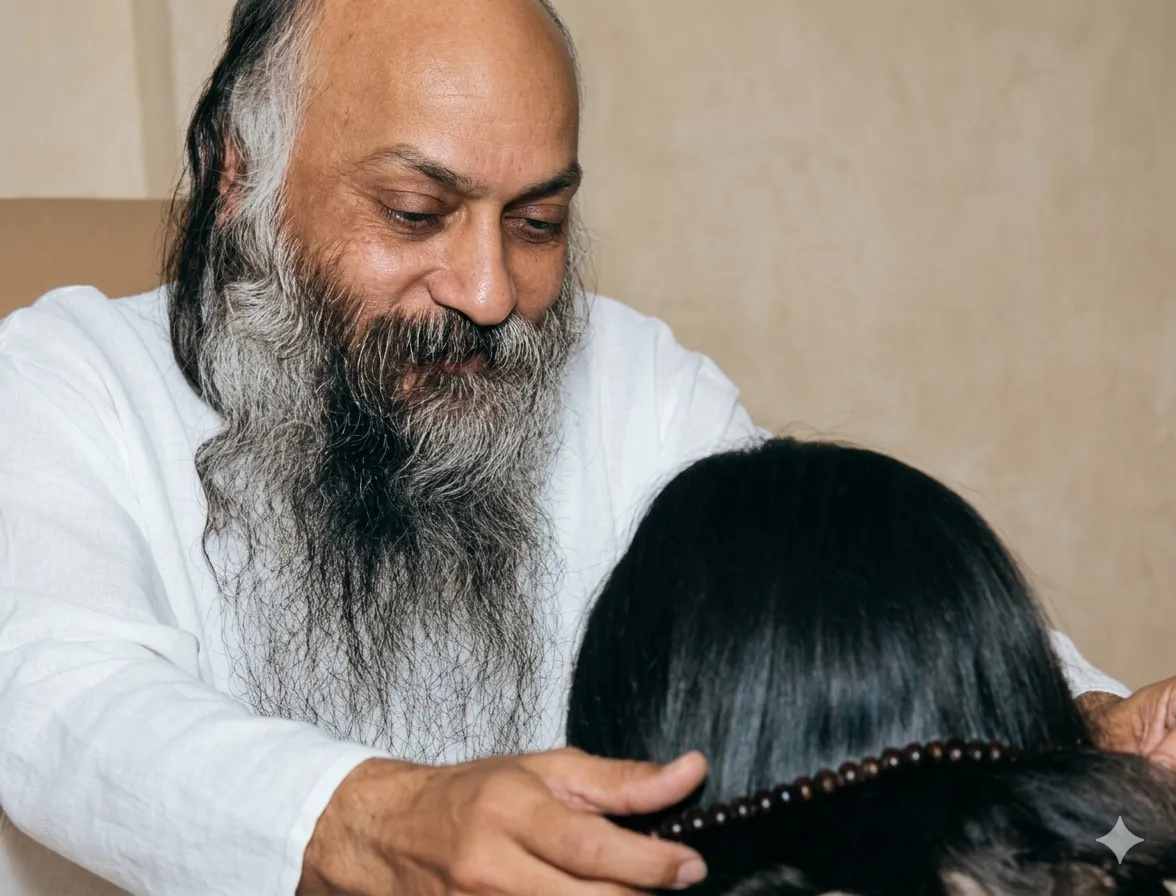
Osho's original Hindi beside Osho Live's English translation, matched passage by passage.
एक कली...
नन्हीं सी
कल ही तो मौसम
मनाया था नेह का
गंध भरी देह का
आज लाचार गयी छली
A bud... So tiny. Only yesterday the season had celebrated love, the body steeped in fragrance— today, helpless, deceived, it has withered. A bud...
एक कली...
एक सुबह एक शाम
इतनी-सी जिंदगी
झरी पाखें सगी
आंखें उदास रूप-जली
One dawn, one dusk— such a little life. The petals—so close, so true—have fallen; the eyes are sad, the beauty seared. A bud...
एक कली...
धूल की अलगनी पर
टंगे सपने अभी
मटैले से सभी
बुझे-बुझे रंग उम्र ढली
एक कली...
On a clothesline of dust dreams still hang, all of them mud-stained, their colors dim, age spent. A bud...
ऐसा ही जीवन है; अभी है, अभी नहीं; क्षणभंगुर है। इस क्षणभंगुरता को जिसने समझा, वही धर्म में प्रवेश करता है। इस क्षणभंगुरता को जिसने न समझा, वह भटकता रहता। कोल्हू के बैल जैसा जुता गोल-गोल घूमता रहता। इसी को बुद्ध ने कहा है--एस धम्मो सनंतनो।
Such is life: now it is, now it is not—evanescent. The one who understands this transience steps into religion. The one who does not understand it wanders on—like an ox hitched to a mill, trudging in circles. This is what Buddha meant by: esa dhammo sanantano—this is the eternal law.
जीवन क्षण-क्षण परिवर्तनशील है, इसे देख लेना परम नियम है। ऐसा हमें दिखायी नहीं पड़ता। आंख पर कोई पर्दा है, जो देखने नहीं देता। रोज देखते हैं चारों तरफ मौत को घटते, फिर भी यह बात मन में बैठती नहीं कि मैं भी मरूंगा। रोज देखते हैं पीले पत्तों को गिरते, लेकिन मन यही कहे जाता है कि मैं सदा हरा रहूंगा। रोज देखते हैं जवानी को बुढ़ापे में बदलते, स्वास्थ्य को बीमारी में गिरते; रोज देखते हैं किसी को धूल में खो जाते, लेकिन मन यही आशा संजोए रहता है--यह औरों के साथ होता है, मेरे साथ न हुआ, न होगा। मैं अपवाद हूं।
Life changes moment to moment; to see this is the supreme law. Yet we do not see it. A veil lies over our eyes that does not let us see. Each day we witness death happening all around, yet the thought never settles in the heart that I too will die. Each day we watch yellowed leaves falling, yet the mind keeps saying, “I shall remain forever green.” We see youth turning into old age, health crumbling into sickness; we see someone returning to dust—but the mind keeps its little hope alive: this happens to others; it has not happened to me, nor will it. I am the exception.
जिसने समझा अपने को अपवाद, वह संसार से मुक्त न हो सकेगा। जिसने समझा कि नियम शाश्वत है, कोई भी अपवाद नहीं...।
Whoever thinks himself the exception will never be free of the world. Whoever understands that the rule is eternal, that there are no exceptions...
जो हरा है, वह पीला होकर झरेगा। जो जन्मा है, वह मरेगा। जो अभी युवा है, कल थकेगा, बूढ़ा होगा। यहां हर चीज बनती और बिगड़ती है। सतत प्रवाह है। यहां कुछ भी थिर नहीं। एक क्षण भी थिर होने की आशा रखना महाभ्रांति है। और थिर होने की आकांक्षा से ही सारे दुखों का जन्म है।
What is green will yellow and fall. Whoever is born will die. Whoever is young today will be weary tomorrow, will grow old. Here everything forms and dissolves. There is a ceaseless flow. Nothing here is still. To hope that anything be still even for a moment is the great delusion. And from the very craving for stillness all suffering is born.
जो नहीं होने वाला है, वह हो जाए, इसी आकांक्षा में तो दुख की उत्पत्ति है। क्योंकि वह नहीं होगा और तुम दुखी होओगे।
Suffering begins in the desire that what cannot be should be. For it will not be—and you will be miserable.
जवान हो, जवानी को थिर बना लेने की आकांक्षा है। सदा जवान रहूं! यह नहीं होगा; कभी नहीं हुआ; यह हो नहीं सकता। यह नियम के विपरीत है। तुम असंभव की कामना कर रहे हो। फिर कामना टूटेगी। पूरी तो हो नहीं सकती, टूटेगी ही; तब विषाद होगा, तब गहन अंधेरे में खो जाओगे। और तब ऐसा लगेगा कि पराजित हुए। पराजित सिर्फ कामना हुई, तुम नहीं। लेकिन कामना से समझा था एक अपने को, इसलिए लगता है पराजित हुआ। फिर भी सीखोगे नहीं! फिर-फिर क्षणभंगुर को पकड़ोगे।
You are young, and you desire to make youth permanent: “May I be forever young!” It will not be; it has never been; it cannot be. It is against the law. You are longing for the impossible. The longing will break—fulfilled it cannot be, break it must; then there will be gloom, then you will be lost in a deep darkness. It will feel as though you have been defeated. Only the desire was defeated, not you. But you had identified yourself with the desire; hence, it feels as if you were defeated. And still you learn nothing! Again and again you will try to seize the fleeting.
पानी के बबूले को थिर बनाने की आकांक्षा है! जो फूल तुम्हारी बगिया में खिला--सदा खिला रहे; ऐसा ही खिला रहे; ऐसी ही सुगंध उठती रहे। झरेगा फूल कल सुबह। पखुड़ियां गिरेंगी धूल में, तब तुम रोओगे। तब आंसू सम्हाले न सम्हलेंगे। लेकिन तुम्हारे रोने का कारण तुम ही हो। तुमने गलत चाहा था; तुमने असंभव चाहा था; जो नहीं होता है, वैसा चाहा था। इसलिए विषाद है।
You want to make a water-bubble stand still! The flower that blossomed in your garden—let it blossom forever; just so; let the same fragrance rise forever. Tomorrow’s morning the flower will fall. Its petals will be scattered in the dust, and you will weep. Your tears will not be held back. But you yourself are the cause of your weeping. You desired wrongly; you desired the impossible; you desired what never happens. Hence, the sorrow.
काश! तुम देख लो उसे जो होता है, और वही चाहो, जो होता है, तो चाह मर गयी। चाह का अर्थ ही है: जो होता है, उसके विपरीत चाहना। जैसा नहीं होता है, वैसा चाहना। जो होता है, उसकी स्वीकृति, उसके साथ समरस हो जाना--चाह मर गयी।
If only you could see what happens, and desire only what happens—then desire has died. Desire means: to want the opposite of what is. To want what is not. To accept what is, to be in harmony with it—that is the death of desire.
जवानी बूढ़ी हो जाती है, तुम भी स्वीकार कर लेते हो। जीवन मृत्यु में परिणत हो जाता है, तुम अंगीकार कर लेते हो। सुख दुखों में बदल जाते हैं; दिन रातों में ढल जाते हैं; तुम जरा भी ना-नुच नहीं करते। तुम कहते हो: जो होता है, होता है। जैसा होता है, वैसा ही होगा। तो कहां वासना है?
Youth grows old; you accept it. Life culminates in death; you embrace it. Pleasure turns into pain; day fades into night; you do not resist at all. You say: what happens, happens. As it happens, so it will be. Where then is craving?
वासना सदा विपरीत की वासना है। इस विपरीत की आकांक्षा को बुद्ध ने कहा है--तन्हा, तृष्णा।
Craving is always the craving for the opposite. Buddha called this yearning for the opposite—tanha, thirst.
किसी से तुम्हारा प्रेम हुआ, अब तुम सोचते हो: यह प्रेम सदा रहे। यहां कुछ भी सदा नहीं रहता। अब तुम कहते हो: इस प्रेम को बांधकर रख लूं। द्वार-दरवाजे बंद कर दूं--कि यह प्रेम का झोंका कहीं बाहर न निकल जाए! हथकड़ियां डाल दूं; बेड़ियां पहना दूं--प्रेम को। तालों पर ताले जड़ दूं; कहीं यह प्रेम चला न जाए! बामुश्किल तो आया है। कितना पुकारा तब आया है!
You fall in love; now you think: may this love remain forever. Nothing here remains forever. Now you say: let me bind this love; let me shut all doors, all windows—so that this gust of love does not slip out! I will slap on handcuffs and fetters—on love. I will pile lock upon lock—let this love not leave! It came with such difficulty. How much I called—and then it came!
याद रखना: न तुम्हारे पुकारने से आया है, न तुम्हारे रोकने से रुकेगा। आता है अपने से, जाता है अपने से।
Remember: it did not come because you called, and it will not stay because you try to hold it. It comes of itself, and goes of itself.
तुम चेष्टा करके प्रेम कर सकोगे? तुम्हें कोई आज्ञा दे: करो इस व्यक्ति को प्रेम; तुम कर सकोगे? जब आता है, तब आता है। तुम अवश हो।
Can you, by effort, love someone? Suppose someone orders you: love this person—can you do it? When it comes, it comes. You are helpless.
जिसके आने पर बस नहीं है, उसके जाने को कैसे रोकोगे? जो आते समय तुम्हारे हाथ से नहीं आया, वह जाते समय तुम्हारे हाथ से रुकेगा भी नहीं। हवा का झोंका है--आया और गया। इस सत्य को समझ लेना धर्म को समझ लेना है। क्योंकि इस सत्य की समझ में ही तृष्णा गिर जाती है, मांग मिट जाती है। जो होता है, उसे स्वीकार कर लेते हो। जो नहीं होता, वह नहीं होता। उसे भी स्वीकार कर लेते हो। फिर जैसा है, वैसे में ही तृप्ति है। इस तृप्ति में ही तृष्णा से मुक्ति है।
What you have no control over in its coming—how will you stop it in its going? What did not come through your hands will not stop in your hands when it goes. It is a gust of wind—come and gone. To understand this truth is to understand religion. For in the very understanding of this truth thirst falls away, demand disappears. You accept what happens. What does not happen—does not happen. You accept that too. Then, as it is, so it is—there is contentment. In this contentment is freedom from craving.
तृष्णा को ठीक से समझना जरूरी है, क्योंकि तृष्णा का ही सारा जाल है।
It is necessary to understand craving correctly, for the entire net is of craving.
तुम बंधे संसार से नहीं, तुम बंधे तृष्णा से। संसार को गालियां मत दो। तृष्णा से बंधे हो तुम, तृष्णा को समझो। तृष्णा को भी गालियां मत दो। क्योंकि गालियां देने से कोई समझ पैदा नहीं होती; निंदा करने से कुछ बोध नहीं पैदा होता। उतरो! आंख खोलकर तृष्णा को देखो। कितनी बार हारे हो! सदा हारे हो! जीत कभी हुई नहीं। किसी की नहीं हुई। और जब तुम्हें लगती है, जीत हो रही है, तब भी ध्यान रखना: तुम्हारी नहीं हो रही है। इसलिए हार जब तुम्हारी होगी, तब भी तुम्हारी नहीं होगी।
You are not bound by the world; you are bound by craving. Do not abuse the world. You are bound by craving; understand craving. Do not abuse craving either. Abuse produces no understanding; condemnation brings no awareness. Enter it! With open eyes, look at craving. How many times you have lost! Always you have lost! There has never been victory—no one’s. And when it seems you are winning, even then be alert: it is not you who is winning. Therefore, when defeat comes to you, it will not really be yours either.
यहां जीवन अपने नियम से चल रहा है। कभी-कभी संयोगवशात तुम नियम के साथ पड़ जाते हो। साथ पड़ जाते हो, अच्छा लगता है। जब-जब साथ छूट जाता है, तब-तब दुख और पीड़ा होती है; कांटा गड़ता है।
Here life goes by its own law. Sometimes, by coincidence, you fall in step with the law. While you are in step, it feels good. Whenever you fall out of step, suffering and pain arise; the thorn pricks.
तुम सदा नियम के साथ हो सकते हो, फिर महासुख है; फिर आनंद है। सदा नियम के साथ होने का अर्थ है: जो होगा, उससे अन्यथा नहीं चाहूंगा। जैसा होगा, उससे रत्तीभर भी अन्यथा नहीं चाहूंगा। दुख होगा, तो दुख अंगीकार करूंगा। सुख होगा, तो सुख अंगीकार करूंगा। मैं अपने को बीच से हटा लूंगा। जो होगा, उसे होने दूंगा। मैं रिक्त हो जाऊंगा। अड़चन न डालूंगा। बाधा न डालूंगा। मांग खड़ी न करूंगा। अपेक्षाएं न रखूंगा। मैं दूर हट जाऊंगा, जैसे मैं रहा नहीं। आए हवा का झोंका--ठीक। न आए--ठीक। सूरज की किरण आए--ठीक। न आए--ठीक। उजाला आए, अंधेरा आए; सुख के दिन और दुर्दिन आएं; जो भी आता हो, आए, मैं तो हूं नहीं। ऐसी भावदशा में फिर कहां दुख? फिर कहां विषाद? इस भावदशा को बुद्ध ने निर्वाण कहा। तुम रिक्त हो जाओ, शून्य हो जाओ। तुम बीच में न आओ, तो निर्वाण है। निर्वाण महासुख है।
You can be in step with the law always—then there is great bliss; then there is joy. To be always in step with the law means: whatever happens, I will not want otherwise. However it is, I will not desire even a hair’s-breadth otherwise. If there is pain, I will accept pain. If there is pleasure, I will accept pleasure. I will remove myself from the middle. I will let what happens, happen. I will become empty. I will not interfere. I will not obstruct. I will not raise demands. I will not carry expectations. I will step aside, as if I were not. If a gust of wind comes—fine. If it does not—fine. If a sunbeam arrives—fine. If it does not—fine. Light comes, darkness comes; days of joy and days of hardship come; whatever comes, let it come—I am not. In such a state of being, where then is sorrow? Where is gloom? Buddha called this state nirvana. Become empty, become void. If you do not come in between, there is nirvana. Nirvana is the great bliss.
ये सारे सूत्र तृष्णा के ऊपर हैं। इसके पहले कि हम सूत्रों में उतरें, उन परिस्थितियों में चलें, जब ये सूत्र कहे गए।
All these sutras are on craving. Before we enter the sutras, let us go into the circumstances in which they were spoken.
पहला दृश्य:
First scene:
भगवान गौतम बुद्ध श्रावस्ती के जेतवन में विहरते थे। श्रावस्ती के नगर-द्वार पर बसे हुए केवट्ट गांव के मल्लाहों ने अचिरवती नदी में जाल फेंककर एक स्वर्ण-वर्ण की अदभुत मछली को पकड़ा।
Bhagwan Gautam Buddha was dwelling in Jetavana in Shravasti. The boatmen of Kevatta village, settled at the city gates of Shravasti, cast their nets in the Achiravati River and caught a wondrous fish with a golden hue.
अदभुत थी मछली। स्वर्ण-वर्ण था उसका, जैसे सोने की बनी हो। उसके शरीर का रंग तो स्वर्ण जैसा था, किंतु उसके मुख से भयंकर दुर्गंध निकलती थी।
Wondrous was the fish. Its color was golden, as if made of gold. Its body shone like gold, yet from its mouth issued a terrible stench.
मल्लाहों ने इस चमत्कार को जाकर श्रावस्ती के महाराजा को दिखाया। ऐसी मछली कभी उन्होंने पकड़ी नहीं थी। ऐसी सुंदर काया कभी देखी नहीं थी किसी मछली की। जैसे स्वर्ग से उतरी हो। और साथ ही एक दुर्भाग्य भी जुड़ा था उस मछली के पीछे। उसके मुंह से ऐसी भयंकर दुर्गंध निकलती थी, वैसी दुर्गंध भी कभी नहीं देखी थी; जैसे भीतर नर्क भरा हो। बाहर स्वर्ण की देह थी और भीतर जैसे नर्क!
The boatmen brought this marvel to the King of Shravasti. They had never caught such a fish. Never had they seen such a beautiful form in any fish—like one descended from heaven. And with it there was attached a misfortune: a horrifying stench came out of its mouth; they had never encountered such a stench—like hell filled within. Outside, a golden body; inside, as if hell itself!
राजा भी चकित हुआ। न उसने सुना था कभी, न देखा था। ऐसी मछली पुराणों में भी नहीं लिखी थी।
The king too was astonished. He had neither heard nor seen such a thing. Not even the Puranas tell of such a fish.
बुद्ध गांव में ठहरे हैं। राजा उस मछली को एक द्रोणी में रखवाकर भगवान के पास ले गया। सोचा: चलें, उनसे पूछें। शायद कुछ राज मिले।
Buddha was staying in the village. The king had the fish placed in a trough and took it to Bhagwan. He thought: let us ask him; perhaps we’ll find a key.
उस समय मछली ने मुख खोला, जिससे सारा जेतवन दुर्गंध से भर गया। जहां बुद्ध ठहरे थे--जिन वृक्षों की छाया में--वह सारा जेतवन दुर्गंध से भर गया! ऐसी भयंकर उसकी दुर्गंध थी।
At that moment the fish opened its mouth, and the whole of Jetavana was filled with stench. The grove in which Buddha was staying—under whose trees—was flooded with the stench. So terrible was its odor.
राजा ने भगवान के चरणों में तीन बार प्रणाम कर पूछा: भंते! क्यों इसका शरीर स्वर्ण जैसा, किंतु मुख से दुर्गंध निकलती है? यह द्वंद्व कैसा? यह द्वैत कैसा? स्वर्ण की देह से तो सुगंध निकलनी थी! और अगर दुर्गंध ही निकलनी थी, तो देह स्वर्ण की नहीं होनी थी। यह कैसा अजूबा! आप कुछ कहें।
The king bowed three times at the feet of Bhagwan and asked: Bhante! Why is its body like gold, yet its mouth emits stench? What is this duality? From a golden body, fragrance should arise! And if a stench had to arise, then the body should not have been of gold. What kind of marvel is this! Please say something.
भगवान ने अत्यंत करुणा से उस मछली की ओर देखा और बड़ी देर चुप रहे। जैसे किसी और लोक में खो गए। और फिर बोले: महाराज! यह मछली कोई सामान्य मछली नहीं है। इसके पीछे छिपा एक लंबा इतिहास है। यह काश्यप बुद्ध के शासन में कपिल नामक एक महापंडित भिक्षु था। यह त्रिपिटकधर था; ज्ञानी था। बड़ा तर्कनिष्ठ, बड़ा तर्क कुशल; स्मृति इसकी बड़ी प्रगाढ़ थी। और उतना ही अभिमानी भी था। अहंकार भी बड़ा तीक्ष्ण था; तलवार की धार की तरह था। इसने अपने अभिमान में भगवान काश्यप को धोखा दिया; अपने गुरु को धोखा दिया। उन्हें छोड़ा ही नहीं, वरन उनके विरोध में भी संलग्न हो गया।
Bhagwan gazed upon the fish with great compassion and remained silent for a long time—like one lost in another world. Then he said: Maharaj! This fish is no ordinary fish. Behind it lies a long history. In the time of Kashyapa Buddha it was a great scholar-monk named Kapila. He was keeper of the Tripitaka; knowledgeable; skilled in logic, a sharp debater; his memory was deep. And equally arrogant. His ego was as keen as the edge of a sword. In his pride he deceived Bhagwan Kashyapa; he betrayed his master. He not only left him, he engaged himself in opposing him.
जो इसने बहुत दिनों तक एक बुद्धपुरुष का सत्संग किया था और उनके चरणों में बैठा था, और उनकी छाया में चला था, उसके फल से इसे स्वर्ण जैसा वर्ण मिला है। ऐसे देह तो इसकी स्वर्णमयी हो गयी, क्योंकि बाहर-बाहर से यह उनके साथ था, लेकिन आत्मा से चूक गया। बाहर तो सुंदर हो गया, लेकिन भीतर कुरूप रह गया। बाहर तो बुद्धपुरुष के साथ रहा, भीतर-भीतर विरोध को संजोता रहा। तो बाहर सुंदर हुआ, भीतर कुरूप रह गया। बाहर स्वर्ण हुआ, भीतर सिवाय दुर्गंध के और कुछ नहीं है। बाहर तो बुद्ध की छाया का परिणाम है; भीतर यह जैसा है, वैसा है। उस अंतर-कुरूपता के कारण ही इसके मुख से भयंकर दुर्गंध निकल रही है।
For the many days he had sat at the feet of a buddha and walked in his shadow, the fruit is this gold-like complexion. His body became golden—outwardly he had been with the buddha—but he missed in the soul. Outwardly he became beautiful, inwardly he remained ugly. Outwardly he stayed with the awakened one, inwardly he nursed opposition. So he became beautiful outside, and remained deformed within. Outside gold; within nothing but stench. Outside is the result of the buddha’s shadow; within he is as he is. Because of that inner ugliness, a terrible stench issues from his mouth.
इसी मुख से इसने काश्यप भगवान का विरोध किया था। और भलीभांति जानते हुए कि यह गलत है, फिर भी विरोध किया था। यह दुर्गंध उस दगाबाजी और धूर्तता और अहंकार की ही गवाही दे रही है।
With this very mouth he opposed Lord Kashyapa. And knowing full well it was wrong, still he opposed. That stench bears witness to that treachery and cunning and pride.
राजा को इस कथा पर भरोसा न हुआ। हो भी तो कैसे हो! यह कथा कल्पित सी मालूम पड़ती है। फिर प्रमाण क्या है? फिर गवाही कहां है? वह बोला: आप इस मछली से कहलवाएं, तो मानूं!
The king could not believe this story. How could he! It seemed fanciful. Where was the proof? Where the witness? He said: Have this fish say it—then I will believe!
भगवान हंसे और अब करुणा से उन्होंने उस राजा की ओर देखा--वैसे ही, जैसे पहले मछली की ओर देखा था। और वे मछली से बोले: याद कर! भूले को याद कर! तू ही कपिल है? तू ही वह भिक्षु है, जो महाज्ञानी था? जो काश्यप बुद्ध के चरणों में बैठा? जो उनकी छाया में उठा?
Bhagwan smiled, and now he looked upon the king with compassion—just as he had looked upon the fish. And he said to the fish: Remember! Recall what is forgotten! Are you Kapila? Are you the monk, the great pundit? Who sat at the feet of Kashyapa Buddha? Who moved in his shadow?
मछली बोली: हां, भंते! मैं ही कपिल हूं। और उसकी आंखें आंसुओं से भर गयीं--गहन पश्चात्ताप और गहन विषाद से। और उस क्षण एक अपूर्व घटना घटी। आंसू भरी आंखों के साथ, बुद्ध के समक्ष, वह मछली तत्क्षण मर गयी। उसकी मृत्यु के क्षण में उसका मुंह खुला था, लेकिन दुर्गंध विलीन हो गयी थी।
The fish said: Yes, Bhante! I am Kapila. Tears filled its eyes—deep remorse, deep sorrow. And then an extraordinary event occurred. With tears in its eyes, before the Buddha, the fish died on the spot. In the moment of death its mouth was open, yet the stench had vanished.
जीते जी दुर्गंध आ रही थी, मरकर तो और भी आनी थी! मरकर तो उनमें भी दुर्गंध आने लगती है, जिनमें दुर्गंध नहीं होती। लेकिन यह अपूर्व हुआ। मछली मर गयी--मुंह खोले, आंख में आंसुओं से भरे! पश्चात्ताप...! लेकिन पश्चात्ताप ही उसे नहला गया, धो गया, पवित्र कर गया। उस पश्चात्ताप के क्षण में उसका अहंकार गल गया।
While alive, it stank; after death, it should have stunk even more! After death even those stink who did not stink before. But this was unique. The fish died—mouth open, eyes brimming with tears. Repentance... and that repentance bathed it, washed it, purified it. In that moment of repentance its ego melted.
किसी और बुद्ध के समक्ष अहंकार लेकर खड़ी थी। आज किसी और बुद्ध के समझ क्षमा मांग ली। वे आंसू पुण्य बन गए। वह मछली मर गयी। इससे सुंदर क्षण मरने के लिए और मिल भी न सकता था!
Once it had stood before another buddha with ego; today before another buddha it sought forgiveness. Those tears turned to virtue. The fish died—no more beautiful moment could be found to die!
एक सन्नाटा छा गया। सारे भिक्षु इकट्ठे हो गए थे मछली को देखने। फिर यह भयंकर दुर्गंध! जो दूर-दूर थे, जिन्हें पता भी नहीं था, वे भी भागे आए कि बात क्या है? इतनी भयंकर दुर्गंध कैसे उठी? फिर महाराजा को देखा। फिर बुद्ध के ये अदभुत वचन सुने। और फिर मछली को बोलते देखा! और यही नहीं, फिर मछली को मरते देखा और रूपांतरित होते देखा! मृत्यु जैसे समाधि बन गयी। और यह भी देखा चमत्कार कि जीते-जी दुर्गंध से भरी थी, मरते दुर्गंध विदा हो गयी! इतना ही नहीं; जैसे ही पुरानी दुर्गंध धीरे-धीरे हवा के झोंके ले गए, उस मरी हुई मछली से सुगंध आने लगी। जेतवन, जैसे पहले दुर्गंध से भर गया था, वैसे ही एक अपूर्व सुगंध से भर गया! वे भिक्षु पहचानते थे भलीभांति--वह सुगंध कैसी है। वह बुद्धत्व की सुगंध थी--जैसे बुद्ध से आती है।
A hush fell. All the monks had gathered to see the fish. Then that terrible stench! Those far away, who did not even know, came running: what is happening? How did such a stench arise? They saw the king. They heard these wondrous words of the Buddha. And then they saw the fish speak! And not only that—they saw the fish die and transform! Death became like samadhi. They also witnessed a miracle: alive it was full of stench; in dying, the stench departed! Not only that—once the old stench had been slowly carried off by the breeze, from the dead fish a fragrance began to arise. Jetavana, which had been filled with stench, was now filled with an unprecedented fragrance. The monks recognized it well—what sort of fragrance it was. It was the fragrance of buddhahood—like that from the Buddha.
मछली उपलब्ध होकर मरी। एक क्षण में क्रांति घटी। क्रांति जब घटती है, तो क्षण में घट जाती है। बोध की बात है।
The fish died fulfilled. In a single moment a revolution occurred. When revolution happens, it happens in a moment. It is a matter of awakening.
सन्नाटा छा गया। बड़ी देर तक कोई कुछ नहीं बोला। लोग संविग्न हो गए। उन्हें रोमांच हो आया। तब भगवान ने उस समय उपस्थित लोगों की चित्त-दशा को देखकर यह गाथाएं कहीं।
Silence fell. For a long time no one spoke. People were shaken to the core. Gooseflesh rose upon them. Then, seeing the state of mind of those present, Bhagwan spoke these verses.
इसके पहले कि हम गाथाओं में जाएं, इस कथा के एक-एक शब्द को हृदय में उतर जाने दो। समझो।
Before we enter the verses, let each word of this tale sink into your heart. Understand it.
भगवान गौतम बुद्ध श्रावस्ती के जेतवन में विहरते थे।
Bhagwan Gautam Buddha was dwelling in Jetavana, Shravasti.
गौतम उनका नाम था, उनके माता-पिता ने दिया था। बुद्धत्व उनकी उपलब्धि थी, क्योंकि वे निद्रा से जागे। अंधेरे से प्रकाश बने। मूर्च्छा गयी, होश आया। दीया जला भीतर का। सो बुद्ध उन्हें कहते हैं। और जो भी जाग गया, वह भगवान हो गया।
Gautam was his given name, from his parents. Buddhahood was his attainment—because he woke up from sleep. Darkness turned into light. The stupor went; awareness came. The lamp was lit within. Hence we call him Buddha. And whoever awakens becomes Bhagwan.
बुद्ध परंपरा में भगवान का वैसा अर्थ नहीं है, जैसा हिंदू या इस्लाम या ईसाई परंपरा में है। हिंदू, ईसाई, इस्लाम की परंपरा में भगवान का अर्थ होता है: जिसने सृष्टि को बनाया। बुद्ध परंपरा में भगवान का अर्थ होता है: जिसने स्वयं को जाना। क्योंकि बुद्ध परंपरा में इस संसार को बनाने वाला तो कोई है ही नहीं। यह संसार कभी बनाया नहीं गया। यह असृष्ट है। यह सदा से है। और यही बात ज्यादा संगत मालूम पड़ती है।
In the Buddha tradition, Bhagwan does not mean what it means in Hindu, Islamic, or Christian traditions. There, Bhagwan means the creator of the universe. In the Buddha tradition, Bhagwan means the one who has known himself. For in this tradition there is no one who created this world. It was never created. It is uncreated. It has been forever. And this seems the more consistent view.
तुम देखते हो: संसार एक वर्तुल में घूम रहा है। बीज बोते हो, वृक्ष बन जाते हैं। वृक्षों में फिर बीज लग जाते हैं। फिर बीज बो दो, फिर वृक्ष बन जाते हैं। वृक्षों में फिर बीज लग जाते हैं। तुम ऐसी कोई घड़ी सोच नहीं सकते, जब यह वर्तुल न रहा हो। तुम ऐसा नहीं सोच सकते कि बीज हो जाएं। बिना वृक्षों के बीज न हो सकेंगे। और तुम ऐसा भी नहीं सोच सकते कि अचानक वृक्ष हो जाएं!
You see it: the world moves in a circle. You plant a seed; it becomes a tree. The tree bears seeds again. Plant the seeds, they become trees. Again trees bear seeds. You cannot imagine a time when this circle was not. You cannot think that suddenly there were seeds—without trees there can be no seeds. Nor can you think that suddenly there were trees!
सृष्टि का तो अर्थ ही यही होगा कि भगवान ने या तो बीज बनाए या वृक्ष बनाए। कहीं से तो शुरू करना होगा! लेकिन वृक्ष बिना बीज के नहीं हो सकते। और बीज बिना वृक्ष के नहीं हो सकते। यह वर्तुल तोड़ा नहीं जा सकता!
Creation would mean: God made either seeds or trees. He must begin somewhere! But trees cannot be without seeds; seeds cannot be without trees. This circle cannot be broken!
बच्चे बिना मां-बाप के नहीं हो सकते। और जो मां-बाप हैं, वे भी किसी के बच्चे हैं। यह वर्तुल तोड़ा नहीं जा सकता। यह परंपरा शाश्वत है, सनातन है। इसको बुद्ध ने संतति कहा है। यह धारा सदा से है; इसको कभी किसी ने बनाया नहीं।
Children cannot be without parents. And those parents are someone’s children too. The circle cannot be broken. This lineage is eternal, sanatan. Buddha called it the stream of continuity. This current has always been; no one ever made it.
इसलिए स्रष्टा की धारणा बुद्ध के विचार में जरा भी नहीं है। आकाश में बैठे भगवान की धारणा बुद्ध की परंपरा में बड़ी बचकानी है। वह मनुष्य की कल्पना है। कोई आकाश में बैठा हुआ नहीं है। कोई न निर्माता है, न कोई नियंता है।
Hence, the concept of a creator has no place in the Buddha’s vision. The idea of a God sitting in the sky is childish. It is man’s imagination. No one sits in the sky. There is no maker, no controller.
फिर कैसे यह विराट चल रहा है? प्रश्न उठता है, कैसे यह विराट चल रहा है? जब कोई सम्हालने वाला नहीं, कोई बनाने वाला नहीं, कोई नियंता नहीं! इतनी जटिल प्रक्रियाएं कैसी शांति से चल रही हैं! और कितनी नियमबद्ध!
Then how does this vastness go on? The question arises: how does the vastness go on when there is no caretaker, no maker, no controller? Such complex processes go on in such peace—and with such lawfulness!
इस नियमबद्धता को बुद्ध ने धर्म कहा है। इस नियमबद्धता को परम नियम कहा है--एस धम्मो सनंतनो। इसलिए बुद्ध की बात वैज्ञानिकों को रुचती है।
This lawfulness Buddha called dharma. He called it the supreme law—esa dhammo sanantano. That is why Buddha’s word appeals to scientists.
आज पश्चिम में बुद्ध का प्रभाव रोज-रोज बढ़ता जाता है। क्योंकि विज्ञान से बात तालमेल खाती है। विज्ञान भी कहता है: नियम हैं। बस, सब नियम से चल रहा है। जमीन में गुरुत्वाकर्षण है, इसलिए फल नीचे गिर जाते हैं। पानी का नियम है नीचे की तरफ बहना, इसलिए पहाड़ों से उतरकर नदियों में बहता और सागर में पहुंच जाता है। सारी चीजें नियम से चल रही हैं। नियम है, नियंता नहीं है।
Today, in the West, Buddha’s influence grows day by day, because it harmonizes with science. Science too says: there are laws. Everything runs by law. There is gravity in the earth, so fruit falls downward. Water’s law is to flow downwards, so from the mountains it runs into rivers and reaches the sea. Everything runs by law. There is law, not a lawgiver.
नियम का अर्थ हुआ: परमात्मा व्यक्ति की तरह नहीं है, सिद्धांत की तरह है। और जो भी जाग जाता है, वह उस नियम के साथ एक हो जाता है। क्यों? क्योंकि वह उस नियम से विपरीत की आकांक्षा नहीं करता।
Which means: the absolute is not a person but a principle. Whoever awakens becomes one with that law. How? Because he does not desire the opposite of the law.
सोया हुआ आदमी नियम के विपरीत की आकांक्षा करता है। सोया हुआ आदमी ऐसा है, जैसे रेत से निचोड़े और सोचे कि तेल मिल जाए! जागा हुआ आदमी ऐसा है: तिल को निचोड़ता है, तो तेल पाता है। रेत को नहीं निचोड़ता। जानता है: रेत से तेल नहीं होता। और अगर रेत को निचोड़कर तेल न मिले, तो दुखी नहीं होता। क्योंकि जो नियम के विपरीत है, वह नहीं होगा। फिर लाख प्रार्थनाएं करो, पूजाएं करो, हवन और यज्ञ करो, जो नियम के विपरीत है, नहीं होगा।
The sleeping man desires what is against the law. He is like someone who squeezes sand and thinks oil will come! The awakened man is like this: he presses sesame and finds oil. He does not squeeze sand. He knows: oil does not come from sand. And if he squeezes sand and oil does not come, he is not unhappy. What is against the law will not be. Then, pray as you will, perform rituals, sacrifices—what is against the law will not happen.
बुद्ध-धर्म में चमत्कार के लिए कोई जगह नहीं है। चमत्कार होते ही नहीं। चमत्कार के नाम पर जो होता है सब धोखाधड़ी है। नियम के विपरीत कभी कोई बात नहीं होती। जो होता है, नियम के अनुसार होता है।
In Buddha-dharma there is no place for miracle. Miracles do not occur. What passes for miracle is all trickery. Nothing ever happens against the law. What happens is according to the law.
तो जो स्थान भगवान का है हिंदू, ईसाई, इस्लाम की परंपरा में, वही स्थान नियम का है--धम्म का, धर्म का--बुद्ध और जैन और लाओत्सू की परंपरा में। जिसको लाओत्सू ने ताओ कहा है, उसी को बुद्ध ने धर्म कहा है।
So the place God holds in Hindu, Christian, and Islamic traditions is held by law—dhamma, dharma—in the traditions of Buddha, Mahavira, and Lao Tzu. What Lao Tzu called Tao, Buddha called Dharma.
धर्म शब्द का अर्थ भी होता है, जिसने धारण किया है; जिस पर सब ठहरा है। लेकिन धर्म सिद्धांत, व्यक्ति नहीं। धर्म कोई आदमी की तरह सिंहासन पर नहीं बैठा है। धर्म विस्तीर्ण है प्रकृति के कण-कण में। धर्म छाया है सब जगह।
Dharma also means: that which holds; that upon which all rests. But dharma is a principle, not a person. Dharma is not a man seated on a throne. Dharma pervades every particle of nature. Dharma’s shadow is everywhere.
फिर भगवान का अर्थ अन्यथा हो गया। फिर भगवान का अर्थ बनाने वाला न रहा। बनाने वाला कोई है नहीं। बुद्ध को भगवान कहा है, क्योंकि उन्होंने जाना; जागे; नियम के अनुकूल हो गए।
Then the meaning of Bhagwan changes. Bhagwan is no longer “the maker”—for there is none. Buddha is called Bhagwan because he has known; he has awakened; he has become attuned to the law.
नियम की प्रतिकूलता में दुख है; नियम की अनुकूलता में सुख है। यह बड़ी वैज्ञानिक बात है। तुम रास्ते पर सम्हलकर चलो, तो पृथ्वी तुम्हें गिराती नहीं और तुम्हारी टांग नहीं तोड़ देती और फ्रेक्चर नहीं हो जाता। तुम सम्हलकर न चलो, शराब पीकर चलो, लड़खड़ाते चलो, आंखें बंद करके चलो, तो गिरोगे। गिरोगे तो हड्डी टूटेगी। तब नाराज मत होना; गुरुत्वाकर्षण को गाली मत देना। गुरुत्वाकर्षण तुम्हारी टांग तोड़ने बैठा नहीं था। तुमने अपनी टांग अपनी ही भूल-चूक से तोड़ ली। तुमने अपनी टांग अपनी ही मूर्च्छा से तोड़ ली।
In opposition to the law there is suffering; in harmony with it is joy. This is profoundly scientific. Walk carefully on the road, and the earth does not throw you down, does not break your leg, does not cause a fracture. If you do not walk carefully—if you walk drunkenly, stagger, keep your eyes shut—you will fall. When you fall and break a bone, do not be angry; do not abuse gravity. Gravity was not out to break your leg. You broke your own leg through your own error. You broke your leg through your own unconsciousness.
गुरुत्वाकर्षण तुम्हारा दुश्मन नहीं है। जमीन की कोई आकांक्षा नहीं कि तुम्हारी टांग तोड़े। तुम सम्हलकर चलते, तो जमीन तुम्हारी टांग न तोड़ती।
Gravity is not your enemy. The earth has no desire to break your leg. If you had walked carefully, the earth would not have broken your leg.
तुमने देखा: रस्सी पर चलता है नट। रस्सी पर चलता है, तो भी सम्हल लेता है, तो जमीन उसकी टांग नहीं तोड़ती। कई लोग जमीन पर चलते हैं और टांग टूट जाती है! होश से चलने की बात है।
You have seen the acrobat walk a rope. Even on a rope, if he is careful, the earth does not break his leg. Many walk on the ground and break their legs! It is a matter of walking with awareness.
बुद्ध ने कहा है: नियम न तो किसी के पक्ष में है, न किसी के विपक्ष में है। नियम निष्पक्ष है। अब तुम्हारे ऊपर निर्भर है। अगर विपरीत चले, तो कष्ट पाओगे। नियम के विपरीत चलोगे, तो नर्क निर्मित कर लोगे। नियम के अनुकूल चलोगे, तो स्वर्ग निर्मित हो जाएगा। और जिस दिन नियम और तुम्हारे बीच जरा भी फासला न रह जाएगा, तुम नियम के साथ एकरूप हो जाओगे, एकरस हो जाओगे, उस दिन तुम भगवत्ता को उपलब्ध हो गए। उस दिन तुम भगवान हो गए।
Buddha said: the law is neither for anyone nor against anyone. It is impartial. It depends on you. If you move against it, you will suffer. Move against the law, and you will manufacture hell. Move with the law, and you will create heaven. And the day there is not even a hair’s gap between you and the law—when you become one with it, single-toned—that day you attain godliness. That day you are Bhagwan.
प्रत्येक व्यक्ति भगवान हो सकता है। यही बुद्ध-धर्म की गरिमा है कि प्रत्येक व्यक्ति को भगवान होने का अवसर है।
Every person can become Bhagwan. This is the glory of Buddha-dharma—that each person has the opportunity to be divine.
हिंदू-धर्म में राम भगवान हो सकते हैं; कृष्ण भगवान हो सकते हैं; परशुराम भगवान हो सकते हैं। दस अवतार चुक गए, फिर कोई उपाय नहीं। हिंदू-धर्म लोकतांत्रिक नहीं है।
In Hinduism, Rama can be God; Krishna can be God; Parashurama can be God. Ten avatars have already come and gone—after that there is no provision. Hinduism is not democratic.
इस्लाम में तो इतनी भी सुविधा नहीं। दस आदमी भी भगवान नहीं हो सकते। मोहम्मद भी भगवान नहीं हैं। मोहम्मद भी केवल संदेश-वाहक, पैगंबर! इस्लाम और भी कम लोकतांत्रिक है। भगवान एक तानाशाह है।
Islam offers even less. Not even ten can be God. Muhammad is not God either—he is only the messenger, the prophet. Islam is even less democratic. God is a despot.
ईसाइयत थोड़ी गुंजाइश रखती है, मगर ज्यादा नहीं। जीसस भगवान हैं। लेकिन वे इकलौते बेटे हैं। दूसरा कोई बेटा भगवान का नहीं! फिर ये सब बेटे किसके हैं? फिर ये सब अनाथ हैं? फिर जीसस ही सनाथ हैं! और बाकी सब अनाथ हैं? यह बात भी बड़ी गैर-लोकतांत्रिक है।
Christianity keeps a little room, but not much. Jesus is God. But he is the only begotten son. No second son of God! Then whose sons are all these? Are all these orphans? Jesus alone has a father, and the rest are fatherless? This is undemocratic.
बुद्ध की बात बड़ी लोकतांत्रिक है। बुद्ध कहते हैं: प्रत्येक भगवान हो सकता है। प्रत्येक के भीतर छिपा हुआ है भगवान का बीज। इसलिए भगवान एक है, ऐसा नहीं। जितनी आत्माएं हैं इस जगत में, उतने भगवान हो सकते हैं। भगवान होना तुम्हारा स्वरूपसिद्ध अधिकार है। ठीक-ठीक चलोगे, तो पहुंच जाओगे। ठीक-ठीक नहीं चलोगे, तो चूक जाओगे।
Buddha’s vision is profoundly democratic. Buddha says: everyone can be Bhagwan. Within each one the seed of godhood is hidden. So it is not that there is only one God. As many as there are souls in this world, so many gods can be. To be divine is your essential birthright. Walk rightly and you will arrive. Do not walk rightly and you will miss.
इसलिए गौतम बुद्ध को भगवान कहा है। वे नियम के साथ एकरूप हो गए। वे धर्म के साथ एकरूप हो गए। अब उनकी कोई आकांक्षा नहीं, कोई तृष्णा नहीं। अब वे नदी के साथ बहते हैं। तैरते भी नहीं। कहीं जाना नहीं है। जहां नदी ले जाए वहीं जा रहे हैं। कहीं न ले जाए तो भी ठीक। कहीं ले जाए तो भी ठीक। मझधार में डुबा दे, तो वहीं किनारा। ऐसी परम तथाता की जो अवस्था है, उसको भगवत्ता कहा है।
Therefore, Gautam Buddha is called Bhagwan. He became one with the law. He became one with dharma. Now he has no desires, no cravings. Now he flows with the river. He does not even swim. There is nowhere to go. Wherever the river takes him, there he goes. If it takes him nowhere—fine. If it takes him somewhere—fine. If it drowns him midstream—that is the shore. This supreme suchness is called godliness.
भगवान गौतम बुद्ध श्रावस्ती के जेतवन में विहरते थे। श्रावस्ती के नगर-द्वार पर बसे हुए केवट्ट गांव के मल्लाहों ने अचिरवती नदी में जाल फेंककर एक स्वर्ण-वर्ण की अदभुत मछली को पकड़ा।
Bhagwan Gautam Buddha was dwelling in Jetavana, Shravasti. At the city gate the boatmen of Kevatta village cast their nets in the Achiravati and caught a wondrous golden fish.
इन सारी छोटी-छोटी कथानक की प्रक्रिया को समझना। इनमें छोटे-छोटे शब्दों का मूल्य है।
Understand the process of these small story motifs. These little words carry value.
अचिरवती नदी में...। चिर नहीं है नदी; अचिर है, क्षणभंगुर है।
In the Achiravati River... achir—nonlasting; the river is not enduring; it is transient.
अचिरवती नदी में मल्लाहों ने जाल फेंका और एक सोने की मछली को पकड़ा।
In the Achiravati, the boatmen cast a net and caught a golden fish.
ऐसे ही तो हम सब मल्लाह हैं और अचिरवती नदी में, संसार की क्षण-क्षण बदलती हुई धारा में जाल फेंके बैठे हैं, अपनी-अपनी बंसी लटकाए बैठे हैं। सब अपनी-अपनी मछली पकड़ने बैठे हैं! कोई पद की मछली, कोई धन की मछली, कोई प्रतिष्ठा की, कोई यश की, कोई प्रसिद्धि की--अलग-अलग मछलियों के नाम हों, मगर अचिरवती नदी के किनारे सभी मल्लाह हैं। सभी अपनी बंसी लटकाए, जाल फैलाए बैठे हैं! मछली फंसे!
Just so, we are all boatmen, and in the Achiravati—the ever-changing stream of the world—we have cast our nets and hung our lines. Each is sitting to catch his fish! One the fish of position, one of wealth, one of status, one of fame—different names for the fish, but on the bank of the Achiravati all are boatmen. All have their lines cast, their nets spread—may a fish be caught!
अचिरवती नदी में मल्लाहों ने जाल फेंककर एक स्वर्ण-वर्ण की अदभुत मछली को पकड़ा।
The boatmen cast the net in the Achiravati and caught a wondrous fish of golden hue.
और यहां कभी-कभी जाल में सोने की मछली फंसती भी है। लेकिन हर सोने की मछली के पीछे भयंकर दुर्गंध है। धन मिलता भी है। ऐसा नहीं कि नहीं मिलता। लेकिन धन के पीछे भयंकर दुर्गंध है।
And here, sometimes, a golden fish does get caught. But behind every golden fish lies a terrible stench. Wealth is obtained too—do not think it is not. But behind wealth there is a horrible stink.
नानक के जीवन में उल्लेख है। एक धनपति ने--दुनीचंद उसका नाम था--नानक को निमंत्रित किया भोजन के लिए। नानक समझाने की कोशिश किए, टालने की कोशिश किए, लेकिन दुनीचंद पीछे पड़ गया। माना नहीं। नगरसेठ था। प्रतिष्ठा का सवाल था। उसका निमंत्रण और कोई न माने!
In Nanak’s life it is recorded: a rich man named Dunichand invited Nanak for a meal. Nanak tried to explain, tried to avoid, but Dunichand insisted. He would not relent. He was the city’s seth. It was a matter of prestige. Who dares refuse his invitation!
अनेक लोग मौजूद थे। उनकी मौजूदगी में उसने चरण छूकर प्रार्थना की थी: कल मेरे घर भोजन करें। और नानक मना करें! दुनीचंद को तकलीफ होने लगी। उसने कहा: चलना ही होगा। उसने सारी प्रतिष्ठा दांव पर लगा दी अपनी। उसने कहा: जो भी दान करना है, करूंगा। नानक ने कहा कि दान का सवाल नहीं। तुम ले चलकर मुझे, दुखी होओगे। नहीं मानते, तो ठीक है, चलूंगा। वे गए।
Many people were present. In their presence he touched Nanak’s feet and pleaded: tomorrow please dine at my house. And if Nanak declined—Dunichand would be hurt. He had put his prestige on the line. He said: whatever you want to donate, I will. Nanak said: it is not a matter of donation. If you take me along, you will be unhappy. If you will not accept it—fine, I will come. They went.
जब दुनीचंद ने उन्हें भोजन परोसा, तो उन्होंने उसकी रोटियां हाथ में उठायीं और जोर से उन रोटियों को मुट्ठी में भींचा। तो खून की बूंद उन रोटियों से टपकी!
When Dunichand served the food, Nanak lifted the rotis in his hand and squeezed them tight. Drops of blood fell from the rotis!
सैकड़ों लोग देखने इकट्ठे हो गए थे। एक तो नानक ने इतना इनकार किया। मानते नहीं थे। फिर गए हैं। और यह भी कहा है दुनीचंद को कि मुझे ले जाकर तू पछताएगा। मुझे न ले जा।
Hundreds had gathered to watch. First, Nanak had refused so much. He would not agree. Then he went. He had also told Dunichand: if you take me you will regret it. Do not take me.
सैकड़ों लोगों ने यह देखा कि उन रोटियों से खून की बूंदें टपकीं! लोग पूछने लगे कि यह क्या है? यह कैसे हुआ? तो नानक ने कहा: इसलिए मैं आना नहीं चाहता था। दुनीचंद के धन के पीछे बड़ी दुर्गंध है। यह धन शोषण से मिला है। इसके रुपए-रुपए में आदमियों का खून है। इसलिए मैं आना नहीं चाहता था।
Hundreds saw the drops of blood fall from the rotis. They asked: what is this? How did this happen? Nanak said: this is why I did not wish to come. There is great stench behind Dunichand’s wealth. This wealth is gained from exploitation. In each rupee of this money is human blood. That is why I did not wish to come.
यहां कभी-कभी सोने की मछली फंस भी जाती है, तो तुम सदा पीछे पाओगे उपद्रव। यहां कभी-कभी पद मिल भी जाता है। एक तो जिंदगी गंवाता है आदमी! अचिरवती नदी के किनारे जाल फैलाए बैठे हैं! कभी-कभी फंस जाती है मछली। तब दूसरी बात पता चलती है कि मछली फंस जाती है; देखने में सोने की मालूम पड़ती है--और भीतर? भीतर सब दुर्गंध है और मल-मूत्र है।
Here, sometimes, a golden fish gets caught, but you will always find trouble behind it. Here, sometimes, status is also gained. A person spends his life; on the bank of the Achiravati he sits with his nets spread! Sometimes the fish is indeed caught—and then the second thing becomes apparent: the fish gets caught; it looks like gold—but inside? Inside there is nothing but stink, filth and excreta.
बड़े से बड़े पद पर पहुंचकर लोगों को मिला क्या? बहुत से बहुत धन इकट्ठा करके लोगों को मिला क्या? पूछो सिकंदर से। पूछो बड़े धनपतियों से।
What did people gain upon reaching the highest positions? What did people gain after hoarding great wealth? Ask Alexander. Ask the big tycoons.
जितना धन बढ़ता जाता है, उतनी अपनी दरिद्रता का पता चलता है। और जितना पद पर बैठ जाते हैं, उतनी अपनी दीनता का पता चलता है। ऊपर-ऊपर स्वर्ण, भीतर-भीतर नर्क निर्मित हो जाता है।
The more wealth grows, the more one’s inner poverty is exposed. The higher the seat, the more one’s inner pettiness is revealed. On the surface gold; within, hell constructed.
अचिरवती नदी में मल्लाहों ने जाल फेंककर
स्वर्ण-वर्ण की अदभुत मछली को पकड़ा। उसके शरीर का रंग स्वर्ण जैसा और उसके मुख से भयंकर दुर्गंध निकलती थी!
The boatmen cast the net in the Achiravati and caught a wondrous golden fish. Its body was like gold and from its mouth issued a terrible stench!
शरीर तो स्वर्ण जैसा बहुत बार मिल जाता है। तुम भी जानते हो। तुम किसी सुंदर स्त्री के प्रेम में पड़ जाते हो। शरीर स्वर्ण जैसा। लेकिन जैसे-जैसे स्त्री को जानना शुरू करते हो, वैसे-वैसे पता चलता है: मुंह से दुर्गंध निकलती है। तुम किसी सुंदर पुरुष के प्रेम में हो। दूर-दूर सब ठीक। दूर के ढोल सुहावने! जैसे-जैसे पास आते हो, वैसे-वैसे जीवन में झंझट बढ़नी शुरू होती है। जैसे-जैसे पास से जानते हो, वैसे-वैसे पता चलता है कि गुलाब तो दूर से दिखते थे, झाड़ी कांटों से भरी है।
A golden body is often found. You know this too. You fall in love with a beautiful woman—her body is like gold. But the closer you come to know her, the more you discover: a stench comes from the mouth. You love a handsome man. From afar, all is fine—drums sound sweet from a distance. As you come near, quarrels increase. The closer you know, the more you see that from afar were roses; up close the bush is full of thorns.
यहां सुंदरतम देहें मिल जाती हैं, लेकिन सुंदर आत्माएं कहां? और जब तक सुंदर आत्मा न मिले, तब तक कहां तृप्ति? कैसी तृप्ति?
Here the most beautiful bodies can be found, but where are the beautiful souls? And until a beautiful soul is found, where is contentment? What contentment?
लेकिन दूसरों के लिए यह मत सोचने लगना कि दूसरों के पास स्वर्ण-देह है और सुंदर आत्मा नहीं। अपनी तरफ भी देखना। वही गति तुम्हारी है। ऊपर-ऊपर अच्छे लगते, ऊपर-ऊपर साज-श्रृंगार है, ऊपर-ऊपर शिष्टाचार है, लीपा-पोती है। भीतर? सब रोग खड़े हैं। ऊपर मुस्कुराहटें हैं, भीतर घाव है। ऊपर बड़े सज्जन मालूम पड़ते, भीतर जंगली जानवर छिपा है। मुख में राम, बगल में छुरी!
But do not start thinking this only of others—that others have golden bodies and no beautiful souls. Look at yourself as well. It is the same with you. On the surface, you seem good—polish and costume; manners; whitewash. Inside? All the illnesses stand there. On the surface smiles; inside wounds. On the surface a gentleman; within a wild beast. Ram on the lips, a knife under the arm!
अपने ही जीवन-अनुभव से देखोगे तो पा लोगे--यह बात सच है। भीतर का भोलापन कहां मिलता? भीतर का स्वर्ण कहां मिलता? भीतर और बाहर एक हो--ऐसा आदमी कहां मिलता? भीतर और बाहर एक ही धुन बजती हो; भीतर और बाहर एक ही संगीत हो; भीतर और बाहर एक ही सुगंध हो--ऐसा आदमी कहां मिलता?
If you look through your own life-experience you will find—it is so. Where is innocence within? Where is the inner gold? Where is one whose inside and outside are one? Where the same tune plays within and without; the same music; the same fragrance?
ऐसा आदमी मिल जाए, तो उसका संग-साथ मत छोड़ना। ऐसा आदमी पारस जैसा है। उसके साथ लोहा भी सोना हो सकता है। लेकिन उसके पास शरीर को ही मत रखना, नहीं तो ऊपर-ऊपर सोना हो जाओगे। उसके पास आत्मा को भी रखना। उसके चरणों में सिर ही मत झुकाना, आत्मा को भी झुका देना।
If you meet such a one, do not leave his company. Such a man is like the philosopher’s stone. Even iron can become gold with him. But do not keep only your body near him, or you will become gold only on the surface. Keep your soul near him as well. Do not bow only your head at his feet; bow your soul too.
जब कभी कोई ऐसा व्यक्ति मिल जाए, जिसके बाहर-भीतर सब एक हो; जिसके बाहर-भीतर नाद बज रहा हो; जिसके बाहर-भीतर ओंकार की गूंज उठ रही हो; जिसके बाहर-भीतर आनंद ही आनंद हो, समाधि-समाधि के फूल खिल रहे हों, फिर वहां शरीर को ही मत झुकाना। शरीर से ही उसके पास मत जाना। फिर आत्मा से सत्संग करना। नहीं तो जो गति मछली की हुई, वही गति तुम्हारी हो जाएगी।
Whenever you meet someone whose inside and outside are one; in whom the same om-sound resounds within and without; in whom there is only bliss—flowers of samadhi blossoming—then do not go to him merely with your body. Go with your soul. Otherwise you will suffer the fate of that fish.
यही तो हो रहा है। सत्संगों में भी जाते हो तुम, ऐसा नहीं कि नहीं जाते। कभी-कभी मंदिर भी जाते हो, मस्जिद भी जाते हो, गुरुद्वारे भी जाते हो। कभी-कभी साधु-संग भी करते हो। मगर ऊपर-ऊपर से। भीतर-भीतर से अपने को बचाए रखते हो। पछताओगे कभी। बुरी तरह पछताओगे। क्योंकि सत्संग तो भीतर से होना चाहिए। देह पास हो या न हो, चलेगा। आत्मा पास होनी चाहिए। आत्मा से किसी के पास बैठ जाने का नाम ही शिष्यत्व है।
This is what is happening. You do go to satsangs; sometimes you go to temple and mosque and gurudwara. Sometimes you keep the company of sadhus. But on the surface. Within, you keep yourself safe. You will repent badly. For satsang must be from within. Whether the body is near or not will do. The soul must be near. To sit with someone soul-to-soul is discipleship.
उस मछली का रंग तो स्वर्ण जैसा, किंतु उसके मुख से भयंकर दुर्गंध निकलती थी।
That fish’s color was like gold, yet from its mouth issued a terrible stench.
यह कहानी तुम्हारी है। यह कहानी सबकी है। इन कहानियों को कभी भूलकर ऐसा मत सोचना कि ठीक है, कथाएं हैं; पुराणों की हैं। ये कथाएं तुम्हारी हैं। ये मनोवैज्ञानिक हैं। ये मनुष्य के मन की कथाएं हैं।
This story is yours. This story is everyone’s. Do not ever think, even by mistake: fine, these are stories; from ancient lore. These stories are yours. They are psychological. They are tales of the human mind.
मल्लाहों ने उसे राजा को दिखाया। राजा उसे एक द्रोणी में रखवाकर भगवान के पास ले गया। उस समय मछली ने मुख खोला।
The boatmen showed it to the king. The king had it placed in a trough and took it to Bhagwan. At that time the fish opened its mouth.
अब तुम थोड़ा सोचना: मल्लाह नहीं समझे, समझ में आती है बात। मल्लाहों ने न कभी सोना देखा, कैसे समझें? लेकिन राजा तो सोने में जीता था। राजा को भी दिखायी न पड़ा यह कि यह उसकी ही कथा है! ऊपर-ऊपर सोना था राजा के भी, भीतर-भीतर उसके भी तो दुर्गंध थी! उसको भी चमत्कार मालूम हुआ।
Consider this a little: the boatmen did not understand—understandable. They had never seen gold—how could they understand? But the king lived in gold. Even he could not see that this is his own tale! On the surface he was gold, like the fish; and within him too was stench! He found it a marvel.
मल्लाहों को क्षमा कर दो। क्षमा किए जा सकते हैं। कभी सोना देखा नहीं, सोने की मछली सपने में नहीं देखी। राजा तो सोने की ही दुनिया में रहता था। इसे तो अकल होती! मगर कौन अपने को देखता है? अपने पर आंख ही नहीं जाती। अपने को आदमी देखता ही नहीं।
Forgive the boatmen. They can be forgiven. They had never seen gold; never seen a golden fish even in dreams. The king lived in a world of gold. He should have had sense! But who looks at himself? Our eyes never turn upon us. We do not look at ourselves.
चीन में एक पुराना रिवाज था कि जब किसी कैदी को फांसी देते, तो फांसी देने के पहले उसके हाथ में आईना देते कि वह अपनी शकल देख ले।
In China there was an old custom: when a prisoner was hanged, before the hanging they put a mirror in his hand so he could see his face.
बड़ी अजीब परंपरा! काहे के लिए--कोई आदमी मर रहा है, उसे तुम दर्पण दे रहे हो! यह एक बहुत प्राचीन परंपरा का हिस्सा था। वह परंपरा यह कहती है कि इस आदमी ने जिंदगी भर तो अपना चेहरा नहीं देखा, अब मरने के वक्त तो देख ले।
A strange custom! A man is dying, and you give him a mirror! It was part of an ancient tradition. The tradition said: this man has never seen his face all his life—let him see it at the moment of death.
कोई अपना चेहरा देखता ही नहीं। हम दूसरों में ही उलझे रहते हैं! दूसरों की निंदा में; दूसरों की आलोचना में। कौन गंदा, कौन बुरा, कौन पापी, कौन अनाचारी, इसी में बीत जाता है समय। फुरसत कहां कि अपना चेहरा आईने में देख लें!
No one looks at his own face. We are entangled with others—condemning others, criticizing others. Who is dirty, who is evil, who is sinful—time passes in this. Where is the leisure to look into the mirror at our own face!
यह राजा को भी समझ में न आया! यह बात इतनी सीधी-साफ थी; इसमें उलझन कहां है? इसमें रहस्य कहां है? राजा को तो समझ में आना चाहिए था कि बाहर मैं सोने का हूं, जैसे यह मछली सोने की है। और भीतर मेरे दुर्गंध है, जैसे इसके भीतर दुर्गंध है। बात उसे तो खुल जानी चाहिए थी! उसे भी न खुली!
Even the king did not understand! The matter was so plain; where is the puzzle? Where is the mystery? He should have seen: outwardly I am gold as this fish is; inwardly I reek as this fish does. It should have dawned on him! It did not.
इस दुनिया में लोग अंधे की तरह जी रहे हैं। अपना पता ही नहीं है। दूसरों के साथ उलझे-उलझे आंखें जड़ हो गयी हैं। दूसरों को देखने में ही समर्थ हो गयी हैं। भीतर मुड़ने की कला खो गयी है। लकवा लग गया है तुम्हारी आंखों को। बस, एक ही तरफ देख पाती हैं। अब उनमें गतिमयता नहीं है, लोच नहीं है--कि कभी-कभी मुड़कर अपनी तरफ भी देख लें।
People live in this world like the blind. They have no clue about themselves. Eyes frozen from looking at others have lost their mobility; they see only outward. The art of turning inward is lost. Paralysis has set into your eyes. They can look only one way. There is no suppleness; that sometimes they might turn and look within.
राजा को भी समझ में न आया। तो बुद्ध के पास ले गया।
Even the king did not understand—so he took it to Buddha.
मल्लाह हों कि सम्राट, गरीब हों कि अमीर, हारे हुए लोग हों कि जीते हुए लोग, सभी को बुद्ध के पास जाना ही होगा; वहीं रहस्य के पर्दे उठ सकते हैं।
Boatman or emperor, poor or rich, losers or winners—everyone must go to Buddha; only there can the veils of mystery be lifted.
यहां गरीब भी सोए हैं, अमीर भी सोए हैं। प्रजा भी सोयी है, राजा भी सोए हैं। यहां सब अंधे और अंधे हैं। यहां अंधे अंधों का नेतृत्व कर रहे हैं!
Here the poor sleep, so do the rich. The subjects sleep, so do the kings. Here all are blind leading the blind!
कबीर ने कहा है: अंधा अंधा ठेलिया, दोनों कूप पड़ंत। यहां अंधे नेता हैं, अंधे अनुयायी हैं। अंधे अंधों का मार्ग-दर्शन कर रहे हैं! फिर अगर सभी कुएं में गिर गए हैं, तो कुछ आश्चर्य नहीं है।
Kabir said: “The blind push the blind; both fall in the well.” Here the blind are leaders, and the blind are followers. The blind guide the blind! No wonder all have fallen into the well.
इस राजा को क्षमा नहीं किया जा सकता। लेकिन उसके बुद्ध के पास जाने में यह सूत्र है कि अंततः सभी को बुद्ध के पास जाना होगा, तो ही जीवन का राज खुलेगा। किसी बुद्धपुरुष के चरण गहने होंगे। किसी बुद्धपुरुष की छाया पकड़नी होगी। किसी बुद्धपुरुष के हाथ पकड़कर चलोगे, तो ही जीवन के उलझाव सुलझेंगे; समस्याएं समाधान में रूपांतरित होंगी। तो ही राह मिलेगी।
This king cannot be forgiven. But in his going to Buddha is a clue: eventually all must go to a buddha; only then will life’s secret open. One must hold the feet of an awakened one. Take the hand of a buddha, and life’s tangles will unravel; problems will transform into solutions. Then the path appears.
जैसे ही मछली को बुद्ध के सामने रखा गया, मछली ने मुख खोला।
As soon as the fish was placed before Buddha, it opened its mouth.
क्यों मछली ने बुद्ध को देखकर मुख खोला? याद आ गयी होगी। अवाक हो गयी होगी। मुंह खुला रह गया होगा। अरे! फिर?
Why did the fish open its mouth on seeing Buddha? It remembered. It was struck dumb. Its mouth remained open. Ah! Again?
ऐसे ही एक बुद्धपुरुष को कभी उसने जाना था। जाना भी था और चूक भी गयी। जाना भी था और जान भी न पायी। वही दुख तो साल रहा है। बाहर सोने की हो गयी जिसकी कृपा से, उसकी कृपा से भीतर भी सोने की हो सकती थी।
Once it had known a buddha. It had known—and missed. It had known—and not known. That pain was haunting it. By whose grace it had become gold from outside—by that grace its inside too could have become gold.
पर लोग अक्सर पछताते हैं तब, जब पछताने में कुछ सार नहीं रह जाता। अब पछताए होत का, जब चिड़िया चुग गयी खेत।
But people often repent when repentance has no use left. “What’s the point of repenting now, when the birds have eaten the seed?”
रोती होगी, जार-जार रोती होगी। अचानक फिर देखकर...।
It must have sobbed, sobbed its heart out. Suddenly, seeing again…
और ध्यान रखना: बुद्धपुरुषों के रूप कितने ही भिन्न हों, उनकी देहें कितनी ही भिन्न हों, उनके चेहरे कितने ही भिन्न हों--उनका भाव एक, उनके भीतर की ज्योति एक। दीए में भेद हो सकता है। मिट्टी के दीए कई तरह के बन सकते हैं। लेकिन दीए में जो ज्योति जलती है, उसका स्वाद एक, उसका गुण एक, उसका धर्म एक।
Remember: however different the faces and forms of awakened ones, their feel is one; their inner light one. Lamps may differ; the clay lamp can be molded in many ways, but the light that burns in the lamp has one taste, one quality, one law.
यह मछली कभी किसी एक बुद्ध के पास रही थी। अनंत बुद्ध हुए हैं। ध्यान रखना: गौतम बुद्ध ने बहुत बार अपने से पहले हुए बुद्धों की कथाएं कही हैं। अनंत बुद्ध हुए हैं। काश्यप बुद्ध हजारों साल पहले बुद्ध से हुए। उन्हीं काश्यप बुद्ध की याद आ गयी होगी--फिर दीए को जला देखकर। फिर वही सुगंध! फिर वही रूप! फिर वही सौंदर्य! फिर वही प्रसाद! फिर वही आनंद की वर्षा! मछली का मुख खुला रह गया होगा।
This fish had once been with a buddha. Buddhas without number have been. Remember: Gautam Buddha often told stories of the buddhas before him. Buddhas without number. Kashyapa Buddha had been thousands of years before Buddha. The memory of that Kashyapa must have been stirred—on seeing the lamp again burning. The same fragrance; the same presence; the same beauty; the same grace; the same rain of joy. The fish’s mouth must have fallen open.
अवाक जब कोई हो जाता है, तो मुंह खुला रह जाता है। ठिठक गयी होगी मछली। सोचा नहीं था सपने में कि फिर ऐसे व्यक्ति के दर्शन होंगे।
When one is dumbstruck, one’s mouth remains open. The fish must have frozen. Never had it imagined that it would again behold such a being.
एक बार बुद्धपुरुष खो जाए, तो जन्म-जन्म लग जाते हैं। क्योंकि बुद्धपुरुष विरले हैं। हों भी, तो भी तुम उसके पास पहुंच पाओ, इसकी बहुत कम संभावना है। क्योंकि तुम वहां जाते हो, जो तुम्हारी तलाश है।
Lose a buddha once, and lifetimes pass. Buddhas are rare. Even if they are, still your reaching them is unlikely—because you go where your desires lead.
तुम राजनेता के पास जाते हो, क्योंकि पद की तुम्हें तलाश है। राजनेता तुम्हारे गांव में आए, तो तुम सब इकट्ठे हो जाते हो। कभी स्वागत करने, कभी जूते फेंकने। मगर इकट्ठे हमेशा हो जाते हो। तुम से रुका नहीं जाता। वहां तुम्हारे प्राण अटके हैं!
You rush to the politician—because you desire position. Let a leader come to your village, you all gather—sometimes to welcome, sometimes to throw shoes. But gather you do. You cannot restrain yourselves. Your life-energy is tied there!
बुद्धपुरुष गांव में आएं भी, तो भी तुम शायद ही जाओ, क्योंकि बुद्धों से तुम्हारा क्या लेना-देना! वह तुम्हारी आकांक्षा नहीं है। तुम वासना छोड़ना थोड़े ही चाहते हो; तुम वासना को पूरा करना चाहते हो। तुम बुद्धों से बचोगे। अगर बुद्ध रास्ते पर मिल जाएं, तो तुम बगल की गली से भाग खड़े होओगे। तुम बचोगे।
If a buddha comes to the village, you perhaps will not go. For what have you to do with buddhas! They are not your desire. You do not want to drop craving; you want to fulfill it. You will avoid buddhas. If you meet a buddha in the lane, you will slip away through a side alley. You will avoid.
ऐसे लोग बचते हैं। बचने के लिए हजार बहाने खोजते हैं। तर्क-जाल बना लेते हैं। क्यों? क्योंकि उन्हें डर लगता है कि बुद्धपुरुष के पास गए और अगर कोई बात सुनायी पड़ गयी और कहीं समझ में आ गयी, तो अब तक जो-जो उन्होंने न्यस्त स्वार्थों का जाल फेंका है, अचिरवती नदी के किनारे जो वे मछली पकड़ने बैठे हैं, उसका क्या होगा! और वर्षों से मछली पकड़ने बैठे हैं। अभी तक पकड़ी है नहीं मछली। अब बुद्धपुरुषों के वचन सुन लें। ये कहते हैं: छोड़ो-छाड़ो जाल; यह नदी अचिर है। यह रहने वाली नहीं। इसमें पकड़ा तो भी न पकड़ने के बराबर है। ये सब पानी के बबूले हैं। यह सब माया है।
ऐसी बात अभी मत कहो। ऐसी बात कहो ही मत। ऐसी बात सुनो ही मत। अभी तो मछली तो पकड़ो पहले, फिर देखेंगे। मछली पकड़कर सुनना होगा, सुन लेंगे। लेकिन पहले मछली पकड़ में आ जाए!
People avoid. They seek a thousand excuses. They weave nets of argument. Why? They fear that if they go near a buddha and something is heard—and understood—then what will become of the nets of vested self-interest they have cast on the bank of the Achiravati to catch fish! And they have been sitting for years, trying to catch a fish. It has not yet been caught. If they listen to the buddha now—who says: drop the nets; this river is achir, nonlasting; even if you catch here, it is as good as not catching; these are bubbles of water; this is all maya—then, not now! Do not say such things. Do not even hear such things. First let me catch the fish; then we will see. Once the fish is in my hand, I will listen if I must. But first let the fish be caught!
तो एक तो बुद्धपुरुषों के पास कोई जाता नहीं। क्योंकि लोग वहीं जाते हैं, जहां उनकी आकांक्षाएं तृप्त होने की संभावनाएं हैं। बुद्धपुरुषों के पास आकांक्षाओं से मुक्त होना पड़ता है। और मजा और विरोधाभास कि जो आकांक्षाओं से मुक्त हो जाता है, वही तृप्त होता है। और जो आकांक्षाओं से भरा है, वह अतृप्ति और अतृप्ति में जलता है।
So no one goes to the awakened. People go where their cravings may be fed. Near a buddha one must be freed of craving. And the paradox: only the one free of craving is truly satisfied; the one filled with craving burns in dissatisfaction.
तुमने नर्क में लपटों में जलने की बात सुनी है, वह नर्क कहीं और नहीं है। वह तुम्हारी आकांक्षाओं का नर्क है, जिसमें तुम अभी जल रहे हो। इस भूल में मत पड़ना कि मरकर तुम नर्क में जाओगे। तुम नर्क में हो। नर्क में होने का अर्थ इतना ही होता है: तुम्हारा मन वासना की लपटों से भरा है।
You have heard of flames in hell—that hell is nowhere else. It is the hell of your cravings—you are already burning in it. Do not fall into the delusion that after death you will go to hell. You are in hell. To be in hell means: your mind is filled with the fire of desire.
न मालूम कितने जन्म बीत गए, न मालूम कितने चक्कर इस आत्मा ने खाए होंगे! न मालूम कितनी दुर्गतियां भोगी होंगी! न मालूम कितनी पीड़ाएं झेली होंगी! न मालूम कितने उपद्रवों के बाद यह इस अचिरवती नदी में सोने की मछली हुई है। इसने सोचा भी नहीं होगा। आदमी रहकर बुद्ध नहीं मिलते, तो मछली होकर बुद्ध कैसे मिल जाएंगे!
Who knows how many births have passed; how many rounds this soul has taken; how many miseries suffered; how much pain endured. Who knows after how many upheavals it became the golden fish in this Achiravati. It could not have imagined. As a man you did not find a buddha; as a fish, how would you find one!
लेकिन वह जो एक बुद्ध के पास होना हुआ था, वह जो बुद्ध के पास सांस लेना हुआ था, वह जो महापुण्य हुआ था, उसके कारण फिर-फिर आकस्मिक रूप से भी बुद्ध का मिलना हो सकता है।
But that being-near a buddha once—the breath you took in a buddha’s presence—that great merit can, again and again, bring about a chance meeting with a buddha.
अब यह बिलकुल आकस्मिक है: मछुओं ने पकड़ा मछली को; ले गए राजा के पास। राजा को समझ में न आया; ले आए बुद्ध के पास।
Now this is purely accidental: the fishermen caught the fish; they took it to the king. The king did not understand; they brought it to the Buddha.
अब मछली का और बुद्ध से मिलना करीब-करीब असंभव है। कैसे होगा? बुद्ध मछली नहीं पकड़ते। मछलियां बुद्ध नहीं खोजतीं। यह मिलना होता कहां? मगर यह मिलना हुआ है।
A fish and a buddha—how will they ever meet? Buddhas do not fish. Fish do not seek buddhas. Where will the meeting happen? But it did.
वह जो बीजारोपण हुआ था, अधूरा-अधूरा हुआ था यद्यपि, वह आज भी फल ला रहा है! किसी बुद्धपुरुष के पास बैठने से जो थोड़ी सी भी श्वास तुमने ली हैं उसकी हवा की, वह जन्मों-जन्मों तक तुम्हें साथ देंगी। अपूर्व, अनजाने, आकस्मिक रूप से साथ देंगी। तुम्हारे जाने-अनजाने साथ देंगी।
The seed that was sown—even if incomplete—is bearing fruit even today! If you have sat by the side of an awakened one and inhaled even a little of his breath, that air will accompany you through births. Wonderfully, unknowingly, accidentally it will accompany you.
उस मछली ने बुद्ध को देखते
ही मुंह खोला, जिससे सारा जेतवन दुर्गंध से भर गया। राजा ने भगवान के चरणों में तीन बार प्रणाम कर पूछा: भंते, क्यों इसका शरीर स्वर्ण जैसा और मुख से दुर्गंध क्यों निकलती है?
The fish, on seeing the Buddha, opened its mouth—and the whole of Jetavana filled with stench. The king bowed three times and asked: Bhante, why is its body golden while its mouth gives off stench?
बुद्ध के पास जाने और बुद्ध के पास कुछ पूछने की प्रक्रिया है। बुद्ध से तुम ज्ञानी की तरह कुछ नहीं पूछ सकते हो। ज्ञानी की तरह पूछा, तो बुद्ध उत्तर भी नहीं देंगे। बुद्ध से तो झुककर पूछो, तो ही उत्तर मिल सकता है। झोली फैलाओ, तो ही उत्तर मिल सकता है। इसलिए तीन बार प्रणाम करके, तीन बार झुककर। क्यों तीन बार? एक बार झुकने से न चलेगा?
There is a process of going to a Buddha and of asking him something. You cannot ask a buddha like a knower. If you ask like a knower, the buddha will not answer. You must ask with a bow, then the answer can be given. Stretch out your begging-bowl, then the answer can be given. Hence, bowing three times. Why three? Wouldn’t once do?
तुम्हारा भरोसा नहीं। एक बार झुको--और बिलकुल न झुको; अकड़े ही खड़े रहो। शायद दूसरी बार थोड़े और। शायद तीसरी बार झुक पाओ। भूल-चूक न हो जाए, इसलिए तीन बार। क्योंकि तुम झुको, तो ही बुद्ध उत्तर देते हैं। तुम्हारा झुकना जब दिखायी पड़ जाए, प्रत्यक्ष हो जाए, तो ही उत्तर देते हैं। क्योंकि जो जानकार है, उसको बुद्ध उत्तर नहीं देते।
You are not reliable. Bow once—and not at all; you might stand stiff. Maybe the second time a little more. Perhaps the third time you can truly bow. Lest there be a mistake, three times. For only when you bow does a buddha answer. When your bowing becomes visible, palpable, only then does he answer. For to the one who already knows, what is there to answer?
जानकार को क्या उत्तर देना? जो निर्दोष भाव से पूछता है, जो इस बात को स्वीकार करके पूछता है कि मैं अज्ञानी हूं, आप ज्ञान बरसाएं; मैं अंधेरे में हूं, आपकी रोशनी लाएं।...
To the one who asks with the innocence of not-knowing—who says: I am ignorant; shower me with knowledge. I am in darkness; bring your light…
लेकिन जो इस अकड़ से पूछता है कि रोशनी तो मेरे पास ही है। ठीक है, चलो, तुमसे भी मेल-ताल कर लें। देखें, तुम्हारे पास भी रोशनी है या नहीं? उत्तर तो मुझे मालूम ही है। तुमसे भी पूछे लेते हैं कि शायद मेल खा जाए, शायद तुम्हें भी ठीक उत्तर पता हो। अगर मुझ से मेल खा जाए, तो तुम्हारा उत्तर ठीक। अगर मेल न खाए, तो तुम्हारा उत्तर गलत। ऐसे लोगों को बुद्धपुरुष उत्तर नहीं देते। क्योंकि क्यों व्यर्थ बात करनी!
But to the one who asks with arrogance—“The light is with me. Fine, let us compare notes. Let’s see, do you also have light? I already know the answer; I ask merely to see if ours match; if what you say matches what I know, your answer is right; if not, it is wrong”—to such people the awakened do not answer. Why speak in vain!
इस देश में यह बड़ी प्राचीन परंपरा है कि गुरु के पास कोई जाए, तो झुका हुआ, तो ही कुछ पाएगा। झुको। झुकोगे, तो भरे हुए लौटोगे। अकड़े रहोगे, खाली के खाली लौट आओगे।
In this land there is an ancient custom: whoever goes to the guru goes bowed; only then does he receive anything. Bow. Bow—and you will return filled. Stay stiff—and you will return empty.
पूछा: भंते! भगवान! क्यों इसका शरीर स्वर्ण जैसा, किंतु मुख से दुर्गंध निकलती है?
He asked: Bhante! Bhagwan! Why is its body like gold and yet its mouth emits stench?
भंते भगवान का ही संक्षिप्त रूपांतरण है। अति प्रेम में भंते कहा जाता है। भगवान बड़ा शब्द है। जैसे आप अति प्रेम में तुम हो जाता है। और अति प्रेम में तू हो जाता है। ऐसे ही भगवान भंते हो जाता है।
Bhante is a lovingly shortened form of Bhagwan. In deep love, one says Bhante. Bhagwan is a big word. As “you” becomes “thou” in love, so Bhagwan becomes Bhante.
अपूर्व प्रेम से भरकर उस राजा ने, अत्यंत विनय से भरकर, बुद्ध से प्रश्न पूछा।
Filled with tender love, with great humility, the king asked.
भगवान ने अत्यंत करुणा से उस मछली की ओर देखा, और बड़ी देर तक देखते रहे। उतरने लगे उस मछली के अतीत में। पर्त-पर्त खोलने लगे होंगे उसकी अतीत स्मृतियों का जाल।
Bhagwan looked upon the fish with great compassion, long and deeply—descending into its past. Layer by layer he must have opened the net of its old memories.
कुछ खोता नहीं; तुम अपने सारे अतीत को लिए बैठे हो। तुम्हें पता न हो, लेकिन जिसके हाथ में रोशनी है, वह तुम्हारे भीतर देख सकता है। तुम्हारी अचेतन पर्तों में जा सकता है। वह देख सकता है: पहले तुम कहां थे, क्या थे, कैसे थे? क्या किया, कैसे यहां आए? कौन तुम्हें यहां ले आया? कैसे बीज तुमने बोए थे? कैसे कर्म तुमने किए थे? क्या है तुम्हारी अतीत स्थिति? क्योंकि तुम तुम्हारा अतीत हो। तुम हो वही, जो तुमने किया, और जो तुम अतीत में रहे।
Nothing is ever lost; you carry your entire past within. You may not know it—but the one who holds the lamp can see within you. He can enter your unconscious layers. He can see: where were you before? What were you? What did you do? How did you come here? Which seeds did you sow? Which actions did you perform? What is your past condition? For you are your past. You are what you did, what you have been.
इसलिए बुद्ध बड़ी देर तक चुप और बड़ी करुणा से उस मछली को देखते रहे। करुणा से इसलिए कि काश्यप बुद्ध जैसे महापुरुष का साथ मिला और यह गरीब मछली, यह गरीब प्राण, यह गरीब आत्मा चूक गयी! ऐसा अपूर्व साथ कैसे चूक गया? तो महाकरुणा है उनके हृदय में।
Thus the Buddha looked long, in great compassion. Compassion—because in the company of a great one like Kashyapa this poor fish, this poor being, this poor soul, missed! How was such an amazing presence missed? Hence the great compassion in his heart.
बड़ी देर तक चुप रहने के बाद वे बोले: महाराज! यह मछली कोई सामान्य मछली नहीं; इसके पीछे छिपा लंबा इतिहास है।
After a long silence he said: Maharaj, this is no ordinary fish; behind it lies a long history.
हर एक के पीछे छिपा लंबा इतिहास है। कोई भी यहां नया नहीं है। तुम सब बड़े प्राचीन यात्री हो। इस रास्ते पर सदियों-सदियों चले हो। तुम कुछ नए आज चलने लगे हो संसार में, ऐसा नहीं है। अति पुरातन हो। उतने ही पुरातन हो, जितना पुरातन यह संसार है। तुम प्रथम से चल रहे हो। तुम इस संसार के साथ ही हो। अनेक-अनेक रूपों में, अनेक-अनेक ढंगों में; कभी वृक्ष, कभी पशु, कभी पक्षी, कभी मनुष्य। और घूमते रहे हो--मूर्च्छित। तुम्हें पक्का पता नहीं है। तुम्हें कुछ भी पता नहीं है कि तुम कहां से आए? कैसे आए? कौन हो? लेकिन बुद्धपुरुष की रोशनी में सारी पर्तें अपना राज खोल देती हैं।
Behind each one lies a long history. No one here is new. You all are ancient travelers. You have walked this road for ages. It is not that you started out in the world today. You are very ancient—ancient as the world itself. From the beginning you have been walking. In countless forms and ways: sometimes as trees, sometimes animals, sometimes birds, sometimes humans—and roaming—unconscious. You have no definite knowledge. You do not know where you come from, how you came, who you are. But in the light of the awakened, all layers reveal their secrets.
बुद्ध का ध्यान तुम्हारे भीतर ऐसे जाता है, जैसे एक्स-रे की किरण जाए। जो नहीं दिखायी पड़ता, वह दिखायी पड़ जाए।
A buddha’s attention enters you like an X-ray. What is unseen becomes seen.
बुद्ध ने कहा: यह काश्यप बुद्ध के शासन में कपिल नामक एक महापंडित भिक्षु था।
Buddha said: In the time of Kashyapa Buddha, this was a great scholar-monk named Kapila.
शासन शब्द को भी समझ लेना। बौद्ध और जैन परंपरा में राजाओं के शासन को शासन नहीं कहा जाता। उनका भी कोई शासन है? टुटपुंजिए हैं तुम्हारे राजा, तुम्हारे महाराजा, तुम्हारे राष्ट्रपति, तुम्हारे प्रधानमंत्री। बुद्ध और जैन परंपरा में शासन कहा जाता है बुद्धों का। वे ही शास्ता हैं। क्योंकि उनसे ही शासन का जन्म होता है। और अपूर्व शासन का जन्म होता है। ऊपर से कोई थोपी नहीं जाती बात, लेकिन तुम्हारे भीतर से उपजती है। एक अनुशासन पैदा होता है, जो तुम्हारी अंतरात्मा से आता है। कोई तुम्हें जबर्दस्ती नहीं करता कि तुम ऐसे हो जाओ। कोई तुम्हें मारता-पीटता नहीं, न कोई दंड देता, न कोई पुरस्कार देता। न अदालतें हैं, न सिपाही हैं। बुद्धों का शासन तुम्हारे भीतर पैदा होता है।
Understand the word “reign.” In the Buddhist and Jain traditions, the reign of kings is not called reign. What reign do your kings, emperors, presidents, prime ministers have? They are triflers. Reign belongs to buddhas—because from them true governance is born. A unique governance. Nothing is imposed from above; it arises from within you. A discipline emerges from your own inner being. No one forces you: be like this. No one beats you, no one punishes, no one rewards. No courts, no policemen. The reign of the awakened arises in you.
बुद्धों के पास तुम बैठ भर जाओ कि धीरे-धीरे तुम उनके रंग में रंगने लगते। और धीरे-धीरे तुम पाते हो कि तुम्हारा आचरण बदला। और तुम्हारे बिना बदले बदला। चुपचाप बदला। जैसे सुबह हो जाती है, और पक्षी सोए थे, जाग जाते हैं। और वृक्ष जाग जाते हैं। ऐसे ही बुद्धों के पास बैठकर सोयी आत्माएं जागने लगती हैं। वही असली शासन है।
Sit near the awakened and slowly you are dyed in their color. Slowly you find your conduct has changed—without your doing anything. Quietly it changes. Like morning arriving—and the sleeping birds awaken; the trees awaken. Sit near the awakened and sleeping souls begin to awaken. That is the real reign.
इसलिए बुद्धों का नाम है शास्ता; जिनके पास बैठकर शासन पैदा हो जाए। जो कहें भी न तुम से; इतना भी न कहें कि ऐसा करो, कि शराब छोड़ दो, कि जुआ मत खेलो। जिनके पास बैठकर जुआ छूट जाए, शराब छूट जाए। बैठकर ही छूटे, तो कुछ अर्थ की। कहने से छूटे, तो बात व्यर्थ हो गयी। बुद्ध शासन देते नहीं, उनके पास शासन का जन्म होता है। सहज स्फुरणा होती है।
Hence the name shasta—one whose very presence births governance. He need not even say: do this; do not drink; do not gamble. Sit near him and gambling drops, drink drops. If it drops just by sitting, then it has meaning. If it drops because you were told, the thing is empty. Buddhas do not hand you governance; in their presence governance is born—spontaneously it flowers.
तो बुद्ध ने कहा: यह काश्यप बुद्ध के शासन में कपिल नामक एक महापंडित भिक्षु था।
So Buddha said: In the reign of Kashyapa Buddha, this was a great scholar-monk named Kapila.
महापंडित था। भिक्षु था। संन्यास धारण किया था। यह त्रिपिटकधर था। यह शास्त्रों का परमज्ञाता था। इसे तीनों पिटक याद थे; ज्ञानी था।
जैसे हिंदुओं के चार वेद, ऐसे बौद्धों के तीन पिटक। ज्ञानी था; महाज्ञानी था। तर्कनिष्ठ था। बड़ा बुद्धिमान था। बड़ा बौद्धिक था। लेकिन उतना ही अभिमानी था।
A great pundit. He had taken sannyas. He was the keeper of the Tripitaka—the supreme knower of the scriptures. The three baskets were on his tongue; he was learned. Just as Hindus have four Vedas, Buddhists have three Pitakas. Learned; very learned. A man of logic, sharp intellect. But equally proud.
अक्सर ऐसा हो जाता है: ज्ञान से अहंकार कटता नहीं, भर जाता है। ज्ञान से अहंकार और मजबूत होकर छाती पर बैठ जाता है। तो चूक हो गयी। दवा जहर हो गयी। औषधि शत्रु हो गयी। औषधि बीमारी बन गयी।
This often happens: knowledge does not cut the ego; it feeds it. Knowledge strengthens the ego, sits upon the chest. Then there is a miss. The medicine turns to poison. The remedy becomes an enemy. Medicine becomes the disease.
ज्ञान का तो अर्थ ही यही है कि काट दे अहंकार को। अगर ज्ञान से तुम्हारे भीतर मैं की अकड़ बढ़ने लगे और ऐसा लगने लगे: मैं जानता; कौन मेरे जैसा जानता? कौन है जो मेरे मुकाबले है? मैं अद्वितीय, मैं बेजोड़! ऐसे भाव उठने लगें ज्ञान से, तो समझना: चूक हो गयी। जल्दी सम्हल जाना। नहीं तो किसी दिन अचिरवती नदी में सोने की देह होगी और मल-मूत्र से भरी आत्मा होगी। बड़ी दुर्गंध उठेगी।
Knowledge should cut the ego. If through knowledge your “I” starts growing stiff; if you feel: I know; who knows as I know? Who can compare with me? I am unique, unmatched! If these feelings rise—then know: there is a miss. Quickly become alert. Otherwise one day in the Achiravati you will have a golden body and a soul filled with filth—and a terrible stench will arise.
इसने अपने अभिमान में भगवान काश्यप के साथ धोखा किया।
In his pride, he betrayed Lord Kashyapa.
अक्सर ऐसा हो जाता है। महावीर के साथ गोशालक ने धोखा किया। गोशालक महावीर का शिष्य था, लेकिन महापंडित, बड़ा ज्ञानी! स्वभावतः, धीरे-धीरे उसे ऐसा लगने लगा कि महावीर क्या जानते हैं! मैं भी जानता हूं सब। जो ये जानते हैं, वह मैं जानता हूं। तो फिर मुझ में कमी क्या है? फिर मैं तीर्थंकर क्यों नहीं? तो फिर मैं अपना अलग ही पंथ निर्मित करूंगा। उसने अपना अलग पंथ निर्मित किया। खुद तो भटका और अनेकों को भटकाया।
This often happens. Goshalak betrayed Mahavira. He was Mahavira’s disciple, but a great pundit—very learned. Naturally, slowly he began to feel: What does Mahavira know! I too know all. What they know, I know. Then what lack is in me? Why am I not a tirthankara? I will found my own path. He did—and went astray, and led many astray.
ऐसा बुद्ध का शिष्य था और उनका चचेरा भाई देवदत्त। राजघर से था। बुद्ध का चचेरा भाई था। उतने ही कुलीन घर से था। बचपन से दोनों साथ खेले थे। सुशिक्षित था, सुसंस्कृत था। आखिर यह अकड़ आनी शुरू हुई उसे कि फिर मैं बुद्ध क्यों न हो जाऊं? बुद्ध को छोड़कर अलग हो गया। बुद्ध को मार डालने की चेष्टाएं कीं--कि बुद्ध मिट जाएं तो मैं अकेला बुद्ध। फिर मेरी कोई भी प्रतिस्पर्धा न कर सकेगा।
So too there was Buddha’s cousin, Devadatta. From a royal house, a cousin of the Buddha. Of an equally noble family. They had played together since childhood. Educated, cultured. Then the conceit arose: Why should I not be Buddha? He left the Buddha and went aside. He even tried to kill the Buddha—if the Buddha were removed, I would be the sole buddha—none could compete with me.
ऐसा जीसस के साथ हुआ। जुदास जीसस का सबसे ज्ञानी शिष्य था, जिसने उनको तीस रुपए में बिकवाकर फांसी लगवा दी। वही एकमात्र सुशिक्षित था, बाकी सब अशिक्षित थे। कोई मछुआ था; कोई किसान था; कोई बागवान था; कोई लकड़हारा था। बाकी तो सब अशिक्षित थे। बारह शिष्यों में ग्यारह अशिक्षित, सामान्य, सीधे-सादे लोग थे। एक ही था पढ़ा-लिखा। एक ही था पंडित। वही धोखा दे गया!
It happened with Jesus too. Judas—Jesus’ most learned disciple—sold him for thirty pieces of silver and got him crucified. He alone was educated; the rest were unlettered: some fisherman, some farmer, some gardener, some woodcutter. Of the twelve, eleven were simple, uneducated. Only one was educated—a scholar. He betrayed.
पंडित सदा धोखा दे जाता है। क्योंकि पंडित को जल्दी ही, देर-अबेर यह अकड़ आनी शुरू होती है कि मैं भी तो जानता हूं। हालांकि पंडित जानता कुछ भी नहीं। उधार शब्द हैं उसके पास। अपना कोई अनुभव नहीं है। बुद्ध जो कहते हैं, पंडित भी वही कहेगा। दोनों एक ही शब्दों का उपयोग करते हैं। और यह भी हो सकता है कि पंडित बुद्ध से भी अच्छी तरह शब्द का उपयोग करे, और भी परिमार्जित शब्द का उपयोग करे, और भी तर्कनिष्ठ दर्शन का निर्माण करे।
The scholar always betrays—because he soon, sooner or later, grows stiff: I too know. Although the scholar knows nothing—his words are borrowed. He has no personal experience. The buddha speaks, and the pundit also speaks the same words. Both may use the same sounds; and it might even be that the pundit uses words better—more polished, more logical.
लेकिन बुद्ध के पास अपना अनुभव है। वे जो कहते हैं, वह उनके अनुभव से उपजता है। और पंडित के पास अपना कोई अनुभव नहीं। शास्त्रों के अध्ययन, मनन से उपजता है। पंडित के पास जो है, उधार है। इस उधार से अकड़ पैदा होती है। जिसके भीतर अपना स्व-ज्ञान पैदा होता है, उसकी तो सब अकड़ खो जाती है। उस स्व-ज्ञान की अग्नि में सब अहंकार भस्मीभूत हो जाता है।
But the buddha has his own experience. What he says springs from his realization. The pundit has none; what he says springs from study and contemplation of scripture. What he holds is borrowed. Borrowed knowledge breeds conceit. One in whom self-knowing arises—his conceit dissolves. In the fire of self-knowledge all ego is ash.
यह महापंडित था। बड़ा अभिमानी था। इसने अपने अभिमान में, ज्ञान की अकड़ में अपने गुरु काश्यप के साथ धोखा किया। उन्हें छोड़ा ही नहीं, वरन उनके विरोध में संलग्न हो गया। जो इसने बहुत दिनों तक एक बुद्धपुरुष का सत्संग किया और उनके चरणों में बैठा और उनकी छाया में चला, उसके फल से इसे स्वर्ण-वर्ण मिला है।
He was a great pundit. Proud. In the stiffness of knowing, he betrayed his master Kashyapa. He left him and engaged in opposition. For the many days he kept satsang with a buddha, sat at his feet, walked in his shadow—he gained a golden complexion.
इसके अनजाने भी, इसके न चाहते हुए भी, कम से कम इसकी देह स्वर्ण की हो गयी। बुद्धों के पास कभी-कभी अनजाने भी...! तुम शायद इसलिए गए भी न थे। तुम किसी और कारण गए थे। लेकिन अगर पारस के पास संयोगवशात भी लोहा पहुंच जाए, तो सोना हो जाता है।
Unknowingly, even unwillingly, at least his body became golden. Sometimes, unknowingly, when you are near the philosopher’s stone—even if the iron arrives by accident—it becomes gold.
ऐसे इसकी देह तो स्वर्णमयी हो गयी। काश! इसके भीतर अहंकार न होता, तो इसकी आत्मा भी स्वर्णमयी हो गयी होती। अहंकार ने एक सख्त दीवाल खड़ी कर दी इसकी आत्मा के चारों तरफ। वह जो बुद्ध का प्रभाव था, काश्यप का जो प्रसाद था, वह भीतर तक प्रवेश न हो सका। अहंकार की दीवाल ने उसे बाहर-बाहर रखा। यह भीतर-भीतर अकड़ा रहा। यह भीतर-भीतर सोचता रहा: यह सब तो मैं भी जानता हूं। इसमें क्या नया है? यह सब तो मुझे पता है। इसमें कुछ ऐसी खास बात नहीं है। खैर, सुने लेता हूं। लेकिन इसमें मुझसे ज्यादा कुछ भी नहीं है। ऐसी अकड़--वंचित रह गया। ऐसी अकड़ में चूक गया।
Thus, his body became golden. If only his ego had not been there, his soul too would have become golden. Ego erected a hard wall around his soul. The influence of the buddha, the grace of Kashyapa, could not enter within. The ego’s wall kept it outside. He stiffened within. He thought within: I know all this too; what is new here? I know it all. There is nothing special. Fine, I will listen. But there is nothing here beyond me. Such conceit—he remained deprived. In that conceit he missed.
तो बाहर तो सुंदर हो गया, भीतर कुरूप रह गया। उस अंतर-कुरूपता के कारण ही इसके मुख से दुर्गंध निकल रही है। और इसलिए भी कि इसी मुख से इसने उसे धोखा दिया, जिसने सिवाय अनुकंपा के, इस पर और कुछ भी न किया था। यही मुख काश्यप के विपरीत और विरोध में बोलता फिरा। यही मुख जो उनकी प्रशंसा के गीत गाता, उनकी निंदा के गीत गाया। इसलिए भी।
So he became beautiful outside, deformed within. Because of that inner deformity, a terrible stench issues from his mouth. And also because with this very mouth he betrayed one who had done nothing but shower compassion upon him. This mouth that should have sung his praise—sang his blame. Hence too.
और यह जानता था कि जो मैं कह रहा हूं, जो मैं कर रहा हूं, वह गलत है। लेकिन अहंकार कहां सुनने देता अंतरात्मा की आवाज!
And he knew that what he was saying and doing was wrong. But the ego does not let the voice of conscience be heard.
तुम भी बहुत बार जानते हो कि यह गलत है, फिर भी करते हो।
You too often know what is wrong, and still do it.
संत अगस्तीन का बड़ा प्रसिद्ध वचन है कि हे प्रभु! दुश्मनों से तो मैं निपट लूंगा; लेकिन तू ही बचाए, तो मैं अपने से बच सकता हूं। दुश्मनों से तो मैं बच लूंगा। लेकिन मुझे मुझ से कौन बचाएगा? तू बचा। यही मेरी प्रार्थना है। क्योंकि मैं वह करता हूं, जो नहीं करना चाहिए। और वह कभी नहीं करता, जो करना चाहिए। और सब मैं जानता हूं कि क्या गलत है और क्या ठीक है।
Saint Augustine has a famous prayer: O Lord! From enemies I can defend myself; but save me from myself. Enemies I can handle. But who will save me from me? Do save me—that is my prayer. For I do what I should not do; and I never do what I should. And I know what is wrong and what is right.
इसे पता था; स
ब जानते हुए, भलीभांति जानते हुए, इसने धूर्तता की, दगाबाजी की। अहंकार में चूक गया। करीब आते-आते दीए के और भटक गया अंधकार में। इसलिए भीतर से दुर्गंध उठती है।
He knew; knowing fully well, he acted cunningly—betrayed. In pride he missed. Coming near the lamp, he drifted back into darkness. Hence the stench within.
राजा को इस कथा पर भरोसा न हुआ। तुमको भी नहीं होगा। अगर तुम मेरे पास आओ और मैं कहूं कि पिछले जन्म में तुम यह थे। मछली की तो छोड़ो, तुम्हारी कहूं, तो भी भरोसा नहीं होगा। मछली की कहूं, तब तो तुम मानोगे ही नहीं--कि यह भी...इसका क्या प्रमाण? समझना इस बात को।
The king did not believe the tale. You too would not. If you came to me and I said, “In your previous birth you were this.” Not of a fish—even if I told you your own—you would not believe. Of the fish you surely would not—“What proof?” Understand this.
बुद्ध कह रहे हैं, तो भी राजा को भरोसा नहीं। शायद तीन बार झुका, तब शायद थोड़ा झुकना आ गया होगा। बुद्ध ने इतने वचन कहे, इस बीच अकड़ फिर लौट आयी है। अहंकार फिर मजबूत हो गया। तीन बार झुककर भी फिर वापस आ गया!
Even when Buddha speaks, the king does not believe. Perhaps he bowed three times, and bowing brought a little bowing into him; but as Buddha spoke at length, the stiffness returned. Ego grew strong again. Even after bowing thrice, it returns!
अहंकार लौट-लौट आता है। तर्क लौट-लौट आता है। संदेह फिर-फिर पकड़ लेता है।
Ego returns again and again. Doubt returns again and again.
राजा को भरोसा न हुआ। वह बोला: आप इस मछली से कहलवाएं, तो मानूं।
The king did not believe. He said: Have the fish say it—then I will accept it.
अब तुम थोड़ा सोचना: बुद्ध के वचन पर भरोसा नहीं; मछली के वचन पर भरोसा आ जाएगा! आदमी की मूढ़ता ऐसी है। बुद्ध कहते हैं, इस पर भरोसा नहीं; मछली कह दे तो भरोसा आ जाए! हम क्षुद्र पर भरोसा करते हैं। हम व्यर्थ पर भरोसा करते हैं।
भगवान हंसे। हंसे इसलिए कि यह भी कैसी मूढ़ता। मैं कह रहा हूं, उस पर भरोसा नहीं। मछली कह देगी, उस पर भरोसा आ जाएगा!
Consider this: there is no faith in the words of the Buddha; but if the fish speaks—you will believe! Such is man’s foolishness. The Buddha speaks—we do not trust; if a fish speaks—then we will trust! We trust the trivial. We trust the vain.
हंसे और करुणा से उन्होंने इस राजा को देखा; वैसी ही करुणा से, जैसे पहले मछली को देखा था। क्यों? क्योंकि उनको लगा होगा: यह भी पास तो आकर बैठ गया, किसी दिन अचिरवती नदी में गिरेगा। सोने की देह होगी, मुंह से दुर्गंध निकलेगी। इसलिए करुणा से, दया से, गीली आंखों से इस राजा की तरफ देखा। इतनी बात सुनकर भी यह नहीं समझ पा रहा है! यह अभी भी उसी में उलझा है कि यह बात सच है कि झूठ है। इसका कोई मूल्य नहीं है। राज की बात साफ हो गयी कि बुद्धों के पास आओ, तो पूरे-पूरे आना, समग्र मन से आना। इतना ही राज है। यह भी समग्र मन से यहां नहीं है। यह कहता है: आपकी बात पर मुझे भरोसा नहीं आता। मछली से कहलवाएं, तो मान लूंगा!
Bhagwan laughed. Laughed at such foolishness: I say it—you do not trust. If the fish says it—you will!
He laughed and looked at the king with compassion; just as he had looked at the fish. Why? He must have felt: this one too, though sitting near, will someday fall into the Achiravati. He will gain a golden body, and his mouth will stink. Therefore, with compassion, with moist eyes, he looked upon the king. Even after hearing so much, he cannot understand! He is still tangled in whether the story is true or not. It has no value. The secret is clear: when you come to a buddha, come whole—whole-heartedly. That is the secret. He is not whole here. He says: I do not believe you. Have the fish say it—then I will!
बुद्ध को दया आ रही है कि यह भी मछली के रास्ते पर चला; यह भी गिरेगा। यह भी स्वर्ण की देह पा लेगा और दुर्गंध से भरी आत्मा होगी। फिर कहानी दोहरेगी।
Buddha feels pity: he too is walking toward the fish’s path; he too will fall. He too will gain a golden body and a stinking soul. The story will repeat.
ऐसा ही आदमी मूढ़ है। फिर-फिर वही दोहरता। फिर-फिर वही चूक। फिर-फिर उसी गड्ढे में हम गिर जाते हैं।
Such is man’s foolishness—he repeats and repeats. The same miss. The same pit again and again.
और फिर भगवान मछली से बोले: याद कर! भूले को याद कर! तू ही कपिल है? मछली बोली: हां भंते! मैं ही कपिल हूं।
Then Bhagwan said to the fish: Remember! Recall what is forgotten! Are you Kapila? The fish said: Yes, Bhante! I am Kapila.
अब तुम इस झंझट में मत पड़ना कि मछलियां कहीं बोलती हैं! अब तुम इस विचार में मत पड़ जाना कि यह बात कपोल-कल्पित है। अभी तक कहानी ठीक चल रही थी। मगर अब सब खराब हुआ। अब भरोसा नहीं आता।
Now do not get stuck in: do fish speak? Do not get tangled in: this is fabricated. The story was fine till now; now all is spoiled. I cannot believe.
ये कथाएं मनोवैज्ञानिक संकेत हैं। ये बोध-कथाएं हैं। ऐसा कभी हुआ, इस चिंता में पड़ने का कोई भी सार नहीं है। ये तो प्रतीक हैं। इनके पीछे सार है। उसे पकड़ लेना। जैसे छोटे बच्चों के लिए कहानियां कहनी होती हैं।
These tales are psychological pointers. They are awakening-stories. Whether such a thing happened is of no consequence. They are symbols. The substance behind them—catch that. As with stories told to children.
ईसप की कहानियां पढ़ीं तुमने? या पंचतंत्र की कहानियां पढ़ीं? जानवर बोलते हैं। खूब बोलते हैं। ईसप में जानवर बोलते हैं। पंचतंत्र में जानवर बोलते हैं। छोटे बच्चों की कहानियां हैं। छोटे बच्चों के लिए लिखी गयी हैं। लेकिन कहानी का मुद्दा कुछ और है। कहानी का मुद्दा नीचे जाकर प्रगट होता है। वह मुद्दा समझ में आ जाए, तो कहानी समझ में आ गयी।
Have you read Aesop’s fables? Or the Panchatantra? Animals speak—freely. In Aesop, animals speak; in Panchatantra, animals speak. These are children’s stories, written for children. But the point of the story is something else. The moral appears at the end. If you grasp that, you grasp the story.
तुम भी बुद्धों के लिए छोटे बच्चों से ज्यादा नहीं हो। ये सारी कथाएं तुम्हारे लिए गढ़ी गयी हैं, ताकि तुम समझ लो। ये कहने के ढंग हैं, ये किसी सत्य को प्रतिपादित करने के उपाय हैं। ये बोध-प्रसंग हैं। ये इतिहास नहीं हैं। ध्यान रखना। इनको इतिहास समझा, तो भूल हो जाएगी। तुम इनके मूल तत्व से वंचित रह जाओगे। ये संकेत हैं--कथा के रूप में, कहानी के रूप में, एक घटना के रूप में। बुद्ध ने जो कहना था, वह कह दिया। अगर बिना कथा के कहते, तो शायद तुम्हें समझ में भी न आता। इस तरह बात जल्दी से समझ में आ जाती है।
To the awakened, you are not more than children. These stories are crafted for you, so you may understand. They are a mode of saying, a way to present a truth. They are awakening episodes—boddha-prasangs. They are not history. Keep this in mind. If you treat them as history, you will miss. You will be deprived of their essence. They are signals—in the form of story, narrative, event. What Buddha had to say, he said. Had he said it without a story, you might not have understood. In this way, it is quickly grasped.
हां, भंते! मछली ने कहा, मैं ही कपिल हूं। और उसकी आंखें आंसुओं से भर गयीं। गहन पश्चात्ताप; आंसू टपके होंगे उसकी आंखों से। और उस अपूर्व क्षण में, इतना बोलकर, वह मर गयी।
“Yes, Bhante,” said the fish, “I am Kapila.” Tears filled its eyes. Deep remorse—tears fell from its eyes. And in that unique moment, having spoken thus, it died.
उसका मुंह खुला था। लेकिन दुर्गंध नहीं उठ रही थी। और जैसे ही पुरानी दुर्गंध धीरे-धीरे हवा उड़ाकर ले गयी, एक अपूर्व सुगंध वहां छा गयी।
Its mouth was open—but no stench arose. And as the old stench drifted away on the breeze, a unique fragrance spread there.
वह मछली बुद्ध के सामने पश्चात्ताप करके मरी। किसी और बुद्ध के साथ धोखा किया था। लेकिन इससे क्या फर्क पड़ता है। किसी और बुद्ध से क्षमा मांग ली। क्षमा का शब्द भी नहीं बोली, लेकिन भाव से मांग ली।
The fish died repenting before the Buddha. It had betrayed one buddha; what does it matter. It sought forgiveness from another. It did not even utter the word “forgive”—but with its heart it asked.
राजा चूक गया; मछली पा गयी। ऐसी उलटी दुनिया है! राजा अभी भी बैठा देख रहा है। राजा के संबंध में कथा कुछ नहीं कहती। शायद सोच में पड़ा हो कि यह मछली से कैसे कहलवाया? कोई धोखा-धड़ी तो नहीं है? कोई बुद्ध वेन्ट्रीलोकिस्ट तो नहीं हैं।
The king missed; the fish attained. Such an upside-down world! The king still sits watching. The story says nothing of him. Perhaps he was wondering: how did they make it speak? Is there trickery? Is Buddha a ventriloquist?
तुमने वेन्ट्रीलोकिस्ट देखे न? मेरे एक संन्यासी हैं--सर्वेश। वे मूर्ति को बुलवा दें। गुड्डे को बुलवा दें। बोलते खुद ही हैं। उनका ओंठ भी नहीं हिलता। ओंठ बंद, और गुड्डे को बुलवा दें।
You have seen ventriloquists? I have a sannyasin—Sarvesh. He can make a statue speak; a doll speak. He himself speaks—without moving his lips. His lips closed—and he makes the doll speak.
सोचा होगा राजा ने: ये कोई वेन्ट्रीलोकिस्ट तो नहीं हैं यह गौतम बुद्ध? मछली को बुलवा दिया! कहीं धोखा-धड़ी तो नहीं है? कोई और जालसाजी तो नहीं है! कहीं कोई टेपरेकार्ड इत्यादि तो नहीं छिपा रखा है? कि कहीं कोई ग्रामोफोन तो नहीं लगा रखा है? कि ऐसा लगे कि मछली बोल रही है और मछली सिर्फ मुंह हिला रही हो!
The king may have thought: Is this Gautam Buddha a ventriloquist? He made the fish speak! Some trickery? Some fraud? Is there a tape recorder hidden? A gramophone hidden? So it seems the fish is speaking while only its mouth moves!
राजा तो चूक ही गया; मछली नहीं चूकी। अहंकारी चूक जाते हैं। मछली ने काफी भोग लिया दुख। पहली दफा चूक गयी थी बुद्ध को, इस बार नहीं चूकेगी। और एक क्षण में क्रांति घट गयी। सुवास फैल गयी। जैसे फूल खिला हो, ऐसे उसकी आत्मा खिल गयी और उड़ गयी। छोड़ गयी देह को। पहुंच गयी परम में।
The king missed; the fish did not. The arrogant miss. The fish had borne enough pain. It had missed a buddha once; this time it would not. And in a single moment the revolution happened. Fragrance spread. As if a flower had blossomed—its soul blossomed and flew away; left the body; reached the Supreme.
एक सन्नाटा छा गया। बड़ी देर तक कोई कुछ नहीं बोला। ऐसे क्षणों में कोई बोले, तो क्या बोले! ठगे रह गए लोग। अवाक रह गए। लोग संविग्न हो गए।
A hush fell. For a long time no one spoke. What can one say in such moments! People stood stunned, speechless—shaken.
संविग्न महत्वपूर्ण शब्द है। संविग्न का अर्थ होता है, लोग भावाविभूत हो गए। लोगों को अपनी कथा दिखायी पड़ने लगी। जो समझदार थे, जो वहां भिक्षु सच में ही बोध रखते थे, वे संविग्न हो गए। उन्हें अपनी कथा दिखायी पड़ गयी। उन्हें अपने जीवन का धोखा, अपने जीवन की बेईमानी दिखायी पड़ गयी। उनमें बहुत होंगे, जिनमें पांडित्य की अकड़ थी। शायद उनकी पांडित्य की अकड़ गिर गयी।
“Samvega” is a significant word—profoundly moved, shaken awake. People saw their own story. Those who were wise, those monks who truly had a little awareness, were moved; they saw their own tale; saw their own fraud, their own dishonesty. Among them would have been many with the conceit of learning. Perhaps their conceit fell.
उस क्षण अचिरवती नदी में गिरने से बहुत लोग बच गए होंगे। उस क्षण बाहर-बाहर सोना और भीतर-भीतर दुर्गंध हो जाने की दुर्घटना से बहुत लोग बच गए होंगे।
In that instant, many were saved from falling into the Achiravati. Many were saved from the accident of being gold outside and stench within.
कुछ उसमें ऐसे भी होंगे, जिन्होंने कहा होगा कि नहीं, ये सब कहानियां हैं। मैं कोई अकड़ा हुआ अहंकारी नहीं हूं। मेरा ज्ञान सच्चा है। यह रहा होगा पंडित, यह कपिल चूका। लेकिन मेरा ज्ञान सच्चा है। मैंने कोई किताबों से नहीं लिया है। यह मेरा है। शायद ऐसे लोग चूक भी गए होंगे।
There must also have been some who said: No, these are all stories. I am not a stiff-necked egoist. My knowledge is true. That fellow Kapila missed, but my knowledge is true—not from books; it is mine. Perhaps such people missed again.
लेकिन सकते में तो सभी आ गए। संविग्न तो सभी हो गए। उन्हें रोमांच हो आया। लोगों के रोएं खड़े हो गए। ऐसी अपूर्व घटना घटी। तब भगवान ने उस समय उपस्थित लोगों की चित्त-दशा को देखकर ये गाथाएं कहीं:
But all were spellbound, profoundly moved. Gooseflesh rose. Such a unique event occurred. Then the Buddha, seeing the state of minds present, spoke these verses:
मनुजस्स पमत्तचारिनो तण्हा बड्ढति मालुवा विय।
सो पलवती हुराहुरं फलमिच्छं’व वनस्मिं वानरो।।
Manujassa pamattacharino tanha baddhati maluva viya. So palavati hurahuram phalam iccham va vanasmin vanaro.
‘प्रमत्त होकर--अहंकार में मूर्च्छित होकर--आचरण करने वाले मनुष्य की तृष्णा मालवा लता की भांति बढ़ती है।’
“When a man, intoxicated with ego, acts heedlessly, his craving grows like the maluva creeper.”
मालवा लता देखी! वह जो बिना जड़ के फैल जाती है वृक्षों पर; जिसकी जड़ नहीं होती। ऐसी तृष्णा है। इसकी कोई जड़ नहीं है, फिर भी फैलती चली जाती है। एक जीवन से दूसरे जीवन में; दूसरे से तीसरे जीवन में। एक वृक्ष से दूसरे वृक्ष पर, दूसरे से तीसरे पर। वृक्षों का शोषण करती है और फैलती चली जाती है। अपनी कोई जड़ें नहीं होतीं।
Have you seen the maluva vine? It spreads over trees without its own roots; it has no roots of its own. Such is craving. It has no root, yet it spreads; from one life to another; from one tree to another—exploiting the trees and spreading. No roots of its own.
ऐसे ही तृष्णा की लता है। तुम्हारा शोषण करती है। तुम अपशोषित होते हो। तुम्हारा एक जीवन चूस लेती है, फिर दूसरा जीवन चूसती है। ऐसे तुम्हारे अनंत जीवन चूसती है और फैलती चली जाती है। और इसकी कोई जड़ें नहीं हैं।
Craving is a parasitic vine. It exploits you. It sucks one life dry, then another, then countless lives—spreading on. And it has no roots.
तृष्णा शोषक है। इसी ने तुम्हें दीन किया; इसी ने तुम्हें दरिद्र किया; इसी ने तुम्हें दुख से भरा; इसी ने तुम्हारे नर्क निर्मित किए।
Craving is the exploiter. It has made you mean, made you poor, filled you with suffering, created your hells.
‘प्रमत्त होकर--अहंकार में मूर्च्छित होकर--आचरण करने वाले मनुष्य की तृष्णा मालवा लता की भांति बढ़ती है। वह वन में फल की इच्छा से कूद-फांद करते बंदर की तरह जन्म-जन्मांतर में भटकता रहता है।’
“When a man, intoxicated with ego, acts heedlessly, his craving grows like the maluva creeper. He roams through births like a monkey in the forest, leaping from tree to tree for the sake of fruit.”
और तुम्हारा भटकाव ऐसा है, जैसे बंदर कूदता है इस वृक्ष से उस वृक्ष पर; इस वृक्ष से उस पर उछल-कूद करता रहता है। ऐसे ही तुम एक योनि से दूसरी योनि में उछल-कूद कर रहे हो। तुम्हारे जीवन में कोई गंतव्य नहीं, कोई दिशा नहीं, कोई योजना नहीं, कोई अनुशासन नहीं। बंदर की भांति हो तुम।
Your wandering is like a monkey’s—leaping from this tree to that; from this life-form to that, you keep jumping. You have no destination, no direction, no plan, no discipline. You are like a monkey.
वासना से भरा हुआ आदमी बंदर की भांति है। और तृष्णा मालवा लता है। सावधान होना इससे। तृष्णा की लता को उखाड़ फेंकना। और यह बंदरपन--एक इच्छा से दूसरी इच्छा--आज मकान बड़ा चाहिए, कल धन और चाहिए, परसों नयी पत्नी चाहिए, फिर यह चाहिए, फिर वह चाहिए। कूदते फिरते हो। सारा जीवन ऐसे ही व्यर्थ हो जाता है।
A man filled with craving is like a monkey. And craving is the maluva vine. Beware of it. Uproot the vine of craving. And this monkey-play—one desire to the next—today a bigger house; tomorrow more money; the day after a new spouse; then this, then that. You keep leaping. Your whole life is wasted thus.
यं एसा सहती जम्मी तण्हा लोके विसत्तिका।
सोका तस्स पबड्ढन्ति अभिवट्ठं’व वीरणं।।
Yam esa sahati jammi tanha loke visattika. Soka tassa pava ddhanti abhivattam va viranam.
‘यह विषरूपी नीच तृष्णा जिसे अभिभूत कर लेती है, उसके शोक वर्षाकाल में वीरण--खस के तृण--की भांति वृद्धि को प्राप्त होते हैं।’
जैसे वर्षा में घास ऊग आता है, सब तरफ घास-पात फैल जाता है; ऐसे ही जिस व्यक्ति को यह तृष्णा पकड़ लेती है, जकड़ लेती है, उसके जीवन में घास-पात फैल जाता है। उसके जीवन में व्यर्थ का विस्तार हो जाता है। क्षुद्र ही क्षुद्र हो जाता है। उसके जीवन में गुलाब के फूल नहीं खिलते। बस, घास-पात होता है।
“This vile, poisonous craving—when it overwhelms someone—his sorrows grow like virana-grass in the rains.”
In the rains, grass sprouts everywhere; weeds spread. So in the life of one seized by craving, weeds spread. His life expands with the trivial. The petty is all there is. No roses bloom—only weeds.
यो चेतं सहती जम्मिं तण्हं लोके दुरच्चयं।
सोका तम्हा पपतन्ति उदविन्दू’व पोक्खरा।।
Yo cetam sahati jammin tanham loke duraccayam. Soka tamha papatanti udabindu va pokkhara.
‘जो संसार में इस दुस्त्याज्य नीच तृष्णा को जीत लेता है, उसके शोक उस तरह गिर जाते हैं, जैसे कमल के ऊपर से जल के बिंदु गिर जाते हैं।’
कुछ करना नहीं पड़ता। जो ठीक से देख लेता है तृष्णा को, इसके जाल को, इसकी मूर्च्छा को, इसके अहंकार को--जो जाग जाता है इसके प्रति--उसके जीवन से तृष्णा ऐसे ही विलीन हो जाती है, और ऐसे ही उसके जीवन से सारे शोक विलीन हो जाते हैं, जैसे कमल के ऊपर से जल के बिंदु अपने आप सरकते और गिर जाते हैं; बिना किसी प्रयास के गिर जाते हैं।
“But he who conquers this hard-to-quit, vile craving—his sorrows fall away like drops of water rolling off a lotus.”
Nothing special needs to be done. He who sees craving rightly—its net, its stupor, its ego—who awakens to it—in his life craving melts, and his sorrows melt too—like water drops slipping off a lotus, falling effortlessly.
फर्क समझ लेना। लोग सोचते हैं: तृष्णा मिटाने को कुछ और करना पड़ेगा। कुछ और करोगे, तो नयी तृष्णा पैदा होगी। तृष्णा मिटाने को लोग कहते हैं: कुछ करना पड़ेगा, तब तृष्णा मिटेगी! तो फिर क्या करोगे?
Understand the difference. People think: to end craving, one must do something. If you do something else, a new craving will be born. People say: to end craving I must do—but then what will you do?
पहले तो एक नयी तृष्णा बनानी पड़ेगी कि मोक्ष पाना है। मुक्ति पानी है। आवागमन से छुटकारा पाना है। यह नयी तृष्णा बनाओ कि मोक्ष पाना है। अब मोक्ष पाकर रहूंगा। और मोक्ष पाने में तृष्णा काटनी पड़ती है, इसलिए तृष्णा काटूंगा।
First, you will have to create a new craving: to attain moksha, liberation, freedom from the cycle of birth and death. Create a new craving: I must attain moksha; I will attain it. And to attain it, I must cut craving—so I will cut craving.
लेकिन तृष्णा तो कट जाए, यह नयी तृष्णा खड़ी हो गयी; इससे कुछ फर्क न पड़ा। फिर नया घास-पात ऊगेगा। पहले धन के नाम पर ऊगता था, अब धर्म के नाम पर ऊगेगा। पहले शरीर के नाम पर ऊगता था, अब आत्मा के नाम पर ऊगेगा। मगर ऊगेगा, फिर भी तुम घास-पात के ही रहोगे। तुम्हारे भीतर भूसा ही भरा रहेगा। तुम्हारे भीतर ज्योति प्रगट न होगी।
But craving may be cut, yet a new craving has been erected; nothing has changed. New weeds will grow. Before, they grew in the name of wealth; now in the name of religion. Before, they grew in the name of body; now in the name of soul. But grow they will. You will remain filled with straw; the lamp will not be lit within.
तो बुद्ध क्या कहते हैं? बुद्ध कहते हैं: मोक्ष की तृष्णा न करो; वह भी तृष्णा है। मुक्ति की आकांक्षा न करो, वह भी आकांक्षा है। फिर करो क्या? संसार की जो तृष्णा है, इसे समझो; जागो, होश से भरो। देखो, तृष्णा कैसे तुम्हें चलाती है! कैसा बंदर जैसा उछलवाती है! कैसा मूढ़ बनाती है! गौर से देखो। इसे देखो, इसको पहचानो। इसकी सारी प्रक्रिया को समझ लो। उस समझने में ही तृष्णा ऐसे विलीन होने लगती है, जैसे कमल के ऊपर से जल के बिंदु गिर जाते हैं।
So what does Buddha say? Do not crave even for moksha; that too is craving. Do not yearn even for liberation; that too is yearning. Then what to do? Understand worldly craving; wake up; be aware. See how craving runs you; how it makes you leap like a monkey; how it makes you stupid. See it clearly; recognize it entirely. In that very understanding craving begins to melt—like drops sliding off the lotus.
सोका तम्हा पपतन्ति उदविन्दू’व पोक्खरा।।
Soka tamha papatanti udabindu va pokkhara.
तं वो वदामि भद्दं वो यावन्तेत्थ समागता।
तण्हाय मूलं खणथ उसीरत्थो’व वीरणं।
मा वो नलं व सोतो व मारो भञ्जि पुनप्पुनं।।
Tam vo vadami bhaddam vo yavantettha samagata. Tanhaya mulam khanatha usiradho va viranam. Ma vo nalam va soto va maro bhanji punappunam.
‘इसलिए मैं तुम्हें जितने तुम यहां आए हो, तुम्हारे कल्याण के लिए कहता हूं, जैसे खस के लिए लोग उषीर को खोदते हैं, वैसे ही तुम तृष्णा की जड़ खोदो।’
“Therefore I tell you, all you who have gathered here, for your well-being: dig out the root of craving as men dig up the roots of vetiver-grass for fragrance. Dig out craving by the root.
“Do it, lest Mara—the tempter—break you again and again, as a flood breaks reed and cane.”
तृष्णा की जड़ है मूर्च्छा। तृष्णा की जड़ है बेहोशी, आंख बंद किए जीए जाना। तृष्णा की जड़ है, अचेतना। तुम इस जड़ को खोदो। अचेतना को मिटा दो। ध्यान में जगो। होश से उठो, होश से बैठो। होश से करो, जो भी करना है।
The root of craving is unconsciousness. The root of craving is living with eyes closed. The root of craving is unawareness. Dig out this root. Remove unconsciousness. Awaken in meditation. Rise, sit with awareness. Do whatever you do—do it with awareness.
क्रोध आए, तो बुद्ध यह नहीं कहते कि क्रोध को दबाओ। बुद्ध कहते हैं: होश से क्रोध को करो। और तुम चकित हो जाओगे। होश से कभी कोई क्रोध कर पाया?
When anger arises, Buddha does not say: suppress anger. He says: do anger with awareness. And you will be amazed—has anyone ever managed angry awareness?
तुम जागकर क्रोध को करो। जब क्रोध पकड़े, तब झकझोरकर अपने को जगा लो। होशपूर्वक क्रोध को करो और तुम पाओगे: इधर होश उठा, उधर क्रोध गिरा। दोनों साथ नहीं होते। दोनों का कोई संग-साथ संभव नहीं है।
Stay awake and do your anger. When anger seizes you, shake yourself awake; do anger mindfully—and you will find: as awareness rises, anger falls. They cannot coexist.
वासना उठे, कामवासना उठे, तो बुद्ध नहीं कहते कि दबाओ। कोई ज्ञानी नहीं कहता कि दबाओ। जो कहता है दबाओ, उसे कुछ भी पता नहीं है। वह महाअज्ञानी है। वह अंधा है और दूसरों को अंधा बनाएगा।
When lust arises, do not suppress it. No wise one ever says suppress. Whoever says suppress knows nothing—he is a great ignoramus. He is blind and will blind others.
बुद्ध कहते हैं: जब कामवासना उठे, तब ध्यान करो। तब देखो: क्या उठ रहा है? क्यों उठ रहा है? पहले इससे क्या मिला? बहुत बार इसमें गिरे थे, क्या पाया? विश्लेषण करो। समझो। सिर्फ समझो। और जैसे-जैसे तुम्हारी समझ गहन होगी, वैसे-वैसे तुम पाओगे: वासना का धुआं गया।
Buddha says: when sex arises, meditate. Watch: what is arising, why is it arising? What came of it before? You have fallen into it many times—what did you gain? Analyze. Understand. Simply understand. As your understanding deepens, the smoke of lust clears.
‘तृष्णा की जड़ खोदो। तुम्हें जल-प्रवाह में उत्पन्न सरकंडे की भांति बार-बार मार न तोड़े।’
“Dig out the root of craving. Otherwise the flood will break you again and again like reed in a torrent.”
बुद्ध कहते हैं: यह तृष्णा का शैतान नहीं तो तुम्हें बार-बार तोड़ेगा। बार-बार गिराएगा। बार-बार सताएगा।
Buddha says: this devil of craving will break you again and again—throw you down again and again; torment you again and again.
दूसरा दृश्य:
Second scene:
भगवान वेणुवन में विहार करते थे। एक दिन भिक्षाटन को जाते हुए राह में एक सुअरी को देखकर ठिठक गए और फिर कुछ सोचकर मुस्कुराए और आगे बढ़े।
Bhagwan was dwelling in Veluvana. One day, going out for alms, he paused on the way upon seeing a sow, then smiled to himself and walked on.
एक सुअरी को देखकर...। आनंद स्थविर ने--जो उनके साथ सदा छाया की तरह लगा रहता था, उनका सेवक था--यह देखा कि बुद्ध ठिठके एक सुअरी को देखकर! कुछ सोचा। फिर मुस्कुराए और आगे बढ़े। आनंद अपनी जिज्ञासा को न रोक सका। और उसने भगवान से ठिठकने, फिर कुछ सोचने और फिर मुस्कुराने का कारण पूछा।
Upon seeing a sow... Ananda, the elder, who always stayed with him like a shadow—his attendant—saw that Buddha paused upon seeing a sow, thought something, smiled, and moved ahead. Ananda could not restrain his curiosity. He asked Bhagwan why he had paused, thought, and smiled.
शास्ता ने कहा: आनंद! यह सुअरी ककुसंध बुद्ध के शासन में एक मुर्गी थी।
The Shasta said: Ananda, this sow was once a hen in the reign of Kakusandha Buddha.
और प्राचीन बुद्ध ककुसंध, उनके शासन में एक मुर्गी थी। भगवान ककुसंध के वचनों को सुनकर और भगवान के विहार-स्थल के पास ही रहने के कारण उनके प्रति प्रीति को उत्पन्न हो गयी थी। जब वे बोलते, तो यह सदा पास आ जाती। समझ न भी सकती, तो भी सुनती। समझ कौन सकता है? तो भी सुनती। भावविभोर हो जाती, तन्मय हो जाती।
An ancient buddha—Kakusandha. In his reign she was a hen. Hearing Bhagwan Kakusandha’s discourses and living near his monastery, she had developed affection for him. Whenever he spoke, she came near. Even if she could not understand, she listened. Who can understand? Still she listened—her heart moved, she became absorbed.
मुर्गी ही थी। कुछ ज्यादा सोच-विचार की संभावना भी न थी। आदमियों तक की नहीं है! लेकिन सरल थी, निर्दोष थी। उनकी सुवास इस अज्ञानी मुर्गी को भी छू गयी थी।
She was only a hen. Not much possibility of thinking—humans hardly manage it! But she was simple, guileless. His fragrance touched even this ignorant hen.
भगवान जब भी बोलते, यह आसपास ही बनी रहती। इसे सत्संग का चाव लग गया था।
Whenever Bhagwan spoke, she was nearby. She had grown fond of satsang.
ऐसा हो जाता है। महर्षि रमण के पास एक गाय बनी रहती थी। यह तो अभी की बात है। वे जब बोलते, तो गाय निश्चित आ जाती। खिड़की में से सिर अंदर कर लेती। सुनती रहती! जब तक वे बोलते, बराबर सुनती रहती। जैसे ही बोलना बंद करते--जाती। रोज आती। इतना नियमित भक्त कोई भी नहीं था, जितनी गाय थी! जब गाय मरी, तो रमण महर्षि ने उसे वैसे ही सम्मान से विदा दी, जैसे कोई मनुष्य को देता है। उसकी समाधि बनवायी।
Such things happen. At Maharshi Raman’s ashram there was a cow who always came. This is recent. When he spoke, the cow surely arrived—put her head through the window and listened. As long as he spoke, she listened steadily; as soon as he stopped, she left—came daily. No devotee was as regular as that cow! When the cow died, Raman Maharshi bid her farewell with the same honor as a human—he had a samadhi built for her.
ऐसी ही यह मुर्गी रही होगी। जब भगवान ध्यान करते, तो यह अत्यंत निकट आकर खड़ी रहती थी। कभी-कभी आंखें बंद कर लेती थी। ज्यादा तो नहीं समझ सकती थी, लेकिन जैसा भगवान शांत बैठे, ऐसे ही यह भी शांति खड़ी हो जाती। देखती: भगवान हिलते-डुलते नहीं; यह भी अडोल हो जाती। देखती: उन्होंने आंखें बंद कीं, तो यह भी आंखें बंद कर लेती। ऐसे धीरे-धीरे इसको रस लगा; रस पगी। धीरे-धीरे सुवास पकड़ी। सत्संग जमा।
So this hen must have been. When Bhagwan meditated, she stood very close, sometimes closing her eyes. She could not understand much, but seeing Bhagwan sit so still, she too stood still. Seeing him unmoving, she too became motionless. Seeing him close his eyes, she closed hers. Slowly, she tasted the juice; she absorbed the fragrance. Satsang settled in.
ऐसे उसने बहुत पुण्य अर्जन किया था। और उस पुण्य के कारण दूसरे जन्म में उवरी नाम की राजकन्या होकर उत्पन्न हुई थी। उस दूसरे जन्म में एक पाखानाघर में कीड़ों को देखकर पुलवक संज्ञा की भावना कर प्रथम ध्यान को प्राप्त हुई।
Thus she earned much merit. Because of that merit, in her next birth she was born as a princess named Uvari. In that life, seeing worms in a latrine, she developed the perception called pulavaka-sanjna and attained the first dhyana.
मुर्गी थी। ककुसंध के सान्निध्य का परिणाम: राजकुमारी होकर पैदा हुई। जब राजकुमारी होकर पैदा हुई, तो एक दिन पाखाने में कीड़े दिखायी पड़े, उन कीड़ों को देखकर उसे अपूर्व बोध हुआ--कि ऐसी ही तो हमारी दशा है। जैसे कीड़े बिलबिला रहे हैं, ऐसे ही आदमी बिलबिला रहा है! और कीड़े भी सोचते पाखाने के कि बड़े मस्ती में हैं। संसार बसा रहे हैं। वे भी प्रेम में पड़ते। विवाह इत्यादि करते। बच्चे पैदा करते। सारा संसार जमाते। ऐसे ही तो हम भी हैं। हम में और इनमें भेद क्या है?
She had been a hen. The result of Kakusandha’s company: she was born a princess. As a princess, one day she saw worms in the latrine; seeing them she had a unique realization—this is our state as well. As worms writhe, so do humans. And worms too think—the worms of the latrine think that they are in high delight; they are settling a world; they too fall in love, marry, have children, establish society. So are we. What difference between us and them?
ऐसा उसे बोध हुआ। तो पहले ध्यान का फूल उसके जीवन में खिला था। उस पुण्य के कारण, उस ध्यान के कारण, उस ध्यान-धन के कारण, फिर ब्रह्मलोक में उत्पन्न हुई। एक देवी की तरह उत्पन्न हुई। देवतालोक में उत्पन्न हुई। लेकिन देवलोक के सुख में मूर्च्छित हो गयी।
Such an awakening occurred. The first flower of meditation blossomed in her life. Because of that merit and meditative wealth, she was then born in Brahmaloka—a celestial realm. But in the bliss of heaven she fell unconscious.
अक्सर ऐसा होता है: दुख जगा देता है, सुख सुला देता है। इसलिए सुख से सावधान रहना। दुख इतना बड़ा अभिशाप नहीं जितना सुख है। क्योंकि दुख में तो कोई सो नहीं सकता। दुख की पीड़ा जगाए रखती है। सुख में आदमी सो जाता है।
This often happens: sorrow awakens; happiness puts to sleep. Beware of happiness. Sorrow is not as big a curse as happiness is—because in sorrow no one can sleep; the pain keeps you awake. In happiness, man falls asleep.
मुर्गी थी, तब ककुसंध बुद्ध का सत्संग करने का रस लिया। उसके परिणाम में राजकुमारी हुई। राजकुमारी थी, तो पाखाने में कीड़ों को देखकर इस बोध को उत्पन्न हो गयी कि सब असार है। और योनियों में भटकना बहुत हो चुका। कंप गयी होगी--कि कभी शायद मैं भी पाखाने का कीड़ा रही होऊं। या कभी हो जाऊं। उस अवस्था में मोह-तृष्णा क्षीण हो गयी, भवतृष्णा क्षीण हो गयी। जीवन को पकड़ने का जो भाव था, वह एकदम शिथिल हो गया। उस ध्यान के कारण देवलोक में उत्पन्न हुई।
As a hen she had savored the satsang of Kakusandha. Its fruit: she became a princess. As princess, seeing worms in feces, she awakened to the insubstantiality of all; shuddered: perhaps I too have been such a worm—or may be one. In that state, worldly craving weakened; the thirst-to-be weakened; the clinging to life loosened. Because of that meditation she was born in heaven.
लेकिन बुद्ध ने कहा, आनंद, समझना। देवलोक के सुख में मूर्च्छित हो गयी। और अब ध्यान-धन के चुक जाने के कारण इस पृथ्वी पर पुनः सुअर की बेटी होकर पैदा हुई है। आवागमन के इस चक्कर को देखकर मैं ठिठका, बुद्ध ने कहा। सोच में पड़ा। और फिर इसलिए मुस्कुराया कि कैसी मूढ़ता है! जागते-जागते फिर सो गए! उठते-उठते फिर गिर गए!
But, Buddha said, Ananda, understand: in the bliss of heaven she became unconscious. And now, her meditative wealth having been exhausted, she has been born again on earth—as a pig’s daughter. Seeing this wheel of rebirth I paused, said Buddha. I pondered—and then I smiled at the folly: how stupid! On the verge of awakening, asleep again! Rising—falling!
देवलोक से भी आदमी गिर जाता है, क्योंकि पुण्य एक दिन चुक जाते हैं। समाधि से नहीं कोई गिरता है; ध्यान से गिर जाता है। ध्यान और समाधि में यही फर्क है। ध्यान यात्रा है; तुम चाहो तो बीच से लौट सकते हो। समाधि मंजिल है; एक बार पहुंच गए, फिर लौटना नहीं है। क्योंकि समाधि में तुम खो जाओगे। बचता ही नहीं कोई लौटने वाला। जब तक निर्वाण न घट जाए, तब तक गिरने का डर है, संभावना है।
Even from heaven one falls, because merit is exhausted. From samadhi no one falls; from dhyana one falls. That is the difference. Dhyana is a journey—you can turn back midway. Samadhi is the destination—once reached, there is no return; for in samadhi you are lost—no one remains to return. Until nirvana happens, there is the risk of falling.
तो बुद्ध कहते हैं: मैं ठिठका। यह कैसा हुआ! मुर्गी थी, तब इतना पुण्य अर्जन किया और देवी होकर गिरी और सुअर की बेटी होकर पैदा हुई! तो चौंका; सोच-विचार में पड़ा। फिर हंसी भी आयी कि कैसा आदमी है! कैसी मूढ़ता है!
So Buddha says: I paused. How did this happen! As a hen she earned such merit, as a goddess she fell, and was born a pig’s daughter! I was startled; then laughter too arose—how human beings are! What stupidity!
यह कथा सुनकर आनंद तथा अन्य भिक्षु जो बुद्ध के साथ भिक्षाटन को गए थे, महान संवेग को प्राप्त हुए। शास्ता ने उनमें पैदा हुए संवेग को देखकर नगर की वीथी में खड़े हुए ही इन गाथाओं को कहा।
Hearing this, Ananda and those other monks who were out on alms with Buddha were greatly moved. Seeing their stirred hearts, the Shasta spoke these verses then and there in the street.
बोलने के क्षण होते हैं, तभी कुछ बातें कही जाती हैं। जैसे लोहा गरम हो, तभी पीटा जाता है; तभी कुछ बन सकता है। तो सड़क पर खड़े हुए बुद्ध ने ये वचन कहे। क्योंकि लौटते-लौटते विहार तक संवेग खो जाए। आदमी का भरोसा क्या!
There are moments to speak—only then can certain things be said. As iron is hammered when hot—only then can it be shaped. So Buddha stood in the road and spoke—for by the time they returned to the monastery, the fervor might fade. Who can trust the mind!
ये जो भिक्षु साथ गए थे, इस घटना के आघात में एकदम चौकन्ने हो गए थे; इस घटना के आघात में बड़े जागरूक हो गए थे। उस जागरूकता के क्षण को चूका नहीं जा सकता है। इसलिए बुद्ध ने बीच सड़क में खड़े होकर ये वचन कहे:
Those monks, struck by the event, had become alert, razor-awake. Such a moment of awareness cannot be missed. So Buddha stood in the street and said:
यथापि मूले अनुपद्दवे दल्हे छिन्नोपि रुक्खो पुनरेव रूहति।
एवम्पि तण्हानुसये अनूहते निब्बत्तति दुक्खमिदं पुनप्पुनं।।
Yathapi mule anupaddave dalhe chinnopi rukkho punareva ruhati. Evampi tanhanusaye anuhate nivattati dukkham idam punappunam.
‘जैसे दृढ़ मूल के बिलकुल नष्ट न हो जाने से कटा हुआ वृक्ष फिर भी वृद्धि को प्राप्त होता है, वैसे ही तृष्णा और अनुशय के समूल नष्ट न होने से यह दुख-चक्र बार-बार प्रवर्तित होता है।’
“Just as, if the root be firm and unharmed, a tree cut down grows again, so long as the root of craving and its tendencies are not destroyed, this wheel of suffering returns again and again.”
तो बुद्ध ने कहा कि भिक्षुओ, पत्ते और शाखाएं मत काटते रहना; जड़-मूल से तृष्णा को काटना है। अगर जड़ बच गयी--मूल जड़ बच गयी--तो तुम पूरे वृक्ष को भी काट दो, फिर नए अंकुर निकल आते हैं।
Buddha said: Monks, do not keep cutting leaves and branches. Cut craving at the root. If the root remains—even if you cut the whole tree—new shoots will sprout.
ऐसा ही इस बेचारी सुअरी को हुआ। मुर्गी थी। अनजाने कुछ शाखाएं गिर गयीं। फिर राजकुमारी थी, तो संवेग की एक दशा में, भाव के एक प्रवाह में ध्यान फला। लेकिन तृष्णा जड़-मूल से नहीं गयी, तो स्वर्ग तक पहुंचकर वापस लौट आयी। फिर अंकुर आ गए। फिर तृष्णा ने पकड़ लिया!
This is what happened to that poor sow. As a hen, some branches fell unknowingly. As a princess, in a surge of feeling, meditation blossomed. But since craving was not destroyed at the root, she reached heaven and came back. Shoots sprouted again. Craving seized her again.
सात अनुशय कहे हैं बुद्ध ने: काम; भवराग...। भवराग का अर्थ होता है: मैं जीऊं; मैं सदा जीऊं; मैं बना रहूं, मैं कभी मिटूं नहीं। प्रतिहिंसा; मान; मिथ्यादृष्टि--जैसा है, उसको वैसा न देखना; जैसा है, उसको कुछ और करके, कुछ और बनाकर देखना; अपने मन के अनुकूल बनाकर देखना। संदेह और अविद्या--ये सात अनुशय हैं। ये सातों जड़ें हैं, जिन पर तृष्णा खड़ी है, जिन पर तृष्णा का वृक्ष बड़ा होता है। ये सातों अनुशय कट जाएं, तो तृष्णा कटती है! फिर उसमें कभी अंकुर नहीं आते।
Buddha names seven anusaya—latent tendencies: kama (sensuality), bhava-raga (the desire to be—to live forever, to remain, to never end), patigha (aversion), mana (conceit), ditthi (wrong view—failing to see what is as it is; seeing through the lens of your preferences), vicikiccha (doubt), and avijja (ignorance). These seven are the roots on which the tree of craving grows. If the seven are cut, craving is cut—and no new shoots arise.
यस्स छत्तिंसति सोता मनापस्सवना भुसा।
वाहा वहन्ति दुद्दिट्ठिं संकप्पा रागनिस्सिता।।
Yassa chattimsati sota manapassavana bhusa. Vaha vahanti duddithim sankappa raganissita.
‘जिसके छत्तीसों स्रोत संसार में प्रिय पदार्थों की तरफ बने रहते हैं, उसके रागपूर्ण संकल्प उसे दुर्दृष्टि की ओर बहा ले जाते हैं।’
“He whose thirty-six streams flow outwards toward pleasant objects—their lust-ridden thoughts carry him away to wrong views.”
और तुम अनंत रूपों में संसार की वस्तुओं की तरफ बह रहे हो। तुम्हारे सब द्वार संसार की तरफ खुले हैं, जो तुम्हें दुर्दृष्टि में बहा ले जाते हैं।
In countless forms you flow outward. All your doors are open to the world, sweeping you into wrong seeing.
इधर एक सुंदर स्त्री दिखायी पड़ गयी--और तुम बहे। यहां किसी की सुंदर कार दिखायी पड़ गयी--और तुम बहे। यहां किसी का बड़ा मकान दिखायी पड़ गया--और तुम बहे। यहां कोई सुंदर कपड़े पहनकर निकला है--और तुम बहे। जागकर चलना होगा।
Here a beautiful woman appears—and you are swept. There a fine car—and you are swept. Here a big house—and you are swept. Here someone’s fine clothes—and you are swept. Walk awake.
इस तरह बुद्ध ने कहा: ये छत्तीस द्वार हैं, जो बहाते हैं। जो तुम्हें प्रतिपल पुकार रहे हैं: आ जाओ, बाहर आ जाओ। और यह जो लता है बिना जड़ की, यह बढ़ती चली जाती है, फैलती चली जाती है।
Thus Buddha said: these are the thirty-six currents that carry you away; they call you every moment—come out! And the rootless vine grows and grows.
सवन्ति सब्बधि सोता लता उब्भिज्ज तिट्ठति।
तञ्च दिस्वा लतं जातं मूलं पञ्ञाय छिन्दथ।।
Savanti sabbadhi sota, lata ubbhijja titthati. Tanca disva latam jatam mulam pannaya chindatha.
‘ये स्रोत सभी तरफ बहते हैं। लता फूटकर निकलती है। उसी फूटी हुई लता को देखकर उसके मूल को प्रज्ञा से काट डालो।’
“These streams run everywhere; the creeper sprouts and stands firm. Seeing this vine arisen, cut it at the root with wisdom.”
तो बुद्ध कहते हैं: ये सात मूल, सात अनुशय हैं, इन्हें काटोगे कैसे? किस कुल्हाड़ी से काटोगे? प्रज्ञा की कुल्हाड़ी से।
Buddha says: these seven roots, the seven anusaya—how will you cut them? With what axe? With the axe of prajna—wisdom.
प्रज्ञा का अर्थ होता है: जागरूकता, अवेयरनेस। प्रज्ञा का अर्थ होता है: प्रतिपल होशपूर्वक जीना; एक क्षण को भी बेहोशी में न करना कुछ। राह चलो, तो ऐसे चलना, जागे हुए। भोजन करो, तो जागे हुए। बोलो, तो जागे हुए। क्रोध, लोभ, मोह--कुछ भी आए, तुम जागे हुए रहना।
Prajna means: awareness. It means living each moment wide awake; not doing a single thing in unconsciousness. Walk—awake. Eat—awake. Speak—awake. When anger, greed, delusion come—stay awake.
और एक अपूर्व घटना घट जाती है। जागरण के साथ ही जो तुम्हारे शत्रु हैं, तुम्हारे पास आने बंद हो जाते हैं। और जो तुम्हारे मित्र हैं, वही आते हैं। जागरण के साथ घृणा खो जाती है, प्रेम बचता है। मूर्च्छा में प्रेम खो जाता है, घृणा बचती है। जागरण में क्रोध खो जाता, करुणा बचती है। मूर्च्छा में करुणा खो जाती, क्रोध बचता है।
An extraordinary thing happens: with awakening, your enemies stop coming near—and your friends arrive. With awakening, hatred disappears, love remains. In stupor, love disappears, hatred remains. With awakening, anger ends, compassion remains. In stupor, compassion is lost, anger remains.
बुद्ध ने कहा है: जैसे किसी घर में दीया जला हो और घर का मालिक जगा हो, तो चोर उस घर की तरफ नहीं आते। पहरेदार सजग हों; घर में दीया जला हो; खिड़कियों से रोशनी बाहर आती हो और मालिक चलता-फिरता हो, तो चोर उस तरफ नहीं आते। दूर-दूर रहते हैं।
Buddha said: when a lamp is lit in a house and the master is awake, thieves do not come. When guards are alert, lamps are burning, light streams from the windows, and the master moves, thieves stay away.
मालिक सोया हो; घर का दीया बुझा पड़ा हो; घर में गहन अंधकार हो; पहरेदार शराब पीकर पड़ा हो; फिर चोरों के लिए निमंत्रण है। तुमने खुद ही निमंत्रण भेज दिया! फिर चोर न आएं, तो क्या करें! चोरों को कसूर मत देना। चोरों को दोषी मत ठहराना। तुम ही दोषी हो।
If the master sleeps; the lamp is out; the house is in dense darkness; the guards are drunk—then thieves are invited. You sent the invitation yourself! If thieves come, what can be done! Do not blame the thieves. Do not call them the culprits. You are the culprit.
ऐसी ही मन की दशा है। जब मन में होश का दीया जगा होता है, जब तुम्हारा ध्यान पहरे पर बैठा होता है, जब तुम्हारा मालिक शराब पीकर खोया नहीं रहता, मूर्च्छा में डूबा नहीं रहता...।
Such is the state of mind. When the lamp of awareness burns within, when your attention stands guard, when your master is not drunk—not lost in stupor…
और शराबें बहुत तरह की हैं। अहंकार की शराब है; उसको पीकर कपिल नाम का भिक्षु महापंडित था, लेकिन गिरा--गर्त में गिरा। भयंकर दुर्गंध वाली मछली हुआ। सुख भी शराब है; उसको पीकर राजकुमारी, जो देवलोक पहुंच गयी थी, वहां से गिरी। और कैसी गिरी कि सुअर की बेटी हुई! किस बुरी तरह खोया!
And there are many liquors. There is the liquor of ego—drinking it, Kapila the monk, the great pundit, fell—into an abyss; became a fish of terrible stench. Pleasure too is a liquor—drinking it, that princess who reached heaven fell. And how she fell—born as a pig’s daughter. How badly lost!
मूर्च्छा गिराती है, क्योंकि मूर्च्छा शत्रुओं को निमंत्रण है। और होश पहुंचाता है, क्योंकि होश के साथ वही बचता है, जो शुभ है।
Stupor topples—because stupor invites the enemy. Awareness delivers—because with awareness only the auspicious remains.
होश में जो हो, वही पुण्य; बेहोशी में जो हो, वही पाप। इसे तुम कसौटी मानना।
What is done in awareness is virtue; what is done in stupor is sin. Keep this as your touchstone.
आज इतना ही।
That is all for today.