
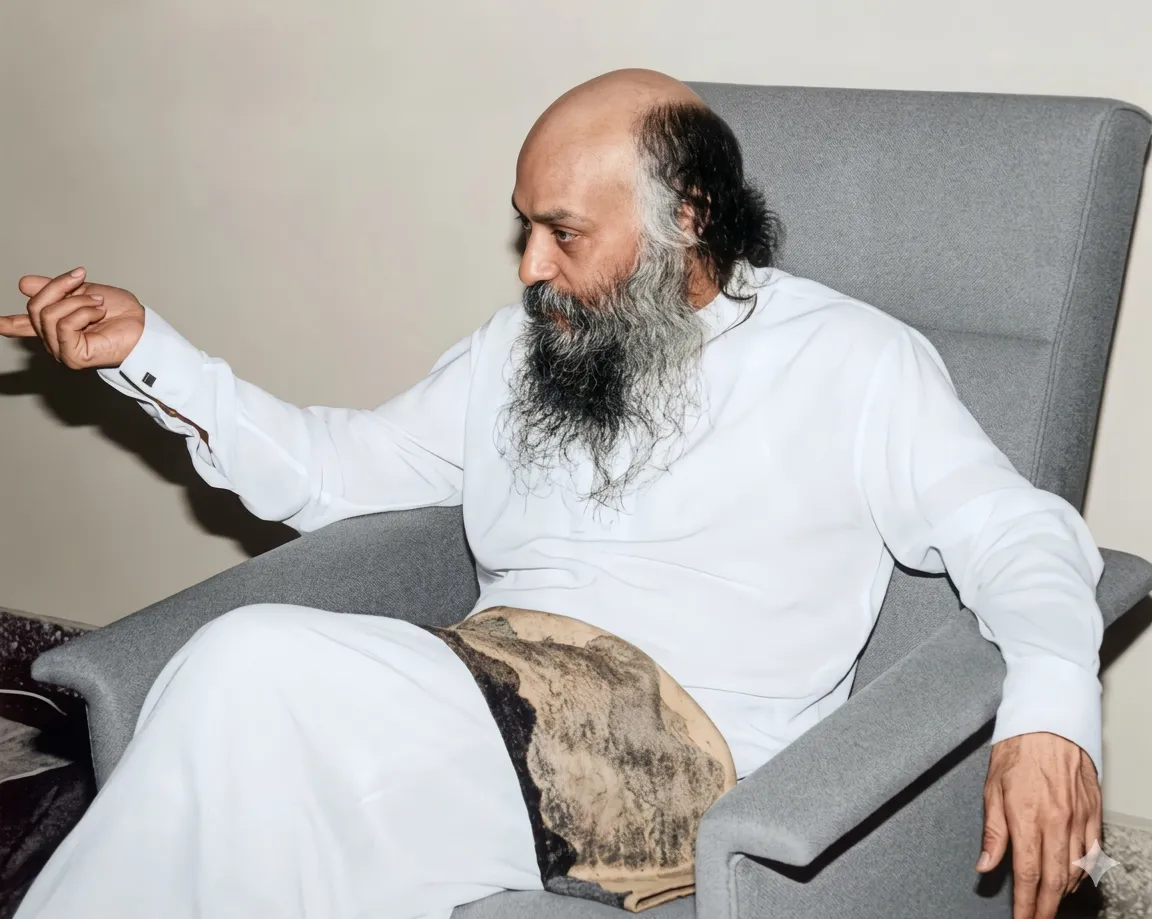
Osho's original Hindi beside Osho Live's English translation, matched passage by passage.
अनुभव तो वह ऐसा है कि छिपाए छिपेगा नहीं, प्रकट होगा ही। जहां तक अनुभोक्ता का संबंध है, प्रकट होगा ही। लेकिन जहां तक तुम्हारा संबंध है, तुम पर निर्भर है: प्रकट हो या अप्रकट रह जाए।
The experience is such that, try to hide it and it will not hide; it will manifest. As far as the experiencer is concerned, it will certainly be expressed. But as far as you are concerned, it depends on you: it may be revealed, or it may remain unrevealed.
बुद्ध ने तो कह दिया है जो जाना, तुमने सुना या नहीं...; बुद्ध की तरफ से प्रकट हो गया, तुम्हारी तरफ प्रकट हो भी सकता है, प्रकट न भी हो।
Buddha has said what he came to know—whether you heard it or not… On Buddha’s side, it has been expressed; on your side, it may or may not be revealed.
वर्षा तो होती है, झील, सरोवर, खाई, खड्डे भर जाते हैं, पहाड़ खाली के खाली रह जाते हैं।
The rain falls: lakes, ponds, pits and hollows fill; the mountains stay empty.
तुम्हारा घड़ा उलटा रखा हो, मेघ कितने ही गरजें, कितने ही बरसें, तुम खाली रह जाओगे; तुम्हारे लिए वर्षा हुई ही नहीं। नहीं कि वर्षा नहीं हुई; वर्षा तो हुई; तुम्हारे लिए नहीं हुई। और जब तक तुम्हारे लिए न हो तब तक हुई या न हुई, क्या फर्क पड़ता है।
If your pitcher is kept upside down, no matter how much the clouds thunder and pour, you will remain empty; for you, the rain will not have happened. Not that there was no rain—there was; only, not for you. And until it is for you, what difference does it make whether it happened or not?
बुद्धपुरुष चुप भी रह जाएं तो उनकी चुप्पी में भी वही प्रकट होता है।
Even if the enlightened ones remain silent, that same truth is revealed through their silence.
बोलना जरूरी नहीं है, बोलना मजबूरी है। बोला जाता है करुणा के कारण, क्योंकि मौन को तो तुम समझ ही न पाओगे। शब्द ही छूट जाते हैं तो मौन तो कैसे पकड़ में आएगा? कह-कह कर भी, तुम्हारी पकड़ नहीं बैठ पाती; अनकहे को तो तुम कैसे पकड़ पाओगे?
Speaking is not necessary; speaking is a compulsion. They speak out of compassion—because you would not understand silence. If words slip through your grasp, how will silence be caught? Even with much saying, your grip does not hold; how will you catch the unsaid?
बोलना जरूरी नहीं है, मजबूरी है। बुद्धों का बस चले तो चुप रह जाएं। लेकिन तुम्हें देख कर, तुम्हारे लड़खड़ाते पैरों को देख कर, अंधेरे में तुम्हें टटोलते देख कर, चिल्लाते हैं; जितने जोर से बोल सकते हैं, उतने जोर से बोलते हैं--फिर भी तुम्हारे बहरेपन में आवाज पहुंचती है, यह संदिग्ध है।
Speaking is not necessary; it is a necessity imposed by the situation. If the Buddhas had their way, they would remain silent. But seeing you—seeing your faltering steps, watching you groping in the dark—they shout; as loudly as they can, they speak—and still, whether their voice reaches through your deafness is doubtful.
करोड़ों सुनते हैं, कोई एक सुन पाता है। सुन सभी लेते हैं, क्योंकि तुम बहरे नहीं हो, कान तुम्हारे काम करते हैं, फिर भी चूक जाते हो। क्योंकि सुनना एक बात है, और सुन लेना बिलकुल दूसरी। शब्द बोले जाते हैं तो कानों पर तरंगें पैदा होती हैं, लेकिन हृदय अछूता रह जाता है। मस्तिष्क के पास तो दो कान हैं, आवाज एक से जाती है, दूसरे से निकल जाती है। हृदय के पास एक ही कान है, आवाज जाती है तो फिर निकल नहीं पाती, बीज बन जाती है, गर्भस्थ हो जाता है हृदय। और जब तक सुनी हुई वाणी तुम्हारे भीतर गर्भ न बन जाए, जैसे सीप के भीतर मोती निर्मित होता है, ऐसे सुना हुआ शब्द जब तक तुम्हारे भीतर मोती न बनने लगे, तब तक तुमने सुना, फिर भी सुना नहीं; देखा, फिर भी देखा नहीं।
Millions listen, but perhaps one truly hears. All of you “hear,” because you are not physically deaf; your ears function—yet you still miss. For listening is one thing, and truly hearing is quite another. Words strike the ears and generate vibrations, but the heart remains untouched. The mind has two ears—sound goes in one and out the other. The heart has only one ear; once the sound enters, it cannot leave—it becomes a seed, it becomes gestation within the heart. Until the spoken word becomes a womb within you—like a pearl forming in an oyster—until the heard word begins to ripen into a pearl within you, you have heard and yet not heard; you have seen and yet not seen.
जीसस बार-बार अपने शिष्यों को कहते हैं: ‘आंखें हों तो देख लो! कान हों तो सुनो! हृदय हो तो समझो।’
Jesus keeps saying to his disciples: “If you have eyes, then see! If you have ears, then hear! If you have a heart, then understand.”
ऐसा नहीं कि जीसस बहरे और अंधे लोगों से बोल रहे थे, तुम्हारे ही जैसे आंख वाले और कान वाले लोग थे। फिर भी बार-बार जीसस दोहराते हैं। कारण साफ है।
It is not that Jesus was speaking to the deaf and blind; they had eyes and ears just like you. And yet Jesus repeated himself again and again. The reason is clear.
सत्य जब अनुभव में आता है किसी के तो बात कुछ ऐसी है कि छिपाए भी नहीं छिप सकती, बताने की तो बात ही अलग। साधारण प्रेम नहीं छिपता। किसी के जीवन में साधारण प्रेम आ जाए तो चाल बदल जाती है; चाल में एक नृत्य समा जाता है; व्यक्तित्व की गंध बदल जाती है; हजार-हजार कमल खिल जाते हैं; बोलता है तो एक माधुर्य आ जाता है; साधारण वाणी में मधु बरसने लगता है!
प्रेमी की आंखें देखो--
बिना शराब पीए शराबी हो गया होता है!
एक मस्ती घेर लेती है!
जैसे प्रकृति पर जब वसंत उतरता है,
When truth comes into someone’s experience, it is of such a nature that it cannot be concealed—even apart from telling it. Even ordinary love does not stay hidden. Let ordinary love touch someone’s life: his gait changes; a dance slips into his step; the fragrance of his being changes; a thousand lotuses bloom; when he speaks, a sweetness arises; honey begins to drip into ordinary speech!
ऐसा जब किसी के जीवन में प्रेम उतरता है,
तो हृदय वसंत से भर जाता है!
सब तरफ फूल खिल जाते हैं!
सब तरफ पक्षियों की चहचहाहट शुरू हो जाती है!
भीतर कोई अवरुद्ध झरने मुक्त हो जाते हैं!
पंख लग जाते हैं--अनंत आकाश में उड़ने के!
Look into the lover’s eyes— without drinking wine he has become intoxicated! A bliss surrounds him! As when spring descends upon nature, so when love descends into someone’s life, the heart fills with spring! Flowers bloom everywhere! Birdsong begins everywhere! Inner blocked springs break free! Wings appear—wings to fly in the infinite sky!
साधारण प्रेम में ऐसा हो जाता है, तो जब परमात्मा का प्रेम बरसता है किसी पर, उस असाधारण प्रेम की घटना घटती है; जब बूंद में सागर उतरता है; आंगन में आकाश आ जाता है; कबीर ने कहा है, जब अंधेरे में हजार-हजार सूरज का प्रकाश आता है, हजारों सूर्य भी मात हो जाएं, ऐसे प्रकाश की वर्षा होती है; मर्त्य में अमृत का आनंद बरसता है--तो कैसे छिपाए छिपेगा?
If this happens in ordinary love, then when the love of the Divine showers upon someone—when that extraordinary event occurs; when the ocean descends into a drop; when the sky arrives in the courtyard; as Kabir has said, when in darkness the light of thousands upon thousands of suns appears—so bright that even thousands of suns are put to shame—such a rain of light; when the bliss of nectar showers upon the mortal—how could it possibly be hidden?
मुर्दा जिंदा हो जाए, छिपाए छिपेगी यह बात? मर्त्य में अमृत उतर आए, छिपाए छिपेगी यह बात? कोई उपाय नहीं है छिपने का। छिपाए तो छिपती ही नहीं; मगर मजा यह है, दुर्भाग्य यह है, बताए भी प्रकट नहीं हो पाती। छिपाए छिपती नहीं और बताए प्रकट नहीं हो पाती। क्योंकि दो हैं। बसंत आ गया, इतना ही थोड़े काफी है, तुम्हारे भीतर भी तो वसंत हो समझने की कोई समझ होनी चाहिए।
If a corpse comes alive, can that be hidden? If immortality descends into the mortal, can that be concealed? There is no way to hide it. It does not hide even if you try; and yet the irony, the misfortune, is this: even if you try to tell it, it does not become revealed. It does not hide when hidden; and told, it still does not manifest. Because there are two sides. Spring has arrived—that alone is not enough; there must be some spring within you as well, some understanding to recognize it.
एक बहुत बड़े चित्रकार टरनर के चित्रों की प्रदर्शनी हो रही थी। बड़ा शोरगुल था। सारा नगर इकट्ठा था चित्रों को देखने के लिए। टरनर द्वार पर ही खड़ा था, लोगों की प्रतिक्रियाएं सुन रहा था।
There was a great painter, Turner. An exhibition of his paintings was on. Great commotion— the whole city had gathered to see the paintings. Turner stood by the door, listening to people’s reactions.
एक महिला ने कहा: बड़ा शोरगुल मचाया हुआ है, मुझे तो कुछ इसमें दिखाई नहीं पड़ता। कुछ सार नहीं मालूम होता इन चित्रों में। ये चित्र तो ऐसे लगते हैं जैसे बच्चों ने रंग भरे हों। मुझे इनमें कोई बड़ी कुशलता नहीं दिखाई पड़ती। इतना शोरगुल क्यों मचाया हुआ है?
One lady said, “What a fuss! I don’t see anything in these. There seems no substance in these paintings. They look as if children had filled them with colors. I see no great skill here. Why all this noise?”
उसके साथ जो महिला थी, वह टरनर को पहचानती थी। उसने उससे कहा: चुप! टरनर सामने खड़ा है। और दूसरी महिला ने टरनर से कहा कि तुम्हारा सूर्योदय का चित्र मुझे बहुत पसंद आया है; लेकिन ऐसा सूर्योदय मैंने कभी देखा नहीं। मतलब यह था कि ऐसा सूर्योदय होता नहीं जैसा तुमने बनाया है। यह किसी कल्पना की बात है।
Her companion recognized Turner. She whispered, “Hush! Turner is standing right there.” The other woman then said to Turner, “Your painting of sunrise—I like it very much; but I have never seen such a sunrise.” Meaning: such a sunrise does not occur; it’s only imagination.
टरनर ने कहा: माना; लेकिन क्या तुम न चाहोगी कि मेरी आंखें तुम्हें उपलब्ध हों और ऐसा सूर्योदय तुम्हें दिखाई दे सके? बड़े माधुर्य से बड़ी गहरी चोट टरनर ने की: ‘क्या तुम न चाहोगी कि तुम्हें मेरे जैसी आंखें मिल जाएं और ऐसा सुर्योदय दिखाई दे सके?’
Turner said, “Granted; but would you not like my eyes to be available to you, so that such a sunrise could be seen?” With great gentleness he delivered a deep stroke: “Would you not want eyes like mine, so that such a sunrise could be visible to you?”
सूर्योदय देखना हो तो सूर्योदय देखने वाली आंखें भी तो चाहिए।
If you want to see the sunrise, you need eyes that can see the sunrise.
कहते हैं, अगर कवियों ने प्रेम के गीत न गाए होते तो लोगों को प्रेम का पता ही न चलता। यह बात मुझे कुछ समझ आती है।
They say that if poets had not sung songs of love, people would never have come to know of love. This, I can understand.
तुम थोड़ा सोचो, अगर कभी तुमने प्रेम का कोई गीत न सुना होता और प्रेम की कोई कहानी न सुनी होती तो क्या तुम्हें तुम्हारी जिंदगी से पता चल सकता था कि प्रेम है? शादी पता चलती, विवाह पता चलता, बाल-बच्चे पैदा होते; लेकिन प्रेम...?
Think a little: if you had never heard a song of love, never heard a story of love, would your life by itself have revealed love to you? You would have known marriage, ceremony, children being born; but love…?
प्रेम का पता चलने के लिए पारखी की आंख चाहिए।
To recognize love, you need the eye of the connoisseur.
बड़ी मुश्किल से पैदा होता है चमन में कोई आंख वाला, कोई दीदावर, कोई द्रष्टा!
Only with great difficulty is someone born in the garden who has eyes—one truly visioned, a seer!
लेकिन कविताएं सुन कर भी, प्रेम के गीत और प्रेम की कहानियां सुन कर भी, तुम्हें प्रेम का शब्द ही याद हो जाता है, तुम उसे दोहराने लगते हो, तुम वक्त-बेवक्त उसका उपयोग करने लगते हो। लेकिन क्या शब्द सुन कर ही तुम्हें प्रेम का अनुभव हो सकता है? क्या यह अनुभव ऐसा है कि उधार हो जाए?
But even after hearing poems, songs and stories of love, you remember only the word “love”; you start repeating it; you use it at all times, fit and unfit. But can you get the experience of love merely by hearing the word? Is this an experience that can be borrowed?
नहीं, उधार यह नहीं हो सकता।
No, it cannot be borrowed.
तो तुम्हारे जीवन में जब तक कोई अनुभव का सूत्र न हो, तब तक बुद्ध खड़े रहें, तुम्हें दिखाई न पड़ेंगे। तुम्हें वही दिखाई पड़ेगा जो तुम्हें दिखाई पड़ सकता है। मीरा नाचती रहे, तुम्हें वही दिखाई पड़ेगा जो तुम्हें दिखाई पड़ सकता है। तुम्हारी आंखें ही तो तुम्हें खबर देंगी, और तुम्हारे कान ही तो व्याख्या करेंगे, और तुम्हारी समझ ही तो परिभाषा बनाएगी।
So until there is some thread of experience in your own life, the Buddha may be standing before you and you will not see him. You will see only what you are able to see. Mira may be dancing; you will see only what you can see. It is your eyes that will report to you; your ears that will interpret; your understanding that will define.
सत्य का अनुभव जब होता है तब तो वह प्रकट हो ही जाता है; लेकिन तुम नहीं समझ पाते।
When the truth is experienced, it certainly manifests; but you do not understand.
बड़ी प्रसिद्ध पंक्तियां हैं:
या रब न वे समझे हैं न समझेंगे मेरी बात
दे और दिल उनको, जो न दे मुझको जबां और।
There are famous lines: “O Lord, they have not understood, nor will they understand my words; Grant them another heart—if you will not grant me another tongue.”
सभी बुद्धों के मन में ऐसा भाव रहा होगा कि हे, भगवान...
All Buddhas must have felt like this in their hearts: “O God…
या रब न वे समझे हैं न समझेंगे मेरी बात
दे और दिल उनको, जो न दे मुझको जबां और।
‘O Lord, they have not understood, nor will they understand my words; Grant them another heart—if you will not grant me another tongue.’”
या तो मेरी जबान बदल, ताकि मैं उन्हें समझा सकूं; या उन्हें और दिल दे, ताकि वे समझ सकें।
Either change my tongue so I can make them understand, or give them more heart so they can understand.
हजार ढंग से बुद्धों ने समझाने की कोशिश की है, लेकिन तुम्हारे पास कोई समानांतर अनुभव चाहिए। न सही सूरज का, किरण का ही सही; न सही सूरज का, मिट्टी के छोटे से दीये का ही सही--पर कोई समानांतर अनुभव चाहिए।
In a thousand ways the Buddhas have tried to explain, but you need a parallel experience. If not of the sun, then at least of a ray; if not of the sun, then at least of a small earthen lamp—some parallel experience is needed.
दीया भी देखा हो तो सूरज का अनुमान किया जा सकता है। दीया भी न देखा हो तो सूरज शब्द कोरा शब्द रह जाता है--चली हुई कारतूस जैसा, खाली। उसे तुम याद कर ले सकते हो, वक्त-बेवक्त उपयोग भी कर सकते हो; लेकिन उसकी कोई जड़ें तुम्हारे भीतर न होंगी--उखड़ा हुआ पौधा होगा, सूखा हुआ पौधा होगा; गुलदस्ते में सजा कर रख सकते हो, उसमें कभी फूल न आएंगे; तुम धोखे में रह सकते हो, लेकिन तुम्हारे जीवन में उस धोखे के कारण बाधा ही पड़ेगी, क्रांति घटित न होगी।
If you have seen even a lamp, you can infer the sun. If you have not even seen a lamp, then the word “sun” remains an empty word—like a fired cartridge, hollow. You can memorize it, use it at all times; but it will have no roots within you—an uprooted plant, a dried plant; you can arrange it in a bouquet, but it will never flower. You may remain in an illusion, but because of that illusion there will only be hindrance in your life; no revolution will occur.
बहुत बुद्धपुरुष चुप भी रह गए हैं, पर उनकी चुप्पी भी बड़ी बोलती हुई थी। वह खामोशी भी गीत गाती हुई थी। जिनको थोड़ी भी समझ थी उन्होंने उन चुप रहने वाले लोगों को भी खोज लिया है और उनके पद-चिह्नों पर यात्रा कर ली है।
Many enlightened ones have remained silent, yet their silence spoke volumes. That quietness itself was singing. Those who had even a little understanding discovered those who had chosen silence and walked in their footprints.
कोई नाचा है। किसी ने बांसुरी बजा कर कहा है। कोई बोला है। किसी ने तर्कनिष्ठ भाषा का उपयोग किया है। जीसस और बुद्धों ने छोटी-छोटी कथाएं कही हैं। जो जिससे बन सका...।
Someone danced. Someone spoke through a flute. Someone spoke in words. Someone used the language of logic. Jesuses and Buddhas told little parables. Each expressed whatever they could, in whatever way they could.
सत्य को पाने के पहले जिसकी जैसी तैयारी थी, फिर जब सत्य उतरा तो उसके पहले जो-जो तैयारी थी उस सबका उपयोग किया है, हर तरह से उपयोग किया है। लेकिन जरूरी नहीं है कि तुम उन्हें पहचान पाए होओ।
Before attaining truth, whatever preparation one had—when truth descended, that very preparation became the instrument of expression, used in every possible way. But it is not necessary that you recognized them.
बुद्ध जिन गांव से गुजरे उनमें हजारों-लाखों लोग थे, जिन्होंने उन्हें नहीं पहचाना; बुद्ध गांव से गुजरे, जो उनके दर्शन को भी न गए, जो उन्हें सुनने भी न गए, जो उन्हें सुनने भी गए तो खाली हाथ ही लौटे, सोचते लौटे कि सब बातें हवा की बातें हैं। उनके कहने में भी सचाई है।
When Buddha passed through villages there were thousands, hundreds of thousands who did not recognize him; Buddha passed by and many did not even go for a glimpse, did not go to listen; some who did listen returned empty-handed, thinking, “All talk, wind.” There is truth in their saying too.
जो तुम्हारी पकड़ में न आए, वह हवा की बात है, पानी का बबूला है!
सत्य तो सत्य तभी होता है जब तुम्हारे भीतर उसे आधार मिल जाए।
Whatever does not fall within your grasp seems like hot air, a bubble on water! Truth becomes truth for you only when it finds a foundation within you.
लेकिन बुद्धपुरुष कहते हैं, उनकी करुणा से हजारों उपाय खोजते हैं। कहने में उन्हें कुछ रस नहीं है; तुम समझ लो। इसमें जरूर रस है। यही तो फर्क है।
Yet the enlightened speak, out of compassion they devise a thousand devices. There is no relish in speaking for them; the only relish is that you may understand. That is the difference.
एक दार्शनिक भी कहता है, उसे कहने में रस है; तुम समझो न समझो इसमें सवाल नहीं है। उसे अपनी ही आवाज सुनने में मजा आ रहा है। बोल कर वह अपने अहंकार को फैला रहा है। विचारक भी लिखता है, बोलता है; लेकिन तुमसे उसे प्रयोजन नहीं है, प्रयोजन अपने अहंकार की सजावट ही है।
A philosopher also speaks, but he enjoys the speaking; whether you understand or not is not the point. He delights in hearing his own voice; by speaking he inflates his ego. A thinker writes and talks, but his purpose is not you—his purpose is the ornamentation of his ego.
कवि भी गाता है, लेकिन गाने में मजा भी अपनी ही आवाज सुनने का है। यही तो कवि और ऋषि का फर्क है। ऋषि गाता है ताकि तुम सुन सको। ऋषि गाता है ताकि तुम्हारे हृदय में कुछ हिलोरें पैदा हो सकें, ताकि तुम्हारा सोया प्राण जग जाए। कवि गाता है, ताकि तुम्हारी तालियों की आवाज उसके अहंकार में नई सजावट बने, नया श्रृंगार हो; मगर तुम्हारी तालियों को सुनने के लिए ही गाता है।
A poet sings, but often the enjoyment is in hearing his own voice. That is the difference between a poet and a seer. A seer sings so that you can hear. A seer sings so that waves may rise in your heart, so that your sleeping life-force may awaken. The poet sings so that your applause may add new decorations to his ego—a new adornment. He sings to hear your clapping.
संत भी बोलते हैं--इसलिए नहीं कि तुम्हारी तालियां सुनें। तुम्हारी प्रशंसा से कोई भी प्रयोजन नहीं है। वस्तुतः जब भी तुम उनकी प्रशंसा करते हो और ताली बजाते हो, तब वे थोड़ा चौंकते हैं। क्योंकि यह बात ताली सुनने के लिए या प्रशंसा के लिए नहीं कही गई थी--यह कही गई थी ताकि तुम बदलो, तुम्हारे जीवन में क्रांति का सूत्रपात हो।
Saints also speak—but not to hear your applause. Your praise serves no purpose. In fact, whenever you praise them and clap, they startle a little, because the words were not spoken to elicit clapping or praise—they were spoken so that you might change, so that the formula for revolution might ignite in your life.
न सताइश की तमन्ना न सिले की परवाह
गर नहीं है मेरे अशआर में मानी न सही।
“I have no desire for praise, nor any care for reward; If there is no meaning in my verses—so be it.”
न तो कोई पुरस्कार चाहिए, न कोई प्रशंसा।
No prize is needed, no praise is needed.
न सताइश की तमन्ना न सिले की परवाह
गर नहीं है मेरे अशआर में मानी न सही।
“I have no desire for praise, nor any care for reward; If there is no meaning in my verses—so be it.”
इसकी भी चिंता नहीं है संतों को कि वे जो कह रहे हैं, वह सार्थक भी हो, क्योंकि सार्थक बनाने के लिए तो उसे तुम्हारे तल पर उतारना पड़ेगा। और जितना ही सत्य तुम्हारे तल पर उतारा जाता है उतना ही मरता जाता है; जब वह ठीक तुम्हारे तल पर आ जाता है, व्यर्थ हो जाता है।
Even this does not worry the saints—that what they say should be meaningful—for to make it meaningful it must be brought down to your level. And the more truth is brought down to your level, the more it dies; when it exactly reaches your level, it becomes futile.
इसलिए अगर किसी को सार्थक वचन ही बोलने की आकांक्षा हो तो सत्य नहीं बोला जा सकता। सत्य तो विरोधाभासी है। सत्य को तो बोलने का एक ही ढंग है कि तुम सार्थक होने की चिंता मत करना।
Therefore, if someone has the desire to speak only “meaningful” words, truth cannot be spoken. Truth is paradoxical. There is only one way to speak it: do not worry about being meaningful.
तर्कातीत है सत्य, तो सार्थक कैसे होगा?
विरोधाभासी है सत्य, तो सार्थक कैसे होगा?
और जो तुम्हारे लिए सार्थक हो सके वह बिलकुल ही व्यर्थ हो गया। जो तुम्हारी बिलकुल ही समझ में आ जाए, वही सार्थक हो सकता है। और जो इतना सार्थक हो जाए कि तुम्हारी समझ में बिलकुल आ जाए, वह तुम्हें ऊपर न उठा सकेगा।
Truth is beyond logic; how will it be “meaningful”? Truth is paradoxical; how will it be “meaningful”? And whatever can be meaningful for you becomes utterly worthless. Only that which fits completely within your current understanding can seem meaningful to you—and that which fits so completely will not be able to lift you higher.
तो बुद्धपुरुषों की चेष्टा क्या है?
‘कुछ समझ में आए, कुछ समझ के पार रह जाए।’
जो समझ में आए, वह सहारा बने आस्था का, ताकि जो समझ में नहीं आया है, उसकी तरफ तुम कदम बढ़ाओ; जरा सा समझ में आए और बहुत सा समझ के पार रह जाए; वह जो थोड़ा सा समझ में आता है, धुंधला सा समझ में आता है, वह तुम्हारे लिए मार्ग बन जाए, उसके सहारे तुम और यात्रा करने के लिए उत्सुक हो जाओ।
So what is the effort of the enlightened? “Let something be understood, and let something remain beyond understanding.” What comes within understanding becomes a support for trust, so that toward what is beyond understanding you may step; let a little be dimly understood, and much remain beyond—let that little, hazy understanding become a path for you, so that with its support you are eager to travel further.
संत तो प्रकट हो जाते हैं--अपनी तरफ से; तुम्हारी तरफ से अप्रकट रह जाते हैं--इतने अप्रकट रह जाते हैं कि इतिहास में उनका कोई उल्लेख भी नहीं होता।
Saints do reveal themselves—from their side. From your side they remain unrevealed—so unrevealed that history makes no mention of them.
जीसस का कोई उल्लेख नहीं है, सिवाय बाइबिल के कहीं और। बाइबिल तो उनके ही शिष्यों की किताब है, इसलिए भरोसे की नहीं है। हजारों लोग हैं जो शक करते हैं कि जीसस कभी हुए भी! कृष्ण कभी हुए--शक की बात है।
There is no mention of Jesus anywhere except in the Bible. The Bible is written by his own disciples; therefore it is not “reliable,” people say. Thousands doubt whether Jesus ever existed at all! Whether Krishna ever was—people doubt it.
इतने विराट पुरुष हुए, इतिहास में इनकी कोई छाप नहीं छूट जाती, क्योंकि इतिहास तुम लिखते हो; जब तुम पर ही छाप नहीं छूटती तो तुम्हारे लिखे पर कहां से छाप छूटेगी! तुम्हारे लिखे पर छाप छूटती है चंगीज खां की, तैमूरलंग की, राजनेताओं की, उपद्रवियों की, हत्यारों की, डाकुओं की, इनकी तुम्हारे लिखे पर छाप छूटती है। इन पर कोई शक नहीं करता कि चंगीज खां कभी हुआ या नहीं, तैमूरलंग कभी हुआ कि नहीं। कोई शक का सवाल ही नहीं है। करोड़ों प्रमाण हैं उनके होने के।
Such vast beings—and history leaves no imprint of them? Because you write history; when no imprint is made upon you, how will any imprint appear on what you write! Your writing carries the imprints of Genghis Khan, of Tamerlane, of politicians, agitators, killers, bandits. No one doubts whether Genghis Khan or Tamerlane existed—there are millions of proofs.
कृष्ण? क्राइस्ट?... कोई प्रमाण नहीं मालूम पड़ता; मान लो, भरोसे की बात है, न मानो तो कोई मना नहीं सकता।
Krishna? Christ? There seem to be no proofs; believe if you will, if you won’t, no one can compel you.
क्या कारण होगा? इतिहास इतना अछूता कैसे रह जाता है?
क्योंकि इतिहास तुम लिखते हो। तुम्हारा हृदय ही अछूता रह जाता है। तुम पर ही निशान नहीं बनते उनके, तो तुम्हारे लिखे पर कैसे बनेंगे? व्यर्थ की तो छाप बन जाती है, क्योंकि व्यर्थ तुम्हें सार्थक है। सार्थक की छाप ही नहीं बनती, क्योंकि सार्थक तुम्हें बिलकुल व्यर्थ है।
What could be the reason? How does history remain so untouched? Because you write history. Your heart itself remains untouched. When no mark is left upon you, how will any mark be left upon what you write? The trivial does leave a mark, because the trivial seems meaningful to you. The truly meaningful leaves no mark, because the truly meaningful seems utterly useless to you.
बुद्ध का क्या करिएगा? युद्ध में काम आ नहीं सकते। तलवार बना नहीं सकते उनसे।
बुद्ध की खोजों का क्या करिएगा? अणुबम तो बन नहीं सकता उनसे। तुम्हारे किसी काम की नहीं हैं। खयाली बातें हैं, हवा की हैं।
What will you do with a Buddha? He is of no use in war. You cannot make a sword out of him. What will you do with Buddha’s discoveries? No atom bomb can be made from them. They are of no use to you—airy talk.
स्वप्न-द्रष्टा है इस तरह का व्यक्ति। तुम उसे माफ कर देते हो, इतना ही बहुत। तुम अपनी राह चले जाते हो। कभी फुर्सत हुई, उसकी दो बात भी सुन लेते हो; लेकिन उसकी बातों के कारण तुम अपने को बदलने की तैयारी नहीं करते। सुन लेते हो औपचारिकता से, शिष्टाचार से; लेकिन कहीं भी तुम पर कोई छाप नहीं पड़ती। किसी पर पड़ जाती है तो तुम उसको पागल समझते हो। किसी पर पड़ जाती है तो तुम समझते हो कि गया काम से, यह एक और आदमी खराब हुआ।
Such a one is a dreamer, you say. You excuse him—that’s generous enough. You go your way. If you get leisure, you may listen to a word or two; but you do not prepare to change yourself because of his words. You listen out of formality, courtesy; but nowhere does any imprint form upon you. If it does form upon someone, you call him mad. If it does form upon someone, you say he is finished, one more person spoiled.
जीवन में जो भी महत्वपूर्ण है, वह तुम्हें सार्थक दिखाई ही नहीं पड़ता। तुम कितने ही ऊंचे आकाश में उड़ो, तुम्हारी नजर चील की तरह कचरा-घरों पर पड़े मरे चूहों में लगी रहती है। तुम बुद्धों के पास भी बैठो तो भी तुम्हारी नजर बुद्धों पर नहीं होती।
Whatever is truly important in life does not appear meaningful to you at all. However high you fly in the sky, your gaze, like an eagle’s, remains fixed on the dead mice lying on the garbage heaps. Even when you sit next to Buddhas, your gaze is not on the Buddhas.
एक सज्जन मेरे पास आए। मिल कर गए। महीने भर बाद वे फिर आए। बड़े प्रसन्न थे। कहने लगे: आपकी बड़ी कृपा है! चमत्कार हो गया। मुकदमा कई सालों से उलझा था, आपके दर्शन किए, जीत गया।
A gentleman came to me. He met me and left. A month later he came again, very happy. He said, “Your great grace! A miracle happened. A lawsuit entangled for many years—after having your darshan, I won.”
मेरे दर्शन से इनके मुकदमे का क्या संबंध? लेकिन जब आए होंगे तो वे इसीलिए आए होंगे कि मुकदमा जीतना था।
What has your lawsuit to do with my darshan? But when he came the first time, he must have come for that very reason: to win the case.
बुद्धपुरुषों के पास भी तुम जाओ तो तुम्हारी नजर तो मरे चूहों पर ही लगी रहती है। कहीं मुकदमा हार जाते तो फिर कभी दुबारा मेरे पास न आते, यह आदमी किसी काम का नहीं, उलटा उपद्रव है।
Even when you go to enlightened ones, your eyes are fixed on dead mice. Had he lost the case, he would never have come back: “This man is of no use—on the contrary, a nuisance.”
तो मैंने उनसे कहा: भूल हो गई। संयोग को चमत्कार मत समझ लेना। और अब दुबारा मुकदमा जीतना हो तो यहां मत आना।
So I said to him, “You are mistaken. Do not take coincidence for a miracle. And if you want to win another lawsuit, don’t come here.”
मुकदमे से मेरा क्या संबंध हो सकता है? तुम्हारी पूरी जिंदगी बेकार है, तुम सब मुकदमे हार जाओ तो भी कुछ फर्क नहीं पड़ता। तुम्हारी जिंदगी पूरी हारी हुई है। तुम जिसे जिंदगी कहते हो वही व्यर्थ है।
What relation could a lawsuit have with me? Your entire life is wasted; you could lose all your lawsuits and it would make no difference. Your life itself—as you live it—is the loss. What you call your life is what is futile.
सार्थक तुम्हारी समझ के मापदंड पर कसा जाता है।
The “meaningful” is measured by your scale of understanding.
ध्यान रखना--
न सताइश की तमन्ना न सिले की परवाह
गर नहीं है मेरे अशआर में मानी न सही।
Remember— “I have no desire for praise, nor any care for reward; If there is no meaning in my verses—so be it.”
बुद्धपुरुष सार्थक की चिंता करें तो बोल ही नहीं सकते, क्योंकि तब मरे चूहों की चर्चा करनी पड़ेगी। सत्य की परवाह करते हैं, सार्थक की नहीं। और सत्य तुम्हें निरर्थक दिखाई पड़ेगा, यह पक्का है।
Were the enlightened to worry about being meaningful, they could not speak at all—for then they would have to talk about dead mice. They care for truth, not for “meaningfulness.” And truth will appear meaningless to you—that is certain.
बड़ी हिम्मत चाहिए सत्य की खोज के लिए, क्योंकि वह अर्थ के पार जाने की चेष्टा है। जिन-जिन चीजों में तुम्हें उपयोगिता मालूम होती है--धन है, पद है, प्रतिष्ठा है--सत्य न तो पद बनेगा, न प्रतिष्ठा, न धन; सिंहासन तो बन ही नहीं सकता, सूली भला बन जाए; धन तो बनेगा ही नहीं, पद तो बनेगा ही नहीं, विपरीत भला हो जाए। तो सत्य तुम्हें कैसे सार्थक मालूम हो सकता है?
Great courage is needed for the search for truth, because it is an effort to go beyond meaning. In all the things you find useful—wealth, position, prestige—truth will give you neither position nor prestige nor wealth; it will never become a throne—at most it may become a cross. Wealth it will not bring, position it will not bring; the opposite may well happen. So how can truth appear meaningful to you?
सत्य तो ऐसा है, जैसे वृक्षों पर फूल हैं, पक्षियों के गीत हैं, झरनों का कलरव है--कोई अर्थ तो नहीं है।
Truth is like flowers on trees, like the songs of birds, the murmur of streams—no “meaning” in them.
पश्चिम के एक बड़े महत्वपूर्ण कवि कमिंग्स से किसी ने पूछा कि तुम्हारी कविताओं का मायना क्या है? अर्थ ही क्या है? उसने कहा: कोई अर्थ नहीं। फूलों से पूछो, क्या अर्थ है? पक्षियों से पूछो, क्या अर्थ है? आकाश से पूछो, क्या अर्थ है उसका? और अगर आकाश व्यर्थ होकर शान से है और फूल व्यर्थ होकर गौरव से खिलते हैं; शरमाते नहीं, छिपते नहीं; तो मेरी कविताओं का ही अर्थ बताने की क्या जरूरत है?
A great Western poet, e. e. cummings, was asked, “What is the meaning of your poems? What is their sense?” He said, “There is no meaning. Ask flowers—what is their meaning? Ask birds—what is the meaning of their song? Ask the sky—what is its meaning? And if the sky stands in glory without meaning, if flowers bloom proudly without meaning, without shame, without hiding—why must my poems have a meaning?”
जितना सत्य के करीब कोई बात पहुंचने लगेगी, उतनी ही तुम्हारी सार्थकता के घेरे के बाहर हो जाएगी। अर्थ है कोई, लेकिन उस अर्थ को जानने के लिए तुम्हारी आत्मा को पूरा रूपांतरित होना पड़ेगा; तुम्हारे अर्थ की परिभाषा ही बदलनी पड़ेगी।
The nearer any statement comes to truth, the more it moves outside your circle of meaningfulness. There is a meaning, but to know that meaning your very soul has to be transformed; your definition of meaning has to change.
बुद्धपुरुष प्रकट होते हैं--तुम्हारे लिए प्रकट नहीं हो पाते।
The enlightened appear—but they cannot appear for you.
तुम इसकी चिंता भी मत करो कि वे प्रकट होते हैं या नहीं--तुम इसकी ही चिंता करो कि तुम्हारे लिए प्रकट हो पाते हैं कि नहीं!
Do not worry whether they appear or not—worry about whether they can appear for you or not!
अपने हृदय को खोलो!
बंद द्वार-दरवाजे तोड़ो!
घबड़ाओ मत, खुले में आओ!
छिपो मत अंधकार में!
आदत अंधकार की छोड़ो!
थोड़ी रोशनी में आओ!
आंखें तिलमिलाएं भी प्रारंभ में तो घबड़ाओ मत। पुराने अंधकार की आदत हो गई है, स्वाभाविक है कि थोड़ी तिलमिलाहट होगी, थोड़ी अड़चन होगी, थोड़ी कठिनाई होगी, थोड़ी तपश्चर्या होगी। मगर यह तपश्चर्या करने जैसी है, क्योंकि जो मिलेगा वह अनंत है, जो मिलेगा वह विराट है। और जब तक वह न मिल जाए तब तक तुम्हारा जीवन एक कोरा शून्य है, एक रिक्तता है, एक खालीपन है।
Open your heart! Break the closed doors! Do not be afraid—come into the open! Do not hide in darkness! Drop the habit of the dark! Come into a little light! Even if your eyes smart at first, do not be frightened. You have grown accustomed to the old darkness; it is natural that there will be a little smarting, a few obstacles, some difficulty, a little austerity. But this is the austerity worth undertaking, because what you will receive is infinite, what you will receive is vast. And until that is received, your life is a blank zero, an emptiness, a void.
उठता नहीं है सिर अब वापस जाने के लिए,
दर्द दिया है तो दवा भी तू ही दे,
ऐसा न हो कि कहानी बन जाए जमाने के लिए।
ठीक है। घबड़ाने की कोई बात नहीं है।
दर्द ही दवा बन जाता है!
दर्द के अधूरे होने में पीड़ा है, पूरे हो जाने में दवा है।
इसे थोड़ा समझना। कठिन होगा समझना, क्योंकि हमारे तर्क की कोई भी कोटियां काम में नहीं आएंगी।
लेकिन आंतरिक जीवन के बहुमूल्य सत्यों में एक सत्य है कि अगर तुम्हारा प्रश्न पूरा हो जाए, तो प्रश्न में ही उत्तर निकल आता है।
और तुम्हारी प्यास अगर समग्र हो जाए, तो प्यास में ही झरने फूट पड़ते हैं और तृप्ति आ जाती है। दर्द पूरा हो जाए, दर्द इतना हो जाए कि तुम दर्द के जानने वाले अलग न रह जाओ, भेद न बचे, दर्द ही बचे, तुम न बचो तो दवा हो जाती है। इसी को तपश्चर्या कहते हैं।
तपश्चर्या का अर्थ धूप में खड़ा हो जाना नहीं है, न भूखे होकर उपवास कर लेना है।
तपश्चर्या का अर्थ है: जीवन के खालीपन की पीड़ा को उसकी समग्रता में अनुभव करना; जीवन की अर्थहीनता को उसकी पूरी त्वरा में अनुभव करना। जीवन की ही यह जिसको भाग-दौड़ हम समझ रहे हैं अभी बड़ी उपयोगी मालूम होती है, एक ख्वाब से ज्यादा न रह जाए तो अचानक हम पाएंगे: हाथ खाली हैं। घबड़ाहट पकड़ेगी। रोआं-रोआं कंप जाएगा। लगेगा यह जो जीए अब तक नाहक ही जीए, यह जो समय गया, व्यर्थ ही गया। पीड़ा उठेगी। गहन पीड़ा उठेगी। इस पीड़ा को झेलने का नाम ही तपश्चर्या है।
और जल्दी दवा मत मांगना, क्योंकि जल्दी दी गई दवाएं शामक होंगी, वे तुम्हारी पीड़ा को सुला देंगी, तुम फिर वापस दुनिया में लौट जाओगे वैसे के वैसे।
दवा मांगना ही मत। दर्द को भोगने के लिए तैयार रहना। अगर तुम भोगने की पूरी तत्परता दिखा सको तो दर्द में ही दवा छिपी है।
Now the head refuses to rise to go back. If you have given the pain, then you alone give the remedy— let it not become a tale for the world to tell. All right. There is nothing to be alarmed about. Pain itself becomes the medicine! In pain’s incompleteness there is suffering; in its completeness, there is the cure. Understand this a little. It will be hard to grasp, because none of our logical categories will be of use. But among the precious truths of the inner life there is this: if your question becomes total, the answer arises from within the question itself. And if your thirst becomes whole, springs burst forth within the thirst itself and fulfillment comes. If pain becomes complete—so complete that you no longer remain separate as the knower of it, no separation remains, only pain remains and you do not—then it turns into medicine. This is what is called tapascharya. Tapascharya does not mean standing in the sun, nor merely fasting. It means to experience the pain of life’s emptiness in its totality; to experience life’s meaninglessness with its full intensity. This bustle we now take to be useful—if it turns out to be nothing more than a dream—then suddenly we find our hands empty. Panic grips us. Every hair trembles. It feels as though all that we have lived till now was lived in vain; the time that has passed was wasted. Pain arises—deep pain. To endure this pain is what is called tapascharya. And do not ask for a remedy too soon, because remedies given too soon will be sedatives; they will put your pain to sleep, and you will return to the world just as you were. Do not ask for medicine at all. Be ready to live through the pain. If you can show total readiness to undergo it, the medicine is hidden within the pain.
इश्क से तबीयत ने जीस्त का मजा पाया
दर्द की दवा पाई, दर्द बेदवा पाया।
Through love the heart tasted the savor of life— found the cure for pain, and found a pain without cure.
प्रेम से, भक्ति से--
...तबीयत ने जीस्त का मजा पाया
पहली दफा जीवन का आनंद आना शुरू हुआ। लेकिन यह आनंद कोरा आनंद नहीं है; इस आनंद की बड़ी गहन पीड़ा भी है। अगर तुमने प्रेम में सिर्फ सुख ही खोजा तो तुम प्रेम से वंचित रह जाओगे, क्योंकि प्रेम का दुख भी है।
गुलाब की झाड़ी पर फूल ही नहीं हैं, कांटे भी हैं। फूल ही फूल मांगे तो फिर तुम जाकर फूल बेचने वाले से फूल खरीद लेना, झाड़ी लगाने की झंझट में मत पड़ता। वहां तुम्हें फूल मिल जाएंगे बिना कांटे के, मगर वे मरे हुए फूल हैं। जिंदा फूल चाहिए तो कांटे भी होंगे।
और गुलाब का फूल कांटों में ही शोभा देता है।
रात के घने अंधेरे में जब चैतन्य का दीया जलता है तो उसी विपरीतता में उसकी प्रतीति की सघनता है।
Through love, through devotion— …the heart tasted the savor of life. For the first time the bliss of life begins to flow. But this bliss is not mere bliss; within it is a very deep pain. If you sought only pleasure in love, you will be deprived of love, because love also has sorrow. On the rosebush there are not only flowers but thorns. If you want only flowers, then go to the florist and buy them—do not bother planting the bush. There you will get flowers without thorns, but they are dead flowers. If you want living flowers, there will be thorns too. And the rose gives its true splendor only among thorns. When the lamp of consciousness is lit in the dense darkness of night, it is in that very contrast that its presence is felt most intensely.
इश्क से तबीयत ने जीस्त का मजा पाया
दर्द की दवा पाई,...।
Through love the heart tasted the savor of life— found the cure for pain,…
अब तक जो दर्द थे जिंदगी के--हजार दर्द हैं जिंदगी के वे ही तुम्हें मेरे पास ले आए। हजार-हजार तकलीफें हैं, चिंताएं हैं, उलझने हैं। हजार दर्द हैं जिंदगी के।
अगर तुम भक्ति और प्रेम के रास्ते पर चले तो दर्द की दवा मिल जाएगी। इन सभी दर्दों की दवा मिल जाएगी। ये सब दर्द खो जाएंगे। ‘दर्द की दवा पाई’--और तब एक नया दर्द शुरू होगा--‘दर्द बेदवा पाया।’ और अब एक ऐसा दर्द शुरू होगा जिसकी कोई दवा नहीं है।
इन सभी दर्दों की तो दवा है। अगर चिंता है तो ध्यान से खो जाएगी। तनाव है, ध्यान से मिट जाएगा। क्रोध है, लोभ है, मोह है--इन सभी दर्दों की दवा है। सिर्फ एक परमात्मा का दर्द है, जिसकी कोई दवा नहीं। तो तुमसे मैं सारे दर्द छीन लूंगा और एक दर्द दूंगा, जिसकी फिर कोई दवा नहीं है। सौदा मंहगा है। मंहगा सौदा है। जुआरी चाहिए। दुकानदार इस काम को नहीं कर सकते। वे कहेंगे: यह क्या हुआ, छोटे-छोटे दर्द ले लिए और यह बड़ा दर्द दे दिया! छोटे-छोटे दर्द ले लिए, जिनकी तो दवा थी; और यह दर्द दे दिया, जिसकी कोई दवा नहीं है!
लेकिन घबड़ाना मत!
इश्क से तबीयत ने जीस्त का मजा पाया
दर्द की दवा पाई, दर्द बेदवा पाया।
The many pains of life—there are a thousand pains—these very pains brought you to me. If you walk the path of devotion and love, the cure for pain will be found; the remedies for all these pains will be found. These pains will vanish. “Found the cure for pain”—and then a new pain begins—“found a pain without cure.” Now a pain begins for which there is no remedy. All these other pains have remedies. If there is worry, it dissolves through meditation. If there is tension, it disappears through meditation. Anger, greed, attachment—all these pains have remedies. Only the pain for the Divine has no remedy. So I will take away all your pains and give you one pain for which there is no cure. It is a costly bargain—an expensive wager. A gambler is needed; shopkeepers cannot do this work. They will say, “What is this? You took away the small pains and gave this great pain! The small pains that had remedies you took away, and gave a pain that has no remedy!” But do not be afraid!
Through love the heart tasted the savor of life— found the cure for pain, and found a pain without cure.
इश्रते कतरा है दरिया में फना हो जाना।
बूंद का गौरव यही है, ऐश्वर्य यही है कि वह सागर में खो जाए, मिट जाए।
The ecstasy of the drop is to vanish in the ocean. The glory, the majesty of the drop is to lose itself, to dissolve in the sea.
इश्वते कतरा है दरिया में फना हो जाना
दर्द का हद से गुजरना है दवा हो जाना।
The ecstasy of the drop is to vanish in the ocean— when pain passes beyond its limit, it becomes the medicine.
यह जो बेदवा-दर्द है, अगर यह हद से गुजर जाए--हद से गुजर जाने का अर्थ है, तुम इसमें मिट ही जाओ; तुम ही हद हो, तुम ही सीमा हो; ऐसा कोई भीतर रह ही न जाए जिसको दर्द हो रहा है, दर्द ही बस रह जाए--
दर्द का हद से गुजरना है दवा हो जाना।
परमात्मा की पीड़ा ऐसी है कि उसका कोई इलाज नहीं; पीड़ा में ही इलाज छिपा है। क्योंकि परमात्मा आखिरी पीड़ा है, उसके आगे इलाज हो भी नहीं सकता। वही पीड़ा है, वही इलाज है। वही रोग है, वही औषधि है। क्योंकि उसके पार फिर कुछ भी नहीं।
तो घबड़ाओ मत!
दर्द की तैयारी चाहिए।
जब परमात्मा के आनंद को मांगने चले हो तो यह सौदा करने जैसा है। जितना दर्द उठाने की तैयारी दिखाओगे, उतना ही परमात्मा का आनंद उपलब्ध होगा।
तुम्हारे दर्द को झेल लेने की तैयारी, तुम्हारी परीक्षा है, तुम्हारी कसौटी है, और तुम्हारी भूमिका भी है।
दर्द निखारता है। दर्द साफ करता है।
दर्द ऐसा है जैसे कि कोई सोने को आग में धरता है, तो जो व्यर्थ है जल जाएगा, स्वर्ण बचा रहेगा खालिस! दर्द में वही जलेगा जो व्यर्थ है, जो जल ही जाना था, कूड़ा-करकट था। तुम्हारे भीतर जो भी सोना है वह बच जाएगा।
यह अग्नि गुजरने जैसी है।
भक्ति अग्नि है।
यह भीतर की आग है।
This pain-without-remedy—if it goes beyond its limit (and going beyond means you are dissolved in it; you yourself are the limit, you are the boundary; let no one remain inside to whom the pain is happening—only pain remains)—when pain crosses the limit, it becomes the medicine. The Divine pain is such that it has no treatment; the treatment is hidden within the pain itself. Because the Divine is the final pain—beyond it no treatment is possible. It is both the pain and the remedy; both the disease and the medicine—because beyond it, nothing remains. So do not panic! What is needed is readiness for pain. When you set out to ask for the bliss of the Divine, it is a bargain: the more readiness you show to endure pain, the more the bliss of the Divine becomes available. Your readiness to bear your pain is your examination, your touchstone, and your preparation as well. Pain refines. Pain purifies. Pain is like placing gold in fire: whatever is worthless will burn away; the gold will remain pure. In pain only that burns which is worthless, which was meant to burn—the rubbish. Whatever gold is within you will remain. It is like passing through fire. Devotion is fire. It is the inner fire.
बारीक है सवाल, थोड़ा समझना पड़े। नाजुक है।
It’s a fine, delicate question; it needs a little understanding.
थोड़ा ध्यान करना, जब भक्ति तक में अहंकार बच जाता है तो अद्वैत में तो मिट ही न सकेगा। जब आंसू भी उसे नहीं बहा सकते तो रूखे-सूखे मार्ग पर तो बड़ा अकड़ कर खड़ा हो जाएगा। जब आंसू भी उसे पिघला नहीं सकते, और आंसुओं से भी वह अपने को भर लेता है, तो जहां आंसू नहीं हैं वहां तो मिटने का उपाय ही न रह जाएगा।
Reflect a little: if even in devotion the ego survives, then in nonduality it certainly won’t be destroyed. If even tears cannot carry it away, on a dry path it will only stiffen and stand more rigidly. If tears cannot melt it, and it even feeds on tears, then where there are no tears at all there will be no means left to dissolve it.
समझें।
Understand this.
अहंकार का आंसुओं से विरोध है। इसलिए तो हम पुरुष से कहते हैं, रोओ मत। क्या स्त्री जैसा व्यवहार कर रहे हो! पुरुष को हम अहंकारी बनाते हैं। छोटा बच्चा भी रोने लगता है तो कहते हैं, चुप! लड़का है या लड़की? पुरुषों की दुनिया है। अब तक पुरुष काबू रहे हैं दुनिया पर, तो उन्होंने अपने लिए अहंकार बचा लिया है। पुरुष होने का अर्थ है: ‘रोना मत।’ यह अकड़ है। ‘स्त्रियां रोती हैं। कमजोर रोते हैं, शक्तिशाली कहीं रोते हैं!’
Ego is opposed to tears. That is why we tell men, “Don’t cry. Why are you behaving like a woman?” We make men egoistic. Even when a small boy starts to cry, we say, “Quiet! Are you a boy or a girl?” It’s a man’s world; men have been in control, so they kept ego for themselves. To be a man has come to mean: “Don’t cry.” That is the stiffness. “Women cry. The weak cry. Do the strong ever cry?”
अहंकार का आंसुओं से कुछ विरोध है।
तुम अगर सिकंदर को रोते देखो तो तुम उसको बहादुर न कह सकोगे। नेपोलियन को अगर तुम रोते देख लो, तो तुम कहोगे: अरे, नेपोलियन, और रो रहे हो! यह तो कायरों की बात है, कमजोरों की बात है। यह तो स्त्रैण-चित्त का लक्षण है।
Ego has an antagonism to tears. If you saw Alexander weeping, you could no longer call him brave. If you saw Napoleon weep, you would exclaim, “Napoleon—and he’s crying?” It would seem the thing of cowards, of the weak, a sign of a feminine mind.
अहंकार का आंसुओं से विरोध है। तो जब आंसू भी अहंकार को नहीं मिटा पाते तो ऐसा मार्ग जहां आंसुओं की कोई जगह नहीं है, वह तो मिटा ही न पाएगा। वहां तो अहंकार और अकड़ जाएगा।
Ego is at odds with tears. So if even tears cannot dissolve ego, a path where tears have no place will not dissolve it at all; there the ego will only become more rigid.
भक्तों में तो कभी-कभी तुम्हें विनम्रता मिल जाएगी, अद्वैतवादियों में तुम्हें कभी विनम्रता नहीं मिलेगी। मुश्किल है, बहुत मुश्किल है। बड़ी अकड़ मिलेगी। आंसू ही नहीं हैं।
Among devotees you will sometimes find humility; among Advaitins you will not find humility. It’s difficult—very difficult. You will find great stiffness. There are no tears.
थोड़ा सोचो, हरा वृक्ष होता है तो झुक सकता है; सूखा वृक्ष होता है तो झुक नहीं सकता। विनम्रता तो झुकने की कला है। अगर आंसुओं ने थोड़ी हरियाली रखी है, तो झुक सकोगे। अगर आंसू बिलकुल सूख गए और सूखे दरख्त हो गए तुम, तो झुकना असंभव है। टूट भला जाओ, झुक न सकोगे।
Think a little: a green tree can bend; a dry tree cannot. Humility is the art of bending. If tears have kept a little greenness in you, you will be able to bow. If the tears have completely dried up and you have become a dry trunk, then bending is impossible. You may well break—but you will not bend.
अहंकारी वही तो कहते हैं कि टूट जाएंगे, मगर झुकेंगे नहीं; मिट जाएंगे, मगर अकड़े रहेंगे।
It is the ego that declares: “We will break, but we will not bend; we will perish, but we will remain stiff.”
अद्वैत रूखा-सूखा रास्ता है--तर्क का, बुद्धि का, विचार का। अगर भाव, प्रेम और भक्ति के रास्ते पर भी तुम पाते हो कि अहंकार इतना कुशल है कि अपने को भर लेता है, तो फिर अद्वैत के रास्ते पर तो बहुत भर लेगा। क्योंकि भक्ति की तो पहली शर्त ही यही है: समर्पण। भक्ति तो पहली ही चोट में अहंकार को मिटाने की चेष्टा करती है, अद्वैत तो अंतिम चोट में मिटाएगा। तुम पूरा रास्ता तय कर सकते हो अद्वैत का अहंकार के साथ। आखिर में अहंकार गिरेगा। भक्ति तो पहले ही चरण पर कहती है: अहंकार छोड़ो तो ही प्रवेश है।
Advaita is a dry path—of logic, intellect, thought. If even on the path of feeling, love, and devotion you find that the ego is so skillful it appropriates everything to itself, then on the path of Advaita it will appropriate far more. For the first condition of bhakti is surrender. Bhakti attempts to annihilate the ego with the very first blow; Advaita strikes it down with the last blow. You can travel the entire path of Advaita with the ego in tow; only at the end does the ego fall. Bhakti, at the very first step, says: “Drop the ego; only then is there entry.”
वैष्णव भक्तों की एक कथा है कि एक भक्त वृंदावन की यात्रा को आया--रोता, गीत गाता, अश्रु-विभोर, लेकिन मंदिर पर ही उसे रोक दिया गया। द्वार पर पहरेदार ने कहा: रुको! अकेले भीतर जा सकते हो। लेकिन यह गठरी जो साथ ले आए हो, इसे बाहर छोड़ दो।
There is a Vaishnava tale: A devotee came to Vrindavan—crying, singing, overwhelmed with tears—but he was stopped right at the temple. The guard at the door said, “Stop! You may enter alone. But this bundle you’ve brought—leave it outside.”
उसने चौंक कर चारों तरफ देखा, कोई गठरी भी उसके पास नहीं है। वह कहने लगा, कैसी गठरी, कौन सी गठरी? मैं तो बिलकुल खाली हाथ आया हूं।
Startled, he looked all around; there was no bundle with him. He said, “What bundle? I have come empty-handed.”
उस द्वारपाल ने कहा: भीतर देखो, बाहर मत। गठरी भीतर है, गांठ भीतर है। जब तक तुम्हें यह खयाल है कि मैं हूं, तब तक, तब तक भक्ति के मंदिर में प्रवेश नहीं हो सकता। भक्ति की तो पहली शर्त है: तू है, मैं नहीं हूं। भक्ति का प्रारंभ है: तू है, मैं नहीं। और भक्ति का अंत है कि न मैं हूं, न तू है।
The gatekeeper said, “Look within, not outside. The bundle is inside; the knot is inside. So long as you carry the notion ‘I am,’ there can be no entry into the temple of devotion. The first condition of bhakti is: Thou art; I am not. Bhakti begins with: Thou art, I am not. And it ends with: neither I am, nor Thou are.”
अद्वैत की तो बहुत गहरी खोज यही है कि मैं हूं, तू नहीं; और अंतिम अनुभव है: न मैं हूं, न तू। इसलिए तो अद्वैत कहता है: अहं-बह्मास्मि! अनलहक! मैं हूं। मैं ब्रह्म हूं। मैं सत्य हूं।
The deep inquiry of Advaita is: I am; Thou art not—and the final experience is: neither I nor Thou. Hence Advaita says: Aham Brahmasmi! Ana’l-Haqq! I am. I am Brahman. I am the Truth.
अद्वैत के रास्ते पर तो वे ही लोग सफल हो सकते हैं, जो अहंकार के प्रति बहुत सजग हो सकें। क्योंकि वहां आंसू भी साथ देने को न होंगे, सिर्फ सजगता ही साथ देगी। वहां प्रेम भी झुकाने को न होगा, वहां तो बोधपूर्वक ही झुकोगे तो ही झुकोगे।
On the path of Advaita only those can succeed who are very alert toward the ego. For there, even tears will not be there to help—only awareness will accompany you. There, love will not bend you; you will bow only if you bow consciously.
तो अद्वैत तो बहुत ही समझपूर्वक चलने का मार्ग है। सौ चलेंगे, एक मुश्किल से पहुंच पाएगा। भक्ति में नासमझ भी चल सकता है, क्योंकि भक्ति कहती है: सिर्फ गठरी छोड़ दो। कोई तर्क का जाल नहीं है, कोई विचार का सवाल नहीं है। प्रेम में डूब जाओ!
So Advaita is a path to be walked with great understanding. Of a hundred who set out, scarcely one will arrive. On the path of bhakti even the simple can walk, because bhakti says: Just drop the bundle. There is no net of logic, no tangle of thought. Drown in love!
अज्ञानी भी चल सकता है भक्ति के मार्ग पर।
Even the ignorant can walk the path of devotion.
ठीक पूछा है। ऐसा होगा, स्वाभाविक है। उससे घबड़ाओ मत। उस अहोभाव को भी परमात्मा के चरणों पर समर्पित कर दो। तत्क्षण कहो कि खूब, फिर उलझाया, इसे भी सम्हाल! अहोभाव मेरा क्या, तेरा प्रसाद है! अब मुझे और धोखा न दे! अब मुझे और खेल न खिला!
जैसे ही यह अहंकार बने, उसे तत्क्षण, जैसे ही याद आ जाए, तत्क्षण परमात्मा के चरणों में रख दो। जल्दी ही तुम पाओगे--अगर तुम रखते ही गए--अहंकार के बनने का कारण ही खत्म हो गया।
अहंकार संगृहीत हो तो ही निर्मित होता है। पल-पल उसे चढ़ाते जाओ परमात्मा के चरणों में। और सब फूल चढ़ाए, बेकार; धूप-दीप बाली, बेकार; आरती उतारी, व्यर्थ--बस अहंकार प्रतिपल बनता है, उसे तुम चढ़ाते जाओ। वही तुम्हारे भीतर उगने वाला फूल है, उसे चढ़ाते जाओ। जल्दी ही तुम पाओगे, उसका उगना बंद हो गया। क्यों? उसका संगृहीत होना जरूरी है।
Well asked. It will happen—naturally so. Don’t be frightened by it. Surrender even that exalted “ah!”-feeling at the feet of the Divine. Instantly say: “All right—entangled again; please take care of this too! What is this rapture of mine? It is your grace! Now don’t deceive me any further! Don’t make me play more games!” The moment this ego forms—at the very instant you notice it—place it at the feet of the Divine. Soon you will find—if you keep doing this—that the very cause of ego’s arising has disappeared. Ego is built only when it is hoarded. Moment by moment, keep offering it at the feet of the Divine. All other offerings—flowers—are useless; incense and lamps—useless; waving the aarti—vain. What is being formed, moment to moment, is the ego: offer that. That is the flower growing within you—offer that. Soon you will find it stops sprouting. Why? Because it depends on accumulation.
और आंसू बड़े सहयोगी हैं। होश रखना पड़ेगा। थोड़ा जागरूक रहना पड़ेगा। नहीं तो अहंकार बड़ा सूक्ष्म है और बड़ा कुशल है, बड़ा चालाक है। सावधान रहना पड़ेगा।
सावधानी तो सभी मार्गों पर जरूरी है; भक्ति के मार्ग पर सबसे कम जरूरी है, लेकिन जरूरी तो है ही। अद्वैत के मार्ग पर बहुत ज्यादा जरूरी है। न्यूनतम सावधानी से भी काम चल सकता है भक्ति के मार्ग पर, लेकिन बिलकुल बिना सावधानी के काम नहीं चल सकता है।
And tears are great allies. You will have to keep watchfulness. A little alertness is needed. Otherwise the ego is very subtle, very skillful, very cunning. You must be careful. Care is necessary on every path; on the path of devotion it is the least necessary—but necessary it still is. On the path of nonduality it is needed far more. Even minimal caution can suffice on the path of devotion, but not absolutely none.
घबड़ाओ मत। जो हो रहा है, बिलकुल स्वाभाविक है, सभी को होता है। यात्रा के प्रारंभ में यह अड़चन सभी को आती है।
अहंकार की आदत है कि जो भी मिल जाए उसी का सहारा खोज कर अपने को भर लेता है। धन कमाओ तो कहता है: देखो कितना धन कमा लिया! ज्ञान इकट्ठा कर लो तो कहता है: कितना ज्ञान पा लिया! त्याग करो तो कहता है: देखो कितना त्याग कर दिया! ध्यान करो तो कहता है: देखो कितना ध्यान कर लिया! मेरे जैसा ध्यानी कोई भी नहीं है! आंसू बहाओ तो गिनती कर लेता है कि मैंने कितने आंसू बहाए, दूसरों ने कितने बहाए। मेरा नंबर एक है, बाकी नंबर दो हैं!
इस अहंकार की तरकीब के प्रति होश रखना भर जरूरी है, कुछ और करने की जरूरत नहीं है। उसे भी चढ़ा दो परमात्मा को।
Don’t be afraid. What is happening is perfectly natural; it happens to everyone. At the beginning of the journey this obstacle comes to all. The habit of the ego is to take support from whatever it can and fill itself. Earn wealth and it says, “Look how much wealth I have amassed!” Accumulate knowledge and it says, “See how much I have attained!” Practice renunciation and it says, “Behold how much I have renounced!” Meditate and it says, “See how deep my meditation is! No one is a meditator like me!” Shed tears and it counts how many you shed and how many others shed. “I am number one; the rest are number two!” All that is needed is awareness of this trick of the ego—nothing more. Offer that too to the Divine.
भक्त को एक सुविधा है, परमात्मा भी है, उसके चरणों में तुम चढ़ा सकते हो। भक्त को एक सुविधा है कि अहंकार के विपरीत वह परमात्मा का सहारा ले सकता है। अद्वैतवादी को वह सुविधा भी नहीं है। वह बिलकुल अकेला है, कोई संगी-साथी नहीं है। भक्त अकेला नहीं है।
इसलिए अगर भक्ति के मार्ग पर भी तुम्हें अड़चन आ रही है तो यह मत सोचना कि अद्वैत का मार्ग तुम्हें आसान होगा; और भी कठिन होगा। इस भूल में मत पड़ना।
The devotee has an advantage: there is God, so you can lay things at his feet. The nondualist doesn’t even have that convenience; he is utterly alone, with no companion. The devotee is not alone. Therefore, if even on the path of devotion you face obstacles, don’t imagine the path of nonduality will be easier; it will be harder. Don’t fall into that mistake.
अहंकार की एक ही घबड़ाहट है, और वह घबड़ाहट यह है कि कहीं मर न जाऊं। अहंकार मरेगा ही। वह कोई शाश्वत सत्य नहीं है, क्षणभंगुर है। तुम कभी न मरोगे, तुम्हारा अहंकार तो मरेगा ही। जितनी जल्दी तुम यह बात समझ लो, उतना ही भला है।
The ego has only one fear—and that fear is: “What if I die?” The ego will die. It is not an eternal truth; it is momentary. You will never die; your ego will die. The sooner you understand this, the better.
उम्र फानी है तो फिर मौत से डरना कैसा?
एक बात तो पक्की है कि मौत निश्चित है और जिंदगी आज है कल नहीं होगी--हवा की लहर है, आई और गई, सदा टिकने वाली नहीं है।
उम्र फानी है तो फिर मौत से डरना कैसा
इक न इक रोज यह हंगामा हुआ रक्खा है।
If life is mortal, then why fear death? One thing is certain: death is sure, and life is today—tomorrow it may not be; it is like a wave of wind, it comes and goes, it is not everlasting. If life is mortal, then why fear death? Sooner or later, this whole tumult is bound to end.
किसी भी दिन यह घटना घटने वाली है। मौत होगी ही।
इक न इक रोज यह हंगामा हुआ रक्खा है।
Any day this event will happen. Death will be. Sooner or later, this whole tumult is bound to end.
तो जो होने ही वाला है, उसे स्वीकार कर लो। लड़ो मत, बहो। यह लड़ाई छोड़ दो कि मैं बचूं। स्वीकार ही कर लो कि मैं नहीं हूं।
जो मौत करेगी, भक्त उसे आज ही कर लेता है। जो मौत में जबरदस्ती किया जाएगा, भक्त उसे स्वेच्छा से कर लेता है। वह कहता है, जो मिटना ही है, वह मिट ही गया। आज मिटा, कल मिटा--क्या फर्क पड़ता है! मैं खुद ही उसे छोड़े देता हूं।
So accept what is bound to happen. Don’t fight—flow. Drop the struggle to be saved. Simply accept, “I am not.” What death will do, the devotee does today. What death will force upon you, the devotee does willingly. He says, “What must be erased is erased—whether today or tomorrow, what difference does it make? I myself let it go.”
अपनी मौत को स्वीकार कर लो तो तुम अमृत को उपलब्ध हो जाओगे। इधर तुमने मौत को स्वीकार किया कि उधर तुम पाओगे, तुम्हारे भीतर कोई छिपा है--तुमसे ज्यादा गहरा, तुमसे ज्यादा ऊंचा, तुमसे ज्यादा बड़ा। तुम मिटे कि उस ऊंचाई और गहराई और उस विराट का पता चलना शुरू हो जाता है।
तुमने तिनके का सहारा ले रखा है। तिनके के सहारे के कारण तुम भी छोटे हो गए हो। तुमने गलत संग पकड़ लिया है। गलत से तादात्म्य हो गया है।
Accept your death, and you will attain the immortal. The moment you accept death, you will find someone hidden within you—deeper than you, higher than you, greater than you. As you vanish, the taste of that height and depth and vastness begins to be known. You have been clinging to a straw. Because of relying on a straw you have become small. You have taken the wrong companion; you have identified with the wrong.
मौत को स्वीकार कर लो। मौत को स्वीकार करते ही अहंकार नहीं बचता। जैसे ही तुमने सोचा, समझा कि मौत निश्चित है--होगी ही; आज हो, कल हो, परसों हो--होगी ही; इससे बचने का कोई उपाय नहीं है; कोई कभी बच नहीं पाया। भाग-भाग कर कहां जाओगे? भाग-भाग कर सभी उसी में पहुंच जाते हैं, मौत के ही मुंह में पहुंच जाते हैं। अंगीकार कर लो। उस अंगीकार में ही अहंकार मर जाता है।
Accept death. In accepting death, the ego cannot remain. Once you truly see that death is certain—it will be, whether today or tomorrow or the day after; there is no way to avoid it; no one has ever escaped—where will you run? Running and running, all arrive at the same place: into the mouth of death. Embrace it. In that embrace the ego dies.
मुझे अहसास कम था वर्ना दौरे जिंदगानी में
मेरी हर सांस के हमराह मुझमें इंकिलाब आया।
मुझे होश कम था, मुझे अहसास कम था। होश कम था, सावधानी नहीं थी, जागरूकता नहीं थी।
...वर्ना दौरे जिंदगानी में
वर्ना जिंदगी भर,
I had little awareness; otherwise, in the course of life, with every breath, a revolution would have arisen within me. I had little awareness, little sensitivity—no vigilance, no wakefulness. …Otherwise, all through life, with every breath, a revolution would have arisen within me.
मेरी हर सांस के हम राह मुझमें इंकिलाब आया।
हर श्वास के साथ क्रांति की संभावना आती थी और मैं चूकता गया। हर श्वास के साथ क्रांति घट सकती थी, अहंकार छूट सकता था और परमात्मा के जगत में प्रवेश हो सकता था--लेकिन होश कम था।
With every breath the possibility of revolution arrived—and I kept missing it. With every breath a revolution could have occurred; the ego could have been dropped, and an entry into the realm of the Divine could have opened—but awareness was scant.
इस होश को थोड़ा जगाओ। वह इंकलाब, वह क्रांति तुम्हारी भी हर श्वास के साथ आती है, तुम चूकते चले जाते हो।
अहंकार को जब तक तुम पकड़े हो, चूकते ही चले जाओगे। जिस दिन छोड़ा अहंकार को, उसी क्षण क्रांति घट जाती है। उसी क्रांति की तलाश है। उस क्रांति के बिना कोई तृप्ति न होगी। उस क्रांति के बिना तुम थरथराते ही रहोगे भय में, घबड़ाते ही रहोगे चिंताओं में, डरते ही रहोगे।
Awaken this awareness a little. That uprising, that revolution, comes with your every breath too—and you keep missing it. As long as you cling to the ego, you will go on missing. The day you let go of the ego, in that very instant the revolution happens. That is the revolution we seek. Without that revolution there will be no fulfillment. Without it you will go on trembling in fear, floundering in anxieties, living in dread.
मौत जब तक होने वाली है, तब तक कोई निश्चिंत हो भी कैसे सकता है! अगर तुमने स्वीकार कर लिया तो मौत हो ही गई, फिर चिंता का कोई कारण नहीं।
As long as death is still to happen, how can one be carefree? If you accept it, then death has already happened—then there is no cause for worry.
इसे थोड़ा करके देखो। यह बात करने की है। यह बात सोचने भर की नहीं है। इसे करोगे तो ही इसका स्वाद मिलेगा।
Try this a little. This is a matter of doing, not just thinking. Only by doing will you taste it.
अगर व्यर्थ न होते तो पृथ्वी पर स्वर्ग उतर आया होता। अगर व्यर्थ न होते--इतनी पूजा, इतनी प्रार्थना, इतने मंदिर, इतने गिरजे, इतने मस्जिद--अगर वे सब सच होते, अगर ये प्रार्थनाएं वास्तविक होतीं, हृदय से आविर्भूत होतीं, तो पृथ्वी स्वर्ग बन गई होती। लेकिन पृथ्वी नरक है। जरूर कहीं न कहीं चूक हो रही है।
If they were not futile, heaven would already have descended on earth. If they were not futile—so much worship, so much prayer, so many temples, so many churches, so many mosques—if all that were true, if those prayers were real, arising from the heart, the earth would have become heaven. But the earth is hell. Certainly, somewhere there is a miss.
या तो परमात्मा नहीं है, इसलिए प्रार्थनाएं व्यर्थ जा रही हैं; या प्रार्थनाएं ठीक नहीं हो रही हैं, और परमात्मा से संबंध नहीं जुड़ पा रहा है। बस दो ही विकल्प हैं। अब इसमें तुम चुन लो, जो तुम्हें चुनना हो।
Either God is not, hence the prayers are going in vain; or God is, but the prayers are not happening rightly, and the connection with the divine is not being made. There are only two options. Choose whichever you like.
एक विकल्प है कि परमात्मा नहीं है, इसलिए प्रार्थनाएं कितनी ही करो, क्या होने वाला है! है ही नहीं कोई वहां सुनने को, आकाश खाली और कोरा है, चिल्लाओ-चीखो--तुम पागलपन कर रहे हो। यह समय व्यर्थ ही जा रहा है, इसका कुछ उपयोग कर लेते, कुछ काम में आ जाता।
One option is that God is not; then pray as much as you want—what is going to happen? There is no one there to listen; the sky is empty and bare. Shout, scream—you’re just being crazy. The time is being wasted; you could have put it to some use.
और या फिर, परमात्मा है, प्रार्थना करने वाला प्रार्थना नहीं कर रहा है, धोखा दे रहा है।
Or else, God is, but the one who prays is not really praying; he is cheating.
मैं दूसरा ही विकल्प स्वीकार करता हूं। मेरे देखे परमात्मा है, प्रार्थना नहीं है--इसलिए संबंध टूट गए हैं, बीच का सेतु गिर गया है।
I accept the second option. In my seeing, God is; prayer is not—hence the connection has broken, the bridge has fallen.
कुछ लोगों ने तो प्रार्थना भी प्रॉक्सी से करनी शुरू कर दी है।
Some people have even begun to do prayer by proxy.
पुजारी कर देता है। हिंदुओं ने वह तरकीब खोज ली है। वे खुद नहीं जाते। गरीब-गुरबे चले भी जाएं, पर जिनके पास थोड़ी सुविधा है, वे पुजारी रख लेते हैं। मंदिर में एक व्यवसायी पुजारी है, वह पूजा कर देता है। यह प्रार्थना प्रॉक्सी से है।
The priest does it. Hindus have devised that trick. They themselves don’t go. The poor may still go, but those with some convenience hire a priest. There is a salaried priest in the temple; he performs the worship. This is prayer by proxy.
यह भी खूब धोखा हुआ! किसको धोखा दे रहे हो? उस पुजारी को प्रार्थना से कुछ लेना-देना नहीं है। उसको सौ रुपये महीने मिलते हैं तनख्वाह, उसको तनख्वाह से मतलब है। वह प्रार्थना करता है, क्योंकि सौ रुपये लेने हैं। यह व्यवसाय है। अगर उसे कोई डेढ़ सौ रुपये देने वाला मिल जाए तो इसी भगवान के खिलाफ भी प्रार्थना कर सकता है, कोई अड़चन नहीं है।
What a fine fraud! Whom are you deceiving? That priest has nothing to do with prayer. He gets a hundred rupees a month—he is concerned with his salary. He “prays” because he must collect those hundred rupees. It’s a business. If he finds someone to pay him a hundred and fifty, he could even pray against this very God—no obstacle at all.
मुल्ला नसरुद्दीन एक सम्राट के घर नौकर था, रसोइए का काम करता था। भिंडी बनाई थीं उसने। सम्राट ने बड़ी प्रशंसा की। उसने कहा कि मालिक, भिंडी तो सम्राट है। जैसे आप सम्राट हैं, शहंशाह हैं, ऐसे ही भिंडी भी सभी शाक-सब्जियों में सम्राट है।
Mulla Nasruddin was a servant, a cook, in an emperor’s house. He had made okra. The emperor praised it highly. Nasruddin said, “Master, okra is the emperor. Just as you are the emperor, the sovereign of sovereigns, so okra is the emperor among vegetables.”
दूसरे दिन भी भिंडी बनाई। तीसरे दिन भी भिंडी बनाई। चौथे दिन सम्राट ने थाली फेंक दी। उसने कहा कि नालायक, रोज भिंडी। तो मुल्ला ने कहा: मालिक! यह तो जहर है! यह तो गधों को भी खिलाओ, तो न खाएं।
Next day he made okra again. Third day again. On the fourth day the emperor threw his plate. He said, “You fool, okra every day!” Nasruddin said, “Master! It is poison! Even donkeys wouldn’t eat it if you fed it to them.”
सम्राट ने कहा कि नसरुद्दीन, चार दिन पहले तूने कहा था: यह शाक-सब्जियों में सम्राट है। और अब जहर है!
The emperor said, “Nasruddin, four days ago you said it was the emperor among vegetables. And now it’s poison!”
उसने कहा: मालिक! हम आपके नौकर हैं, भिंडी के नहीं। हम तो आपको देख कर कहते हैं। जो आप कहते हैं वही हम कहते हैं। हम आपके नौकर हैं। भिंडी से हमें कुछ लेना-देना नहीं।
He replied, “Master! We are your servants, not the okra’s. We speak by looking at you. Whatever you say, we say. We are your servants; we’ve nothing to do with the okra.”
तो उस पुजारी से तुम जो चाहो करवा लो। वह तुम्हारा नौकर है, परमात्मा से कुछ लेना-देना नहीं है।
So you can make that priest do whatever you like. He is your servant; he has nothing to do with God.
आदमी बड़ी चालाकियां करता है।
Man plays great tricks.
तिब्बती लामा एक चाक बना लिए हैं--प्रेयर-व्हील। उसके आरों पर, स्पोक्स पर मंत्र लिखे हैं। उसको बैठ-बैठे घुमा देते हैं हाथ से। जैसे चरखे का चाक होता है, हाथ से घुमा दिया, वह कोई पचास-सौ चक्कर लगा कर रुक जाता है। वे सोचते हैं कि इतने मंत्रों का लाभ हो गया, इतनी बार मंत्र कहने का लाभ हो गया।
Tibetan lamas have made a contraption—a prayer wheel. On its spokes mantras are written. They sit and spin it by hand. Like a spinning wheel: you give it a turn, it makes fifty or a hundred rounds and stops. They think they have earned the benefit of that many mantras, as if they had recited them that many times.
एक लामा मुझसे मिलने आया था। मैंने कहा कि तू बिलकुल पागल है! इसमें प्लग लगा दे और बिजली में जोड़ दे। यह चलता ही रहेगा, तू सो, बैठ, जो तुझे करना हो, कर। यह भी झंझट क्यों कि इसको बार-बार हाथ से घुमाना पड़ता है, तू काम दूसरा करता है। फिर घुमाया, फिर घुमाया। और जब धोखा ही देना है, तो तुझे, तूने प्लग लगाया, इसलिए तुझ ही को लाभ मिलेगा, जैसे चक्कर लगाने से मिलता है। जो प्लग लगाएगा उसी को लाभ मिलेगा।
A lama once came to see me. I said, “You are absolutely mad! Put a plug on it and connect it to electricity. It will keep turning; you sleep, sit—do whatever you want. Why even the hassle of turning it by hand now and then? Do your other work; then turn it again. And if the point is to deceive, then because you installed the plug, the benefit should accrue to you—just as it supposedly does by spinning it. Whoever plugs it in will get the merit.”
हम किसको धोखा दे रहे हैं?
Whom are we deceiving?
लोग प्रार्थनाएं कर रहे हैं, लेकिन प्रार्थनाओं का कोई संबंध परमात्मा से है?
People are praying, but do their prayers have any relationship to God?
कोई मांग रहा है कि बेटा नहीं है, मिल जाए। कोई मांग रहा है कि धन नहीं है, मिल जाए। कोई मांग रहा है, अदालत में मुकदमा है, जीत जाऊं।
Someone is asking for a son; someone is asking for wealth; someone for victory in a court case.
तुम परमात्मा की सेवा लेने गए हो, परमात्मा की सेवा करने नहीं। तुम परमात्मा को भी अपना नौकर-चाकर बना लेना चाहते हो; तुम्हारा मुकदमा जिताए, तुम्हें बच्चा पैदा करे, तुम्हारे लड़के की शादी करवाए। लेकिन तुम परमात्मा को धन्यवाद देने नहीं गए हो कि तूने जो दिया है वह अपरंपार है। तुम मांगने गए हो।
You have gone to take God’s service, not to serve God. You want to make even God your servant—let him win your lawsuit, produce you a child, arrange your boy’s marriage. But you have not gone to thank God that what he has given is immeasurable. You have gone to ask.
जहां मांग है वहां प्रार्थना नहीं है।
Where there is asking, there is no prayer.
इसे तुम कसौटी समझो कि जब भी तुम मांगोगे, तब प्रार्थना झूठी हो गई। क्योंकि जब तुम धन मांगते हो तो धन परमात्मा से बड़ा हो गया। तुम परमात्मा का उपयोग भी धन पाने के लिए करना चाहते हो।
Take this as the touchstone: whenever you ask, prayer becomes false. Because when you ask for wealth, wealth becomes greater than God—you even want to use God to obtain it.
विवेकानंद के पिता मरे। शाहीदिल आदमी थे। बड़ा कर्ज छोड़ कर मरे। घर में तो कुछ भी न था, खाने को भी कुछ छोड़ नहीं गए थे। तो रामकृष्ण ने विवेकानंद को कहा कि तू परेशान मत हो। तू मां से क्यों नहीं कहता? मंदिर में जा और कह दे, वह सब पूरा कर देंगी!
Vivekananda’s father died. He was a royal-hearted man. He died leaving a large debt. There was nothing in the house; he left not even food to eat. So Ramakrishna said to Vivekananda, “Don’t worry. Why don’t you ask the Mother? Go into the temple and tell her—she will fulfill it all!”
वे द्वार पर बैठ गए, विवेकानंद को भीतर भेज दिया। घंटे भर बाद विवेकानंद लौटे, आंख से आंसू बह रहे हैं, बड़े अहोभाव में! रामकृष्ण ने कहा: कहा? विवेकानंद ने कहा: अरे! वह तो मैं भूल ही गया।
He sat at the door and sent Vivekananda in. After an hour Vivekananda returned, tears flowing from his eyes, filled with awe. Ramakrishna asked, “Did you ask?” Vivekananda said, “Ah! I completely forgot.”
फिर दूसरे दिन भेजा। फिर वही। फिर तीसरे दिन भेजा। विवेकानंद ने कहा: यह मुझसे न हो सकेगा। मैं जाता हूं और जब खड़ा होता हूं प्रतिमा के समक्ष, तो मेरे दुख-सुख का कोई सवाल ही नहीं रह जाता। मैं ही नहीं रह जाता तो दुख-सुख का सवाल कहां! पेट होगा भूखा, लेकिन मेरा शरीर से ही संबंध टूट जाता है। और उस महिमा के सामने क्या छोटी-छोटी बातें करनी हैं! चार दिन की जिंदगी है, भूखे भी गुजार देंगे। यह शिकायत भी कोई परमात्मा से करने की है! आप मुझे, परमहंस देव, अब दुबारा न भेजें। क्षमा करें, मैं न जाऊंगा।
Next day he sent him again. Same thing. Third day again. Vivekananda said, “This I cannot do. I go, and when I stand before the image, there remains no question of my joys and sorrows. I myself am no more—then where is the question of joy or sorrow? The stomach may be hungry, but my link with the body breaks. And before that Majesty, what small, petty things am I to speak of? Life is but four days; we will pass it hungry too. Is this something to complain to God about? Please, Paramhansa Dev, do not send me again. Forgive me, I will not go.”
रामकृष्ण हंसने लगे। उन्होंने कहा: यह तेरी परीक्षा थी। मैं देखता था कि तू मांगता है या नहीं। अगर मांगता तो मेरे लिए तू व्यर्थ हो गया था। क्योंकि प्रार्थना फिर हो ही नहीं सकती, जहां मांग है। तूने नहीं मांगा, बार-बार मैंने तुझे भेजा और तू हार कर लौट आया--यह खबर है इस बात की कि तेरे भीतर प्रार्थना का खुलेगा आकाश। तेरे भीतर प्रार्थना का बीज टूटेगा, प्रार्थना का वृक्ष बनेगा। तेरे नीचे हजारों लोग छाया में बैठेंगे।
Ramakrishna laughed. He said, “It was your test. I was seeing whether you ask or not. Had you asked, you would have become useless for me. Because where there is asking, prayer cannot be. You did not ask—again and again I sent you and you returned ‘defeated’—this tells me that within you the sky of prayer will open; within you the seed of prayer will break and a tree of prayer will grow; under your shade thousands will sit.”
मांग रहे हैं लोग--मंदिरों में, मस्जिदों में, गुरुद्वारों में, शिवालयों में--प्रार्थना नहीं हो रही है।
People are asking—in temples, mosques, gurdwaras, Shiva shrines—prayer is not happening.
मंदिर-मस्जिद में जाता ही गलत आदमी है। जिसे प्रार्थना करनी हो वह कहीं भी कर लेगा। जिसे प्रार्थना करने का ढंग आ गया, सलीका आ गया, वह जहां है वहीं कर लेगा।
It is precisely the wrong kind of person who goes to temples and mosques. One who truly wants to pray can do it anywhere. One who has learned the way, the grace of prayer, will pray wherever he is.
यह सारा ही संसार उसका है, उसका ही मंदिर है, उसकी ही मस्जिद है।
This entire world is his—it is his temple, his mosque.
हर चट्टान में उसी का द्वार है!
और हर वृक्ष में उसी की खबर है!
In every rock is his doorway! And in every tree is his message!
कहां जाना है और?
Where else is there to go?
तेरे कूचे में रह कर मुझको मर मिटना गवारा है
मगर दैरो-हरम की खाक अब छानी नहीं जाती।
“It is acceptable to me to live in your lane and die there, but the dust of temples and mosques I can no longer sift.”
भक्त तो कहता है: अब क्या मंदिर और मस्जिद की खाक छानूं, तेरी गली में रह कर मर जाएंगे, बस पर्याप्त है।
A devotee says: Why should I now go sifting the dust of temples and mosques? To remain in your street and die there—that is enough.
और सभी तो गलियां उसकी हैं।
And all streets are his.
मैं यह नहीं कहा रहा हूं, मंदिर मत जाना। क्योंकि मंदिर भी उसका है, चले गए तो कुछ हर्ज नहीं। लेकिन विशेष रूप से जाने की कोई जरूरत भी नहीं है। क्योंकि जहां तुम बैठे हो, वह जगह भी उसी की है। उससे खाली तो कुछ भी नहीं।
I am not saying, “Don’t go to temples,” because the temple is his too; if you go, there is no harm. But there is no special need to go. Because the place where you are sitting is also his. Nothing is empty of him.
यह स्मरण आ जाए तो जब आंख बंद कीं, तभी मंदिर खुल गया; जब हाथ जोड़े, तभी मंदिर खुल गया; जहां सिर झुकाया, वहीं उसकी प्रतिमा स्थापित हो गई!
Let this remembrance arise: the moment you close your eyes, the temple opens; the moment you fold your hands, the temple opens; wherever you bow your head, there his image is established.
झेन फकीर इक्यू एक मंदिर में ठहरा था। रात सर्द थी, बड़ी सर्द थी! तो बुद्ध की तीन प्रतिमाएं थीं लकड़ी की, उसने एक उठा कर जला ली। रात में ताप रहा था आंच, मंदिर का पुजारी जग गया आवाज सुन कर--और आग और धुआं...। वह भागा हुआ आया। उसने कहा: यह क्या किया?
The Zen mystic Ikkyu was staying in a temple. The night was very cold—bitterly cold. There were three wooden statues of Buddha. He picked one up and burned it. He was warming his hands at the fire when the temple priest awoke at the sound—the flames, the smoke… He came running. “What have you done?”
देखा तो मूर्ति जला डाली है। तो वह तो विश्वास ही न कर सका। यह बौद्ध भिक्षु है और इसी भरोसे इसको ठहर जाने दिया मंदिर में और यह तो बड़ा नासमझ निकला, नास्तिक मालूम होता है। तो बहुत गुस्से में आ गया। उसने कहा: तूने बुद्ध की मूर्ति जला डाली है! भगवान की मूर्ति जला डाली है!
He saw the statue had been burned. He could not believe it. “A Buddhist monk! I let you stay here on that trust, and you turned out to be such an ignoramus, even an atheist!” He was furious. “You burned Buddha’s statue! God’s statue!”
तो इक्यू बैठा था, राख तो हो गई थी, मूर्ति तो अब राख ही थी। उसने बड़ी एक लकड़ी उठा कर कुरेदना शुरू किया राख को।
Ikkyu was sitting there; by now the statue was ash. He picked up a stick and began to rake the ashes.
उस पुजारी ने पूछा: अब यह क्या कर रहे हो?
The priest asked, “What are you doing now?”
तो उसने कहा कि मैं भगवान की अस्थियां खोजता हूं।
Ikkyu said, “I am looking for the bones of God.”
वह पुजारी हंसने लगा। उसने कहा: तुम बिलकुल ही पागल हो--लकड़ी की मूर्ति में कहीं अस्थियां हैं!
The priest laughed. “You are utterly mad—how can there be bones in a wooden statue!”
तो उसने कहा: फिर ऐसा करो, अभी दो मूर्तियां और हैं, ले आओ। रात बहुत बाकी है और रात बड़ी सर्द है, और भीतर का भगवान बड़ी सर्दी अनुभव कर रहा है।
Ikkyu said, “Then do this—bring the other two statues. The night is long and very cold, and the God within is feeling very cold.”
पुजारी ने तो उसे निकाल बाहर किया, क्योंकि कहीं यह और न जला दे। लेकिन सुबह पुजारी ने देखा कि बाहर वह सड़क के किनारे बैठा है और मील का जो पत्थर लगा है, उस पर उसने दो फूल चढ़ा दिए हैं और सुबह प्रार्थना में लीन है! तो वह गया और उसने कहा कि पागल हमने बहुत देखे हैं, लेकिन तुम भी गजब के पागल हो! रात मूर्ति जला दी भगवान की, अब मील के पत्थर की पूजा कर रहे हो!
The priest threw him out, lest he burn the others too. In the morning the priest saw Ikkyu sitting by the roadside, and on the milestone he had placed two flowers—and he was absorbed in morning prayer. The priest went over and said, “We have seen many madmen, but you are something else! Last night you burned God’s statue; now you are worshipping a milestone!”
उसने कहा: जहां सिर झुकाया वहीं मूर्ति स्थापित हो जाती है।
Ikkyu said, “Wherever I bow my head, there a statue is installed.”
मूर्ति, मूर्ति में तो नहीं है, तुम्हारे सिर झुकाने में है। और जिस दिन तुम्हें ठीक-ठीक प्रार्थना की कला आ जाएगी, उस दिन तुम मंदिर-मस्जिद न खोजोगे--उस दिन तुम जहां होओगे, वहीं मंदिर-मस्जिद होगा; तुम्हारा मंदिर, तुम्हारी मस्जिद तुम्हारे चारों तरफ चलेगी; वह तुम्हारा प्रभामंडल हो जाएगा।
The divinity is not in the statue; it is in your bowing. And the day you truly learn the art of prayer, that day you will not go looking for temples and mosques—wherever you are will be temple and mosque; your temple, your mosque will move with you; it will become your aura.
जहां-जहां भक्त पैर रखता है, वहीं-वहीं एक काबा और निर्मित हो जाता है। जहां भक्त बैठता है, वहां तीर्थ बन जाते हैं। तीर्थों में थोड़े ही भगवान मिलता है; जिसको भगवान मिल गया है, उसके चरण जहां पड़ जाते हैं वहीं तीर्थ बन जाते हैं। ऐसे ही पुराने तीर्थ भी बने हैं।
Wherever a devotee places his feet, there another Kaaba is erected. Wherever a devotee sits, there a place of pilgrimage is born. It is not that God is found in the tirthas (pilgrimage places); rather, wherever someone has found God, wherever his feet have fallen, there tirthas have come to be. That is how the ancient tirthas were born.
काबा के कारण काबा महत्वपूर्ण नहीं है, वह मोहम्मद के सिजदा के कारण महत्वपूर्ण है, अन्यथा पत्थर था। लेकिन किसी को सिर झुकाना आ गया, इस कारण महत्वपूर्ण है।
The Kaaba is not significant because of itself; it is significant because of Muhammad’s prostration—otherwise it was stone. But someone learned to bow there; for that reason it is significant.
सारे तीर्थ इसीलिए महत्वपूर्ण हैं कि कभी वहां कोई भक्त हुआ, कभी कोई वहां मिटा, कभी किसी ने अपनी बूंद को वहां खोया और सागर को निमंत्रण दिया। वे याददाश्त हैं! वहां जाने से तुम्हें कुछ हो जाएगा, ऐसा नहीं--लेकिन, अगर तुम्हें कुछ हो जाए, तो तुम जहां हो वहीं तीर्थ बन जाएगा, ऐसा जरूर है।
All places of pilgrimage are significant because once a devotee was there; someone dissolved there; someone lost his drop there and invited the ocean. They are remembrances. By going there nothing is going to happen to you—not that. But if something happens to you, then wherever you are will become a tirtha—that is certain.
एक हम हैं कि तेरी महफिल में
प्यासे आते हैं, प्यासे ही जाते हैं!
As for us, in your gathering we come thirsty, and thirsty we go!
फिर प्यास, प्यास ही न होगी। फिर अभी प्यास खयाल है, वास्तविक नहीं। अन्यथा कौन रोकता है तुम्हें पीने से?
अगर सरोवर के पास से तुम प्यासे ही लौट आओ, तो प्यास, प्यास ही न होगी।
Then that thirst is not really thirst. Right now it is only an idea, not actual. Otherwise, who is stopping you from drinking? If you return thirsty from the very shore of the lake, then your thirst was not thirst.
जब प्यास पकड़ती है किसी को तो गंदे डबरे से भी आदमी पी लेता है। प्यास होनी चाहिए। और जब प्यास नहीं होती है तो स्वच्छ मानसरोवर भी सामने हो तो भी क्या करोगे?
When thirst truly seizes someone, he will drink even from a foul puddle. What is needed is thirst. And when there is no thirst, even if the pristine Lake Manasarovar is before you, what will you do?
प्यास की तलाश करो। खोजो। प्यास झूठी होगी।
बहुत लोगों को झूठी प्यास लग आती है। प्यास की चर्चा सुन-सुन कर प्यास तो नहीं लगती; प्यास लगनी चाहिए, ऐसा लोभ भीतर समा जाता है।
Look for the thirst. Seek it. Otherwise the “thirst” will be false. Many people feel a false thirst. By hearing talk about thirst, real thirst does not arise; instead a greed takes hold within—“one should have thirst.”
तुमने परमात्मा की बहुत बातें सुनी तो लगता है, परमात्मा मिलना चाहिए। प्यास नहीं है भीतर, लोभ पैदा हुआ।
लोभ से काम न होगा। तुम लोभ के कारण आते होओगे, तो खाली लौट जाओगे, क्योंकि यहां मैं किसी का भी लोभ पूरा करने को नहीं हूं। यहां तो लोभ छोड़ना है, मिटाना है, पूरा नहीं करना है।
You have heard a lot about God, so it seems God should be attained. There is no thirst inside; greed has arisen. Greed will not work. If you come out of greed, you will go back empty, because I am not here to fulfill anyone’s greed. Here, greed is to be dropped, erased, not gratified.
तुम्हारी परमात्मा की धारणा झूठी और उधार होगी। तुम्हें जीवन की परिपक्वता से परमात्मा की धारणा पैदा न हुई होगी। तुम अभी कच्चे फल हो ।
Your notion of God will be false and borrowed. It has not arisen from the ripeness of your own life. You are still unripe fruit.
या तो आओ तो प्यास लेकर आओ, अन्यथा आओ ही मत। थोड़ी देर और रुको। कहीं ऐसा न हो कि मेरे शब्द तुम्हें और एक नया धोखा दे दें। प्यास का धोखा तो है ही, कहीं तृप्ति का धोखा और न पैदा हो जाए। वह बड़ा खतरा है। और जिसको प्यास का धोखा है, वह एक न एक दिन तृप्ति का धोखा भी कर लेता है।
Either come carrying thirst, or else do not come at all. Wait a little longer. Let it not happen that my words give you yet another new deception. There is already the deception of thirst; may the deception of fulfillment not be born as well. That is a great danger. One who is deluded about thirst will, sooner or later, also delude himself about fulfillment.
जब तुम झूठी प्यास को मान लेते हो--किसको कहता हूं मैं झूठी प्यास?
मेरे पास लोग आते हैं, इतने लोग आते हैं, उनमें से सौ में से निन्यानबे झूठी प्यास के होते हैं।
When you take false thirst to be real—what do I call false thirst? Many people come to me—so many! Out of a hundred, ninety-nine are in false thirst.
किसी की पत्नी मर गई, परमात्मा की खोज पर निकल जाता है; जैसे पत्नी के मरने से परमात्मा की खोज का कोई संबंध हो! दूसरी पत्नी खोजता, समझ में आती थी बात। लेकिन संस्कार, समाज! दूसरी पत्नी नहीं खोजता। खोज रहा है दूसरी ही पत्नी। झुठला रहा है। बिना खोजे नहीं रह सकता, एक खोज पैदा हो रही है भीतर। कामवासना प्रगाढ़ हो रही है, जग रही--लेकिन संस्कार, समाज, प्रतिष्ठा, बच्चे, परिवार, नाम...! खोजना तो है पत्नी को, खोजता है परमात्मा को! अब वह कभी भी परमात्मा को तो पा ही ना सकेगा। बुनियाद में खोज ही गलत हो गई।
Someone’s wife dies, and he sets out to seek God—as if the death of a wife had anything to do with the search for God! If he were seeking another wife, that would make sense. But conditioning, society! He won’t look for another wife. In truth he is seeking just another wife, but he is denying it. He cannot live without a search; a search is arising within. Sexual desire is intensifying, awakening—but conditioning, society, prestige, children, family, reputation...! He needs to seek a wife, yet he seeks God! Now he will never find God. The search has gone wrong at the very foundation.
किसी का दिवाला निकल गया, परमात्मा की खोज पर चले! दिवाले से परमात्मा का क्या लेना-देना है? तुम परमात्मा को सांत्वना समझ रहे हो? दुख में हो तो तुम परमात्मा को मलहम समझ रहे हो, तो गलत जा रहे हो।
Someone goes bankrupt and sets out to seek God! What has God to do with your bankruptcy? Are you taking God as consolation? If you are in sorrow and you take God to be a balm, you are going astray.
परमात्मा की खोज तो सच्ची तभी होती है जब जीवन का अनुभव तुम्हें कह दे कि जीवन व्यर्थ है। जब पूरा जीवन व्यर्थ मालूम हो, जब इस जीवन की सारी सार्थकता खंडित हो जाए, तुम अचानक जागो जैसे कोई स्वप्न से जाग गया और पाओ कि अब तक जो किया था, वह सब व्यर्थ हुआ, नये से शुरुआत करनी है, नया जन्म हो--तो प्यास पैदा होती है।
ऐसा व्यक्ति जब भी आएगा तो तृप्त होकर जाएगा।
The search for God is genuine only when the experience of life itself tells you that life is futile. When the entirety of life seems futile, when all the meaningfulness of this life is shattered, you suddenly awaken as from a dream and see that all you have done till now was in vain; a fresh beginning is needed, a new birth—then thirst is born. Such a person, whenever he comes, will leave fulfilled.
प्यास ही न लाए होओ तो कैसे तृप्त होकर जाओगे? तृप्ति की पहली शर्त तो पूरी करो। तुम प्यास पूरी बताओ, तुम प्यास पूरी जगाओ, दूसरा काम मैं कर दूंगा। वह करना ही नहीं पड़ता, इसलिए तो इतनी सुविधा से जिम्मेवारी ले रहा हूं। तुम बस पहला पूरा कर दो, वह दूसरा अपने से पूरा हो जाता है, उसे कुछ करने की जरूरत नहीं पड़ती। तुम्हारी प्यास में ही तुम्हारी तृप्ति का सागर छिपा है। इसलिए तो निश्चित भाव से कहता हूं कि दूसरा मैं कर दूंगा। इसकी गारंटी कर देता हूं, क्योंकि उसमें कुछ करना ही नहीं है। मैं रहूं न रहूं, कोई फर्क नहीं पड़ता; तुम जब भी प्यासे होओगे, तृप्ति हो जाएगी।
If you do not bring thirst, how will you go away fulfilled? First fulfill the first condition of fulfillment. Declare your thirst completely; awaken your thirst completely—then I will do the second part. In fact it does not even have to be done; that is why I can so easily take the responsibility. You complete the first, the second completes itself; nothing needs to be done to it. In your very thirst the ocean of your fulfillment is hidden. Therefore I say with certainty that I will do the second. I give you this guarantee, because in it there is nothing to be done. Whether I am here or not, it makes no difference; whenever you are truly thirsty, fulfillment will happen.
कि लगाए न लगे और बुझाए न बुझे!’
फिर देवर्षि नारद ने प्रेम पर यह शास्त्र क्यों लिखा?
निश्चित ही प्रेम ऐसी आग है जो न तो तुम लगा सकते हो, न तुम बुझा सकते हो। न लगे तो लगाने का कोई उपाय नहीं है। लग जाए तो बुझाने का कोई उपाय नहीं है।
"—which, if you try to kindle it, will not be kindled, and if you try to extinguish it, will not be extinguished!" Then why did the divine sage Narad write this scripture on love?
स्वाभाविक प्रश्न उठता है। अगर प्रेम ऐसी आग है, अगर एक ऐसी घटना है जो अपने से घटती है और तुम्हारे किए कुछ भी नहीं हो सकता--तो फिर शास्त्र का प्रयोजन क्या? फिर भी प्रयोजन है।
Certainly, love is such a fire that you can neither ignite nor extinguish. If it does not arise, there is no way to make it arise; if it has arisen, there is no way to put it out.
A natural question arises: If love is such a fire—an event that happens by itself, beyond your doing—then what is the point of a scripture? Still, there is a point.
ऐसा समझो कि तुम खिड़की द्वार दरवाजे बंद करके अपने अंधेरे घर में बैठे हो, द्वार पर खड़ा है सूरज, किरणें थाप दे रही हैं, लेकिन तुम अपने दरवाजे बंद किए बैठे हो, तो सूरज भीतर नहीं आ पाएगा। द्वार-दरवाजे खोल दो, सूरज अपने से ही भीतर आता है, उसे लाना नहीं पड़ता। तुम कोई पोटलियों में बांध कर सूरज को भीतर नहीं लाओगे। तुम कोई हांक कर सूरज को भीतर नहीं लाओगे। बुलाने की भी जरूरत न पड़ेगी, आमंत्रण भी न देना पड़ेगा। इधर तुमने द्वार खोला कि सूरज भीतर आया। और अगर सूरज बाहर न हो तो सिर्फ तुम्हारे द्वार खुलने से भीतर न आ जाएगा; सूरज होगा तो भीतर आएगा। सूरज न होगा तो तुम कुछ भी न कर सकोगे कि सूरज भीतर आ जाए। तो एक बात तो पक्की है कि सूरज होगा तो ही भीतर आएगा; न होगा तो तुम द्वार-दरवाजे कितने ही खोलो, इससे कुछ न होगा। लेकिन एक बात है, सूरज बाहर खड़ा हो और तुम द्वार न खोलो तो भीतर न आ सकेगा।
Think of it like this: you sit in a dark house with all windows and doors shut. The sun stands at the threshold; its rays are knocking. But if your doors are closed, the sun cannot enter. Open them and the sun comes in by itself; you don’t have to bring it in. You won’t bundle the sun up and carry it inside, nor can you drive it in with a shout. You don’t even need to invite it. The moment you open the door, the sun comes in. And if there is no sun outside, then merely opening the doors will not bring it in; only if the sun is there will it enter. One thing is certain: if the sun is present, it will come in; if it is not, opening doors changes nothing. But if the sun is there and you don’t open the doors, it still cannot enter.
शास्त्र का इतना ही उपयोग है कि तुम्हें द्वार-दरवाजे खोलना सिखा दे।
That is the sole use of scripture: to teach you to open the doors and windows.
प्रेम तो जब घटता है घटता है, तुम्हारे घटाए न घटेगा। और तुम्हारे घटाए घट जाए तो वह प्रेम दो कौड़ी का होगा, वह तुमसे नीचा होगा, तुमसे छोटा होगा। तुम्हारा ही कृत्य तुम से बड़ा नहीं हो सकता। कोई कृत्य कर्ता से बड़ा नहीं हो सकता। उस प्रेम ही कोई कीमत नहीं है। वह तो अभिनय होगा ज्यादा से ज्यादा। प्रेम तो अपने से घटेगा। वह घटना है, हैपनिंग। लेकिन अगर तुम द्वार-दरवाजे बंद किए बैठे हो तो वह द्वार पर ही खड़ा रहेगा, भीतर किरणें न आ सकेंगी।
Love happens when it happens; it will not happen because you make it happen. And if, by your doing, something “happens,” that love will be cheap—lower than you, smaller than you. No act can be greater than its doer. Such “love” has no value; at most it is a performance. Love happens by itself. It is a happening. But if you sit with your doors and windows shut, it will remain standing at the threshold; its rays cannot enter within.
शास्त्र का उपयोग है कि वह तुम्हें इतना ही बताए कि तुम बाधा न डालो। बाधा हटाई जा सकती है, बस। फिर प्रेम तो मौजूद ही है।
The use of scripture is only this: to tell you not to obstruct. Obstacles can be removed—nothing more. Love is already present.
भक्ति तो तुम्हें चारों तरफ से घेरे खड़ी है। झरना तो बहने को तत्पर है, एक पत्थर पड़ा है चट्टान की तरह, रुकावट डाल रहा है। चट्टान उठाने से झरना पैदा नहीं होता--झरना होगा तो चट्टान उठाने से बह उठेगा, जलधार आ जाएगी। लेकिन झरना भी हो और चट्टान पड़ी हो, तो जलधार उपलब्ध न होगी।
Devotion stands encircling you on all sides. The spring is eager to flow; a rock lies like a boulder, blocking it. Lifting the rock does not create the spring—if the spring is there, removing the rock allows it to flow. But even if there is a spring, if a rock lies upon it, the stream will not be available.
निषेधात्मक है शास्त्र का उपयोग, निगेटिव है। सभी शास्त्र निषेधात्मक हैं। वे इतना ही बताते हैं कि किस-किस तरह से तुम इंतजाम करो, ताकि बाधा न पड़े। जो होना है, वह तो अपने से होगा।
The function of scripture is negative. All scriptures are negative. They only tell you how to arrange things so that no obstruction remains. What is to happen, happens by itself.
इसलिए तो भक्त कहते हैं: जब परमात्मा मिलता है तो प्रसाद से मिलता है, हमारे किए नहीं मिलता; लेकिन जब नहीं मिलता तो हमने कुछ किया है जिसके कारण नहीं मिलता।
That is why devotees say: when the Divine is found, it is received as grace, not by our doing; but when the Divine is not found, it is because of something we have done that prevents it.
इसको समझ लेना।
परमात्मा को खोते तुम हो; जब वह मिलता है तो उसके कारण मिलता है। पाप तुम करते हो, पुण्य वह करता है। भूल तुमसे होती है, सुधार उससे होता है। गलत तुम जाते हो, और जब तुम ठीक जाने लगते हो तब वह जाता है, तब तुम नहीं जाते।
Understand this. It is you who lose the Divine; when the Divine is found, it is by the Divine. Sin is yours; virtue is his. The mistake is yours; the correction is his. You go wrong, and when you begin to go right, then it is he who moves—no longer “you.”
यही मतलब है--
‘इश्क पर जोर नहीं ये वो आतिश ‘गालिब’
कि लगाए न लगे और बुझाए न बुझे!’
इश्क पर कोई जोर नहीं है, लेकिन चट्टानें-पत्थर इकट्ठा करना बड़ा आसान है। तुम अपने चारों तरफ अवरोध खड़े कर सकते हो कि प्रेम आ ही न सके।
This is the meaning: “Love cannot be compelled; it is that fire, Ghalib, which, if you try to kindle it, will not be kindled, and if you try to extinguish it, will not be extinguished!” There is no compulsion in love—but piling up rocks is very easy. You can raise such barriers around yourself that love cannot enter at all.
यही तुमने किया है। तुमने परमात्मा के लिए रंध्र-रंध्र भी बंद कर दिए हैं, कहीं से उसकी एक किरण भी तुम्हारे भीतर प्रविष्ट न हो जाए! तुम सब तरफ से परमात्मा-प्रूफ हो!
That is exactly what you have done. You have sealed every pore against the Divine, lest even a single ray enter within. You are Divine-proof from all sides!
उतना ही शास्त्र का प्रयोजन है कि तुम अपने दीवाल-दरवाजे हटा दो।
The purpose of scripture goes only this far: remove your walls and doors.
परमात्मा तुम्हारा जन्म-सिद्ध अधिकार है, स्वरूप-सिद्ध अधिकार है। गंवाया है तो तुमने अपनी होशियारी से। पाओगे--इस होशियारी को छोड़ देने से।
The Divine is your birthright, intrinsic to your very nature. You have squandered it through your cleverness. You will regain it by dropping this cleverness.
इसलिए सारा सूत्र नकारात्मक है।
Therefore the whole formula is negative.
किसी चिकित्सक से पूछो, चिकित्सा शास्त्र क्या है? तो वह कहेगा, बीमारी का इलाज। उससे तुम पूछो तो हजारों बीमारियों की व्याख्या कर देगा, लेकिन अगर स्वास्थ्य की व्याख्या पूछो तो न कर पाएगा।
Ask a physician, what is medical science? He will say: the treatment of disease. Ask him and he will describe a thousand illnesses, but if you ask him to define health, he will not be able to.
स्वास्थ्य की कोई व्याख्या ही नहीं है। स्वास्थ्य तो जब होता है तब होता है--अव्याख्य है।
फिर चिकित्सक क्या करता है? वह केवल बीमारी का अवरोध हटाता है।
Health has no definition. When health is, it is—indefinable. So what does the physician do? He only removes the disease.
तुम्हें टी.बी. पकड़ जाए तो चिकित्सक स्वास्थ्य थोड़े ही लाता है--उसकी किसी दवा की गोली में स्वास्थ्य नहीं छिपा है--सिर्फ टी.बी. को अलग करता है। टी.बी. अलग हो जाए तो स्वास्थ्य तो अपने से घटता है।
If you catch tuberculosis, the physician does not bring health—health is not hidden in any pill. He only removes the TB. Once TB is gone, health happens by itself.
स्वास्थ्य तो तुम्हारा स्वभाव है। इसलिए तो उसे हम ‘स्वास्थ्य’ कहते हैं! वह ‘स्व’ का भाग है। वह तुम्हारी स्वयं की सत्ता है।
‘स्व’ में स्थित हो जाना स्वास्थ्य की परिभाषा है।
Health is your nature. That is why we call it “swasthya”—it belongs to the “swa,” the self. It is your own being. To be established in the “self” is the definition of health.
बीमारी तुम्हें अपने से बाहर खींच रही है कहीं। चिकित्सक तुम्हें बीमारी से छुड़ा देता है, बस। स्वास्थ्य कोई चिकित्सक नहीं दे सकता--स्वास्थ्य तो तुम लेकर ही आए हो।
Disease pulls you away from yourself. The physician merely frees you from disease. No physician can give you health—health you brought with you.
ठीक शास्त्र का यही उपयोग है कि बीमारी से छुड़ा दे।
Exactly so is the use of scripture: it frees you from disease.
प्रेम तो अपने से घटता है।
भक्ति तो अपने से आती है।
परमात्मा अपने से उतरता है।
लेकिन कोई अवरोध न रह जाए...।
Love happens of itself. Devotion comes of itself. The Divine descends of itself. Only let no obstruction remain…
तुम एक बीज बोते हो बगीचे में... बीज बोओ और उसके ऊपर एक पत्थर रख दो; बीज में संभावना थी, वह संभावना तुम नहीं ला सकते, वह संभावना थी ही; बीज फूटता अपने से; तुम जल दे सकते थे, सहारा बन सकते थे, तुम पत्थर हटा सकते थे, अवरोध अलग कर सकते थे: बीज वृक्ष बनता, फूल आते, फल लगते, छाया होती, सौंदर्य का जन्म होता--वह सब अपने से होता।
You plant a seed in the garden. Plant the seed and put a stone upon it; the possibility was in the seed—you cannot supply that possibility. The seed sprouts by itself. You can water it, you can be a support; you can remove the stone, take away the obstacle. Then the seed becomes a tree, flowers come, fruits appear, shade spreads, beauty is born—all that happens by itself.
तुम कोई बीज से वृक्ष को खींच नहीं सकते। तुम कोई जबरदस्ती फूलों को खिला नहीं सकते। तुम जबरदस्ती वृक्ष से फलों को निकाल नहीं सकते। लेकिन तुम चाहो तो रोक सकते हो।
You cannot pull a tree out of a seed. You cannot force flowers to bloom. You cannot extract fruits by force. But you can, if you wish, stop it all.
मनुष्य की सामर्थ्य इतनी ही है कि वह जो हो सकता है, उसे रोक सकता है; जो होना चाहिए, उसे कर नहीं सकता।
This is the extent of human power: he can prevent what could be; he cannot produce what should be.
मनुष्य भटक सकता है--यह उसकी सामर्थ्य है। बीमार हो सकता है--यह उसकी सामर्थ्य है; अंधकार में रह सकता है--यह उसकी सामर्थ्य है। गलत होने की सामर्थ्य मनुष्य में है। ठीक, बस वह गलत होने की सामर्थ्य को छोड़ दे कि ठीक अपने से हो जाता है।
A human being can go astray—that is within his power. He can fall ill—that is within his power. He can remain in darkness—that is within his power. The power to go wrong is in man. Simply drop this power to be wrong, and rightness happens by itself.
ठीक होना प्रकृतिदत्त है, स्वाभाविक है; गलत होना चेष्टा से है।
प्रयत्न से हम पाप करते हैं; जो निष्प्रयत्न होता है, वह पुण्य है।
प्रयास से हम संसार बनाते हैं; जो बिना प्रयास के, प्रसाद से मिलता है, वही परमात्मा है।
Being right is nature-given, spontaneous; being wrong is by effort. By effort we commit sin; what is effortless is virtue. By effort we build the world; what comes without effort, as grace, that is the Divine.
आज इतना ही।
That is all for today.