
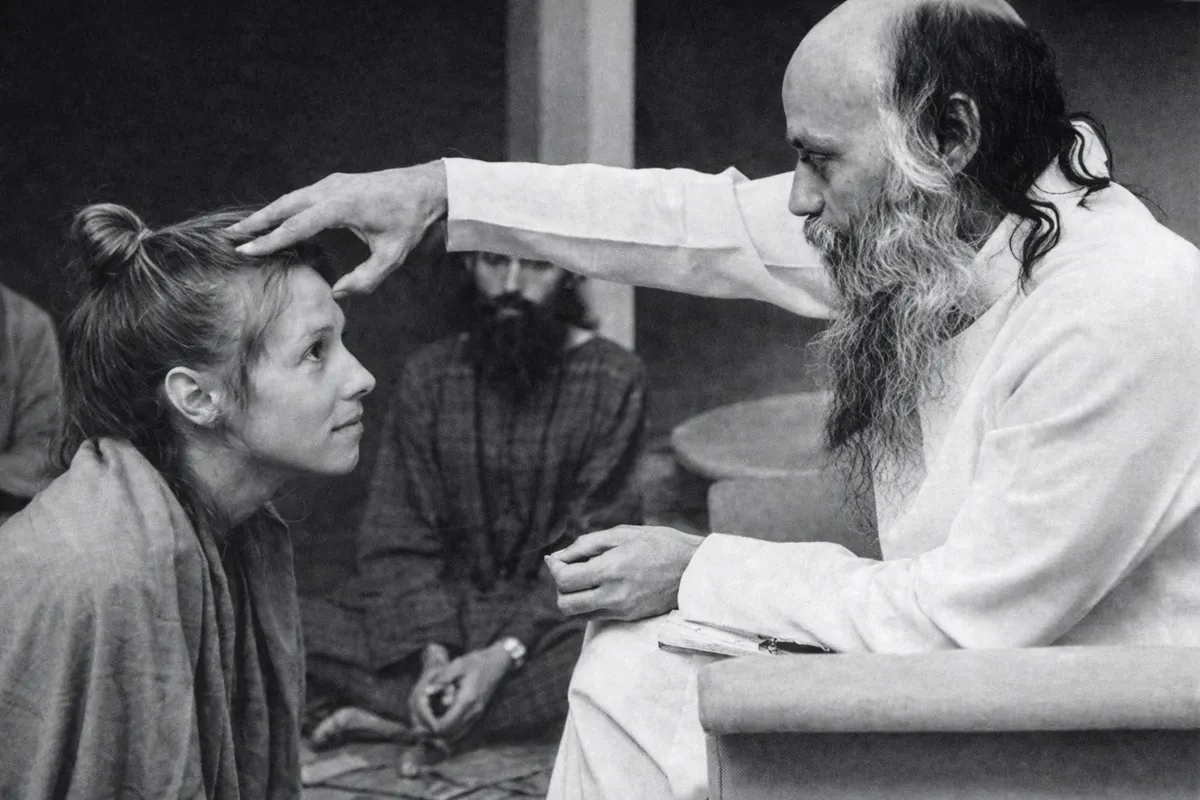
Osho's original Hindi beside Osho Live's English translation, matched passage by passage.
भक्ति की यात्रा को दो खंडों में बांटा जा सकता है। एक तो भक्त के हृदय में विरह की अवस्था है--वियोग की, रुदन की। और फिर दूसरी भक्त के हृदय में योग की अवस्था है--मिलन की, हर्षोन्माद की। एक तो जब भक्त तलाश रहा है, भगवान की कोई झलक नहीं मिलती; अंधेरे में टटोल रहा है; गिरता है, उठता है, फिर गिरता है, फिर-फिर उठता है; कई बार भरोसे का धागा हाथ से छूट-छूट जाता है; कई बार अंधेरा आत्यंतिक मालूम होता है कि सुबह कभी भी नहीं होगी; लेकिन ये क्षण संदेह के आते हैं और चले जाते हैं; सुबह की यात्रा, सुबह की खोज जारी रहती है। इन सारी स्थितियों के बावजूद भक्त तलाशता रहता है। यह आधी यात्रा है। फिर आधी यात्रा आनंद-उत्सव की है, जब मिलन हो गया, मिलन की घड़ी घट गई। पहले क्षणों में भक्त प्रमुख है, भगवान गौण है। जिसे जाना नहीं, वह गौण होगा ही। जिसे पहचाना नहीं, वह प्रमुख कैसे हो सकता है? भक्त मिटना चाहता है, मगर किसमें मिटे, उसकी तलाश करता है। जैसे गंगा तलाश करती है सागर की--मिटना चाहती है, खोना चाहती है।
The journey of devotion can be divided into two halves. First, the state of separation in the devotee’s heart—of distance, of weeping. And then the state of union in the devotee’s heart—of meeting, of rapture and ecstasy. In the first, the devotee searches and finds no glimpse of the Divine; he fumbles in the dark; falls, rises, falls again, and rises once more; many times the thread of trust slips from his hand; many times the darkness seems absolute, as if morning will never come. Yet moments of doubt come and go; the pilgrimage toward dawn, the search for dawn, goes on. In spite of it all, the devotee keeps seeking. This is half the journey. The other half is a celebration of bliss—when the meeting happens, when the hour of union descends.
In the first moments, the devotee is central and God is secondary; what is not yet known must remain secondary. What is not yet recognized—how can that be primary? The devotee longs to dissolve, but whom to dissolve into? He is searching. Like the Ganges seeking the ocean—longing to lose herself, to disappear.
इस जगत में वे ही धन्यभागी हैं जो मिट पाते हैं, जो उस शरण को उपलब्ध हो जाते हैं जहां मिटना सुगम है। वे ही धन्यभागी हैं और वे ही हैं जो मिट गए हैं। विरोधाभास लगेगा। लेकिन जीवन का अंतरंग विरोधाभासों से भरा है। यही तो अर्थ है कहने का कि अस्तित्व रहस्यपूर्ण है। यहां जो हैं, वे नहीं हैं; और जो मिट गए हैं, वे ही हैं। यहां जिसने अपने को बचाया, उसने गंवाया; और जिसने अपने को गंवाया, उसने पाया। यहां जीत हार में बदल जाती है, यहां हार जीत हो जाती है।
Blessed are those in this world who can disappear—who find that refuge where dissolving is easy. Blessed are they, and they alone are the ones who have vanished. It sounds paradoxical. But the inner fabric of life is woven of contradictions. That is what it means to say existence is mysterious. Here, those who seem to be, are not; and those who have disappeared—they alone are. Here, whoever saved himself, lost; and whoever lost himself, found. Here, victory turns into defeat and defeat becomes victory.
भक्त मिटने चला है। मगर अभी उस जगह का भी पता नहीं है, उस द्वार का भी पता नहीं है जिस द्वार पर मिटना हो जाएगा। तलाश रहा है। भक्त अपनी मौत खोज रहा है। इसलिए भक्त होने के लिए साहस चाहिए।
The devotee sets out to disappear. But he doesn’t yet know the place, not even the doorway at which dissolving will happen. He searches. The devotee is seeking his own death. That is why devotion demands courage.
साधारणतः लोग सोचते हैं, कायर लोग धार्मिक हो जाते हैं। गलत है उनकी धारणा। कायर कभी धार्मिक नहीं हो पाते; कायर तो धार्मिक हो ही नहीं सकता। दुस्साहसी चाहिए। मिटने की क्षमता चाहिए।
Ordinary people think cowards become religious. Their idea is wrong. A coward can never be religious; religion is not for the timid. It requires audacity, and the capacity to die.
भक्ति तो आत्मघात की कला है। तुम मिटोगे तो ही परमात्मा हो सकेगा। तुम जरा भी बचे तो उतनी ही बाधा शेष रह जाएगी। तुम्हारे होने में बाधा है।
Devotion is the art of self-annihilation. Only when you vanish does the Divine become possible. If even a shred of you remains, that much obstacle remains. Your very existence is the obstruction.
तो भक्त रोता है, पुकारता है, चीखता-चिल्लाता है, छाती पीटता है, गिर-गिर पड़ता है, सारा हृदय विषाद से भरा होता है। इस विषाद में कभी-कभी दूर के तारे भी ऊग आते हैं। और इस विषाद में कभी-कभी फूल की सुगंध भी नासापुटों तक आ जाती है। इस विषाद में कभी-कभी उस परम की ध्वनि भी सुनी जाती है, उसका तैरता संगीत भी कभी-कभी आ जाता है। पर ऐसी घड़ियां बहुत कम होती हैं; और जब होती भी हैं तो प्यास को बुझाती नहीं और जलाती हैं, और जगाती हैं। क्योंकि जरा-जरा सा जो स्वाद लगता है, वह और तड़पाता है। एकाध बूंद प्यासे के कंठ में पड़ जाए तो प्यास बढ़ जाती है, घटती नहीं। भरोसा बढ़ता है, प्यास भी बढ़ती है।
So the devotee cries, calls out, screams, beats his chest, stumbles and falls again and again; the whole heart is soaked in sorrow. In this sorrow, sometimes distant stars rise. In this sorrow, sometimes a fragrance reaches the nostrils. In this sorrow, sometimes the sound of the Ultimate is heard, its floating music comes drifting in. But such moments are rare; and when they do come, they do not quench the thirst—they inflame it, they awaken it. For the slightest taste only heightens the longing. Let a single drop fall into the throat of the thirsty, the thirst increases, it does not diminish. Trust grows—and so does thirst.
इस प्रथम अवस्था को जो पार कर सके, वही दूसरी अवस्था को पाता है--मिलन की। विरह की अग्नि में जो जले, वही मिलन के योग्य हो पाता है। विरह की यह अवस्था परीक्षा की अवस्था है। अगर दिल भर कर रोए न, पुकारा न, तो कभी पा न सकोगे। पहली अवस्था में कंजूसी की, दूसरी से दूर रह जाओगे। यह मार्ग कृपण के लिए नहीं है, कायर के लिए नहीं है। साहस चाहिए और अकृपण-भाव चाहिए। सब भांति सर्वस्व चरणों में रख देने की क्षमता चाहिए।
Whoever can pass through this first state reaches the second—union. Only he who burns in the fire of separation becomes worthy of union. This state of separation is the testing ground. If you have not wept with your whole heart, have not called out with your whole being, you will never attain. If you are stingy in the first stage, you will remain far from the second. This path is not for the miserly, not for the cowardly. It asks for courage and a lavish heart. It asks for the capacity to lay everything at the Beloved’s feet.
इस अवस्था में भगवान तो दूर होता है--दूर की ध्वनि की भांति; दूर से आती सुगंध की भांति--भगवान तो एक प्रतिशत होता है, भक्त निन्यानबे प्रतिशत होता है। दूसरी घड़ी जब घटती है तो भक्त एक प्रतिशत रह जाता है और भगवान निन्यानबे प्रतिशत हो जाता है।
In this first stage, God is far—like a distant sound, like a fragrance from afar. God is one percent, the devotee ninety-nine. In the second moment when it happens, the devotee is one percent and God ninety-nine.
ये दो अवस्थाएं तो शब्दों में कही जा सकती हैं। तीसरी अवस्था है, जिसको कहा नहीं जा सकता--जब भक्त बचता ही नहीं और भगवान ही बचता है। वह परम फल है।
These two stages can be spoken of. There is a third that cannot be said—when the devotee no longer remains and only God remains. That is the supreme fruit.
आज के सूत्र इस दिशा में तुम्हारे लिए सहयोगी होंगे।
Today’s aphorisms will help you in this direction.
भक्त्या भजनोपसंहारात् गौण्या पराय एतद्धेतुत्वात्।
‘भक्ति शब्द यहां गौणी-भक्ति का प्रतिपादक है; भजन और सेवा ही गौणी-भक्ति है, और यह गौणी-भक्ति पराभक्ति की भित्तिरूप है।’
Bhaktyā bhajanopasaṁhārāt gauṇyā parāya etad-dhetutvāt. “Here the word bhakti indicates secondary devotion; chanting and service are the forms of this secondary devotion, and this secondary devotion is the foundation of supreme devotion.”
शांडिल्य इन दो अंगों को दो नाम देते हैं: एक को गौणी-भक्ति, एक को पराभक्ति। गौणी-भक्ति नाममात्र को ही भक्ति है। अभी भगवान ही नहीं मिला तो भक्ति क्या? मगर जरूरी अंग है। गौणी-भक्ति में उपचार है, विधि-विधान है, पूजा-प्रार्थना, आराधना है। गौणी-भक्ति में द्वैत है। भक्त और भगवान दूर हैं, बीच में बड़ा फासला है। अभी सेतु भी नहीं बना। लेकिन भक्त ने इस किनारे से उस किनारे को पुकारना शुरू किया है। आवाज उसकी पहुंचती भी है या नहीं, यह भी कुछ पता नहीं। पहुंचेगी भी या नहीं, यह भी कुछ पता नहीं। वहां कोई है भी दूसरे किनारे पर सुनने को, यह भी पता नहीं। दूसरा किनारा होता भी है, यह भी पता नहीं। जिसमें इतना साहस हो, इतनी श्रद्धा हो...हजार संदेह खड़े होंगे: क्यों समय व्यर्थ करते हो? किसे पुकार रहे हो? आकाश चुप मालूम होता है, उत्तर तो आता नहीं। उस किनारे से कोई इशारा तो मिलता नहीं। हजार संदेह उठेंगे, स्वाभाविक है। इतनी श्रद्धा चाहिए कि तुम उन संदेहों को पार कर जाओ। इतनी श्रद्धा चाहिए कि उन संदेहों के बावजूद तुम आगे बढ़ जाओ।
Shandilya gives two names to these two limbs: one he calls gauṇī-bhakti (secondary devotion), the other parā-bhakti (supreme devotion). Gauṇī-bhakti is devotion in name only. When God has not yet been found, what devotion? And yet it is an essential limb. In gauṇī-bhakti there are forms and observances, worship and prayer, adoration. In gauṇī-bhakti there is duality. The devotee and the Divine are far apart; there is a great distance in between. The bridge is not yet built. But the devotee has begun to call from this shore to the far shore. Whether his voice reaches there, he does not know. Whether it ever will, he does not know. Whether there is anyone on the other shore to hear, he does not know. Whether that other shore even exists, he does not know. Whoever has this much courage, this much trust… a thousand doubts will arise: Why waste your time? Whom are you calling? The sky seems silent; no answer comes. No sign from the other side. A thousand doubts—naturally. You need enough trust to pass through them. Enough trust to go on in spite of them.
यह श्रद्धा कहां से आएगी?
Where will this trust come from?
इसलिए शांडिल्य ने कहा है: यह श्रद्धा गुरु से मिलेगी। यह गुरु के पास मिलेगी। अगर तुम्हें कोई ऐसा व्यक्ति मिल जाए जो उस किनारे खड़ा है, या उस किनारे से आया है, जिसने उस किनारे को जाना है, जिसके आस-पास उस किनारे की कुछ हवा है, और जिसकी आंखों में उस किनारे की कुछ झलक है, और जिसका हाथ छुओ तो उस किनारे से जुड़ जाते हो, और जिसमें झांको तो आकाश के द्वार खुल जाते हैं। ऐसा व्यक्ति न मिले, तब तक मरुस्थल में भटकना होता है। गुरु का अर्थ है: मरुस्थल में तुम्हें कोई मरूद्यान मिल गया। अज्ञानियों की भीड़ में तुम्हें कोई जागा पुरुष मिल गया। सोए हुए लोगों में तुम्हें कोई मिल गया जो सोया हुआ नहीं है।
That is why Shandilya says: this trust comes from the Master. From the guru you receive it. If you find someone who stands on that other shore, or has come from there; who has known that far shore; in whose vicinity you can feel the breeze of that shore; in whose eyes there is a glimmer of that beyond; whose hand, when you touch it, connects you to the other bank; in whose depths, when you gaze, the doors of the sky open—until you find such a person, you wander in the desert. The meaning of guru is: in the desert, you have found an oasis. Amid the crowd of the ignorant, you have found one who is awake. Among sleepers, you have found someone who is not asleep.
सोया हुआ जो नहीं है वही तुम्हें जगा सकेगा। शास्त्रों से काम नहीं चलने का। शास्त्र तो कमजोर पकड़ लेते हैं। कायर शास्त्रों को पकड़ लेते हैं। साहसी शास्ता को खोजते हैं--जिसके भीतर अभी शास्त्र का जन्म हो रहा हो, जिसके भीतर उस दूर के प्रकाश की किरण उतर रही हो, अभी नाचती हो, अभी जीवंत हो, अभी धड़कती हो, अभी श्वास लेती हो--ऐसे व्यक्ति के पास ही श्रद्धा का आविर्भाव होता है। फिर इसी श्रद्धा के सहारे तो परमात्मा की तरफ जाना है।
Only one who is not asleep can awaken you. Scriptures will not suffice. Scriptures are gripped by the weak. Cowards cling to scriptures. The brave seek the Master—the one in whom scripture is being born now; in whom the ray of that distant light is descending now—dancing, alive, throbbing, breathing. Only near such a person does trust arise. And with that trust as your companion you set out toward God.
इसलिए गुरु पाथेय है। बिना गुरु के पाथेय को पकड़े हुए तुम जा न सकोगे। यात्रा बहुत खतरनाक है। बड़े से बड़ा खतरा तो यही है कि तुम जाओगे कहां? किस दिशा में खोजोगे? कैसे खोजोगे? तुम अपने से इतने ग्रसित हो! और तुम्हारा सारा अतीत अज्ञान का है, तुम्हारा सारा अतीत गलत आदतों से भरा है, उन्हीं आदतों को सिर पर लिए जाओगे, वे आदतें तुम्हें वापस-वापस अतीत की तरफ मोड़ती रहेंगी।
Hence the guru is your provision for the journey. Without holding to this provision, you will not make it. The journey is perilous. The greatest danger is: where will you go? In what direction will you search? How will you search? You are so possessed by yourself! Your entire past is steeped in ignorance, crammed with wrong habits; you will carry those habits on your head, and they will keep turning you back toward the past.
आदतों का एक नियम है कि वे पुनरुक्त होना चाहती हैं। तुमने कल शराब पी थी, आदत आज भी कहेगी--पीओ। तुमने कल गाली दी थी, आदत आज भी कहेगी--दो। तुमने जो कल किया था, और-और अतीत में किया था, वह सब दोहरना चाहता है। कोई भी आदत आसानी से नहीं छूट जाती। और ध्यान रखना, तुम्हारे पास आदतों के सिवाय कुछ भी नहीं है; तुम्हारे पास अतीत के सिवाय कुछ भी नहीं है, भविष्य तुम्हारे पास नहीं है। ऐसे किसी व्यक्ति को खोज लेना जिसके पास भविष्य हो। उसके साथ जुड़ोगे तो द्वार खुलेगा, क्योंकि भविष्य द्वार है। उसके साथ जुड़ोगे तो धीरे-धीरे भरोसा बढ़ेगा, धीरे-धीरे उसकी तरंगें तुम्हारे हृदय की भी बंद कलियों को खोलेंगी। उसकी हवाएं तुम्हारे भीतर प्रवेश करेंगी; तुम्हारे वृक्षों को स्पर्श करेंगी, तुम्हारे वृक्षों में से दौड़ेंगी, तुम्हारी धूल झाड़ेंगी, तुम्हारे सूखे पत्ते गिराएंगी, तुम्हारी पुरानी आदतों को उखाड़ेंगी; और धीरे-धीरे तुम्हारे भीतर भी नये पत्ते ऊगने शुरू हो जाएंगे। तुम समर्थ हो, सिर्फ तुम्हें अपने सामर्थ्य का पता नहीं है।
The law of habit is repetition. You drank yesterday, the habit says—drink today. You swore yesterday, the habit says—swear today. Everything you did yesterday, and before, wants to repeat. No habit lets go easily. And remember: apart from habits you have nothing; apart from your past you have nothing—no future. Find someone who has a future. Connect with him and a door will open, because the future is the door. In his company, slowly your trust will deepen; slowly his vibrations will open the closed buds in your heart. His winds will enter you; they will touch your trees, run through them, dust you clean, shake off your dry leaves, uproot your old habits; and slowly new leaves will sprout within. You are capable—you just don’t know your own capacity.
पहली को शांडिल्य ने कहा गौणी-भक्ति। लेकिन गौणी से तुम यह अर्थ मत ले लेना कि उसका कोई मूल्य नहीं है। क्योंकि उसके बिना पराभक्ति होगी ही नहीं। गौणी उसे इसलिए कहते हैं कि उस पर रुक मत जाना, ध्यान रखना। श्रद्धा पर रुक नहीं जाना है, गुरु पर रुक नहीं जाना है; गुरु से पार होना है।
The first, Shandilya calls gauṇī-bhakti. But do not take “secondary” to mean it has no value. Without it, parā-bhakti will never be. It is called secondary so you won’t stop there. Do not stop at trust; do not stop at the guru; go beyond the guru.
लेकिन दुनिया में दो तरह के नासमझ हैं। एक हैं जो कहते हैं: जब गुरु से पार ही होना है तो फिर गुरु से जुड़ें ही क्यों? और दूसरे हैं जो कहते हैं: जब गुरु से जुड़ना ही है और गुरु के बिना मिलन होगा ही नहीं, तो जुड़ गए, अब छूटें क्यों? ये दोनों नासमझ हैं। गुरु तो सीढ़ी है। एक दिन उसे पकड़ना पड़ता है, एक दिन उसे छोड़ देना पड़ता है। तो ही तो सीढ़ी का उपयोग हो पाएगा। चढ़ भी गए सीढ़ी से और आखिरी सोपान पर जाकर सीढ़ी को पकड़ कर बैठ रहे, तो सार क्या हुआ? सीढ़ी तो गंतव्य नहीं है।
But there are two kinds of fools in the world. One says: if I must go beyond the guru, why take a guru at all? The other says: if without the guru union is impossible, I’ve taken hold—why ever let go? Both are foolish. The guru is a ladder. One day you must grasp it; one day you must release it. Only then is the ladder used rightly. If you climb to the last rung and sit hugging the ladder, what is the point? The ladder is not the destination.
तो कुछ हैं जो अपने अहंकार के कारण गुरु को नहीं पकड़ पाते, और कुछ हैं जो अपने लोभ के कारण गुरु को पकड़ तो लेते हैं लेकिन छोड़ नहीं पाते। लोभ और अहंकार, दो बातों से सावधान रहना।
Some, out of ego, cannot take hold of the guru; others, out of greed, do take hold—but cannot let go. Beware of greed and ego—both.
गौणी इसीलिए कहा है कि यह अंत नहीं है, यात्रा का प्रारंभ है। अनिवार्य प्रारंभ है। इससे बचा नहीं जा सकता है।
It is called gauṇī to remind you: it is not the end; it is the beginning of the journey. An indispensable beginning. You cannot bypass it.
‘गौणी-भक्ति में भजन और सेवा।’
“In gauṇī-bhakti there are chanting and service.”
भजन उसका, जिससे अभी मिलन नहीं हुआ, जिससे अभी पहचान नहीं हुई। उसकी पुकार! पुकारो-पुकारो, तो एक दिन जरूर यह अस्तित्व उत्तर देता है। यह अस्तित्व बहरा नहीं है। यह अस्तित्व संवेदनशील है। लेकिन तुम्हारी पुकार हार्दिक होनी चाहिए। तुम पुकारते हो और कोई नहीं सुनता--उसका सिर्फ इतना ही अर्थ है कि तुम्हारी पुकार के पीछे तुम्हारा हृदय नहीं धड़कता था। और कुछ अर्थ नहीं है। इससे यह मत सोच लेना कि वहां कोई उत्तर देने वाला नहीं है। उत्तर तो दिया जाएगा, लेकिन अभी तुम उत्तर के योग्य नहीं। अभी तुमने प्रश्न भी ठीक से नहीं पूछा, तुम्हारा प्रश्न भी उधार है, तुम्हारा प्रश्न भी अपना नहीं है, तुम्हारे प्रश्न में भी प्राण नहीं हैं, तुम्हारा प्रश्न कचरा है। कचरा प्रश्नों के उत्तर नहीं आते अस्तित्व से।
Chanting of the One not yet met, not yet recognized. The call! Call and call—and one day existence answers. Existence is not deaf. Existence is sensitive. But your call must be heartfelt. If you call and no one hears—there is only one meaning: your heart was not beating behind your call. Do not conclude there is no one to answer. The answer will come—but you are not yet worthy of it. You have not even asked rightly yet; your question is borrowed, not yours; there is no life in it—your question is trash. Existence does not answer garbage questions.
लेकिन जब भी तुम ऐसा कोई प्रश्न पूछोगे, जिस पर तुम अपने जीवन को लगाने को तैयार हो; जब तुम कोई ऐसा प्रश्न पूछोगे, ऐसी पुकार करोगे कि तुम उस पर सब निछावर करने की तैयारी रखते हो, तुम कीमत चुकाने के लिए राजी हो, तुम मुफ्त उत्तर नहीं पाना चाहते और जो भी मांगा जाएगा, जो भी शर्त होगी, पूरी करोगे--चाहे जीवन ही क्यों न देना पड़े--उसी दिन तुम उत्तर पाओगे। उसी दिन तुम पाओगे, सारा अस्तित्व जो कल तक बहरा मालूम पड़ता था, बहरा नहीं है। वृक्ष बोलने लगे, तारे बोलने लगे, पत्थर-पहाड़ बोलने लगे। अचानक तुम पाओगे, तुम एक दूसरे जगत में प्रवेश कर गए, एक संवेदनशील जगत का जन्म हुआ। कुछ भी नहीं हुआ, जगत वही का वही है, सिर्फ तुम्हारी संवेदना जग गई; तुम्हारी संवेदना के स्रोत खुल गए; तुम्हारा हृदय अनुभव करने लगा।
But when you ask a question for which you are ready to stake your life—when your call is such that you are prepared to give everything for it, to pay the price, not to receive a free answer, and whatever is required— even life—you will give it—on that very day you will receive. On that day you will find that what seemed deaf yesterday is not deaf. Trees begin to speak, stars begin to speak, stones and mountains begin to speak. Suddenly you discover you have entered another world; a sensitive world is born. Nothing has happened to the world—the world is the same. Only your sensitivity has awakened; the springs of your feeling have opened; your heart has begun to experience.
मेरी तो हर सांस मुखर है, प्रिय, तेरे सब मौन संदेशे
एक लहर उठ-उठ कर फिर-फिर
ललक-ललक तट तक जाती है,
किंतु उदासीना युग-युग से
भाव-भरी तट की छाती है,
भाव-भरी यह चाहे तट भी
My every breath speaks, my love, all your silent messages— A wave rises again and again, Yearning its way to the shore, Yet the shore’s heart has been indifferent for ages. Even if that feelingful shore were to come forward, What would be wrong? My every breath speaks, my love, all your silent messages.
कभी बढ़े, तो अनुचित क्या है?
मेरी तो हर सांस मुखर है, प्रिय, तेरे सब मौन संदेशे
भक्त ऐसा अनुभव करेगा।
The devotee will feel this.
मेरी तो हर सांस मुखर है...
My every breath speaks…
पुकारेगा, आवाज देगा, और वहां से कोई उत्तर न पाएगा।
He will call, send his voice—and receive no answer.
मेरी तो हर सांस मुखर है, प्रिय, तेरे सब मौन संदेशे
एक लहर उठ-उठ कर फिर-फिर
ललक-ललक तट तक जाती है,
किंतु उदासीना युग-युग से
भाव-भरी तट की छाती है,
My every breath speaks, my love, all your silent messages— A wave rises again and again, Yearning its way to the shore, Yet the shore’s heart has been indifferent for ages.
तुम्हारी छाती उदासीन है। लहर आती भी है उस तरफ से, तो तुम पकड़ नहीं पाते। तुम्हारी आंखें अंधी हैं। उस तरफ से हाथ बढ़ता भी है आशीर्वाद बरसाने को, तो तुम देख नहीं पाते। तुम कुछ का कुछ देख लेते हो। तुम कुछ का कुछ समझ लेते हो। तुम्हारी समझ ही बाधा बन रही है। तुम नासमझ हो जाओ, तुम अपनी सारी समझ छोड़ दो, तो शायद समझ भी जाओ। लेकिन तुम्हारा पांडित्य, तुम्हारा ज्ञान, तुम्हारी व्याख्याएं, तुम्हारी टीकाएं, तुम्हारे शास्त्र; तुमने जो सीखा, पढ़ा, गुना है--वह सब बीच में बाधा बन जाता है। उस सबको पार करके प्रभु की आवाज तुम तक नहीं पहुंच पाती।
Your chest is indifferent. Even when a wave comes from that side, you cannot catch it. Your eyes are blind. From that side a hand reaches out to shower blessings, and you do not see it. You mis-see, you misunderstand. Your understanding itself is the obstacle. Become unknowing—drop all your cleverness—and perhaps you will understand. But your scholarship, your knowledge, your interpretations, your commentaries, your scriptures—what you have learned and memorized—these become the barrier. Through this tangle the voice of the Lord cannot reach you.
मेरी तो हर सांस मुखर है, प्रिय, तेरे सब मौन संदेशे
My every breath speaks, my love, all your silent messages—
परमात्मा मौन नहीं है, परमात्मा प्रतिपल बोल रहा है। उसके बोलने के ढंग और हैं। कभी-कभी मौन से भी बोलता है, मौन उसकी भाषा है। लेकिन बोलता है, निश्चित बोलता है।
God is not silent; he speaks each moment. His ways of speaking are different. Sometimes he even speaks through silence—silence is his language. But he speaks, surely he speaks.
बंद कपाटों पर जा-जा कर
जो फिर-फिर सांकल खटकाए,
और न उत्तर पाए, उसकी
लाज-व्यथा को कौन बताए,
पर अपमान पिए पग फिर भी
उस ड्योढ़ी पर जाकर ठहरें,
क्या तुझमें ऐसा जो तुझसे मेरे तन-मन-प्राण बंधे से
Knocking again and again on bolted doors And receiving no reply—who will tell The shame and pain of such a heart? Yet drinking this insult, the feet still return To that threshold and stand… What is there in you that binds my body, mind, and life to you so?
मेरी तो हर सांस मुखर है, प्रिय, तेरे सब मौन संदेशे
My every breath speaks, my love, all your silent messages.
फिर भी भक्त पुकारता रहता है। हारता है और पुकारता है। जल्दी सफलता नहीं मिलती है। इसलिए जो जल्दबाजी में हैं वे परमात्मा से वंचित रह जाते हैं। यह हमारी सदी अगर परमात्मा से वंचित है तो उसका और कोई कारण नहीं है; न तो पाप बढ़ा है, न लोग भ्रष्ट हुए हैं, न नास्तिकता फैल गई है। अगर कोई एक चीज बढ़ी है तो वह जल्दबाजी बढ़ी है। आदमी तत्क्षण चाहता है। प्रतीक्षा की क्षमता चुक गई है। घड़ी भर भी राह देखने को कोई तैयार नहीं।
Still, the devotee keeps calling. He fails and calls again. Quick success does not come. Those in a hurry are deprived of God. If our century is deprived of the Divine, the reason is not that sin has increased, nor corruption, nor atheism. If anything has increased, it is hurry. Man wants everything instantly. The capacity to wait is exhausted. No one is ready to watch the road even for a minute.
बंद कपाटों पर जा-जा कर
जो फिर-फिर सांकल खटकाए,
और न उत्तर पाए, उसकी
लाज-व्यथा को कौन बताए,
Knocking again and again on bolted doors… Returning with no reply—who can tell The embarrassed agony of such a one?
बहुत बार होगा। सांकल खटखटाओगे, कोई उत्तर न आएगा। बार-बार लौट आओगे--थके, उदास, हारे, पराजित। प्रतीक्षा चाहिए ही। जब हारे लौट आओ, तो ऐसा मत सोचना कि परमात्मा नहीं है; और ऐसा भी मत सोचना कि परमात्मा कठोर है; और ऐसा भी मत सोचना कि परमात्मा संवेदनशून्य है। इतना ही जानना कि अभी मेरी पुकार पूरी नहीं; अभी मेरी प्यास अधूरी है। अभी मैंने द्वार तो खटखटाया था, लेकिन पूरे प्राण खटखटाने में संयुक्त न हुए थे। ऐसे डरते-डरते खटखटाया था। सोचा था, शायद हो--इस तरह खटकाया था। श्रद्धा पूरी न थी। मेरे संदेह ही बाधा बन गए।
It will happen many times. You will knock; no answer will come. Again and again you will return—tired, sad, defeated. Wait you must. When you return defeated, do not think God is not; do not think God is harsh; do not think God is insensible. Know only this: my call is not yet complete; my thirst is not yet total. I knocked, but not with my whole being in my knock. I knocked timidly, as if thinking, “perhaps”—I knocked like that. Trust was not whole. My doubts became the barrier.
जाहिर और अजाहिर दोनों
विधि मैंने तुझको आराधा,
रात चढ़ाए आंसू, दिन में
राग रिझाने को स्वर साधा,
मेरे उर में चुभती प्रतिध्वनि
आ मेरी ही तीर सरीखी
पीर बनी थी गीत कभी, अब गीत हृदय के पीर बने से
Openly and secretly both, I worshiped you. By night I offered tears; by day I tuned my voice to please you. The echo piercing my heart Returned like my own arrow: Once a song was my pain, now pain Has become the song in my heart. My every breath speaks, my love, all your silent messages.
मेरी तो हर सांस मुखर है, प्रिय, तेरे सब मौन संदेशे
प्रारंभ में ऐसा होगा। लगेगा तुम किसी पत्थर से बातें कर रहे हो। मगर अगर बातें करते ही रहे, तो पत्थर पिघले हैं, तुम्हारे लिए भी पिघलेंगे। थकना मत, चोट किए जाना। किसी को भी पता नहीं है, किस चोट पर द्वार खुल जाएगा। द्वार खुलता है, इतना पक्का है। औरों के लिए खुला है, तुम्हारे लिए भी खुलेगा। मगर किस चोट पर खुलता है, कोई भी नहीं कह सकता। कितनी प्रार्थनाएं संयुक्त हो जाती हैं तब हृदय इस योग्य होता है, कोई भी नहीं कह सकता। फिर प्रत्येक व्यक्ति अलग-अलग है।
At the beginning it will be like this. You will feel you are talking to a stone. But if you keep talking, stones have melted before; they will melt for you too. Do not tire; keep striking. No one knows with which blow the door will open. Open it does—that much is certain. It has opened for others; it will open for you. But which blow—no one can say. How many prayers must be gathered before a heart becomes worthy—no one can say. Every person is different.
पुकारो! नये-नये रास्ते खोजो पुकारने के। शब्द से पुकारो, मौन से पुकारो; आंसुओं से पुकारो, नृत्य से पुकारो, पुकारो! नये-नये मार्ग खोजो पुकारने के। एक हारे तो दूसरा तलाशो। थको मत! हारो मत! जीत सुनिश्चित है। देर हो सकती है, अंधेर नहीं है।
Call! Find new ways to call. Call with words, call with silence; call with tears, call with dance—call! Find new paths to call. If one fails, seek another. Do not tire! Do not lose! Victory is assured. There may be delay, but there is no darkness without end.
क्या गाऊं जो मैं तेरे मन को भा जाऊं
What shall I sing that I might please your heart?
नये-नये गीत गाओ। एक गीत सफल न हो, दूसरा गीत गाओ। एक द्वार न खुले, दूसरा द्वार खटखटाओ। उसके द्वार अनंत हैं।
Sing new songs. If one song fails, sing another. If one door doesn’t open, knock on another. His doors are infinite.
क्या गाऊं जो मैं तेरे मन को भा जाऊं
प्राची के वातायन पर चढ़
प्रात किरण ने गाया,
लहर-लहर ने ली अंगड़ाई
बंद कमल खिल आया,
मेरी मुस्कानों से मेरा
मुख न हुआ उजियाला
आशा के मैं क्या तुझको राग सुनाऊं
क्या गाऊं जो मैं तेरे मन को भा जाऊं
कमल खिल जाता है, तुम क्यों न खिलोगे? कली फूल बन जाती है, तुम क्यों न बनोगे? पक्षी गा उठते हैं, तुम क्यों न गा उठोगे? अपने पर थोड़ी श्रद्धा चाहिए।
What shall I sing that I might please your heart? At dawn’s window the morning ray Sang as she climbed; Wave upon wave stretched and woke, And the shut lotus opened. But by my smiles alone My face did not grow bright— What song of hope shall I sing to you?
If the lotus can open, why not you? If a bud becomes a flower, why not you? If birds burst into song, why not you? You need a little trust in yourself.
और बड़ी हानि हुई है कि जिनसे तुमने सोचा था तुम्हें श्रद्धा मिलेगी, उनसे सिर्फ तुम्हें स्वयं के प्रति अपमान मिला है। तुम्हारे धर्मगुरु, तुम्हारे पंडित-पुरोहित, तुम्हारे तथाकथित साधु-संत अगर कोई एक बात तुम्हें पकड़ा दिए हैं, तो वह तुम्हारे प्रति निंदा का भाव है। तुम्हें उन्होंने गर्हित घोषित कर दिया है। तुम अपात्र हो, पापी हो और तुम सदा ऐसे ही रहने वाले हो--ऐसी धारणा तुम्हारे चित्त में बिठा दी है। उन्होंने तुम्हें इतना क्षुद्र कर दिया है कि तुम अब विराट की तरफ आंखें उठाने में समर्थ नहीं रह गए। तुम आंखें झुकाए जमीन में गड़े-गड़े चल रहे हो।
And a great harm has been done: those from whom you expected trust have only taught you self-contempt. Your religious leaders, your priests, your so-called saints—if they have given you one thing, it is a sense of your own unworthiness. They have declared you unfit, a sinner, and destined to remain so. They have made you so small you can no longer lift your eyes to the vast. You walk with eyes downcast, nailed to the ground.
प्राची के वातायन पर चढ़
प्रात किरण ने गाया,
लहर-लहर ने ली अंगड़ाई
बंद कमल खिल आया,
At dawn’s window the morning ray Sang as she climbed; Wave upon wave stretched and woke, And the shut lotus opened—
तुम भी खिलोगे। सुबह की किरण तुम्हें भी जगा सकती है। लेकिन थोड़ा आत्म-सम्मान सम्हालो। तुम फूलों से गए-बीते नहीं हो। कौन कमल तुमसे ज्यादा मूल्यवान है? तुम सहस्रार हो, तुम्हारे भीतर सहस्रदल कमल है। तुम्हारी झील में जो कमल खिल रहा है, वैसा किसी झील में न कभी खिला है, न खिल सकता है। झीलों के कमल साधारण हैं। तुम्हारे भीतर चेतना का कमल खिलने को तत्पर बैठा है।
You too will open. The morning ray can wake you as well. But hold a little self-respect. You are not less than the flowers. What lotus is more precious than you? You are the thousand-petaled crown; within you the sahasrara, the thousand-petaled lotus. The lotus blooming in your lake—such a lotus has never bloomed in any pond, nor can it. The lotuses of ponds are ordinary. The lotus of consciousness ready to bloom within you is extraordinary.
लेकिन अगर एक मार्ग से हार जाओ तो हताश मत हो जाना।
If one path fails, do not be disheartened.
पकी बाल, बिकसे सुमनों
से लिपटी शबनम सोती,
धरती का यह गीत, निछावर
जिस पर हीरा-मोती
सरस बनाना था जिसको
वे हाय, गए कर गीले,
कैसे आंसू से भीगे साज सजाऊं
क्या गाऊं जो मैं तेरे मन को भा जाऊं
Frosty hair and blossoming flowers— Dew wrapped in sleep. This song of the earth, upon which Pearls and diamonds are offered— I meant to make it sweet, But alas, they were moistened and lost. With tears-soaked instruments, How shall I adorn the melody? What shall I sing that I might please your heart?
पूछो! खोजो!! तलाशो!!!
Ask! Seek!! Search!!!
क्या गाऊं जो मैं तेरे मन को भा जाऊं
सौरभ के बोझे से अपनी
चाल समीरण साधे,
कुछ न कहो इस वक्त उसे,
वह स्वर्ग उठाए कांधे,
बंधी हुई मेरी कुछ सांसों
से भी मीठी सुधियां,
जो बीत चुकी क्या उसकी याद दिलाऊं
क्या गाऊं जो मैं तेरे मन को भा जाऊं
What shall I sing that I might please your heart? The breeze has schooled its gait With the burden of fragrance. Say nothing to it now— It carries heaven on its shoulders. From a few breaths bound in me Sweeter memories linger, But what has passed—shall I recall it? What shall I sing that I might please your heart?
छोड़ो अतीत को। जो बीता, बीता! अनबीते को तलाशो। जो हुआ, हुआ। अनहुए को तलाशो। और अनहुआ बड़ा है। हुआ तो बहुत क्षुद्र है। तुम जो रहे हो वह तो ना-कुछ है, तुम जो हो सकते हो वह सब कुछ है। तुम्हारा भविष्य विराट है। तुम अतीत के बोझ से अपने को दबा मत लो। तुम छोटी-छोटी बातों में मत पड़ जाओ।
Abandon the past. What is gone is gone. Seek the un-gone. What has happened has happened. Seek the un-happened. The un-happened is vast. What you have been is nothing; what you can be is everything. Your future is immense. Do not be crushed under the burden of your past. Do not get lost in trifles.
लोग छोटे-छोटे अपराधों से दब गए हैं। पंडितों ने, पुरोहितों ने, संतों ने तुम्हें इतने अपराधों से भर दिया है कि तुम यह मान ही नहीं सकते कि मेरा और प्रभु से मिलन हो सकता है। तुमने यह स्वीकार ही कर लिया है कि तुम अंधेरे के कीड़े हो और अंधेरे में ही जीओगे, प्रकाश से तुम्हारा मिलन नहीं हो सकता। इसीलिए प्रकाश से मिलन नहीं हो रहा है। यह सबसे बड़ी दुर्घटना है जो मनुष्य के जीवन में घटी है।
People are crushed under petty guilt. Priests and pundits and sadhus have filled you with so many sins that you cannot even conceive that you could meet God. You have accepted that you are a worm of darkness, destined to live in darkness, and meeting with light is not for you. Therefore you do not meet the light. This is the greatest calamity to befall human life.
अब चाहिए ऐसा धर्म जो लोगों को भरोसा दिलाए कि तुमने जो किया है, वह कुछ भी नहीं है। तुम्हारा होना तुम्हारे किए से अछूता है। तुम्हारे पाप और पुण्य सब सपने हैं। तुमने जो बुरा किया, भला किया, उसका कोई बड़ा मूल्य नहीं है। तुम जो हो सकते हो, उसका मूल्य है। और तुम्हारे भीतर परम मूल्यवान बैठा है। तुम्हारा कोई कृत्य उसे दूषित नहीं कर पाया है।
Now a religion is needed that gives people confidence: what you have done is nothing. Your being is untouched by what you have done. Your sins and virtues are dreams. What you did ill or well—of little consequence. What you can become—that has value. And within you sits the supremely valuable. None of your acts have tainted that.
कबीर ने कहा है: ज्यों की त्यों धरि दीन्हीं चदरिया।
मैं तुमसे कहता हूं कि तुम्हारी चादर भी वैसी की वैसी है। इसमें कुछ कबीर ने किया नहीं था कि जैसी की तैसी चदरिया रख दी। चदरिया मैली होती ही नहीं। यह चदरिया तुम्हारे भीतर जो है, ऐसी है, मैला होना इसका गुण नहीं। तुम कितनी ही अंधेरी रातों से गुजरे होओ, तुम्हारी चादर में अंधेरा नहीं चिपक जाता है। और तुम कितने ही नरकों से गुजर गए होओ, तुम्हारी चादर का स्वर्ग सदा सुरक्षित है।
Kabir said: “I have returned the cloth just as it was.” I say to you: your cloth, too, is as it was. Kabir did nothing to keep it pure; the truth is, this cloth cannot be stained. This inner cloth is such; darkness does not stick to it, no matter how many nights you pass. No matter how many hells you walk through, the heaven of your cloth remains secure.
तुम अतीत को देखते हो तो अपराध के भाव से दब जाते हो। भविष्य को देखो। संभावना को देखो। वास्तविक का कोई मूल्य नहीं है, जो हो सकता है उसे देखो। तब तुम्हारे भीतर उमंग उठेगी। वही उमंग भजन बनती है।
When you look at the past, you are crushed by guilt. Look to the future. Look to possibility. The “real” has no price; look at what can be. Then a surge will arise in you. That surge becomes chanting.
‘भजन और सेवा।’
“Chanting and service.”
सेवा का क्या अर्थ है? शांडिल्य के सूत्रों पर जिन्होंने टीकाएं लिखी हैं, उन्होंने लिखा है--सेवा का अर्थ है: मंदिर में भगवान की जो मूर्ति है उसकी सेवा। यह झूठा अर्थ है। मूर्ति को सेवा की कोई जरूरत नहीं है। तुम नाहक समय खराब कर रहे हो। जीवित परमात्मा चारों तरफ मौजूद है, सेवा करनी हो इसकी करो।
What does service mean? Those who have commented on Shandilya’s sutras say service means serving the idol in the temple. This is a false meaning. The idol needs no service. You are wasting your time. The living God is present all around—serve this.
मैं तुमसे यह कहना चाहता हूं: जब तुम अपने बच्चे की सेवा कर रहे हो, अपनी पत्नी की, अपने पति की, अपने पिता की, अपनी मां की, अपने पड़ोसी की, अपनी गाय की, अपने घोड़े की, अपने पौधे की--तब तुम परमात्मा की सेवा कर रहे हो। मंदिर की मूर्ति ने तुम्हें खूब धोखा दे दिया। वह सस्ती सेवा है। और मंदिर की मूर्ति को तुम जानते हो कि पत्थर है; इसलिए सेवा भी कर आते हो और भीतर तुम जानते हो--पत्थर पत्थर है। इसे झुठलाओगे कैसे? इसलिए तुम्हारी सेवा कभी भी हार्दिक नहीं हो पाती।
I say to you: when you serve your child, your wife, your husband, your father, your mother, your neighbor, your cow, your horse, your plant—you are serving God. The temple idol has deceived you—cheap service. And you know the idol is stone; you serve, but inside you know—stone is stone. How will you hide it from yourself? That is why your service is never heartfelt.
जीवंत चारों तरफ मौजूद है, तुम कहां जा रहे? किस मंदिर में? किस मस्जिद में? किस मूर्ति की तलाश कर रहे हो? परमात्मा तुम्हारे घर आया हुआ है और तुम मंदिर जा रहे हो? परमात्मा तुम्हारे बेटे में मौजूद है, तुम्हारी मां में, तुम्हारे पिता में, तुम्हारी पत्नी में। लेकिन नहीं, पत्नी, पिता, मां, बेटा--यह तो जंजाल है, यह तो माया है। यह बड़े मजे की बात है, यह माया है और वह पत्थर की मूर्ति जो मंदिर में रखी है, वह सत्य है! आदमी कैसे धोखे खड़े कर लेता है! जीवंत झूठा है और मुर्दा सच है। और वह मुर्दा भी इन्हीं जीवंतों ने बनाया है; किसी मूर्तिकार ने गढ़ा है; किसी पुजारी ने फूल चढ़ाए हैं। इन मुर्दों के द्वारा, इन झूठों के द्वारा बनाया गया परमात्मा सच हो गया है, और बनाने वाले झूठ हो गए हैं।
The Living is all around—where are you going? To what temple? What mosque? What idol do you seek? God has come to your home and you are going to the temple? God is present in your son, in your mother, your father, your wife. But no: wife, father, mother, son—these are snares, “maya.” And the stone idol in the temple—that is truth! How clever the mind is at deceiving itself! The living is false and the dead is true. And that dead idol is made by these very living ones; some sculptor carved it; some priest adorned it with flowers. Through these dead and false, the God they made has become true, while the makers are false.
नहीं, मैं तुम्हें सेवा का वही अर्थ देना चाहता हूं जो शांडिल्य का रहा होगा। भजन करो, खोजो, गीत गाओ, पूछो कि मैं किस तरह गाऊं कि तुझे लुभा लूं, कि तुझे भा जाऊं? नये नृत्य सीखो। नये ध्यान सीखो। और चारों तरफ जो परमात्मा मौजूद है, इसकी सेवा में लग जाओ।
No—I want to give you the meaning of service that Shandilya must have intended. Chant—seek—sing—ask: how shall I sing so that I may charm you, so that I may please you? Learn new dances. Learn new meditations. And serve the God who is present everywhere.
यह गौणी-भक्ति है।
This is gauṇī-bhakti.
‘और यह गौणी-भक्ति पराभक्ति की भित्तिरूप है।’
“And this gauṇī-bhakti is the foundation of parā-bhakti.”
और जिसने गौणी को न साधा, वह पराभक्ति को न साध सकेगा। यह बुनियाद है, भित्ति है। इसी बुनियाद पर यह मंदिर उठेगा। पराभक्ति का अर्थ होता है: वहां भजन भी खो जाएगा; वहां वार्ता बंद हो जाएगी; वहां सन्नाटा हो जाएगा। वहां अंततः भक्त भी खो जाएगा, भगवान भी खो जाएगा; वहां द्वैत खो जाएगा, वहां एक ही बचेगा। इतना एक कि उसको एक भी न कह सकेंगे हम। क्योंकि एक कहो तो दो का भाव पैदा होता है। वहां जो बचेगा उसको शब्द न दिया जा सकेगा। अनिर्वचनीय होगा वह। अव्याख्य होगा। उसकी कोई शब्द में परिभाषा नहीं होगी। न तो वहां बचेगा जानने वाला और न जाना जाने वाला। एक शून्य विराजमान होगा, और उस शून्य में पूर्ण का नृत्य होगा।
Without mastering the secondary, you will never attain the supreme. It is the base, the wall. The temple rises on this very foundation. Parā-bhakti means: even chanting disappears; conversation ceases; silence prevails. Ultimately the devotee disappears and God disappears; duality dissolves; only One remains—so one that we cannot even say “one,” for the word “one” suggests “two.” What remains cannot be named. It is inexpressible, indefinable. There, neither knower nor known remains. A vast emptiness abides—and in that emptiness, the dance of the Whole.
वह अलौकिक है। उसकी अलौकिकता की घोषणा के लिए उसको ‘परा’ कहा है। वह पार और पार! वह हमारे सारे अनुभवों का अतिक्रमण कर जाता है। हमारा कोई अनुभव उसके संबंध में सूचना नहीं दे सकता। हमने अब तक जो जाना है, जो अनुभव किया है, वह सब उसके सामने व्यर्थ हो जाता है। हमारी भाषा पंगु होकर गिर जाती है। हमारी बुद्धि अवाक होकर ठिठक जाती है। हमारा हृदय नहीं धड़कता। वहां अपूर्व सन्नाटा है। उस पराभक्ति को पाने के लिए गौणी-भक्ति केवल भित्तिरूप है।
It is transcendent. To indicate its otherworldliness, it is called “parā”—beyond, beyond. It oversteps all our experiences. None of our past experiences can inform us about it. All we have known becomes useless in its face. Our language collapses, crippled. Our intellect halts, dumbfounded. Even the heart does not beat. There is an unprecedented silence. To reach that parā-bhakti, gauṇī-bhakti is only the foundation.
गौणी-भक्ति पर रुक मत जाना। गौणी-भक्ति से गुजरना जरूर है, मगर गुजर जाना है।
Do not stop at gauṇī-bhakti. You must pass through, but pass beyond.
अब दो तरह के लोग हैं। अधिक लोग गौणी-भक्ति में उलझे रह गए हैं। वे भजन-कीर्तन ही करते रहते हैं। वे पराभक्ति की बात ही भूल गए हैं। उन्होंने मंदिर की बुनियाद तो भर ली है, लेकिन बुनियाद भरने में ही इतने मस्त हो गए हैं कि उन्होंने मंदिर उठाना है, मंदिर उठाया जाना है, इसकी बात ही विस्मृत कर दी है। बस अपनी बुनियाद भरे बैठे हैं! उसी बुनियाद की पूजा कर रहे हैं! मंदिरों में मूर्तियों की जो पूजा में लगे हैं, वे बुनियाद में ही उलझे हैं। एक तो इस तरह के लोग हैं, जो गौणी-भक्ति में ही उलझ कर रह गए हैं। गौणी-भक्ति उनके लिए पराभक्ति का आधार नहीं बनी, पराभक्ति के लिए अवरोध बन गई है। और दूसरे कुछ ऐसे लोग हैं, जो जरा सोच-विचार वाले हैं, जिनमें बुद्धि की थोड़ी प्रखरता है, वे कहते हैं, गौणी में हम जाएं क्यों? हम सीधे परा में जा रहे हैं। वे वेदांत की बड़ी ऊंची चर्चा करते हैं, अद्वैत की बातें करते हैं। लेकिन उनकी बातें फिजूल हैं। वे मंदिर उठाने की बातें करते हैं, मंदिर के शिखर की बातें करते हैं, स्वर्ण-शिखरों की चर्चा करते हैं, लेकिन बुनियाद नहीं रखी गई है।
Now there are two types. Most are entangled in gauṇī-bhakti. They go on with chanting and singing and forget all about parā-bhakti. They have laid the foundation, but have become so enamored of it that they have forgotten the temple must rise. They worship the foundation itself! Those who worship idols in temples are stuck at the foundation. That is one kind—those who remain entangled in gauṇī-bhakti. For them, the secondary did not become the base of the supreme; it became its obstacle. The second kind—those who are a bit intellectual—say, why bother with the secondary? We will go straight to the supreme. They indulge in lofty Vedantic talk, talk of nonduality. But their words are futile. They talk of raising the temple, of golden spires, but the foundation is not laid.
तुम दोनों का ध्यान रखना। दोनों को साधने से बात सधेगी। और मजा ऐसा है कि दोनों ही आधे-आधे सही हैं। लेकिन आधा सत्य झूठ ही है। आधे सत्य का कोई मतलब नहीं होता। और आधा सत्य अक्सर तो झूठ से भी खतरनाक होता है। क्योंकि झूठ तो किसी दिन पकड़ में आ जाएगा कि झूठ है, तो छोड़ दोगे, आधा सत्य कभी पकड़ में न आएगा कि झूठ है। क्योंकि उसका आधा सत्य तो मौजूद है। वह आधा सत्य तुम्हें लुभाए रखेगा। वह आधा सत्य तुम्हें भरमाए रखेगा। वह आधा सत्य कहेगा, कौन जाने पूरा भी छिपा हो! और दोनों आधे सत्य हैं।
Beware of both. The matter is accomplished only by accomplishing both. And the irony is—each is half right. But a half-truth is a lie. A half-truth is often more dangerous than a lie. A lie is exposed someday; a half-truth is never caught, because its half-truth protects it. It keeps you tempted and confused, whispering, “Who knows—the whole may be hidden behind!” Both are half-truths.
तो एक तो साधारण आदमी है, जो मंदिर पूजा कर आता है, कभी घर में फूल लगा देता है भगवान को, धूप-दीप जला देता है, और सोचता है कि बात पूरी हो गई। और फिर एक पंडित है, वह जो वेदांत की चर्चा करता रहता है; वह समझता है, चर्चा करने से बात पूरी हो गई।
One is the ordinary man who visits the temple, offers a flower at home, lights incense, and imagines the work is done. The other is the pundit who goes on discussing Vedanta and imagines the work is done.
दोनों को जीवन में आने दो। गौणी को आधार बनाओ। और गौणी का भी मजा है, चूकने जैसा नहीं है। और गौणी का भी बहुत सा काम है, जो नहीं हो पाएगा तो परा असंभव है।
Let both enter your life. Make the secondary your base. And the secondary has its own joy—do not miss it. It has much work to do; without it the supreme is impossible.
गौणी-भक्ति में तुम किसी को देखोगे तो तुम्हारा मन होगा कहने का कि पागल है। कोई आदमी एकांत में बैठा भगवान से बातें कर रहा है, तो तुम पागल ही कहोगे न! वहां कोई भी तो नहीं है। इसी तरह तो पागल बातें करते रहते हैं; कोई भी नहीं है और बातें करते रहते हैं। और यह आदमी भी बातें कर रहा है, और कोई दिखाई तो पड़ता नहीं।
To the onlooker, the gauṇī-bhakti type will look crazy. A man sits alone talking with God—what will you call him but mad? No one is there. Madmen also talk like that—to no one visible. This man too is talking, and no one can be seen.
तुम्हें दिखाई नहीं पड़ता! ऐसे निष्कर्ष मत लेना। ऐसे निष्कर्ष घातक हैं। ऐसे निष्कर्षों से उस आदमी का कोई नुकसान नहीं होता, तुम्हारा नुकसान हो रहा है। क्योंकि ऐसे निष्कर्षों के कारण अगर तुमने यह सोचा कि यह पागलपन है, तो तुम कभी इस दिशा में द्वार न खटखटाओगे। और वहीं से मार्ग जाता है।
You cannot see. Do not draw such conclusions. They are deadly. They do not harm the devotee; they harm you. Because of such conclusions you will never knock on that door—and that is where the path begins.
सुनते ही मुस्कुरा उठी गुलशन में हर कली
बादे-सबा ने उससे खुदा जाने क्या कहा
The moment the breeze spoke, every bud in the garden smiled. God knows what the morning wind whispered to her.
जब तक तुम भी कली की तरह मुस्कुराओगे न, खिलोगे न, तब तक तुम जान भी न पाओगे कि सुबह की हवा क्या कह जाती है कली को कि कली एकदम मुस्कुराने लगती है, कि कली के ओंठों पर एकदम मुस्कुराहट फैल जाती है! तुम्हें हवा तो दिखाई नहीं पड़ती, हवा का संदेश भी समझ में नहीं आता। उस संदेश को समझने के लिए कली होना जरूरी है। उसके बिना कोई उपाय नहीं। कली ही जानती है उस भाषा को। कली ही खोल पाती है उस राज को जो हवा उसके कानों में गुनगुना जाती है। तुम तो बाहर से खड़े हो। पत्थर की तरह तुम देख रहे हो, चट्टान की तरह तुम पड़े हो। तुम्हें चौंकना होगा ही, तुम्हें विस्मय होगा ही--पता नहीं क्या मामला चल रहा है! यह कली क्यों हंसने लगी? पागल होगी!
Until you too smile like the bud, open like the bud, you will not know what the morning breeze whispers that makes the bud suddenly smile, that spreads laughter on her lips! You cannot see the wind; you cannot understand its message. To understand, you must become a bud. There is no other way. Only the bud knows that language, only the bud can unlock that secret the wind hums in her ear. You stand outside, like a stone. Of course you will be startled, amazed—what is going on here? Why did this bud start laughing? She must be mad!
अगर भक्त को तुम मुस्कुराते देखोगे, अगर भक्त को तुम हंसते देखोगे, खिलखिलाते देखोगे, भक्त को रोते देखोगे, तो तुम्हें बड़ी अड़चन होगी।
If you see a devotee smiling, laughing, giggling—or weeping—you will be very disturbed.
सुनते ही मुस्कुरा उठी गुलशन में हर कली
बादे-सबा ने उससे खुदा जाने क्या कहा
The moment the breeze spoke, every bud in the garden smiled. God knows what the morning wind whispered to her.
तुम यही सोचोगे, पागल हो गया यह व्यक्ति। गौणी-भक्ति में स्थिति पागल जैसी हो जाती है। और तुम उससे पूछोगे कि क्या तुझे हुआ है, तो जैसे कली चुप रह जाती है वैसे वह भी चुप रह जाएगा। क्योंकि जो उसे हो रहा है वह कुछ ऐसा है, कहे तो कैसे कहे! और कहता है तो सदा पाता है कि जो कहा, वह गलत हो गया; कहते ही गलत हो गया। जो कहना चाहा था, वह पीछे ही छूट गया; कुछ का कुछ कह दिया। इसलिए चुप रह जाता है।
You will think: this person has gone mad. In gauṇī-bhakti one looks mad. And if you ask him, “What is happening to you?”—like the bud he will fall silent. For what is happening is such—how can he say it? Whenever he tries, he finds that the moment he speaks, it is wrong. What he wanted to say is left behind; something else is said. So he falls silent.
सवाल सुनके किसी ने जवाब तक न दिया
तेरी गली में हर एक बेजुबां लगे है मुझे
No one answered when I asked my question; In your lane, everyone seems tongueless to me.
उसकी गली में जो प्रवेश किया, वह बेजुबां हो जाता है। तुम पूछोगे भी किसी से तो लोग हंसेंगे, वे कहेंगे, तुम भी चखो; तुम भी गुनो; तुम भी आओ, हमारे साथ बैठ जाओ!
Whoever enters His lane becomes tongueless. You will ask, and people will smile: “Taste it yourself; come and sit with us!”
जीसस से उनके शिष्यों ने एक दिन पूछा कि हम प्रार्थना कैसे करें? जीसस ने कहा, देखो! वे घुटनों पर झुक गए। उन्होंने आकाश की तरफ उठा ली आंखें और प्रार्थना में लीन हो गए। उनकी आंख से आंसू झरने लगे। मगर शिष्य तो खड़े हैं, वे समझ ही नहीं पा रहे हैं कि यह मामला क्या है! हमने पूछा, प्रार्थना कैसे करें? हमने यह थोड़े ही कहा कि तुम प्रार्थना करके बताओ। हमने तो पूछा था, हम कैसे करें, हमें बताओ। इससे तो कुछ हल नहीं होता।
और जब जीसस प्रार्थना से उठे--वह स्निग्ध, सद्यःस्नात रूप, वे सुंदर आंखें; आंसू धो गए उन आंखों को, वह कोमल भाव, वह पारलौकिक आभा! उन्होंने फिर पूछा कि इससे कुछ हल नहीं होता। हमने यह नहीं कहा था, आप प्रार्थना करो; हमने कहा था, हम प्रार्थना कैसे करें? जीसस ने कहा: बस मैं प्रार्थना करके बता सकता हूं। तुम भी ऐसे ही करो; और कुछ भी नहीं कहा जा सकता।
Once Jesus’s disciples asked, “How should we pray?” Jesus said, “Watch.” He fell to his knees, lifted his eyes to the sky, and was absorbed in prayer. Tears began to flow. But the disciples stood there, not understanding. “We asked how to pray. We didn’t ask you to pray. Tell us how we should do it.” When Jesus rose from prayer—fresh as if just bathed, those beautiful eyes washed by tears, that tender mood, that otherworldly aura—they asked again, “This does not help. We didn’t say, ‘You pray’; we asked, ‘How shall we pray?’” Jesus said, “I can only show you by praying. Pray like this.” He said nothing more.
प्रार्थना करने वाले से प्रार्थना सीख लो। प्रार्थना करने वाले के पास बैठ-बैठ कर तुम भी प्रार्थना में धीरे-धीरे डूबो, डुबकी लगाओ। प्रार्थना को संक्रामक होने दो। अन्यथा--
Learn prayer from one who prays. Sit near the one who prays and slowly slip into prayer. Let prayer be contagious. Otherwise—
तेरी गली में हर एक बेजुबां लगे है मुझे
In your lane, everyone seems tongueless to me.
वहां कुछ कोई बताने वाला नहीं मिलेगा। भक्ति के मार्ग पर जो गया है, वह धीरे-धीरे बेजुबां हो जाता है।
On the path of devotion, those who go become tongueless.
और भक्त चाहता भी नहीं कि बुद्धि की बकवास में पड़े। क्योंकि भक्त को एक अनुभव रोज-रोज होने लगता है: जब भी वह बुद्धि के खेल में पड़ता है, तभी उसकी प्रार्थना टूट जाती है, खंडित हो जाती है। जब भी वह बुद्धि के जाल में उलझ जाता है, तभी परमात्मा से दूर पड़ जाता है। फिर प्रार्थना पुकारे-पुकारे नहीं उठती, बुलाए-बुलाए नहीं आती। फिर बड़ी मेहनत करनी पड़ती है, तब कहीं प्रार्थना खुलती है। क्योंकि प्रार्थना और बुद्धि बड़े अलग केंद्र हैं। प्रार्थना उठती है हृदय से, बुद्धि चलती है सिर में। सिर को प्रार्थना का कोई पता नहीं है, हृदय को तर्क का कोई पता नहीं है।
Nor does the devotee wish to fall into the babble of the intellect. He experiences daily that whenever he gets entangled in the mind’s game, his prayer breaks, is shattered. Whenever he’s caught in the net of thought, he moves away from God. Then he calls and calls, but prayer does not rise; he summons and summons, but it does not come. Much effort is then needed to open prayer again. For prayer and mind are opposite centers. Prayer arises from the heart; mind runs in the head. The head knows nothing of prayer; the heart knows nothing of logic.
इसलिए अगर तुम भक्त से पूछोगे भी कि तू यह क्या करता है, क्या है तेरा भजन, तो वह चुप रहेगा, मुस्कुराएगा, हंसेगा, इधर-उधर की बातें करेगा, लेकिन भजन के संबंध में कुछ कहेगा नहीं। ज्यादा होगा तो भजन गाकर सुना देगा। वही जीसस ने किया।
So if you ask a devotee, “What are you doing? What is your chanting?” he will remain quiet, smile, talk of this and that—but of chanting, he will say nothing. At most, he will sing. That’s what Jesus did.
खुदा करे कि न टूटे तिलिस्मे-जौके-नजर
जुनूं पे अक्ल अगर छा गई तो क्या होगा
May the spell of this wine-eyed seeing never break; If reason descends upon this ecstasy, what will become of it?
वह चाहता नहीं है कि उसकी मस्ती टूट जाए। और मस्ती में कहीं बुद्धिमत्ता छा गई तो फिर क्या होगा? क्योंकि ये दोनों बातें बड़ी विपरीत हैं। बुद्धिमान मस्त नहीं हो पाता, और मस्त को सब बुद्धिमानी छोड़ देनी पड़ती है। मगर यही तो मैं तुमसे कहना चाहता हूं: इस जगत में बुद्धिमानी जो छोड़ दे, वही बड़े से बड़ा बुद्धिमान है।
He does not want his intoxication to break. If reason overlays ecstasy—what then? They are opposites. The rational cannot be intoxicated, and the intoxicated must leave intelligence behind. Yet I say to you: he who drops worldly cleverness is the wisest of all.
क्या है भजन? बहुत सी बातें हैं भजन--हृदय का भाव है; आंसुओं की वर्षा है; पैरों का नृत्य है। मगर जानोगे तो ही। नाचोगे तो पता चलेगा, नाच क्या है। नाचने वाले को नाचते देख कर भी तुम बाहर ही बाहर हो, तुम्हें वह तो कभी पता नहीं चल सकता जो नाचने वाले को पता चल रहा है। तुम ज्यादा से ज्यादा भाव-भंगिमाएं देख लोगे बाहर से।
What is chanting? Many things—an upsurge of the heart; a rain of tears; a dance of the feet. But you will only know by doing. Only the dancer knows what dance is; watching from outside, you remain outside. You cannot know what the dancer knows. At most, you notice gestures and expressions.
यहां लोग आ जाते हैं कुछ दर्शकों की भांति। जो दर्शक की भांति यहां आता है, वह बड़ा मूढ़ है। मेरे पास आकर वे कहते हैं कि यह मामला क्या है? लोग नाचते हैं, गाते हैं, शोरगुल मचाते हैं, इससे क्या होगा? उसकी भी बात ठीक है। बाहर से देखेगा तो उसे लगेगा, इससे क्या होगा? दूर से खड़े होकर देखेगा तो उसे लगेगा, यह सब पागलपन है। इसमें बुद्धिमानी कहां है!
People sometimes come here as spectators. Whoever comes as a spectator is very dull. They ask me, “What is this? People dance, sing, make noise—what will come of it?” They are not wrong—from the outside it seems so. From a distance it looks like madness. Where is the intelligence in this?
इसमें एक और ही तरह की बुद्धिमानी है जिसका तुम्हें अनुभव नहीं है। इसमें मस्ती है, मादकता है। इसकी अपनी शराब है। यह पीने वाले को ही पता है।
There is another kind of intelligence here of which you have no experience. There is intoxication, sweetness. It has its own wine. Only the drinker knows its taste.
तुम जब शराबी को शराब पीते देखते हो तो तुम्हें बाहर से लगता है, क्यों पागल हुआ जा रहा है? ऐसा क्या हो सकता है इसमें? क्यों इतना मस्त हुआ जा रहा है?
When you watch a drunkard drink, it seems to you from outside, Why this madness? What can be in it? Why so intoxicated?
पीओगे तो जानोगे। स्वाद के अतिरिक्त अर्थ नहीं खुलता।
Drink—and you will know. Meaning opens only in taste.
भजन क्या है?
What is chanting?
ठहरते ही नहीं आंखों में आंसू
चमक कर टूटते हैं आबगीने
Tears will not stay in the eyes; They flash and glass shatters.
क्या है भजन?
What is chanting?
आवाज दी है तुमने कि धड़का है दिल मेरा
कुछ खास फर्क तो नहीं दोनों सदाओं में
You called—and my heart skipped a beat. There is no great difference between the two sounds.
क्या है भजन?
What is chanting?
क्या बुझाएंगे अश्क दिल की आग
वो तो खुद आतशीं शरारे हैं
Will tears quench the fire of the heart? They, too, are fiery sparks.
क्या है भजन?
What is chanting?
वो दूर से ही हमें देख लें यही है बहुत
मगर कुबूल हमारा सलाम हो जाए
Let him see me from afar—that is enough. But may he accept our salaam.
परमात्मा एक दफा देख ले, दूर से सही, अनंत दूरी से सही--क्योंकि उसकी नजर अगर पड़ गई तो सेतु बन गया, फिर दूरी कहां! उसकी नजर से जुड़ गए कि सेतु बन गया।
If the Divine glances once—even from afar, from infinite distance—his glance alone becomes a bridge, and distance is gone. To be linked to his glance is to be bridged.
वो दूर ही से देख लें यही है बहुत
मगर कुबूल हमारा सलाम हो जाए
Let him see us from afar—that is enough. But may he accept our salaam.
बस इतना भरोसा आ जाए कि हमने पुकारा था, वह पुकार पहुंच गई, हमारा सलाम स्वीकार हो गया है।
Just this much confidence arises: we called, and the call has reached; our salute is accepted.
नाचो! गाओ! गुनगुनाओ! बहो! पिघलो! आंसुओं में अमृत है। और जो विरह में डूबेगा, वही मिलन को उपलब्ध होता है। विरह की कीमत चुकानी पड़ती है।
Dance! Sing! Hum! Flow! Melt! There is nectar in tears. Only one who is submerged in longing attains union. The price of union is separation.
रागार्थे प्रकीर्त्तिसाहचर्यात् च इतरेषाम्।
‘नमस्कार और नाम-कीर्तन आदि अनुराग के अर्थ हैं।’
Rāgārthe prakīrtisāhacaryāt ca itareṣām. “Bowing, name-chanting, and the like are means to arouse love.”
क्या जरूरत है नमस्कार की और नाम-कीर्तन की? इनसे अनुराग पैदा होता है। इनसे प्रेम उमगता है। जैसे पानी सींचते हो वृक्ष पर तो वृक्ष में नये पल्लव आते हैं, नये फूल खिलते हैं। ऐसा जो प्रेम का पौधा है, उसको भी पानी की जरूरत है। वह भी सूख जाता है अगर पानी न मिले। उसे भी पोषण चाहिए। नाम-संकीर्तन, नमस्कार इत्यादि उसका पोषण है। जब तुम बार-बार झुकते हो परमात्मा की तरफ, झुकते ही चले जाते हो, झुकना ही तुम्हारे जीवन की कला हो जाती है, झुकना तुम्हारा स्वभाव हो जाता है, तो कुछ चीजें तुम्हारे भीतर ऊगेंगी, जो उन्हीं में ऊगती हैं जो झुकना जानते हैं।
Why the need of bowing and name-chanting? Because they generate love. They quicken love. As you water a tree and new shoots appear, flowers bloom—so the plant of love also needs water. Without water it dries up. It needs nourishment. Name-chanting, bowing, etc., are its nourishment. When again and again you bow toward the Divine; when bowing becomes your art of living, your nature—then certain things will sprout within you that sprout only in those who know how to bow.
अकड़ गई, अकड़ के साथ तुम्हारे जीवन में जो पड़े हुए पत्थर थे वे हटे। अकड़ यानी तुम्हारे मार्ग में पड़े पत्थर। जैसे बीज पत्थर में दबा हो, ऐसी तुम्हारी अकड़ में तुम्हारा बीज दबा है। तुम्हारे अहंकार ने तुम्हारे भीतर छिपे हुए झरने को रोक रखा है, चट्टान की तरह।
Stiffness gone—those stones blocking your path are removed. Your stiffness is precisely the stones on your path. As a seed trapped under a rock—so your seed is trapped in your stiffness. Your ego is a rock damming the hidden spring within.
झुको! नमस्कार का अर्थ होता है: झुको। जहां जितने मौके मिल जाएं झुकने के, झुको। झुकने का मौका न खोओ।
Bow! Namaskar means: bow. Wherever you find a chance to bow, bow. Do not miss an opportunity.
तुम देखते हो, यह अकेला देश है सारी दुनिया में, जहां नमस्कार में हम भगवान के नाम का उपयोग करते हैं। दुनिया में कहीं वैसा नहीं है। उसका कारण है। क्यों मौका खोते हो? रास्ते पर एक अजनबी मिल गया, तुमने कहा, राम-राम! तुम क्या कह रहे हो? तुम शायद होश में भी नहीं हो। तुमने तो सिर्फ इसको एक उपचार बना लिया है। लेकिन जिन्होंने खोजी थी बात, बड़े अदभुत लोग थे। तुम यह कह रहे हो कि अजनबी हो तुम भला, मगर भीतर तो तुम राम ही हो। तुम्हें देख कर मैंने फिर राम की याद कर ली। यह मौका क्यों छोडूं? तुम्हें देख कर फिर मैं राम के लिए झुक लिया। यह मौका मैं क्यों छोडूं?
In this unique land, unlike anywhere else, we use God’s name in our greeting. Why waste an opportunity? You meet a stranger on the road and say, “Ram-Ram!” What are you saying? You may not even be aware. You have turned it into a mere formality. But those who discovered it were amazing people. You are saying, “Though you are a stranger outwardly, within you are Rama. Seeing you, I remembered Rama again. Why should I miss this chance? Seeing you, I bowed again to Rama. Why should I miss it?”
अब इस हिसाब से दुनिया में जो और नमस्कार की विधियां प्रचलित हैं, वे बहुत बचकानी मालूम पड़ती हैं। अंग्रेजी में हम कहते हैं कि शुभप्रभात, गुड मार्निंग! इसका कोई खास मतलब नहीं है। एक शुभाकांक्षा है। लेकिन जब हम कहते हैं जयरामजी, तो हम यह कहते हैं: भगवान की जय हो। तुम्हें देख कर मुझे भगवान की जय की याद आ गई। तुममें मैंने भगवान को फिर देखा; इस बहाने देखा, इस रूप में भगवान आया। नमस्कार का अर्थ है: जहां मौका मिल जाए, झुकना। झुकने का कोई मौका मत छोड़ना।
By this measure, other greetings in the world seem childish. “Good morning” carries no deep meaning—only a good wish. But when we say, “Victory to Rama!” we declare: Glory be to God. Seeing you, I remembered God’s glory. In you I saw God again; in this guise He came. Namaskar means: wherever there’s a chance, bow. Miss no chance to bow.
अभी हालत उलटी है। लोग अकड़ने का कोई मौका नहीं छोड़ते हैं। राह पर भी तुम किसी को मिल जाते हो तो तुम देखते हो कि पहले वह नमस्कार करे। तुम कैसे किसी को पहले नमस्कार करो? तुम राह देखते हो, तुम इधर-उधर देखते हो, तुम बहाना करते हो कि मैंने तुम्हें अभी देखा नहीं, कि पहले तुम नमस्कार करो; कि मैं हेड क्लर्क हूं, तुम क्लर्क हो; कि मैं हेड मास्टर, तुम सिर्फ मास्टर, मैं कैसे नमस्कार करूं? कि मैं शिक्षक, तुम विद्यार्थी, मैं कैसे नमस्कार करूं? मैं और तुम्हें हाथ जोडूं!
As it is, people miss no chance to be stiff. On the road you wait for the other to greet first. How can you be the first? You pretend not to see, so that he must greet first—you’re the head clerk and he’s just a clerk; you’re the headmaster, he’s only a teacher; how can you bow? You are the teacher, he the student—how can you join your hands?
तुम अकड़े होते हो। अकड़े होते हो, इसलिए चूक रहे हो। अकड़ को जाने दो। नमस्कार का कुल इतना ही अर्थ है: अकड़ को गलाओ, अकड़ को मिटाओ। जितना बन सके, जहां बन सके, जो चरण भी बहाने बन जाएं वहीं झुक जाओ।
You stiffen. And thus you miss. Let stiffness go. The whole meaning of namaskar is: melt stiff pride. Where you can, as much as you can, in front of any feet that present themselves—bow.
‘नमस्कार और नाम-कीर्तन आदि अनुराग के अर्थ हैं।’
अनुराग के लिए हैं, ताकि प्रेम उमगे, ताकि तुम्हारे भीतर प्रेम का पौधा बड़ा हो। क्योंकि प्रेम का पौधा ही बड़ा हो, तो उसी में एक दिन प्रार्थना की सुगंध उठेगी। प्रेम को फैलाओ! कैसे प्रेम फैलेगा? झुकने से फैलता है। अहंकारी आदमी प्रेम नहीं कर सकता। जीवन का साधारण प्रेम भी अहंकारी आदमी नहीं कर सकता, क्योंकि प्रेम के लिए झुकना अनिवार्य शर्त है।
“Bowing and name-chanting are for the sake of love”—so that love surges, so the plant of love grows. When the plant of love grows, one day the fragrance of prayer will arise. Spread love! How? By bowing. An egoist cannot love. Even ordinary human love is unavailable to the egoist, because love demands bowing.
तुम तो प्रेम में भी दूसरे को झुकाने की कोशिश में लगे होते हो। यही पति-पत्नी का संघर्ष है सारी दुनिया में, दोनों एक-दूसरे को झुकाने की कोशिश में लगे होते हैं। पति चाहता है पत्नी को झुका ले, पत्नी चाहती है पति को झुका ले। उनकी सारी कूटनीति, प्रत्यक्ष-परोक्ष में एक ही होती है, कैसे दूसरे को झुका लो। अच्छे-अच्छे बहाने खोजे जाते हैं दूसरे को झुकाने के लिए। पत्नी अपने ढंग से खोजती है; उसके ढंग स्त्रैण होते हैं। लेकिन वह भी झुकाने की तरकीबें खोजती रहती है। स्त्रैण होने के कारण उसके ढंग बड़े परोक्ष होते हैं, प्रत्यक्ष नहीं होते।
पति को अगर पत्नी को झुकाना है तो वह कभी-कभी पत्नी को सीधा मार देता है। पत्नी को अगर पति को झुकाना है तो वह अपने को पीट लेती है। फर्क जरा भी नहीं है। प्रयोजन एक ही है। और निश्चित ही पत्नी ज्यादा जीतती है, क्योंकि परोक्ष, उसके मार्ग सूक्ष्म हैं। पति के जरा आदिम हैं, ज्यादा सुसंस्कृत नहीं हैं, स्त्री का मार्ग ज्यादा सुसंस्कृत है। इसलिए वह जीतती है। उसका मार्ग ज्यादा कोमल है। उसको अगर पति को जीतना है तो वह रोने लगती है। पति को अगर पत्नी पर कोई विरोध हुआ है, तो वह क्रोधित होता है। पत्नी उदास होती है। उदासी क्रोध का छिपा हुआ ढंग है।
Even in love you try to make the other bow. This is the global conflict of husband and wife; both try to bow the other. The whole politics, overt and covert, aims at the same: how to make the other bow. Clever devices are invented. The wife has her way—feminine ways. She too seeks techniques to make him bow. Being feminine, her ways are indirect. The husband, if he wants to subdue his wife, sometimes hits her. The wife, if she wants to subdue her husband, beats herself. The purpose is the same. And of course the wife wins more often—her means are subtler. The husband’s are primitive, less cultured. The wife’s are more refined, gentle. If she must win, she weeps. If the husband faces opposition, he becomes angry. The wife becomes sad. Sadness is the hidden form of anger.
यह तुम चकित होओगे जानकर कि उदास आदमी क्रोध को दबा रहा है, इसलिए उदास है। वह दबा हुआ क्रोध है, वह पी गया क्रोध है। लेकिन जब कोई उदास होता है तो दया ज्यादा आती है। कोई क्रोध कर रहा हो तो उससे तो लड़ने की भी सुविधा है, लेकिन कोई क्रोध न कर रहा हो, सिर्फ रो रहा हो, तो उससे कैसे लड़ोगे? इसलिए सौ में निन्यानबे पुरुष हार जाते हैं। जो एकाध जीतता है, वह एकदम बिलकुल ही हिंस्र प्रकृति का हो तो ही जीत पाता है, एकदम पाशविक वृत्ति का हो तो ही जीत पाता है। नहीं तो सभी हार जाते हैं।
You may be surprised to learn: the sad man is suppressing anger; hence the sadness. It is swallowed anger. But sadness evokes more pity. If someone rages, you can fight; if someone only weeps, how will you fight? So ninety-nine men out of a hundred lose. Only a rare one wins—and then he is of a brutal nature, animal-like. Otherwise, all are defeated.
तुमने वह प्रसिद्ध कहानी सुनी है न कि अकबर ने एक दिन अपने दरबारियों से कहा कि बीरबल मुझसे कहता है कि तुम्हारे दरबार में सब अपनी औरतों के गुलाम हैं। यह बात मुझे जंचती नहीं; यह मैं मान नहीं सकता। मेरे बहादुर सिपाही, मेरे बहादुर सेनापति, मेरे बहादुर वजीर, ये सब औरतों के गुलाम हैं, यह मैं मान नहीं सकता। तो आज मुझे यह परीक्षा लेनी है। जो-जो अपनी स्त्रियों के गुलाम हों, एक तरफ खड़े हो जाएं। और कोई झूठ न बोले, क्योंकि इसका पता लगाया जाएगा, तुम्हारी स्त्रियों को भी बुलवाया जाएगा, फिर पीछे फजीहत होगी; इसलिए जो-जो अपनी स्त्रियों के गुलाम हों, चुपचाप एक लाइन में खड़े हो जाएं। और जो अपनी स्त्रियों के मालिक हों, वे एक लाइन में खड़े हो जाएं।
सिर्फ एक आदमी उस लाइन में खड़ा हुआ जो अपनी स्त्रियों का मालिक था और बाकी सब उस लाइन में खड़े हो गए जहां स्त्रियों के गुलामों को खड़ा होना था। बादशाह बड़ा हैरान हुआ। फिर भी उसने कहा कि चलो, यह भी क्या कम है! क्योंकि बीरबल तो कहता था सौ प्रतिशत, मगर एक आदमी तो कम से कम है। मैं तुमसे पूछता हूं कि तुम उस लाइन में क्यों खड़े हो? तुम्हें पक्का भरोसा है?
उस आदमी ने कहा, भरोसा इत्यादि कुछ नहीं है, जब मैं घर से चलने लगा, मेरी औरत ने कहा, भीड़-भाड़ में खड़े मत होना। मुझे कुछ पता नहीं है, मैं तो सिर्फ उसकी आज्ञा का पालन कर रहा हूं।
You know the famous story: One day Akbar said to his courtiers, “Birbal tells me that everyone in my court is a slave of his woman. I cannot accept this. My brave soldiers, generals, ministers—slaves to women? I cannot accept it. Today we shall test. Whoever is a slave of his wife, stand on one side. Do not lie—your wives will be called, and you’ll be exposed.” Only one man stood in the line of those who were masters of their wives; the rest stood in the slaves’ line. The emperor was surprised. “At least there is one!” He asked, “Why are you in this line? Are you certain?” The man said, “Certainty has nothing to do with it. When I was leaving home, my wife said, ‘Don’t stand in a crowd.’ I’m just obeying.”
सदा ही कोमल जीत जाएगा कठोर पर। पानी जीत जाता है चट्टान पर। मगर जीत की चेष्टा चल रही है, संघर्ष चल रहा है। पति-पत्नी के बीच जो शाश्वत कलह है, वह यही है। प्रेम में यह कलह? फिर प्रेम कैसे फलेगा? इसलिए प्रेम कहां फलता है? पति-पत्नी लड़ते रहते हैं और मर जाते हैं; प्रेम कहां फलता है? बाप-बेटे में संघर्ष चलता है, भाई-भाई में संघर्ष चलता है, प्रेम कहां फल पाता है?
The soft always wins over the hard. Water wears down rock. But this urge to win, this struggle, goes on. Between husband and wife, a perpetual quarrel—this is it. In love, this quarrel? How will love blossom then? It does not. They fight and die—love never flowers. Father and son struggle; brother and brother struggle—where can love bear fruit?
प्रेम वहीं फलता है जहां कोई अपने अहंकार को स्वेच्छा से विसर्जित करता है। हार कर नहीं, स्वेच्छा से; स्वयं अपने से। कहता है, मुझे तुमसे प्रेम है तो तुमसे लड़ना क्या? तुमसे मुझे प्रेम है तो तुम्हारे लिए मैंने अपना अहंकार छोड़ा। तुमसे मेरा कोई संघर्ष नहीं है। साधारण प्रेम में भी झुकने से ही प्रेम फलता है, तो फिर उस परम प्रेम में, परमात्मा के सामने तो पूरी तरह झुक जाना होगा। इस झुकने की कला का नाम है, नमस्कार, नाम-कीर्तन, उसकी याद, उसका गुणगान। जिन्होंने उसे जाना है, उनसे सुनना उसकी याद। जिन्होंने थोड़ी-बहुत उसकी झलक पाई है, उनके पास बैठ कर उसकी झलक की चर्चा करना। जहां चार दीवाने बैठ जाएं वहां उसकी याद करनी चाहिए।
Love fruits where someone willingly dissolves his ego. Not out of defeat, but willingly—from himself. “I love you—why should I fight? I love you—so I drop my ego. I have no conflict with you.” Even human love flowers only through bowing—before the Supreme Beloved, you will have to bow utterly. This art of bowing is namaskar, name-chanting, remembrance, praising him; listening to those who have known him; sitting with those who have glimpsed him and speaking of that glimpse. Wherever four lovers gather, remember him.
लेकिन तुम क्या करते हो? तुम व्यर्थ की बातें करते हो। पड़ोसियों की निंदा में लगते हो। कौन ने चोरी की, कौन किसकी स्त्री को भगा ले गया, कौन ने रिश्वत ले ली, कौन चुनाव हार गया, कौन जीत गया; तुम इस व्यर्थ में ही अपना जीवन खराब कर रहे हो। और ध्यान रखना, ये सब बातें महंगी हैं, क्योंकि तुम्हारे ओंठ जिन बातों को कहते हैं, तुम्हारे प्राण भी उन्हीं बातों जैसे हो जाते हैं। तुम्हारे ओंठ और तुम्हारे प्राणों में संबंध है।
But what do you do? You gossip. You engage in slander of neighbors. Who stole, who ran off with whose wife, who took a bribe, who won, who lost—you waste your life in this nonsense. And remember, these are costly, for your lips shape your vital energy into the form of what you speak. Lips and life-breath are linked.
पुराने दिनों में लोग सुबह उठ कर प्रभु का स्मरण करते थे--दिन की यात्रा शुरू करने को। भरी दोपहरी में थोड़े से क्षण खोज लेते थे कि फिर प्रभु का स्मरण कर लें बीच बाजार में। रात सोने के पहले, थके-मांदे, लेकिन फिर भी प्रभु का स्मरण करके सोते थे। ऐसे प्रभु की याद से सब तरफ से अपने को घेरे रखते थे। अब वह सुबह उठते से ही, अभी मुंह भी नहीं धोया, अखबार मांगते हैं। कहते हैं, अखबार आया कि नहीं? जैसे रात भर अखबार की प्रतीक्षा करते रहे। और अखबार में तुम भलीभांति जानते हो कि क्या होगा। वही कूड़ा-कर्कट। वही का वही रोज-रोज।
In old days people began the day by remembering the Lord—before setting out. At noon they found a few moments in the marketplace to remember again. At night, tired, but still they remembered before sleep. They ringed their lives with remembrance. Now we wake and, before even washing the face, demand the newspaper: Has it arrived? As if the whole night we awaited it. And you know too well what will be in it—the same garbage, day after day.
मैं एक नगर में कुछ महीनों तक रहा था। मेरे पड़ोस में एक पागल आदमी था। उससे मेरी दोस्ती हो गई। मेरे पागलों से नाते हैं! उससे मेरी दोस्ती हो गई। वह रोज मेरे पास आता, अखबार पढ़ने का उसे बड़ा शौक था। लेकिन वह इसकी फिकर ही नहीं करता था कि तारीख कौन सी है अखबार पर। दस साल पुराना अखबार, वह बैठा है मजे से उसको पढ़ रहा है! मैंने उससे पूछा कि भई, और सब तो ठीक है, और सब पागलपन मेरी समझ में आता है, दस साल पुराना अखबार! उस पागल ने क्या कहा, मालूम है? उसने कहा, दस साल पुराना हो कि आज का, सबमें बात तो वही होती है।
मुझे बात उसकी लगी! वह कह तो ठीक ही रहा है, बात तो वही होती है। अगर तुम्हें तारीख का पता न हो तो दस साल पुराना अखबार उठा कर पढ़ना और तुम्हें कोई अड़चन नहीं मालूम होगी कि कुछ नया दुनिया में हो रहा है। वही हो रहा है। बदलाहटें सब थोथी हैं, ऊपर-ऊपर हैं, अन्यथा सारी बात वही की वही है। लेबल बदल जाते हैं; कुछ अंतर नहीं आता।
I once lived in a town for a few months. Next door lived a madman. I befriend madmen! He loved to read newspapers. But he never cared what the date was. Ten-year-old papers—he read them with relish. I asked, “Look, I can understand other madness, but a ten-year-old paper?” He said, “Whether ten years old or today’s, the news is the same.” I liked his point. He was right. If you didn’t know the date, pick up a ten-year-old paper—you won’t feel anything new is happening. The labels change; nothing essential changes.
कुछ बाहर की दुनिया में अंतर होता ही नहीं कभी। वही पिटी-पिटाई दुनिया चलती रहती है, वही लकीर की फकीर दुनिया चलती रहती है। वही मुकदमे, वही अदालतें, वही चोरियां, वहां बेईमानियां, वही राजनीतिज्ञ, वही मुखौटे, वही आश्वासन, वही धोखेधड़ियां, सब वही चलता रहता है। लेकिन सुबह से उठ कर तुम्हें जो पहली आकांक्षा जगती है वह यही, अखबार? इससे तुम्हारी आत्मा का पता चलता है। तुम्हारी आत्मा अखबार हो गई है। तुम्हारी आत्मा अब कुरान नहीं है, गीता नहीं है, वेद नहीं है; तुम्हारी आत्मा अखबार हो गई है।
Nothing changes in the outer world in any meaningful way. The same tired world hobbles along; the same rut. The same lawsuits, courts, thefts, corruption, politicians, masks, promises, deceits. Yet your first urge on waking is: the paper? That reveals your soul. Your soul has become newsprint. Your soul is no longer the Gita, the Quran, the Vedas; your soul is the newspaper.
प्रभु का स्मरण करो। उसके स्मरण से ही तो धीरे-धीरे, धीरे-धीरे तुम्हारा हृदय उसकी तरफ डोलेगा, आंदोलित होगा। उसकी खबर रोज-रोज सुनोगे, उसकी बात रोज-रोज करोगे, कितनी देर तक रुके रहोगे? एक न एक दिन खोज शुरू करनी ही पड़ेगी।
Remember the Lord. Only through remembrance will your heart slowly tilt toward him, be stirred by him. Hearing of him each day, speaking of him each day—how long can you resist? One day you will have to begin the search.
रोज कहता हूं न आऊंगा कभी घर उसके
रोज उस कूचे में एक काम निकल आता है
Every day I swear I’ll never go to her house again— Every day some errand takes me to that lane.
अगर प्रेम होता है तो आदमी रास्ता बना ही लेता है। कई दफे आदमी कह देता है कि अब नहीं, बस, बहुत हो गया।
If love exists, one finds a way. Often one says, “No more—enough.”
रोज कहता हूं न आऊंगा कभी घर उसके
रोज उस कूचे में एक काम निकल आता है
Every day I swear I’ll never go to her house again— Every day some errand takes me to that lane.
निकालते रहो काम। उसके कूचे में ही अंतिम पड़ाव डालना है। उसके कूचे में ही आखिर में बसना है। निकालते रहो काम। कोई भी बहाने, प्रभु का स्मरण करो। मंदिर को ही क्यों झुकते हो? रास्ते में गुरुद्वारा पड़ जाए, उसको भी झुको। याद के लिए एक मौका मिला, उसको क्यों छोड़ते हो? मस्जिद मिल जाए, उसको भी झुको। और गिरजा मिल जाए, उसको भी झुको। क्यों मौका छोड़ते हो?
Keep finding errands. Your last encampment is in that lane. Your final dwelling is in that alley. Keep finding excuses to remember. Why bow only to a temple? If a gurudwara appears, bow there too. A chance for remembrance—why miss it? If a mosque comes, bow there too. If a church appears, bow there too. Why miss a chance?
मैं एक बार यात्रा पर था, और एक जैन महिला मेरे साथ यात्रा पर थी। उसकी बड़ी तकलीफ थी। जब तक वह जाकर जैन मंदिर में भगवान महावीर को स्मरण न कर ले, उनके चरणों में सिर न झुका ले, भोजन न ले। मैं बड़ी मुश्किल में पड़ा। किसी गांव में मंदिर नहीं भी था, तो उसने भोजन नहीं किया। उसकी वजह से मुझे जल्दी गांव छोड़ना पड़े, दूसरे गांव में जहां मंदिर हो। ऐसा दो दिन हो चुका था कि उसे भोजन नहीं मिला था। मैं भी परेशान था। उसको लाख समझाओ, वह सुनती नहीं थी। तीसरे गांव में हम पहुंचे। राह से गुजरते थे तो मुझे मंदिर दिखाई पड़ा। तो मैंने जो मित्र मुझे ड्राइव कर रहे थे उनसे कहा कि भई, जैन मंदिर मालूम होता है।
उन्होंने कहां, हां, जैन मंदिर है।
मैंने कहा, चलो अच्छा हुआ। जिस देवी को मैं ले आया हूं साथ, वह भोजन नहीं करती। और उसकी वजह से मेरी तक मुसीबत हो गई है। यह अच्छा हुआ।
मैंने देवी को कहा कि अब तू स्नान कर और जाकर मंदिर में पहले स्मरण कर आ।
वह गई और वापस आ गई। उसने कहा, वह तो श्वेतांबर जैन मंदिर है; मैं दिगंबर हूं।
आदमी ने कैसी-कैसी झूठी और व्यर्थ की बातें बना रखी हैं। वही महावीर की मूर्ति दिगंबर मंदिर में है, वही महावीर की मूर्ति श्वेतांबर मंदिर में है। लेकिन महावीर-महावीर की मूर्ति में फर्क हो गया। वह दिगंबर एक महावीर, एक महावीर श्वेतांबर।
I was once traveling with a Jain lady. She had a rule: until she bowed to Lord Mahavira in a Jain temple, she would not eat. I was in trouble. In some villages there was no temple; she would not eat. Because of her I had to leave quickly for another village where there was one. After two days without food, I pleaded in vain. On the third day we entered a village. I saw a temple and said to my driver, “Looks like a Jain temple.” He said, “Yes.” I said, “Good. The lady with me won’t eat otherwise.” I told her, “Bathe and go for darshan first.” She went and returned: “It’s a Shvetambara temple. I am Digambara.” Humans have invented such false, petty distinctions. The same Mahavira’s idol here, the same there—yet a Digambara Mahavira and a Shvetambara Mahavira!
मस्जिद में भी वही बैठा है, वहां अमूर्त है। मंदिर में भी वही बैठा है, वहां मूर्ति में विराजमान है। गुरुद्वारे में भी वही है, गिरजे में भी वही है, गिरजे के बाहर भी वही है, सब तरफ वही है। जिसको यह बात समझ में आ गई कि जितना झुकना हो सके, झुको, वह यह कहां छोटी-छोटी बातों की फिकर करेगा कि तुम किस रूप-रंग में मिले। जिस रूप-रंग में मिले, वह कहता है--जयरामजी! वह झुकता है। इसी झुकने से धीरे-धीरे पत्थर टूट जाता है, तुम्हारे भीतर की अकड़ मिट जाती है।
He is in the mosque too—formless there. He is in the temple—enshrined in form. He is in the gurudwara and in the church, and outside as well—everywhere. One who understands this will not fuss over forms—he bows wherever he meets him. Through constant bowing the inner stone cracks; stiffness melts.
यह विरह का तूफान जितना जोर से उठ आए, यह याद जितनी सघन हो, उतना शुभ है।
May the storm of separation rise as violently as possible; may remembrance become as dense as possible—that is auspicious.
ऐ नाखुदा, यह देखा है दरिया का मोजिजा
साहिल पे फेंक देते हैं तूफां कभी-कभी
O helmsman, I have seen the miracle of the sea: Sometimes storms fling you onto the shore.
यह चमत्कार भी घटता है।
This too happens.
ऐ नाखुदा, यह देखा है दरिया का मोजिजा
यह चमत्कार देखा है कभी?
साहिल पे फेंक देते हैं तूफां कभी-कभी
O helmsman, I have seen the miracle of the sea— Have you seen this wonder? Sometimes storms fling you onto the shore.
तूफान सदा ही नहीं डुबाते, कभी-कभी साहिल पर फेंक देते हैं, किनारे पर फेंक देते हैं। नाव तूफान की वजह से किनारे पर आकर लग जाती है।
Storms do not always drown; sometimes they throw you to safety. The boat, because of the storm, strikes the bank.
यह विरह का तूफान ही मिलन के किनारे पर ले आता है। मगर तूफान को उठाओ, कंजूसी मत करो! सब तूफान में लगा दो। उठने दो अंधड़!
The storm of longing brings you to the shore of union. But raise the storm—do not be miserly! Pour everything into the tempest. Let the whirlwind rise!
अंतराले तु शेषाः स्युः उपास्यादौ च काण्डत्वात्।
‘गीता में भी इस उपासनाकांड रूप गौणी-भक्ति का वर्णन है।’
Antarāle tu śeṣāḥ syur upāsyādau ca kāṇḍatvāt. “In the Gita too, this section of worship—the gauṇī-bhakti—is described.”
शांडिल्य कहते हैं: जो मैं कह रहा हूं, उसकी गवाही शास्त्रों में भी है। गीता में भी कृष्ण ने यही कहा है।
Shandilya says: the scriptures testify. Krishna says the same in the Gita.
कृष्ण का वचन है:
Krishna’s words:
सततं कीर्तयंतो मां यतंतश्च दृढ़व्रताः
नमस्यंतश्च मां भक्तया नित्ययुक्ता उपासते
ज्ञानयज्ञेन चाप्यन्ये यजंतो मामुपासते
एकत्वेन पृथक्त्वेन बहुधा विश्वतोमुखम्
Satataṁ kīrtayanto māṁ yatantaś ca dṛḍha-vratāḥ Namasyantaś ca māṁ bhaktyā nitya-yuktā upāsate Jñāna-yajñena cāpy anye yajanto mām upāsate Ekatvena pṛthaktvena bahudhā viśvato-mukham.
‘कोई-कोई भक्त मेरा गुण-कीर्तन करके, कोई-कोई दृढ़ नियमयुक्त तपस्या करके, कोई-कोई भक्तिपूर्वक मुझे प्रणाम करके, कोई-कोई सर्वदा एक मन होकर ध्यान करके, कोई ज्ञानयज्ञ द्वारा मेरी उपासना करके, कोई-कोई अहंकाररहित होकर दास रूप से मेरी पूजा करके और कोई-कोई भक्त मुझे सर्वात्मक जान कर नाना रूप से ही मेरी उपासना किया करते हैं।’
“Some devotees worship me by constant praise; some by firm-vowed austerity; some bow to me with devotion; some meditate upon me with single-pointedness; some by the sacrifice of knowledge; some, free of ego, serve me as their Lord; and some, knowing me as the Self of all, worship me in manifold forms.”
लेकिन ये सभी मार्गों से चलने वाले लोग उसी एक गंतव्य पर पहुंच जाते हैं। तुमने कैसे पुकारा, इससे कोई संबंध नहीं है; पुकारा! और हृदय से पुकारा! तुमने किस भाषा में पुकारा, इससे भी कोई संबंध नहीं है--अरबी में, कि संस्कृत में, कि हिंदी में, कि जापानी में; तुमने कौन सी विधि का उपयोग किया--कुरान की या उपनिषद की; तुम बुद्ध को मान कर पुकारे, कि महावीर को मान कर पुकारे; इन सब बातों का कोई अर्थ नहीं है। अर्थ सिर्फ एक बात का है, जिस पर सारी बात निर्भर होती है: तुमने जो किया, वह हृदय से किया या नहीं? बस वहीं सारी बात निर्णय होती है। हृदय से पुकारो तो सब भाषाएं उस तक पहुंच जाती हैं। और बिना हृदय के पुकारते रहो तो फिर तुम चाहे शुद्ध संस्कृत में बोलो, चाहे शुद्ध अरबी में, कुछ भी नहीं पहुंचता। टूटी-फूटी भाषा भी उस तक पहुंच जाती है।
But all who walk by any of these paths reach the one goal. How you called does not matter—only that you called, and from the heart. What language you used—Arabic, Sanskrit, Hindi, Japanese—does not matter; what method—Quran or Upanishad—does not matter. Whether you called as a follower of Buddha or Mahavira—none of it matters. Only one question decides everything: Did you do it with your heart? If your call is from the heart, all languages reach him. Without the heart, even the purest Sanskrit or Arabic reaches nowhere. Broken language, too, reaches him.
टॉल्सटॉय की बड़ी प्रसिद्ध कहानी है। रूस का जो सबसे बड़ा पुरोहित था, उसे खबर मिली-- खबर रोज मिलने लगी थी, बढ़ने लगी थीं खबरें--कि पास की एक झील के किनारे तीन फकीर रहते हैं, जो बिलकुल बेपढ़े-लिखे और गंवार हैं, जिन्हें प्रार्थना करना भी नहीं आता, उनके लोग दर्शन करने जाते हैं, वहां बड़े चमत्कार होते हैं। वह तो बड़ा नाराज हुआ। उसने एक दिन नाव ली, नाव में बैठ कर उस किनारे गया। वे तीनों फकीर वहां बैठे थे एक झाड़ के नीचे। बड़े मस्त हो रहे थे! कोई कारण नहीं दिखाई पड़ता था मस्ती का। डोल रहे थे आनंद में! उसने कहा कि बंद करो यह डोलना! जानते हो, मैं कौन हूं?
उन्होंने कहा कि हमें कुछ पता नहीं आप कौन हैं। मगर आप बताएं तो हम जान लेंगे कि आप कौन हैं।
उसने कहा कि मैं सबसे बड़ा पुरोहित हूं।
उन तीनों ने उसके चरणों में सिर रख दिया। तब तो वह निश्चिंत हो गया कि ये मूढ़, इनको क्या चमत्कार आता होगा! और क्या इनको भक्ति आती होगी! लोग इनके पीछे नाहक पागल हो रहे हैं, ये तो मेरे चरणों में सिर रख रहे हैं। उसने पूछा कि तुम्हारी क्या साधना है? तुम्हारे पीछे भीड़ क्यों आती है?
उन्होंने कहा, हम साधना जानते ही नहीं।
तुम प्रार्थना क्या करते हो? उस पुरोहित ने पूछा।
उन्होंने कहा, प्रार्थना भी अब आपसे हम क्या कहें, शर्म आती है।
शर्म आती है? फिर भी तुम कहो।
उन्होंने एक-दूसरे की तरफ देखा कि भई तू कह दे! मगर वह कोई कहने को राजी नहीं। आखिर एक ने हिम्मत की। उसने कहा, अब आप मानते नहीं तो हमें कहना पड़ेगा। असल में प्रार्थना हमें आती नहीं थी, हम तीनों ने अपनी प्रार्थना गढ़ ली है। हमने ही बनाई है, इसलिए क्षमा करना आप।
फिर भी उस पुरोहित ने कहा, तुमने क्या प्रार्थना बनाई है? वह तो नाराज होने लगा कि तुमने प्रार्थना बनाई कैसे? प्रार्थना तो चर्च का अधिकार है बनाना। उसका तो ऊपर से निर्णय होता है। तुमने कैसे प्रार्थना बना ली? फिर चर्च की निश्चित प्रार्थना है। क्या है तुम्हारी प्रार्थना?
वे तीनों एक-दूसरे की तरफ देखने लगे। फिर उन्होंने कहा कि अब नहीं मानते तो हम आपको कह देते हैं। हमने सुना है कि ईश्वर के तीन रूप हैं, त्रिमूर्ति; या जैसा ईसाई कहते हैं, ट्रिनिटी, उसके तीन रूप हैं। और हम भी तीन हैं। सो हमने एक प्रार्थना बना ली है कि तुम भी तीन, हम भी तीन, हम पर कृपा करो! बस इतनी हमारी प्रार्थना है। हम भी तीन, तुम भी तीन, हम पर कृपा करो!
वह पुरोहित तो हंसने लगा। उसने कहा, तुम बिलकुल मूढ़ हो। यह कोई प्रार्थना हुई? मैं तुम्हें प्रार्थना बताता हूं। अब तुम यह बंद करो प्रार्थना, यह असली प्रार्थना तुम्हें देता हूं। तो उसने ईसाई धर्म की जो स्वीकृत प्रार्थना है, प्रामाणिक, वह कही।
लेकिन वे तीनों बोले कि यह तो बड़ी लंबी है और हम भूल जाएंगे। यह संक्षिप्त नहीं हो सकती?
उसने कहा कि यह संक्षिप्त नहीं हो सकती, इसमें एक शब्द नहीं बदला जा सकता, न एक जोड़ा जा सकता है।
There is a famous story Tolstoy tells. The chief priest of Russia heard repeated reports that on the shore of a nearby lake lived three simple hermits—uneducated, uncouth—who did not even know how to pray, yet people went to see them and miracles occurred. He was annoyed. One day he took a boat to that shore. He found the three under a tree, swaying in bliss without any visible cause. “Stop this swaying!” he said. “Do you know who I am?” “We don’t,” they replied. “Tell us who you are.” “I am the chief priest.” They fell at his feet. He was reassured: “Fools. What miracles could they have? What devotion? People have gone mad. They are touching my feet!” He asked, “What is your practice? Why do people come to you?” “We know no practice.” “What prayer do you say?” “We are ashamed to tell you.” “Even so—tell me.” They looked at each other—none wanted to speak. Finally one said, “Since you insist… Truly, we didn’t know any prayer, so we made one up. Forgive us.” The priest grew angry—how dare they invent a prayer! “Tell me your prayer.” They said, “We heard God has three forms—the Trinity. We are three too. So we made a prayer: ‘You are three, we are three—have mercy on us.’ That’s all.” The priest laughed: “Fools! Is that a prayer? I will teach you the true prayer.” He recited the Church’s authorized prayer. They said, “It’s very long—we’ll forget. Can’t it be shorter?” “Not a word can be changed,” he said. “Then say it again,” they pleaded. “Once more… and once more, so we can remember.” He recited; they repeated. “We’ll try,” they said. The priest was pleased and returned by boat. In mid-lake he saw a whirlwind racing over the water. There was no storm—what was this? Looking closely, he saw the three running on the water. “Wait!” they cried. “We’ve forgotten—say it once more!” Then the priest became a little wise. “Those who can run over water—their prayer is right. Yours has reached. Continue your prayer. Forget mine. I’ve prayed all my life and still need a boat. I don’t have enough faith to walk on water. Go back. Forgive me—I placed myself between you and your God. I sinned.”
तो उन्होंने कहा, आप फिर एक दफा और कह दें। फिर तीसरी दफे भी कहा कि एक दफा और बस, ताकि हमें याद हो जाए।
इधर पुरोहित कहने लगा, उधर वे उसे दोहराने लगे। उन्होंने कहा कि ठीक, हम कोशिश करेंगे।
पुरोहित बड़ा प्रसन्न होकर नाव में बैठ कर वापस लौटा। जब वह बीच झील में था, तब उसने देखा, एक बवंडर की तरह चला आ रहा है। वह तो बड़ा हैरान हुआ कि यह क्या है? कोई तूफान नहीं है, कोई आंधी नहीं है, यह बवंडर कैसे आ रहा है? और तब उसने गौर से देखा तो पाया कि वे तीनों पानी पर भागते चले आ रहे हैं। उन्होंने कहा कि रोको! रोको! हम भूल गए। एक दफा और कह दो। वह प्रार्थना एक दफा और बता दो।
तब उस पुरोहित को थोड़ी बुद्धि आई कि जो पानी पर चल कर आ गए हैं, इनकी ही प्रार्थना ठीक होगी, इनकी प्रार्थना पहुंच गई है। उसने उनके चरण छुए और कहा, मुझे क्षमा करो, मैंने बड़ा अपराध किया है। तुम्हारी प्रार्थना पहुंच गई है; तुम अपनी प्रार्थना जारी रखो। मेरी प्रार्थना भूल जाओ। क्योंकि मैं वह प्रार्थना जिंदगी भर से कर रहा हूं, अभी भी मुझे नाव में बैठना पड़ता है। अभी मुझे इतनी श्रद्धा नहीं कि उस प्रार्थना के सहारे मैं पानी में चल जाऊंगा। तुम वापस जाओ, मुझे माफ कर देना! मैंने तुम्हारे और तुम्हारे परमात्मा के बीच बड़ी बाधा डाली। मैंने पाप किया।
भाषा का मूल्य नहीं है, न शास्त्र का मूल्य है। मूल्य है हृदय का, हार्दिकता का। इसलिए कृष्ण कहते हैं: कोई किसी ढंग से आए, किसी बहाने आए, किसी मार्ग से आए, किसी दिशा से आए, सब मुझ तक पहुंच जाते हैं।
Language has no value, nor scriptures. Value lies in the heart, in wholeheartedness. Hence Krishna says: come by any path, any pretext, any direction—you will reach me.
परमात्मा परम शिखर है। पहाड़ पर बहुत रास्ते शिखर की तरफ जाते हैं, तुम किसी भी रास्ते से चल पड़ो, बस चलते रहना, पहुंच जाओगे। रास्तों की इतनी मूल्यवत्ता नहीं है, जितना लोग समझ बैठे हैं। लोग इतना झंझट मचा कर रखते हैं कि कौन सा रास्ता ठीक? रास्ता ठीक नहीं होता, चलने वाला ठीक होता है या गलत होता है। रास्ते तो बस रास्ते हैं। रास्ते तो मुर्दा हैं। चलने वाला हो तो गलत रास्तों से पहुंच जाता है और न चलने वाला हो तो ठीक रास्तों पर भी मकान बना लेता है, वहीं बैठ कर रह जाता है। ठीक और गलत रास्ते क्या होंगे!
God is the supreme summit. Many paths go up the mountain; walk any, but walk—and you’ll arrive. The path has no value of its own, not as people imagine. They create such commotion about which path is right. Paths are not right or wrong—the walker is. Paths are dead. A true walker arrives even by wrong paths; a non-walker builds a house on the right path and stays put. Right and wrong paths—what will they be?
मैं तुम्हारी दृष्टि बदलना चाहता हूं। मैं तुमसे कहना चाहता हूं: चलने वाला ठीक होता है या गलत होता है। कब ठीक होता है? जब वह जो कर रहा है, उसके पीछे उसका हृदय होता है। और कब गलत होता है? जब वह ऊपर-ऊपर करता है और पीछे हृदय का साथ नहीं होता, तब गलत होता है। हृदयपूर्वक जो भी किया जाए, वह परमात्मा के चरणों तक पहुंच जाता है।
I want to shift your vision. The walker is right or wrong. When is he right? When his heart stands behind what he does. When is he wrong? When he does it outwardly without the heart. Whatever is done wholeheartedly reaches God’s feet.
कठिनाइयां आती हैं। कठिनाइयां स्वाभाविक हैं। उनसे भयभीत मत होना। उनको चुनौती समझना।
Difficulties come—naturally. Do not be afraid. Take them as challenges.
जो जिद है बर्के-चमनसोज को तो जिद ही सही
हम आज अपना नशेमन बनाके देखेंगे
अगर बिजलियों ने जिद बांध रखी है कि आज गिर कर रहेंगी, तो यह भी सही, मगर हम तो अपना घोंसला बना कर रहेंगे। बिजलियां गिरें तो गिरें, तूफान आएं तो आएं, हम तो यात्रा पर चल पड़े हैं तो चल कर रहेंगे।
If lightning has set its heart on the garden, So be it—today we’ll build our nest.
If the thunderbolts are bent on striking, so be it. But we will build our nest. Let storms come—we have set out and we will go.
सारी विपरीत अवस्थाओं को चुनौती समझना। उन्हीं चुनौतियों को स्वीकार कर-कर के तुम्हारे भीतर दृढ़ता पैदा होती है। उन्हीं चुनौतियों से गुजर कर तुम निखरते हो। तुम कुंदन बनते हो आग से गुजर कर। और कोई उपाय नहीं है।
Take all adverse conditions as challenges. By accepting them you grow in strength. Passing through them, you are refined. Gold is made pure by fire. There is no other way.
ताभ्यः पावित्र्यम् उपक्रमात्।
‘गौणी-भक्ति के द्वारा पवित्रता लाभ होती है।’
Tābhyaḥ pāvitryam upakramāt. “Through gauṇī-bhakti, purity is attained.”
गौणी-भक्ति का क्या फल है? नाम-स्मरण, भजन-कीर्तन, सेवा, नमस्कार, नर्तन, इस गौणी-भक्ति का क्या परिणाम है? इन सबके माध्यम से हृदय पवित्र होता है, शुचिता आती है, सारल्य आता है, सरलता आती है, निष्कपटता आती है, निर्दोषता आती है। और वे ही पा सकते हैं प्रभु को जो निर्दोष हैं। पराभक्ति उन्हीं में उमगेगी जिनका हृदय पवित्र है। ये सारे गौणी-भक्ति के आयोजन तुम्हारे हृदय से कीचड़ को अलग करने के उपाय हैं।
What is the fruit of gauṇī-bhakti? Name-remembrance, chanting-singing, service, bowing, dance—what is their result? Through these the heart becomes pure. Purity arises, clarity, simplicity, guilelessness, innocence. And only the innocent can find the Lord. Only in pure hearts does parā-bhakti bloom. All these arrangements of gauṇī-bhakti are ways to remove the sludge from your heart.
प्रार्थना के इन क्षणों में कई बार जैसे बादल छंट जाएंगे, आकाश खुल जाएगा, सूरज चमक आएगा; फिर बादल घिर जाएंगे। ऐसा बहुत बार होगा, अनंत बार होगा। लेकिन एक बात निश्चित होने लगेगी कि बादल कितने ही घिरें, अंधेरा फिर-फिर आ जाए, सुबह होती है। और बादल कितने ही घिर जाएं, सूरज नष्ट नहीं होता। और मैं कितना ही परमात्मा को भूल-भूल जाऊं, तो भी याद वापस लौट आती है। बहुत बार भूलोगे, बहुत बार भटकोगे। कोई एक ही कदम में नहीं पहुंच जाता है। कई बार रास्ता चूक-चूक जाएगा, लेकिन अगर हृदय खोजने के लिए तत्पर है, अगर तुमने तय ही कर रखा है कि--
In moments of prayer, clouds will part, the sky will open, the sun will shine—then clouds will gather again. This will happen many times. But one thing will become certain: no matter how clouds gather and darkness returns, morning comes. No matter how clouds thicken, the sun is not destroyed. No matter how often you forget God, remembrance returns. You will forget often, wander often. No one arrives in a single step. You will miss the path again and again. But if your heart is set to seek, if you have decided—
जो जिद है बर्के-चमनसोज को तो जिद ही सही
हम आज अपना नशेमन बनाके देखेंगे
If lightning has set its heart on the garden, So be it—today we’ll build our nest—
--तो नशेमन बनेगा।
—then the nest will be built.
दश्ते-तनहाई में ऐ जाने-जहां लरजां हैं
तेरी आवाज के साये, तेरे ओंठों के सराब
दश्ते-तनहाई में, दूरी के खसो-खाक तले
खिल रहे हैं तेरे पहलू के समन और गुलाब
उठ रही है कहीं कुरबत से तेरी सांस की आंच
अपनी खुशबू में सुलगती हुई मद्धिम-मद्धिम
दूर--उफक पार चमकती हुई कतरा-कतरा
गिर रही है तेरी दिलदार नजर की शबनम
इस कदर प्यार से ऐ, जाने-जहां! रक्खा है
दिल के रुखसार पे इस वक्त तेरी याद ने हाथ
In the desert of loneliness, O beloved of the world, tremble The shadows of your voice, the mirages of your lips. In the desert of solitude, beneath the dust of distance, Bloom the jasmines and roses of your nearness. Somewhere, from closeness, rises the warmth of your breath— Smoldering softly in its own fragrance. Far—beyond the horizon—drop by drop Falls the dewdrop of your tender gaze. So lovingly, O beloved of the world, your memory Has laid its hand on the cheek of my heart That it seems—though it’s still the dawn of separation— The day of absence has set, and the night of union has come.
यूं गुमां होता है, गर्चे है अभी सुबहे-फिराक
ढल गया हिज्र का दिन, आ भी गई वस्ल की रात
साधारण प्रेमियों को तो ऐसा होता ही है, असाधारण प्रेमियों को भी ऐसा ही होता है। प्रेम के अनुभव एक ही जैसे हैं। साधारण प्रेम का अनुभव बूंद जैसा है, परमात्मा के प्रेम का अनुभव सागर जैसा है। लेकिन मौलिक रूप से कुछ भेद नहीं है। मात्रा का भेद है। करोड़-करोड़ गुना है परमात्मा का प्रेम। लेकिन तुमने अगर प्रेम कभी जाना है, अगर तुम किसी स्त्री की याद में तड़पे हो, या किसी पुरुष की याद में रोए हो, तो तुम जानोगे कि प्रार्थना क्या है, पूजा क्या है।
This happens to ordinary lovers—and to the extraordinary lover of God as well. The experiences of love are one. Human love is a drop; divine love, the ocean. Essentially there is no difference—only of magnitude. God’s love is a billion-fold. If you have known love—if you have ached in the memory of a woman, or wept in the memory of a man—you will know what prayer is, what worship is.
इस कदर प्यार से, ऐ जाने-जहां! रक्खा है
दिल के रुखसार पे इस वक्त तेरी याद ने हाथ
जब उसकी याद तुम्हें घेर लेगी, जब उसकी याद तुम्हें स्पर्श करेगी--
यूं गुमां होता है, गर्चे है अभी सुबहे-फिराक
So tenderly, O beloved of the world, your memory Has laid its hand on the cheek of my heart— When his memory surrounds you, when it touches you—
अभी तो विरह की सुबह है, लेकिन ऐसा संदेह होता है--
यूं गुमां होता है, गर्चे है अभी सुबहे-फिराक
ढल गया हिज्र का दिन...
अभी सुबह ही है विरह की, अभी मार्ग पर चले ही हैं, लेकिन ऐसा एहसास होने लगता है कि--
ढल गया हिज्र का दिन...
विरह के दिन समाप्त हुए।
It seems—though it’s still the dawn of separation— The day of absence has set And the night of union has come.
...आ भी गई वस्ल की रात
और मिलन की रात आ गई। ऐसा बहुत बार होगा। और जब-जब ऐसा होगा तब-तब तुम्हारे जीवन में एक नया पहलू प्रकट हो जाएगा, एक ऊंचाई आ जाएगी। ऐसा बहुत बार होगा, परमात्मा से मिलने के पहले बहुत बार एहसास होगा कि आ गई मंजिल, आ गई मंजिल। फिर-फिर चूक जाएगी।
This will happen many times. And whenever it happens, a new dimension will open in your life, a new height will come. Many times it will seem the goal has arrived—and it will slip again.
यह चूकना भी तुम्हारे जीवन को निखारने का उपाय है। इसे सौभाग्य समझना। यह परीक्षा है, यह कसौटी है। और तुम हर बार पाओगे कि जब भी तुमने एक चुनौती को अंगीकार किया और एक आग से गुजरे, तुम और पवित्र हो गए, कुछ कचरा और जल गया।
Even this slipping refines you. Take it as good fortune. It is the test, the touchstone. Each time you embrace a challenge and pass through a fire, you become more pure; some more rubbish burns away.
तासु प्रधान योगात् फलः अधिक्यम् एके।
‘कोई-कोई आचार्य गौणी-भक्ति की प्रधानता के कारण अधिक फल मानते हैं।’
Tāsu pradhāna-yogāt phalaḥ adhikyam eke. “Some teachers, because of the primacy of gauṇī-bhakti, consider its fruit even greater.”
गौणी-भक्ति का इतना मूल्य है कि कुछ आचार्यों ने ऐसा भी मान लिया है कि गौणी-भक्ति पराभक्ति से भी ज्यादा मूल्यवान है।
उनकी बात में भी थोड़ी सचाई है, क्योंकि बिना गौणी-भक्ति के पराभक्ति तो होगी नहीं। बिना बुनियाद के मंदिर तो उठेगा नहीं। तो बुनियाद महत्वपूर्ण है कि मंदिर महत्वपूर्ण?
Such is the value of gauṇī-bhakti that some teachers consider it more valuable than parā-bhakti. There is truth in their view, for without the secondary the supreme will not be. Without a foundation, no temple rises. Which is more important—the foundation or the temple?
इस फिजूल झंझट में पड़ना ही मत; क्योंकि यह विवाद ऐसा ही है जैसे कोई कहे कि मुर्गी पहले कि अंडा पहले? कोई कह सकता है, अंडा पहले, क्योंकि बिना अंडे के मुर्गी कैसे होगी? और कोई कह सकता है, मुर्गी पहले, क्योंकि बिना मुर्गी के अंडा कौन रखेगा? और यह विवाद चलता रह सकता है। दार्शनिक इस पर लड़ते रहे हैं। पांच हजार सालों में न मालूम कितना विवाद इस बात पर हुआ है कि कौन पहले? और एक छोटी सी बात दिखाई नहीं पड़ती कि मुर्गी और अंडा दो नहीं हैं। मुर्गी में अंडा समाया हुआ है, अंडे में मुर्गी बैठी हुई है। उनको दो मानना गलत है। वे एक ही यात्रा के दो पड़ाव हैं। मुर्गी ही तो अंडा हो जाती है। अंडा ही तो मुर्गी हो जाता है। इसलिए एक ही घटना है, उसके दो रूप हैं, दो ढंग हैं, दो कदम हैं।
Do not be trapped in this futile dispute; it is like arguing whether the chicken or the egg came first. One can say egg first—without an egg, how a chicken? Another can say chicken first—without a chicken, who lays the egg? Philosophers have fought over this for thousands of years. What is not seen is the simple truth: the chicken and the egg are not two. The chicken is in the egg; the egg is in the chicken. To make them two is the mistake. They are two stages of one journey. The chicken becomes the egg; the egg becomes the chicken. One event, two forms, two steps.
तुम बच्चे थे, तुम्हीं तो जवान हो गए! तुम जवान हो, तुम्हीं तो बूढ़े हो जाओगे। तुम्हीं जीवन हो, तुम्हीं कल मृत्यु हो जाओगे। ये दोनों एक ही बात हैं। इनके बीच अंतर मानना और इनको दो मानने से झंझट खड़ी हो जाती है। एक दफा दो मान लिया तो फिर कोई हल नहीं हो सकता।
You were a child—you became young. You are young—you will become old. You are life—you will become death. These are one. To divide them creates trouble. Once you split them, no solution is possible.
शांडिल्य कहते हैं: कुछ आचार्य कहते हैं कि गौणी-भक्ति प्रधान है, उसको गौण कहना ठीक नहीं, क्योंकि उसके बिना पराभक्ति कभी होगी ही नहीं। ठीक ही कहते हैं। मगर दूसरे हैं जो कहते हैं, पराभक्ति परा है, गौणी तो गौण है। वे भी ठीक कहते हैं। क्योंकि पराभक्ति के लिए ही तो गौणी-भक्ति की जाती है, वह साधन रूप है। हम राह चलते हैं मंजिल पर पहुंचने के लिए। मंजिल का मूल्य है। राह चलने के लिए तो कोई राह नहीं चलता, मंजिल पर पहुंचने के लिए चलता है। इसलिए असली मूल्य तो मंजिल का है। लेकिन कोई यह भी कह सकता है, बिना राह चले मंजिल पहुंचोगे? कैसे पहुंचोगे? और जब मंजिल मिल नहीं सकती बिना राह के, तो राह मंजिल से भी ज्यादा मूल्यवान है।
ये दोनों ही बातें ठीक हैं। इनमें विवाद व्यर्थ है।
Shandilya says: some teachers say gauṇī-bhakti is primary; calling it secondary is wrong, for without it parā-bhakti will never be. They are right. Others say parā is supreme and gauṇī is secondary. They are right too. For the secondary is practiced for the sake of the supreme; it is the means. We walk the road to reach the destination. The destination has value. No one walks for the sake of walking; one walks to arrive. So the true value is the destination. Yet one can say: without walking, how will you arrive? And if you cannot arrive without the road, then the road is more valuable than the destination. Both statements are true; the dispute is pointless.
गौणी-भक्ति को हृदय में बिठा लो, स्वागत से, उसे मेहमान बना लो। उसके बड़े रंग हैं, बड़े रूप हैं! भगवान जब करीब आने लगता है भक्त के--पुकारता है भक्त कि मेरे करीब आओ, कि मुझे करीब लो, लेकिन जब आने लगता है तो डरने भी लगता है। कभी-कभी कहता है, बस और पास मत आ जाना! इससे ज्यादा पास आए तो घबड़ाहट होती है।
Seat gauṇī-bhakti in your heart with welcome—make it your honored guest. It has many colors and forms! As God comes closer to the devotee—when the devotee calls, “Come closer; come close”—when he starts to come, fear also arises. Sometimes the devotee says, “No more, not so near! If you come closer than this, panic sets in.”
लाऊंगा मैं कहां से जुदाई का हौसला
क्यों इस कदर करीब मेरे आ रहे हो तुम
From where will I gather the courage for parting? Why are you coming so close to me?
डरने लगता है कि इतने करीब आ गए और फिर जाओगे, तो फिर बहुत दुख होगा, फिर और विरह होगा। जरा दूर ही रहो। नहीं आता परमात्मा करीब तो पुकारता है। करीब आता है तो कहता है--
He fears: if you come so close and then go, the pain will be unbearable; there will be greater separation. Stay a little far. When he does not come near, you call him. When he comes, you say:
लाऊंगा मैं कहां से जुदाई का हौसला
क्यों इस कदर करीब मेरे आ रहे हो तुम
From where will I gather the courage for parting? Why are you coming so close to me?
शिकायतें हजार उठती हैं। शिकायतें सोचता भी है, फिर सोच-सोच कर यह भी सोचता है कि सार क्या है शिकायतों में?
Complaints arise—thousands. And yet thinking and thinking, you see there is no substance in them:
शिकायत किस जुबां से मैं करूं उनके न आने की
यही एहसान क्या कम है कि मेरे दिल में रहते हैं
With what tongue shall I complain that he does not come, When is it not grace enough that he lives in my heart?
ऐसे समझाता है, सांत्वना देता है। सांत्वना में, समझाने में अपने को सम्हालता है। प्रतीक्षा करता है, धैर्य रखता है, पुकारता है। परमात्मा का आगमन न हो, तो जानता है, मेरी पात्रता अभी न होगी। और जब परमात्मा का आगमन होता है, तो ऐसा नहीं जानता कि अब मेरी पात्रता है। इसको खयाल में रखना। जब तक परमात्मा नहीं आता, जानता है कि मेरी पात्रता नहीं है। लेकिन जब परमात्मा आता है तो जानता है, उसका प्रसाद है।
In this way he consoles himself, keeps himself steady—waits, is patient, calls. If God does not come, he knows: I am not yet worthy. And when God comes, he does not take it to mean: now I am worthy. Keep this in mind. As long as God has not come, he knows: I lack. But when God comes, he knows: it is grace.
गौणी-भक्ति प्रयास है। फिर भी भक्त का भाव सदा इसका ही होता है कि तेरी अनुकंपा के कारण तू मिला है, मेरे प्रयास के कारण नहीं। तेरा प्रसाद है। तेरी करुणा है।
Gauṇī-bhakti is effort. Even so, the devotee’s feeling is always: You came because of your compassion, not because of my effort. It is your prasad, your grace.
करो प्रयास, ध्यान रखना प्रसाद पर। इन दो शब्दों के बीच सारा राज है। प्रयास पर बहुत भरोसा कर लिया तो चूक जाओगे। और प्रयास किया ही नहीं तो भी चूक जाओगे। प्रयास करना भरपूर, और भरोसा रखना प्रसाद पर। इसमें विरोधाभास लगता है, मगर यह विरोधाभास भक्त को समझना ही पड़ता है।
Make effort—but keep your trust on grace. Between these two words lies the whole secret. If you trust too much in effort, you will miss. If you make no effort, you will miss. Make total effort—and keep your trust on grace. It seems a contradiction, but the devotee must understand it.
फिर से तुम्हें कह दूं। चेष्टा पूरी करना, जितनी तुम कर सको, उसमें कुछ कंजूसी नहीं लेना, अपने को बचाना मत, अपने को पूरा दांव पर लगा देना; और फिर भी जब मिलन हो, तो भूल कर भी यह भाव मत उठने देना कि मेरी पात्रता से मिला। क्योंकि अगर यह भाव उठा, उसी क्षण तुम इतने दूर पड़ जाओगे जितने दूर परमात्मा से कोई हो सकता है। क्योंकि यह तो अहंकार ही है। फिर अहंकार लौट आया नये रास्ते से। फिर उसने तुम्हारी गर्दन दबा दी। तुम फिर हार गए अहंकार से, फिर अकड़ आ गई।
Let me say it again. Do all you can—hold nothing back, stake yourself completely. And still, when union happens, never let the thought arise that it came through your merit. If that thought arises, in that very instant you are as far from God as anyone can be—for that is ego. Ego has returned by a new route and seized you by the throat. You are lost again; stiffness returns.
तो भक्त प्रसाद की याद रखता है। जब परमात्मा मिलता है तो वह कहता है: मेरी कोई पात्रता नहीं है। मुझ जैसे अपात्र को तुम मिले, जरूर तुम्हारी अनुकंपा होगी! इसका यह अर्थ नहीं है--जैसा कि कुछ काहिलों ने और सुस्तों ने ले रखा है। उन्होंने यह ले रखा है कि जब प्रसाद से ही मिलना है, तो हमारे किए से क्या होगा? प्रार्थना भी क्या करनी, पूजा भी क्या करनी, नमस्कार भी क्या करना! जब उसकी कृपा होगी तब होगी, हमारे किए से क्या होता है! जब भाग्य में होगा तब होगा। वे प्रयास ही नहीं करते हैं। और जो प्रयास नहीं करता, वह प्रसाद के योग्य नहीं बनता।
So the devotee remembers grace. When God is met, he says: I have no worthiness. That you came to the unworthy like me—surely it is your compassion! This does not mean—as some lazy ones think—that since it is grace, what is the use of doing anything? Why pray, why worship, why bow? When he wills, it will be—what can our doing do? When it is in my fate, it will be. They do not make any effort—and the graceless are not made worthy of grace.
तुम अपना पूरा प्रयास करो। तुम्हारा प्रयास जब पूर्णता पर पहुंच जाएगा तभी प्रसाद की किरण उतरती है। और जैसे ही प्रसाद की किरण उतरी, गौणी-भक्ति विदा हो गई। फिर पराभक्ति का प्रारंभ है। वहां भक्त और भगवान एक हैं। वहां एक ही ऊर्जा का नृत्य है। फिर वहां कोई भेद नहीं, कोई द्वैत नहीं। जहां तक भेद है, जहां तक द्वैत है, वहां तक द्वंद्व भी रहेगा, दुख भी रहेगा। दुख की समाप्ति है द्वैत की समाप्ति पर। उस लक्ष्य पर ध्यान रखना कि एक दिन भगवान में लीन हो जाना है, भगवान को अपने में लीन हो जाने देना है। एक दिन सब सीमाएं मिटा देनी हैं।
Make your utmost effort. Only when your effort reaches fulfillment does the ray of grace descend. And the moment grace descends, gauṇī-bhakti takes its leave. Then parā-bhakti begins. There, devotee and God are one. There is the dance of one energy. No difference, no duality. As long as difference remains, duality remains—so do conflict and sorrow. Sorrow ends with the end of duality. Keep your eyes on that goal: one day to dissolve into God—to allow God to dissolve into you. One day to erase all boundaries.
गौणी-भक्ति में लगो और पराभक्ति की प्रतीक्षा करो। यह घटना घटती है। जब घटती है तभी तुम जानोगे कि जीवन कैसा अपूर्व अवसर है! गुलाब की झाड़ी, जिसमें कभी गुलाब के फूल नहीं खिले, उसे पता भी नहीं हो सकता कि जब फूल खिलेंगे तो कैसी सुगंध बिखरेगी! उसे यह भी खयाल नहीं हो सकता कि मैं कैसी सुंदर हो जाऊंगी जब फूल खिलेंगे! कि कैसी महिमा का जागरण होगा! कि कैसा गौरव मेरे भीतर उठेगा! कि कैसी दुल्हन सी मैं सज जाऊंगी! फिर हवाओं में नाचूंगी, एक गरिमा होगी! फिर हवाओं में सुगंध लुटाऊंगी, एक सौरभ उठेगा! एक संगीत मुझसे जन्मेगा! उसे कुछ पता भी नहीं हो सकता जब तक गुलाब के फूल नहीं खिले हैं; तब तक तो वह कोरी बांझ झाड़ी है।
Practice gauṇī-bhakti and wait for parā-bhakti. It happens. When it happens, only then will you know what an incomparable opportunity life is! A rosebush that never blossoms cannot know what fragrance will spread when flowers bloom; cannot imagine how beautiful she will become; what dignity will awaken; what glory will arise; how like a bride she will be adorned; how she will dance in the winds, scatter fragrance, sing her song. She cannot know until the flowers open; until then she is a barren bush.
तुम भी, जब तक परमात्मा तुम्हारे भीतर न उतरे, बांझ झाड़ी हो। तुम्हारे भीतर फूल नहीं खिले हैं, तुम्हें अपनी सुगंध का भी कोई पता नहीं है। तुम्हें पता नहीं तुम किस महत संगीत को लिए भीतर चल रहे हो। तुम्हें पता नहीं, तुम्हारी हृदय की वीणा कैसे अपूर्व नाद को उठा सकती है।
So are you—until God descends within. No flowers have bloomed in you; you do not know your own fragrance. You do not know the great music you carry within. You do not know what unparalleled sound your heart’s veena can release.
मगर उतरे परमात्मा, उसकी अंगुलियां तुम्हारे हृदय पर पड़ें, तो ही संगीत उठ सकता है। उस संगीत का नाम ओंकार है।
But let God descend; let his fingers touch your heart—and the music will rise. That music is Om.
आज इतना ही।
Enough for today.