
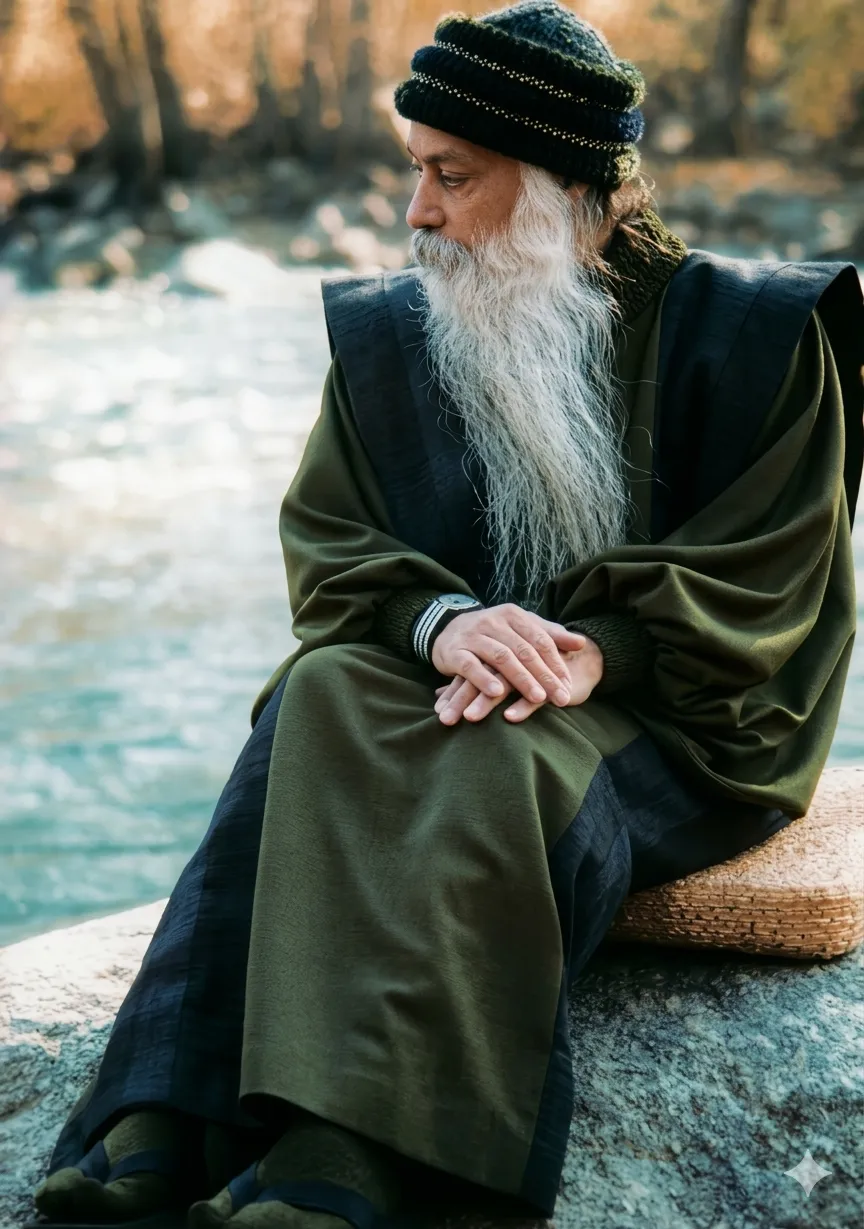
"Athato Bhakti Jigyasa" delves into the intricate dance between attachment, passion, and devotion, challenging established notions of love and suffering. Rooted in the sutra by sage Shandilya, Osho confronts conventional beliefs that link love with suffering and advocates for dispassionate detachment. Through his discourse, Osho signifies that devotion is inherently a form of passionate love, but one that must find its refuge in worthiness. He offers a profound perspective, suggesting that it is not love itself that breeds misery, but the nature of attachment and the worthiness of the object to which that love is bound. Osho reframes affection as a dynamic force, not inherently good or bad, but defined by the context and quality of its focus. Instead of the prevalent notion that detachment is the ultimate spiritual aim, Osho invites seekers to explore the depths of their attachments, recognizing where true devotion lies. He posits that both heaven and hell emerge from this realm of passion, challenge, and longing. Thus, by transforming our understanding of love and attachment, Osho provides a path to transcendence that is both radical and deeply insightful, urging mindfulness and awareness in our spiritual journeys.
-
Chapter 1
Om is the soul’s sound; true bhakti is love that dissolves ego and knowledge, freeing life into an all-embracing union with the Immortal, truly.
-
Chapter 2
Life is self-existent; turn inward to the witnessing presence—samadhi reveals life. Earn trust by questioning; love freed from desire becomes devotion.
-
Chapter 3
Choose love and neglect hatred: bhakti arrives by grace, not effort; discern who is friend or foe within, surrender to devotion instead of waging inner war.
-
Chapter 4
Pure love, freed from 'mine' and ego, naturally ripens through affection, love and faith into devotion; prayer's power is its transforming joy.
-
Chapter 5
Ego blocks true bhakti: doubt and dissolve the I; stake everything in uncalculating bhava, become empty of self, and the Divine rushes in to fill you.
-
Chapter 6
Grace, not effort, brings God-realization: drop the 'I' and become an empty reed; surrender, wait, and the divine flows—egolessness opens the door.
-
Chapter 7
Devotion dissolves the duality of devotee and God into a nameless, desireless oneness; surrender craving, purify with yoga as preparation, and seek parā‑bhakti.
-
Chapter 8
Religious faith wanes because institutions have become dead, dusty traditions; true faith revives only through living masters, direct inner search and surrender.
-
Chapter 9
Passion isn't the root of suffering - attachment's object is. Turn love from the transient to the Eternal: devotion transforms desire into liberation.
-
Chapter 10
Prayer tunes the instrument with words; devotion is the wordless fragrance. Sannyas is surrender of the ego; the world is maya, a waking dream.
-
Chapter 11
Bhakti is a fearless immediate leap of feeling beyond ritual and thought; surrendering the ego to God purifies, dissolves bondage and reveals limitless freedom.
-
Chapter 12
Auspicious is what deepens your inner rhythm; test within, not by scripture. Beyond good and bad is becoming that rhythm—extinguish hope, wake to the Divine.
-
Chapter 13
Divine is ever-present; realization is remembrance. Truth is paradoxical—both-and-beyond. Speaking it awakens thirst, yet words always fall short.
-
Chapter 14
Accept contradiction: transcend narrow logic, see God as all - life and death, good and evil, and fully live the golden age in the present now.
-
Chapter 15
Devotee and God merge; bhakti is final—losing self yields majesty. Shandilya answers: why speak of majesty after union? Because intellects are many.
-
Chapter 16
Bhakti and jnana differ only on the surface; at the center they become one. True religion is personal rebellion, and sannyas marks the beginning of devotion.
-
Chapter 17
Devotion transcends knowledge’s duality: love unites knower and known; the world is maya, not false—awaken in love rather than flee the world.
-
Chapter 18
Natural urges are seeds—let them grow into devotion; don’t stop at habit but keep flowing toward Divine. Surrender and viraha (yearning) ripen union.
-
Chapter 19
Reality is nondual: you are already one with God; devotion is dying to the ego, renouncing sorrow and receiving grace through surrender, satsang and compassion.
-
Chapter 20
Devotion is the natural science of svabhava; love reconciles matter and soul, not renunciation. Drop greed, give yourself and taste divine union.
-
Chapter 21
Seek devotion, not God: awaken love and reverence, heal the inner eye through surrender and guru; only then does the Divine descend and become known.
-
Chapter 23
Devotion moves from anguished separation to ecstatic union; chanting, service and a living guru purify the heart so grace dissolves ego into Divine.
-
Chapter 24
Prayer is non-doing: abandon doing, sit without props, let prayer arise; ego dissolves by inner seeing, pain becomes the remedy, saints need not convene.
-
Chapter 25
Means and end in devotion are one: love makes any practice potent; offering the self dissolves the doer, turning ritual into living union and freedom.
-
Chapter 26
Ego cannot be half-erased: only total self-emptying lets the Divine appear; awareness, prayerful helplessness and love—not negation—open the inner door.
-
Chapter 27
Devotion arises from surrender, not striving or ritual: offer yourself as prasad, choose bhajan over yajan, be dyed in the Master's color and be caught.
-
Chapter 28
Seeing life's futility awakens the inner search: let sadness ripen into bliss; renounce worldly hopes and pay the price by choosing joy, not self‑torture
-
Chapter 29
Means must be used then released: devotional practices (bhajan, kirtan, satsang) are ladders to parabhakti; let go of the boat to sing your true song.
-
Chapter 30
Religion is the science of going beyond man; true depth arises through meditation and satsang, dissolve the ego and witness life beyond good and bad.
-
Chapter 31
Let go of ego by single-point devotion and a master’s stripping; in emptiness the Divine descends. Religion must honor life, creativity and be adjective‑free.
-
Chapter 32
Religion is the effulgence of your intrinsic nature: outer conduct must follow inner realization; Osho calls for a life-affirming, freedom-based sannyas.
-
Chapter 33
Seek the inner eye of the heart: surrender (utkranti) lets devotion cut the ego in one leap so the world is seen as God’s form, fit for worship and enjoyment.
-
Chapter 34
Earth already is heaven; awakening, not construction, reveals it. Individuals must freely choose bliss; society may partially awaken, never by coercion.
-
Chapter 35
Everything is God's form; maya is divine energy, not illusion—worship the world, drop 'mine', wake within life; can scriptures and gurus guide the seeker?
-
Chapter 36
The world is the divine; proof is everywhere—open the inner eye of love and meditation. Surrender dissolves karma; cut the doer, not the leaves, and be free.
-
Chapter 37
Karma's fruits are bestowed by a living intelligence—God as consciousness, not person; true freedom is viloma: inward sannyas, reversing expansion to awaken.
-
Chapter 38
Human life is a fall from divine heights; awakening opens the inner eye, reversing the descent so our innate wings can carry us home to the Divine.
-
Chapter 39
Ananya—nondual devotion—dissolves the ego into a tannmayi mind; Shandilya’s sutras demand praxis over parroting: know God by intimate union, not mere thought.
-
Chapter 40
Prayer is silent surrender—an unspoken union beyond words; ego dissolves by direct seeing, not by fighting; love and true devotion require losing the self.