
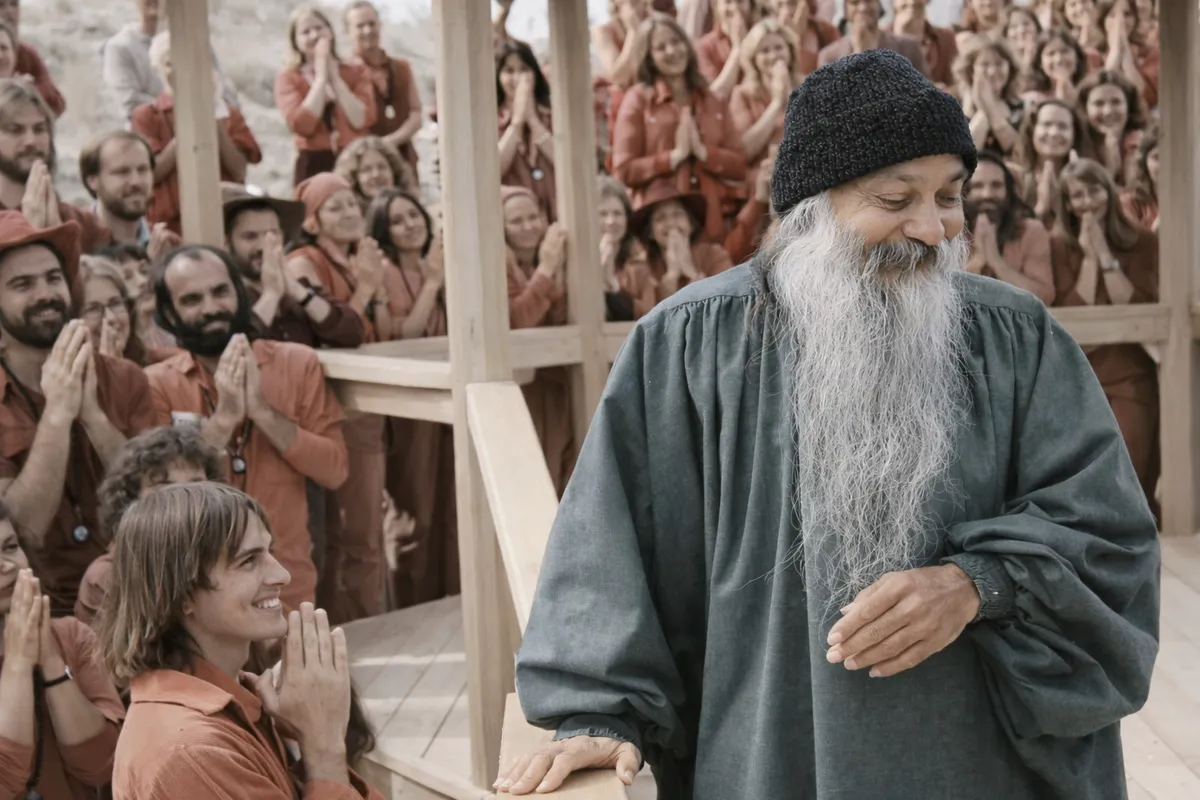
Osho's original Hindi beside Osho Live's English translation, matched passage by passage.
सहजानंद!
मन या तो अतीत होता है या भविष्य। वर्तमान में मन की कोई सत्ता नहीं। और मन ही संसार है; इसलिए वर्तमान में संसार की भी कोई सत्ता नहीं। और मन ही समय है; इसलिए वर्तमान में समय की भी कोई सत्ता नहीं।
Sahajanand! The mind is either past or future. In the present the mind has no being. And the mind is the world; therefore in the present the world has no being. And the mind is time; therefore in the present time has no being.
अतीत का वस्तुतः कोई अस्तित्व तो नहीं है, सिर्फ स्मृतियां हैं। जैसे रेत पर छूटे हुए पगचिह्न। सांप तो जा चुका, धूल पर पड़ी लकीर रह गई। ऐसे ही चित्त पर, जो बीत गया है, व्यतीत हो गया है, उसकी छाप रह जाती है। उसी छाप में अधिकतर लोग जीते हैं।
In truth the past does not exist—there are only memories. Like footprints left on sand. The snake has gone; on the dust a line remains. So too, in the psyche the imprint of what has gone—the spent—remains. Most people live in that imprint.
जो नहीं है उसमें जीएंगे, तो आनंद कैसे पाएंगे? प्यास तो है वास्तविक और पानी पीएंगे स्मृतियों का! बुझेगी प्यास? धूप तो है वास्तविक और छाता लगाएंगे कल्पनाओं का! रुकेगी धूप उससे?
If you live in what is not, how will you find joy? Your thirst is real, and you drink from memories—will thirst be quenched? The sun is real, and you raise an umbrella made of imagination—will it keep off the heat?
अतीत का कोई अस्तित्व नहीं। अतीत जा चुका, मिट चुका। मगर हम जीते हैं अतीत में। और इसलिए हमारा जीवन व्यर्थ, अर्थहीन, थोथा। इसलिए जीते तो हैं, मगर जी नहीं पाते। जीते तो हैं, लेकिन घिसटते हैं। नृत्य नहीं, संगीत नहीं, उत्सव नहीं।
The past has no existence. It is gone, erased. Yet we live in it. Hence our lives are futile, meaningless, hollow. We exist, but we do not live. We drag ourselves; there is no dance, no music, no celebration.
और अतीत रोज बड़ा होता चला जाता है। चौबीस घंटे फिर बीत गए, अतीत और बड़ा हो गया। चौबीस घंटे और बीत गए, अतीत और बड़ा हो गया। जैसे-जैसे अतीत बड़ा होता है, वैसे-वैसे हमारे सिर पर बोझ बड़ा होता है। इसलिए छोटे बच्चों की आंखों में जो निर्दोषता दिखाई पड़ती है, जो संतत्व दिखाई पड़ता है, वह फिर बूढ़ों की आंखों में खोजना मुश्किल हो जाता है। हजार तरह के झूठ इकट्ठे हो जाते हैं! सारा अतीत ही झूठ है!
And the past grows bigger every day. Twenty‑four hours go by—again the past has swollen. As the past enlarges, the burden on our head increases. That innocence in the eyes of little children, that saintliness—later it becomes hard to find in the eyes of the old. A thousand kinds of untruth pile up. The whole past is a lie.
जीसस एक सुबह-सुबह झील पर रुके। सूरज अभी ऊगा नहीं। बस, ऊगने को है। और एक मछुए ने जाल फेंका है। जीसस ने उस मछुए के कंधे पर हाथ रखा; मछुए ने लौट कर देखा। सूरज की पहली फूटती हुई किरणें पूरब से जीसस के चेहरे पर पड़ीं, उस मछुए की आंख जीसस की आंख से मिली, और बात हो गई! बिना बात किए बात हो गई। आंख से आंख की मुलाकात हो गई। क्षण भर सन्नाटा रहा और जीसस ने कहा, छोड़ यह जाल! पकड़ लीं तूने मछलियां बहुत! करेगा भी क्या मछलियां पकड़-पकड़ कर? जीवन में कुछ और पकड़ना है या बस मछलियां ही पकड़ना है? इनकी दुर्गंध से अभी ऊबा नहीं? छोड़ जाल! मेरे पीछे आ! मैं तुझे परम धन खोजने का सूत्र दूं। ऐसा जाल फेंकना सिखाऊं कि परमात्मा ही फंसे उस जाल में। उससे कम को क्या फांसना!
Jesus halted by a lake one early morning. The sun had not yet risen—just about to. A fisherman had cast his net. Jesus placed his hand on the fisherman’s shoulder. The man turned. The sun’s first rays broke from the east onto Jesus’ face. The fisherman’s eyes met Jesus’ eyes—and it happened. Without words, the word happened. Eye met eye. For a moment there was silence. Jesus said, “Leave this net. You’ve caught enough fish. What will you do catching fish? Is life only for fish? Are you not yet tired of this stench? Drop the net. Come, follow me. I’ll give you the key to the supreme treasure. I’ll teach you to cast such a net that God himself is caught in it. Why catch anything less?”
मछुआ हिम्मतवर रहा होगा। पंडित होता, चालबाज होता, होशियार होता, ब्राह्मण होता, हजार बातें निकालता--कि अभी कैसे चलूं! अभी तो अड़चनें हैं। पहले मां से तो जाकर आज्ञा ले आऊं! पहले पिता से तो पूछ लूं! पत्नी क्या कहेगी! बच्चों का क्या होगा?
The fisherman must have been courageous. Had he been a pundit, a clever man, a worldly wise Brahmin, he would have raised a thousand objections—“How can I come now? There are hindrances. First I must seek my mother’s permission, then ask my father, what will my wife say, what about the children?”
मगर जीसस की आंखों का जादू! जैसे सब भूल गया! छोड़ दिया जाल उसने पानी में ही। खींचा भी नहीं पानी के बाहर! जीसस के पीछे हो लिया।
But the magic of Jesus’ eyes! As if he forgot everything. He dropped the net into the water itself—didn’t even pull it out—and went after Jesus.
वे दोनों गांव के बाहर निकलते ही थे कि एक आदमी भागा आया और उस मछुए को कहा, पागल! तू कहां जा रहा है? और इस पागल आदमी के साथ कहां जा रहा है? तेरे पिता की मृत्यु हो गई! मैं तुझे खोजने झील पर गया, वहां इस घटना का पता चला कि एक पागल, जो आस-पास गांव के कई बार देखा गया है, उसने तेरे कंधे पर हाथ रखा और तू उसके पीछे चल पड़ा है। वापस चल! तेरे पिता का अंतिम संस्कार करना है या नहीं?
As they were leaving the village, a man ran up and shouted to the fisherman, “Madman! Where are you going? And with this mad fellow? Your father has died! I went to the lake to find you and learned that a lunatic—seen around the nearby villages—put his hand on your shoulder and you ran after him. Come back! Will you not perform your father’s last rites?”
उस युवक ने जीसस से कहा, मुझे क्षमा करें। मैं जाकर अंतिम संस्कार कर आऊं। तीन दिन बाद लौट आऊंगा।
The young man said to Jesus, “Forgive me. I’ll go and perform the rites. I’ll return in three days.”
जीसस ने उससे कुछ बातें कहीं, जो सोचना। पहली तो बात जीसस ने यह कही कि एक पल का तो भरोसा नहीं है, कल का भरोसा कहां! और तू तीन दिन का वायदा करता है! आ सकेगा? तेरे पिता को पक्का था कि आज मर जाएंगे? तुझे ही पक्का होता, तो आज तू झील पर मछली पकड़ने न गया होता। तू कल भी जिंदा होगा? तीन दिन बाद भी तू आ सकेगा? यह भी मान लें कि तू जिंदा होगा, तो तीन दिन बाद यह साहस रह जाएगा जो आज तुझमें जगा है? यह जो किरण तुझमें आज फूटी है? और फिर तीन दिन बाद तू आ भी जाए, यह भाव भी रह जाए, तो मैं बचूंगा? मैं भी बच जाऊं, यह भाव भी रह जाए, तीन दिन बाद तू आ भी जाए, तो हमारा फिर मिलन होगा? अनंत-अनंत काल में पहली बार हम मिले हैं, दुबारा का क्या भरोसा!
Jesus said a few things worth pondering. First: “You have no certainty of a single moment—how can you promise three days? Will you be able to come? Was your father certain he would die today? If you had been certain, you would not have gone fishing. Will you be alive tomorrow? Will you come after three days? Even if you live, will the courage that has awakened in you today still be there—the ray that has dawned today? And even if you come in three days and this feeling remains—will I be here? And if I am, will we meet again? In endless time we have met for the first time—what assurance is there of a second meeting?”
उस युवक ने कहा, बात तो आपकी ठीक है। जवाब तो मेरे पास नहीं। मगर मेरे पिता का अंतिम संस्कार भी तो करना है!
The youth said, “You are right. I have no answer. But my father’s last rites—”
जीसस ने कहा, इसकी फिक्र छोड़। क्योंकि गांव में बहुत मुरदे हैं, वे मुरदे को दफना देंगे! गांव में कुछ मुरदों की कमी है? अब यही आदमी आया है, यह खुद ही मुरदा है। यह ही दफना देगा। मुरदे मुरदे को दफना देंगे। मुरदों को दफना लेने दे मुरदों को। फिर जो मर ही चुका, अब दफनाओ न दफनाओ, ऐसा दफनाओ वैसा दफनाओ, जमीन में गड़ाओ कि आग लगाओ, क्या फर्क पड़ता है! पंछी तो उड़ चुका। पिंजड़ा पड़ा रहा गया है। तू मेरे पीछे आ! यह अवसर खोने का नहीं है। पीछे की तरफ लौट कर मत देख, क्योंकि वही आदमी की बुनियादी भूल है।
Jesus said, “Let that worry go. There are many dead in the village; they will bury the dead. Is there any shortage of corpses there? The very man who has come is himself a corpse; he will bury him. Let the dead bury the dead. As for one who is already gone—whether you bury or not, whether you inter him or burn him, what difference does it make? The bird has flown; the cage lies here. Come with me. Don’t miss this moment. Do not look back—that is man’s fundamental mistake.”
और हम सब पीछे लौट कर देखते हैं! हम पीछे से ही जीते हैं। हम हिसाब ही लगाते रहते हैं: यह हुआ, वह हुआ। काश ऐसा हो जाता! काश वैसा हो जाता!
And we all look back. We live from the back. We keep accounting: this happened, that happened. “If only it had been so! If only it had been otherwise!”
फिर इस अतीत के उपद्रव से भविष्य का उपद्रव पैदा होता है। उपद्रव निःसंतान नहीं होते! उपद्रव संतति-नियमन में नहीं मानते! उपद्रव भारतीय होते हैं। एक उपद्रव दस-पंद्रह बच्चे पैदा करता है; इससे कम नहीं।
From this disturbance of the past arises the disturbance of the future. Disturbances are not celibate; they don’t practice family planning. They are prolific. One trouble begets ten or fifteen.
मैंने सुना, जनगणना करने वाले अधिकारी ने एक द्वार पर दस्तक दी। और थोड़ा चौंका, और थोड़ा हैरान हुआ। आंख पर भरोसा भी न आया, गौर से पुनः देखा। लेकिन बात सच थी, भरोसा आए या न आए। जिस स्त्री ने दरवाजा खोला था, बिलकुल नग्न थी! चौंक गया। पूछा, आप नग्न क्यों हैं?
I heard of a census officer who knocked at a door. He was startled, a bit shocked—couldn’t trust his eyes. He looked again closely. But it was true, whether or not he could believe it: the woman who opened the door was completely nude. Startled, he asked, “Why are you naked?”
उस स्त्री ने कहा, चौंको मत। मैं न्यूडिस्ट हूं! मैं दिगंबरत्व में विश्वास करती हूं!
She said, “Don’t be shocked. I’m a nudist. I believe in sky‑clad living.”
वह आदमी समझदार था। सोचा, अपने को क्या लेना-देना! इसकी यह जाने। जिस काम के लिए आया हूं, वह मैं करूं और अपने रास्ते पर लगूं। उसे तो कुछ जानकारियां लेनी थीं जनगणना के लिए, सो उसने जरूरी प्रश्न पूछ कर अपनी बही में लिखे। उन्हीं प्रश्नों में एक प्रश्न था, आपके कितने बच्चे हैं। सो उसने पूछा। उस स्त्री ने कहा, बाईस!
The man was sensible. “What is it to me?” he thought. “Let me do what I came for and be on my way.” He took the necessary details. One question was, “How many children do you have?” She said, “Twenty‑two.”
फिर वह आदमी चौंका। उसने कहा, बाई, क्या आप वाकई न्यूडिस्ट हैं या आपको कपड़े पहनने की फुर्सत नहीं मिलती?
Now he was shocked again. “Madam, are you truly a nudist—or do you just never get time to put your clothes on?”
ये जो उपद्रव हैं, इनकी बड़ी संतानें होती हैं। कहावत है कि एक मुसीबत अकेली नहीं आती; साथ में भीड़-भड़क्का लाती है! मुसीबत तो यूं समझो कि कुंभ का मेला है! एक क्या आई, और आती होंगी। एक आई, तो तुम यूं समझो कि बस खबर आई। कहते हैं, एक फूल खिल जाए, तो समझो कि वसंत आ गया। फूलों के संबंध में सच हो या न हो, मगर एक मुसीबत आ गई, तो समझ लो कि अब मुसीबतों ही मुसीबतों के जाल फैल जाने वाले हैं।
These disturbances have big families. There’s a saying: trouble never comes alone; it brings a crowd. Trouble is like the Kumbh fair—if one arrives, more are on their way. They say: if a single flower blooms, spring has come. Whether or not that’s true for flowers, for trouble it is. When one trouble comes, know that soon there will be a web of troubles.
सबसे बड़ी मुसीबत जो अतीत लाता है, वह है भविष्य। भविष्य तुम्हारे अतीत की ही छाया है। वह तुमने जो जीया है, उसमें से कुछ काट-छांट कर तुम भविष्य की कल्पना करते हो। जो प्रीतिकर नहीं था, उसे छांटते हो। जो प्रीतिकर था, उसे फैलाते हो, बढ़ाते हो, विस्तीर्ण करते हो। भविष्य है क्या? भविष्य का तुम्हें पता तो नहीं। जिसका पता हो, वह भविष्य नहीं। भविष्य तो अज्ञात है। लेकिन अतीत ज्ञात है। ज्ञात से हम अज्ञात के संबंध में अनुमान लगाते हैं। और ज्ञात में से ही चुनाव करते हैं। सुखद को चुनते हैं, दुखद को छोड़ते हैं। ऐसे हम भविष्य के रंगीन सपने संजोते हैं। कांटे-कांटे अलग कर देते हैं, गुलाब-गुलाब बचा लेते हैं।
The greatest trouble the past brings is the future. The future is only the shadow of your past. Out of what you have lived, you trim and tailor a future. You prune what was unpleasant, you magnify what was pleasant. What is the future? You don’t know. If you knew, it would not be the future. The future is the unknown. But the past is known, so from the known we infer about the unknown. We select from the known—choose the agreeable, drop the disagreeable—and weave colorful dreams of tomorrow. You remove thorns and keep the roses.
हालांकि यह हमारी भ्रांति है, क्योंकि कांटे और गुलाब साथ-साथ होते हैं। यह असंभव है कि तुम जो-जो गलत था उसे छोड़ दो और जो-जो ठीक था उसे बचा लो। गलत और ठीक संयुक्त था, जुड़ा था। आएगा, तो साथ आएगा। जाएगा, तो साथ जाएगा। वे एक ही सिक्के के दो पहलू हैं। तुम एक पहलू को बचा न सकोगे।
But this is our delusion: thorns and roses come together. It is impossible to discard only the wrong and keep only the right. Right and wrong were one, entwined. If they come, they come together; if they go, they go together—two sides of one coin. You cannot preserve one side.
तो एक तो अतीत का बोझ; उसकी चट्टानें हमारी छाती पर रखी हैं। और फिर भविष्य का बोझ। अतीत का रोना, कि ऐसा क्यों न हुआ। और फिर जल्दी ही भविष्य के लिए रोओगे, क्योंकि वह भी नहीं होने वाला है। न अतीत तुम्हारे मन के अनुकूल हुआ, न भविष्य तुम्हारे मन के अनुकूल होगा। इन दो पाटों के बीच में आदमी पिसता है। और दोनों ही का कोई अस्तित्व नहीं है।
So on one side the burden of the past—its rocks placed on our chest. On the other, the burden of the future. You cry over the past—“why didn’t it happen this way?”—and soon you’ll cry over the future, because that too won’t happen your way. Between these two millstones man is ground. And neither has any existence.
अतीत वह, जो जा चुका--अब नहीं। और भविष्य वह, जो आया नहीं--अभी नहीं। दोनों के मध्य में छोटा सा बिंदु है अस्तित्व का। बस, बूंद की भांति है। अगर होश न रहा, तो चूक जाओगे।
Past is that which has gone—no more. Future is that which has not come—not yet. Between them is a tiny point of existence—like a drop. Without awareness you will miss it.
यह सूत्र प्यारा है। यह संन्यास की परिभाषा है।
This maxim is sweet. It is the very definition of sannyas.
‘भविष्यं नानुसंधत्ते।’
भविष्य का अनुसंधान न करो। जो नहीं है, उसके पीछे न दौड़ो।
“Bhaviṣyaṁ nānusaṃdhatté.” Do not investigate the future. Do not chase what is not.
मगर साधारण आदमियों की तो बात छोड़ दो, जिनको तुम असाधारण कहते हो, जिनको तुम पूजते हो, वे भी जो नहीं है उसके पीछे दौड़ते हैं। राम भी स्वर्णमृगों के पीछे दौड़ते हैं! औरों की तो बात छोड़ दो। हाथ की सीता को गंवा बैठते हैं! इसमें कसूर रावण का कम है। रावण को नाहक दोष दिए जाते हो। अगर कहानी को गौर से देखो, तो रावण का कसूर न के बराबर है। अगर कसूर है किसी का, तो राम का। स्वर्णमृग के पीछे जा रहे हैं!
Leave aside ordinary people—those you call extraordinary, those you worship, they too chase the unreal. Even Rama runs after golden deer! Let others be—he loses Sita who was in his hands. Ravana is not so much at fault; he’s blamed in vain. Look closely at the story; Ravana’s fault is negligible. If there’s fault, it’s Rama’s—chasing a golden deer.
बुद्धू से बुद्धू आदमी को भी पता है कि मृग स्वर्ण के नहीं होते। साधारण से साधारण आदमी कहता है कि सारा जग मृग-मरीचिका है। देखते हो मजा! साधारण आदमी भी कहता है, जग मृग-मरीचिका है। और राम सोने के मृग के पीछे चल पड़े! और क्या मृग-मरीचिका होगी? इससे बड़ा और क्या भ्रमजाल होगा? सीता को गंवा बैठे!
Even the dullest man knows there are no golden deer. The simplest villager says the world is mirage. See the irony! The common man says “the world is a mirage,” and Rama runs after a golden deer. What greater mirage could there be? He loses Sita.
जब भी मैं राम, लक्ष्मण और सीता की तस्वीर देखता हूं, तो मुझे लगता है कि यह भविष्य, वर्तमान और अतीत की तस्वीर है। राम हैं आगे, लक्ष्मण हैं पीछे, मध्य में सीता है। राम हैं अतीत; जो बीत गया, जो जा चुका, उसके पूजक। इसलिए तो दशरथ की मान कर चल पड़े। न सोच किया, न विचार किया। न पूछा, न प्रश्न उठाया।
Whenever I see a picture of Rama, Lakshmana, and Sita, I feel it is a picture of future, present, and past. Rama in front, Lakshmana behind, Sita in the middle. Rama is the past—the worshiper of what is gone. Hence he obeys Dasharatha without question. No thought, no inquiry, no asking, no doubt.
दशरथ की बात मानने योग्य थी ही नहीं। दशरथ की बात विद्रोह के योग्य थी। और काश, राम ने विद्रोह किया होता, तो भारत की कथा और होती। तो भारत के जीवन का अर्थ और होता, इतिहास और होता। काश, राम ने विद्रोह किया होता, तो भारत इस तरह गुलामी में न जीता, इस तरह की पीड़ा में न जीता। लेकिन राम ने एक ऐसी बात को स्वीकृति दे दी, जो कि बुनियादी रूप से गलत थी। जिसमें कहीं भी कोई न्याय नहीं था। चौदह साल का वनवास! अकारण!
दशरथ बूढ़े थे। बुढ़ापे में जो विवाह किया था, जो चौथी पत्नी थी, वह जवान! अक्सर बूढ़े पति जवान पत्नियों के चक्कर में होते हैं! बूढ़े हैं, चक्कर में होना ही पड़ता है। अरे, जवानों को होना पड़ता है, तो बूढ़ों की तो बात ही क्या! इस बुढ़ापे में जवान स्त्री ने जो कहा, वह मान लिया! यह भी अत्यंत मूर्च्छा की बात थी।
और राम हैं परंपरा के पूजक। रघुकुल रीति सदा चलि आई। वे तो रघुकुल की रीति--रीति और रिवाज, परंपरा--उसके पोषक हैं। तो अन्याय हो तो भी चलेगा। अन्याय के संबंध में भी बगावत नहीं है, विद्रोह नहीं है। और जहां अन्याय को पूजने वालों को पूजा जाता हो, फिर स्वभावतः उस देश का दुर्भाग्य सुनिश्चित है। वे अतीत के प्रतीक हैं राम।
Dasharatha’s demand was not worthy of obedience; it called for rebellion. Had Rama rebelled, India’s story would be different—its life’s meaning, its history different. Had Rama rebelled, India would not have lived so long in slavery and suffering. But Rama accepted something fundamentally unjust. Fourteen years of exile—without cause. Dasharatha was old; in old age he married again, a fourth wife, young. Often old husbands get entangled with young wives—what to say of the old when even the young get entangled! In that dotage he yielded to the young wife’s whim—utter unconsciousness. Rama is a worshiper of tradition. “The rule of the Raghu line has always been this.” He props up rite and custom—even if injustice is involved, no revolt. In a land where those who worship injustice are worshiped, misfortune is assured. Rama is the symbol of the past.
लक्ष्मण भविष्य के लिए आतुर हैं। तुम्हें याद होगा, स्वयंवर जब सीता का रचा गया, तो लक्ष्मण उचक-उचक पड़ते हैं! उनको रोकना पड़ता है बार-बार। वे धनुष तोड़ने को एकदम आतुर हो रहे हैं। वे इसकी फिक्र नहीं करते कि बड़े भैया मौजूद हैं, इनका भी कुछ खयाल करें! ऋषि-मुनि उनको रोकते हैं, कि रुको। यह ऋषि-मुनियों का भी काम खूब है! अरे, तोड़ लेने दो बेचारे को तोड़ना है तो! मगर वे उनको रोकते हैं कि नहीं, तू मत तोड़ना! वे एकदम आगे के लिए आतुर हैं; भविष्योन्मुख हैं, जल्दबाजी में हैं। राम हैं अतीत-उन्मुख। और सीता है दोनों के मध्य में। और वह कोमल सी सीता, वही है वर्तमान।
Lakshmana is feverish for the future. Remember Sita’s swayamvara—Lakshmana keeps springing up, eager to break the bow. He has to be restrained again and again. He pays no heed to the elder brother’s presence. Rishis restrain him: “Stop.” That’s the job rishis have always done—what harm if the poor fellow had broken it? But they stop him: “Not you.” He is rushing headlong, future‑oriented. Rama faces the past; Sita, tender, is in the middle—the present.
In this verse for the present the phrase is “vartamāna nimeṣam”—a mere twinkling.
इस सूत्र में वर्तमान के लिए जो शब्द उपयोग हुआ है: वर्तमान निमेषं! निमिष-मात्र!
निमिष शब्द को समझना उपयोगी है। निमिष उस हिस्से को कहते हैं समय के, जिसको तौला न जा सके, मापा न जा सके। सेकेंड नहीं, मिनट नहीं। निमिष का अर्थ होता है, जो तुलना के बाहर है, इतना छोटा है! जैसे कि भौतिकशास्त्री कहते हैं कि परमाणु का जब विस्फोट करते हैं और इलेक्ट्रान हमारे हाथ लगते हैं, तो उनमें कोई वजन नहीं; वे तौले नहीं जा सकते। जो तौला नहीं जा सकता उसको तो पदार्थ ही नहीं कहना चाहिए।
अंग्रेजी में शब्द है पदार्थ के लिए मैटर। मैटर बड़ा महत्वपूर्ण शब्द है। पदार्थ से ज्यादा महत्वपूर्ण शब्द है। क्योंकि पदार्थ का तो अर्थ होता है, जिस पद में अर्थ हो। मैटर बनता है मीटर से। मीटर यानी जिससे तौला जाए, जो तुल जाए। मैटर का अर्थ होता है, जो तौला जा सकता है।
लेकिन इलेक्ट्रान तो तौला नहीं जा सकता, मापा नहीं जा सकता--न तराजू पर, न इंच-फिटों में; कोई उपाय नहीं। इतना छोटा है कि हमारे तौलने के साधन सब मोटे हो जाते हैं, सब स्थूल रह जाते हैं। वह हमारी तुलना के बाहर हो जाता है।
Understand the word nimeṣa. It indicates that slice of time which cannot be weighed or measured. Not seconds, not minutes. Nimeṣa means beyond comparison—so small our measures become gross, our scales coarse. As physicists say, when we explode the atom and catch electrons, they have no weight; they cannot be weighed. That which cannot be weighed should hardly be called matter. In English the word for material is “matter.” It is an important word, more telling than “substance.” Matter comes from meter—what can be measured. Matter means that which is measurable. But the electron can’t be weighed, can’t be measured—by scales or inches; there is no way. It is so subtle our tools become crude. It slips beyond comparison.
ऐसे ही समय के उस अंतिम हिस्से को निमिष कहते हैं, जो तुलना के बाहर है, जो तौल के बाहर है; जिसकी कोई मात्रा नहीं होती; जो आया और गया! जो आया नहीं कि गया नहीं!
So the final indivisible segment of time is called nimeṣa—beyond measurement, without magnitude—no sooner here than gone; in truth, neither coming nor going.
दो शिकारी नए-नए शिकार खेलने गए थे। दोनों बड़े तत्पर थे, बिलकुल बंदूक लिए हुए। और तभी एक खरगोश छलांग लगाया; एक झाड़ी से दूसरी झाड़ी में चला गया। दोनों बिलकुल तत्पर थे, लेकिन फिर भी चूक गए। एक ने दूसरे से पूछा कि मामला क्या हुआ? मैं भी तैयार, तुम भी तैयार; बंदूकों के घोड़ों पर हाथ रखे थे; हुआ क्या? बात क्या हुई?
Two new hunters went out. They were ready, guns cocked. A rabbit leapt from one bush to another. Both were primed—yet they missed. One asked the other, “What happened? I was ready, you were ready; fingers on the triggers—what went wrong?”
उस दूसरे शिकारी ने कहा, मैं कहूं क्या! जब खरगोश निकल गया, तब मुझे दिखाई पड़ा! इतनी तेजी से निकला कि जब निकल रहा था तब तो मैं चूक ही गया। जब निकल गया, तब मुझे याद आई कि अरे! मगर तब तक तो देर हो चुकी थी। तब तो गोली चलाने का कोई अर्थ न था।
The second said, “What can I say? When the rabbit had already gone, then I saw it! It moved so fast that while it was passing, I missed; when it was gone, it occurred to me—ah!—but then it was too late. No point firing.”
ऐसा निमिष है। तुम्हें जब दिखाई पड़ता है, तब तक जा ही चुका होता है। जैसे ही तुम्हें याद आती है, यह वर्तमान! गया। अतीत हो गया। पहचाना, कि अतीत हो गया। सिर्फ जीया जा सकता है, जाना नहीं जा सकता। या कि यूं कहो कि जीना ही जानने का एकमात्र उपाय है। क्योंकि तुमने अगर जानने की कोशिश की, तो अतीत हो जाएगा। या अगर जल्दबाजी की, तो भविष्य रहेगा। अगर जरा सी देर की, तो अतीत हो जाएगा। और देर करनी ही पड़ेगी, क्योंकि मन में इतनी गति नहीं है। यूं तो तुमने सुना है बहुत कि मन की बहुत गति है, मगर वह जो वर्तमान का क्षण है, मन से भी बहुत तीव्र गति से जाता है। मन उसके सामने कुछ भी नहीं। बहुत पिछड़ जाता है।
Such is nimeṣa. By the time you notice it, it is gone. The moment you recall, “This present!”—it’s gone; it has become past. It can only be lived, not known. Or say: living is the only way of knowing it. If you try to know first, it becomes past. Hurry, and it remains future. Delay even a little, and it becomes past. And you will delay, for the mind has not such speed. You’ve heard the mind is very swift, but the instant called the present moves faster still. Before it the mind is nothing—left far behind.
यह सूत्र संन्यास की आधारशिला है: ‘भविष्यं नानुसंधत्ते।’
न तो भविष्य का अनुसंधान करना; दौड़ना मत भविष्य के पीछे। यह भविष्य बस स्वर्णमृग है।
This sutra is the foundation of sannyas: “Bhaviṣyaṁ nānusaṁdhatté”—do not chase the future. It is a golden deer.
मगर हम सब दौड़ रहे हैं भविष्य के पीछे। अलग-अलग स्वर्णमृग हैं--कोई धन के पीछे, कोई पद के पीछे, कोई मोक्ष के पीछे, कोई परमात्मा के पीछे--मगर भागे हुए हैं लोग! कोई यहां नहीं; सब की आंखें वहां टिकी हैं। और होना है यहां और आंखें हैं वहां! इसलिए तुम्हारे और तुम्हारी आंख में ही तालमेल नहीं हो पाता; उन दोनों में ही टूट हो जाती है। चलते हो कहीं, देखते हो कहीं!
But we all run after it. Different golden deer—some after wealth, some position, some liberation, some God—but running. No one is here; everyone’s eyes are there. What has to happen is here, and the eyes are there. Hence you and your eyes fall out of step. Your feet move one way, your eyes another.
यूनान की बड़ी प्रसिद्ध कथा है। एक बहुत बड़ा ज्योतिषी रात तारों का अध्ययन करता हुआ एक कुएं में गिर पड़ा। कुएं पर कोई घाट न था, कोई पाट न था। और उसकी आंखें अटकी थीं दूर आकाश के तारों पर। तो गिर पड़ा कुएं में। जब गिर पड़ा, तब होश आया। चिल्लाया। रात थी अंधेरी, रास्ता निर्जन, गांव पीछे छूट गया। वह तो खेत में एक झोपड़े में रात, और तो कोई न था, एक बूढ़ी औरत सोई थी। वह भी रखवाली के लिए थी। आवाज सुनी तो आई। बामुश्किल उस वृद्धा ने रस्सी डाल कर इस ज्योतिषी को बाहर निकाला।
A famous Greek tale: a great astrologer, studying the stars at night, fell into a well—no steps or parapet. His eyes were glued to the distant stars; he tumbled in. Only then did he come to his senses and cry out. Dark night, deserted path, the village far behind. In a hut in a field an old woman, a watch‑keeper, was sleeping. Hearing the shout she came, threw down a rope, and with difficulty pulled him out.
ज्योतिषी ने उसे बहुत-बहुत धन्यवाद दिया, बहुत अनुग्रह किया। और कहा कि सुन, तुझे शायद पता भी न हो कि मैं यूनान का सबसे बड़ा ज्योतिषी हूं। तारों के संबंध में और तारों के माध्यम से मनुष्य के भविष्य के संबंध में मेरी घोषणाएं कभी गलत नहीं हुईं। बड़े-बड़े सम्राट दूर-दूर से अपना भविष्य पूछने मेरे पास आते हैं। हजारों रुपये मेरी फीस है। लेकिन तेरा भविष्य मैं मुफ्त बता दूंगा, क्योंकि तूने मेरा जीवन बचाया।
The astrologer thanked her profusely. “Listen, you may not know—I am Greece’s greatest astrologer. My pronouncements about the future, through the stars, never go wrong. Emperors come from afar to ask their fate. My fee is in the thousands. But I will tell your future for free, because you saved my life.”
वह बूढ़ी स्त्री हंसने लगी। उसने कहा, बेटा, तू फिक्र न कर। मैं तुझे कष्ट न दूंगी। उसने कहा, नहीं-नहीं। कष्ट की कोई बात नहीं। तू कल आ जाना। यह मेरा पता रहा। यूं तो तू किसी से भी पूछ लेगी एथेंस में, तो कोई भी मेरे घर का पता बता देगा। बच्चा-बच्चा जानता है।
The old woman laughed. “Son, don’t trouble yourself. I won’t burden you.”
He said, “No, no—no burden. Come tomorrow. Here’s my address. Ask anyone in Athens—every child knows my house.”
पर, उस बुढ़िया ने कहा, मुझे आना नहीं बेटा। तुझसे क्या अपना भविष्य पूछूंगी! तुझे एक कदम आगे का कुआं तो दिखाई पड़ता नहीं। तू मेरे संबंध में क्या बताएगा! तुझे अपना भविष्य पता नहीं कि आज कुएं में गिरना है; कि आज जरा सम्हल कर चलूं; कि आज चलूं ही नहीं, घर में ही रहूं। तू मुझे क्या भविष्य बताएगा!
The old woman said, “I won’t come, son. Why should I ask my future from you? You could not see the well a step ahead—what will you tell me? You didn’t know your own future—that today you would fall into a well; that you should walk carefully today, or better, not walk at all. What can you tell me?”
कहानी अदभुत है, क्योंकि उस ज्योतिषी को इससे इतनी चोट लगी और बात इतनी साफ हो गई कि उसने ज्योतिषी का धंधा छोड़ दिया। बात तो सच थी।
The story is remarkable. It hit him so hard, and the point was so clear, that he gave up astrology. The truth was plain.
ऐसा हुआ, जयपुर में मेरे पास एक ज्योतिषी को लोग ले आए। एक हजार एक रुपया उनकी फीस थी। उससे कम में वे हाथ भी नहीं देखते थे। मुझसे बोले कि आपको मेरी फीस पता है? मैंने कहा, जो भी फीस होगी...।
Something similar happened in Jaipur. People brought an astrologer to me. His fee was one thousand and one rupees—he wouldn’t even look at a hand for less. He said, “Do you know my fee?” I said, “Whatever it is...”
उन्होंने कहा, नहीं। मैं आपको बता दूं। एक हजार एक।
He said, “No, let me tell you—one thousand and one.”
मैंने कहा, तुम फिक्र छोड़ो। मैं एक हजार दो दूंगा! अब तुम आ ही गए हो, इतना कष्ट किए, तो खाली हाथ जाना उचित नहीं। तुम मजे से मेरे हाथ का अध्ययन करो।
I said, “Don’t worry; I’ll give you one thousand and two. You’ve come all the way; you shouldn’t go empty‑handed. Read my hand at leisure.”
कुछ बातें यहां-वहां की उन्होंने कहीं, जो कि बंधी हुई बातें हैं, जो कि ज्योतिषी सभी को कहते हैं, जो कि सभी के संबंध में सही होती हैं। थोड़ा-बहुत हेर-फेर करना पड़ता है। और बातें इस ढंग से कहनी होती हैं कि उनमें हेर-फेर करने की सुविधा होती है; गोल-मोल करनी होती हैं। फिर चलने का वक्त आया, तो वे राह देखें कि उनकी फीस मिले!
He said some odds and ends—set phrases astrologers say to everyone, which prove right for all. You have to tweak them a bit, and speak them in a way that allows room to maneuver—vague and roundabout. When it was time to go, he waited for his fee.
मैंने कहा, अब आप जाइए भी। अब मैं कुछ और काम करूं!
I said, “Now you may go. I have other work.”
उन्होंने कहा, मैं तो जाऊं, लेकिन फीस!
He said, “I’ll go—but the fee!”
मैंने कहा, यह तो आपको पहले ही सोच लेना था! अपना हाथ देख कर घर से निकलना चाहिए!
I said, “You should have thought of that before. You should have looked at your own hand before leaving home.”
उन्होंने कहा, आपका मतलब?
He said, “What do you mean?”
मैंने कहा, मेरा मतलब यह कि मैं तो फीस देने वाला नहीं हूं। तुम्हें मेरा हाथ देखते से समझ लेना था कि इस आदमी से फीस नहीं मिलने वाली! सच तो यह है, तुमने मेरा इतना समय खराब किया, इसकी फीस तुम मुझे दो। और तुम निपट बुद्धू हो, क्योंकि तुमको यह भी पता नहीं कि आज किसका हाथ देखने जा रहे हो; उससे फीस मिलने वाली नहीं!
I said, “I mean I’m not going to pay you. You should have known from reading my hand that this man won’t pay. In truth, you have wasted my time—pay me my fee. You are downright foolish: you don’t even know whose hand you’re going to read today, and whether you’ll get paid!”
लेकिन यह ज्योतिषी एथेंस के उस ज्योतिषी जैसा बुद्धिमान नहीं था। मैंने सुना, वे अभी भी वही धंधा कर रहे हैं! उस एथेंस के ज्योतिषी ने तो धंधा छोड़ दिया। बात तो साफ हो गई कि मेरी आंखें तारों पर अटकी हैं; मुझे एक कदम आगे का तो पता नहीं चलता; कुएं में गिर जाता हूं; क्या जानूंगा भविष्य!
But this astrologer was not as intelligent as the Greek one. I hear he still practices. The Greek gave it up. The point was clear: his eyes were fixed on the stars; he couldn’t see a step ahead; he fell in a well—what could he know of the future?
भविष्य वह है, जो जाना ही नहीं जाता। और अतीत वह है, जो जाना गया। तो तुम भविष्य के संबंध में जो दौड़-धूप करते हो, आपा-धापी करते हो, वह अतीत के ही आधार पर करते हो। अतीत से ही सीढ़ियां बनाते हो। और इन दोनों के बीच में वह निमिष-मात्र छोटा सा पल है, जो भागा जा रहा है, इतनी तेजी से कि अगर तुम अतीत और भविष्य में उलझे रहे, तो उससे चूकते ही जाओगे, चूकते ही जाओगे। और वही है सत्य।
The future, by its very nature, cannot be known. The past is what is known. All your bustle about the future is based on the past. You build the stair out of the past. Between the two runs that tiny, twinkling instant—so swift that if you stay entangled in past and future you will go on missing it. And that alone is truth.
‘भविष्यं नानुसंधत्ते नातीतं चिन्तयत्यसौ।’
और न अतीत की चिंता। जो बीत गया, बीत गया। अब उधेड़बुन क्या! अब उसको अन्यथा तो किया नहीं जा सकता। अब तुम लाख उपाय करो, तो भी रत्ती भर उसे बदला नहीं जा सकता। जिसे बदला ही नहीं जा सकता, उसके संबंध में चिंता कैसी! क्यों समय खराब कर रहे हो उसके संबंध में? और जो आया नहीं है अभी, अभी कुछ किया नहीं जा सकता। और हम दोनों में ही उलझे हैं। इन दोनों का नाम संसार है।
“Bhaviṣyaṁ nānusaṁdhatté nātītaṁ cintayaty asau.” Nor brood over the past. What is gone is gone. Why unravel it now? You cannot make it otherwise. Do what you will, not a grain can be changed. What cannot be changed—why worry? And what has not yet come—nothing can be done about it now. Yet we are trapped in both. Their name together is the world.
संसार बाजार नहीं है, न दुकान है, न परिवार है। अतीत और भविष्य, इनका जो विस्तार है...। अतीत अर्थात स्मृति; भविष्य अर्थात कल्पना। इन दोनों के बीच में तुम मरे जा रहे हो। यही तुम्हारा संसार है।
The world is not a market, not a shop, not family. The world is the spread of past and future—past as memory, future as imagination. Between them you are dying. This is your world.
मैं भी अपने संन्यासी को कहता हूं कि संसार छोड़ो। लेकिन उस संसार को छोड़ने को नहीं कहता, जिसको पुराने संन्यासी छोड़ कर भागते रहे हैं। वे तो भगोड़े हैं। वे तो पलायनवादी हैं। वे तो कायर हैं। उन्होंने तो पीठ दिखा दी। उन्होंने तो जीवन का अवसर खो दिया। मैं कहता हूं, इस संसार को छोड़ो। मन संसार है। अतीत-भविष्य संसार है। इसको छोड़ दो; और वर्तमान में जीओ--अभी! यहीं!
I too tell my sannyasin: leave the world. But not the world old renunciates fled. They were escapees, escapists, cowards. They showed their backs to life and missed the opportunity. I say: leave this world—mind is the world; past‑future is the world. Drop it and live in the present—now, here.
थोड़ा सोचो इस सौंदर्य को, इस अपूर्व प्रसाद को--यहीं और अभी होने के! सब जैसे ठहर जाए। अतीत नहीं, भविष्य नहीं। तो वह जो ठहराव है, वह जो थिरता है, वही ध्यान है, वही संन्यास है। उस थिरता में निर्मलता है, निर्दोषता है। उस थिरता में अहोभाव है, आश्चर्य है, रहस्य है। उस थिरता में परमात्मा का दर्शन है, मुक्ति है, निर्वाण है।
Contemplate the beauty, the incomparable grace, of being here and now. No past, no future. In that stillness, that steadiness, is meditation, is sannyas. In that steadiness there is purity, innocence. There is awe, wonder, mystery. There is the vision of God, freedom, nirvana.
और योगवासिष्ठ का यह सूत्र इसलिए और भी महत्वपूर्ण है, इससे तुम्हें जाहिर होगा कि यह मेरे संन्यास की परिभाषा ही हो सकता है, पुराने संन्यास की परिभाषा नहीं। क्योंकि पुराना संन्यासी तो न केवल भविष्य की सोच रहा है, साधारण संसारी से तुम्हारा संन्यासी तो और भी बड़े भविष्य की सोच रहा है--मृत्यु के बाद क्या होगा? स्वर्ग में क्या होगा? कितने स्वर्ग हैं? मोक्ष मिलेगा कि नहीं मिलेगा? किन पुण्यों के करने से स्वर्ग में प्रवेश मिलेगा? परमात्मा की उपलब्धि कब होगी?
And this Yogavasistha verse is all the more significant because it makes clear it could only define my sannyas, not the old. For the old renunciate not only thinks of the future—more than the worldly man he frets over a grander future: What after death? What in heaven? How many heavens? Will I get moksha or not? By which merits can I enter heaven? When will God be realized?
धन की दौड़ तो यहीं है; उसकी तो सीमा है मौत। मगर यह जो मोक्ष की और परमात्मा की और ब्रह्म-अनुभव की खोज में दौड़ रहा है, इसकी तो कोई सीमा ही नहीं। इसका भविष्य तो बड़ा असीम है! यह तो और भी बड़ा संसारी है, मेरे हिसाब से, क्योंकि इसका तो मन और भी बड़ा है। और तुम्हें तो इसी जन्म की फिक्र है। मगर यह तुम्हारा जो संन्यासी है, इसको पिछले-पिछले जन्मों की भी फिक्र पड़ी है। कि पिछले जन्मों में जो पाप किए थे, कर्म किए थे, उनका भी निपटारा करना है, उनका भी हिसाब करना है।
The race after money at least ends here—in death. But the chase after liberation, God, Brahman—there is no end. That future is boundless. He is, in my view, even more worldly—his mind is bigger. You worry about this life; he worries about past lives too—the sins and karmas of previous births to settle and account for.
तुम्हारा भविष्य भी सीमित है और अतीत भी। अतीत तुम्हारा जन्म से अब तक; और भविष्य तुम्हारा अब से मृत्यु तक। कोई बहुत ज्यादा नहीं! सत्तर साल जीओगे, तो समझ लो कि आधा भविष्य, आधा अतीत--अगर पैंतीस साल की उम्र है अभी, अगर अभी बीच में खड़े हो तो। मगर तुम्हारा जो संन्यासी है, जिसको तुम धार्मिक कहते हो, उसकी मुसीबत तो सोचो! वह तो कह रहा है, चौरासी करोड़ योनियों में होकर आया हूं! चौरासी करोड़ योनियों में उन्होंने क्या-क्या काम नहीं किए होंगे! उन सब का हिसाब, उन सब का निपटारा करना है। एक-एक रत्ती-रत्ती कृत्य का चुकतारा करना होगा। इसका अतीत तो बहुत बड़ा है! यह तो कभी सुलझ पाएगा, इसकी संभावना न समझो। इतने उलझाव को कैसे सुलझाएगा? और उलझाव आदमी का ही नहीं है; सब तरह के जानवरों का है। यह मछली भी रहा; यह केंचुआ भी रहा। अब इसने क्या-क्या उपद्रव न किए होंगे!
Your past and future are limited—past from birth to now, future from now to death. Not too much. If you live seventy years, then roughly half past, half future—if you are in midlife. But think of your so‑called holy man: “I have passed through 8.4 million wombs.” What mischiefs must he have done there! All to be accounted for, balanced to the last grain. His past is vast. There is no chance of ever untangling it. And it’s not only human—he was all manner of creatures. He was a fish, a worm. What riots must he have caused!
मैंने सुना, एक केंचुए ने एक दूसरे केंचुए को देख कर कहा, अहा! पहली नजर का प्रेम इसको कहते हैं! मुझे तो तुझसे प्रेम हो गया!
I heard one worm say to another, “Ah! So this is love at first sight. I’ve fallen for you.”
उस दूसरे केंचुए ने कहा, अरे मूरख, मैं तेरा ही दूसरा हिस्सा हूं! नाहक की बकवास न कर! क्योंकि केंचुए के दो मुंह होते हैं, वह उन्हीं का दूसरा हिस्सा था। उसने कहा, मूरख, व्यर्थ की बकवास न कर!
The other said, “You fool, I am your other half—don’t talk nonsense!” Worms have two mouths; it was his own second end. “Don’t babble.”
केंचुए भी रहे होओगे। न मालूम कैसी-कैसी नजरों के प्रेम हुए होंगे। कभी-कभी खुद से भी प्रेम हुआ होगा। खुद ही से प्रेम के वार्तालाप हो गए होंगे। जंगली जानवर भी रहे होओगे। क्या-क्या नहीं रहे होओगे! चौरासी करोड़ योनियों में सब तो आ गया होगा। पत्थर से लेकर आदमी तक की लंबी यात्रा, इस सब का हिसाब-किताब करना है!
You will have been worms too. Who knows what “love at first sight” you’ve had—at times with yourself! Wild beasts too. What have you not been? From stone to man, a long journey. All this to be tabulated!
इसलिए तो तुम्हारा साधु इतना उदास हो जाता है; इतना चिंतित हो जाता है; इतना व्यथित हो जाता है। न दिन चैन, न रात चैन। कहां विश्राम उसे! और मैं बात कर रहा हूं अनहद में बिसराम की। उसको कहां विश्राम? उसको तो उधेड़बुन ही उधेड़बुन है। और फिर उसका भविष्य यहीं खत्म नहीं होता; मौत पर कोई समाप्ति नहीं होती। फिर आगे चलते ही जाना है।
No wonder your sadhu is so gloomy, so anxious, so tormented. No peace by day or night. Where can he rest? And I speak of resting in the soundless. Where can he rest—he has only worry. His future does not end with death; it stretches on.
इन दोनों अनंत यात्राओं के बीच में उसका निमिष पल-मात्र का जो वर्तमान है, वह तो यूं दब कर पिस जाएगा कि जैसे दो चट्टानों के बीच में किसी ने जुही के फूल को दबा दिया हो! पता भी न चलेगा। कभी खबर भी न मिलेगी।
Between these two endless journeys, his present—this mere twinkling—will be crushed like a jasmine blossom between two rocks. He will never even come to know it.
नहीं। यह सूत्र मेरे संन्यास की ही बात कर रहा है। छोड़ो अतीत को; छोड़ो भविष्य को। और दूसरी बात भी मेरे संन्यासी पर ही लागू हो सकती है: ‘वर्तमान निमेषं तु हसन्नेवानुवर्तते।’
No—the verse speaks of my sannyas. Drop the past; drop the future. And the second half applies only to my sannyasin: “Vartamāna nimeṣaṁ tu hasann evānuvartate”—follow the present instant laughingly.
हंसो, आनंदित होओ। प्रफुल्लित होओ। मग्नचित्त होकर जीओ।
Laugh. Rejoice. Be festive. Live absorbed in delight.
यह तो पुराने संन्यासी पर लागू नहीं हो सकता। हंसते हुए वर्तमान में जीना! पुराना संन्यासी तो कहेगा कि यह योगवासिष्ठ भी भ्रष्ट है। मैं तो भ्रष्ट हूं ही।
This cannot apply to the old renunciate. “Live laughingly in the present”—he would say even the Yogavasistha has become corrupt. I am corrupt, of course.
योगवासिष्ठ को लोग पढ़ते रहते हैं, लेकिन इसके अर्थ को नहीं समझते। न मालूम कितने शास्त्रों को पढ़ते रहते हैं, जिनके अर्थ नहीं समझते। अगर उनको अर्थ समझ में आ जाएं, तो बहुत चौंकें, बहुत हैरानी उन्हें हो। क्योंकि उनकी जीवन-धारणाओं में और उन शास्त्रों के मौलिक अर्थों में भेद होगा। होना ही चाहिए। क्योंकि शास्त्र तो उनसे जन्मे हैं, जिन्होंने जाना।
People read the Yogavasistha and many scriptures without grasping their meaning. If they understood, they would be startled, amazed—for their beliefs would clash with the scriptures’ original intent. As it must be, because scriptures are born of those who have known.
अब जिसने जाना है, उसने यह बात कही होगी। अज्ञानी तो नहीं कह सकता। वर्तमान के क्षण में मस्त होकर जो जी रहा है, अलमस्त, प्रमुदित, प्रफुल्लित; जिसका रोआं-रोआं नृत्य में लीन है, और जिसके कण-कण में गीत उठ रहा है, वैसा व्यक्ति ही संन्यासी है।
Only one who knows can say this. One who lives in the present moment, intoxicated, carefree, jubilant; whose every pore is dissolved in dance, whose every particle sings—that one is a sannyasin.
लेकिन तुम्हारे तथाकथित संन्यासियों को तुम देखो। उनकी शक्लों पर बारह बज रहे हैं! हमेशा मातमी! हंसना तो जैसे सदियों से भूल गए हैं। और हंसें भी तो कैसे हंसें? चौरासी करोड़ योनियों का बोझ! कितना हिसाब-किताब निपटाना है! कर्मों के कितने जाल इकट्ठे हो गए हैं, और रोज होते जा रहे हैं। और रोज भूल पर भूल होती जा रही हैं। और अभी आगे भी बहुत यात्रा पड़ी है। धूल यूं ही बहुत जम गई है और अभी यात्रा बहुत शेष है, और धूल जमेगी। उनका संकट तो देखो! उनके प्राण कैसी विडंबना में पड़े न होंगे! कहां हंसें? कैसे हंसें? हंस तो वही सकता है, जिसका कोई अतीत नहीं, कोई भविष्य नहीं; वर्तमान ही जिसके लिए सब कुछ है। उसके लिए क्या चिंता? क्या बोझ? क्या पीड़ा? क्या मातम? उसके लिए जीवन उत्सव है।
But look at your so‑called renunciates—their faces ring with perpetual midnight; always funereal. As if they have forgotten how to laugh for centuries. And how can they laugh? The burden of 8.4 million births! So many accounts to settle. Karma upon karma piled up, and more each day. Mistake upon mistake daily. A long journey still ahead; dust already thick and more to gather. See their plight, their tragic breath. Where can they laugh? Only one who has no past, no future, can truly laugh; for whom the present is all. What worry, what burden, what grief, what mourning? For him life is celebration.
निश्चित ही, सहजानंद, योगवासिष्ठ का यह श्लोक, मैं जो कहता हूं, उसकी तरफ ही इशारा है; और बहुत स्पष्ट इशारा है। जिसने भी कहा होगा, वह जानने वाला रहा होगा, वह बुद्धपुरुष रहा होगा।
Certainly, Sahajanand, this verse of the Yogavasistha points exactly to what I say—and very clearly. Whoever said it must have been a knower, an awakened one.
शास्त्रों के संबंध में एक बात खयाल रखना, क्योंकि पुराने शास्त्र एक व्यक्ति के द्वारा लिखे हुए नहीं हैं, अनेक व्यक्तियों के द्वारा लिखे हुए हैं। उनमें चीजें जुड़ती चली गईं। वे सब संहिताएं हैं। नए-नए लोग होते गए, नई-नई बातें जोड़ते चले गए। तो उनमें कभी-कभी अज्ञानियों ने भी जोड़ दिया है बहुत कुछ। ज्ञानियों के साथ-साथ अज्ञानियों के शब्द भी उनमें मिल गए हैं।
Remember one thing about scriptures: ancient texts are not written by one person but by many. They are compilations. Things were added over time—sometimes by the ignorant too. Alongside the wise, the words of the unwise got mixed in.
इसलिए तुम्हें मेरी बातों में कई बार विरोधाभास मिलेगा। योगवासिष्ठ के इस सूत्र का मैं समर्थन करूंगा और किसी दूसरे सूत्र का विरोध करूंगा। और तब तुम्हें अड़चन होती है, क्योंकि तुम्हें हैरानी यह होती है कि जब योगवासिष्ठ का एक सूत्र मैंने ठीक कहा, तो सब सूत्र ठीक होने चाहिए!
सब सूत्र ठीक नहीं हो सकते, क्योंकि सब सूत्र एक ही ऊर्जा से पैदा नहीं हुए हैं।
Therefore in my talks you will often find apparent contradictions. I will support this verse of the Yogavasistha and oppose another, and you will be puzzled: if one verse is right, should not all be right? They cannot be, because they did not all spring from the same energy.
वेद के एक सूत्र का मैं समर्थन कर दूंगा और दूसरे सूत्र का विरोध करूंगा। और उतने ही बलपूर्वक विरोध करूंगा, जितने बलपूर्वक मैंने पहले का समर्थन किया था। और तुम विरोधाभास देखते हो, तो तुम्हारी भूल है। कहीं कोई विरोधाभास नहीं है। संहिताएं हैं ये।
I may support one Vedic verse and oppose another with equal force. If you see contradiction, it is your mistake. There is none. These are anthologies.
बुद्ध के नाम से इतने शास्त्र हैं कि असंभव है कि एक व्यक्ति ने उतने शास्त्र लिखे हों या कहे हों। व्यास के नाम से इतने शास्त्र हैं कि असंभव है यह कि एक व्यक्ति ने इतने शास्त्र लिखे हों या कहे हों। व्यास का नाम स्वीकृत नाम हो गया; साख हो गई नाम की। तो जिसको भी अपनी किताब चलानी हो, वह व्यास का नाम उस पर लिख देता था!
छपती तो थीं नहीं किताबें; लिखी जाती थीं हाथ से। कोई कापीराइट तो थे नहीं उन दिनों, कोई सरकारी नियंत्रण था नहीं। तुम भी किताब लिख कर अगर उसको लिख दो व्यास-रचित, तो कोई कुछ कर नहीं सकता था। तुमने चला दी व्यास की एक और किताब! लेकिन व्यास के नाम की साख थी; साख का फायदा उठा लेना अच्छा था। तुम अपने नाम से लिखोगे, कौन पढ़ेगा? कौन सुनेगा? कौन मानेगा?
लेकिन व्यास की है, तो फिर तो माननी ही होगी; गलत भी हो, तो भी माननी होगी।
So many texts are under Buddha’s name that it is impossible one man spoke or wrote them all. So many under Vyasa’s that it is impossible one man composed them all. Vyasa became an accepted brand; the name had prestige. Anyone who wanted his book to go would write Vyasa’s name. There was no printing, no copyright, no government control. You too could write a book, sign it “composed by Vyasa”—no one could object. Another Vyasa book would be launched. The brand helped. Under your own name, who would read, who would listen, who would believe? But if it was Vyasa’s, then it had to be accepted—even if wrong.
कितनी रामायणें हैं! वाल्मीकि से लेकर तुलसीदास तक कितने लोगों ने रामायणें लिखीं! इनमें बहुत भेद हैं। एक-दूसरे से बहुत ज्यादा अलग-अलग बातें हैं। मगर राम की कथा है; राम की कथा की साख है; तो कोई भी लिख दे राम की कथा, चल पड़ेगी! लोग उसे सिर पर रख लेंगे। लोगों को फिक्र ही नहीं कि उसके भीतर क्या है!
How many Ramayanas there are! From Valmiki to Tulsidas many wrote Ramayanas—with great differences. But it is Rama’s tale; the brand is strong—anyone writes Rama’s story and it spreads. People carry it on their heads. No one cares what is inside.
इसलिए मैं जब किसी सूत्र का समर्थन करूं, तो खयाल रखना, उस सूत्र का समर्थन कर रहा हूं, कोई योगवासिष्ठ के पूरे जीवन-दर्शन का समर्थन नहीं कर रहा हूं। बहुत से सूत्र हैं जिनसे मेरा इतना ही विरोध है, जितना मेरा समर्थन इस सूत्र के लिए है। क्योंकि मेरे पास अपनी कसौटी है। मुझे किसी शास्त्र से न कुछ लेना है, न देना है। मेरी कसौटी पर जो ठीक उतरेगा, वह ठीक। जो ठीक नहीं उतरेगा, वह नहीं ठीक। सोने को सोना कहूंगा; मिट्टी को मिट्टी कहूंगा। फिर वह चाहे योगवासिष्ठ में ही रखी हुई मिट्टी क्यों न हो! और सोना अगर कचरे में भी पड़ा हो, तो भी उसे सोना कहूंगा।
So when I support a verse, understand: I support that verse, not the entire philosophy of the Yogavasistha. There are many verses I oppose as strongly as I support this one. Because I have my own touchstone. I owe nothing to any scripture. What proves true on my touchstone is true; what doesn’t, isn’t. Gold I will call gold; clay I will call clay—even if the clay lies in the Yogavasistha. And if gold lies amid garbage, I will still call it gold.
इसलिए तुम्हें मेरी बातों में बहुत बार विरोधाभास दिखाई पड़ें, तो जल्दी मत कर लेना, सोचना, कारण होगा कुछ।
So if you find contradictions in my words, don’t hurry—reflect. There will be reasons.
जैसे इस सूत्र में तो मैं कोई शर्त न लगाऊंगा, बेशर्त स्वीकार करूंगा। यह तो मेरी ही बात है; यही तो मैं रोज कह रहा हूं तुमसे, कि क्षण में जीना सीखो, पल में जीना सीखो। अगर चाहते हो कि तुम्हारे जीवन में आनंद के फूल खिलें, सुवास उड़े महोत्सव की, और परमात्मा तुम्हें घेर कर तुम्हारे साथ मदमस्त हो उठे, तो इतना ही करना जरूरी है। यही ध्यान की पूरी प्रक्रिया है। अतीत से अपने को छुड़ा लो। और अतीत ने तुमको नहीं पकड़ा है; तुमने ही अतीत को पकड़ा है। इसलिए जब चाहो तब छोड़ दे सकते हो। और वर्तमान मौजूद है, कहीं खोजने जाना नहीं है। और भविष्य है ही नहीं; छोड़ने में क्या अड़चन है!
For this verse I put no conditions; I accept it unreservedly. It is my own statement. It is what I tell you every day: learn to live in the instant, in the moment. If you want the flowers of joy to bloom in your life, the fragrance of festival to arise, and God to surround you and dance with you in abandon, this is enough. This is the whole process of meditation. Free yourself from the past. The past has not held you—you have held the past; so you can drop it whenever you wish. The present is here; there is no need to go searching. And the future is not—what obstacle is there in dropping it?
लेकिन बड़े अजीब लोग हैं। जो नहीं है, उसको भी छोड़ने में मुश्किल होती है! मुट्ठी खाली है, मगर उसको खोलने में डर लगता है कि कहीं खाली दिखाई न पड़ जाए! बांधे रहो, तो कम से कम भरोसा तो बना रहता है कि कुछ होगा, तभी तो बांधे हुए हैं! लोग अपनी मुट्ठी भी खोलने में डरते हैं कि कहीं खाली दिखाई न पड़ जाए! मगर तुम्हारी मुट्ठी है, तुम्हें पता ही है कि खाली है; खोलो या न खोलो।
But people are strange—what is not, even that is hard to drop. The fist is empty, yet you fear to open it lest it be revealed as empty. Keep it clenched, and at least you preserve the hope “there must be something, otherwise why would I hold it?” People fear opening even their own fist lest it appear empty. But it is your fist—you already know it is empty. Open it or not.
भविष्य है नहीं; छोड़ने का सवाल नहीं। अतीत जा चुका है; छोड़ने का सवाल नहीं, छूट ही चुका है। जो है, उसे तुम छोड़ना भी चाहो तो छोड़ नहीं सकते हो। मगर कैसा उपद्रव है कि नहीं के साथ उलझे होऔर है से चूक रहे हो। और जो है, वह परमात्मा का ही दूसरा नाम है।
The future is not; there is nothing to drop. The past is gone; there is nothing to drop—it has dropped. What is, you cannot drop even if you try. Yet see the mischief: entangled with what is not, missing what is. And what is—that is just another name for God.
आनंद!
सत्यं वै चक्षुः। सत्य कोई वस्तु नहीं है; सत्य दृष्टि है; देखने का एक ढंग है--एक निर्मल ढंग, निर्दोष ढंग। एक ऐसी आंख जिस पर कोई पर्दा न हो; एक ऐसी आंख जिस पर कोई धुआं न हो; एक ऐसी आंख जो निर्विचार हो।
Anand! Satyam vai chakshuh. Truth is not a thing; truth is a way of seeing—a pure way, an innocent way. An eye with no veil over it, no smoke over it; an eye that is without thought.
कोई हिंदू है, तो फिर उसकी आंख सत्य नहीं हो सकती। कोई मुसलमान है, तो उसकी आंख सत्य नहीं हो सकती। कोई ईसाई है, तो उसकी आंख सत्य नहीं हो सकती। अगर आंख को सत्य करना हो, तो ईसाई होना, हिंदू होना, मुसलमान होना हटा कर रख देना होगा। आंख निर्मल होनी चाहिए, पक्षपातशून्य होनी चाहिए, पूर्वाग्रहों से मुक्त होनी चाहिए।
If someone is a Hindu, then his eye cannot be true. If someone is a Muslim, his eye cannot be true. If someone is a Christian, his eye cannot be true. If the eye is to be made true, then being Christian, Hindu, Muslim has to be set aside. The eye must be clear, impartial, free of prejudices.
लेकिन लोग अपने विश्वासों से भरे हैं। और उन्हीं विश्वासों के माध्यम से देखने की कोशिश करते हैं। और जब तुम अपने विश्वास के माध्यम से देखने की कोशिश करते हो, तभी सब असत्य हो जाता है। तब तुम वही देख लेते हो, जो तुम देखना चाहते हो; वह नहीं, जो है। और देखना है उसे, जो है। सबसे बड़ी कठिनाई जीवन की, सबसे बड़ी मुसीबत, कि हम पैदा होने के साथ ही विकृत होने की प्रक्रिया में सम्मिलित कर दिए जाते हैं। हमारी आंखों पर पर्दे पर पर्दे, पर्तों पर पर्तें चढ़ा दी जाती हैं।
But people are full of beliefs, and they try to see through those beliefs. And when you try to see through your belief, everything becomes untrue. Then you see what you want to see; not what is. And what must be seen is what is. The greatest difficulty of life—the greatest calamity—is that from birth we are enlisted into a process of distortion. Layer upon layer of curtains are laid over our eyes.
अब अगर जैन कृष्ण के मंदिर में जाता है, तो झुकने का सवाल ही नहीं उठता, प्रश्न ही नहीं उठता। कृष्ण में उसे कोई भी महिमा दिखाई नहीं पड़ती। उसकी अपनी धारणाएं इतनी मजबूत हैं कि कृष्ण में तो उसको निपट भोगी दिखाई पड़ता है।
Now if a Jain goes into Krishna’s temple, the question of bowing down doesn’t even arise. He sees no glory at all in Krishna. His own notions are so strong that Krishna appears to him as nothing but a sensualist.
कृष्ण खड़े हैं, बांसुरी बजा रहे हैं। मोर-मुकुट बांधे हुए हैं। पीतांबर वस्त्र पहने हुए हैं। आभूषण पहने हुए हैं। रुक्मिणी की प्रतिमा भी साथ में है, कि राधा की। यह देख कर ही जैन के मन में तत्क्षण सवाल उठता है, ये कैसे भगवान? भगवान तो वीतराग होना चाहिए! वह उसकी धारणा है, वीतराग। उसे तो राग के बाहर, पार होना चाहिए। यह तो रागी का रूप हुआ। यह बांसुरी, यह मोर-मुकुट, ये सुंदर वस्त्र, यह स्त्री का पास खड़े होना, यह तो राग का लक्षण है!
Krishna stands there playing the flute, wearing a peacock-feather crown, dressed in yellow silk, adorned with ornaments. There is also the image of Rukmini or Radha beside him. Just seeing this, a Jain’s mind immediately asks, “What kind of God is this? God must be veetrag—beyond attachment.” That is his notion: veetrag. He should be beyond raga, beyond passion. This is the very form of a ragi! This flute, this peacock crown, these beautiful garments, a woman standing beside him—these are all marks of passion!
हां, महावीर को देखता है, तो वह गदगद हो जाता है। नग्न खड़े हैं। न कोई स्त्री पास है; न वस्त्र पास हैं। मोर-मुकुट तो दूर, बांसुरी तो दूर, भिक्षापात्र भी साथ में नहीं है। महावीर तो करपात्री थे; हाथ से ही भोजन लेते थे। हाथ की अंजुली बना कर जो बन जाता हाथ में, बस वही उनका भोजन था, वही भोजन-पात्र था! भिक्षापात्र भी नहीं है। ऐसे वीतरागी को नमस्कार उठता है।
Yes, when he looks at Mahavira, he melts with devotion. Standing naked. No woman near him; no clothing either. Peacock crown and flute are far away—there isn’t even a begging bowl. Mahavira was karapatri—he took his food in his hands. Cupping his palms, whatever fit there was his meal, and those palms were his bowl. Such a dispassionate one—he spontaneously bows.
लेकिन किसी और को, हिंदू को महावीर को देख कर थोड़ी हैरानी होती है कि ये कैसे भगवान? ये कैसे ईश्वर? ईश्वर शब्द का अर्थ ही होता है, ऐश्वर्यवान। ईश्वर शब्द बनता ही ऐश्वर्य से है। सारा ऐश्वर्य जिसका है, वही तो ईश्वर! ये नंग-धड़ंग खड़े हैं, ये कैसे ईश्वर? इनके पास कुछ भी नहीं है। और यह नंगा खड़ा होना उसे अशोभन लगता है। उसे वीतरागता नहीं दिखाई पड़ती। उसे दिखाई पड़ता है, यह क्या मामला है! अरे, कम से कम लोक-लाज तो रखो! स्त्री-बच्चे भी आते हैं। नंग-धड़ंग खड़े हो! एक लंगोटी तो कम से कम लगा लेते! लंगोटी लगा लेते तो क्या बिगड़ जाता!
But someone else—a Hindu—on seeing Mahavira is a bit startled: “What kind of God is this? What kind of Ishvara? The very meaning of the word Ishvara is aisvaryavan—the possessor of grandeur. The word Ishvara comes from aisvarya—sovereignty, opulence. He to whom all glory belongs is Ishvara! And this one stands stark naked—how is he God? He possesses nothing.” And the nakedness seems indecorous to him. He doesn’t see dispassion; he sees something else entirely: “At least keep some public decorum! Women and children also come here. Standing there stark naked! Wear at least a loincloth. What would be lost by wearing a loincloth?”
दिगंबर जैन मुनि बैठता इस ढंग से...। तुमने दिगंबर जैन मुनियों के चित्र देखे? चित्र भी इस ढंग के बनाए जाते हैं। महावीर तक के चित्र जैनियों के घर में ऐसे होते हैं।
A Digambara Jain monk sits in such a way… Have you seen pictures of Digambara monks? Even the images of Mahavira in Jain homes are made this way.
मैं एक जैन घर में मेहमान था। बड़ा सुंदर चित्र महावीर का लगा था। मैंने उनसे कहा, चित्र तो सुंदर है, मगर चालबाजी से भरा है!
I was a guest in a Jain home. There was a very beautiful painting of Mahavira. I said to them, “The painting is beautiful—but full of trickery!”
उन्होंने कहा, क्या चालबाजी? इस चित्र को जो भी कहता है, वही सुंदर कहता है! आप पहले आदमी हैं कि सुंदर भी कह रहे हैं और चालबाजी से भरा भी!
They said, “What trickery? Whoever sees this painting calls it beautiful. You are the first to call it beautiful and also full of trickery!”
मैंने कहा, चालबाजी इसलिए कि महावीर को तो सुंदर बनाया है, मगर एक झाड़ की आड़ में खड़ा किया है। और झाड़ की शाखा इस तरह से उनके पास से गुजारी है कि उनका नग्नपन न दिखाई पड़े। तो, मैंने कहा, लंगोटी ही लगा देते! इतना बड़ा झाड़ लिए फिरो! तो लंगोटी में क्या बुरा है? और हमेशा ऐसे झाड़ की आड़ में ही खड़े रहो, यह भी एक झंझट है! और कहीं झाड़ मिले न मिले! और इसके पहले कि झाड़ मिले, कोई दूसरा मिल जाए! और ऐसा झाड़ लेकर चलना हो, तो फिर तो ट्रक पर समझो कि एक झाड़ खड़ा किए हुए हैं, जैसे ट्रक पर झांकियां निकलती हैं, ऐसे महावीर स्वामी खड़े हैं और झाड़ की आड़ में! मगर इतना उपद्रव!
I said, “Trickery because you have made Mahavira beautiful, but you have placed him behind a bush. And the branch of the bush passes just in front of him so that his nakedness is not visible. Then why not simply tie on a loincloth? Why carry such a big bush around! If you always have to stand behind a bush, that too is a bother. And what if you don’t find a bush? Or before you find a bush, someone else finds you! And if you have to carry such a bush with you, then you’ll need a truck with a tableau—like festival floats—with Lord Mahavira standing behind a bush! So much fuss!”
उन्होंने कहा, यह बात मुझे कभी खयाल न आई। बात तो सच है कि झाड़ इस ढंग से बनाया है कि बस उनका नग्नपन भर छिप गया है!
They said, “We never noticed that. It’s true—the bush has been painted in such a way that just his nakedness is hidden!”
जैन मुनि को इस तरह से बिठालते हैं, फोटो लेते वक्त, पालथी मार कर! और शास्त्र रख देते हैं उसकी पालथी में! वे शास्त्र पढ़ रहे हैं! जैसे ये चौबीस घंटे कोई और दूसरा काम करते हैं कि नहीं, पता नहीं! नहाते-धोते भी हैं कि शास्त्र ही पढ़ते रहते हैं! मगर जब भी तस्वीर देखो, तो शास्त्र ही पढ़ रहे हैं! वह शास्त्र पढ़वाना पड़ता है। और शास्त्र भी छोटा नहीं, काफी बड़ा शास्त्र पढ़वाना पड़ता है, जिसमें उनका सब ढंक जाए!
They seat a Jain monk for a photograph cross-legged, and place a scripture in his lap—as if he is reading. As though these people do anything else for twenty-four hours! Whether they bathe or not—who knows—but whenever you see a picture, they’re reading a scripture! The scripture has to be put there. And not a small one either—a large scripture—to cover everything.
अब इतना ही ढांकना है, तो लंगोटी में क्या बुराई है?
If it is only a matter of covering that much, what is wrong with a loincloth?
जैन मुनि चलता भी है रास्ते पर--दिगंबर जैन मुनि--तो उनके भक्त चारों तरफ से उनको घेर कर चलते हैं। अंग्रेजों के जमाने में तो कुछ नगरों में उनके चलने पर निषेध था, पहले पुलिस से स्वीकृति लेनी पड़ती थी। और जब वे चलते भी, तो उनके आस-पास जैनियों को मंडल बना कर चलना पड़ता था कि उनकी नग्नता किसी को दिखाई न पड़े। और जैन मुनि भी जब चलता है, तो वह पिच्छी रखता है। वह पिच्छी इस ढंग से रखता है...।
When a Digambara monk walks on the road, his devotees surround him on all sides. In the British era, in some cities there was a prohibition against their walking without prior permission from the police. And even then Jains had to form a ring around them so that their nakedness would not be visible to others. And the Jain monk himself carries a pichchhi—a broomlike whisk—and holds it in such a way…
क्या मतलब? क्या प्रयोजन? छोटी सी बात के लिए इतनी बड़ी पिच्छी! जो काम तिग्गी से हो जाए, उसके लिए पिच्छी की क्या जरूरत? मगर खुद के पास भी तो वही बुद्धि है और चारों तरफ औरों के पास भी वही बुद्धि है। वह नजर उनकी वहीं अटकती है कि अरे, यह नंगा घूम रहा है आदमी! यह बात ठीक नहीं! किसी को यह भाव पैदा नहीं होता कि ये वीतराग हैं, इनको सम्मान दो! इनके चरणों में गिरो!
What is the point? What is the purpose? For such a small matter, such a big pichchhi! What a tiny strip of cloth could do—why the pichchhi? But the same intelligence is at work in him and in those around him. Everyone’s gaze gets stuck right there: “Ah, a naked man is walking around!” No one feels, “He is beyond attachment—honor him, fall at his feet!”
तुम्हारी धारणा तुम्हारी आंख को आरोपित कर लेती है, आच्छादित कर लेती है।
Your notion overlays your eye; it covers it.
पत्नी चंदूलाल से कह रही थी, तुम मर्द लोग कितने लाचार होते हो जी! हम औरतें न रहें, तो तुम्हारे बटन कौन टांकेगा?
A wife was saying to Chandulal, “You men are so helpless! If we women weren’t there, who would sew your buttons?”
चंदूलाल बोले, बंटन टांकने की फिर जरूरत ही कहां रह जाएगी! देवियो, तुम्हारे ही कारण तो ये बटनों को टंकवाना पड़ रहा है, नहीं तो बिना ही बटन टांके हुए घूमेंगे न!
Chandulal replied, “Then there would be no need to sew buttons in the first place! Madam, it’s because of you that these buttons have to be sewn—otherwise we’d go about without any buttons at all!”
मोटर की कतार का तथा सिपाही के खड़े हाथ की ओर ध्यान न देकर एक व्यक्ति ने बड़ी शांति से चौराहा पार करना आरंभ किया था। ब्रेकों की आवाज गूंज उठी। ट्रैफिक पुलिस का व्यक्ति क्रोध से भरा हुआ उस व्यक्ति के पास आया और बोला, क्या आपको मेरा खड़ा हाथ दिखाई नहीं देता था?
A man, ignoring the line of cars and the traffic policeman’s raised hand, calmly started crossing an intersection. Brakes screeched. The traffic cop, full of anger, came up to him and said, “Didn’t you see my raised hand?”
खड़े हाथ का मतलब मैं नहीं जानूंगा? वह व्यक्ति चिल्ला कर बोला। पचास साल से ज्यादा हो गए मुझे बच्चों को पढ़ाते हुए। अरे, लघुशंका करने जाना है, जाओ!
“Don’t I know what a raised hand means?” the man shouted. “I’ve been teaching children for over fifty years. If you need to go pee, go!”
अपनी-अपनी दृष्टि है! अब वह बेचारा पचास साल से स्कूल में पढ़ा रहा है; बच्चे हाथ खड़ा करते हैं; मतलब लघुशंका! अब पुलिसवाला हाथ खड़ा किए हुए है। तुमको करना है लघुशंका, करो! इसमें मुझे क्या लेना-देना है!
Each one has his own way of seeing! The poor fellow has been teaching in school for fifty years: when children raise a hand, it means “I need to go for a short call.” Now the policeman has his hand raised. “You want to pee? Go ahead! What do I have to do with that?”
उस बेचारे ने ठीक कहा, कि पचास साल स्कूल में पढ़ाने के बाद मुझे पता नहीं होगा कि खड़े हाथ का क्या मतलब होता है! जरूरत क्या है खड़ा हाथ करने की? तुमको लघुशंका करनी है, करो! मैं कोई रोक रहा हूं!
He was right in his own terms: “After fifty years of teaching I wouldn’t know what a raised hand means? If you need a short call, go! Am I stopping you?”
एक दृष्टि तय हो जाती है, फिर वही दिखाई पड़ती है।
Once a certain way of seeing settles, that is all you see.
लड़की का बाप अपने होने वाले दामाद को अपने परिवार का अलबम दिखा रहा था। उस खानदान के पचासों चित्र देखने के बाद एक मजबूत काठी के बूढ़े का चित्र सामने आया। लड़की के बाप ने बड़े गर्व से कहा, ये हमारे हैं आदिपुरुष, इन्होंने ही हमारे खानदान की स्थापना की।
A girl’s father was showing his future son-in-law the family album. After fifty pictures of the clan, a photo of a robust old man appeared. With great pride the father said, “This is our ancestor, the founder of our lineage.”
ये क्या थे?
“What was he?”
बताया न! इन्होंने ही हमारे खानदान की बुनियाद डाली!
“I told you—he founded our family!”
दामाद ने पूछा, जी, वह तो मैं समझा। मेरा मतलब है कि दिन के वक्त में ये क्या करते थे? खानदान की स्थापना तो रात में करते होंगे, मगर दिन में? सिर्फ खानदान की स्थापना ही करते थे! कोई धंधा वगैरह नहीं करते थे!
The son-in-law asked, “Yes, I got that. I mean, what did he do during the day? He must have been founding the lineage at night, but during the day? Did he do any business or anything, or only found the lineage?”
लोगों के प्रश्न भी उनकी दृष्टियों से उठते हैं!
People’s questions arise out of their way of seeing.
ढब्बूजी पहली बार दिल्ली जा रहे थे। उनके मित्र चंदूलाल ने उन्हें कहा कि मित्र खयाल रखना कि दिल्ली के लोग बड़े चालबाज होते हैं। वहां के दुकानदार ग्राहकों की आंखों में धूल झोंकने में बड़े माहिर होते हैं। हर चीज की कीमत दोगुनी बताते हैं। तो कोई भी चीज खरीदने के पहले मोल-भाव करना न भूलना।
Dhabbhuji was going to Delhi for the first time. His friend Chandulal told him, “Friend, be careful—Delhi people are very crafty. Shopkeepers there are masters at throwing dust in customers’ eyes. They quote double the price of everything. So before buying anything, don’t forget to bargain.”
ढब्बूजी एक छाते की दुकान पर छाता खरीदने के लिए पहुंचे। छाते के दाम पूछे, तो दुकानदार ने कहा कि बीस रुपये होंगे श्रीमानजी।
Dhabbhuji went to buy an umbrella. He asked the price. The shopkeeper said, “Twenty rupees, sir.”
ढब्बूजी को फौरन चंदूलाल की सीख याद आई। वे बोले कि मैं तो अधिक से अधिक बस दस रुपये इस छाते के दे सकता हूं। इससे एक पाई ज्यादा नहीं।
Dhabbhuji immediately remembered Chandulal’s advice. He said, “At most I can give you ten rupees for this umbrella—not a paisa more.”
दुकानदार बोला, अच्छा ऐसा करिए, आप पंद्रह रुपये दे दीजिए।
The shopkeeper said, “All right, do this—give me fifteen.”
ढब्बूजी बोले, अब तो मैं साढ़े सात रुपये ही दूंगा!
Dhabbhuji said, “Now I’ll give only seven and a half.”
दुकानदार बोला, देखो, अभी तुमने दस रुपये कहा था। चलो, दस रुपये ही निकालो।
The shopkeeper said, “Look, you just said ten. Fine—give me ten.”
ढब्बूजी को लगा कि दुकानदार तो बड़ा चालबाज है! वे बोले, अब तो मैं पांच रुपये में ही खरीदूंगा। इससे एक पैसा भी ज्यादा नहीं!
Dhabbhuji felt the shopkeeper was very crafty. He said, “Now I’ll buy it for five rupees only—not a penny more.”
दुकानदार इस मोल-भाव से झल्ला गया और बोला कि ऐसा करो कि मुफ्त में ही ले जाओ!
Exasperated, the shopkeeper said, “All right—take it for free!”
ढब्बूजी बोले, अगर मुफ्त में दे रहे हो, तो मैं दो छाते लूंगा, एक नहीं! तुमने मुझे समझा क्या है! अरे, मैं भी तैयार होकर आया हूं। बिलकुल आंखों में धूल झोंक रहे हो! एक छाता मुफ्त में पकड़ा रहे हो! दो लूंगा, दो। इससे एक कम नहीं लूंगा।
Dhabbhuji said, “If you’re giving it free, then I’ll take two, not one! What do you take me for? You’re trying to throw dust in my eyes—palming off one free umbrella on me! I’ll take two—no less.”
यह शतपथ ब्राह्मण का सूत्र: ‘सत्यं वै चक्षुः।’
This is the Shatapatha Brahmana’s sutra: “Satyam vai chakshuh.”
तुम्हारे देखने के ढंग में सत्य है--या असत्य। सब तुम्हारे देखने के ढंग पर निर्भर है। अगर आंखें पक्षपात से भरी हैं, तो तुम जो देखोगे वह असत्य।
Truth or untruth lies in your way of seeing. Everything depends on your way of looking. If the eyes are filled with bias, then what you see will be untrue.
फिर तुम्हें याद दिला दूं, सत्य या असत्य कोई बाहर निर्णीत नहीं होते हैं; तुम्हारे भीतर निर्णय होता है। बाहर तो वही है जो है। लेकिन तुम्हें सत्य मालूम होगा, अगर आंख निर्मल है। और अगर आंख दूषित है, जैसे पीलिया के मरीज को सब पीला दिखाई पड़ने लगे, ऐसे ही अगर तुम्हारी आंख ने कुछ पहले ही तय कर रखा है...। और जिस आंख ने कुछ तय कर रखा है, वह अंधी है।
Let me remind you again: truth or untruth is not decided outside; the decision happens within you. Outside, things are as they are. But you will know truth if the eye is clear. And if the eye is tainted—like a jaundiced patient to whom everything appears yellow—if your eye has already decided something… And the eye that has already decided is blind.
अंधा मैं उस आदमी को कहता हूं, जिसकी आंख पक्षपातों से भरी है। और आंख वाला उस आदमी को, जिसकी आंख पक्षपातमुक्त है।
I call that man blind whose eye is full of prejudice; and I call that man truly seeing whose eye is free of prejudice.
‘सत्यं वै चक्षुः।’
चक्षु सत्य है। असली बात आंख की है, दृष्टि की है--सृष्टि की नहीं। सृष्टि तो जैसी है वैसी है। मगर देखने वाले अलग-अलग ढंग से देखते हैं। और जब तक तुम्हारा कोई भी देखने का ढंग है, तब तक तुम जो भी देखोगे वह सत्य नहीं हो सकता। तुम्हारा ढंग आरोपित हो जाएगा।
“Satyam vai chakshuh.” The eye is truth. The essential thing is the eye, the seeing—not the seen world. The world is as it is. But different seers look in different ways. And as long as you have any particular way of looking, whatever you see cannot be truth; your way will be superimposed.
ध्यान का अर्थ होता है, आंख को सब ढंगों से मुक्त कर लेना; आंख को निर्विचार, निर्विकल्प, निर्बीज कर लेना। आंख के पास अपनी कोई भावना न रह जाए। आंख के पास अपनी कोई छिपी हुई आकांक्षा भी न रह जाए। फिर तुम जो देखोगे, वह सत्य है।
Meditation means freeing the eye from all ways; making the eye thought-free, choice-less, seedless. The eye should have no agenda of its own, not even a hidden yearning. Then what you see is truth.
‘और सत्य ही प्रजापति है।’
सत्य ही परमात्मा है। सत्य से ही सारे जगत का आविर्भाव हुआ है, सत्य में ही सारा जगत जी रहा है, और सत्य में ही सारा जगत लीन होता है; उठता है, जीता है, लीन होता है।
“And truth is Prajapati.” Truth is the divine. From truth the whole cosmos arises, in truth it lives, and into truth it dissolves—arises, lives, dissolves.
और यह सत्य अभी तुम देख सकते हो। योगवासिष्ठ के सूत्र को और शतपथ ब्राह्मण के इस सूत्र को तुम जोड़ दो, तो तुम्हारा ध्यान का पूरा शास्त्र निर्मित हो जाएगा।
And you can see this truth right now. If you join the sutra of the Yoga Vasistha to this sutra of the Shatapatha Brahmana, your complete scripture of meditation will be formed.
‘सत्यं वै चक्षुः।’
सत्य है आंख में। आंख ही सत्य है। आंख होनी चाहिए।
“Satyam vai chakshuh.” Truth is in the eye. The eye itself is truth. You must have the eye.
‘सत्यं हि प्रजापतिः।’
और जिसने सत्य को जान लिया, उसने परमात्मा को जान लिया।
“Satyam hi Prajapatih.” And the one who has known truth has known God.
और यह आंख कैसे निर्मल होगी?
And how will the eye become clear?
‘भविष्यं नानुसंधत्ते।’
भविष्य का अनुसंधान न करो।
“Bhavishyam nanusandhatte.” Do not pursue the future.
‘नातीतं चिन्तयत्यसौ।’
और न अतीत की चिंता करो।
“Naatitam cintayatyasau.” Do not worry about the past.
‘वर्तमान निमेषं तु।’
यह जो वर्तमान का निमिष मात्र है, पल मात्र है, बस इसमें ठहर जाओ, अडिग हो जाओ।
“Vartamana nimesham tu.” In this blink of the present moment, just stop—be unmoving.
‘हसन्नेवानुवर्तते।’
प्रमुदित हो जाओ, आह्लादित हो जाओ। नाचो! गाओ! इस वर्तमान के क्षण को मधुशाला बना लो। यह वर्तमान का क्षण तुम्हारे लिए शराब हो जाए। पीओ, बेझिझक, बिना किसी शर्त के। और तब तुम जीवन का एक नया ही रूप अनुभव करोगे। वैसा रूप जैसा कि ऋषियों ने जाना; वैसा रूप जैसा कि बुद्धों ने पहचाना; वैसा रूप जैसा कि जिनों ने जीया। क्राइस्ट और जरथुस्त्र और बुद्ध और लाओत्सु और महावीर और कृष्ण, सब एक साथ तुम्हारे लिए सही हो जाएंगे। योगवासिष्ठ और शतपथ ब्राह्मण और ईशावास्य और धम्मपद और कुरान और बाइबिल और जेन्दावेस्ता, सब एक साथ तुम्हारे भीतर लयबद्ध हो जाएंगे। तब तुम ऐसा न देखोगे कि ये अलग-अलग हैं; तब तुम्हारे लिए धर्म नहीं होंगे, सिर्फ धार्मिकता रह जाएगी।
“Hasanneva anuvartate.” Be delighted, be rejoicing. Dance! Sing! Turn this present moment into a tavern. Let this present instant become your wine. Drink—unhesitatingly, without any conditions. Then you will experience a new form of life—the way the seers knew it; the way the Buddhas recognized it; the way the Jinas lived it. Christ and Zarathustra and Buddha and Lao Tzu and Mahavira and Krishna will all become right for you at once. Yoga Vasistha and Shatapatha Brahmana and Ishavasya and the Dhammapada and the Quran and the Bible and the Zend Avesta will all become harmonized within you. Then you will not see them as separate; for you there will be no “religions,” only religiosity will remain.
सत्य एक है, तो धार्मिकता भी एक ही हो सकती है।
Truth is one, therefore religiosity too can only be one.
मैं संन्यास के इस प्रयोग से इन्हीं दो बातों को पूरा कर लेना चाह रहा हूं: तुम्हारी आंख निर्मल हो और तुम वर्तमान में ठहर जाओ। ये दोनों एक ही सिक्के के दो पहलू समझो। आंख निर्मल होगी, तो ही वर्तमान में ठहरोगे। वर्तमान में ठहरोगे, तो ही आंख निर्मल होगी। ये एक-दूसरे पर निर्भर हैं, परस्पर-निर्भर हैं।
Through this experiment of sannyas I want to fulfill precisely these two things: that your eye become clear, and that you settle in the present. Understand them as two sides of the same coin. Only if the eye is clear will you settle in the present; only if you settle in the present will the eye become clear. They depend on each other; they are mutually dependent.
जब तक यह न हो जाए, जब तक जीवन में दुख होगा, तब तक जीवन नर्क है। जैसे ही यह हुआ कि जीवन स्वर्ग है, मोक्ष है। तब परमात्मा कहीं बाहर नहीं, तुम्हारी श्वास-श्वास में है, तुम्हारे हृदय की धड़कन-धड़कन में है।
Until this happens, as long as there is sorrow in life, life is hell. The moment it happens, life is heaven—liberation. Then God is not somewhere outside—he is in your every breath, in the beating of your heart.
चंद्रकांता भारती!
यह घटना शुरू हो जाए, तो फिर मिटता नहीं। यह बीज फूटना शुरू हो जाए, तो फिर रुकता नहीं। असली कठिनाई बीज के टूटने की है। एक दफा बीज टूटा कि फिर विराट वृक्ष होगा।
Chandrakanta Bharti! Once this happening begins, it does not end. Once this seed begins to sprout, it does not stop. The real difficulty is the breaking of the seed. Once the seed is broken, there will be a vast tree.
इसी घटना की तो चर्चा शतपथ ब्राह्मण का सूत्र, योगवासिष्ठ का श्लोक, इस नृत्य के लिए ही तो इशारे हैं।
It is this very happening the Sutra of the Shatapatha Brahmana speaks of, that verse of the Yogavasishtha hints at—this dance.
‘मोहे आई न जग से लाज
मैं इतने जोर से नाची आज
कि घुंघरू टूट गए।’
“I feel no shame before the world; today I danced with such abandon that my anklet-bells broke.”
टूट ही जाएंगे घुंघरू, क्योंकि यह नाच सीमा नहीं जानता, अवरोध नहीं जानता। यह कोई कंजूस का नृत्य नहीं है। यह कोई सम्हल-सम्हल कर नाचने की बात नहीं है। यह न आंगन देखे कि टेढ़ा है, कि तिरछा है; न यह ढंग देखे; न यह कोई नृत्य के शास्त्र का हिसाब रखे कि भरतनाट्यम है, कि कथकली है। यहां सब शास्त्र टूट जाते हैं। यहां सब नियम टूट जाते हैं।
The bells are bound to break, because this dance knows no limits, knows no obstacles. This is not the dance of a miser. This is not about dancing carefully, step by step. It does not look to see whether the courtyard is crooked or slanted; it does not look for technique; it keeps no account of dance treatises—whether Bharatanatyam or Kathakali. Here all scriptures shatter. Here all rules collapse.
‘मोहे आई न जग से लाज
मैं इतने जोर से नाची आज
कि घुंघरू टूट गए।’
“I feel no shame before the world; today I danced with such abandon that my anklet-bells broke.”
टूट ही जाने चाहिए घुंघरू। घुंघरुओं को बचा-बचा कर जो नाचेगा, वह क्या खाक नाचेगा! वह तो घुंघरुओं को बचाने में ही लगा रहेगा। जो जग की लाज का हिसाब रखेगा, वह क्या खाक नाचेगा! उसके नाच में तो अहंकार बना ही रहेगा। और नाच भी क्या कोई छोटी-मोटी घटना है! बाढ़ है। जब आती है, तो सब बहा ले जाती है।
The bells should indeed break. Whoever dances trying to save the anklets—what kind of dance will that be! He will only be busy saving the bells. Whoever keeps account of the world’s opinion—what dance will he dance! Ego will remain in his dancing. And what is dance? No petty event—it is a flood. When it comes, it carries everything away.
‘मोहे आई न जग से लाज
मैं इतने जोर से नाची आज
कि घुंघरू टूट गए।
कुछ मुझमें नया जोबन भी है...’
“I feel no shame before the world; today I danced with such abandon that my anklet-bells broke. There is a new youthfulness in me...”
होना ही चाहिए। आंख नई होती है, तो सब नया हो जाता है।
So it should be. When the eyes are new, everything becomes new.
‘कुछ मुझमें नया जोबन भी है
कुछ प्यार का पागलपन भी है...’
“There is a new youthfulness in me, and a little of love’s madness too...”
होना ही चाहिए। प्रेम हो और पागलपन न हो, असंभव! हां, पागलपन हो सकता है और प्रेम न हो, यह बात बनती है। लेकिन प्रेम हो और पागलपन न हो, यह बात नहीं बनती। बहुत हैं पागल, जिनके जीवन में प्रेम नहीं। लेकिन ऐसा एक भी प्रेमी नहीं हुआ, जिसके जीवन में पागलपन न हो।
So it must be. Love without madness—impossible! Yes, madness can be there without love—that happens. But love without madness—no, that does not happen. Many are mad whose lives have no love. But there has never been a lover whose life lacked madness.
‘कुछ मुझमें नया जोबन भी है
कुछ प्यार का पागलपन भी है
जब लिया तुम्हारा नाम
कुछ ऐसा लचका पांव
कि घुंघरू टूट गए।’
“There is a new youthfulness in me, and a little of love’s madness too. When I took your name, my foot swayed in such a way that the anklet-bells broke.”
टूट ही जाने चाहिए। चंद्रकांता, बिलकुल ठीक हो रहा है। रास्ते पर आ गई! यूं तो लोग कहेंगे, भटक गई; पांव लचक गया! मगर मैं कहूंगा कि पांव क्या लचका, पंख लग गए।
They should break. Chandrakanta, it is happening perfectly. You have come onto the path. People will say you’ve gone astray, that your foot slipped; but I will say, what slipping of the foot—wings have grown.
‘कहती है मेरी हर अंगड़ाई
मैं पिया की नींद चुरा लाई
मुझे अंग मिले परवानों के
मुझे पंख मिले अरमानों के
मैं बन के गई थी चोर
कि मेरी पायल थी कमजोर...’
“Every languid stretch of my body says, I have stolen my Beloved’s sleep. I have been given the body of moths, I have been given wings to my longings. I had gone in as a thief, but my anklet was fragile...”
यह काम ही चोरी का है! इसलिए तो हमने भगवान को एक नाम दिया, हरि! भगवान के बहुत से नाम हमने दिए। इस देश में जितने नाम हमने भगवान के दिए, दुनिया के किसी देश ने नहीं दिए। पूरा एक शास्त्र ही है, विष्णुसहस्रनाम। उसमें सिर्फ नामों का ही उल्लेख है। भगवान के हजार नाम। और हजार तो केवल प्रतीक है। हजार प्रतीक है अनंत का। इसलिए तो कहते हैं, जब समाधि लगती है, तो सहस्रदल कमल, हजार पंखुड़ियों वाला कमल खिलता है। हजार प्रतीक है अनंत का। उसमें सभी नाम प्यारे हैं।
This very work is thievery! That is why we gave one of God’s names as Hari. We have given God many names. No country has given as many names to the divine as this land has. There is an entire scripture, the Vishnu Sahasranama—only a list of names. A thousand names—and a thousand is merely a symbol, a symbol of the infinite. That is why we say that when samadhi happens, the sahasradal lotus, the thousand-petaled lotus, blossoms. A thousand is the symbol of the endless. All those names are dear.
एक नाम तो बहुत अदभुत है। नाम है: ॐ संन्यासकृते नमः। भगवान का एक नाम, वह जिसने संन्यास को पैदा किया। क्या गजब का नाम है! तुमने सुना, संसार को पैदा किया। मगर उसने संन्यास को भी पैदा किया।
One name is most wondrous: Om sannyasakrite namah—salutations to the One who created sannyas. What a marvellous name! You have heard he created the world—but he also created sannyas.
उससे भी गजब का नाम है, हरि! हरि का अर्थ होता है चोर, हरण कर ले जो। चोर है भगवान! माखनचोर ही नहीं; कैसे आहिस्ते से हृदय को चुरा ले जाता है, पता ही नहीं चलता!
Even more wondrous is the name Hari. Hari means the thief, the one who steals. God is a thief—not only a butter-thief; how silently he steals the heart—you don’t even know when it happens!
अभी कुछ दिन पहले एक जर्मन सुंदर युवती ने संन्यास लिया। उसे मैंने नाम दिया, हरिदासी। उसको नाम समझा रहा था। बहुत भोली-भाली लड़की थी। उसे मैं नाम समझा रहा था, और जब मैंने उसे कहा कि भगवान चुपचाप हृदय चुरा लेता है, यह मतलब है हरि का। सो उसने कहा, हाय! और अपने हृदय पर हाथ रखा। मैंने कहा, अब बेकार रख रही है तू, गया! अब कहां! वहां कभी था।
A few days ago a beautiful German girl took sannyas. I gave her the name Haridasi. I was explaining the name to her—she was very innocent—and when I told her that Hari means: God quietly steals the heart, she exclaimed, “Oh!” and put her hand on her heart. I said, “Now you’re placing it there in vain—gone! It’s no longer there.”
उससे मैंने पूछा, अब कितने दिन रहेगी?
उसने कहा, अब क्या कहूं! अब मुझे खुद ही पता नहीं। अब सवाल यह है कि जाऊंगी कैसे! अगर हृदय गया, तो सब गया।
I asked her, “How many days will you stay now?” She said, “What shall I say! Now I myself don’t know. The question now is: how will I go? If the heart is gone, everything is gone.”
तू ठीक ही आई चंद्रकांता! यही आने का ढंग है।
You have come rightly, Chandrakanta. This is the way to come.
‘मैं बन के गई थी चोर
कि मेरी पायल थी कमजोर
कि घुंघरू टूट गए।’
“I had gone in as a thief, but my anklet was fragile— and the anklet-bells broke.”
चोर तो बन कर जाना पड़ता है। परमात्मा को भी तुम्हारे भीतर चोर बन कर जाना पड़ता है और तुमको भी परमात्मा के भीतर चोर बन कर जाना पड़ता है। मगर कितने ही सम्हल कर जाओ, घुंघरू बज जाते हैं; बज ही नहीं जाते, टूट भी जाते हैं! शोरगुल हो जाता है। बात जग-जाहिर हो जाती है। कितने ही आहिस्ता जाओ, कितने ही चुपचाप जाओ, कितना ही छुपाओ, छुपाए भी यह बात छुपती नहीं।
One has to go as a thief. God has to enter you as a thief, and you have to enter God as a thief. But however carefully you go, the anklet-bells start to sound; not only do they sound, they break! There is a commotion; the matter becomes public. However softly you go, however silently you go, however much you try to hide it—this thing cannot be hidden.
चंद्रकांता! ठीक हो रहा है। पैर लचक गया, घुंघरू टूट गए, पंख लग गए अरमानों को--तू चल पड़ी मार्ग पर। आंख निर्मल होती जाएगी। अतीत खो जाएगा, भविष्य खो जाएगा, यह वर्तमान का अपूर्व क्षण ही रह जाएगा। और उसी क्षण--अतीत जहां नहीं, भविष्य जहां नहीं--तू भी गई! अभी पायल के घुंघरू टूटे हैं, जल्दी ही तू भी टूट जाएगी। यह मैं-भाव भी टूट जाएगा। और जहां मैं गया, वहां परमात्मा है।
Chandrakanta! It is going well. The foot swayed, the anklet-bells broke, wings have sprouted on your longings—you have set out on the path. Your eyes will grow ever more pure. The past will be lost, the future will be lost; only this incomparable moment of the present will remain. And in that very moment—where there is no past, no future—you too will be gone. For now the anklet-bells have broken; soon you too will break. This “I”-sense will break. And where the “I” is gone, there God is.
जब तक मैं है, तब तक परमात्मा नहीं; और जब मैं नहीं है, तब परमात्मा है।
As long as the “I” is, God is not; and when the “I” is not, God is.
आज इतना ही।
Enough for today.