
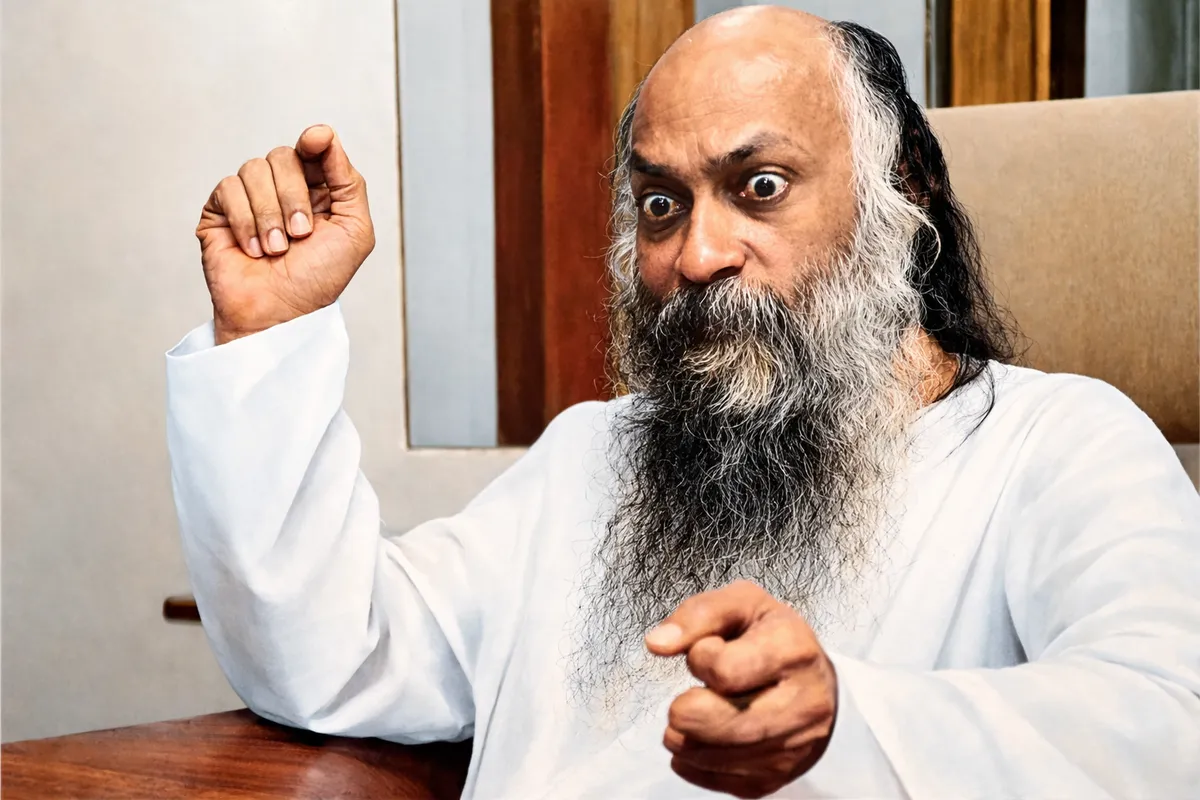
Anahad Mein Bisram explores the intricate nuances of desire and purity of the self through Osho's insightful interpretations. Central to this discourse is the assertion that desire, in any form, represents an impurity of the self. Osho provocatively suggests that desires—whether for material wealth or spiritual enlightenment—are essentially the same and create an ever-expanding world of illusion. He argues that the cessation of desire is the gateway to true spiritual purity or sattva-shuddhi, and that a truly pure self cannot coexist with the disturbances of the mind. This series questions conventional spiritual teachings, challenging the integrity of certain Sutras within revered texts such as the Upanishads. Through his teachings, Osho encourages a departure from blind adherence to scripture, urging seekers to rely on direct, personal experience as the ultimate touchstone for truth. His discourse thus redefines the essence of spiritual liberation, emphasizing the dissolution of desire and the attainment of a pure, unwavering consciousness as the true path to enlightenment. Through this series, Osho offers a fresh, experiential perspective on attaining self-realization beyond mere doctrinal confines.
-
Chapter 1
Build nests, live naturally, use the world without attachment; true rest is anhad — the limitless void where things drop by awareness, not by fear.
-
Chapter 2
Authentic atheism—the courage to say no—prepares one for true theism and sannyas; meeting a living teacher can transform a former socialist’s life into joy.
-
Chapter 3
Truth, tapas, right-knowledge and brahmacharya mean inner emptiness, equanimity, clear seeing and transformed sex-energy — they reveal the Self within.
-
Chapter 4
Drop past and future, live laughingly in the immeasurable present; clear the eye to behold truth—be here now and let joy, dance and divinity arise.
-
Chapter 5
Desire defiles the self; when desire burns away the mind ends. Idol worship for boons is misguided — true religion is inner surrender, love and silence.
-
Chapter 6
True rishis embody realization so meaning follows their words; pseudo‑sadhus merely echo borrowed scriptures. Upanishads were spoken by seers, not authored.
-
Chapter 7
Strength as inner energy surpasses intellectual knowledge; rising, serving and sitting by a guru transforms one into seer, buddha and true knower.
-
Chapter 8
Contemplation of the essence is supreme—realization in silence beyond thought; scripture, ritual, pilgrimage inferior; prasad (lassi/boondi) awakens bhakti and shakti.
-
Chapter 9
Meditation, not mere thought or nationalist outrage, is India’s remedy; light the inner lamp, drop 'ours', test, not believe, to transform society.
-
Chapter 10
Rebuking Dattabal's slanders, Osho defends self-declared divinity, urges inner cleansing over outer ritual, rejects fatalistic karma and calls mindful action to end hypocrisy.