
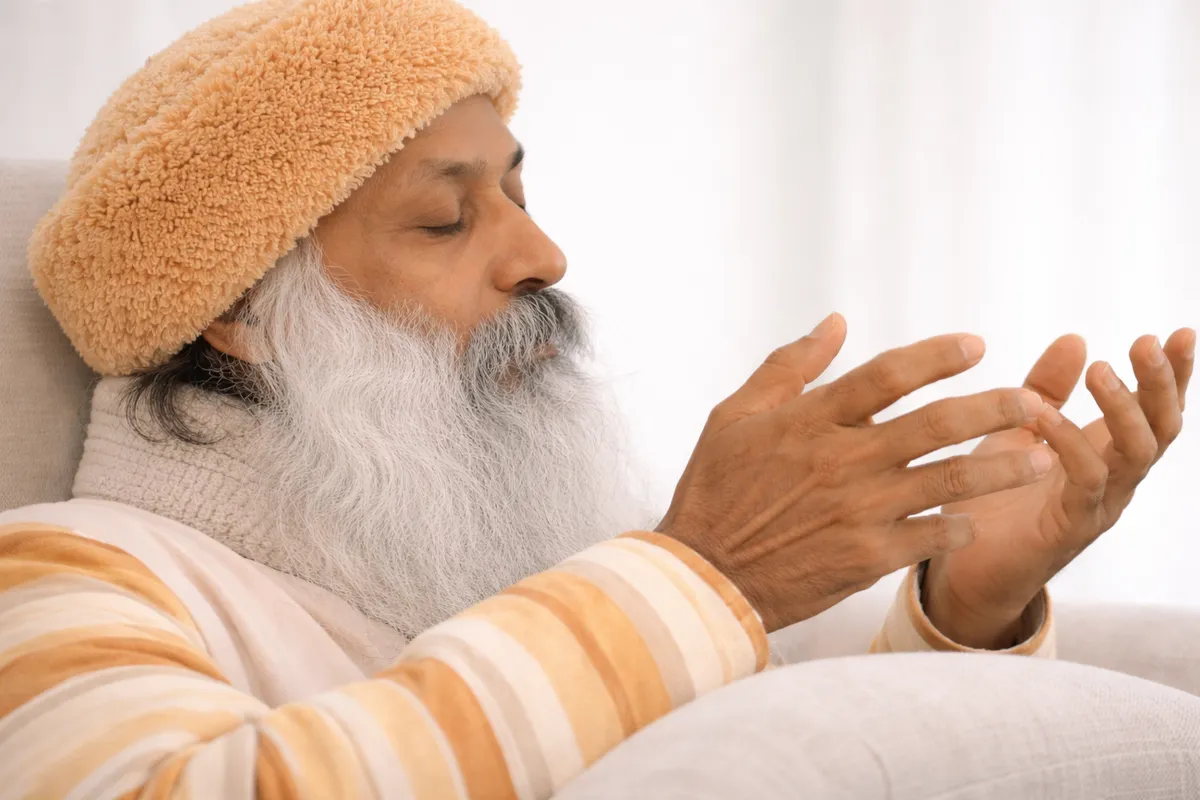
Osho's original Hindi beside Osho Live's English translation, matched passage by passage.
मनुष्य के जीवन की सारी यात्रा, जो अज्ञात है उसे जान लेने की यात्रा है। जो नहीं ज्ञात है उसे खोज लेने की यात्रा है। जो नहीं पाया गया है उसे पा लेने की यात्रा है। जो दूर है उसे निकट बना लेने की। जो कठिन है उसे सरल कर लेने की। जो अनुपलब्ध है उसे उपलब्ध कर लेने की।
The whole journey of man’s life is a journey to know that which is unknown. A journey to seek that which has not yet been known. A journey to find that which is still unfound. To bring the distant near. To make the difficult simple. To make the unavailable available.
मनुष्य की इस यात्रा ने स्वभावतः दो दिशाएं ले ली हैं। एक दिशा मनुष्य के बाहर की ओर जाती है, दूसरी मनुष्य के भीतर की ओर।
Man’s journey has, by its very nature, taken two directions. One moves outward from man; the other moves inward.
एक फकीर औरत थी, राबिया। एक सुबह उसका एक मित्र फकीर उसके झोपड़े के बाहर आकर उसे बुलाने लगा और कहने लगा, राबिया, तू भीतर क्या कर रही है? बाहर आ। सूरज निकल रहा है। और बड़ी सुंदर सुबह का जन्म हुआ है। इतना सुंदर प्रभात मैंने कभी नहीं देखा। तू भीतर द्वार बंद किए क्या करती है? बाहर आ। राबिया भीतर से हंसने लगी और उसने कहा: हसन, बाहर के सूरजों को मैंने बहुत देखा, बाहर की प्रभात भी मैंने बहुत देखी, बहुत सुंदर सुबह देखी, बहुत सुंदर रात्रियां देखीं। बड़ी अदभुत हैं। लेकिन जब से मैं भीतर आ गई हूं, तब से जो देखा है, उसके सौंदर्य के आगे बाहर का सौंदर्य कुछ भी नहीं है। तो मैं तुझसे कहती हूं हसन, तू ही भीतर आ जा। तू बाहर क्या कर रहा है?
There was a fakir woman, Rabia. One morning a fakir friend of hers came to her hut, calling from outside: Rabia, what are you doing inside? Come out. The sun is rising. Such a beautiful morning has been born. I have never seen such a lovely dawn. Why do you sit inside with the door closed? Come out. Rabia began to laugh from within and said: Hasan, I have seen many suns outside, many dawns outside; I have seen very beautiful mornings, very beautiful nights. They are wondrous indeed. But since I have come within, what I have seen there makes the beauty outside nothing at all in comparison. So I say to you, Hasan, you come inside. What are you doing outside?
पता नहीं हसन की समझ में बात आई या नहीं। लेकिन एक तो जगत वह है जो आंखों से दिखाई पड़ता है और एक जगत वह भी है जो आंखों से दिखाई नहीं पड़ता है। एक सत्य वह भी है जो हाथ के स्पर्श में आ जाता है और एक सत्य वह भी है जिसकी सपनों में झलक मिलती है। एक हमसे बाहर है जगत और एक हमारे भीतर भी। और इन दोनों जगतों का अपना सौंदर्य है, अपना सत्य है। इन दोनों जगतों की अपनी सच्चाई है, अपना यथार्थ है। शायद अंततोगत्वा, अल्टीमेटली ये दोनों जगत किसी एक ही चीज के दो पहलू हों। लेकिन साधारणतः ऊपर से देखे जाने पर ये दो दिखाई पड़ते हैं। इन दो के कारण ही धर्म और विज्ञान का जन्म हो गया।
Who knows whether Hasan understood or not. But there is a world that is seen by the eyes, and there is a world that is not seen by the eyes. There is a truth that comes within the reach of the hand’s touch, and there is a truth of which a glimpse comes in dreams. There is a world outside us, and there is a world within us too. And both worlds have their own beauty, their own truth. Each has its own reality, its own suchness. Perhaps, ultimately, these two worlds are two aspects of one and the same thing. But ordinarily, seen from above, they appear as two. And it is because of these two that religion and science were born.
जो जगत बाहर है, उसकी खोज; जो अज्ञात, जो अननोन बाहर है, उसे जान लेने की यात्रा विज्ञान बन गई है। और जो जगत भीतर है, वह जो अज्ञात भीतर है, उससे परिचित हो जाने की, उसे जी लेने की और जान लेने की यात्रा धर्म बन गई। और मनुष्य की समृद्धि और शांति इसमें ही निर्भर है कि ये दोनों यात्राएं विरोधी न हों--सहयोगी हों, साथी हों, समन्वित हों। लेकिन अब तक ऐसा नहीं हो सका।
The search for the outer world—for the unknown outside—has become the journey called science. And the search for the inner world, the unknown within—becoming acquainted with it, living it, knowing it—has become the journey called religion. And man’s richness and peace depend upon this one thing: that these two journeys not be in opposition—but be cooperative, be companions, be integrated. It has not happened so far.
अब तक जिन लोगों ने पदार्थ की जगत में खोज की है, वे लोग परमात्मा के विरोधी रहे हैं। और जिन लोगों ने परमात्मा की खोज की है, वे पदार्थ के निंदक रहे हैं। इन दोनों तरह के लोगों ने मनुष्य की संस्कृति को परिपूर्ण होने से रोका है। इन दोनों ने ही उसे परिपूर्ण होेने से रोका है। क्योंकि मनुष्य न केवल शरीर है, न केवल आत्मा है; मनुष्य न केवल पदार्थ है, न केवल परमात्मा है; मनुष्य तो दोनों का अदभुत मिलन और संगीत है। मनुष्य का जीवन दोनों के मध्य एक सेतु है, एक ब्रिज है। और इस बात को आज तक विस्मरण किया गया है, झुठलाया गया है।
Up to now, those who have inquired into the world of matter have been opponents of Paramatma. And those who sought Paramatma have been condemners of matter. Both kinds of people have prevented human culture from becoming complete. Both have hindered its fulfillment. For man is not only body, nor only soul; man is not only matter, nor only Paramatma; man is the wondrous meeting and music of both. Man’s life is a bridge between the two. And this has been forgotten, denied, until today.
जिन लोगों ने परमात्मा की प्रशंसा की, उन्होंने पदार्थ की निंदा पर परमात्मा की प्रशंसा की, जो गलत थी। पदार्थ के गौरव और गरिमा पर भी परमात्मा की प्रशंसा हो सकती थी। जिन लोगों ने पदार्थ की खोज-बीन की है और पदार्थ पर विजय की है, उन्होंने यह विजय परमात्मा की तरफ उपेक्षा, विरोध और अस्वीकार से की है। यह परमात्मा के साथ और परमात्मा की प्रार्थना के साथ भी हो सकती थी। इसमें परमात्मा का कोई विरोध न था।
Those who praised Paramatma did so by condemning matter—and this was wrong. Paramatma could have been praised through the glory and dignity of matter as well. Those who investigated matter and conquered it, achieved that victory with neglect, opposition, and denial towards Paramatma. That too could have been done with Paramatma, with prayer to Paramatma. There was no inherent opposition.
लेकिन यह अब तक नहीं हुआ कुछ कारणों से। और विज्ञान और धर्म दो शत्रुओं की भांति खड़े हो गए हैं। उनकी शत्रुता मनुष्य के लिए बहुत महंगी पड़ रही है।
But for certain reasons it did not happen. Science and religion have stood like two enemies. Their enmity is proving very costly for man.
पश्चिम विज्ञान का प्रतीक बन गया है। पूरब धर्म का प्रतीक बन गया है। विज्ञान नास्तिकता का प्रतीक बन गया है, धर्म अलौकिकता का। ये दोनों ही बातें भ्रांत हैं और गलत हैं। ये दोनों ही बातें अधूरी और एकांगी हैं।
The West has become the symbol of science. The East has become the symbol of religion. Science has become the symbol of atheism, religion of the supernatural. Both positions are deluded and wrong. Both are incomplete and one-sided.
एक छोटी सी कहानी मुझे स्मरण आती है, उससे मैं यह बात समझाना चाहूंगा।
A small story comes to my mind through which I would like to make this clear.
रोम में एक सम्राट बीमार पड़ा हुआ था। वह इतना बीमार था कि चिकित्सकों ने अंततः इनकार कर दिया कि वह नहीं बच सकेगा। सम्राट और उसके प्रियजन बहुत चिंतित हो आए। और अब एक-एक घड़ी उसकी मृत्यु की प्रतीक्षा ही करनी थी। और तभी रोम में यह खबर आई कि एक फकीर आया है जो मुर्दों को भी जिला सकता है। सम्राट की आंखों में आशा वापस लौट आई। उसने अपने वजीरों को भेजा उस फकीर को ले आने को।
In Rome an emperor fell ill. He was so sick that finally the physicians gave up and said he could not be saved. The emperor and his dear ones became deeply anxious. Now they could only wait for death hour by hour. Just then a rumor spread in Rome that a fakir had arrived who could even raise the dead. Hope returned to the emperor’s eyes. He sent his viziers to bring the fakir.
वह फकीर आया। और फकीर ने आकर उस सम्राट को कहा कि कौन कहता है कि तुम मर जाओगे? तुम्हें तो कोई बड़ी बीमारी भी नहीं है। तुम उठ कर बैठ जाओ, तुम ठीक हो सकोगे। एक छोटा सा इलाज कर लो।
The fakir came. He looked at the emperor and said: Who says you are going to die? You do not even have any great illness. Get up, sit up—you can be healed. Do a small treatment.
सम्राट जो महीनों से लेटा हुआ था, उठा नहीं था, उठ कर बैठ गया। उसने कहा: कौन सा इलाज? जल्दी बताओ उसके पहले कि मैं समाप्त न हो जाऊं। क्योंकि चिकित्सक कहते हैं कि मेरा बचना मुश्किल है।
The emperor, who had been lying for months, who had not risen at all, sat up. He said: What treatment? Tell me quickly before I come to an end. The physicians say I cannot be saved.
वह फकीर बोला: क्या तुम्हारी इस राजधानी में एकाध ऐसा आदमी नहीं मिल सकेगा जो सुखी भी हो और समृद्ध भी? अगर मिल सके तो उसके कपड़े ले आओ और उसके कपड़े तुम पहन लो, तुम बच जाओगे। तुम्हारी मौत पास नहीं।
The fakir said: Is there not, in your capital, at least one person who is both happy and prosperous? If there is, bring his clothes. Put them on—and you will be saved. Death is not near you.
वजीर बोले: यह तो बहुत आसान सी बात है। इतनी बड़ी राजधानी है, इतने सुखी, इतने समृद्ध लोग हैं, महलों से...आकाश छू रहे हैं महल, आपको दिखाई नहीं पड़ता? यह वस्त्र हम अभी ले आते हैं।
The viziers said: That is very easy. Such a large capital! So many happy, so many prosperous people! Palaces touching the sky—can you not see? We will bring such garments at once.
फकीर हंसने लगा, उसने कहा: अगर तुम वस्त्र ले आओ तो सम्राट बच जाएगा।
The fakir laughed: If you bring the garments, the emperor will be saved.
वे वजीर भागे। वह उस फकीर की हंसी को कोई भी न समझ सका। वे गए नगर के सबसे बड़े धनपति के पास और उन्होंने जाकर कहा कि सम्राट मरणशय्या पर है और किसी फकीर ने कहा है कि वह बच जाएगा, किसी सुखी और समृद्ध आदमी के वस्त्र चाहिए, आप अपने वस्त्र दे दें। वह नगर सेठ की आंखों में आंसू आ गए। उसने कहा: मैं अपने वस्त्र ही नहीं, अपने प्राण भी दे सकता हूं अगर सम्राट बचते हों, लेकिन मेरे वस्त्र काम नहीं आ सकेंगे। मैं समृद्ध तो हूं, लेकिन सुखी मैं नहीं हूं। सुख की खोज में मैंने समृद्धि इकट्ठी कर ली, लेकिन सुख से अब तक मिलन नहीं हो सका। और अब तो मेरी आशा भी टूटती जाती है। क्योंकि जितनी समृद्धि संभव थी मेरे पास आ गई है और अब तक सुख के कोई दर्शन नहीं हुए। मेरे वस्त्र काम नहीं आ सकेंगे। मैं दुखी हूं, मैं क्षमा चाहता हूं।
The viziers ran off. None of them understood the fakir’s laughter. They went to the city’s richest merchant and said: The emperor lies on the deathbed, and a fakir has said he can be saved if we bring the clothes of a happy and prosperous man. Give us your clothes. Tears came into the merchant’s eyes. He said: If my life could save the emperor, I would gladly give it—not only my clothes. But my clothes will not work. I am prosperous, yes—but I am not happy. In search of happiness I gathered wealth, but I have not yet met happiness. And now my hope too is breaking, because whatever wealth was possible has come to me and still I have had no vision of happiness. My clothes will not help. I am unhappy. Forgive me.
वजीर तो बहुत हैरान हुए। उन्हें फकीर की हंसी याद आई। लेकिन और लोगों के पास जाकर पूछ लेना उचित था। वे नगर के और धनपतियों के पास गए। और सांझ होने लगी। और जिसके पास गए उसी ने यह कहा कि समृद्धि तो बहुत है लेकिन सुख, सुख से हमारी कोई पहचान नहीं है। वस्त्र हमारे काम नहीं आ सकेंगे।
The viziers were astonished. They remembered the fakir’s laughter. Still, it seemed proper to ask others. They went to other wealthy men of the city. Evening began to fall. Whomever they asked said the same: there is much prosperity, but as for happiness—there is no acquaintance with it. Our garments will not serve.
फिर तो वे बहुत घबड़ाए कि सम्राट को क्या मुंह दिखाएंगे? सम्राट खुश हो गया है। और यह इलाज हमने समझा था कि सस्ता है, यह तो बहुत महंगा मालूम पड़ता है, बहुत कठिन। तभी उनके पीछे दौड़ता हुआ सम्राट का बूढ़ा नौकर हंसने लगा और उसने कहा कि जब फकीर हंसा था तभी मैं समझ गया था। और जब तुम सम्राट के सबसे बड़े वजीर भी अपने वस्त्र देने का खयाल तुम्हारे मन में न उठा और दूसरों के वस्त्र मांगने चले, तभी मैं समझ गया था कि यह इलाज मुश्किल है। ये वस्त्र मिलने कठिन हैं। क्योंकि सम्राट का बड़ा वजीर भी यह नहीं सोचता है कि अपने वस्त्र दे दूं। उस वजीर ने कहा कि मैं अपने वस्त्र कैसे देता? समृद्धि तो मेरे पास है लेकिन सुख से तो मेरा भी कोई संबंध नहीं हो सका है। फिर उन वजीरों ने सोचा कि सम्राट मरेगा ही, बचना कठिन है। उस फकीर ने धोखा दे दिया। लेकिन दिन की रोशनी में सम्राट को क्या चेहरा दिखाएंगे, तो उन्होंने सोचा कि रात हो जाए फिर अंधेरे में चलेंगे और रोकर और प्रार्थना कर देंगे कि नहीं, यह इलाज नहीं हो सकता।
Now they were very troubled: what face would they show the emperor? He had become hopeful. And this remedy they had thought cheap now seemed very costly, very difficult. Just then the emperor’s old servant came running after them and laughed: When the fakir laughed, I understood. When even the emperor’s chief vizier did not think to give his own clothes, but ran to ask for others’ clothes, I knew the remedy was difficult. These garments are hard to find. For even the emperor’s vizier does not think: I will give my clothes. The vizier said: How could I give my clothes? I do have prosperity, but I too have no relationship with happiness. The viziers thought: The emperor will die—it is hard to save him. The fakir has deceived us. How shall we face the emperor in daylight? Let night come—then in the dark we will go and, with tears and apologies, tell him this remedy cannot be done.
फिर जब सूरज ढल गया तो सम्राट के महल के पास पहुंचे। महल के पीछे ही गांव की नदी बहती थी। अंधेरे में नदी के उस पार से किसी की बांसुरी की आवाज सुनाई पड़ रही थी। वह संगीत बड़ा मधुर था। वह संगीत बड़ी शांति की खबर लिए हुए था। उस संगीत की लहरों के साथ आनंद की भी कोई धुन थी। उन वजीरों ने सोचा कि शायद इस बांसुरी बजाने वाले आदमी को सुख मिल गया। इससे और पूछ लें, इससे पहले कि सम्राट को इनकार करें। एक और कोशिश कर लें।
When the sun set they reached the palace. Behind the palace flowed the village river. In the dark, from across the river, the sound of a flute floated over. The music was very sweet, carrying tidings of peace. Along with the waves of that music there was a certain melody of joy. The viziers thought: Perhaps this flute-player has found happiness. Ask him—before we refuse the emperor. One more attempt.
वे नदी पार करके उस आदमी के पास अंधेरे में पहुंचे। जैसे-जैसे पास गए वैसे-वैसे उन्हें लगा कि शायद यही वह आदमी है जिसके वस्त्र काम आ जाएंगे। उसके संगीत में ही कुछ ऐसी बात थी कि उनके प्राण भी जो निराशा और उदासी से भरे थे वे भी पुलक उठे, वे भी नाचने लगे। वे उस आदमी के पास पहुंचे और उन्होंने कहा कि मित्र, हम बहुत संकट में हैं, हमें बचाओ, सम्राट मरणशय्या पर पड़ा है। हम तुमसे यह पूछने आए हैं कि तुम्हें जीवन में आनंद मिला है? वह आदमी कहने लगा: आनंद! आनंद मैंने पा लिया है। कहो, मैं क्या कर सकता हूं? वे खुशी से भर गए और उन्होंने कहा कि तुम्हारे वस्त्रों की जरूरत है। सम्राट मरणशय्या पर है और किसी सुखी और समृद्ध आदमी के वस्त्र चाहिए। वह आदमी हंसने लगा, उसने कहा: मैं अपने प्राण दे दूं सम्राट को बचाना हो, लेकिन वस्त्र मेरे पास नहीं हैं, मैं नंगा बैठा हुआ हूं। अंधेरे में आपको दिखाई नहीं पड़ रहा।
They crossed the river and came to the man in the dark. As they came closer they felt increasingly: This may be the man whose garments will work. There was something in his music such that even their own life-energies, filled with despair and sorrow, thrilled and began to dance. They approached the man: Friend, we are in great trouble—save us. The emperor lies on his deathbed. We have come to ask: have you found joy in life? The man said: Joy? I have found joy. Tell me, what can I do? They overflowed with delight and said: We need your garments. The emperor is on his deathbed, and he needs the garments of a happy and prosperous man. The man laughed: I would give my life to save the emperor—but I have no clothes. I am sitting here naked. In the dark you cannot see.
उस रात वह सम्राट मर गया। क्योंकि समृद्ध लोग मिले, जिनका सुख से कोई परिचय न था। एक सुखी आदमी मिला, जिसके पास वस्त्र भी न थे। अधूरे आदमी मिले, एक भी पूरा आदमी न मिला। जिसके पास वस्त्र भी हों और जिसके पास आत्मा भी हो, ऐसा कोई आदमी नहीं मिला। इसलिए सम्राट मर गया।
That night the emperor died. They found the prosperous who had no acquaintance with happiness, and one happy man who had not even a garment. They met incomplete men; not one whole man. No man was found who had both garments and soul. Therefore the emperor died.
पता नहीं यह कहानी कहां तक सच है। लेकिन आज तो पूरी मनुष्यता मरणशय्या पर पड़ी है। और आज भी यही सवाल है कि क्या हम ऐसा मनुष्य पैदा कर सकेंगे जो समृद्ध भी हो, शांत भी? जिसके पास वस्त्र भी हों और आत्मा भी? जिसके पास संपदा हो बाहर की और भीतर की भी? जिसके पास शरीर के सुख भी हों और आत्मा के आनंद भी?
I do not know how far this story is true. But today the whole of humanity lies on the deathbed. And the same question stands today: can we create such a human being who is both prosperous and at peace? Who has garments and has soul? Who has wealth outwardly and inwardly too? Who has comforts of the body and the bliss of the soul?
पश्चिम ने वस्त्र पैदा कर लिए। विज्ञान वस्त्र ही पैदा कर सकता है। विज्ञान मनुष्य को आत्मा नहीं दे सकता। विज्ञान समृद्धि दे सकता है। और बहुत समृद्धि दे सकता है। और मनुष्य को अपूर्व समृद्धि से समृद्ध कर सकता है। पश्चिम ने समृद्धि इकट्ठी कर ली है और वस्त्र, और वस्त्र, और वस्त्र बढ़ते चले गए। लेकिन भीतर की आत्मा खो गई, भीतर की शांति खो गई। भीतर का आनंद खो गया। आदमी वहां खड़ा है घबड़ाया हुआ कि सब हमारे पास है, सिर्फ हमको छोड़ कर। भीतर सब खाली है, बाहर सब भर गया है। भीतर आदमी रिक्त होता चला गया और बाहर सामग्री बढ़ती चली गई।
The West has produced garments. Science can produce only garments. Science cannot give man a soul. Science can give prosperity, and can give much. It can enrich man with an unprecedented abundance. The West has gathered wealth—more and more garments piled up. But the inner soul has been lost, inner peace has been lost, inner bliss has been lost. Man stands there, panic-stricken: everything is with us—everything, except ourselves. Inside all is empty; outside all is filled. Within, man has become more and more vacant; without, things have gone on increasing.
आज आदमी को अपने ही द्वारा इकट्ठे किए गए सामान में खोजना कठिन हो गया है। वह पश्चिम ने अकेले विज्ञान की यात्रा की है, वह समृद्ध हो गया। पूरब दरिद्र से दरिद्र होता चला गया। उसके सब वस्त्र छिन गए, उसकी रोटी छिन गई। वह भूखा और गरीब होता चला गया। उसने कुछ शांति के स्वर पाए। उसने कोई बांसुरी बजाई भीतर की, उसने कोई संगीत अनुभव किया--किसी बुद्ध ने, किसी महावीर ने किन्हीं ऊंचाइयों पर किसी बहुत गहरे आनंद को प्रतीत किया। लेकिन अधिकतम लोग नंगे और उघाड़े होते चले गए। भूखे, दीन-हीन और दास होते चले गए। अकेले धर्म की यात्रा यही कर सकती थी। अकेले धर्म की खोज यही कर सकती थी कि आदमी दीन-हीन होता चला जाए।
Today it has become difficult to find man among the very objects he has amassed. The West, traveling only with science, has become prosperous. The East has become poorer and poorer. Its garments have been snatched, its bread has been snatched. It has become hungry and poor. It has found some notes of peace. Some inner flute was played, some music was experienced—some Buddha, some Mahavira, on certain heights felt some very deep bliss. But the majority became naked and unclad, hungry, wretched, enslaved. The journey of religion alone could do only this. The search for religion alone could only make man destitute.
भीतर के लिए, बाहर की कुर्बानी का यही परिणाम हो सकता था कि मुल्क, राष्ट्र, वे लोग जो भीतर की यात्रा में एकांगी रूप से पड़ गए हैं वे दास हो जाएं। जिनके पास शक्ति थी बाहर की, वे विजेता होते चले गए। जिनके पास बाहर की कोई शक्ति नहीं थी, वे पराजित होते चले गए।
For the inner, sacrificing the outer had this inevitable result—that nations, peoples, who one-sidedly took to the inner journey became slaves. Those who had power on the outside went on becoming conquerors. Those who had no outer power kept being defeated.
अकेले धर्म ने पूरब को दीन-हीन कर दिया बाहर से। अकेले विज्ञान ने पश्चिम को दीन-हीन कर दिया भीतर से। अकेला पूरब मर गया धर्म के एकांगीपन से। पश्चिम मर रहा है विज्ञान के एकांगीपन से। क्या इन दोनों के बीच कोई सिंथेसिस, कोई समन्वय संभव नहीं?
Religion alone made the East outwardly wretched. Science alone made the West inwardly wretched. The East died because of religion’s one-sidedness. The West is dying because of science’s one-sidedness. Is some synthesis, some coordination between the two not possible?
पूरब समाप्त हो गया है, पूरब मर चुका है। और पूरब को अब एक ही रास्ता सूझता है कि वह पश्चिम का अनुसरण करे। पूरब को बचने का अब कोई और उपाय नहीं दिखता है कि वह पश्चिम का अनुयायी हो जाए। और यदि उसे दिखाई पड़ रहा है कि पश्चिम का अनुयायी होकर भी वह कहां पहुंचेगा? जहां पश्चिम पहुंचा है वहीं तो पहुंच सकता है!
The East has ended, the East has died. And the East now sees only one path—to imitate the West. It sees no other way to survive than to become the West’s follower. And if it sees that by following the West, where will it arrive? Only where the West has arrived!
वह भी कोई सुखद आशा नहीं मालूम पड़ती। वह भी कोई नियति, वह भी कोई भविष्य बहुत कामना-योग्य नहीं प्रतीत होता। लेकिन और कोई विकल्प नहीं दिखता। पश्चिम भी ऐसी जगह पहुंच गया है जहां वह पूरब का अनुयायी हो जाना चाहता है।
That does not look like a happy hope. That destiny, that future, does not seem desirable. But no other option appears. The West too has reached such a place that it wants to become the East’s follower.
यह बड़े मजे की घटना घट गई है। पश्चिम के वैज्ञानिक का आदर पूरब में बढ़ता जाता है, पूरब के संन्यासियों का आदर पश्चिम में बढ़ता चला जाता है। यह कुछ बात ऐसी हो गई है जैसा एक गांव में एक बार हुआ था।
A strange incident is occurring. The scientist of the West is increasingly honored in the East; the sannyasins of the East are increasingly honored in the West. It is like what once happened in a village.
एक गांव में दो बहुत बड़े विद्वान थे। एक आस्तिक था, एक नास्तिक था। उन दोनों में भारी विवाद था। उनके विवाद से गांव परेशान आ गया था। विद्वानों से गांव अक्सर परेशानी में पड़ जाते हैं। वह गांव बहुत परेशान हो गया था। वह ऊब गया था, वह घबड़ा गया था। क्योंकि वे दोनों किसी को भी चैन नहीं लेने देते थे। वह आस्तिक आस्तिकता समझाए चला जाता था, नास्तिक नास्तिकता समझाए चला जाता था। लोगों का मन और भी उलझन में पड़ गया था। कुछ साफ नहीं रहा था कि क्या सच है? क्या झूठ? वे गांव के लोग जब बहुत घबड़ा गए, और उनकी शांति और उनकी नींद हराम हो गई, और वे दोनों विद्वान उनका पीछा करने लगे, तो उन्होंने आकर उन दोनों से प्रार्थना की कि हमारी प्रार्थना है ः यह सारा गांव इकट्ठा हुआ जाता है, आप दोनों विवाद कर लें। और जो जीत जाए हम उसी के साथ हो जाएंगे। हम उपद्रव में नहीं पड़ना चाहते।
There were two very great scholars in a village. One was theist, one atheist. There was fierce dispute between them. The village was harassed. Villages are often troubled by scholars. The village became very distressed and fed up. Neither would let anyone rest. The theist went on preaching theism; the atheist went on preaching atheism. People’s minds became more entangled. Nothing remained clear—what is true, what is false? When the villagers became very upset, their peace and sleep ruined, and those two scholars pursued them everywhere, they pleaded: This whole village will gather—both of you debate. Whosoever wins, we will follow. We do not want disturbance.
अंततः एक पूर्णिमा की रात्रि उन विद्वानों का विवाद हुआ। सारा गांव इकट्ठा हो गया। आस्तिक ने आस्तिकता के लिए बड़े शक्तिशाली प्रमाण दिए, बड़े तर्क दिए। नास्तिक ने भी उतने ही शक्तिशाली प्रमाण दिए, उतने ही तर्क दिए। तर्क के साथ यह मजा है कि वह किसी का भी प्रमाण बन सकता है और किसी का भी साथी बन सकता है। तर्क वेश्या जैसा है। वह किसी के भी साथ हो सकता है। वह किसी का नहीं है। दोनों ने बहुत तर्क दिए, बहुत प्रमाण दिए। सुबह होते-होते एक अदभुत घटना घट गई। उस गांव में आस्तिक नास्तिक से प्रभावित हो गया, नास्तिक आस्तिक से प्रभावित हो गया। गांव की मुसीबत वही बनी रही। दूसरे दिन आस्तिक नास्तिक हो गया, नास्तिक आस्तिक हो गया। और गांव की पंचायत वही रही, वह फिर विवाद चलने लगा। वे फिर दोनों समझाने निकल पड़े।
At last, on a full-moon night, the scholars debated. The whole village gathered. The theist offered powerful proofs for theism. The atheist offered equally powerful proofs. The fun of logic is that it can become anyone’s proof, anyone’s ally. Logic is like a prostitute—it can go with anyone. It belongs to no one. Both marshaled many arguments, many proofs. By morning an astonishing thing had happened: in that village the theist was influenced by the atheist, and the atheist was influenced by the theist. The village’s trouble remained the same. Next day the theist became an atheist and the atheist a theist. The village council remained where it was; the controversy began again. Both set out once more to preach.
ऐसी हालत आज दुनिया में हुई जा रही है। पूरब पश्चिम हो जाएगा और पश्चिम पूरब हो जाएगा। और बेवकूफी वही की वही रहेगी। आदमी उतना ही परेशान रहेगा। यहां आइंस्टीन प्रभावी होते चले जाते हैं, वहां विवेकानंद प्रभावी होते चले जाते हैं। लेकिन पागलपन वही रहेगा, उससे कोई फर्क नहीं पड़ने वाला। क्योंकि विवेकानंद भी किसी अधूरी संस्कृति के पक्षपाती हैं और आइंस्टीन भी किसी अधूरी संस्कृति का पक्षपाती।
Such is the condition of the world today. The East will become the West and the West will become the East—and the stupidity will remain as it is. Man will be just as harassed. Here Einstein becomes influential; there Vivekananda becomes influential. But the madness remains the same; nothing will change. For Vivekananda too is partisan to an incomplete culture, and Einstein too is partisan to an incomplete culture.
जिस अति से हम ऊब जाते हैं उससे हम दूसरी अति पर जाने को उत्सुक हो जाते हैं। गरीब आदमी गरीबी से ऊब जाता है, अमीर होने की कोशिश करने लगता है। जो बहुत अमीर हो जाते हैं, वे अमीरी से ऊब जाते हैं, फकीर हो जाते हैं। महावीर और बुद्ध दोनों राजपुत्र थे, वे फकीर हो गए। फकीर अमीर होना चाहता है, अमीर गरीब होना चाहता है। अमीर अमीरी से ऊब जाता है, गरीब गरीबी से ऊब जाता है। आस्तिक आस्तिकता से ऊब जाते हैं, नास्तिक नास्तिकता से ऊब जाते हैं।
From the extreme that we become weary of, we become eager to run to the opposite extreme. The poor man, bored with poverty, tries to become rich. Those who become very rich, bored with riches, become fakirs. Mahavira and Buddha were both princes; they became fakirs. The fakir wants to be rich; the rich want to be poor. The rich tire of wealth; the poor tire of poverty. The theist tires of theism; the atheist tires of atheism.
पूरब पूरब से ऊब गया, पश्चिम पश्चिम से ऊब गया। धार्मिक लोग धर्म से ऊब गए हैं, वैज्ञानिक लोग विज्ञान से ऊब गए हैं। और वे अति बदल लेना चाहते हैं। और आदमी का मन घड़ी के पेंडुलम की तरह है। एक एक्स्ट्रीम से दूसरी एक्स्ट्रीम पर चला जाता है, फिर दूसरी एक्स्ट्रीम पर चला जाता है। बीच में कभी भी नहीं रुकता है।
The East tired of the East; the West tired of the West. Religious people have become tired of religion; scientific people have become tired of science. They want to switch extremes. And man’s mind is like the pendulum of a clock—it moves from one extreme to the other, and then to the other again. It never stops in the middle.
इससे बहुत खुश होने की जरूरत नहीं है। अगर पूरब का एकाध योगी पश्चिम में चला जाता है और वहां के छोेकरे उसके पीछे गिरोह बना कर घूमने लगते हैं, इससे बहुत खुश मत हो जाना। यह वही पागलपन का लक्षण है, जैसे आपके छोकरे विज्ञान के पीछे घूम रहे हैं। ऐसे उनके छोकरे योगियों के पीछे घूम रहे हैं। इसमें कोई खास खूबी की और आदर की और इज्जत की कोई भी बात नहीं है। आपके लड़के अगर सिनेमागृहों के पास भीड़ कर रहे हों और पश्चिम के लड़के अगर मंदिरों के आस-पास इकट्ठे होने लगें, तो बहुत हैरान मत हो जाना। ये एक सी बातें हैं, इनमें कोई भी भेद नहीं है। उनका मन उनकी अति से ऊब गया, आपका मन आपकी अति से ऊब गया है। लेकिन अब तक अति से किसी का भी मन नहीं ऊबा है। तो एक अति से हम दूसरी अति को चुन लेते हैं।
There is no need to be very delighted. If a yogi or two from the East go to the West and boys there form gangs following them, do not be very pleased. It is the same symptom of madness as your boys running after science. Their boys gather around yogis; your boys crowd around laboratories and cinemas—do not be astonished. These are the same things; there is no difference. Their minds are weary of their extreme; your minds are weary of yours. But so far no one has tired of extremes themselves; from one extreme we simply choose the other.
मैं यह कहना चाहता हूं, एक ज्यादा सिंथेटिक कल्चर, एक ज्यादा समन्वित संस्कृति, एक ऐसी सभ्यता विकसित होनी जरूरी है जो अतिवादी न हो, जो एक्सट्रीमिस्ट न हो। जो संतुलन, समन्वय और मध्य पर खड़े होने की सामर्थ्य रखती हो। जो विज्ञान को उसकी जगह दे सके और धर्म को उसकी जगह दे सके। जो इस बात को स्वीकार कर सके कि विज्ञान का अपना मूल्य है, विज्ञान असार नहीं है। संसार का अपना मूल्य है और संसार माया नहीं है। और जो इस बात को भी स्वीकार कर सके कि संसार के सत्य होने के बावजूद भी संसार से ऊपर भी सत्य है। परमात्मा इस कारण व्यर्थ नहीं है कि संसार सत्य है। परमात्मा इस कारण और भी सत्य है। संसार भी जब सत्य है तो परमात्मा इस कारण और भी गहरे सत्य को उपलब्ध होता है।
I want to say: a more synthetic culture, a more integrated civilization must evolve—one that is not extremist. One that has the capacity to stand in balance, in harmony, at the center. One that can give science its place and religion its place. One that can accept that science has its own value; science is not meaningless. The world has its own value; the world is not maya in the sense of nonexistence. And that can also accept: even though the world is true, there is a truth beyond the world. Paramatma is not futile because the world is true. Paramatma is all the more true. When the world too is true, Paramatma becomes available as an even deeper truth.
परमात्मा और संसार के बीच का जो विरोध और खाई है, वह समाप्त होनी चाहिए। मनुष्य के जीवन में जो सबसे बड़ा दुर्भाग्य सिद्ध हुआ है, जो सबसे बड़ी दुर्घटना हुई है वह यह कि हमने सत्य और संसार के बीच एक बड़ी खाई खोद रखी है। जो आदमी ईश्वर की तरफ जाना चाहता है वह संसार को छोड़ कर भागता है। वह कहता है संसार तो असार है, संसार तो सपना है, संसार तो माया है--छोड़ कर भागता है।
The hostility and chasm between Paramatma and the world should end. The greatest misfortune in human life—the greatest calamity—has been that we dug a deep gulf between truth and world. The man who wishes to go toward God runs away from the world. He says: the world is worthless, the world is a dream, it is maya—and he flees.
हालांकि उसका छोड़ कर भागना ही यह बताता है कि संसार असार नहीं है, संसार सपना नहीं है। क्योंकि सपनों को छोड़ कर भागने की कोई भी जरूरत नहीं रहती। जो असार है, उससे भागने की कोई भी जरूरत नहीं है। जो है ही नहीं, उससे भागने की कोई जरूरत है?
But his fleeing only proves that the world is not worthless, not a dream. For there is no need to flee from dreams. From that which is without substance there is no need to run. If a thing is not, what need to escape?
एक आदमी कहे कि मैं भूत-प्रेत नहीं मानता हूं, वे होते ही नहीं, और भाग रहा है कि भूत-प्रेतों से बचने के लिए भाग रहा हूं। हम क्या कहेंगे? कि या तो यह आदमी पागल है या यह जो कह रहा है उस पर इसका विश्वास नहीं है। एक आदमी कहता है कि सब संसार माया है, फिर भी कहता है, मैं संसार त्याग दिया हूं। जो नहीं है उसका त्याग कैसे हो सकता है?
A man says: I don’t believe in ghosts; they don’t exist—and he runs to save himself from ghosts. What shall we say? Either the man is mad, or he has no trust in what he says. A man declares: the world is maya—and yet says, I have renounced the world. How can you renounce that which is not?
नहीं, लेकिन संसार है। चाहे उसे भोगो, चाहे उसे त्यागो। चाहे उसमें डूबो, चाहे उससे भागो--वह है। उसके होने को नहीं पोंछा जा सकता।
No—the world is. Whether you enjoy it or renounce it, whether you drown in it or run from it—it is. Its being cannot be wiped away.
एक भूल यह संन्यासी करता है, जो कहता है कि संसार असार है, इसे मैं छोड़ता हूं। मैं तो परमात्मा का प्यारा हूं, मैं परमात्मा की तरफ जाता हूं। ठीक इससे उलटी भूल वह जो पदार्थवादी है, वह करता है। वह कहता है ः संसार सार है, संसार सार्थक है।
One mistake is made by the sannyasin who says: the world is unreal, I leave it; I go to Paramatma. And precisely the opposite error is made by the materialist: he says, the world is substantial, meaningful.
और जब संसार सार है तो परमात्मा नहीं हो सकता। क्योंकि परमात्मा जो मानता है, वह कहता है, संसार असार है। संसार की असारता पर वह परमात्मा के प्रमाण को मानता है। तो जो आदमी संसार में सार देखता है, वह परमात्मा को अप्रमाण मान ले तो कोई आश्चर्य नहीं।
ये दोनों तर्क एक से हैं। जिन लोगों ने संसार को माया कहा, उन्हीं लोगों ने परमात्मा को झूठा सिद्ध करवाने की कोशिश भी तय कर दी। क्योंकि जिन लोगों को संसार सार्थक दिखा, सत्य दिखा, सब्स्टेंशियल दिखा, फिर उनको लगा कि ठीक है, फिर इनका परमात्मा झूठा होना चाहिए--कि दो में से एक ही बात सच हो सकती है।
And when the world is substantial, Paramatma cannot be. For those who believe in Paramatma have declared the world unsubstantial; on the world’s unsubstantiality they rest their proof of God. So the man who sees substance in the world will naturally regard Paramatma as unproven—believing only one of the two can be true.
यह बात गलत है कि दोनों में से एक ही बात सच हो सकती है। दोनों बातें एक साथ सच हो सकती हैं और दोनों बातें एक साथ झूठ भी हो सकती हैं। दो में से एक ही सच हो इसका कोई सवाल नहीं है।
This is wrong—that only one of the two can be true. Both can be true together, and both can be untrue together. There is no necessity that when two are in view, only one be true.
जीवन में अनेक तरह के सत्य हैं। पदार्थ का अपना सत्य है; पैसे का अपना सत्य है। प्रेम का अपना सत्य है; परमात्मा का अपना सत्य है। सत्यों में भी मूल्यांकन है कि हम निरंतर ऊपर से ऊपर सत्य की खोज में बढ़ते चले जाएं। लेकिन एक सत्य कोई दूसरे का खंडन नहीं है। सपनों की अपनी सच्चाई है और जागने की अपनी सच्चाई है। नींद की अपनी सच्चाई है और होश की अपनी सच्चाई। इन सच्चाइयों में कोई ऐसा विरोध नहीं है कि एक है तो दूसरा नहीं हो सकता है।
Life has many kinds of truths. Matter has its own truth; money has its own truth. Love has its truth; Paramatma has his truth. Among truths there is a valuation—by which we move ceaselessly toward higher and higher truth. But one truth is not the negation of another. Dreams have their own kind of truth, and waking has its own. Sleep has its truth, and awareness its truth. Between these truths there is no such opposition that if one is, the other cannot be.
और जिस दिन कोई व्यक्ति इन दोनों सच्चाइयों की गहरी से गहरी सीमा को छू लेता है उस दिन तो वह हंसता है, उस दिन तो वह हैरान हो जाता है। उस दिन वह पाता है कि जिनको मैंने दो समझा था, वे एक ही सत्य को दो तरफ से देखने के उपाय थे। वे दो दृष्टियां थीं, वे दो सत्य नहीं थे। एक ही चीज को बहुत तरह से देखा जा सकता है।
And the day a person touches the deepest boundary of both truths, that day he laughs, that day he is astonished. He finds that what he had taken as two were simply two ways of looking at the same truth. Two perspectives—not two truths. One thing can be seen in many ways.
बुद्ध एक रात्रि प्रवचन किए। रोज का उनका नियम था कि प्रवचन के बाद वे भिक्षुओं को कहते थे कि अब आप जाएं और रात्रि के अंतिम कार्य में संलग्न हों। वह रात्रि का अंतिम कार्य था--रात्रि का ध्यान। भिक्षु जब विदा होते, तो रात्रि का ध्यान करते और सो जाते। तो बुद्ध रोज फिर इतना ही कहते थे--इसको कहने की रोज जरूरत न थी कि अब आप ध्यान करें। वे इतना ही कहते थे कि अब आप जाएं और रात्रि के ध्यान में संलग्न हों, यह नहीं कहते थे, इतना ही कहते थे, रात्रि का अंतिम कार्य करें।
Buddha once gave a discourse at night. His daily custom was that after the discourse he would say to the bhikkhus: Now go and engage in the final work of the night. That last work was the night’s meditation. The monks would take leave, meditate, and sleep. So Buddha did not need to say every day: Now meditate. He would simply say: Do the night’s final work.
उस रात उस सभा में एक चोर भी आया हुआ था, एक वेश्या भी आई हुई थी। जैसे ही बुद्ध ने कहा कि अब आप जाएं और अपना रात्रि का कार्य शुरू करें। वैसे ही चोर को खयाल आया कि अरे, मैं कहां बैठा हुआ हूं, रात हो गई और अपने काम का समय आ चुका। वेश्या ने भी सोचा कि बहुत रात हो गई, अब मेरी दुकान के खुलने का वक्त आ गया, मैं जाऊं। और भिक्षु ध्यान पर चले गए।
That night a thief was in the assembly, and a courtesan too. As soon as Buddha said: Now go and begin your night’s work—the thief thought: Ah, what am I doing here? Night has fallen; time for my work has come. The courtesan also thought: It is late—time to open my shop; I should go. And the monks went to meditation.
एक ही वाक्य था। एक ही बात कही गई थी। लेकिन तीन अर्थ हो गए उस बात के। तीन देखने वाले थे। तीन देखने की दृष्टियां थीं। तीन तरफ से वह बात देखी गई और अपना-अपना अर्थ ले लिया गया।
The same sentence. The very same words. But three meanings were taken. There were three hearers—three ways of seeing. From three sides that one statement was taken and each took his own meaning.
जीवन को हम जिस दृष्टि से देखते हैं, वह वैसा दिखाई पड़ना शुरू हो जाता है। जो लोग पदार्थ की दृष्टि से देखते हैं, उन्हें जीवन पदार्थ दिखाई पड़ता है। जो लोग चैतन्य की दृष्टि से देखना शुरू करते हैं, उन्हें जीवन चैतन्य दिखाई पड़ने लगता है। यह हम पर निर्भर है कि हम किस भांति देखते हैं।
Life appears as we look at it. Those who look through the lens of matter see life as matter. Those who begin to look through the lens of consciousness see life as consciousness. It depends on us—how we see.
एक कवि एक फूल को देखता है, वह कहता है, बहुत सुंदर है। उसके चित्त में सौंदर्य की न मालूम कितनी प्रतिमाएं घूम जाती हैं। हो सकता है उसे अपनी प्रेयसी का चेहरा याद आ जाए। हो सकता है उसे आकाश के तारे उन फूलों में चलते दिखाई पड़ जाएं। हो सकता है किसी झील पर उसे किसी लहर की स्मृति उस फूल की पंखुड़ियों में दिख जाए। हो सकता है उस सुगंध के साथ उसे दूर की सुगंधों का बोध आ जाए। हो सकता है उस फूल के साथ न मालूम किन सपनों का गीत उसके मन में खुल जाए। फूल वही रह जाए, वह सपनों की दुनिया में चला जाए।
A poet looks at a flower and says: How beautiful. Statues of beauty whirl through his mind. He may remember his beloved’s face. He may see stars walking in the petals. He may recall on those petals the ripples of a lake. With the fragrance may come the feel of distant fragrances. With the flower some song of dreams may open within his heart. The flower remains where it is; the poet moves into the world of dreams.
एक वैज्ञानिक फूल को देखता है, उसे न कोई सौंदर्य दिखाई पड़ता है, न कोई चांद-तारे दिखाई पड़ते हैं। उसे तो कुछ केमिकल्स दिखाई पड़ते हैं। उससे अगर कोई कहे कि फूल बहुत सुंदर है, तो वह पूछेगा, यह सौंदर्य कहां है? मैं तो अपनी प्रयोगशाला में जाकर, काट-पीट करके देखता हूं तो कोई सौंदर्य नहीं मिलता। हां, कुछ केमिकल्स मिलते हैं, कुछ खनिज मिलते हैं, कुछ और मिलता है। लेकिन सौंदर्य तो, हमने अपनी प्रयोगशाला में बहुत जांच-बीन की, आज तक मिला नहीं है।
A scientist looks at a flower; he sees neither beauty, nor moon and stars. He sees some chemicals. If someone tells him, The flower is very beautiful, he will ask: Where is this beauty? In my laboratory when I cut and analyze, I find no beauty. Yes, I find chemicals, some minerals, and other things. But beauty—I have examined much in the lab, and I have never found beauty.
फूल में सौंदर्य प्रयोगशाला में मिल भी नहीं सकता, तो कवि झूठा हो जाता है। लेकिन कवि को सौंदर्य ही मिलता है उस फूल में। उसे कोई खनिज नहीं मिलते, कोई केमिकल, कोई रसायन नहीं मिलती, तो क्या वैज्ञानिक झूठा हो जाता है? फूल बड़ी सत्ता है। उसे हजार ढंग से देखने के उपाय हैं।
Beauty cannot be found in the laboratory; thus the poet becomes a liar. But the poet finds only beauty in the flower; he finds no minerals, no chemicals. Does that make the scientist a liar? The flower is a vast reality. There are a thousand ways to see it.
एक-एक चीज इतनी अनंत है, छोटी से छोटी चीज इतनी अनंत है कि उसे अनंत दृष्टियों से देखने के मार्ग सदा खुले हुए हैं। एक दृष्टि दूसरी दृष्टि को गलत नहीं कर जाती। एक दृष्टि केवल इतना ही कहती है कि मैंने किस भांति देखा। जब कवि कहता है, मुझे फूल में सौंदर्य दिखाई पड़ा, तो वह यह नहीं कहता है कि फूल में सौंदर्य है। वह यह कह रहा है कि मैंने फूल को कवि की तरह देखा। और जब वैज्ञानिक कहता है कि मुझे फूल में खनिज मिले, रसायन मिली, केमिकल्स मिले, तब वह यह नहीं कह रहा है कि फूल में केमिकल्स ही हैं। तब वह यह कह रहा है कि मैंने फूल को एक वैज्ञानिक की तरह देखा है। ये हमारे देखने के ढंग हुए।
Each small thing is so infinite that infinite perspectives are always open. One perspective does not invalidate another. A perspective only says: This is how I looked. When the poet says: I saw beauty in the flower—he is not saying beauty is an objective constituent in the flower; he is saying: I looked like a poet. When the scientist says: I found minerals and chemicals—he is not saying the flower consists only of chemicals; he is saying: I looked like a scientist. These are our modes of seeing.
विज्ञान देखने के ढंग का एक रूप है; धर्म जीवन को देखने का दूसरा रूप है। और दोनों रूप जीवन के देखने की समृद्धि को बढ़ाते हैं। उन दोनों में से एक भी विदा नहीं हो जाना चाहिए। विज्ञान जिस दृष्टि से जीवन को देखता है, उससे शक्ति बढ़ती है। धर्म जिस दृष्टि से जीवन को देखता है, उससे शांति बढ़ती है।
Science is one mode of seeing life; religion is another. Both enrich our vision of life. Neither should be dismissed. The perspective of science increases power; the perspective of religion increases peace.
शक्ति भी चाहिए और शांति भी चाहिए। अकेली शक्ति खतरनाक है। और अशांत आदमी के हाथों में तो बहुत खतरनाक है। अशांत आदमी तो कमजोर हो तो अच्छा, अशांत आदमी शक्तिशाली हो तो खतरनाक है। क्योंकि अशांति के हाथ में शक्ति मिल जाए तो उपद्रव बढ़ेंगे।
Power is needed, and peace is needed. Power alone is dangerous—especially in the hands of the unpeaceful. Better that an unpeaceful man remain weak; if he becomes powerful he is perilous. For when power comes into the hands of unrest, upheavals increase.
नादिरशाह हिंदुस्तान की तरफ आता है। एक राजधानी में रुका और एक ज्योतिषी उससे मिलने आया। उस ज्योतिषी से नादिर ने पूछा कि मैं बहुत सोता हूं, मुझे नींद बहुत आती है। मैं कोई बारह-तेरह घंटे, चौदह घंटे सोता हूं। लोग कहते हैं, इतना सोना बहुत बुरा है, आपका क्या खयाल है? आप बहुत बुद्धिमान आदमी हैं, आपका क्या खयाल है? उस ज्योतिषी ने कहा: बुरे आदमी का ज्यादा सोना अच्छा होता है। अच्छे आदमी का ज्यादा जागना अच्छा होता है। आप और सोएं और चौबीस ही घंटे सोए रहें तो बहुत अच्छा है। क्योंकि आप जैसा आदमी जितनी देर जागता है उतनी देर दुनिया में उपद्रव बढ़ते हैं। आपके जागने से कोई हित नहीं होता किसी का भी; न मुल्क का हित होता है, न किसी और का हित होता है।
Nadir Shah once came toward India. He halted in a capital, and an astrologer came to meet him. Nadir asked: I sleep a lot; much sleep comes to me. I sleep twelve, thirteen, fourteen hours. People say so much sleep is very bad. What do you think? The astrologer said: For a bad man to sleep more is good. For a good man to be more awake is good. You should sleep more; if you could sleep all twenty-four hours, that would be best. Because the longer a man like you stays awake, the longer turmoil increases in the world. Your waking brings benefit to no one—neither to the nation nor to anyone.
उस ज्योतिषी ने कहा कि बुरा आदमी जितना सोया रहे उतना अच्छा। यह अच्छे आदमी के लिए कहा गया है कि वह जागा रहे। यह बुरे आदमी के लिए नहीं कहा गया है। शक्ति उन हाथों में हो जो शांत हैं, तब तो ठीक। अन्यथा कमजोर होना बुरा नहीं है। अशांत आदमी के हाथ में शक्ति आत्मघाती और परघाती सिद्ध होती है।
The astrologer said: Let a bad man sleep as much as possible. Wakefulness is recommended for the good—not for the bad. Let power be in hands that are peaceful—then it is all right. Otherwise, weakness is not bad. In the hands of the unpeaceful, power is suicidal and homicidal.
विज्ञान ने शक्ति दे दी और शांति नहीं दी, वह घातक सिद्ध हुई जा रही है। दो महायुद्ध हमने देख लिए, तीसरे की तैयारियां हैं। और तीसरा खतरनाक होगा, बहुत खतरनाक होगा।
Science has given power but not peace; it is proving murderous. We have seen two world wars; preparations for the third are on. And the third will be dangerous—very dangerous.
आइंस्टीन से मरने के पहले किसी ने पूछा था कि तीसरे महायुद्ध के संबंध में आप कुछ बताएंगे? आइंस्टीन ने कहा: तीसरे के संबंध में बताना बहुत कठिन है। हां, चौथे के संबंध में कुछ बता सकता हूं। सुनने वाला बहुत हैरान हुआ। उसने कहा: आप तीसरे के बाबत बता नहीं सकते, चौथे के बाबत क्या बता सकते हैं? आइंस्टीन ने कहा: चौथे के बाबत एक बात निश्चित ही कही जा सकती है कि चौथा महायुद्ध कभी नहीं होगा। क्योंकि तीसरे में सभी आदमी समाप्त हो जाने को हैं। तीसरे के बाबत कुछ नहीं कहा जा सकता कि क्या होगा। तीसरे की जो तैयारी है, वह बहुत हैरान करने वाली है। मनुष्यता को ही नहीं, समस्त जीवन को नष्ट कर देने के हमने उपाय कर लिए हैं। जीवन को ही नहीं, हो सकता है पृथ्वी भी बिखर जाए और टूट जाए।
Before his death, someone asked Einstein: Will you say something about the Third World War? Einstein said: About the third it is very difficult to say anything. Yes, about the fourth I can say something. The listener was astonished: You cannot say about the third—what can you say about the fourth? Einstein said: About the fourth one thing can be said with certainty—that there will never be a fourth world war. Because in the third all men are to be finished. About the third nothing can be said. The preparations are astonishing. We have devised means not only to annihilate humanity, but all life. Not only life—perhaps the earth itself may shatter and break apart.
तो एक छोटी सी कल्पना आपको दूं तो खयाल हो सके कि अशांत हाथ में कितनी ताकत इकट्ठी हो गई है। इस समय पृथ्वी पर कोई पचास हजार उदजन बम तैयार हैं। पचास हजार की संख्या से हमें कुछ पता नहीं चलता कि पचास हजार उदजन बम का क्या अर्थ होता है?
Let me give you a small picture so you can sense how much power has gathered in unpeaceful hands. At this moment there are some fifty thousand hydrogen bombs on earth. The number fifty thousand tells us little—what does it mean?
एक उदजन बम चालीस हजार वर्गमील में समस्त जीवन को नष्ट करता है, समस्त जीवन को। मनुष्य के नहीं, पशु के, पौधे के, छोटे-छोटे बैक्टीरिया और अमीबा, छोटे-छोटे कीटाणुओं को--सबको नष्ट करता है। चालीस हजार वर्गमील में एक उदजन बम। पचास हजार उदजन बम इतने हैं जितने से हमारे बराबर पृथ्वियां सात नष्ट की जा सकती हैं, एक नहीं। या ऐसा समझ लें कि एक-एक आदमी को अगर हमें मारना हो, तो हम सात-सात बार मार सकते हैं। वैसे एक आदमी एक ही दफा में मर जाता है, इतना कमजोर है। अब तक ऐसा सुना ही नहीं गया कि एक आदमी को दुबारा मारना पड़ा हो। मर गया तो एक ही दफा में मर गया, नहीं मरा तो बात दूसरी है। लेकिन एक दफा में ही मर जाता है, दुबारा मारने की जरूरत नहीं पड़ती।
One hydrogen bomb destroys all life in forty thousand square miles—not only human life, but animal, plant, even tiny bacteria and amoebae—all. One H-bomb for forty thousand square miles. Fifty thousand hydrogen bombs are enough to destroy seven earths like ours—not one. Or think thus: if we had to kill every human being one by one, we could kill each seven times. In fact a man dies in one blow—he is that fragile. It has not been heard that a man had to be killed twice. If he dies, he dies once; if he does not, that is another matter. But one blow is enough; there is no need to kill twice.
लेकिन हम बहुत होशियार लोग हैं, सब इंतजाम कर लेना ठीक है। कोई एक दफा में बच जाए तो दुबारा मार सकते हैं, तिबारा मार सकते हैं। सात बार का इंतजाम काफी है। सात बार में कोई बच सकेगा, इसकी कोई कल्पना नहीं की जा सकती। तो आदमी ने पूरा, सब कैल्कुलेशन, सब हिसाब लगा लिया है, पूरा इंतजाम कर लिया है। अब तैयारी कर रहे हैं कि हम कब सबको खत्म कर लें।
But we are very clever; it is best to make every arrangement. If someone survives once, we can kill him again and yet again. Seven times is enough. That anyone could survive seven times—this cannot be imagined. So man has done all the calculations, made all the arrangements. Now we are preparing for when to finish everyone.
एक उदजन बम क्या करता है? मर जाए आदमी, यह भी बहुत कठिन बात नहीं है। न बहुत हैरान होने की बात है। लेकिन कितनी पीड़ा से गुजरेगा, इसकी भी हम कल्पना नहीं कर सकते।
What does a hydrogen bomb do? That a man dies is not the astonishing part. But through what agony he passes—that we cannot imagine.
सौ डिग्री पानी हम गर्म करें, सौ डिग्री पर तो पानी भाप बन कर उड़ता है। उस पानी में हम किसी को डाल दें, उबलते हुए पानी में, तो उसको क्या होगा? लेकिन सौ डिग्री गर्मी कोई बहुत गर्मी नहीं है। पंद्रह सौ डिग्री गर्मी पर लोहा भी पिघल जाता है। उस लोहे में किसी को डाल दें, पिघले हुए लोहे में, तो उसका क्या होगा? क्या उसके प्राणों को अनुभव होंगे? कौन से आनंद उसको पता चलेंगे? उसका थोड़ा सोचें। किस परमात्मा की उसे उस वक्त याद आएगी? लेकिन पंद्रह सौ डिग्री गर्मी कोई बड़ी गर्मी नहीं है। पच्चीस सौ डिग्री गर्मी पर लोहा भी भाप बन कर उड़ने लगता है। उसमें किसी को डाल दें, तो उसको क्या होगा? लेकिन पच्चीस सौ डिग्री गर्मी भी कोई बड़ी गर्मी नहीं है।
At one hundred degrees water boils. If we throw someone into boiling water, what will happen to him? But a hundred degrees is not very hot. At fifteen hundred degrees iron melts. If we throw someone into molten iron, what will his life know? What bliss will he experience? Think a little. Which Paramatma will he remember then? But fifteen hundred degrees is not that hot. At twenty-five hundred degrees iron begins to vaporize. Throw someone into that—what will happen? But even twenty-five hundred degrees is not very hot.
एक उदजन बम से जो गर्मी पैदा होती है, वह होती है दस करोड़ डिग्री। इस दस करोड़ डिग्री गर्मी की भट्टी में हम आदमी को डालने का इंतजाम कर लिए हैं। यह गर्मी उतनी ही है जितनी सूरज पर। तो अब तक सूर्य देवता वगैरह को आप नमस्कार करते थे, वह बहुत दूर है। हमने इंतजाम किया है कि वह आपके घर ही आ जाए, आपसे मिलन हो जाए, जिससे मुलाकात ही हो जाए सूर्य भगवान से आपकी--इसका वैज्ञानिकों ने इंतजाम कर दिया है।
The heat produced by a hydrogen bomb is a hundred million degrees. Into this furnace of a hundred million degrees we have arranged to throw man. This is the heat of the sun. Till now you saluted Surya Devata from afar; he was very distant. We have made arrangements that he come to your home—so you might meet, might have a face-to-face with the Sun-God. Scientists have arranged this.
यह जो इतना बड़ा नरक हम पृथ्वी को बनाने का आयोजन कर रहे हैं, यह किसलिए और क्यों? यह अशांत मन के हाथ में शक्ति पहुंच गई है। शांत मन के हाथ में यह शक्ति पहुंचती, तो आज पृथ्वी स्वर्ग बन सकती है। जिसके लिए ऋषि-मुनियों ने सपने देखे थे। कहीं आकाश में, स्वर्ग में जाने की अब कोई जरूरत नहीं। मनुष्य के हाथ में इतनी बड़ी ऊर्जा, इतनी बड़ी शक्ति पर हाथ पड़ गया है उसका कि वह इस सारी पृथ्वी को पहली दफा स्वर्ग बना सकता है। आज पृथ्वी पर किसी के दरिद्र होने की कोई भी जरूरत नहीं है; सिवाय राजनीतिज्ञों की शैतानी के और कोई कारण नहीं है। आज पृथ्वी पर किसी के दीन-हीन, बीमार, कम उम्र होने की, असुंदर होने की, दुखी होने की, कष्ट में होने की कोई जरूरत नहीं है; सिवाय अशांत आदमियों के हाथ में शक्ति है इसके अतिरिक्त।
The scheme by which we are turning the earth into such a vast hell—why? Because power has reached the hands of unpeaceful minds. Had this power reached peaceful hands, today the earth could become a heaven—the very dream of the rishis. There would be no need to go to heaven in the sky. In man’s hands such great energy has come that for the first time he could make this entire earth a paradise. Today there is no need for anyone to be poor on earth; except for the devilry of politicians there is no other cause. There is no need for anyone to be wretched, ill, short-lived, ugly, unhappy, in pain—except that power rests in unpeaceful hands.
आज पृथ्वी एक अनूठी जगह बन सकती है, इतनी शक्ति, इतनी ऊर्जा हमारे हाथ में है। आज पहली बार चांद-तारे हमारे हाथ में हैं। आज पहली बार पदार्थ के भीतर छिपी हुई सबसे बड़ी शक्ति हमारे हाथ में है। आज हम क्या कर सकते हैं इसका कोई अनुमान नहीं लगाया जा सकता। लेकिन हम कुछ भी नहीं कर पा रहे हैं, क्योंकि अशांत आदमी के हाथ में ताकत है। वह कहता है, हम तो मरने की तैयारी करेंगे और मारने की तैयारी करेंगे।
Today the earth could become a unique place. Such energy is in our hands. For the first time the moon and stars are within reach. For the first time the greatest power hidden in matter is in our hands. What we could do today cannot be estimated. But we can do nothing—because power is in the hands of the unpeaceful. They say: We will prepare to die and to kill.
अशांति हमेशा मृत्यु की आकांक्षा को जन्म देती है। अशांति हमेशा दूसरे को मारने की और खुद को मारने की चेष्टा में संलग्न करती है। अशांति सुसाइडल है, आत्मघाती है। और जब भी अशांत आदमी के हाथ में ताकत मिल जाएगी, तो पहले दूसरों को मारेगा। और अगर कोई मारने को नहीं मिला या कोई मरने को राजी नहीं हुआ, तो खुद को मारेगा। कोई न कोई रास्ता मारने का करेगा।
Unpeace always generates the longing for death. Unpeace always engages in killing others and killing oneself. Unpeace is suicidal. Whenever power comes into unpeaceful hands, first it kills others; if none are found to kill, or none agree to be killed, it kills itself. By some route it will kill.
अशांति यात्रा है मृत्यु की तरफ।
Unpeace is a journey toward death.
विज्ञान ने शक्ति तो दे दी, लेकिन शांति विज्ञान के देने की सामर्थ्य नहीं है। उसका कोई सवाल ही नहीं है। उससे अपेक्षा भी नहीं करनी चाहिए। उससे मांग भी नहीं करनी चाहिए, वह कोई प्रश्न ही नहीं है। वह तो ऐसा है जैसे कोई गणित से कहने लगे कि कविता भी आप ही हमें दो। तो गणित कविता कैसे देगा? गणित गणित देगा, गणित की अपनी जरूरत है। लेकिन गणित कविता नहीं दे सकता। या कोई कविता से कहने लगे कि हमें फैक्ट्री बना दो, तो कविता फैक्ट्री कैसे बनाएगी? कविता गीत दे सकती है, प्रेम दे सकती है, आनंद की पुलक दे सकती है, नृत्य दे सकती है, लेकिन फैक्ट्री कैसे देगी? ये तो पागलपन की बातें हैं। कोई कान से कहने लगे कि देखो, और कोई आंख से कहने लगे कि सुनो--वैसी ही बातें हैं। विज्ञान से अपेक्षा भी नहीं करने का सवाल है।
Science has given power; giving peace is beyond it. Do not expect it. Do not demand it; the question does not arise. It is as if one were to ask mathematics to give poetry—how can mathematics give poetry? Mathematics gives mathematics; it has its own necessity. Poetry cannot be given by mathematics. Or if one were to ask poetry to build a factory—how will poetry build a factory? Poetry can give song, can give love, can give the thrill of bliss, can give dance; how would it give a factory? These are insane demands. To ask the ear to see, and the eye to hear—just such demands. Do not expect from science.
शांति तो देगा धर्म। शांति का विज्ञान धर्म है। और शक्ति का विज्ञान विज्ञान है। अंतस-चेतना कैसे शांत होती चली जाए, कितनी निर्विकार, कितनी आनंद को उपलब्ध होती चली जाए, इसकी जो चेष्टा और साधना है, वह धर्म है। लेकिन धर्म केवल शांति दे सकता है, शक्ति नहीं दे सकता।
Peace will be given by religion. The science of peace is religion. And the science of power is science. The effort and discipline by which the inner consciousness becomes more and more peaceful, untainted, available to bliss—that is religion. But religion can give only peace; it cannot give power.
अकेली शांति निर्बल कर देती है, कमजोर कर देती है। अकेली शांति एक तरह की इंपोटेंस पैदा करती है, एक तरह की नपुंसकता पैदा करती है। भारत जो इतना इंपोटेंट हो गया, उसका कोई और कारण नहीं है। भारत की इतनी दीनता, दरिद्रता और कमजोरी में भारत के उन धार्मिक लोगों का हाथ है जिन्होंने विज्ञान का निषेध करके धर्म को विकसित किया। कमजोर हो ही जाएगा। और शांत आदमी कमजोर हो जाए, यह उतना ही खतरनाक है जितना अशांत आदमी शक्तिशाली हो जाए--एक सी बातें हैं ये दोनों।
Peace alone makes one feeble, weak. Peace alone creates a kind of impotence. India has become so impotent—there is no other reason. In India’s poverty, wretchedness, and weakness, the religious who denied science and cultivated only religion are implicated. The peaceful man will become weak. And for a peaceful man to become weak is as dangerous as for an unpeaceful man to become powerful—both are equally dangerous.
शांत आदमी कमजोर हो जाए, यह सारी दुनिया के लिए खतरनाक है। क्योंकि तब शांत आदमी दुनिया में परिवर्तन की सारी सामर्थ्य खो देता है। तब अच्छा आदमी, भला आदमी दुनिया को बदलने की सारी हिम्मत खो देता है। तब उसके पास एक ही काम रह जाता है कि अपने मंदिरों में बैठ जाए और भगवान की प्रार्थनाएं करता रहे। और वह भी तभी तक, जब तक कोई ताकतवर आदमी आकर उसके भगवान की मूर्ति को तोड़-फोड़ कर न फेंक दे, तभी तक प्रार्थनाएं करता है।
If the peaceful man becomes weak, it is dangerous for the whole world—because then the peaceful lose all power to change the world. Then the good, the virtuous, lose all courage to transform. Then they have only one task left—to sit in their temples and go on praying to God. And that too only until some strong man arrives, breaks and throws away their god’s image. Until then they pray.
और जब कोई धीरे-धीरे कमजोर होता चला जाता है तो यह भी खयाल में ले लें कि कमजोर आदमी बहुत दिन तक शांत भी नहीं रह सकता। दीन-हीन आदमी बहुत दिन तक शांत भी नहीं रह सकता। कष्ट में पड़ा हुआ आदमी बहुत दिन तक शांत भी नहीं रह सकता। तब फिर अशांति का जन्म शुरू हो जाएगा। और एक चक्कर शुरू होगा। अशांति का जन्म होगा तो विज्ञान की खोज शुरू हो जाएगी। और विज्ञान शक्ति लाएगा, और अशांत आदमी के हाथों में शक्ति आ जाएगी। यह चक्कर आज तक पूरी मनुष्यता को पीड़ित किए रहा है। एक विसियस सर्किल है। एक दुष्चक्र है। जिसमें आदमी पड़ गया। जैसे ही आदमी के हाथ में ताकत आती है, वह शांत होने की कोशिश शुरू कर देता है।
And know this too: a man who becomes weak cannot remain peaceful for long. The destitute cannot remain peaceful for long. A man in suffering cannot remain peaceful for long. Then unpeace is born again. And once the circle begins—unpeace is born, science is sought, power is acquired; power falls into unpeaceful hands. This vicious circle has tormented humanity until now. The moment power comes to man, he begins to seek peace.
हिंदुस्तान में जब शांति की और धर्म की लहर चली, उस वक्त हिंदुस्तान बहुत समृद्ध था। बुद्ध और महावीर का वक्त हिंदुस्तान में स्वर्ण-वक्त था। बहुत समृद्ध था। एकदम सोने की चिड़िया थी। उस वक्त शांति की लहर और धर्म की बातें थीं।
In India, when waves of peace and religion rose, India was very prosperous. The time of Buddha and Mahavira was a golden time. Very prosperous. A veritable golden bird. In that time there were waves of peace, teachings of religion.
शक्तिशाली आदमी शांत होने की कोशिश में लग जाए तो धीरे-धीरे निर्बल हो जाता है। और निर्बल आदमी अशांत होता है तो अशांत होते से ही शक्ति की खोज में लग जाता है।
The powerful man, seeking to become peaceful, gradually becomes weak. And the weak man, becoming unpeaceful, immediately begins the search for power.
पूरब समृद्ध था, शांति की खोज की, दरिद्र हो गया। पश्चिम दरिद्र था, शक्ति की खोज की, समृद्ध हो गया। लेकिन अब तक शक्ति और शांति एक साथ निर्मित नहीं की जा सकी है। दोनों प्रयोग असफल हो गए। विज्ञान भी असफल हुआ, उससे हिरोशिमा और नागासाकी पैदा हुए। और अब तीसरा महायुद्ध पैदा होगा। धर्म भी अकेला असफल हो गया, उससे यह भारत के दीन-हीन, दरिद्र, भिखारी पैदा हुए, गुलाम पैदा हुए, बड़े से बड़ा देश छोटे-छोटे देशों के हाथों में गुलाम बन गया। उनके चरण चूमता रहा, वे उसकी छाती पर जूते रख कर चलते रहे, वह पड़ा रहा। वह राम-राम जपता रहा, वह ओम-ओम करता रहा।
The East was prosperous; it sought peace, and became poor. The West was poor; it sought power, and became rich. But power and peace together have not yet been created. Both experiments have failed. Science failed—Hiroshima and Nagasaki were born. And now a third world war will be born. Religion alone failed too—out of it came India’s destitute, poor, beggars, slaves; the largest country became the slave of small nations. They made it kiss their feet and trampled on its chest, and it lay there. It went on muttering Ram-Ram, went on chanting Om-Om.
ये दोनों प्रयोग असफल हो गए, जो अब तक आदमी ने किए हैं। एक तीसरे प्रयोग में सारी संभावना और सारा भविष्य है। और वह तीसरा प्रयोग है कि धर्म और विज्ञान के बीच सारा विरोध समाप्त हो। विरोध का कोई कारण भी नहीं है, कोई जगह भी नहीं है, कोई वजह भी नहीं है। धर्म और विज्ञान एक संस्कृति के अंग बनें। यह कब होगा और कैसे होगा?
These two experiments have failed—the ones man has tried so far. In a third experiment lies all possibility and the whole future. And that third experiment is: the entire opposition between religion and science should end. There is no cause for opposition, no basis, no reason. Religion and science must become limbs of one culture. When will this be, and how?
जब तक हम जगत और परमात्मा के बीच विरोध मानते हैं, यह नहीं हो सकता है। पदार्थ और परमात्मा के बीच एक गहरा संबंध, एक ही दिशा में, एक ही चीज के, एक ही सिक्के के वे दो पहलू हैं, इस बात की स्वीकृति। धर्म संसार को असार कहना बंद कर दे, विज्ञान परमात्मा को व्यर्थ कहना बंद कर दे। और दोनों की सार्थकता संयुक्त हो और एक साथ हो। शांति और शक्ति की एक साथ खोज हो तो एक नये मनुष्य का और एक नई संस्कृति का जन्म हो सकता है।
So long as we posit opposition between the world and Paramatma, it cannot happen. There must be the acceptance of a deep relatedness between matter and Paramatma—two aspects of one thing, two faces of one coin. Let religion stop calling the world unsubstantial; let science stop calling Paramatma futile. Let the meaningfulness of both be joined and brought together. Let the search for peace and the search for power proceed together—then a new man and a new culture can be born.
मेरे देखे, दोनों में कोई भी विरोध नहीं है; न विरोध का कोई कारण है। विरोध हमारी नासमझी पर खड़ा हुआ था। और या तो हम अपनी नासमझी बचा सकते हैं अब, या अपने को बचा सकते हैं। दोनों अब एक साथ नहीं बच सकते। पूरब को, पूरब के लोगों को जगतगुरु होने का खयाल छोड़ देना चाहिए। वे पागलपन की बातें हैं। अधूरी संस्कृतियां जगतगुरु नहीं हो सकतीं। पश्चिम के लोगों को भी जगतगुरु होने का खयाल छोड़ देना चाहिए। अधूरी संस्कृतियां जगतगुरु नहीं हो सकतीं।
In my vision there is no opposition between the two, nor any reason for it. The opposition stood upon our ignorance. Now we can either save our ignorance, or save ourselves. Both cannot be saved together. The East should drop dreaming of being Jagatguru—the world teacher. Such notions are madness. Incomplete cultures cannot be Jagatgurus. The West too should drop dreaming of being Jagatguru. Incomplete cultures cannot be world teachers.
अब तो एक संस्कृति पैदा होगी, जो न पूरब की होगी, न पश्चिम की होगी। अब तो एक संस्कृति पैदा होगी, जो न विज्ञान की होगी, न धर्म की होगी। अब तो एक संस्कृति पैदा होगी जो पूरे मनुष्य की होगी, समग्र मानव की होगी, इंटिग्रेटिड, पूरे मनुष्य की होगी। मनुष्य की संस्कृति पैदा होने का पहली बार अवसर आया है। और यह अवसर तभी सफल हो सकता है जब विज्ञान और धर्म के बीच कोई समन्वय पैदा हो सके।
Now a single culture must be born—neither Eastern nor Western. A culture that is neither of science alone nor of religion alone. A culture of the whole man—integrated, of the total human being. For the first time there is an opportunity to create a human culture. And that opportunity can succeed only if coordination arises between science and religion.
विज्ञान एक अति है, धर्म दूसरी अति। धर्म और विज्ञान संयुक्त, संश्लिष्ट, मध्य-बिंदु होंगे, वह गोल्डन-मीन होगी। वह बीच का मज्झिम निकाय होगा, वह बीच का रास्ता होगा, वह समन्वय होगा।
Science is one extreme; religion is the other extreme. United and interwoven, religion and science will be the midpoint—the golden mean. The middle way, the Majjhim Nikaya—the path of balance.
एक छोटी सी घटना और मैं अपनी बात पूरी करूंगा।
A small incident, and I will complete my talk.
बुद्ध के समय में एक राजकुमार बुद्ध के पास आकर दीक्षित हुआ, संन्यासी हुआ। राजकुमार अक्सर संन्यासी हो जाते हैं। एक अति से दूसरी अति पर चले जाते हैं। वह राजकुमार बहुत विलासी प्रवृत्ति का युवक था। कहते हैं, वह रास्तों पर भी चलता तो पहले कालीन बिछा दिए जाते। वह कभी नंगी भूमि पर नहीं चलता था। वह जब महलों में चलता तो फूलों पर चलता। वह जब सीढ़ियां चढ़ता तो नग्न स्त्रियां सीढ़ियों के किनारे खड़ी रहतीं, जिनके कंधों के सहारे लेकर वह ऊपर जाता। वह दीक्षित हो गया और संन्यासी हो गया। तो बुद्ध के भिक्षु बहुत हैरान हुए। यह इतने जोर का परिवर्तन कि जो आदमी शिखर पर था भोग के, वह एकदम योग के दूसरे शिखर पर आ जाएगा? उन्होंने बुद्ध को पूछा, तो बुद्ध ने कहा: आदमी का मन अतियों में चलता है। और इसलिए अक्सर यह होता है कि जो लोग भोग के शिखर पर होते हैं, वे योगी होेने की कल्पना करते रहते हैं। और जो लोग योगी हैं, वे भोगी होने के सपने देखते रहते हैं। यह अक्सर होता है।
In Buddha’s time a prince came to him and was initiated, became a sannyasin. Princes often become sannyasins—leaping from one extreme to the other. This prince was a young man of very luxurious habits. It is said that even on the streets carpets were laid before he walked; he never set foot on bare earth. In the palaces he walked on flowers. When he climbed stairs, naked maidens stood on either side; he took support from their shoulders as he ascended. He was initiated and became a monk. The bhikkhus were astonished: such a sharp turn! The man at the peak of indulgence—will he suddenly ascend to the other peak of yoga? They asked Buddha. Buddha said: Man’s mind moves in extremes. Often it happens that those at the pinnacle of bhoga dream of being yogis; and those who are yogis dream of indulgence. This is common.
अगर संन्यासियों के सपने निकाले जा सकें उनके दिमाग से, तो दुनिया बहुत हैरान हो जाएगी। अगर भोगियों के सपने निकाले जा सकें उनके दिमाग से, तो भी दुनिया बहुत हैरान हो जाएगी। कि जिस आदमी को हम इतना भोगी समझते थे, इसके मन में भी संन्यासी होने की कल्पनाएं दौड़ती रहती हैं। और जिस आदमी को हम इतना त्यागी समझते थे, इसके मन में भी भोग के ऐसे सपने उठते हैं। सपने सब्स्टीट्यूट हैं। जो हम बाहर करते हैं एक अति, दूसरी अति जो हम नहीं करते, उसके सपने चलते रहते हैं।
If one could draw out the dreams from the sannyasins’ minds, the world would be very surprised. And if one could draw out the dreams from the minds of the indulgent, the world would be surprised too. The one we took to be so indulgent harbors fantasies of renunciation; and the one we took to be so renounced harbors such dreams of indulgence. Dreams are substitutes. What we do outside as one extreme, inwardly the dream of the other extreme goes on.
तो बुद्ध ने कहा, यह स्वाभाविक है। मैं तो सोचता ही था कि यह आदमी आज नहीं कल संन्यासी होगा। अब तुम देखना यह दूसरी अति पर जाएगा। और छह महीने के भीतर भिक्षुओं ने देखा कि वह दूसरी अति पर गया। दूसरे भिक्षु वस्त्र पहनते, उसने वस्त्र भी छोड़ दिए। दूसरे भिक्षु रास्ते पर चलते, पगडंडी पर चलते, राजपथ पर चलते जहां कांटे न होते। वह जान कर ऐसे रास्तों पर चलता जहां कांटे होते, जहां रास्ते न होते। उसके पैर लहूलुहान हो गए। उसके पैरों में फफोले और घाव पड़ गए। उसका शरीर धूप में सूखने लगा। भिक्षु वृक्षों की छाया में ठहरते, वह भरी धूप में सूरज के नीचे बैठता। भिक्षु ठंड में गर्मी का सहारा खोजते, वह ठंड में खुले में पड़ा रहता। छह महीने में उसका सुंदर शरीर सूख कर कांटा हो गया। छह महीने बाद उसे पहचानना मुश्किल था कि यह वही राजकुमार है। छह महीने बाद तो वह बिलकुल ही दूसरा आदमी हो गया था। अत्यंत कुरूप हो गया था, बीमार, रुग्ण हो गया था।
Buddha said: It is natural. I had thought this man would become a monk sooner or later. Now watch—he will go to the other extreme. Within six months the monks saw he had gone to the other extreme. While others wore robes, he left even clothes. While others walked on paths, tracks, or roads where there were no thorns, he deliberately chose those where there were thorns and no paths. His feet bled; blisters and wounds appeared. His body began to dry under the sun. Where monks rested in the shade of trees, he sat under the blazing sun. Where monks sought warmth in the cold, he lay in the open in winter. In six months his beautiful body had withered to a thorn. After six months it was difficult to recognize him as the same prince. He had become an entirely different man—extremely haggard, ill, diseased.
बुद्ध उसके पास गए छह महीने बाद और उससे कहा: श्रोण! उसका नाम श्रोण था। मैं तुझसे एक बात पूछने आया हूं। मैंने सुना है कि जब तू राजकुमार था, तो तू वीणा बजाने में बहुत कुशल था। तो मैं तुझसे यह पूछने आया हूं कि अगर वीणा के तार बहुत ढीले हों, तो संगीत पैदा होता है या नहीं होता है?
Buddha came to him after six months and said: Shrona—his name was Shrona—I have come to ask you something. I have heard that when you were a prince you were skilled in playing the veena. Tell me: if the strings of the veena are too loose, does music arise?
श्रोण ने कहा: वीणा के तार ढीले हों, तो संगीत कैसे पैदा होगा? तार ढीले हों, तो उनमें टंकार ही नहीं हो सकती, उनको चोट ही नहीं की जा सकती, उनमें प्रतिध्वनि नहीं पैदा की जा सकती। तार ढीले हों, तो ढीले तारों में कैसे संगीत पैदा हो सकता है?
Shrona said: If the strings are loose, how can music arise? Loose strings cannot be struck; no resonance is possible. With loose strings, how can there be music?
तो बुद्ध ने कहा: अगर तार बहुत कसे हुए हों, तो संगीत पैदा होगा?
Buddha asked: And if the strings are too tight—does music arise?
तो श्रोण ने कहा: बहुत कसे तार टूट जाते हैं, उनमें भी संगीत पैदा नहीं होता।
Shrona said: Strings that are over-tight snap; there too no music is born.
तो बुद्ध ने कहा: संगीत कब पैदा होता है?
Buddha said: Then when does music arise?
तो उस श्रोण ने कहा: संगीत तो तब पैदा होता है जब तार न तो कसे होते हैं, न ढीले होते हैं। एक ऐसी अवस्था भी है तारों की जब कहा जा सकता है कि न तार ढीले हैं, न तार कसे हैं। वह मध्य-बिंदु है। वहां तार उस जगह होते हैं जहां संगीत पैदा होता है।
Shrona said: Music arises when the strings are neither loose nor too tight. There is a certain state of the strings in which it can be said: the strings are neither loose nor tight. That midpoint—there music is born.
तो बुद्ध ने कहा: वीणा का जो नियम है, मैं तुझसे कहने आया, जीवन का नियम भी वही है। जीवन में भी संगीत वहां पैदा होता है जहां न तो तार बहुत ढीले होते हैं, न तार बहुत कसे होते हैं।
Buddha said: The law of the veena—I have come to tell you—is also the law of life. In life too, music is born where the strings are neither too loose nor too tight.
एक तरफ विज्ञान के ढीले तार हैं, जिन्होंने मनुष्य की आत्मा को बिलकुल ढीला छोड़ दिया। एक तरफ धर्म के अत्यंत कसे हुए तार हैं, जिन्होंने मनुष्य की आत्मा को इतना कस दिया। और इन दोनों के बीच मर गया मनुष्य। इन दोनों के बीच टूट गई मनुष्य की वीणा। इन दोनों के बीच खो गया मनुष्य के जीवन का संगीत।
On one side are the loose strings of science, which have left man’s soul altogether slack. On the other side are the over-tight strings of religion, which have pulled man’s soul so taut. Between the two, man has died. Between the two, man’s veena has broken. Between the two, the music of life has been lost.
मनुष्य के जीवन के तारों को वहां लाना है, जहां न तो वह पदार्थ की तरफ बहुत खिंचे होते हैं, न आत्मा की तरफ। जहां वे न तो भोग की तरफ दीवाने होते हैं और न योग की तरफ। जहां वे उस मध्य-बिंदु पर होते हैं, जहां कहा जा सकता है कि यह मनुष्य न तो भोगी है, न योगी है। जहां कहा जा सकता है, यह मनुष्य न तो पदार्थवादी है, न परमात्मवादी है। जहां मनुष्य बिलकुल मध्य के बिंदु पर होता है, वहां जीवन का परिपूर्ण संगीत उपलब्ध होता है। और ऐसे परिपूर्ण संगीत के अनुभव में ही वह जानता है कि पदार्थ भी परमात्मा है, परमात्मा भी पदार्थ है।
We have to bring the strings of life to that point where they are drawn neither too much toward matter nor too much toward soul; where they are not mad after bhoga nor after yoga. Where they are at that midpoint of which it can be said: this man is neither bhogi nor yogi; neither a materialist nor a worshiper of Paramatma. When man stands at the very middle point, the perfect music of life becomes available. And in the experience of such perfect music he knows: matter too is Paramatma, and Paramatma too is matter.