
Osho's original Hindi beside Osho Live's English translation, matched passage by passage.
कबीर, आनंद तो अपरिभाष्य है, अव्याख्य है, गूंगे का गुड़ है। स्वाद तो ले सकते हो, जान तो सकते हो, जी तो सकते हो; मगर जना न सकोगे, बता न सकोगे। हृदय के अंतरतम में एक गीत तो उठेगा, मगर ओंठों तक ला न सकोगे।
Kabir, bliss is indefinable, inexpressible—like a dumb person tasting jaggery. You can taste it, you can know it, you can live it; but you cannot convey it, you cannot describe it. A song will arise in the innermost heart, but you will not be able to bring it to the lips.
अनगाया ही रह जाता है आनंद का गीत। अनकही ही रह जाती है आनंद की अनुभूति। और ऐसा भी नहीं है कि लोगों ने कहने की चेष्टा न की हो। सदियों-सदियों में, सनातन से सतत जानने वाले चेष्टा करते रहे हैं कि जतला सकें उनको जिनकी आंखें अभी बंद हैं; कि याद दिला सकें उनको जो दुख के गड्ढों में डूबे हुए हैं; कि बता सकें उन्हें कि जीवन में जहर ही जहर नहीं, अमृत भी है। मगर नहीं बतला सके। बताया ही नहीं जा सकता।
The song of bliss remains unsung. The experience of bliss remains unspoken. And it is not that people have not tried to say it. For ages upon ages, from time immemorial, the knowers have kept trying to convey something to those whose eyes are still closed; to remind those who are drowning in pits of sorrow; to tell them that life is not only poison, there is nectar too. But they have not been able to tell it. It cannot be told.
आनंद का स्वभाव शब्दातीत है। इशारे किए जा सकते हैं; जैसे कोई चांद की तरफ अंगुली उठाए। अंगुली चांद नहीं है। अंगुली से चांद का क्या लेना-देना! और कोई नासमझ हो तो अंगुली को पकड़ कर बैठ जाए कि यही चांद है। और ऐसे नासमझ बहुत हैं, जिन्होंने मील के पत्थरों को मंजिल समझ कर पूजा करनी शुरू कर दी है; जो सत्यों को तो भूल गए और शब्दों को छाती से लगा कर बैठ गए हैं; जिन्होंने बुद्धों का तो विस्मरण कर दिया, लेकिन उनके वचनों को सिर पर सदियों से ढो रहे हैं। उन वचनों का वजन इतना है हिमालय जैसा कि लोगों का चलना भी मुश्किल हो गया है; बोझ के नीचे दबे हैं। ज्ञान के बोझ के नीचे मर रहे हैं, सड़ रहे हैं।
The nature of bliss is beyond words. Indications can be given—like someone raising a finger toward the moon. The finger is not the moon. What has the finger to do with the moon! And if someone foolish grabs the finger and sits there thinking, “This is the moon,” then? There are many such fools who have taken milestones to be the destination and begun to worship them; who have forgotten the truths but cling to the words; who have forgotten the Buddhas yet have been carrying their sayings on their heads for centuries. The weight of those sayings is so Himalayan that even walking has become difficult; people are crushed beneath the load—dying, decaying under the burden of knowledge.
नासमझ हैं लोग। इशारे पकड़ लेते हैं। और जिस तरफ इशारे किए जाते हैं, उस तरफ आंख ही नहीं उठाते। उस तरफ आंख उठाना जरा मंहगा सौदा भी है। आनंद को जानना है तो दुख को खोने की तैयारी दिखानी होगी। और तुम कहोगे, यह भी कोई मंहगी बात है! हम सभी तो दुख खोने को तैयार हैं। नहीं, जरा भी नहीं, हजार बार नहीं। तुम कहते हो कि दुख खोने को तैयार हो, मगर दुख तुम खोना नहीं चाहते। दुख को तुम पकड़े हो, जोर से पकड़े हो। तुम्हारी दुविधा यही है। तुम ऐसा ही अनुभव करते हो कि दुख से मुक्त होने की तुम्हारी बड़ी प्रबल आकांक्षा है। और भीतर-भीतर तुम दुख के बीज बोते हो, दुख के जाल बुनते हो। क्योंकि तुम्हारे दुख में तुम्हारे बड़े न्यस्त स्वार्थ हैं। तुम्हारे दुख के बिना तुम्हारा अहंकार कैसे बचेगा?
People are foolish: they catch hold of the pointer, and do not lift their eyes to where it points. And lifting the eyes in that direction is a costly bargain too. If you want to know bliss you will have to show a readiness to lose sorrow. And you will say, how is that costly? We are all ready to lose sorrow. No, not at all—no, a thousand times no. You say you are ready to lose it, but you do not want to lose sorrow. You clutch sorrow—tightly. This is your dilemma. You feel you have a powerful longing to be free from sorrow, and within you, you go on sowing seeds of sorrow, weaving its webs. Because you have deep vested interests in your misery. Without your misery, how will your ego survive?
आनंद में अहंकार तिरोहित हो जाता है, जैसे कपूर उड़ जाए बस ऐसे। दुख में अहंकार रहता है। और जिसको भी अपने अहंकार को बचाना है, उसे अपने दुख को बचाना होगा। बचाना ही नहीं, रोज-रोज बढ़ाना होगा, सजाना होगा, संवारना होगा। उसे नरकों पर नरक खड़े करने पड़ेंगे।
In bliss the ego evaporates—like camphor just vanishing. In sorrow the ego remains. And whoever wants to save his ego will have to save his sorrow; not only save it—he will have to increase it every day, adorn it, embellish it. He will have to erect hell upon hell.
एक सज्जन मुझसे पूछते थे, कितने नरक हैं?
मैंने कहा, जितने खड़े करना चाहो उतने हैं। किन्हीं का एक से काम चल जाता है; किन्हीं का दो से नहीं चलता; किन्हीं का तीन से नहीं चलता। व्यक्ति-व्यक्ति पर निर्भर है। कितना बड़ा अहंकार चाहते हो, उतने ही नरक खड़े करने पड़ेंगे। नरक अहंकार की सीढ़ियां हैं।
A gentleman asked me, “How many hells are there?” I said, as many as you want to construct. For some, one is enough; for some, even two won’t do; for some, three won’t suffice. It depends on the person. As big an ego as you want, that many hells you will have to raise. Hells are the stairs of the ego.
स्वर्ग चाहते हो? तो एक बात पक्की समझ लेना--मिटना होगा; अहंकार को विदा देनी होगी; ना-कुछ होने की तैयारी दिखानी होगी।
Do you want heaven? Then understand one thing clearly—you must dissolve; you must bid farewell to the ego; you must be ready to be a nobody.
फकीरों ने सदा से कहा है: जब तक मैं था तब तक परमात्मा नहीं; और जब मैं न रहा तब परमात्मा हुआ!
यह ‘मैं’ सिर्फ दुख में ही जी सकता है। दुख इसका भोजन है। और आनंद में इसकी मृत्यु हो जाती है। जैसे प्रकाश आ जाए और अंधेरा मर जाए, ऐसे ही आनंद आए तो अहंकार मर जाता है।
The fakirs have always said: As long as I was, God was not; and when I was no more, God was! This “I” can live only in sorrow. Sorrow is its food. And in bliss it dies. As when light comes and darkness dies, so when bliss comes the ego dies.
तो आनंद की तरफ पहला इशारा कि वहां कोई अहंकार नहीं पाया जाता; किसी भांति की अस्मिता नहीं पाई जाती; मैं हूं, यह भाव नहीं पाया जाता। परमात्मा है, लेकिन मैं नहीं। सागर है, लेकिन बूंद नहीं।
So the first indication toward bliss is that no ego is found there; no kind of “somebodiness” is found there; the feeling “I am” is not found there. God is, but I am not. The ocean is, but the drop is not.
दूसरी बात...पर याद रखना इशारे हैं ये, परिभाषाएं नहीं। इंगित! समझो तो बड़े काम आ जाएं। समझो तो हजारों काम हल हो जाएं। दूसरा इंगित: आनंद तुम्हारा स्वभाव है। दुख अर्जित करना होता है बाहर से। दुख के लिए झोली फैलानी होती है। दुख मांगना पड़ता है। कोई दे तो मिले। आनंद--किसी से मांगे नहीं मिलता। कोई लाख देना चाहे तो भी नहीं दे सकता और तुम लाख मांगो तो भी मिल नहीं सकता।
The second thing… but remember, these are indications, not definitions. Pointers. Understand them and they will serve you greatly. Understand, and thousands of knots will be untied. The second pointer: bliss is your nature. Sorrow has to be acquired from outside. For sorrow you have to spread your begging bowl. You have to ask for sorrow; only if someone gives do you get it. Bliss—you do not get by asking anyone. Even if someone wanted to give, he could not; and even if you begged, you could not receive it.
दुख भिखमंगों की दुनिया का हिस्सा है; आनंद सम्राटों की। आनंद के लिए झोली नहीं फैलानी होती। आनंद किसी से मांगना नहीं होता। आनंद किसी से मिलता ही नहीं। आनंद तो तुम्हारी निजता है। आनंद तो तुम्हारा स्वभाव है। आनंद तो तुम लेकर ही आए हो। अभी भी जब तुम दुख से भरे हो, जब तुम्हारे चारों तरफ दुख की छायाएं खड़ी हैं, दुख के दंश, दुख के कांटे तुम्हारे प्राणों में छिदे हैं, जब दुख की फांसी लगी है--तब भी तुम्हारे अंतरतम में आनंद का झरना ही बह रहा है। उससे छूटने का कोई उपाय ही नहीं है। स्वभाव से कोई कैसे छूट सकता है! भूल सकते हो स्वभाव को, विस्मृत कर सकते हो स्वभाव को--विनष्ट नहीं।
Sorrow belongs to the world of beggars; bliss to emperors. For bliss you do not spread a bowl. You do not ask it of anyone. Bliss is not given by another. Bliss is your innermostness. Bliss is your nature. You have come with it. Even now, when you are full of sorrow, when shadows of sorrow stand around you, when the stings and thorns of sorrow have pierced your very life, when the noose of sorrow is around your neck—even then, in your innermost core a spring of bliss is flowing. There is no way to be rid of it. How can one be rid of one’s nature! You can forget your nature, you can become oblivious to it—but you cannot destroy it.
आनंद भीतर जाने से मिलता है; दुख बाहर जाने से। दुख बहिर्यात्रा है; आनंद अंतर्यात्रा। दुख पर-निर्भर है; आनंद स्व-निर्भर।
Bliss is found by going within; sorrow by going without. Sorrow is an outward journey; bliss an inward journey. Sorrow is other-dependent; bliss is self-dependent.
ज्यां पाल सार्त्र का वचन महत्वपूर्ण है। उसने कहा है, दूसरा नरक है। दि अदर इज़ हेल।
इसमें सच्चाई का एक बहुत गहरा अंश है। दूसरा नरक है! लेकिन सिर्फ अंश ही है सच्चाई का। और महत्वपूर्ण अंश नहीं, गैर-महत्वपूर्ण अंश है। महत्वपूर्ण अंश तो जीसस के वचन में है: दि किंगडम ऑफ गॉड इज़ विदिन यू। परमात्मा का राज्य तुम्हारे भीतर है। ये दो हिस्से हुए एक ही सिक्के के। दूसरा दुख है, स्वयं का होना सुख है। दूसरा नरक है तो स्वयं का होना स्वर्ग है।
Jean-Paul Sartre made an important statement: The other is hell. In it there is a very deep fragment of truth. The other is hell! But it is only a fragment—and not the essential one. The essential part is in Jesus’ saying: The Kingdom of God is within you. These are two faces of the same coin. If the other is sorrow, being oneself is joy. If the other is hell, being oneself is heaven.
दुख के लिए मन के बड़े आयोजन चाहिए। मन इंतजाम करे, मन खूब आयोजन करे, तो दुख मिल सकता है। मन अर्थात तुम्हारी सारी वासनाएं, आकांक्षाएं, अपेक्षाएं। मन अर्थात तुम्हारी सारी कामनाएं, इच्छाएं, अभिलाषाएं। मन यानी तुम्हारी सारी बहिर्गामी दौड़--विचार की, कल्पना की, स्मृति की। यह जो मन है, यह दुख का मूल उदगम है। इसी मन के केंद्र पर अहंकार है और परिधि पर सारी वासनाओं का जाल है।
For sorrow the mind needs elaborate arrangements. The mind manages, the mind organizes, and then sorrow can be had. By mind I mean all your passions, longings, expectations. By mind I mean all your desires, wishes, ambitions. Mind means your entire outward-running chase—of thought, of imagination, of memory. This mind is the original source of sorrow. At its center is the ego and on its periphery the web of all cravings.
आनंद अमनी दशा है; या जैसा कि संतों ने कहा, उन्मनी दशा है। जैसा झेन फकीर कहते हैं, ए स्टेट ऑफ नो माइंड। मन-शून्य अवस्था, चित्त-रहित अवस्था। पतंजलि ने कहा है, चित्त-वृत्ति-निरोध! योग की परिभाषा, कि जहां चित्त की सारी वृत्तियों का निरोध हो जाता है। जहां चित्त की कोई वृत्ति नहीं रह जाती, कोई तरंग नहीं रह जाती। जहां चित्त ही नहीं रह जाता, क्योंकि चित्त तरंगों का ही जोड़ है। जहां तुम इतने शांत होते हो, तुम्हारे चैतन्य की झील इतनी मौन होती है कि एक लहर भी नहीं उठती--उस अनुभूति का नाम आनंद है। उस परम शांति का नाम आनंद है। उस स्वयं में प्रतिष्ठित हो जाने का नाम आनंद है।
Bliss is a state of no-mind; or, as the saints have said, unmani. As the Zen masters say, a state of no mind. Mindless, thought-free. Patanjali has said: chitta-vritti-nirodha—where the modifications of consciousness are brought to cessation. Where no wave of the mind remains, no ripple remains. Where the mind itself is no more, because mind is only the sum of its waves. Where you are so silent, the lake of your consciousness so still, that not a single ripple arises—that experiencing is called bliss. That supreme peace is called bliss. That settling into oneself is called bliss.
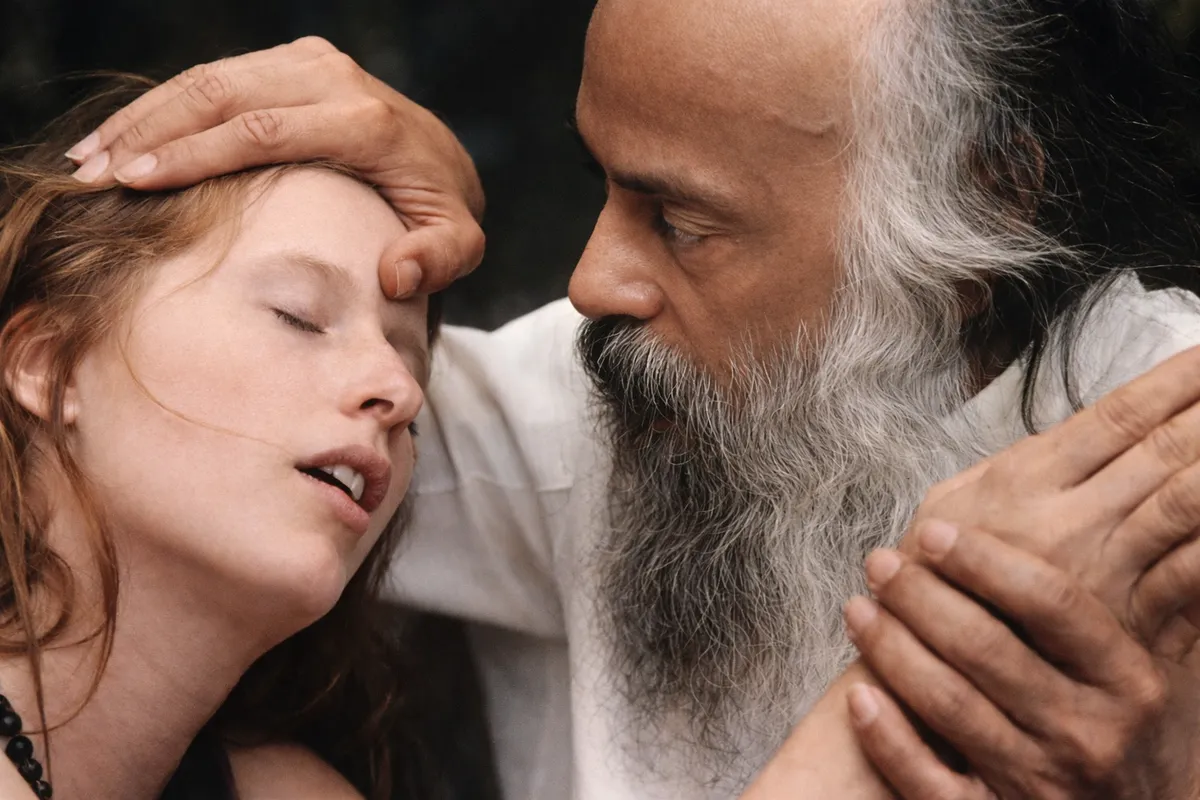
मैं तुम्हें आनंद की तरफ ले चल सकता हूं, ले चल रहा हूं। संन्यास कुछ और नहीं, वही अंतर्यात्रा का दूसरा नाम है। ध्यान कुछ और नहीं, मन से मुक्ति का उपाय है। अमनी दशा की तरफ धीरे-धीरे सरकना है। लेकिन मैं तुम्हें बता नहीं सकता कि आनंद क्या है। शब्दों में नहीं, मेरी आंखों में झांको! कबीर, मेरी आंखों में झांको! या मेरे पास बैठ कर अनुभव करो। मेरे हृदय की तरंगों को अपने हृदय की तरंगों में मिल जाने दो। मेरी अंगुलियों को तुम्हारे हृदय की वीणा पर खेलने दो। और तुम जानोगे कि आनंद क्या है।
I can lead you toward bliss—I am leading you. Sannyas is nothing but another name for that inward journey. Meditation is nothing but a device for freedom from mind. It is slowly, slowly sliding toward no-mind. But I cannot tell you what bliss is. Not in words. Look into my eyes, Kabir—look into my eyes! Or sit near me and experience. Let the waves of my heart merge into the waves of your heart. Let my fingers play upon the veena of your heart. And you will know what bliss is.
नहीं लेकिन, शब्दों में, व्याख्याओं में, परिभाषाओं में नहीं समाया जा सकता है उस विराट आकाश को। इसलिए ज्ञानी नेति-नेति की बात करते रहे--यह भी नहीं, यह भी नहीं।
But not in words, not in explanations, not in definitions can that vast sky be contained. Therefore the wise have spoken neti-neti—“not this, not this.”
अहंकार आनंद नहीं है; यह नेति की भाषा हुई। मन आनंद नहीं है; यह नेति की भाषा हुई। बाहर आनंद नहीं है; यह नेति की भाषा हुई। दूसरे में आनंद नहीं है; यह नेति की भाषा हुई। मगर यह तो बताया कि आनंद क्या नहीं है। आनंद क्या है, यह तो अनबताया रह गया। अनबताया ही रहेगा।
Ego is not bliss—this is the language of neti. Mind is not bliss—this too is neti. Outside is not bliss—this too is neti. The other is not bliss—this too is neti. But this only tells what bliss is not. What bliss is remains untold. It will remain untold.
मेरा हाथ पकड़ो! मेरे साथ चलो! मैं तुम्हें उस पार ले चलूं। यह नाव लेकर उस पार से तुम्हारे लिए ही आया हूं। इसी किनारे पर मत पूछो कि वह किनारा कैसा है!
Hold my hand! Come with me! I will take you across. I have brought this boat from the other shore for you. Do not ask, on this shore, what that shore is like!
तुम्हारी तकलीफ भी मैं समझता हूं। तुम पक्के हो जाना चाहते हो कि वह किनारा है भी? है तो कैसा है? है तो इस किनारे से बेहतर है न? कहीं ऐसा तो न हो कि दुविधा में दोई गए, माया मिली न राम! कहीं ऐसा न हो कि यह भी किनारा छूट जाए। माना कि यहां दुख हैं, लेकिन कभी-कभी सुख की झलकें भी हैं। और माना कि यहां कांटे बहुत हैं, मगर कांटों में कभी-कभी गुलाब भी तो खिलते हैं। और माना कि असफलता है, विषाद है, पीड़ा है, संताप है, सब हो, लेकिन आशा का दीया तो जलता है; आशा का दीया बुझा तो नहीं! कौन जाने वह किनारा हो कि न हो, यहां से दिखाई भी नहीं पड़ता। और अगर हो भी तो कौन जाने कि वह भी किनारा ऐसा ही किनारा हो। इतनी यात्रा करें और फिर ऐसा ही किनारा हाथ लगे। और यह भी हो सकता है कि वह किनारा इस किनारे से भी बदतर हो।
I understand your difficulty too. You want to be assured that the other shore exists at all. If it exists, what is it like? Is it better than this shore? Lest it happen that, caught in dilemma, you lose both—neither Maya nor Rama! Lest it happen that this shore slips away too. Granted there is sorrow here, but there are occasional glimpses of happiness as well. And granted there are many thorns, yet sometimes roses bloom among the thorns. And granted there is failure, gloom, pain, anguish—let all that be—but the lamp of hope is still lit; hope has not gone out! Who knows whether the other shore is or not? From here it is not visible. And even if it is, who knows whether it will be a shore just like this one? After such a long journey we might end up with a shore like this again. It is also possible that the other shore is worse than this one.
तुम्हारा भय भी मेरी समझ में आता है। तुम इसी किनारे पर आश्वस्त हो जाना चाहते हो, वह किनारा कैसा है? उस किनारे का आनंद क्या है? उस किनारे का अहोभाव क्या है? उस किनारे पर कौन से उत्सव, कौन से महोत्सव मनाए जा रहे हैं? वहां कैसी रोशनी है? वहां कैसे चांद-तारे हैं? वहां की वीणा में कैसे गीत उठते हैं, कैसा संगीत उठता है? तुम आश्वस्त होना चाहते हो।
I understand your fear. You want to be reassured, here on this bank, about what that bank is like. What is the bliss of that shore? What ecstasy? What celebrations, what great festivals are being held there? What kind of light is there? What kind of moon and stars? What songs rise in the veena there, what music? You want to be assured.
मगर मैं लाख सिर पटकूं, कैसे तुम्हें आश्वस्त करूंगा? मैं उस किनारे की बातें कर रहा हूं, रोज ही कर रहा हूं। और तुम उस किनारे की आकांक्षा से भी कभी-कभी भर उठते हो। मगर इस किनारे के फैलाव बहुत हैं। इस किनारे में तुमने जड़ें दूर-दूर तक फैला दी हैं। इस किनारे के साथ तुमने बहुत से संबंध बना लिए हैं। इस किनारे पर तुमने घर बसा लिया है। और बड़ी मुश्किल से बसाया है। एक-एक ईंट चुन-चुन कर बसाया है, जन्मों-जन्मों में बसाया है। इस किनारे पर ही तो तुम्हारी सारी आत्मकथा घटी है। इस सारे अतीत को छोड़ कर एक अनजान-अपरिचित आदमी के साथ, एक ऐसे मांझी के साथ जिसकी नाव में कभी पहले सवारी नहीं की, न जिसकी नाव का भरोसा है, न जिसकी पतवार का भरोसा है, न जिसका भरोसा है--हो भी भरोसा तो कैसे हो--किसी अज्ञात तट की यात्रा पर निकलना! मन आश्वस्त हो जाना चाहता है। मन सब तरह के तर्क से अपने को समझा लेना चाहता है। मन कहता है, इतना छोड़ कर जा रहा हूं तो पक्का हो तो ही जाना ठीक है।
But even if I beat my head a thousand times, how can I reassure you? I speak of that shore; I speak of it every day. And sometimes you, too, are filled with the longing for it. But the entanglements of this bank are many. Here you have spread your roots far and wide. You have made many relationships with this shore. You have built your house here—and with great difficulty. You have built it brick by brick, over many lives. It is on this shore that your entire autobiography has happened. To leave all this past and set out with an unknown, unfamiliar man, with a boatman whose boat you have never ridden, whose boat is not proven, whose oar is not proven, who himself is not proven—how can there be trust? To embark upon a journey to an unknown shore! The mind wants to be assured. The mind wants, by every kind of logic, to convince itself. The mind says: since I am leaving so much, only if it is sure should I go.
मगर कोई कैसे पक्का करे? न कृष्ण कर सके, न बुद्ध, न कबीर, न क्राइस्ट, न मोहम्मद, न मंसूर। कोई निश्चित रूप से तुम्हें आश्वासन नहीं दे सकता, इसकी कोई गारंटी नहीं हो सकती। क्यों? क्योंकि उस किनारे पर जो है वह इस किनारे की भाषा में प्रकट नहीं होता।
But how can anyone make it sure? Not Krishna, not Buddha, not Kabir, not Christ, not Mohammed, not Mansoor—no one can give you a definite assurance; there can be no guarantee. Why? Because what is on that bank cannot be expressed in the language of this bank.
ऐसे समझो कि जैसे किसी देश में हीरे-जवाहरात न होते हों, कंकड़-पत्थर ही होते हों। और फिर हीरे-जवाहरातों के देश वाला आदमी उस दुनिया में आए और उनसे कहे कि ये क्या हैं, ये तो सब कंकड़ पत्थर हैं। तुमने हीरे-जवाहरात देखे? तुमने मोती-माणिक देखे? और लोग पूछें, कैसे होते हैं हीरे-जवाहरात? कैसे होते मोती-माणिक? और वह आदमी चारों तरफ खोजे कि कोई उदाहरण मिल जाए और कंकड़-पत्थर कंकड़-पत्थर ही पाए, तो क्या तुम्हें कंकड़-पत्थरों से उदाहरण दे?
Understand it like this: suppose there were a country where there were no diamonds and jewels, only pebbles and stones. And a man from the land of diamonds comes there and says, “What are these? These are all pebbles and stones. Have you seen diamonds and jewels? Have you seen pearls and rubies?” And the people ask, “What are diamonds like? What are pearls and rubies like?” And the man searches all around for an example and finds only pebbles and stones—should he use pebbles and stones as examples?
वह कहेगा कि नहीं, तुम्हारी इस दुनिया की भाषा में मैं अपनी उस दुनिया को प्रकट न कर सकूंगा। क्योंकि वह सत्य का उल्लंघन होगा। ये रंगीन कंकड़-पत्थर, इनसे मैं कैसे हीरे-जवाहरातों की खबर दूं? ये अनगढ़ कंकड़-पत्थर, इनसे मैं कैसे कोहिनूरों की खबर दूं? बेहतर है मैं चुप रहूं। बेहतर है कि मैं उस किनारे के गीत गाऊं, तुम्हें लालसा से भरूं, तुम्हारे भीतर एक उद्दाम अभीप्सा पैदा करूं उस किनारे पर चलने की, लेकिन उस किनारे के हीरे-जवाहरातों के संबंध में कुछ भी न कहूं। क्योंकि तुम्हारे कंकड़-पत्थरों से मैं कितना ही उस किनारे को समझाऊं, बात गलत हो जाएगी--बात बिलकुल गलत हो जाएगी। और तुम ज्यादा से ज्यादा कंकड़-पत्थर ही समझ सकते हो। अगर मैं यह भी कहूं कि तुम्हारे कंकड़-पत्थरों से करोड़-करोड़ गुना ज्यादा कीमती! करोड़-करोड़ गुना ज्यादा चमकदार! ज्यादा रंगीन! ज्यादा रोशन! तो भी जो अंतर होगा वह परिमाण का होगा; गुण का नहीं होगा, मात्रा का होगा। और असली अंतर मात्रा का नहीं है, असली अंतर गुण का है। उस किनारे पर गुणात्मक रूप से कुछ भिन्न घट रहा है।
He will say, “No, in the language of your world I cannot express my world; that would be a violation of truth. With these colored pebbles, how can I give news of diamonds? With these uncut stones, how can I give you tidings of Kohinoors? Better I remain silent. Better I sing the songs of that shore, fill you with longing, create in you an intense urge to set out for that shore—but regarding the diamonds and jewels of that shore, I should say nothing. Because if I try to explain that shore with your pebbles and stones, the matter will become false—utterly false. And you can, at most, understand only pebbles and stones. Even if I say that your pebbles are millions of times less valuable, millions of times less lustrous, less colorful, less radiant—still the difference will be only of quantity, not of quality. And the real difference is not quantitative; it is qualitative. On that shore something qualitatively different is happening.”
दुख में और आनंद में परिमाण का भेद नहीं है, गुणात्मक भेद है। वे एक-दूसरे से विपरीत हैं। वे इतने विपरीत हैं कि ज्यादा से ज्यादा इतना ही कहा जा सकता है कि आनंद दुख का अभाव है।
Between sorrow and bliss the difference is not of degree but of kind. They are opposites. At most, it can be said that bliss is the absence of sorrow.
इसलिए बुद्ध ने इस परिभाषा को चुना: आनंद दुख का अभाव है। वही नेति-नेति की भाषा हो गई। मगर जो आदमी पूछ रहा है आनंद क्या है, उसे इससे तृप्ति नहीं मिलती कि दुख का अभाव है। बस दुख का अभाव? सिर्फ दुख न होंगे, बस? वह चाहता है कुछ विधायक, जिसे पकड़ सके; कुछ साकार, जो उसके प्राणों में रूप ले सके, आकार ले सके, दृश्य बन सके; कुछ, जिसे वह स्पर्श कर सके।
Therefore Buddha chose this definition: bliss is the absence of sorrow. Again, it is the language of neti-neti. But one who asks, “What is bliss?” is not satisfied with “the absence of sorrow.” Only the absence of sorrow? He wants something affirmative, something he can grasp; something concrete that can take form within his life, become visible; something he can touch.
मगर आनंद का स्पर्श नहीं किया जा सकता। इस किनारे पर आनंद घटता ही नहीं। मन के जिस तट पर, कबीर, तुम अभी जी रहे हो वहां आनंद न कभी घटा है, न कभी घटेगा। तुम्हें यह किनारा छोड़ कर चलना होगा। ले चलने को राजी हूं। तुम्हें उस तट तक पहुंचा दूंगा। मगर उस तट तक पहुंचने के पहले यह तट छोड़ना होगा।
But bliss cannot be touched. On this shore bliss does not happen at all. On the shore of the mind, Kabir, where you are living now, bliss has never happened, nor will it ever happen. You will have to leave this shore. I am ready to take you. I will deliver you to that bank. But before reaching that bank, this bank must be left.
हमारी चाह यह होती है कि पहले हम वह तट पा लें, फिर इसे छोड़ देंगे। गणित, तर्क यही कहेगा कि हाथ की आधी रोटी मत छोड़ देना पूरी की आशा में। गणित और तर्क यही कहेगा कि दूर के ढोल सुहावने होते हैं। जो पास है उसे मत छोड़ देना दूर की आशा में। कौन जाने वहां जाकर पता चले कि वह जो सुहावनापन था, सिर्फ दूर से दिखाई पड़ता था। लंबी यात्रा के बाद कहीं विफलता हाथ न लगे।
Our desire is to secure the other bank first, then we will leave this one. Mathematics and logic say: do not drop the half loaf in hand in the hope of a whole one. Mathematics and logic say: distant drums sound sweet. Do not leave what is near for the hope of what is far. Who knows—after going there it may be found that what looked attractive was only from afar. After a long journey, failure may be all you meet.
इसलिए ऐसे प्रश्न उठते हैं। मैं जानता हूं, तुम्हारा प्रश्न कोई सिर्फ बौद्धिक प्रश्न नहीं है। मेरे पास जो संन्यासी इकट्ठे हुए हैं, उनका कुतूहल बौद्धिक नहीं है। जिज्ञासा से भी ऊपर है उनकी बात; उनकी बात मुमुक्षा है। कुतूहल तो है ही नहीं; जिज्ञासा भी नहीं; मुमुक्षा है। वे जरूर जानना ही चाहते हैं। वे जरूर ठीक अनुभव करना चाहते हैं। मगर मन कहता है, कुछ प्रमाण मिल जाएं, कुछ सहारे मिल जाएं, कुछ बात सूझ-बूझ में आने लगे, तो हम भी उतरें इस नाव में, हम भी चलें उस किनारे!
Therefore such questions arise. I know, your question is not merely intellectual. The sannyasins who have gathered around me—their eagerness is not intellectual. It is beyond curiosity; it is mumuksha, an ardent thirst for liberation. Not just curiosity; not merely inquiry; it is an existential longing. They truly want to know. They truly want to experience rightly. But the mind says: if only some proofs were available, some supports, if something began to make sense, then we too would step into this boat, we too would set out for that shore!
मेरे करीब आओ। मेरे शब्दों को ही मत सुनो, मेरे शून्य को अनुभव करो। मेरे निःशब्द में तैरो। यह जो बुद्ध-ऊर्जा क्षेत्र निर्मित हो रहा है, इसमें सब भांति समर्पित हो जाओ--सब भांति, बेशर्त! धीरे-धीरे बूंद-बूंद अमृत टपकेगा। धीरे-धीरे बूंद-बूंद अमृत कंठ से नीचे उतरेगा। तुम जानोगे, निश्चित जानोगे कि आनंद क्या है।
Come closer to me. Do not only hear my words; experience my wordlessness. Swim in my silence. Surrender in every way—in every way, unconditionally—to this Buddha-energy field that is forming here. Slowly, slowly, drops of nectar will fall. Slowly, slowly, the nectar will pass down the throat. You will know—know for certain—what bliss is.
जब आनंद उपलब्ध होता है और उसे कहने का कोई उपाय नहीं मिलता, तो उस असहाय अवस्था में उत्सव पैदा होता है। उत्सव, आनंद को भाषा में व्यक्त नहीं किया जा सकता, इसलिए पैदा होता है। नाच कर कोई कहता है! जो नहीं कहा जा सकता वाणी से, नाच कर कहता है--पद घुंघरू बांध मीरा नाची रे! वह उत्सव। नहीं कह सकता वाणी से, बांसुरी बजा कर कहता है। कृष्ण ने बांसुरी बजाई। नहीं कह सकता, नहीं बतला सकता, तो अपनी अलमस्ती से, अपने होने से उसके प्रमाण देता है; वही उत्सव है।
When bliss becomes available and there is no way to say it, in that helpless state celebration is born. Celebration arises because bliss cannot be expressed in language. Someone speaks by dancing! What cannot be said by the tongue is said by the dance—Meera tied the anklets to her feet and danced. That is celebration. If it cannot be said, cannot be told, then by one’s very ecstasy, by one’s very being, one gives its proof—that is celebration.
उत्सव तो यहां चल रहा है। इसी उत्सव के कारण तो अनेक लोगों को कठिनाई हो गई है, बड़ी कठिनाई हो गई है।
Celebration is going on here. And because of this very celebration many people have run into difficulty—great difficulty.
कल ही मैंने तुम्हें कहा। किसी ने प्रश्न पूछा था कि कानजी स्वामी और उनके भक्त कहते हैं कि जो सम्यक-दृष्टि को उपलब्ध हो गया, वहां राग-रंग कैसा? और मैं तुमसे कहता हूं, जो सम्यक-दृष्टि को उपलब्ध हो गया, वहीं राग है, वहीं रंग है--असली राग, असली रंग! तुमने अभी राग कहां जाना? रंग कहां जाना? तुम्हारे जीवन की फाग अभी आई कहां? गुलाल अभी उड़ी कहां? तुम तो ठीकरे बीन रहे हो, उसी को राग-रंग कहते हो। तुम तो बाजार में कूड़ा-कर्कट इकट्ठा कर रहे हो, उसी को राग-रंग कहते हो। और जो उस बाजार के कूड़ा-कर्कट को छोड़ देता है, उसको तुम समझते हो सम्यक-दृष्टि! त्यागी! व्रती! वीतरागी!
Only yesterday I told you. Someone had asked: Kanji Swami and his devotees say that where right vision (samyak-drishti) has been attained, how can there be song and color? And I tell you: where right vision has been attained, there alone are melody and color—the real melody, the real color! You have not yet known what melody is, what color is. When has spring’s Holi come to your life? When has the gulal yet flown? You are picking up broken potsherds and calling that melody and color. You are gathering trash in the marketplace and calling that melody and color. And the one who leaves that market’s rubbish—you take him to be the man of right vision! A renunciate! A votary! A vitaragi!
तुम्हें कुछ पता नहीं। वीतरागता राग से मुक्ति नहीं है, वीतरागता महाराग का अवतरण है। वीतरागता राग से भाग जाना नहीं है, बल्कि असली राग का, महाराग का जन्म है।
You know nothing. Vitaragata is not liberation from raga; vitaragata is the descent of the Maha-raga, the great rapture. Vitaragata is not running away from passion, but the birth of the real raga—the supreme rapture.
मैं तुमसे कहता हूं कि महावीर से बड़े भोगी इस जगत में दूसरे नहीं हैं। तुम अपने को भोगी मत समझना। तुम क्या खाक भोगी हो! रोगी हो सकते हो, भोगी नहीं हो। और जिसको तुम भोग समझ रहे हो--खाया-पीया, मौज कर लिया--सिर्फ उस भोग के धोखे में जीवन को गंवा रहे हो। भोगते हैं महावीर, भोगते हैं बुद्ध, भोगते हैं रामकृष्ण, भोगते हैं रमण। इन्हें मैं कहता हूं--महाभोगी, परम भोगी! क्योंकि वे परमात्मा को भोगते हैं। वे परमात्मा को ही पी जाते हैं। वे परमात्मा को ही आत्मसात कर लेते हैं।
I tell you, there are none greater enjoyers in this world than Mahavira. Do not think yourself an enjoyer. What enjoyer are you! At best you are a patient, not an enjoyer. And what you take to be enjoyment—eating, drinking, having a bit of fun—you are wasting life in the delusion of that “enjoyment.” Mahavira enjoys; Buddha enjoys; Ramakrishna enjoys; Raman enjoys. I call them great enjoyers, supreme enjoyers! Because they enjoy the Divine. They drink the Divine. They assimilate the Divine.
यहां उत्सव मनाया जा रहा है, क्योंकि यहां आनंद घटा है, घट रहा है। यहां धीरे-धीरे लोग आनंद के स्वाद में तल्लीन होते जा रहे हैं। यहां वीणा बजी है, धीरे-धीरे बहरे से बहरे कानों को भी सुनाई पड़ने लगी है। बीन के बजने पर जैसे सांप नाच उठता है, ऐसे आनंद के भीतर बजने पर तुम भी नाच उठोगे; उसी नाच का नाम उत्सव है।
Here celebration is being lived, because here bliss has happened and is happening. Here, slowly, people are becoming absorbed in the taste of bliss. Here the veena has sounded; even the deafest ears have begun to hear. As a snake rises to dance when the snake-charmer’s reed plays, so when bliss begins to sound within, you too will rise to dance; that dance is called celebration.
उत्सव का अर्थ है: अनुग्रह। उत्सव का अर्थ है: धन्यवाद। उत्सव का अर्थ है: मुझ अपात्र को इतना दिया! इतना जिसकी न मैं कल्पना कर सकता था न कामना! मेरी झोली में पूरा आकाश भर दिया! मेरे हृदय में पूरा अस्तित्व उंडेल दिया! मेरे इस छोटे से घट में शाश्वत अमृत ढाल दिया! अब मैं क्या करूं?
Celebration means grace. Celebration means gratitude. Celebration means: So much has been given to me, the unworthy one! So much that I could neither imagine nor desire! My begging-bag has been filled with the whole sky! The whole existence has been poured into my heart! Into this small pot of mine the eternal nectar has been poured! Now what shall I do?
उस अपूर्व आनंद की स्थिति में नाचोगे नहीं? गाओगे नहीं? उल्लास, उमंग, उत्साह न जगेगा? हजार-हजार रूपों में जगेगा। उसका नाम उत्सव है। आनंद का अनुभव और फिर वाणी से उसे कहने का उपाय न मिलने के कारण उत्सव पैदा होता है। उत्सव आनंद की अभिव्यक्ति है--शब्द में नहीं; जीवन में, आचरण में।
In that unparalleled state of bliss, will you not dance? Will you not sing? Will not joy, exuberance, enthusiasm arise? It will arise in a thousand and one forms. Its name is celebration. The experience of bliss—and then, finding no way to say it in words—gives birth to celebration. Celebration is the expression of bliss—not in words, but in life, in conduct.
जो लोग बाहर से देखते हैं, जो कभी यहां आते भी नहीं, उन्हें तो यही लगता है कि राग-रंग चल रहा है। यहां उत्सव पैदा हुआ है। और स्वभावतः, परमात्मा भी उतरे तुम्हारे भीतर तो भी तुम्हारा उत्सव तो बहुत कुछ वैसा ही होगा न जैसा जगत का होता है। किसी को धन मिल जाए और नाच उठे और मीरा को कृष्ण मिले और मीरा नाच उठी। अगर तुम नाच ही देखोगे तो दोनों का नाच एक जैसा ही मालूम होगा, क्योंकि नाच तो देह से प्रकट हो रहा है। लेकिन कारण भिन्न-भिन्न हैं। मीरा इसलिए नाच रही है कि ध्यान मिला, और तुम इसलिए नाच रहे हो कि लाटरी मिल गई। दोनों के कारण भिन्न हैं।
Those who look from the outside, who never even come here, it seems to them that some revelry is going on. What has arisen here is celebration. And naturally, even if the Divine descends within you, your celebration will look very much like the world’s celebration. Someone gets money and dances, and Meera meets Krishna and Meera dances—if you see only the dance, both dances will appear alike, because the dance manifests through the body. But the causes are different. Meera is dancing because meditation has happened; you are dancing because you have won the lottery. The reasons are different.
लेकिन बाहर से तो कारण का पता नहीं चलेगा। और भीतर उतरने की तो किसकी तैयारी है? किसके पास समय है? किसके पास उत्सुकता है? भीतर उतरने में तो डर भी है कि कहीं ऐसे राग-रंग के जगत में जाकर हम भी डूब न जाएं, रंग न जाएं।
But from the outside the cause cannot be known. And who is prepared to go within? Who has the time? Who has the eagerness? There is even fear of going within—that entering such a world of song and color, we too might get drowned, get dyed.
एक वीतरागता का बड़ा झूठा रूप इस देश में प्रचलित हुआ है--निषेधात्मक, नकारात्मक, जीवन-विरोधी, उत्सव-विरोधी। वह सिकुड़ना सिखाता है, फैलना नहीं।
A very false form of vitaragata has become prevalent in this country—negational, negative, life-denying, celebration-denying. It teaches shrinking, not spreading.
मैं तुम्हें फैलना सिखाता हूं। मैं तो मानता हूं, विस्तीर्ण होना ही ब्रह्म के निकट आने का उपाय है। हमारा शब्द ‘विस्तार’ ब्रह्म शब्द का ही एक रूप है। ब्रह्म का अर्थ होता है जो विस्तीर्ण होता चला जाए। जिसके विस्तार का कोई अंत ही न आए। फैलता जाए, फैलता जाए।
I teach you to expand. I hold that becoming vast is the way to come near Brahman. Our word “expansion” is itself a form of the word “Brahman.” Brahman means that which keeps on becoming vast, whose vastness knows no end—spreading and spreading.
आनंद फैलाव है, दुख सिकुड़ाव है। तुमने अनुभव भी किया होगा, जब तुम दुखी होते हो तो बिलकुल सिकुड़ जाते हो। जब तुम दुखी होते हो, तुम द्वार-दरवाजे बंद करके एक कोने में पड़ रहते हो। तुम चाहते हो कोई मिले न, कोई बोले न, कोई देखे न, कोई दिखाई न पड़े। बहुत दुख की अवस्था में आदमी आत्मघात तक कर लेता है। वह भी सिकुड़ने का ही अंतिम उपाय है। ऐसा सिकुड़ जाता है कि अब दोबारा न देखना है रोशनी सूरज की, न देखना है चेहरे लोगों के, न देखना है खिलते गुलाब। जब अपना गुलाब न खिला, जब अपना सूरज न उगा, जब अपने प्राण न जगे, तो अब दुनिया जागती रहे इससे क्या, हम तो सोते हैं!
Bliss is expansion; misery is contraction. You have experienced it: when you are miserable you shrink completely. When you are miserable, you shut the doors and windows and lie in a corner. You want no one to meet you, no one to speak, no one to see you, and that nothing be seen. In great misery a person even commits suicide. That too is only the final device of contraction. One shrinks so much that one will no longer see the sun’s light, nor people’s faces, nor blooming roses. “When my own rose has not blossomed, when my own sun has not risen, when my own life has not awakened—then what if the world stays awake? I will sleep!”
आत्महत्या अंतिम उपाय है सिकुड़ने का। उससे ज्यादा और सिकुड़ना नहीं हो सकता। दुख आत्मघाती है। और आनंद आत्मा की विस्तीर्णता है। आत्मा इतनी बड़ी होती जाती है कि दूसरे भी उसमें समाने लगते हैं। आत्मा इतनी बड़ी हो जाती है कि चांद-तारे उसके भीतर आ जाते हैं।
Suicide is the final device of shrinking; beyond it one cannot shrink further. Misery is self-destroying. And bliss is the vastness of the soul. The soul becomes so large that others begin to be contained within it. The soul becomes so vast that the moon and stars come within it.
स्वामी राम ने कहा है कि जब मैं सोया था तो सोचता था चांद-तारे मुझसे बाहर हैं; जब मैं जागा तो मैंने पाया चांद-तारे मेरे भीतर हैं। मेरे ही भीतर सूरज और मेरे ही भीतर चांद और मेरे भीतर तारे घूम रहे हैं।
Swami Ram has said: When I was asleep I thought the moon and stars were outside me; when I awoke I found the moon and stars are within me. Within me the sun, within me the moon, within me the stars are revolving.
किसी ने राम से पूछा कि चांद-तारे बनाए किसने? राम ने कहा, मुझसे पूछते हो? अरे, मुझसे पूछते हो? मैंने ही बनाए! मैंने ही पहली बार अंगुली के इशारे से चांद-तारों को जुंबिश दी थी।
Someone asked Ram, “Who made the moon and stars?” Ram said, “You ask me? You ask me? I made them! It was I who for the first time set the moon and stars in motion with a gesture of my finger.”
तुम तो पागल कहोगे इस आदमी को। लेकिन यह आदमी बड़ी गहरी और पते की बात कह रहा है। यह यह कह रहा है कि अब राम नहीं हूं मैं--राम, जिसे तुम जानते रहे। अब तो मैं सच में ही राम हूं--राम, जिसे तुम नहीं जानते। अब तो मैं विराट के साथ एक हूं।
You will call this man mad. But he is saying something very deep and to the point. He is saying: I am no longer the Ram you knew. Now I am truly Ram—the Ram you do not know. Now I am one with the Vast.
विराट के साथ एक हो जाना आनंद। लेकिन आनंद को समा तो न सकोगे। आनंद तो उछलेगा। आनंद तो अभिव्यक्त होगा। आनंद तो बजेगा--हजार-हजार रागों में। आनंद तो बरसेगा--हजार-हजार रंगों में। वही उत्सव है।
To become one with the Vast is bliss. But you will not be able to contain bliss. Bliss will overflow. Bliss will express itself. Bliss will resound—in a thousand and one melodies. Bliss will rain—in a thousand and one colors. That is celebration.
कबीर, आनंद है आत्म-अनुभव। उत्सव है परमात्मा के प्रति धन्यवाद।
Kabir, bliss is self-experience. Celebration is gratitude toward the Divine.
जिन कुंजों में श्याम विहंसते
राधा का भी ध्यान वहीं है।
नेक अनेक देख छवि मैंने
मधुकर व्रत लेकर झूला डाला,
फूली डाल कदंब बिना ऋतु
गलबांही की सरसी माला;
जहां जहां श्यामा रस गर्वित
In the bowers where Shyam laughs, there too is Radha’s meditation. I have seen many a lovely vision; taking the bee’s vow, I hung a swing. The kadamba branch bloomed out of season, a garland of entwined arms; wherever Shyama, proud with nectar, moves, there beauty’s new ordinance is.
छवि का नवल विधान वहीं है।
रास रचे छवि जीवन पथ पर
कलकंठों का लगता मेला,
मगर एक स्वर विलग कि सबसे
जिसने अठखेली से खेला;
हंसी खेल यह जीवन भर का
जिसमें भ्रम विज्ञान नहीं है।
On life’s path, beauty composes the rasa-dance; it seems a fair of cuckoos, but there is one note apart from all the rest, the one that played in playful sport; this is a game of laughter for a whole life, in which there is no delusion of doctrines.
नास्तिक के सर पर चढ़ बोली,
आंख मूंद कर हंसी ठिठोली,
तुम भगवान बनो मैं पूजूं,
शतदल की लेकर मधु टोली
अब मंदिर में देवी शारदा
सीखा पूजन ध्यान वहीं है।
Mounting the atheist’s head, she spoke, eyes closed, laughing in teasing play: “You be God, I will worship,” bringing a swarm of honey from the hundred-petaled lotus. Now in the temple, the goddess Sharada has learned worship—meditation there. In the bowers where Shyam laughs, there too is Radha’s meditation.
जिन कुंजों में श्याम विहंसते
राधा का भी ध्यान वहीं है।
खोजी तो राधा है; जिसे खोज रहा है वह कृष्ण है। खोजी तो स्त्रैण है; जिसे खोज रहे, परमात्मा, वही एकमात्र पुरुष है।
The seeker is Radha; the one sought is Krishna. The seeker is feminine; the one sought, the Divine, is the only male.
जिन कुंजों में श्याम विहंसते
राधा का भी ध्यान वहीं है।
In the bowers where Shyam laughs, there too is Radha’s meditation.
अपने ध्यान को ले चलो दूर, ले चलो उस पार--जिन कुंजों में श्याम विहंसते! जहां परमात्मा का वास है, उस तरफ अपनी आंखों को टिकाओ। जैसे-जैसे परमात्मा की तरफ सरकोगे वैसे-वैसे आनंद का स्वाद उपलब्ध होना शुरू हो जाएगा।
Carry your meditation far, carry it beyond—to those bowers where Shyam laughs! Fix your eyes toward the place where the Divine dwells. As you move toward the Divine, the taste of bliss will begin to be available.
नेक अनेक देख छवि मैंने
मधुकर व्रत लेकर झूला डाला
डालो अब झूले!
I have seen many a lovely vision, taking the bee’s vow, I hung a swing— hang the swings now!
फूली डाल कदंब बिना ऋतु
और अगर तुम्हारी तैयारी हो तो बिना ऋतु भी कदंब की डाल फूल जाए। और तुम्हारी तैयारी हो तो कभी भी वसंत आने को तैयार है। वसंत द्वार पर खड़ा है। मधुमास तुम्हारी झोली भर देने को आतुर है--फूलों से, तारों से।
The kadamba branch bloomed out of season— and if your readiness is there, even out of season the kadamba branch will bloom. If your readiness is there, spring is ready to come at any time. Spring stands at the door. The honeyed month is eager to fill your lap—with flowers, with stars.
फूली डाल कदंब बिना ऋतु
गलबांही की सरसी माला;
जहां जहां श्यामा रस गर्वित
छवि का नवल विधान वहीं है।
The kadamba branch bloomed out of season, a garland of entwined arms; wherever Shyama, proud with nectar, moves, there beauty’s new ordinance is.
और तुम्हें थोड़ी-थोड़ी झलक मिलने लगे श्याम की, सत्य की, या स्वयं की, कि बस तुम्हारे जीवन में झूला डला! कि आया सावन! कि आया गीत गाने का मौसम! कि पैरों में घूंघर बांधने का क्षण! कि ढोलों पर थाप देने का क्षण! कि बजे अब बांसुरी!
And if you begin to get even a few glimpses of Shyam, of truth, or of yourself—then a swing has been hung in your life! The rains have come! The season of singing has arrived! It is the moment to tie ankle-bells to your feet! The moment to beat the drums! Now let the flute begin to play!
यह सुनते हो दूर कोयल की कुहू-कुहू! ऐसे ही तुम्हारे प्राणों में भी कोयल छिपी है। तुम्हारे अंतरतम में भी पपीहा है, जो पुकार रहा है--पी कहां! मगर तुम्हारे सिर में इतना शोरगुल है कि उस शोरगुल के कारण तुम सुन नहीं पाते। और तुम्हारे शोरगुल में जिस चीज से सहारा मिल जाए, उसे तुम्हारा शोरगुल जल्दी से पकड़ लेता है।
Do you hear the distant cuckoo’s cooing? Just so, within your very life-breath a cuckoo is hidden. In your innermost being too is the papiha, calling, “Beloved, where?” But there is so much racket in your head that because of that noise you cannot hear. And in your commotion, whatever gives it a prop, your noise quickly grabs hold of it.
पंद्रह साल में आनंद स्वभाव ने कभी पत्र नहीं लिखा! पंद्रह साल सुनने के बाद चिंतन-मनन घंटों चलता था। वह चिंतन-मनन क्या है? वह तुम्हारे भीतर शोरगुल है। और परसों चूंकि चिंतन-मनन नहीं चला तो प्रवचन खोखला लगा। परसों की ही बात तुम्हारे काम की थी, स्वभाव, बाकी पंद्रह साल तो यूं ही गए। परसों की ही बात सुन कर अगर तुम चुप हो गए होते, मौन हो गए होते, शून्य हो गए होते, तो कोई बंद द्वार खुल जाता।
In fifteen years Anand Swabhav never wrote a letter! For fifteen years, after listening, thinking and brooding went on for hours. What is that thinking and brooding? It is a commotion inside you. And because the day before yesterday that thinking did not continue, the discourse felt hollow. It was precisely the talk of the day before yesterday that was of use to you, Swabhav; the other fifteen years just went by. If, hearing that, you had fallen silent—become quiet, become empty—some closed door would have opened.
लेकिन लोग सुनने भी आते हैं तो शून्य के लिए थोड़े ही आते हैं; सुनने आते हैं तो ज्ञान के लिए। कुछ पकड़ में आए, कुछ बुद्धि काम करे, कुछ बुद्धि का विचार चले, कुछ तारतम्य बंधे। तो पंद्रह साल सब ठीक चला, क्योंकि मेरे विचारों ने तुम्हारे भीतर और विचारों का ऊहापोह जगा दिया।
But even when people come to listen, they do not come for emptiness; they come for knowledge. Something to grasp, something for the intellect to work upon, some chain of ideas to be woven. So for fifteen years everything went fine, because my words stirred up more turmoil of thoughts within you.
लोग सोचते हैं चिंतन-मनन बड़ी मूल्य की चीजें हैं। दो कौड़ी का मूल्य है उनका। शून्य के अतिरिक्त और किसी चीज का कोई मूल्य नहीं है।
People think thinking and contemplation are highly valuable. They are worth two pennies. Other than emptiness, nothing has any real value.
अगर मेरी बात सुन कर तुम्हें खोखली लगी थी, मौका चूक गए। उस क्षण तुम्हें भी बिलकुल खोखला हो जाना था। तो शायद पहली दफा शून्य की झलक मिलती। मगर तुम सोचने लगे होओगे कि अरे, आज का प्रवचन जंचा नहीं। आज की बात कुछ मन रुची नहीं। आज की बात में कुछ था नहीं, कोई सार हाथ नहीं आया। तुम इस विचार में पड़ गए होओगे। उसी विचार से तो यह प्रश्न आया। आदमी का मन बहुत अजीब है। वह हर चीज में से उपाय निकाल लेता है।
If, on hearing me, it felt hollow to you, you missed the chance. In that very moment you too should have become utterly hollow. Then perhaps for the first time there would have been a glimpse of the void. But you must have started thinking, “Ah, today’s discourse didn’t appeal. Today’s talk did not suit my taste. There was nothing in it; no substance came into my hands.” You must have gotten caught in that thought. It is from that very thought that this question has come. The human mind is strange: it can find a way to perpetuate itself out of anything.
मुल्ला नसरुद्दीन की पत्नी रात अचानक मुल्ला को झकझोर कर बोली--आधी रात--सुनते हो जी, नीचे से खटर-पटर की आवाजें आ रही हैं, लगता है कि चोर आ गए हैं। जरा नीचे जाकर देखना तो। मुल्ला नसरुद्दीन ने कंबल सिर के ऊपर खींचते हुए कहा, बकवास बंद करो, चुपचाप सो जाओ। कहीं चोर भी खटर-पटर की आवाजें करते हैं? वे तो बिना कोई आवाज किए ही अपना काम करते हैं। कोई चोर वगैरह नहीं हैं। चूहे वगैरह कूदते होंगे। शांत रहो। और मुल्ला तो कंबल ओढ़ कर बिलकुल मुर्दा हो गया। कुछ समय बाद मुल्ला की पत्नी ने फिर मुल्ला को हिलाया और बोली, सुनते हो जी, नीचे से आवाजें अब बिलकुल नहीं आ रही हैं, देखना कहीं चोर तो नहीं हैं।
Mulla Nasruddin’s wife suddenly shook him awake at midnight and said, “Listen, I’m hearing rattling sounds from downstairs. It seems thieves have come. Please go and see.” Pulling the blanket over his head, Mulla said, “Stop this nonsense. Go to sleep quietly. Do thieves make a racket? They do their work without a sound. There are no thieves. Perhaps some mice are jumping about. Keep quiet.” And he became completely dead to the world under the blanket. After some time, his wife shook him again and said, “Listen, now there are absolutely no sounds coming from downstairs. Go see—maybe there are thieves!”
आदमी का मन यहां से भी, वहां से भी, सब तरफ से विचारों का ऊहापोह खोजता है; निर्विचार होने से डरता है।
The mind looks for agitation of thoughts from here, from there, from everywhere; it is afraid of no-thought.
स्वभाव, तुमसे कहा किसने कि मेरी बातें सुन कर चिंतन-मनन करो? सुनो और भूलो। कहते हैं न, नेकी कर और कुएं में डाल। सुनो और भूलो। जरा भी भीतर सरकने मत दो। मेरे पास शून्य सीखना है। मेरे पास तुम्हें देखना है कि तुम्हारे भीतर कुछ भी नहीं है। क्योंकि उस ना-कुछ में ही सब कुछ के घटने की संभावना है।
Swabhav, who told you to think and ponder over my words? Listen and forget. As the saying goes: do good and throw it into the well. Listen and forget. Don’t let it slip inside even a little. With me you are to learn emptiness. With me you are to see that inside you there is nothing. Because in that no-thingness alone lies the possibility of everything happening.
लेकिन मन भी बड़ा अजीब है। पंद्रह साल में धन्यवाद नहीं दिया, एक दिन बात नहीं जमी तो शिकायत आ गई! शिकायत करने के लिए मन कितना आतुर होता है, धन्यवाद देने में कितना कंजूस!
But the mind is very strange. For fifteen years you did not offer thanks; one day it didn’t sit well with you and a complaint arrived! How eager the mind is to complain, and how miserly in gratitude!
मैंने सुना है, एक मुसलमान बादशाह का एक नौकर था। उसे बड़ा प्यारा था। नौकर जैसा संबंध नहीं रहा था उससे, मैत्री जैसा संबंध हो गया। जी-जान देने को तैयार रहा सदा बादशाह के लिए। शिकार को गए थे। दोनों रास्ता भटक गए। एक झाड़ के नीचे रुके छाया में। सांझ होने लगी, भूख भी लगी। उस वृक्ष में एक ही फल लगा है--अनजाना, अपरिचित फल। सम्राट ने हाथ बढ़ा कर तोड़ लिया। नौकर ने कहा, मालिक, मुझे मालूम है कि आपको भूख लगी है; मुझे भी भूख लगी है। लेकिन यह अपरिचित फल है, इसकी पहली फांक मुझे खाने दें। पता नहीं जहरीला हो, पता नहीं घातक हो। जब मैं हां कह दूं तब आप चखें।
I have heard that a Muslim emperor had a servant he loved dearly. It was no longer the relation of master and servant; it had become friendship. He was always ready to give his life for the emperor. Once they went hunting and lost their way. They stopped under a bush for shade. Evening began to fall; they were hungry. There was a single fruit on that tree—unknown, unfamiliar. The emperor reached out and plucked it. The servant said, “Master, I know you are hungry; I am hungry too. But this is an unfamiliar fruit. Let me eat the first slice. Who knows—it may be poisonous, it may be deadly. When I say yes, then you taste it.”
सम्राट ने चार फांकें कीं, एक फांक अपने दास को दी। उसने फांक ली और इतने आनंद से खाई, आंखों में उसके आनंद के आंसू आ गए। उसने कहा, मालिक, बहुत आपके सत्संग में सुस्वादु भोजन मिले हैं, किसको मिले होंगे! मगर नहीं, इस फल का मुकाबला नहीं, एक फांक और!
दूसरी भी ले ली, वह भी खा गया। और सम्राट से बोला कि मालिक, कभी आपसे कुछ मांगा नहीं; आज पहली बार मांगता हूं--तीसरी फांक और। सम्राट ने तीसरी फांक भी दे दी; इतना ही प्रेम था उस नौकर पर। लेकिन जब उसने कहा, मालिक, बस आखिरी इच्छा पूरी कर दें, अब जीवन में दोबारा आपसे कुछ कभी नहीं मांगूंगा। यह चौथी फांक भी दे दें। तो सम्राट ने कहा, तू अब ज्यादती कर रहा है। और जल्दी से सम्राट ने एक कौर उस फांक में से ले लिया। तत्क्षण थूका! इतनी जहरीली चीज उसने जीवन में कभी खाई ही नहीं थी। उसने नौकर से कहा, पागल, तू मांग-मांग कर ये फांकें खा गया! यह तो शुद्ध जहर है! और तूने कहा क्यों नहीं?
तो उस नौकर ने कहा, मालिक, जिन हाथों से बहुत सुस्वादु भोजन मिले, उस हाथ से मिली एक-दो कड़वी फांकों के लिए शिकायत करनी शोभा नहीं देता, इसलिए चुप रह गया। क्या बात करनी इस एक फांक की!
The emperor cut it into four slices and gave one slice to his servant. He took it and ate it with such delight that tears of joy came to his eyes. He said, “Master, many delicious meals have come to me in your company—who else would have received such? But no, nothing compares to this fruit. One more slice!” He took the second too and ate it. Then he said, “Master, I have never asked anything of you; today for the first time I ask—give me the third slice as well.” The emperor gave him the third; his love for the servant was that great. But when he said, “Master, only fulfill this last wish, and I will never ask you for anything again. Give me the fourth slice too,” the emperor said, “Now you are going too far.” Quickly the emperor took a bite from that slice—and at once he spat it out! He had never tasted anything so poisonous in his life. He said to the servant, “You fool! You kept asking and ate those slices—this is pure poison! And why didn’t you say so?” The servant replied, “Master, from the same hands that have given me so many delicious meals, it does not befit me to complain about one or two bitter slices—so I kept quiet. What was there to say about this one slice!”
लेकिन स्वभाव को एक दिन बात नहीं जमी, शिकायत तत्क्षण आ गई। पंद्रह साल जमी, धन्यवाद नहीं आया। ऐसा हमारा मन है। और मैं तुमसे कहता हूं कि जो बात तुम्हें नहीं जमी, वही काम की थी।
But when one day a talk didn’t sit well with Swabhav, the complaint immediately arrived. For fifteen years it did sit well; no thanks came. Such is our mind. And I tell you, the talk that didn’t sit well with you—that was the one that mattered.
तुम्हें जमती ही कौन सी बातें हैं? तुम्हें जमती वे ही बातें हैं जो तुमसे तालमेल खाती हैं। जो तुमसे तालमेल खाती हैं वे तुमको ही मजबूत कर जाती हैं। जो बातें तुमसे तालमेल नहीं खातीं, जो तुम्हें मजबूत नहीं करतीं, उनमें तुम्हें सार नहीं मालूम होता।
What are the things that do “sit well” with you? Only those that harmonize with you. And those that harmonize with you only strengthen you. The words that do not harmonize with you, that do not fortify you—those you feel have no substance.
फिर जिनका मुझसे प्रेम है, उनके लिए यह असंभव है कि मैंने जो बात कही हो वह खोखली हो। यह सोचना असंभव है। अगर खोखली भी कही है तो उसमें भी कुछ राज होगा। वह भी किसी के लिए कही गई होगी। हो सकता है वह स्वभाव के लिए ही कही गई थी।
And for those who love me, it is impossible to think that something I have said is hollow. Even if it seems hollow, there will be some secret in it. It would have been said for someone. Perhaps it was said precisely for Swabhav.
आनंद है अनुभव। लेकिन हमारे मन की आदतें तो दुख ही दुख की हैं। शिकायत, निंदा, विरोध, ये हमारी मन की आदतें हैं। इन आदतों से जागो तो आनंद तो अभी घट जाए--इसी क्षण, यहीं! क्योंकि सारा अस्तित्व आनंद से भरपूर है, लबालब है। सिर्फ तुम उसे अपने भीतर लेने को राजी नहीं हो। तुम्हारे द्वार-दरवाजे बंद हैं।
Bliss is an experience. But the habits of our mind are all of sorrow: complaint, condemnation, opposition—these are the habits of the mind. Awaken out of these habits and bliss will happen right now—this very instant, here! Because the whole existence is overflowing with bliss, brimming. Only you are not willing to receive it within. Your doors are shut.
खोलो द्वार-दरवाजे! ये तुम्हारी सारी इंद्रियां आनंद के द्वार बनें। यह तुम्हारी देह आनंद को झेलने के लिए पात्र बने। यह तुम्हारा मन आनंद को अंगीकार करने के योग्य शांत बने। ये तुम्हारे प्राण आनंदित होने के योग्य विस्तीर्ण हों। फिर जो होगा वह उत्सव है। फिर तुम भी चांद-तारों के साथ, फूलों के साथ, वृक्षों के साथ, हवाओं के साथ नाच सकोगे। उत्सव आनंद की अभिव्यक्ति है।
Open the doors! Let all your senses become doors to bliss. Let this body become a vessel capable of withstanding bliss. Let this mind become quiet enough to embrace bliss. Let your life-breath widen enough to be gladdened. Then what will happen is celebration. Then you too will be able to dance with the moon and stars, with flowers and trees, with the winds. Celebration is the expression of bliss.
जब सौरभ सुधा लुटाता है
तब परिचित पाहुन जीवन का
कुसुमित कानन में आता है
रजनीगंधा की छाया में।
When fragrance pours out nectar, then the familiar guest of life comes into the blossoming groves in the shade of tuberose.
रस-रूप-रंग चितवन पुलकन
तन-मन से आंख मिचौनी कर
छिप-छिप बरसाता मधु के घन
इंद्रासन की मधु माया में।
मोती निर्माल्य सजे जग की
वह रात बड़ी छोटी होती
Flavor, form, color, the thrilled glance, playing hide-and-seek with body and mind, clouds of honey rain in secret, in the honey-magic of Indra’s throne.
Pearls like sacred offerings deck the world, that night grows very short, dear talk proves counterfeit, in the alchemy of touchstone and gold.
प्रिय बात बड़ी खोटी होती
कंचन पारस की काया में।
जब सौरभ सुधा लुटाता है
तब परिचित पाहुन जीवन का
कुसुमित कानन में आता है
रजनीगंधा की छाया में।
When fragrance pours out nectar, then the familiar guest of life comes into the blossoming groves in the shade of tuberose.
तुम तैयार होओ! प्यारा आएगा, पाहुन आएगा। तुम तैयार होओ! तुम अभी से मत पूछो कि प्रकाश कैसा होगा, आंख खोलो! तुम अभी से मत पूछो कि वीणा-वादन के स्वर कैसे होंगे, कान खोलो!
Be ready! The beloved will come, the guest will arrive. Be ready! Don’t ask in advance what the light will be like—open your eyes! Don’t ask in advance what the tones of the veena will be—open your ears!
कबीर, जागो! आनंद बरस रहा है। आनंद तुम्हारा स्वभाव है, अस्तित्व का स्वभाव है। तुम सोए हो, इसलिए अपरिचित हो। खोजना नहीं है कहीं--सिर्फ जाग, सिर्फ जाग; सिर्फ होश, सिर्फ पुनः स्मृति अपने निज की--और तत्क्षण बरस उठता है आनंद, जैसे मेघ बरस जाएं!
Kabir, wake up! Bliss is pouring. Bliss is your nature, the nature of existence. You are asleep, hence unfamiliar with it. There is nothing to search for anywhere—only awaken, only awaken; only awareness, only a remembrance of your own nature—and at once bliss showers down, like monsoon clouds pouring rain!
और बरसते मेघों के नीचे नाचते मोर देखे? वही उत्सव है। ऐसे ही मैं तुम्हें भी नाचते हुए देखना चाहूंगा। नृत्य के ही पाठ दे रहा हूं, गीत के ही पाठ दे रहा हूं।
And have you seen peacocks dance beneath the raining clouds? That is celebration. In just that way I would like to see you dancing too. I am teaching you the lessons of dance, the lessons of song.
गजगामिनि विहरो!
हृदय कुंज के छवि-निकुंज में
प्रिय आश्रम हरिणी सुवासिनी
प्रेमपुंज रस-प्रभा हासिनी
प्रकृति-वधू लीला प्रकाशिनी
ऊषा से रजनी तक छमछम सरस राग रस गंध भरो।
Gajgamini, roam! In the image-bowers of the heart’s grove, beloved doe of the hermitage, sweetly fragrant, cluster of love, radiance of rasa, smiling one, nature’s bride, revealer of divine play— from dawn to night, with tinkling steps, fill all with melody, essence, and scent.
तृषा, तपन से जब जल उन्मन
नयन निहार थके सावन घन
बन बन तब करुणा की बदरी
बरसाती हो स्वाती के कण
When, from thirst and burning, the waters grow restless, when eyes, from gazing, tire of monsoon clouds, then, forest to forest, let the cloud of compassion rain down the drops of Swati; hold to your lips each day the intoxicating honey-flute that heals all pain.
पीर हरण मादक मधु मुरली सब दिन अधर धरो।
प्रेम-पराग शक्ति सीता की
विश्व-मंत्र जीवन-गीता की
राधा हो तुम नट नागर की
गति नव प्रकृति पुनीता की
रति हो कामदेव की मेरे नित छवि सी लहरो।
Be love’s pollen, the power of Sita, the world-mantra of the Gita of life; be Radha to the playful Lord, the new, sanctified pace of nature; be the very love of Kamadeva—each day ripple like my own image.
गजगामिनि विहरो!
ऊषा से रजनी तक छमछम सरस राग रस गंध भरो।
पीर हरण मादक मधु मुरली सब दिन अधर धरो।
Gajgamini, roam! From dawn to night, with tinkling steps, fill all with melody, essence, and scent. Hold to your lips each day the intoxicating honey-flute that heals all pain.
जो द्वार तुम्हारे लिए खोल रहा हूं वह अदृश्य मंदिर का द्वार है। तुम अगर अपने किनारे की जंजीरों, अपने किनारे के मोह, सुरक्षाओं, सुविधाओं को छोड़ने को तैयार हो, तो देर नहीं लगेगी, जरा भी देर नहीं लगेगी।
The door I am opening for you is the door of an invisible temple. If you are ready to leave behind the chains on your shore, your attachments, your securities, your conveniences, it will not take long—not long at all.
क्या पूछते हो आनंद क्या है? आनंद को ही क्यों न जान लें! क्या पूछते हो उत्सव क्या है? उत्सव ही क्यों न मना लें!
Why ask what bliss is? Why not know bliss itself! Why ask what celebration is? Why not celebrate!
आनंद के संबंध में कितना ही जान लो, आनंद नहीं होगा। उत्सव के संबंध में कितना ही जान लो उत्सव नहीं होगा। उत्सव शब्द उत्सव नहीं, आनंद शब्द आनंद नहीं। आनंद भी अनुभव, उत्सव भी अनुभव।
However much you know about bliss, it will not be bliss. However much you know about celebration, it will not be celebration. The word “celebration” is not celebration; the word “bliss” is not bliss. Bliss is experience; celebration is experience.
कृष्ण तीर्थ, जीवन तो वही हो जाता है जैसा तुम उसे बनाते हो। तुम मालिक हो, जीवन तुम्हारा है। तुम नियंता हो, तुम निर्णायक हो।
Krishna Tirtha, life becomes exactly what you make of it. You are the master; life is yours. You are the controller, the decider.
जीवन तो एक अनगढ़ पत्थर है, इसे तुम क्या बनाओगे, सब तुम पर निर्भर है। चाहो तो इस अनगढ़ पत्थर को किसी की छाती पर रख दो; चाहो तो इस अनगढ़ पत्थर को किसी के सिर पर पटक दो, प्राण ले लो; चाहो तो इस अनगढ़ पत्थर को गढ़ो, मूर्ति बनाओ, जो किसी मंदिर में शोभा बने, जो किसी मंदिर की आराध्य बने। सब तुम पर निर्भर है। जीवन तो मिलता है एक कोरी किताब की भांति; गालियां लिखोगे कि गीत, सब तुम पर निर्भर है। जीवन तो मिलता है एक वीणा की भांति; शोरगुल मचाओगे कि संगीत पैदा करोगे, सब तुम पर निर्भर है।
Life is a rough, uncut stone; what you shape from it depends entirely on you. If you wish, you can place that stone on someone’s chest and crush them; if you wish, you can smash it on someone’s head and take a life; if you wish, you can chisel it into a statue to grace a temple, to become an object of worship. It all depends on you. Life is given like a blank book; whether you write curses or songs—it is up to you. Life is given like a veena; whether you create mere noise or bring forth music—it is up to you.
तुम मुझसे पूछते हो: ‘क्या जीवन मात्र संघर्ष ही है?’
You ask me: “Is life only struggle?”
अधिक लोग जीवन को संघर्ष की तरह ही जानते हैं। क्योंकि उन्होंने अहंकार को ही जीवन का आधार बना लिया। अहंकार है तो जीवन संघर्ष है। अगर अहंकार ही अहंकार है तो जीवन संघर्ष ही संघर्ष है। और ऐसा संघर्ष, जिसमें विजय कभी नहीं आएगी। ऐसा संघर्ष, जिसमें दौड़ोगे तो बहुत, लेकिन पहुंचोगे कहीं भी नहीं। ऐसा संघर्ष, जिसमें जलोगे तिल-तिल, सड़ोगे तिल-तिल, और मृत्यु के अतिरिक्त तुम्हारी कोई उपलब्धि नहीं होगी। अहंकार अगर तुम्हारे जीवन का आधार है तो तुम्हारा जीवन सिर्फ युद्ध होगा--ईर्ष्या, जलन, वैमनस्य, हिंसा। अहंकार अगर तुम्हारे जीवन की बुनियाद है तो तुम्हारा जीवन सिवाय राजनीति के और कुछ भी नहीं होगा।
Most people know life only as struggle—because they have made the ego the very foundation of life. If the ego is there, life is struggle. If nothing but ego is there, then life is nothing but struggle—an endless struggle in which victory never comes; a struggle in which you may run a lot yet arrive nowhere; a struggle in which you burn and rot away bit by bit and, in the end, attain nothing but death. If ego is the basis of your life, your life will be nothing but war—envy, jealousy, hostility, violence. If the foundation of your life is the ego, your life will be nothing but politics.
और ध्यान रखना, जब मैं कहता हूं राजनीति, तो मेरा अर्थ उन सारी जीवन-दिशाओं से है जहां तुम दूसरों के साथ प्रतियोगिता करते हो, स्पर्धा करते हो। वह जो बाजार में धन के लिए लड़ रहा है, वह भी राजनीति में है। वह राज करना चाहता है धन के बल पर। वह जो ज्ञान के सागर में है, जो किसी विश्वविद्यालय में उपाधियों पर उपाधियां इकट्ठी किए जा रहा है, वह भी राजनीति में है। वह राज करना चाहता है उपाधियों के बल पर।
And remember, when I say politics, I mean all the directions in life where you compete with others, where you compare and contend. The one who fights in the marketplace for money is also in politics—he seeks to rule through wealth. The one who dives into the ocean of knowledge, gathering degree upon degree in a university, he too is in politics—he seeks to rule through titles.
मैं बनारस में मेहमान था। जिनके घर मेहमान था वे एक सज्जन को मुझे मिलाने लाए। उन्होंने बड़ी प्रशंसा में कहा कि आप मिलने योग्य व्यक्ति हैं। आप बारह विषयों के एम.ए. हैं! मैंने कहा, इन्हें बाहर करो, क्योंकि इनका दिमाग खराब होगा। जिंदगी गंवाई बारह विषयों में एम.ए. होने में! एकाध विषय में एम.ए. होना ठीक है, माफ किया जा सकता है; लेकिन बारह विषयों में! होश है इस आदमी को? क्या करोगे बारह विषयों में एम.ए. होकर?
I was a guest in Banaras. My host brought a gentleman to meet me and praised him greatly: “He is a man worth meeting. He has an M.A. in twelve subjects!” I said, “Show him out—his mind must be deranged. He has wasted his life becoming M.A. in twelve subjects! One or two subjects might be forgivable—but twelve? Is this man in his senses? What will you do with twelve M.A.s?”
नहीं लेकिन, यह भी अकड़ बन गई है। यह भी अहंकार को तृप्त कर रही है बात कि और कोई इतने ज्यादा विषयों में एम.ए. नहीं जितने विषयों में मैं हूं। हालांकि इस आदमी के चेहरे को देख कर मुझे जरा भी नहीं लगा कि इसमें बुद्धिमत्ता की कोई भी झलक है। हो भी नहीं सकती। बारह विषयों में एम.ए. होते-होते बुद्धू हो ही जाएगा, कोई भी हो जाएगा। विश्वविद्यालय से अपनी बुद्धिमत्ता को बचा कर निकल आना बड़ा कठिन काम है।
But even that becomes a swagger, a feed for the ego: “No one has as many M.A.s as I have!” And looking at his face I did not see even a glimmer of intelligence. Nor could there be; by the time one has collected twelve M.A.s, one is bound to turn into a dullard. To pass through a university and still preserve one’s intelligence is a very difficult task.
जब पहली दफा हेनरी थारो विश्वविद्यालय से घर वापस लौटा तो गांव के एक बूढ़े आदमी ने आकर उसकी पीठ ठोंकी और कहा, बेटा, मैं बहुत खुश हूं। हेनरी थारो ने कहा, क्या आप खुश हैं क्योंकि मैं विश्वविद्यालय की बड़ी उपाधि लेकर लौटा? उसने कहा कि नहीं-नहीं, मुझे गलत मत समझना। मैं इसलिए खुश हूं, मैं देखने आया था कि विश्वविद्यालय ने तुझे बरबाद तो नहीं कर दिया, मगर तू बच कर आ गया। तेरी आंखों में अभी भी बुद्धिमानी दिखाई पड़ती है। तेरी आंखों में अभी भी थोड़ा होश है, चमक है। तेरे चेहरे पर अभी भी प्रतिभा है। तू अपनी प्रतिभा बचा कर लौट आया, यही देखने मैं आया था।
When Henry Thoreau returned from the university for the first time, an old villager came, patted his back and said, “Son, I am very happy.” Thoreau asked, “Are you happy because I returned with a great degree?” The old man said, “No, no—don’t misunderstand me. I am happy because I came to see whether the university had ruined you—but you have come back intact. I can still see intelligence in your eyes. There is still a sparkle, a certain awareness on your face. You have returned with your originality preserved—that is what I came to see.”
विश्वविद्यालय में से निन्यानबे प्रतिशत लोग प्रतिभा बचा कर नहीं लौटते। और जो आदमी बारह विषयों में एम.ए. करता रहा, करता ही रहा, जिंदगी इसी में गंवा दी...यह भी राजनीति है।
Ninety-nine percent do not return with their originality intact. And the man who kept doing M.A. after M.A., spending his life on it—this too is politics.
राजनीति का अर्थ है--स्पर्धा, संघर्ष। यहां दूसरों को हराना है, दूसरों को मिटाना है। यहां दूसरों के सिरों के ऊपर चढ़ना है। यहां दूसरों की लाशें भी पट जाएं तो कोई फिकर नहीं, लेकिन पदों पर, प्रतिष्ठा पर, सम्मान पर पहुंचना है। अहंकार की छाया है राजनीति।
Politics means competition, contest. You have to defeat others, efface others. You climb on the heads of others. Even if corpses must be laid in a row, no matter—you must reach positions, prestige, honor. Politics is the shadow of the ego.
इसलिए निर-अहंकारी राजनीति में नहीं हो सकता--न धन की, न पद की, न ज्ञान की, न त्याग की। निर-अहंकारी स्पर्धा में ही नहीं होता। निर-अहंकारी सिर्फ होता है--आनंदमग्न मस्त! निर-अहंकारी के लिए कल नहीं है सुख--अभी है सुख, यहीं है सुख। अहंकारी के लिए कल। लड़ेगा, धन कमाएगा, बचाएगा, बड़े पदों पर पहुंचेगा--तब। तब सुख होगा। अहंकारी का सुख किन्हीं शर्तों पर निर्भर है।
Therefore the egoless cannot be in politics—neither of wealth, nor of position, nor of knowledge, nor even of renunciation. The egoless does not enter into competition at all. The egoless simply is—reveling, blissful! For the egoless, happiness is not in some tomorrow; happiness is here and now. For the egoist, it is always tomorrow: he will fight, earn money, save, reach high positions—then. Then there will be happiness. The egoist’s joy depends upon conditions.
कृष्ण तीर्थ, अगर अहंकार से जीओगे तो जीवन संघर्ष है। और अगर जीवन संघर्ष है, तो याद रखना, तुम परमात्मा को कभी पहचान न पाओगे। क्योंकि परमात्मा को संघर्ष से नहीं जाना जाता। परमात्मा के साथ कोई युद्ध थोड़े ही करना है। परमात्मा पर कोई विजय थोड़े ही करनी है। परमात्मा के सिर पर जाकर कोई विजय का झंडा थोड़े ही गाड़ना है। परमात्मा कोई धन तो नहीं है जिसे तुम तिजोड़ी में बंद करोगे। परमात्मा कोई वस्तु तो नहीं है जिसे तुम मुट्ठी में बांध लोगे। और परमात्मा कोई ऐसी चीज तो नहीं है कि एक ने पा लिया तो अब तुम कैसे पाओगे?
Krishna Tirtha, if you live from the ego, life is struggle. And if life is struggle, remember: you will never recognize the divine. The divine is not known through struggle. You are not to wage war on God. There is no question of conquering God, of planting a victory flag on His head. God is not a treasure to lock in your vault. God is not an object you can clutch in your fist. Nor is God such a thing that if one has attained, others cannot.
जरा फर्क समझना। अगर एक आदमी ने धन पा लिया तो तुम्हें पाने में मुश्किल हो जाएगी। उतना धन कम हो गया। अगर एक आदमी प्रधानमंत्री हो गया तो अब तुम कैसे होओगे? एक ही कुर्सी पर दो आदमी तो नहीं बैठ सकते। हालांकि कोशिश करते हैं कई-कई आदमी एक साथ बैठने की। अभी इस वक्त इस देश में तीन आदमी एक साथ बैठने की कोशिश में लगे हुए हैं--एक ही कुर्सी पर! मगर एक कुर्सी पर कैसे बैठोगे? धक्कमधुक्की होगी।
Understand the difference: if one person has acquired wealth, it becomes harder for you; the total is reduced. If one person becomes prime minister, how will you? Two cannot sit on the same chair—though many do try. Even right now in this country three men are trying to sit on the same chair! But how will you sit? There will be jostling and shoving.
इस जगत में सब चीजें सीमित हैं। इस जगत में जो कुछ भी पाने जाओगे, वहां तुम पाओगे: अगर किसी और ने पा लिया तो तुम्हारी उतनी कम हो गई बात। उतना तुम्हें कम मिलेगा। इसलिए अहंकार प्रत्येक को दुश्मन मानता है, कहे चाहे न कहे। तुम चाहे लाख कहो कि हम सब मित्र हैं, मगर जब तक तुम संघर्ष में लगे हो, कैसे मित्र हो सकते हो? तुम भी धन खोजने चले हो, तुम्हारा पड़ोसी भी धन खोजने चला है; तुम मित्र हो कैसे सकते हो? अगर पड़ोसी ने पहले पा लिया तो तुम चूकोगे। अगर तुमने पहले पा लिया तो पड़ोसी चूकेगा। दुश्मनी ही होगी; मित्रता ऊपर-ऊपर होगी, औपचारिक होगी।
In this world, things are limited. Whatever you try to acquire here, you will find that if someone else has got it, your share is reduced. Therefore the ego considers everyone an enemy, whether it admits it or not. You may loudly proclaim that we are all friends—but as long as you are engaged in struggle, how can you be friends? You seek wealth; your neighbor seeks wealth. How can you be friends? If the neighbor gets it first, you miss out; if you get it first, he misses out. Enmity will be the reality; friendship will be superficial, formal.
हमने प्रतिस्पर्धा को इतना फैला दिया है, हमने लोगों के खून में राजनीति का जहर इस तरह डाला है कि इस दुनिया में मैत्री असंभव हो गई है। शत्रु ही शत्रु हैं और संघर्ष ही संघर्ष है। इस संघर्ष और शत्रुता में घिरे तुम परमात्मा को नहीं जान पाओगे; आनंद नहीं जान पाओगे; उत्सव नहीं जान पाओगे। तुम्हारे जीवन में जो घटने योग्य है, कभी नहीं घटेगा। तुम रहोगे, किसी तरह घिसटोगे और मरोगे। तुम्हारी जिंदगी में कोई भी अर्थवत्ता नहीं होगी। भगवत्ता ही नहीं होगी तो अर्थवत्ता कैसे होगी? भगवान के बिना कोई अर्थ नहीं है।
We have spread competition so widely, we have injected the poison of politics so deeply into people’s blood that friendship has become impossible in this world. It is enemies everywhere and struggle upon struggle. Surrounded by such conflict and hostility, you cannot know the divine, you cannot know bliss, you cannot know celebration. That which is meant to happen in your life will never happen. You will drag along somehow and die. There will be no meaning in your life. Without godliness there can be no meaning.
लेकिन यही कोई एक ढंग नहीं है जीने का। जीने के और भी ढंग हैं। संघर्ष से क्यों जीते हो, समर्पण से क्यों नहीं? लड़ कर जीने की भी बात क्या, बिना लड़ कर भी जीया जा सकता है।
But this is not the only way to live. There are other ways. Why live through struggle? Why not through surrender? Why live by fighting when it is possible to live without fighting?
आशा की रात में
तारों की बारात देख
शबनम सी जिंदगी
आई उतर
धरती के पात पर
करके सिंगार।
In the night of hope, seeing the procession of stars, a dewdrop-like life descended, adorned herself, upon earth’s leaf.
सिंदूर भरे मांग से
सूरज का मुख हुआ लाल
गाल पर अनुराग की पड़ी भंवर;
जाने कब ढुलक गई
पानी की माया
मिट्टी की काया
रामनाम सत्य है
With vermilion in her parting the sun’s face flushed red; on the cheek a whirl of love appeared; who knows when slipped away the illusion of water, the clay-bodied form— “Ramnam is truth,” the earth’s truth, the truth of the ages; then why fear the truth? Only because man would not accept defeat— he fights with Time, has fought and will keep fighting, descendant of Bhagirath, until he flows like a blade of grass in the current of the Ganga.
धरती का सत्य
युग-युग का सत्य
फिर सत्य से भय क्यों
इसलिए कि नर ने
न मानी हार
लड़ रहा काल से
लड़ता रहा है
लड़ता रहेगा
वंशज भगीरथ का
जब तक न बहता है वह
तृण सा गंगा की धार में।
एक तो है तैरना और एक है तृण सा गंगा की धार में बह जाना। एक तो है लड़ना। लड़ने का अर्थ है अस्तित्व को तुमने शत्रु मान लिया। और एक है: मैं अस्तित्व का अंग हूं; लड़ना किससे है? बह जाना गंगा की धार में तृण की भांति। फिर जीवन में एक दूसरा ही स्वाद उत्पन्न होता है। उसे ही मैं संन्यास का स्वाद कहता हूं--बह जाना गंगा की धार में! लड़ना मत। तैरना मत। गंगा पराई थोड़े ही है; अपनी है। गंगा से हम भिन्न तो नहीं। तैरना क्या है? लड़ना क्या है?
One way is to swim; another is to drift like a blade of grass in the Ganga’s current. One way is to fight—which means you have taken existence as your enemy. The other is to feel: I am part of existence; with whom should I fight? Drift like a blade of grass on the current of the Ganga. Then another taste arises in life—that I call the taste of sannyas: to drift in the current of the Ganga! Do not fight. Do not swim. The Ganga is not alien; she is ours. We are not separate from the Ganga. What is there to swim against? What is there to battle?
कृष्ण तीर्थ, जीवन संघर्ष ही संघर्ष नहीं है। यद्यपि अधिक लोग इसी तरह जीवन को जान पाते हैं। जीवन आनंद भी है, उत्सव भी है। और मजा यह है कि संघर्ष संताप पैदा करता है। संघर्ष विफलता लाता है, विजय नहीं। और समर्पण अपूर्व शांति पैदा करता है और सफलता लाता है, विजय लाता है।
Krishna Tirtha, life is not only struggle, though most people know it only so. Life is also bliss, also celebration. And the wonder is: struggle creates anguish and brings failure, not victory; surrender creates a unique peace and brings success, brings victory.
परमात्मा के जगत के नियम बड़े अनूठे हैं। इसलिए तो कबीर जैसे लोग उलटबांसियां कहे। उलटबांसियां इसलिए कहे कि परमात्मा के नियम बड़े अनूठे हैं। जैसे इस जगत में अगर कुछ बचाना है तो छीना-झपटी करो। अगर परमात्मा के जगत में कुछ बचाना है तो बांटो, लुटाओ।
The laws of the divine realm are very strange. That is why people like Kabir spoke “upside-down” couplets—paradoxical sayings—because the divine’s mathematics is different. In this world, if you want to keep something, you snatch and grab. In the divine realm, if you want to keep something, you share it, you give it away.
जीसस ने कहा है: जो बचाएगा, उसका छीन लिया जाएगा। और जो लुटाएगा, उसका बच जाएगा।
जीसस ने कहा है: जो इस जगत में प्रथम हैं, वे मेरे प्रभु के राज्य में अंतिम होंगे। और जो इस जगत में अंतिम हैं, मेरे प्रभु के राज्य में प्रथम। वहां गणित कुछ और है।
Jesus has said: Whoever seeks to save will lose; whoever gives away will be saved. Jesus has said: Those who are first in this world will be last in my Father’s kingdom; those who are last here will be first there. The arithmetic there is different.
अगर धन को लुटाओगे तो भिखमंगे हो जाओगे। और अगर ध्यान को लुटाया तो सम्राट हो जाओगे। अगर धन को लुटाया तो आज नहीं कल मांगोगे दर-दर। और अगर प्रेम को लुटाया तो अनंत स्रोत खुल जाएंगे जो बंद पड़े हैं। रोज नया-नया प्रेम तुम्हारे भीतर उमगता आएगा। नये-नये झरने ताजी-ताजी प्रेम की ऊर्जा तुम्हारे भीतर लाने लगेंगे।
Give away money and you will become a beggar; give away meditation and you will become a sovereign. Give away money and today or tomorrow you will be knocking door to door; give away love and the sealed springs within will open. Fresh streams of love will surge in you every day; ever-new fountains of fresh loving energy will arise.
जो कुआं बंद कर दिया जाए, वह सड़ जाता है। उसके झरने भी बंद हो जाते हैं। उसका जल भी विषाक्त हो जाता है। कुआं तो जीता है--भरते रहो पानी, उलीचते रहो पानी। इसलिए ज्ञानी कहते हैं: दोनों हाथ उलीचिए! एक हाथ से भी काम नहीं चलेगा, दोनों हाथों से उलीचो! बांटो!
A well that is sealed up becomes stagnant. Its springs die. Its water turns poisonous. A well lives by being filled and poured out—keep drawing and keep refilling. Hence the wise say: throw it out with both hands! One hand is not enough—use both! Share!
मगर बांट तो तुम तभी सकते हो, जब तुम्हारे जीवन की दिशा संघर्ष न हो, समर्पण हो। जब तुम्हारे जीवन की दिशा युद्ध न हो, विश्राम हो। जब तुम तलवार लेकर न जूझो, बल्कि हाथ में एक फूल लेकर। जब कि तुम्हारे ओंठों पर बांसुरी हो, हाथ में तलवार नहीं।
But you can share only when the direction of your life is not struggle but surrender; not war but rest. When you do not grapple with a sword in your hand, but carry a flower in your palm; when a flute is on your lips, not a sword in your hand.
इसलिए मुझे राम की प्रतिमा, धनुर्धारी राम की प्रतिमा कभी भी मन नहीं भाई। मेरे मन तो बांसुरी बजाते कृष्ण भाए। धनुर्धारी राम, कहीं न कहीं संघर्ष के प्रतीक हैं, युद्ध के प्रतीक हैं; कहीं न कहीं जीतना है। और इसलिए ठीक किया इस देश ने कि कृष्ण को छोड़ कर किसी को पूर्णावतार नहीं कहा; सबको अंशावतार कहा। शुभ हैं, सुंदर हैं, मगर आंशिक रूपों में। कृष्ण को पूर्णावतार कहा। क्यों? क्योंकि बांसुरी पर जाकर बात पूर्ण हो गई; आनंद पर जाकर बात पूर्ण हो गई; उत्सव पर जाकर बात पूर्ण हो गई। अब उसके पार कुछ भी न बचा।
That’s why the image of Rama with the bow has never appealed to me. I love Krishna playing the flute. Rama with the bow is a symbol of struggle, of war—somewhere the urge to conquer. And this country did rightly to call only Krishna a purnavatar, a complete incarnation; all others were called partial. Auspicious, beautiful, but partial. Krishna was called complete. Why? Because with the flute the journey becomes complete—with joy the journey becomes complete; with celebration, nothing remains beyond.
कृष्ण तीर्थ, बांसुरी की टेर सुनो, बांसुरी क्या कह रही है! संघर्ष नहीं, समर्पण। और विजय सुनिश्चित है। तैरो मत, बहो। गंगा सागर की तरफ जा ही रही है, तुम भी पहुंच जाओगे।
Krishna Tirtha, listen to the call of the flute—what is it saying? Not struggle: surrender. And victory is assured. Do not swim—flow. The Ganga is already moving toward the ocean; you too will arrive.
लेकिन कुछ हैं, जो न केवल तैरते हैं, बल्कि उलटी धार में तैरते हैं; जो गंगोत्री की तरफ तैरने की कोशिश करते हैं। उसका भी कारण है, अहंकार को तभी रस आता है जब उलटा कुछ करो।
But some people not only swim; they swim upstream, toward Gangotri, the source. The reason is that the ego gets its taste only when you do the opposite.
इस अहंकार के रस के मनोविज्ञान को तुम ठीक से समझ लो। क्योंकि सदियों में हजारों-हजारों लोगों ने इसी तरह अपने जीवन को गंवाया है--इसी मनोविज्ञान को न समझने के कारण। एक आदमी सिर के बल खड़ा हो जाता है, भीड़ लग जाती है फौरन। तुम पैर के बल घंटों खड़े रहो, कोई नहीं आता। बड़ी अजीब दुनिया है! उलटे में इसका बड़ा रस है। एक आदमी उलटे-सीधे शरीर को मोड़े-तोड़े, बस लोग कहने लगते हैं कि महायोगी! कोई आदमी उपवास करे, और लोग कहते हैं त्यागी-तपस्वी! कोई धूप में खड़ा रहे, कोई शीत में गलता रहे, कोई हिमालय पर जाकर नंगा बैठ जाए, बर्फ पड़ती रहे--बस लोग बड़े आदर-भाव से भर जाते हैं।
Understand the psychology of this taste of ego, because for centuries thousands have squandered their lives by not understanding it. A man stands on his head and a crowd gathers at once. You can stand on your feet for hours and nobody comes. Strange world! There is great relish in the upside-down. Twists the body this way and that, and people declare, “A great yogi!” Someone fasts and people say, “A renunciate, an ascetic!” Someone stands in blazing sun, someone shivers in cold, someone sits naked in the Himalayas as snow falls—and people are filled with reverence.
यह आदर-भाव बहुत भिन्न नहीं है उस आदर-भाव से जो तुम सर्कस में दिखलाते हो सर्कसी काम करने वाले लोगों के प्रति--कि कोई रस्सी पर चल रहा है नट और तुम्हारी धक-धक बंद हो जाती है कि कहीं गिर न जाए! कोई आग के वर्तुलों में से कूद रहा है; सिंहों को नचा रहा है।
This reverence is not different from what you feel toward circus performers—when a tightrope walker steps onto the rope and your heart stops lest he fall; or someone jumps through circles of fire; or makes lions dance.
मैंने सुना है, एक सर्कस में ऐसा हुआ। सिंहों को नचाने वाला अचानक हार्ट-फेल से मर गया। भर दुपहरी, ज्यादा समय नहीं, शाम होने का वक्त आ रहा है। सर्कस का विज्ञापन हो चुका है। क्या करें अब, क्या न करें! मैनेजर ने गांव भर में डुंडी पिटवाई कि है कोई हिम्मतवर जो कुछ सिंहों के साथ खेल कर सके? और देख कर चकित हुआ। आई एक महिला--सुंदर महिला!
I have heard of a circus where the lion-tamer suddenly died of heart failure. It was mid-afternoon; not much time—showtime was near. What to do? The manager had drums beaten across the town: “Is there anyone brave who can play with a few lions?” To his surprise, a beautiful woman came forward.
उसने कहा, तू क्या कर सकती है? तू क्या कर पाएगी?
“What can you do?” he asked. “What will you manage?”
उसने कहा, मैं वह चमत्कार कर सकती हूं जो अभी तक किसी ने नहीं किया होगा। मैं जाकर घुटने के बल खड़ी हो जाऊंगी और तुम देखना, सिंह आकर अगर मेरा चुंबन न ले!
She said, “I can do a miracle no one has ever done. I will go in, kneel, and you will see: a lion will come and kiss me!”
मैनेजर भी हैरान हुआ। चमत्कार उसने बहुत देखे थे; जिंदगी भर मैनेजरी की सर्कस की, एक से एक काम देखे थे, मगर यह काम उसने नहीं देखा था। उसने कहा, तू ठीक कह रही है? ठीक, तो जो तेरी मांग हो पूरी कर देंगे। आज का खेल अगर सफल हुआ तो तू जो तनख्वाह मांगेगी, कल से तेरी तनख्वाह तय हो जाएगी। और आज का तुझे जो चाहिए वह मांग ले।
The manager was amazed. He had seen many wonders in a lifetime of managing circuses, but not this. “Are you sure?” he asked. “If you succeed, we will grant whatever salary you ask from tomorrow. And today—ask what you want.”
उसने कहा, पीछे ले लेंगे। लेने की बात पीछे हो जाएगी, पहले खेल हो जाए।
She said, “We can settle that later. First, let the act happen.”
गांव भर में खबर भी फैल गई। उस दिन बड़ी भीड़-भाड़ थी। क्योंकि लोगों ने देखा था हंटर मारते हुए आदमी को, शेरों को नचाते। लेकिन एक सुंदर स्त्री वहां जाकर घुटने टेक कर खड़ी हो जाएगी और सिंह उसका चुंबन लेगा! और यह हुआ। यह युवती आई। आकर घुटने टेक कर खड़ी हो गई। सिंह आया। सकता छा गया। लोगों की सांसें बंद हो गईं। लोगों ने तो समझा कि मारी गई बेचारी। हाथ में कोड़ा तक नहीं है। बचाव का कोई उपाय नहीं है। और मैनेजर ने दरवाजा भी बंद करवा दिया था कठघरे का, क्योंकि यह खतरनाक मामला है; नया मामला है, क्या हो इसका परिणाम! शेर कहीं बाहर आ जाए, कुछ से कुछ हो जाए। सिंह दहाड़ा। उसकी दहाड़ सुन कर क्या हालत हुई होगी! मगर युवती अडिग खड़ी रही। सिंह दहाड़ा, पास आया, फिर पूंछ हिलाने लगा। फिर आकर उसने स्त्री का चुंबन लिया। और वापस जाकर अपनी कुर्सी पर बैठ गया।
The news spread. That evening there was a huge crowd. People had seen men cracking whips and making lions dance; but a beautiful woman kneeling while a lion kissed her! And it happened. She entered, knelt. The lion came. A hush fell. People held their breath. They thought: poor woman—she’s finished. Not even a whip in her hand. No defense. And the manager had closed the cage door—dangerous business, something new, who knows the outcome; what if the lion jumps out? The lion roared. Imagine the state of hearts hearing that roar! But the woman remained steady. The lion roared, came close, then began to wag his tail, then came and kissed the woman, and returned to his perch.
चमत्कार! मैनेजर ने घोषणा की कि दस हजार रुपये हम ईनाम देते हैं इस स्त्री को। अगर कोई मर्द यहां हो जो यह काम करके दिखा सकता हो तो उसके लिए हम बीस हजार देंगे।
A miracle! The manager announced a prize of ten thousand rupees for the woman. “If there is any man who can do the same trick, we will give him twenty thousand.”
मुल्ला नसरुद्दीन खड़ा हो गया। लोगों में और सकता छा गया कि यह बड़े मियां को क्या सूझा! ये किसी एक ताकतवर कुत्ते को भी न सम्हाल पाएं। अब तो और भी सन्नाटा छा गया। मुल्ला पहुंचा। मैनेजर ने कहा कि बड़े मियां, आप होश में हो? ज्यादा तो नहीं पी गए हो? क्या करने जा रहे हो? यह सिंह है और इस स्त्री को इसने चूमा है; आप भी यह खेल करके दिखा सकते हो?
Mulla Nasruddin stood up. There was stunned silence. “What has gotten into the old fellow?” people thought. “He can’t even handle a strong dog.” Nasruddin came forward. The manager said, “Are you in your senses? Haven’t had too much to drink? Do you know what you’re doing? This is a lion, and he kissed that woman; can you do the same act?”
उसने कहा, बिलकुल दिखा सकता हूं! लेकिन पहले इस सिंह के बच्चे को बाहर निकालो। यही खेल करके दिखाऊंगा। मगर जब तक सिंह भीतर है तब तक मैं भीतर नहीं जाऊंगा।
“Certainly,” said Nasruddin. “But first take that lion out. I’ll do the same trick. As long as the lion is inside, I’m not going in.”
लोग उलटे काम करने में राजी होते हैं। इसके लिए कोई राजी नहीं हुआ। लोगों ने कहा, अरे बड़े मियां, हमें पहले ही पता था कि तुमसे क्या होगा। यह भी तुमने खूब शर्त लगाई! हो-हल्ला हो गया, हंसी-मजाक हो गई।
People are ready to do the opposite. No one volunteered for that! There was uproar and laughter.
लोग उलटे में रस लेते हैं। उलटे से अहंकार की तृप्ति होती है। तुम किनको पूजते हो? कभी तुमने सोचा है अपने हृदय में कि तुम्हारी पूजा सिर्फ इसी कारण तो नहीं है कि वह आदमी सिर के बल खड़ा है? कुछ उलटा कर रहा है? कुछ अस्वाभाविक कर रहा है? कोई आदमी कांटों पर लेटा है, बस तुम्हारे मन में एकदम श्रद्धा के सुमन खिले! तुम पागल हो? कांटों पर लेट जाने से क्या होगा? भूखे मरने से क्या होगा? पहाड़ों पर गिरती बर्फ में नग्न बैठ जाने से क्या होगा? ये सब अभ्यास हैं और सरल अभ्यास हैं, कोई बहुत कठिन अभ्यास नहीं हैं।
People take delight in the upside-down; it gratifies the ego. Whom do you worship? Have you looked into your heart to see if your worship is not simply because someone is standing on his head—doing something inverted, something unnatural? Someone lies on a bed of thorns and your heart blooms with reverence. Are you crazy? What will lying on thorns do? What will starving do? What will sitting naked in falling snow on the mountains do? These are tricks—and simple ones, not difficult.
तुम्हें अगर तैयारी करनी हो तो मैं तुम्हें सुगम उपाय बता सकता हूं। ये बहुत सरल अभ्यास हैं। तुम जरा अपने छोटे बच्चे को कहना कि सुई लेकर तू जरा मेरी पीठ पर जगह-जगह चुभा। और तुम चकित हो जाओगे, बच्चा अगर पचास जगह चुभाएगा तो तुम को सिर्फ पच्चीस जगह सुई चुभती मालूम पड़ेगी और पच्चीस जगह तुम्हें मालूम ही नहीं पड़ेगी। क्योंकि पीठ पर ऐसे बिंदु हैं, जो ब्लाइंड स्पॉट हैं, जिनमें कोई चुभन पता नहीं चलती। बस वह जो कांटों पर लेट रहा है, उसका कुल काम इतना है कि उसने अपनी पीठ पर कहां-कहां चुभन पता नहीं चलती वे बिंदु खोज लिए हैं। और कांटों की जो सेज बनाई है वह इस ढंग से बनाई गई है कि बस वे उन्हीं बिंदुओं पर कांटे पड़ते हैं जिन बिंदुओं पर चुभन का पता नहीं चलता।
तुम चाहो तो आज ही जाकर घर अपने बच्चे को कहना, जरा सुई लेकर तू मेरी पीठ पर चुभा। और तुम बहुत हैरान होओगे, बच्चा चुभा रहा है और तुम्हें पता नहीं चल रहा! पता ही नहीं चल रहा, क्योंकि उस स्थान पर कोई संवेदनशील तंतु नहीं है। तुम्हारी पूरी पीठ अनुभव नहीं करती; थोड़े से बिंदु हैं जो अनुभव करते हैं। बस उनको छोड़ दो, बाकी पर तुम भी लेट सकते हो कांटों पर।
If you want to prepare, I can show you easy methods. Tell your little child to poke your back with a needle at various spots. You will be amazed: if he pricks you fifty times, you will only feel twenty-five—because there are points on the back that are blind spots; there is no sensation there. The one who lies on thorns has only done this much: found the points on his back where pricks are not felt, and arranged the bed of thorns so that they touch only those points. If you like, try it today—ask your child to prick your back; you will be surprised: he pricks and you do not feel it. Those points have no sensitive nerves. Your whole back does not feel—only a few points do. Avoid those and you too can lie on thorns.
तिब्बत में लामा अभ्यास करते हैं श्वास की एक खास प्रक्रिया का। एक खास ढंग से श्वास लेना गहरी और उसको खास समय तक भीतर रोकना; फिर उसे झटके से बाहर फेंक देना। फिर तीव्रता से श्वास लेना; पूरे फेफड़ों को भर लेना; फिर उसे भीतर रोकना। साधारणतः तुम जो श्वास लेते हो, इससे तुम्हें उतनी गरमी मिलती है जितनी तुम्हारे शरीर को जरूरी है। यह जो तिब्बती ढंग है श्वास लेने का--पूरे फेफड़े को भर देना। तुम आमतौर से जो श्वास लेते हो, उससे तुम्हारा एक तिहाई फेफड़ा श्वास से भरता है। छह हजार छिद्र अगर तुम्हारे फेफड़े में हैं तो केवल दो हजार छिद्रों तक श्वास पहुंचती है। चार हजार छिद्रों में कार्बन डाय आक्साइड इकट्ठी होती रहती है। वह जो तिब्बती ढंग है, उसमें पूरे छह हजार छिद्र आक्सीजन से भर जाते हैं। तीन गुनी मात्रा में आक्सीजन तुम्हारे भीतर हो जाती है। आक्सीजन अग्नि है। अगर उतनी आक्सीजन को तुम अपने भीतर रोक सको तो तुम्हारा खून उत्तप्त होने लगता है। उस उत्तप्त खून के कारण बरफ भी पड़ती रहे तो तुम्हारे शरीर से पसीना चूता रहेगा।
In Tibet the lamas practice a special breathing technique: inhale in a particular way, very deep; hold it for a particular time; then throw it out with a jerk; then inhale swiftly, fill the lungs completely, and hold it inside. Ordinarily, the way you breathe gives you just as much heat as your body needs. In the Tibetan method the lungs are filled to the brim. Normally, you fill only about a third: if there are six thousand pores in your lungs, breath reaches only two thousand; in the remaining four thousand, carbon dioxide accumulates. In that Tibetan way, all six thousand pores fill with oxygen. Triple the oxygen enters you. Oxygen is fire. If you can hold that much oxygen inside, your blood becomes heated; even if snow falls, sweat will drip from your body.
अब यह सिर्फ साधारण अभ्यास है। यह तुम कर सकते हो। इसमें कोई अड़चन नहीं है। मगर तिब्बती लामा को लोग इसीलिए सम्मान देते हैं, कि चमत्कार! इसको कहते हैं योग-बल!
यह न योग-बल है, न कोई चमत्कार है। और जितने चमत्कार तुम सोचते हो वे सब इसी तरह के हैं; उन सब की व्यवस्था है। मगर कोई आदमी उलटा कर रहा है और तुम्हारे मन में समादर पैदा होता है। इस कारण दुनिया में धर्म करीब-करीब सर्कस का खेल हो गया।
It’s just a simple practice—you can do it. Nothing stops you. But people revere the Tibetan lama: “A miracle! Yogic power!” It is neither yogic power nor miracle; most “miracles” you think of are like this—there is a method behind them. But because someone does the opposite, reverence arises in you. That is how religion in the world has been reduced to a circus act.
मैं एक ऐसा धर्म देखना चाहता हूं दुनिया में जो स्वाभाविक हो। उसको सम्मान दो जो बिलकुल स्वाभाविक है। उसको सम्मान दो जो बिलकुल प्राकृतिक है। तो अधिकतम लोग इस दुनिया में धार्मिक हो सकेंगे। और सबसे ज्यादा स्वाभाविक बात क्या है? संघर्ष से मुक्त हो जाना। क्योंकि जो संघर्ष से मुक्त हुआ, उसके तनाव गए, उसकी चिंताएं गईं। जो संघर्ष से मुक्त हुआ, वह शिथिल हुआ, विश्राम को उपलब्ध हुआ।
I want to see a religion in the world that is natural. Give respect to that which is utterly natural. Honor that which is utterly spontaneous. Then the maximum number of people in the world can be religious. And what is the most natural thing? To be free of struggle. Because the one free of struggle is free of strain and worry; he relaxes, finds rest.
गंगा की धार में उलटे मत तैरो; गंगा की धार में साथ बहो। यह धार अपनी है। हम भी इस धार के हिस्से हैं। जीवन की इस गंगा में बहते चलो; यह गंगा सागर तक पहुंच हीजाएगी। यह जा ही रही है; तुम नाहक परेशान हो रहे हो।
Do not swim against the current of the Ganga; flow with it. This current is our own. We too are part of this flow. Drift along the Ganga of life; she will reach the ocean—she is anyway on her way. You are unnecessarily making yourself anxious.
तुम्हारी हालत वैसी है जैसे एक सम्राट राजमहल लौट रहा था शिकार खेल कर; रास्ते में उसे एक बूढ़ा आदमी मिला जो सिर पर गठरी लादे हुए चल रहा है किसी तरह। बहुत बूढ़ा है और बोझ ज्यादा है। ऐसे सम्राटों को दया नहीं आती; लेकिन एक तो शिकार करके लौट रहा था; जंगल था, अकेला था और इस बूढ़े आदमी को बड़ी देर से देख रहा था कि घसिट रहा है। कहा कि रुक, तू आकर मेरे रथ में बैठ जा। बूढ़े की हिम्मत तो नहीं पड़ी, लेकिन सम्राट आज्ञा दे तो इनकार भी नहीं कर सका। तो किसी तरह सिकुड़ कर सम्राट के चरणों में रथ में बैठ गया। मगर वह जो रखे है सिर पर बोझ, वह सिर पर ही रखे रहा। सम्राट ने कहा, अरे पागल, अब यह बोझ सिर पर क्यों रखे है, इसको नीचे क्यों नहीं रख देता? उसने कहा कि नहीं महाराज नहीं, आपकी इतनी कृपा क्या कम है कि आपने मुझे रथ में बिठाल लिया! अब आपके रथ पर अपने सिर का बोझ भी डालूं, नहीं-नहीं, यह मुझसे न हो सकेगा।
Your situation is like this: An emperor was returning to his palace after a hunt. On the way he saw an old man staggering along with a bundle on his head. Very old, heavily burdened. Emperors are not easily moved to pity—but he was returning from a hunt, it was a forest road, he was alone, and he had been watching this old man dragging himself along. He said, “Stop. Come sit in my chariot.” The old man didn’t dare, but an emperor’s order cannot be refused. Somehow he crouched by the emperor’s feet in the chariot—but kept the bundle on his head. The emperor said, “You fool, why keep that load on your head now? Put it down.” The old man said, “No, my lord. Is it not enough grace that you have let me sit in your chariot? How can I also place my burden upon your chariot? I cannot do that.”
यही तुम्हारी दशा है। यह बूढ़ा समझ रहा है कि यह सिर का जो बोझ है, रथ पर नहीं पड़ रहा है। रथ पर तो पड़ ही रहा है, चाहे रथ पर रखो और चाहे अपने सिर पर रखो, क्योंकि तुम भी रथ पर हो। अब तुम नाहक अपने सिर पर ढोना चाहो तो तुम्हारी मर्जी।
This is your condition. He imagines the load is not already on the chariot. But it is—whether you place it on the floor or keep it on your head, because you too are in the chariot. If you want to carry it pointlessly on your head, that is your choice.
जीवन की धारा अपने आप परमात्मा की तरफ बह रही है। बह ही रही है। अब तुम अगर गंगोत्री की तरफ तैरो तो तुम्हारी मर्जी। अगर धारा के साथ बहने को राजी हो जाओ, पहुंच जाओगे।
The stream of life is flowing toward the divine all by itself. It is flowing. If you want to swim toward Gangotri, that is your choice. If you agree to drift with the current, you will arrive.
मगर एक बात खयाल रखना, धारा के साथ बहे कि न तुम्हें कोई त्यागी कहेगा, न कोई तपस्वी कहेगा, न कोई महात्मा कहेगा। धारा के साथ बहे कि लोग कहेंगे, अरे, राग-रंग में पड़े! लोग कहेंगे, अरे, यह कैसा संन्यास! मेरे संन्यासी को यही तो आलोचना झेलनी पड़ रही है। क्योंकि मैं संन्यास एक जीवन की स्वाभाविक दशा मानता हूं। मैं तुम्हें अगर उलटा चलना सिखाऊं, तुम्हें बड़ा सम्मान मिलेगा। मैं तुम्हें जीवन की जो सहज गति है, उसके साथ तालबद्ध होना सिखा रहा हूं; तुम्हें सम्मान मिलने वाला नहीं है। तुम चाहना भी मत। न मिले तो इसके कारण विषादग्रस्त भी न होना। यह बिलकुल स्वाभाविक है।
But remember this: if you flow with the current, no one will call you an ascetic, a renunciate, or a great soul. If you flow with the current, people will say, “Ah, he is lost in pleasures!” They will say, “What kind of sannyas is this?” My sannyasins have to endure this very criticism—because I consider sannyas a natural state of life. If I taught you to go upside-down, you would gain great respect. I am teaching you to synchronize with life’s spontaneous rhythm; you will not be respected for it. Do not expect it. And if it does not come, do not be disheartened. It is perfectly natural.
झेन फकीर कहते हैं: जब भूख लगे, खा लो; जब प्यास लगे, पी लो; जब नींद आ जाए, सो जाओ। बस इससे ज्यादा और कोई साधना नहीं।
Zen masters say: When hungry, eat; when thirsty, drink; when sleepy, sleep. There is no other practice.
मगर ऐसे आदमी को क्या तुम सम्मान दोगे--भूख लगे खा ले, प्यास लगे पी ले, नींद आए सो जाए? तुम कहोगे, इसमें योग कहां है? यम-नियम इत्यादि का क्या हुआ? आसन, प्राणायाम, प्रत्याहार, उस सब का क्या हुआ? जब भूख लगे खा ले, जब नींद लगे सो जाए, जब प्यास लगे पी ले। यह कोई साधना हुई! मगर मैं तुमसे कहता हूं, यही असली साधना है--सहज योग! अगर सहज योग को समझो, कृष्ण तीर्थ, बह चलो तृण की तरह गंगा की धार में, फिर जीवन संघर्ष नहीं है--फिर जीवन उत्सव है, महोत्सव है।
But will you respect such a person—who eats when hungry, drinks when thirsty, sleeps when sleepy? You will ask, “Where is yoga in this? What about yama and niyama? What about asana, pranayama, pratyahara?” Eat when hungry, sleep when sleepy, drink when thirsty—“is that a practice?” I tell you: that is the real practice—sahaj yoga, the yoga of spontaneity. Understand sahaj yoga, Krishna Tirtha—flow like a blade of grass in the Ganga’s current. Then life is not struggle; life is celebration, a great festival.
सुजाता, दुख ही दुख अगर पाया है तो बड़ी मेहनत की होगी पाने के लिए, बड़ा श्रम किया होगा, बड़ी साधना की होगी, तपश्चर्या की होगी! अगर दुख ही दुख पाया है तो बड़ी कुशलता अर्जित की होगी! दुख कुछ ऐसे नहीं मिलता, मुफ्त नहीं मिलता। दुख के लिए कीमत चुकानी पड़ती है।
Sujata, if you have found nothing but suffering, you must have worked very hard to get it—great effort, great discipline, great austerity! If you have found only suffering, you must have acquired great skill. Suffering does not come just like that; it isn’t free. You have to pay for it. Bliss, on the other hand, comes of its own accord; it is free—because bliss is your nature. Suffering has to be earned.
आनंद तो यूं ही मिलता है; मुफ्त मिलता है; क्योंकि आनंद स्वभाव है। दुख अर्जित करना पड़ता है। और दुख अर्जित करने का पहला नियम क्या है? सुख मांगो और दुख मिलेगा। सफलता मांगो, विफलता मिलेगी। सम्मान मांगो, अपमान मिलेगा। तुम जो मांगोगे उससे विपरीत मिलेगा। तुम जो चाहोगे उससे विपरीत घटित होगा। क्योंकि यह संसार तुम्हारी चाह के अनुसार नहीं चलता। यह चलता है उस परमात्मा की मर्जी से।
And what is the first rule for earning suffering? Ask for pleasure, and suffering will arrive. Ask for success, and failure will come. Ask for respect, and insult will follow. Whatever you demand, the opposite will be given. Whatever you desire, the opposite will happen—because this existence does not move according to your desire; it moves according to the will of the divine.
जीसस ने अंतिम प्रार्थना की: हे प्रभु, तेरी मर्जी पूरी हो!
यह अंतिम भी है प्रार्थना, यही प्राथमिक भी होनी चाहिए--हे प्रभु, तेरी मर्जी पूरी हो! मेरी मर्जी बीच में न आए।
Jesus made a final prayer: O Lord, Thy will be done! That is the final prayer—and it should be the first as well: O Lord, Thy will be done! Let not my will interfere.
सुजाता, तू अपनी मर्जी बहुत बीच में ले आई होगी, इससे दुख ही दुख पाया है। अपनी मर्जी को हटाओ! अपने को हटाओ! उसकी मर्जी पूरी होने दो। फिर दुख भी अगर हो तो दुख मालूम नहीं होगा। जिसने सब कुछ उस पर छोड़ दिया, अगर दुख भी हो तो वह समझेगा कि जरूर उसके इरादे नेक होंगे। उसके इरादे बद तो हो ही नहीं सकते। जरूर इसके पीछे भी कोई राज होगा। अगर वह कांटा चुभाता है तो जगाने के लिए चुभाता होगा। और अगर रास्तों पर पत्थर डाल रखे हैं उसने तो सीढ़ियां बनाने के लिए डाल रखे होंगे। और अगर मुझे बेचैनी देता है, परेशानी देता है, तो जरूर मेरे भीतर कोई सोई हुई अभीप्सा को प्रज्वलित कर रहा होगा; मेरे भीतर कोई आग जलाने की चेष्टा कर रहा होगा।
जिसने सब परमात्मा पर छोड़ा, उसके लिए दुख भी सुख हो जाते हैं। और जिसने सब अपने हाथ में रखा, उसके लिए सुख भी दुख हो जाते हैं।
दुख पाया है हमने सुख के संवर्धन के नाम पर
दर्द मिला है हमें प्यार के आवंटन के नाम पर
अन्य सभी कुछ वैकल्पिक था आंसू ही अनिवार्य थे
Sujata, you have brought your will too much in the way; hence, only suffering has come. Remove your will! Remove yourself! Let His will be fulfilled. Then, even if there is pain, it will not feel like pain. One who has left everything to Him—even if sorrow comes—will understand: surely His intention is benevolent; it cannot be bad. There must be a hidden purpose. If He pricks with a thorn, it must be to awaken. If He has strewn stones on the path, it must be to build steps. If He gives restlessness and trouble, He must be kindling some sleeping longing within me; trying to ignite a fire inside.
For the one who leaves all to God, even sorrow becomes joy. And for the one who keeps everything in his own hands, even joy turns into sorrow.
बेआवाज रुदन पाया है गीत-सृजन के नाम पर
गहराई में गिरे सतत हर ऊंचाई के वास्ते
अवरोहण ही पाया हमने आरोहण के नाम पर
संबंधों वाली सूची से नाम हमारा काट दिया
हमें दूरियां मिलीं निकटता के गोपन के नाम पर
कलियों में छुपकर कांटों ने हमें निरंतर दंश दिए
We harvested sorrow in the name of nurturing happiness, We received pain in the name of apportioning love. Everything else was optional; only tears were compulsory. We found voiceless weeping in the name of creating song. We kept falling into depths for the sake of every height, We won descent in the name of ascent. Our names were struck off the roster of relationships, We were handed distances in the name of guarding nearness. Hidden in buds, thorns stung us without cease, We found serpents’ coils in the name of embrace. Whenever we broke a fast, a birth-thirst set out again, Embers were laid upon our lips in the name of a kiss. We thought we lived the whole of life—what a delusion, unknown to us— We got a piecemeal death in the name of this life.
सर्पों के कुंडल पाए हैं आलिंगन के नाम पर
जन्म उपासी प्यास चली है जब-जब भी व्रत खोलने
रख-रख दिए अंगारे अधरों पर चुंबन के नाम पर
हम समग्र जीवन जीते हैं, भ्रम था, हमको ज्ञात न था
टुकड़े-टुकड़े मौत मिली है इस जीवन के नाम पर
जिसे तुम जीवन समझ रहे हो, वह जीवन नहीं है, टुकड़े-टुकड़े मौत है। जन्म के बाद तुमने मरने के सिवाय और किया ही क्या है? रोज-रोज मर रहे हो। और जिम्मेवार कौन है? परमात्मा ने जीवन दिया है, मृत्यु हमारा आविष्कार है। परमात्मा ने आनंद दिया है, दुख हमारी खोज है।
What you think is life is not life; it is a piecemeal death. After birth, what have you done except die? Day by day you are dying. And who is responsible? God has given life; death is our invention. God has given bliss; suffering is our discovery.
प्रत्येक बच्चा आनंद लेकर पैदा होता है; और बहुत कम बूढ़े हैं जो आनंद लेकर विदा होते हैं। जो विदा होते हैं उन्हीं को हम बुद्ध कहते हैं। सभी यहां आनंद लेकर जन्मते हैं; आश्चर्यविमुग्ध आंखें लेकर जन्मते हैं; आह्लाद से भरा हुआ हृदय लेकर जन्मते हैं। हर बच्चे की आंख में झांक कर देखो, नहीं दीखती तुम्हें निर्मल गहराई? और हर बच्चे के चेहरे पर देखो, नहीं दीखता तुम्हें आनंद का आलोक? और फिर क्या हो जाता है? क्या हो जाता है? फूल की तरह जो जन्मते हैं, वे कांटे क्यों हो जाते हैं?
Every child is born with bliss; and very few old people depart with bliss. Those who depart with bliss—we call them buddhas. All are born carrying bliss, eyes astonished with wonder, hearts brimming with delight. Look into any child’s eyes—don’t you see a pristine depth? Look at any child’s face—don’t you see the radiance of joy? Then what happens? What happens? Those who are born like flowers—why do they become thorns?
जरूर कहीं हमारे जीवन की पूरी शिक्षण की व्यवस्था भ्रांत है। हमारा पूरा संस्कार गलत है। हमारा पूरा समाज रुग्ण है। हमें गलत सिखाया जा रहा है। हमें सुख पाने के लिए दौड़ सिखाई जा रही है। दौड़ो! ज्यादा धन होगा तो ज्यादा सुख होगा। ज्यादा बड़ा पद होगा तो ज्यादा सुख होगा।
Surely somewhere our entire system of education is mistaken. Our conditioning is wrong. Our society is sick. We are being taught wrongly. We are trained to run after happiness: Run! With more money there will be more happiness. With a higher position there will be more happiness.
गलत हैं ये बातें। न धन से सुख होता है, न पद से सुख होता है। और मैं यह नहीं कह रहा हूं कि धन छोड़ दो या पद छोड़ दो। मैं इतना ही कह रहा हूं, इनसे सुख का कोई नाता नहीं। सुख तो होता है भीतर डुबकी मारने से। हां, अगर भीतर डुबकी मारे हुए आदमी के हाथ में धन हो तो धन भी सुख देता है। अगर भीतर डुबकी मारे हुए आदमी के हाथ में दुख हो तो दुख भी सुख बन जाता है। जिसने भीतर डुबकी मारी, उसके हाथ में जादू आ गया, जादू की छड़ी आ गई। वह भीड़ में रहे, तो अकेला। वह शोरगुल में रहे, तो संगीत में। वह जल में चलता है, लेकिन जल में उसके पैर नहीं भीगते।
These sayings are false. Neither wealth brings happiness nor position. And I am not saying: renounce wealth or leave your post. I am only saying: they have nothing to do with happiness. Happiness happens by diving within. Yes, if money is in the hands of one who has dived within, even money gives joy. If sorrow comes into the hands of one who has dived within, even sorrow becomes joy. The one who has dived within has found magic in his hands—a magic wand. In the crowd, he remains alone. In the noise, he is in music. He walks in water, yet his feet do not get wet.
तू पूछती है सुजाता: ‘इस जीवन में मैंने दुख ही दुख क्यों पाया है?’
अगर तू किसी पंडित-पुरोहित से पूछेगी तो वह कहेगा, पिछले जन्मों में पाप किए होंगे। उससे तुझे राहत मिलेगी कि अब क्या किया जा सकता है? पिछले जन्म में जो हुआ हुआ। पंडित-पुरोहित कहेगा, अब जो पिछले जन्म में किया किया; अब इस जन्म में मत करना। पति को परमेश्वर मान। चरण दाब उनके। भजन-कीर्तन कर, यज्ञ-हवन कर। अगले जन्म में सुख मिलेगा।
You ask, Sujata: “In this life, why have I found nothing but suffering?” If you ask some pandit-priest, he will say: you must have sinned in past lives. You will feel relieved: now what can be done? What happened in a past life is done. The priest will say: what’s done is done; in this life don’t repeat it. Consider your husband God; massage his feet. Do bhajan-kirtan; perform sacrifices and rituals. In the next life you will get happiness.
अगले जन्म में क्या होगा, इसका कुछ पक्का नहीं। अगला जन्म भी होगा कि नहीं, इसका कुछ पक्का नहीं। कोई लौट कर बताता नहीं कि यज्ञ-हवन किए थे तो सुख मिला कि नहीं मिला। इसलिए पंडित का धंधा चलता है। पंडित के धंधे को तोड़ना बहुत मुश्किल है, क्योंकि वह जो चीजें बेचता है वे दिखाई पड़ती ही नहीं।
What will happen in the next life—there is no certainty. Whether there even is a next life—no certainty. No one returns to report whether, after doing sacrifices and rituals, happiness was obtained. Therefore the priest’s trade thrives, because he sells things that cannot be seen.
मैंने सुना है कि न्यूयार्क की एक दुकान ने विज्ञापन दिया कि अदृश्य पिन, बालों में लगाने के अदृश्य पिन आ गए हैं; जिनको लेना हो ले जाएं। बिक्री शुरू हो गई। महिलाएं और ऐसे मौके पर छूट जाएं--कतारें लग गईं! अदृश्य पिन! दिखाई न पड़ें, तब तो मजा आ गया। पिन दिखाई पड़ता है तो जरा बेहूदा सा तो लगता ही है।
एक महिला ने खरीदा। डब्बी खोली। उसमें कुछ दिखाई तो पड़े ही नहीं। दिखाई पड़ने का तो कोई सवाल ही नहीं था; अदृश्य पिन दिखाई कैसे पड़ें? उस महिला ने कहा, कुछ दिखाई तो पड़ता नहीं। तो उसने कहा, अदृश्य पिन हैं, ये दिखाई कैसे पड़ेंगे? तो उसने पूछा कि हैं भी इसमें कि नहीं? अब उस दुकानदार ने कहा, यह मत पूछो। तीन सप्ताह से स्टाक नहीं है, मगर बिक्री तो जारी है।
I have heard of a shop in New York that advertised: Invisible hairpins have arrived; whoever wants them may come and buy. Sales began. How could ladies miss such a chance—queues formed! Invisible pins! If a pin is visible, it looks a bit crude. One woman bought a box. She opened it—nothing was to be seen. Of course—how could invisible pins be seen? She said, Nothing is visible. The shopkeeper said, They are invisible pins—how can they be visible? She asked, Are they even in there or not? The shopkeeper said, Don’t ask that. We’ve been out of stock for three weeks, yet sales are still going strong.
अदृश्य धंधे हैं; उसमें पुरोहित का धंधा सबसे अदृश्य है। तू अगर किसी पंडित-पुरोहित के पास गई होती तो तुझे सांत्वना भी मिलती कि पिछले जन्मों के पाप हैं; कटे जा रहे हैं, कट जाने दो। कट ही जाना अच्छा है। जो किया है, उसको भर जाना ही ठीक है। अगले जन्म में सुख ही सुख होगा।
Invisible trades! And among them, the priest’s trade is the most invisible. Had you gone to a pandit-priest, you would have been consoled: sins of past lives are being expiated; let them be burned off. It’s good they are getting exhausted. In the next life there will be only happiness.
यह मैं तुझसे नहीं कह सकता। ये दुख अगर तुझे मिल रहे हैं तो पिछले जन्मों के नहीं हैं। पिछले जन्मों के दुख पिछले जन्मों में मिल गए होंगे। परमात्मा उधारी में भरोसा नहीं करता। अभी आग में हाथ डालोगे, अभी जलेगा, अगले जन्म में नहीं। और अभी किसी को दुख दोगे तो अभी दुख पाओगे, अगले जन्म में नहीं। यह अगले जन्म की तरकीब बड़ी चालबाज ईजाद है, बड़ा षड्यंत्र है, बड़ा धोखा है।
I cannot say that to you. If these sufferings are coming to you, they are not from past lives. The sufferings of past lives were received in those lives. Existence does not believe in credit. Put your hand into fire now, and it will burn now, not in the next life. Hurt someone now, and you will be hurt now, not in the next life. This “next life” device is a very cunning invention—a conspiracy, a deception.
अगर अभी प्रेम करोगे तो अभी सुख बरसेगा और अभी क्रोध करोगे तो अभी दुख बरसेगा। सच तो यह है, क्रोध करने के पहले ही आदमी क्रोध से भस्मीभूत हो जाता है। दूसरे को जलाओ, उसके पहले खुद जलना पड़ता है। दूसरे को दुख दो, उसके पहले खुद को दुख देना पड़ता है।
If you love now, bliss will shower now; if you are angry now, misery will shower now. The truth is, even before a person expresses anger, he is already reduced to ashes by it. Before you burn another, you must first burn yourself. Before you give pain to another, you must first give pain to yourself.
ये पिछले जन्मों के दुख नहीं हैं। अभी तू जो कर रही है, उसी का परिणाम है। पहले तो मेरी बात सुन कर तुझे चोट लगेगी, क्योंकि सांत्वना नहीं मिलेगी। लेकिन अगर मेरी बात समझे तो छुटकारे का उपाय भी है। तो तुझे खुशी भी होगी। अगर इसी जन्म की बात है तो कुछ किया जा सकता है। यही मैं कह रहा हूं कि अभी कुछ किया जा सकता है।
These are not sufferings from past lives. They are the results of what you are doing now. At first, hearing me will sting you, because you won’t get consolation. But if you understand, there is a way out. Then you will be happy: if it is about this very life, something can be done. That is exactly what I am saying: something can be done right now.
सुख छोड़ो! सुख की आकांक्षा छोड़ो! सुख की आकांक्षा का अर्थ है--बाहर से कुछ मिलेगा, तो सुख। बाहर से कभी सुख नहीं मिलता। सुख की सारी आकांक्षा को ध्यान की आकांक्षा में रूपांतरित करो। सुख नहीं चाहिए, आनंद चाहिए। और आनंद भीतर है।
Drop happiness! Drop the craving for happiness! The very meaning of the craving for happiness is: something from the outside will make me happy. From the outside, happiness never comes. Transform your entire longing for happiness into a longing for meditation. Not happiness—bliss. And bliss is within.
तो भीतर जितना समय मिल जाए, सुजाता, उतना भीतर डुबकी मारो। जब मिल जाए, दिन-रात, काम-धाम से बच कर, जब सुविधा मिल जाए, पति दफ्तर चले जाएं, बच्चे स्कूल चले जाएं, तो घड़ी दो घड़ी के लिए द्वार-दरवाजे बंद करके--घर के ही नहीं, इंद्रियों के भी द्वार-दरवाजे बंद करके--भीतर डूब जाओ। और धीरे-धीरे सुख के फूल खिलने शुरू हो जाएंगे--महासुख के! और वे ऐसे फूल हैं जो खिलते हैं तो फिर मुर्झाते नहीं हैं।
So whenever you find time, Sujata, dive within. Whenever possible—day or night—slip away from work and chores. When the opportunity comes—husband off to the office, children off to school—close the doors for an hour or two; not only the doors of the house, but the doors of the senses—and sink within. Slowly, flowers of happiness will begin to bloom—flowers of great bliss. And these are flowers which, once they bloom, never wither.
आज ही इस दुख से छुटकारा पाया जा सकता है। अगले जन्म तक प्रतीक्षा की कोई जरूरत नहीं। मैं कल पर नहीं टालता। क्योंकि परमात्मा को जैसा मैं जानता हूं उसमें एक बात बहुत स्पष्ट है कि परमात्मा कल पर नहीं टालता। परमात्मा सदा आज है।
You can be free of this suffering today. There is no need to wait for the next birth. I do not postpone to tomorrow. Because, as I know the divine, one thing is very clear: the divine never postpones to tomorrow. The divine is always today.
और तुम भी आज जीने की कला सीखो। जीओ अपने अंतरतम से। पर-निर्भर नहीं, आत्म-निर्भर। जीओ भीतर की ज्योति से। बाहर के दीयों का भरोसा छोड़ो। इनसे सिर्फ अंधेरा मिलता है, रोशनी नहीं मिलती। इनसे सिर्फ अमावस आती है, पूर्णिमा नहीं आती।
And you too learn the art of living today. Live from your innermost core. Not other-dependent, but self-dependent. Live by the inner lamp. Drop reliance on lamps outside. From them only darkness comes, not light. From them only the new moon night arrives, not the full moon.
न तो, सुजाता, पति से सुख मिलेगा, न बच्चों से, न घर से, न द्वार से। उसी आशा में अटकी रहेगी तो दुख पाएगी। और फिर तुझे याद दिला दूं, मैं यह नहीं कह रहा हूं कि भाग जा हरिद्वार, काली कंबली वाले बाबा के आश्रम में जाकर बैठ जा! यह मैं नहीं कह रहा हूं। जहां है वहीं रहो। पति भी ठीक, बच्चे भी ठीक, घर भी ठीक, सब ठीक। मगर भीतर अपने खोदना शुरू कर दो। भीतर का कुआं खोदना शुरू कर दो। जल्दी ही, जैसे हर जमीन के नीचे जल-स्रोत हैं, ऐसे ही हर हृदय के भीतर आनंद का स्रोत है।
No, Sujata—neither from the husband will happiness come, nor from the children, nor from the house, nor from the gate. If you remain stuck in that hope, you will gather sorrow. And let me remind you again: I am not saying, Run away to Haridwar and sit in the ashram of some black-blanketed baba. I am not saying that. Stay where you are—husband fine, children fine, house fine, everything fine. But begin to dig within yourself. Begin to dig the inner well. Soon—just as underground streams lie beneath every land—so in every heart there is a source of bliss.
नीरज, जीवन तो संकट में है ही; मौत तो आएगी ही। इसलिए अब और जीवन संकट में क्या पड़ सकता है? मौत से बड़ी और क्या दुर्घटना हो सकती है? लोग बिगाड़ क्या लेंगे? ऐसे ही सब छिन जाने वाला है। इसलिए घबड़ाहट क्या? चिंता क्या? जहां सब लुट ही जाने वाला है, वहां तो घोड़े बेच कर सोओ, फिकर छोड़ो! लोग क्या करेंगे? लोग क्या छीन लेंगे?
Neeraj, life is already in crisis; death will come anyway. So what more can happen now that would put life in crisis? What accident could be greater than death? What can people really spoil? Everything is going to be taken away as it is. Then why panic? Why worry? Where everything is destined to be looted, sell your horses and sleep—drop the worry! What will people do? What can they take away?
और लोग जो अड़चनें पैदा करेंगे, अगर तुम में समझ हो तो हर अड़चन साधना बन जाएगी। लोग बाधाएं डालेंगे, अगर तुम में थोड़ी समझ हो तो हर बाधा सीढ़ी बन जाएगी। लोग अड़चन पैदा करें, बाधा पैदा करें, इससे तुम्हारे भीतर आत्मा सघन होगी, मजबूत होगी, एकाग्र होगी।
And the obstacles people create—if there is understanding in you, every obstacle will become your practice. People will put up barriers; if you have a little understanding, each barrier will turn into a step. Let people create hurdles; from them your inner being will grow dense, strong, concentrated.
घबड़ाओ मत। अगर संकल्प जग ही रहा है तो तुम क्या कर सकते हो अब? संदेश को पहुंचाना ही होगा! यह तुम्हारे बस के बाहर बात है। अगर परमात्मा तुम्हारे भीतर से कोई गीत गाना ही चाहता है तो गाकर रहेगा।
Do not be afraid. If the resolve itself is arising, what can you do now? The message will have to be shared! This is beyond your personal will. If the Divine wants to sing a song through you, it will be sung.
और जब गाना ही चाहता है तो फिर तुम दिल से, पूरे दिल से साथ हो जाओ, ताकि गीत पूरा प्रकट हो, ऐसा अटका-अटका न हो।
And when it is determined to sing, then join from your heart—your whole heart—so the song is expressed in its wholeness, not in fits and starts.
चला है राहे-वफा में तो मुस्कुराता चल!
हवादसात के बरबत पै गीत गाता चल!
कमाले-आगही-ओ-कैफे-जुस्तजू लेकर
हिजाबे-दानिशो-होशो-खिरद उठाता चल!
तगैयुराते-जमाने को देके हुक्मे-सबात
मवालिगाते-जहां का मजाक उड़ाता चल!
गिरोहे-अहले-तलब के बुझे-बुझे से हैं दिल
चिरागे-मंजिले-मकसूद को जलाता चल!
अजीयतों से उठा लुत्फे-जिंदगी ऐ दोस्त!
हर-एक दर्द को दरमाने-गम बनाता चल!
दिखाके सोजे-मुहब्बत की ताबनाकी को
जहाने-शौक में इक आग सी लगाता चल!
मजाजे-बेहिसीए-जिंदगी को जल्द बदल
If you have set out on the path of fidelity, walk smiling! On the barbat of mishaps, keep singing your song! Carrying the perfection of awareness and the ecstasy of seeking, Lift the veils of learning, wakefulness, and reason! Give to the changing times the decree of steadfastness, And make light of the world’s tumults as you go! The band of seekers—how dim their hearts have grown; Light the lamp of the destined goal as you walk! Friend, draw from afflictions the very relish of life! Turn every pain into a balm for grief! By revealing love’s ardor in its radiance, Set a fire in the world of longing! Quickly change life’s numb disposition— Proclaim the message of the fire-voiced star as you go!
पयामे-अख्तरे-आतिशनवा सुनाता चल!
एक गीत तेरे भीतर पैदा होना शुरू हुआ, नीरज, होने दो पैदा।
A song has begun to be born within you, Neeraj—then let it be born.
चला है राहे-वफा में तो मुस्कुराता चल!
रास्ता ठीक है तो मुस्कुराते चलो, डर क्या!
If you have set out on the path of fidelity, walk smiling! If the road is true, then walk with a smile—what is there to fear!
हवादसात के बरबत पै गीत गाता चल!
आपत्तियां तो आएंगी, आपत्तियों के साज को बजाओ; उन्हीं पर गीत गाओ।
On the barbat of mishaps, keep singing your song! Obstacles will come; play them as your instrument. Sing your song on them.
कमाले-आगही-ओ-कैफे-जुस्तजू लेकर
उत्साह और उमंग से, ज्ञान और खोज की अभीप्सा से...।
Carrying the perfection of awareness and the ecstasy of seeking... With enthusiasm and zest, with the passion for knowledge and the thirst for search...
हिजाबे-दानिशो-होशो-खिरद उठाता चल!
बुद्धि पर पड़े जितने परदे हैं, वे सब हटा दो अब। अपने भी हटाओ, दूसरों के भी हटाओ। परदे हटाने हैं, लोगों के घूंघट हटाने हैं; क्योंकि घूंघटों के भीतर परमात्मा छिपा है।
Lift the veils of learning, wakefulness, and reason! Remove all the veils that cover the mind. Remove your own, remove others’ too. The veils must be lifted, the curtains drawn—because behind those veils the Divine is hidden.
तगैयुराते-जमाने को देके हुक्मे-सबात
युग को परिवर्तन की आवाज देनी है।
Give to the changing times the decree of steadfastness The age must be given a call for transformation.
मवालिगाते-जहां का मजाक उड़ाता चल!
और दुनिया तो उपद्रव खड़े करेगी; उसके अंधविश्वास, उसकी धारणाएं उपद्रव खड़ा करेंगी। हंसते हुए चलो, मजाक करो। घबड़ाओ मत। दुनिया के अंधविश्वासों का मजाक उड़ाओ। हंसते हुए चलना है, गंभीरता से भी नहीं।
And make light of the world’s tumults as you go! And the world will create disturbances—its superstitions, its dogmas will raise storms. Walk laughing, make fun. Do not be nervous. Make fun of the world’s superstitions. Walk laughing—do not even be solemn about it.
गिरोहे-अहले-तलब के बुझे-बुझे से हैं...
जरा देखो, लोगों की जिंदगी के चिराग बहुत बुझे-बुझे से हैं। यात्री-दल चल रहा है, और बिना चिराग, बिना मशालों के!
The band of seekers—how dim their hearts have grown... Just look: the lamps in people’s lives are so faint. The caravan moves on—without lamps, without torches!
गिरोहे-अहले-तलब के बुझे-बुझे से हैं दिल
यात्रा करने वालों के दिल भी बुझे-बुझे से हैं।
The band of seekers—how dim their hearts have grown; Even the hearts of the travelers are dimmed.
चिरागे-मंजिले-मकसूद को जलाता चल!
हिम्मत करो, थोड़े दीये जलाओ! थोड़ी रोशनी करो!
Light the lamp of the destined goal as you walk! Take courage; light a few lamps. Bring a little light.
अजीयतों से उठा लुत्फे-जिंदगी ऐ दोस्त!
और ये जो दीये जलेंगे, ये ही तुम्हारे आनंद का कारण बन जाएंगे, ये ही तुम्हारे उत्सव का कारण बन जाएंगे। इस जगत में इससे बड़ी और कोई सौभाग्य की घड़ी नहीं है जब तुम किसी अंधेरे आदमी की जिंदगी में दीया जलाने में सफल हो जाओ। तुम्हारे हाथ से अगर किसी की जिंदगी में एक फूल भी खिल जाए तो इससे बड़ी और कोई धन्य घड़ी नहीं है।
Friend, draw from afflictions the very relish of life! And those lamps you light will become the very cause of your joy, the reason for your celebration. There is no greater blessed hour in this world than when you succeed in lighting a lamp in the life of someone in darkness. If, through your hands, even a single flower blossoms in someone’s life, there is no more auspicious moment than that.
अजीयतों से उठा लुत्फे-जिंदगी ऐ दोस्त!
हर-एक दर्द को दरमाने-गम बनाता चल!
और कष्ट तो आएंगे, लेकिन उन सारे कष्टों को तुम्हारे गीतों में जोड़ लो। उन सारे कष्टों को तुम्हारी सीढ़ियों में जोड़ लो। उन सारे कष्टों को भी प्रभु का प्रसाद समझो। परमात्मा जो भी देता है, ठीक ही देता है। उसकी मर्जी पूरी हो!
Friend, draw from afflictions the very relish of life! Turn every pain into a balm for grief! And hardships will come—add them to your songs. Make every hardship into a step. Receive every hardship too as the grace of God. Whatever the Divine gives is well given. May His will be done!
आज इतना ही।
That’s all for today.