
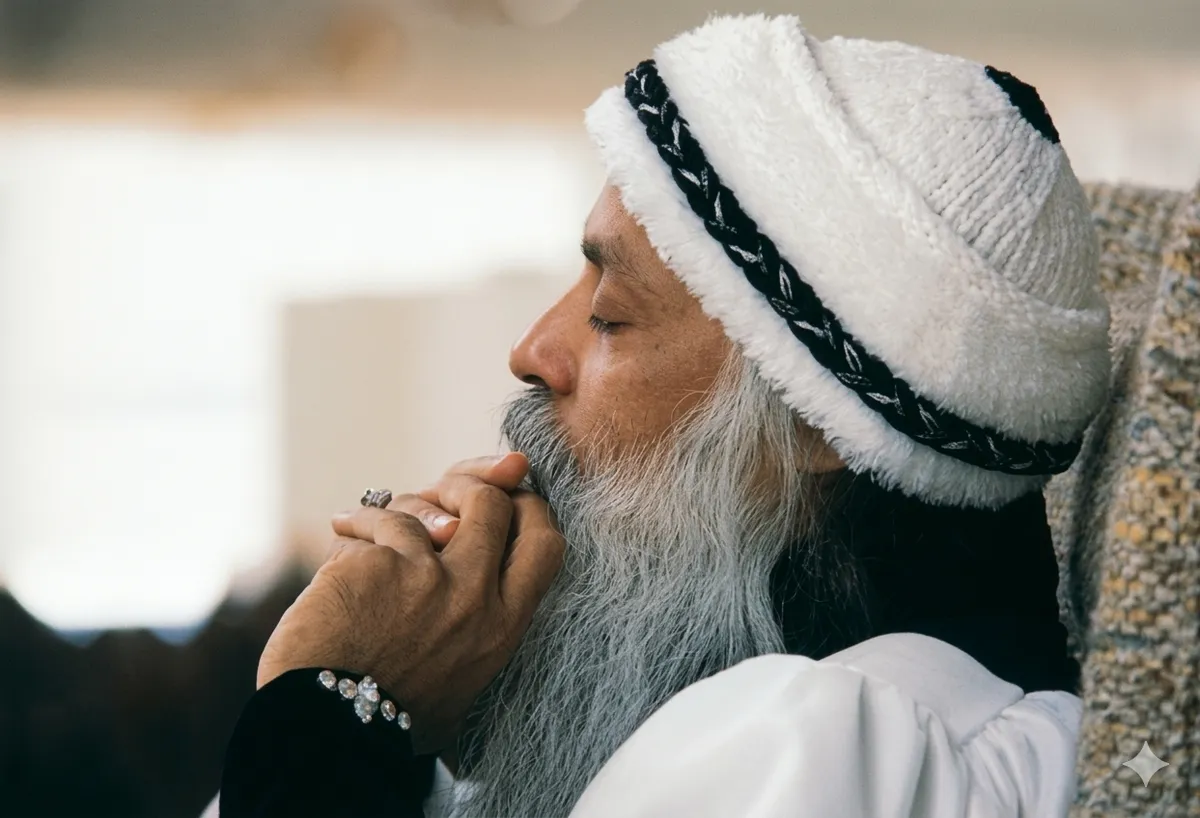
Osho's perspective on Shunyavada
When Osho Spoke About Shunyavada
Passages from the discourses where this theme comes alive.
Beloved Osho, is there a difference between the 'shunyavada' of nagarjuna and 'avyakritopadesh', the unspoken and the undefinable teaching of lord buddha?
This is avyakritopadesh, this is the indefinable message. This is the origin of Zen Buddhism, the transmission. Something was transmitted by Buddha to Mahakashyapa, something which is nothing; on the visible plane nothing -- no word, no scripture, no theory -- but something has been transmitted. What? The Zen monks have been meditating on this for two thousand five hundred years: "What? What was transmitted? What exactly was given?" In fact, nothing has been given from Buddha to Mahakashyapa; Mahakashyapa has certainly understood something. He understood the silence, he understood the penetrating silence. He understood that moment of clarity, that moment of utter thoughtlessness. He became one, in that moment, with Buddha. That's what surrender is. Not that he was doing it: Buddha was silent and he was silent, and the silences met, and the two silences dissolved into each other. And two silences cannot remain separate, remember, because a…
Osho, Buddha insists on emptiness and Shankara on fullness. They each marshal weighty arguments and debates for their respective positions. They know the Truth, the Divine. Even so, why do they refute the other and extol their own? And you support both at once—why is that?
Death is just as divine. Night is as much God as day is. One aspect had been missed; there had been too much talk—only talk remained; the air was smoky with words; a web of words had been woven. A fresh expression was needed; the Divine was in search of a new word with which to knock again on the hearts still untouched by the stupidity of scholarship; to call again to those who are innocent, guileless, simple. Buddha caught hold of “emptiness.” It was a significant word. Consider: Buddha and Mahavira were born in the same era. Yet Buddha’s impact was unprecedented; Mahavira’s was not. Buddha’s thought spread across the world; its waves went to far horizons. Mahavira’s remained limited, reaching only a few. Both are equally wise. Both have the same experience. Both are mighty. One is not superior to the other, neither is behind. Then why did…
पहला प्रश्न: ओशो, बुद्ध शून्यता का आग्रह करते हैं और शंकर पूर्णता का। वे अपने-अपने आग्रह के लिए भारी तर्क और वाद-विवाद भी खड़ा करते हैं। इन्हें सत्य का, परमात्मा का पता है। फिर भी ये दूसरे का खंडन एवं स्वयं का मंडन क्यों करते हैं? और एक आप हैं जो दोनों का एक साथ समर्थन करते हैं, ऐसा क्यों?
एक पहलू चूक गया था, चर्चा बहुत हो चुकी थी, चर्चा ही चर्चा रह गई थी; हवा में धुआं ही धुआं था बातचीत का, शब्दों का जाल गुथ गया था। एक नई अभिव्यंजना चाहिए थी, परमात्मा नये शब्द की तलाश में था, जिससे फिर उन हृदयों पर दस्तक दे सके जो अभी पांडित्य की मूढ़ता से अछूते हैं। फिर उन्हें पुकार सके जो निर्दोष हैं, निष्कलुष हैं, जो सहज हैं। बुद्ध ने शून्य पकड़ा। महत्वपूर्ण शब्द था। तुम सोचो, बुद्ध और महावीर एक साथ ही पैदा हुए। लेकिन बुद्ध का प्रभाव अप्रतिम हुआ, महावीर का नहीं हुआ। बुद्ध का विचार सारे जगत पर फैलता चला गया, उसकी लहरें दूर-दिगंत तक गईं। महावीर का विचार बड़ी सीमित दुनिया में रहा, थोड़े से लोगों तक गया। दोनों एक से प्रज्ञावान हैं। दोनों का एक अनुभव है। दोनों बड़े समर्थ हैं। एक-दूसरे से श्रेष्ठ हैं, कहीं कोई किसी से पीछे नहीं है। फिर महावीर का विचार दूर-दिगंत तक गया क्यों नहीं? कारण था। महावीर पिटे-पिटाए शब्दों का उपयोग कर रहे थे। उन्होंने परमात्मा को पुराने और बासे शब्दों से ही पुकारा--आत्मा। …
Osho, what is the difference between surrender and blind imitation?
So be careful: the freedom you allow yourself, allow the other too. You have no right to judge another as blindly credulous or as a surrendered being. Drop that concern. You cannot judge anyway—how will you enter another’s heart? How will you know? Think only about yourself. See within whether, up to now, you have lived by blind belief or by surrender. Decide only there; leave worrying about others. Otherwise, all your judgments will be wrong. Jesus said: Judge not; do not set yourself up as a judge in relation to another. To the friend who has asked: if you are asking for yourself, good. Drop worrying about others. Look within and see: whatever I have been clinging to till now—have I ever staked my life to hold it? Have I meditated for it? Have I loved for it? Or am I just clutching what culture, society, civilization handed me?…
चौथा प्रश्न: ओशो, समर्पण और अंधानुकरण में क्या अंतर है?
इसलिए खयाल रखना, जो तुम अपने लिए मौका देते हो, वह दूसरे को भी देना। तुम्हें कोई हक नहीं है किसी दूसरे के बाबत निर्णय करने का कि वह अंधविश्वासी है, या समर्पित हुआ व्यक्तित्व है। तुम इसकी चिंता छोड़ो। तुम कर भी नहीं सकते निर्णय। तुम दूसरे के हृदय में उतरोगे कैसे? जानोगे कैसे? तुम तो अपनी ही सोच लो। इतना ही देखो अपने भीतर कि अब तक तुम अंधविश्वास से जी रहे हो, या समर्पण से जी रहे हो। बस, वहीं निर्णय कर लो, दूसरों की फिकिर छोड़ दो। अन्यथा तुम्हारे सभी निर्णय गलत होंगे। जीसस ने कहा है, निर्णय करो ही मत; दूसरे के संबंध में न्यायाधीश बनो ही मत। तो जिन मित्र ने पूछा है, अगर अपने लिए पूछते हों, तो ठीक। दूसरों की चिंता छोड़ दें। अपने भीतर ही देख लेना है कि अब तक जो मैं पकड़े हुए हूं, उसको पकड़ने के लिए मैंने कोई जीवन दांव पर लगाया है? कोई ध्यान किया है? कोई प्रेम किया है? या सिर्फ संस्कृति ने, समाज ने, सभ्यता ने जो दिया है, उसे पकड़े हुए हूं! दूसरों ने दिया है। …
Second point: however many ways the realized may have reached, however numerous the names of paths, the path is, in truth, one; there cannot be two. This needs to be understood—it’s a little subtle. If we are creating images, a thousand forms can be made. But if we are erasing images, there is only one way to erase. If you are building a house, architects can suggest thousands of ways. But if the house is to be demolished, no architect need be consulted; however the house is built, demolition is one. What difference can there be in breaking? To attain realization, Buddhahood, is a process of dissolving the world—not building something new. In building there are differences; in dissolving what differences can there be? Forms are different; the formless cannot be different.
दूसरी बात: चाहे सिद्ध कैसे ही मार्गों से पहुंचे हों, उन मार्गों के नाम अनेक हों; लेकिन मार्ग एक ही है, मार्ग दो हो नहीं सकते। इसे समझना पड़े; थोड़ा कठिन है; थोड़ा सूक्ष्म है। अगर हम प्रतिमाएं बनाएं, तो लाख तरह की प्रतिमाएं बन सकती हैं। लेकिन हम प्रतिमाएं मिटाएं, तो मिटाना तो एक ही तरह का होगा। तुम मकान बनाओ तो आर्किटेक्ट्स हजार रास्ते बताएंगे, मकान बनाने के। लेकिन अगर मकान गिराना हो, तो किसी आर्किटेक्ट से कुछ पूछने की जरूरत नहीं है। और मकान किसी भी ढंग का बना हो, गिराने का ढंग तो एक ही होगा। गिराने में क्या फर्क होगा? सिद्धत्व को पाना, बुद्धत्व को पाना, संसार मिटाने की प्रक्रिया है--कुछ बनाने की नहीं। बनाने में भेद होते हैं, मिटाने में क्या भेद होता है? आकार भिन्न होते हैं, निराकार कैसे भिन्न होगा! तुम्हारे खीसे में रुपये हों, मेरे खीसे में रुपये हों, फर्क हो सकता है। तुम्हारे पास करोड़ हो सकते हैं। मेरे पास अंगुलियों पर गिने जा सकें, इतने हो सकते हैं; फर्क हो सकता है। …
Profound Quotes on Shunyavada
Explore our structured collection of meaning-mapped quotes regarding Shunyavada.