
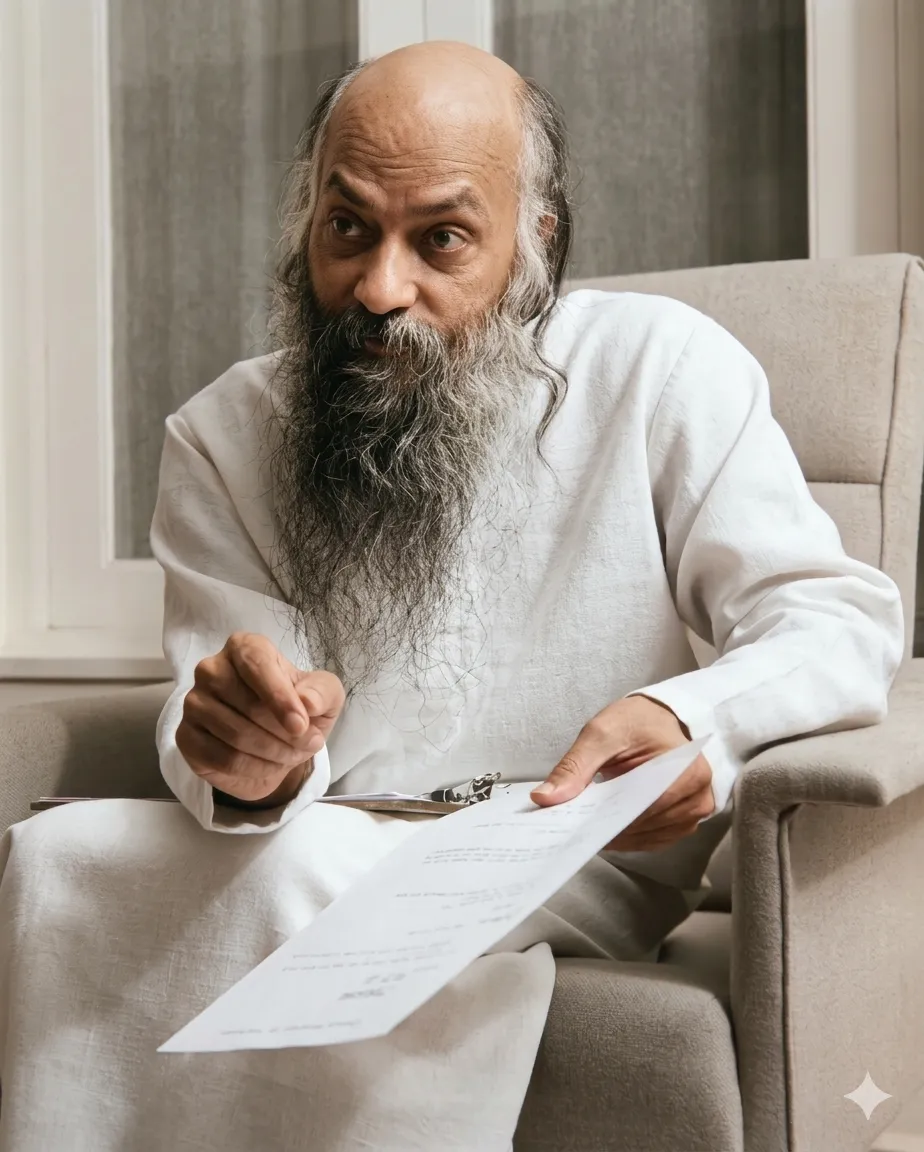
Osho's perspective on Pratyahara
When Osho Spoke About Pratyahara
Passages from the discourses where this theme comes alive.
Osho, in the meditation experiments you lead, there is a synthesis of yoga and devotion. So, are both necessary for pratyahara?
Life can be of two kinds: one life is built only on what is necessary; and one life is built on excess, on overflow. Watch the peacock dancing. Are those feathers, spread with the colors of the rainbow, necessary? If you cut off the feathers, would the peacock face any difficulty or hindrance in life? He would still live. Feathers are connected neither with the stream of life, nor with food, nor will they obstruct procreation. The feathers are surplus; they are a sign of more-than-needed, not of need. These birds are singing—stitch their beaks shut; will anything be lost? What difference would it make? The birds would still live. The songs would cease, because songs were never necessary—they were a flood, an exuberance. You dance—don’t dance; run your shop, come home. You sing—don’t sing. Will there be any obstacle? You love—don’t love; doing business is enough. If you don’t…
पांचवां प्रश्न: ओशो, आप जो ध्यान प्रयोग कराते हैं, उसमें योग और भक्ति का समावेश है। तो क्या प्रत्याहार के लिए दोनों आवश्यक हैं?
मोर को नाचते हुए देखो। क्या पंखों में जो इंद्रधनुषों के रंगों का फैलाव है वह आवश्यक है? पंख अगर काट दो तो मोर के जीवन में क्या कोई कठिनाई और अड़चन आ जाएगी? मोर फिर भी जी लेगा। क्योंकि पंखों से न तो कोई जीवन की धारा का संबंध है, न भोजन का संबंध है, न बच्चे पैदा करने में कोई बाधा पड़ेगी। पंख तो अतिरेक हैं; वे तो जरूरत से ज्यादा की खबर हैं, जरूरत की खबर नहीं हैं। ये पक्षी गीत गा रहे हैं, इनके ओंठ सी दो, कुछ हर्ज हो जाएगा? क्या फर्क पड़ेगा? पक्षी फिर भी जी लेंगे। गीत बंद हो जाएंगे, क्योंकि गीत आवश्यक थोड़े ही थे--बाढ़ थी; अतिरेक था। तुम नाचते हो, मत नाचो; दुकान करो, घर आ जाओ। गीत गाते हो, मत गाओ। कोई बाधा आ जाएगी? प्रेम करते हो, मत करो; दुकान करना काफी है। प्रेम न करोगे तो क्या अड़चन आ जाएगी? क्या मर जाओगे? नहीं जो प्रेम करते, वे भी जी रहे हैं; नहीं जो गीत गाते, वे भी जी रहे हैं। …
Beloved Osho, this pratyahar looks like an impossible experiment. Is it possible for the ganges to return to gangotri and is it possible for the tree to again become a seedling and a seed? And shankara and you are both asking us to do this.
The return of the Ganges to its source, to Gangotri, and the tree becoming a seed looks impossible to you, but this is what is happening every day. The tree is becoming a seed again daily. Just look at the seeds hanging on that gulmohar tree: the whole tree has become seeds. And every day the Ganges returns to Gangotri through the dark clouds; it rains on the Himalayas and the Ganges returns to Gangotri. This is happening every day. You ask what has to be done. Really, this is happening unconsciously; you just have to see this happening in wakefulness. Many times you return home but you are not conscious. You have become so used to staying in guesthouses that even when you return to your own home you think it to be a guesthouse. A friend of mine has to travel day and night in connection with his…
Osho, I feel that in the journey of life I have wandered very far from my true nature. Will the journey of returning—of retracing—back to my nature be just as long? Or is some shortcut possible?
But we manage to extract futility out of everything. So there are people “remembering God,” chanting “Ram-Ram, Ram-Ram.” They have turned their shawl into a “Ram shawl,” covered with Ram-Ram. Remembrance of the Lord means that what is hidden within me becomes evident to me. By repeating Ram-Ram awareness will not arise. Let my eyes, which have been wandering outward, turn within; let my ears, which listen outside, begin to listen within; let my mind, which thinks about the external, turn inward—let its lamp, its light, fall inside. This very moment you can be established in your nature, because in truth you already are. No one has ever been able to dislodge you from there, nor ever will. That is why, even after wandering for thousands of births, you never truly wander away. Your capacity to reclaim it is, at every instant, exactly what it has always been; not the…
तीसरा प्रश्न: ओशो, मुझे लगता है कि जीवन-यात्रा में मैं स्वभाव से बहुत दूर निकल आया हूं। तो क्या स्वभाव में वापस लौटने की, प्रतिक्रमण की यात्रा भी इतनी ही लंबी होगी? या उसमें कोई शार्टकट भी संभव है?
पर हम तो हर चीज से व्यर्थता निकाल लेते हैं। तो लोग हैं जो हरि-स्मरण कर रहे हैं, प्रभु-स्मरण कर रहे हैं, राम-राम, राम-राम जप रहे हैं। अपनी चदरिया को उन्होंने राम चदरिया बना ली है, उस पर सब राम-राम लिख लिया है। प्रभु-स्मरण का अर्थ है कि जो मेरे भीतर छिपा है उसका मुझे बोध हो जाए। राम-राम दोहराने से बोध नहीं हो जाएगा। मेरी आंखें जो बाहर भटक रही हैं भीतर मुड़ जाएं; मेरे कान जो बाहर सुन रहे हैं भीतर सुनने लगें; मेरी बुद्धि जो बाहर के संबंध में सोच रही है वह भीतर मुड़ जाए, उसका दीया, उसका प्रकाश भीतर पड़ने लगे। इसी क्षण आप स्वभाव में प्रतिष्ठित हो सकते हैं, क्योंकि प्रतिष्ठित तो आप हैं ही। कभी कोई आपको वहां से अप्रतिष्ठित न कर सका है, न कर सकेगा। इसीलिए हजारों जन्मों तक भी भटक कर आप भटक नहीं पाते। आपकी क्षमता उसे वापस पाने की प्रतिपल उतनी ही है जितनी कभी थी; उसमें रत्ती भर कमी नहीं हुई। अभी चाहें, इसी क्षण, तो मुड़ सकते हैं। …
Osho, just as the sage Shandilya calls knowledge (jnana) and yoga the helpers of devotion (bhakti), do the exponents of knowledge and yoga likewise regard devotion as their helper, or not?
The devotee’s vision is more generous than the vision of the knower and the yogi. Because the source of devotion is the heart. The heart is vast; it can include even what is opposed to it. The heart does not worry about coherence; the heart cares about music. Jnana and yoga are not the ways of the heart; they are the ways of the intellect. The intellect is very narrow. The intellect chooses. Then the intellect worries about coherence, not about music—there must be logical consistency. So in Mahavira’s utterances there can be no room for devotion. His is the path of pure thought: samyak jnana, right knowledge. There only what exactly suits knowledge will be accepted. Knowledge selects, sifts; it is orderly; it has a blueprint. The devotee is not so narrow. He does not get flustered by a little inconsistency. The logician, the philosopher, is consistent—but the poet…
दूसरा प्रश्न: ओशो, जैसे शांडिल्य ऋषि ज्ञान और योग को भक्ति का सहायक बताते हैं, वैसे ही ज्ञान और योग के प्रस्तोता भक्ति को अपना सहायक मानते हैं या नहीं?
भक्त की दृष्टि ज्ञानी और योगी की दृष्टि से ज्यादा उदार होती है। चूंकि भक्ति का स्रोत है हृदय। हृदय विराट है, अपने से विरोधी को भी समा लेता है। हृदय संगति की चिंता नहीं करता, हृदय संगीत की चिंता करता है। ज्ञान और योग हृदय के मार्ग नहीं हैं, बुद्धि के मार्ग हैं। बुद्धि बड़ी संकीर्ण है। बुद्धि चुनाव करती है। फिर बुद्धि संगति की चिंता करती है, संगीत की नहीं--तर्कयुक्त संगति होनी चाहिए। तो महावीर के वचनों में भक्ति की गुंजाइश नहीं हो सकती। शुद्ध विचार का मार्ग है, सम्यक ज्ञान, ठीक ज्ञान का मार्ग है। वहां तो जो ज्ञान को एकदम अनुकूल है वही अंगीकार होगा। ज्ञान चुनाव कर लेता है, छांट लेता है; सुसंबद्ध होता है; रूपरेखा होती है ज्ञान की। भक्त इतना संकीर्ण नहीं होता। भक्त को असंगति में कुछ घबड़ाहट नहीं होती। जैसे तार्किक, दार्शनिक असंगत नहीं होता, लेकिन कवि असंगत होता है।
Profound Quotes on Pratyahara
Explore our structured collection of meaning-mapped quotes regarding Pratyahara.