
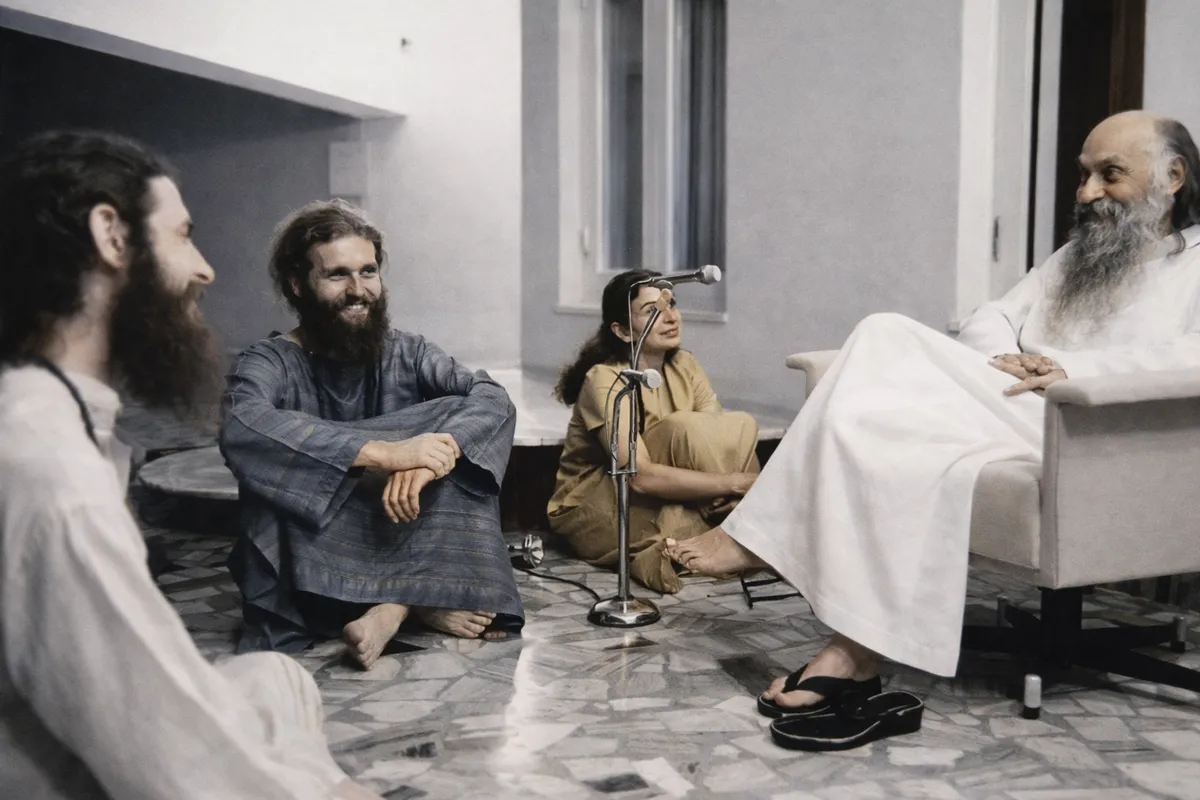
Osho's perspective on Misfortune
When Osho Spoke About Misfortune
Passages from the discourses where this theme comes alive.
Osho, what is the first experience of samadhi like?
You will know only when it happens. It cannot be said; at most a few hints can be given. It is as if, in the dark, a lamp is suddenly lit. Or as if a dying patient, right at the edge of death, suddenly finds a medicine that works; life’s wave, life’s thrill spreads again—so it is. As if a corpse becomes alive—such is the first experience of samadhi. It is the taste of nectar. The experience of the ultimate music. But it will be only when it happens; and only then will you understand. You will not understand by my saying it. It is as with love. How can anyone explain it? To someone who has never loved, never known love, no matter how many explanations you offer—he will hear it all and still ask, “I haven’t understood; please explain a little more.” It is like explaining light to…
तीसरा प्रश्न: ओशो, समाधि का पहला अनुभव कैसा होता है?
होगा तो ही जानोगे। कहा जा सके, ऐसा नहीं है। कुछ-कुछ इशारे किये जा सकते हैं। जैसे अंधेरे में अचानक दीया जल जाये, ऐसा होता है। या जैसे बीमार मरता हो और अचानक कोई दवा लग जाये...मरते-मरते कोई दवा लग जाये; और जीवन की लहर, जीवन की पुलक फिर फैल जाये--ऐसा होता है। जैसे कोई मुर्दा जिंदा हो जाये--ऐसा होता है समाधि का पहला अनुभव। अमृत का अनुभव है। परम संगीत का अनुभव है। पर होगा तो ही होगा। और होगा तो ही तुम समझ पाओगे; मेरे कहने से समझ में न आ सकेगा। प्रेम में जैसा होता है। अब कोई किसी को कैसे समझाये? …
Osho, in an earlier talk you said that God—meaning Existence, the Whole, Totality—is one. But in this verse, how are beings and God, or nature and God, spoken of as two distinct categories? What is the reason?
I moved the pillow farther away. When I touched it, he reacted as if someone had touched his beloved; it showed on his face. As twenty minutes approached, I picked the pillow up to lock it in a cupboard. He rushed over, and totally outside his conscious control, he snatched the pillow, kissed it, and hugged it. Everyone burst out laughing. “What are you doing?” He began to cry, “I myself don’t understand what I’m doing. But now I feel such relief. A restlessness was building so that I just couldn’t stop myself—I had to hug and kiss this pillow. I am absolutely mad!” He had no idea what had been said to him under hypnosis. Isn’t the attraction between man and woman just like this? No one has hypnotized you—you are already hypnotized by the journey of lifetimes. It is nature’s hypnosis. The old word is maya; the new…
प्रश्न: ओशो, आपने पिछली एक चर्चा में कहा है कि परमात्मा अर्थात अस्तित्व, एक्झिस्टेंस, समग्रता, टोटेलिटी। लेकिन इस श्लोक में भूतप्राणी और परमात्मा, या प्रकृति और परमात्मा ऐसे दो अलग-अलग विभाग कैसे कहे गए हैं, इसके क्या कारण हैं?
मैंने तकिया और दूर हटा दिया। जब मैंने तकिया छुआ, तो उसको वैसी ही चोट लगी, जैसे कोई किसी की प्रेयसी को छू दे। उसके चेहरे पर सारा भाव झलक गया। फिर मैं उठा, और जैसे ही बीस मिनट करीब आने को थे, मैं तकिए को उठाकर जाकर अलमारी में बंद करने लगा। वह भागा हुआ मेरे पास आया और बिलकुल होश के बाहर उसने तकिया छीना, चूमा और छाती से लगाया। सारे लोग हंसने लगे। उन्होंने कहा, तुम यह क्या कर रहे हो? वह रोने लगा। उसने कहा, मेरी भी समझ में नहीं आ रहा है कि मैं क्या कर रहा हूं। लेकिन अब मुझे बड़ी राहत, बड़ी रिलीफ मिली। कुछ ऐसी बेचैनी हो रही थी कि इसको बिना किए रुक ही नहीं सकता; इस तकिए को छाती से लगाना ही पड़े। मैं बिलकुल पागल हूं!
You sometimes use the word 'accident' or 'accidental' to describe an event. Are there any accidents in life in reality?
In reality there are only accidents and accidents, and nothing else. The factual world is the world of cause and effect; the world of truth is the world of freedom. Freedom means that causes don't work at all. Freedom means that now everything is accidental, now everything is possible. Nothing is impossible in the world of reality. From the moment you become enlightened everything becomes possible. Now no cause and effect have any hold on you. But I understand your question. It comes again from the same ideology -- that how can anything be accidental? The world is confined to cause and effect. Everything can be reduced to cause and effect. Nothing happens as a miracle. That is the scientific approach. That's why men like B. F. Skinner or Pavlov and other behaviourists go on saying that the idea of freedom is just stupid. There is no freedom. Man has…
Osho, what is the reason behind so-called accidental events?
No event is accidental. In fact, we call an event “accidental” when we cannot discover its cause. There are events whose causes elude our understanding, but no event is accidental.
प्रश्न: ओशो, अकस्मात जो घटनाएं हो जाती हैं, उसकी क्या वजह है?
कोई घटना अकस्मात नहीं होती। असल में उस घटना को हम अकस्मात कहते हैं, जिसका कारण नहीं खोज पाते। ऐसी घटनाएं होती हैं जिनका कारण हमारी समझ में नहीं पड़ता, लेकिन कोई घटना अकस्मात नहीं होती।
Profound Quotes on Misfortune
Explore our structured collection of meaning-mapped quotes regarding Misfortune.