
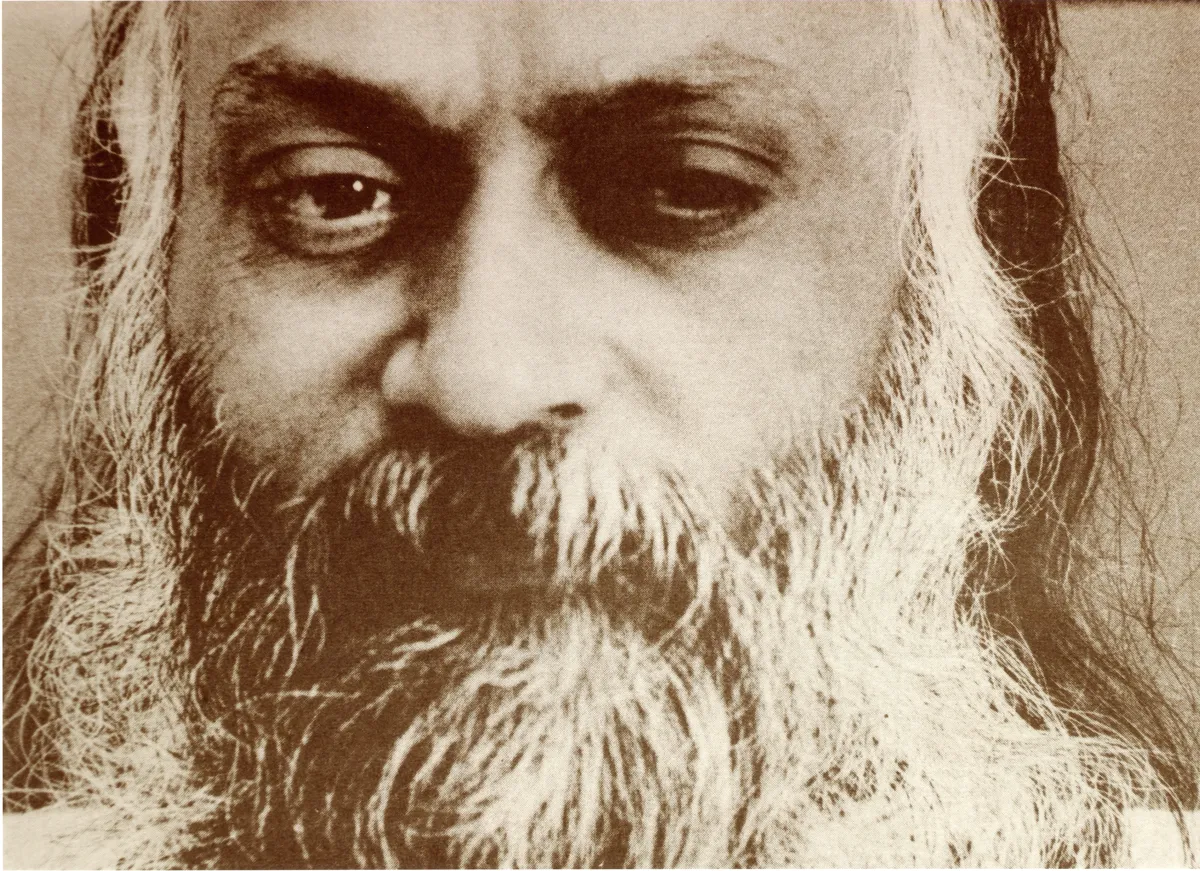
Osho's perspective on Gazing
When Osho Spoke About Gazing
Passages from the discourses where this theme comes alive.
What is the difference between waiting for godot and waiting for god?
It is as if the sun has risen in the morning and you are sitting in your room with closed doors and windows, in darkness. Open the doors, you become available to the sun. The sun was already available -- just the meeting happens. You cannot wait for God. All waiting is for Godot. Godot means the one who never comes, who CANNOT come, whose arrival is impossible. And the only impossible thing is that which has already happened -- how can it happen again? You are alive, and you are waiting for life, Now, this is ridiculous. The real man of religion does not think in terms of God. He thinks in terms of life or, even better, of living -- because life can again become an abstract idea. Living, moment-to-moment living. In that very living, one knows what God is, because one knows who one is. Your idea…
Beloved Osho, somewhere in your discourses there is a mention of the sage durvasa as an example of one in whom concentration has turned itself into a state of insanity. But in your tratak meditation, the gazing meditation, concentration seems to be the main process. Please, could you explain the difference between the two?
Just like this is the experiment of my tratak. I am sitting here empty, you are sitting there full up; how can the meeting take place? I am here, eager to flow, but your pot there is kept upside down. I am here, ready to enter you through your every pore, but you have not left a single opening anywhere; you have built up a concrete wall all around you. You are fretting and crying within -- I hear how thirsty you are, I see the trouble you are in. Your search is deeply honest, but you are enclosed within the fences you have created around yourself. And your difficulty is that you have mistaken your prison for your home, and you think your chains are precious ornaments and you seek to protect them, afraid that somebody may rob you. You are so busy guarding them, you have created all…
Osho, in one of your discourses you mentioned the sage Durvasa. You cited him as an example of the deranged state to which concentration can ultimately lead. But in trataka the spirit is also of concentration. What is the difference between the two? Please explain.
The traditional trataka—the conventional understanding of trataka—is indeed concentration. And concentration generates power; siddhis are acquired. But the union with the Divine, the supreme rest we seek, does not happen through it. Concentration is a function and an extension of the ego. You do not dissolve; you become more solid. You do not melt; you freeze like ice. Your power increases, not your bliss. But what I am calling trataka is not the use of concentration; it is only the experiment of seeing—just looking. Understand the difference. Trataka means gathering the entire mind and fixing it on one point—on the sun, on an image, on a mark—on anything. It means narrowing the mind so that it does not run here and there. All the currents of the mind turn in one direction. The mind goes on flowing toward a single point. Not even a single ray of awareness scatters elsewhere.…
प्रश्न: ओशो, आपके किसी प्रवचन में दुर्वासा ऋषि का जिक्र आया है। एकाग्रता की परिणति को विक्षिप्तता की अवस्था के उदाहरण के रूप में दुर्वासा ऋषि बताए गए हैं। पर त्राटक में एकाग्रता का ही भाव रहता है। इन दोनों में क्या फर्क है, कृपा करके बताएं।
फर्क को समझ लें। त्राटक का अर्थ होता है, किसी एक बिंदु पर--सूर्य पर, मूर्ति पर, बिंदु पर--किसी भी चीज पर अपने सारे मन को एकजुट लगा देना है। मन को कर लेना है संकीर्ण कि मन यहां-वहां न भागे। मन की सब धाराएं एक तरफ मुड़ जाएं। मन एक बिंदु की तरफ बहता हुआ रह जाए। जरा-सी भी चेतना की किरण यहां-वहां न बिखरती हो। बिना बिखरे सब एक बिंदु पर आकर टिक जाए। चेष्टा एक बिंदु पर टिकाने की है। मन को बांध-बांधकर, पकड़-पकड़कर एक जगह बिठाने की है।
SOMETHING ABOUT THE TRATAK MEDITATION. At night when we are doing tratak -- you are staring at me with unblinking eyes, your hands raised, jumping, crying the mantra HOO -- what are we doing basically? What are we doing, what is the inner process? What is going to happen through it? The first thing. When you stare with unblinking eyes, your energy becomes concentrated. Eyes are the doors from which you can move out or in. It is just like breathing. The breathing goes out and then comes in; then it goes out and comes in. You exhale and inhale. In the same way, you exhale and inhale consciousness through the eyes. This has to be deeply understood; it is one of the secrets of yoga. Just like you exhale and inhale breath through the nostrils, you inhale and exhale consciousness through the eyes. It is very subtle.
Profound Quotes on Gazing
Explore our structured collection of meaning-mapped quotes regarding Gazing.