
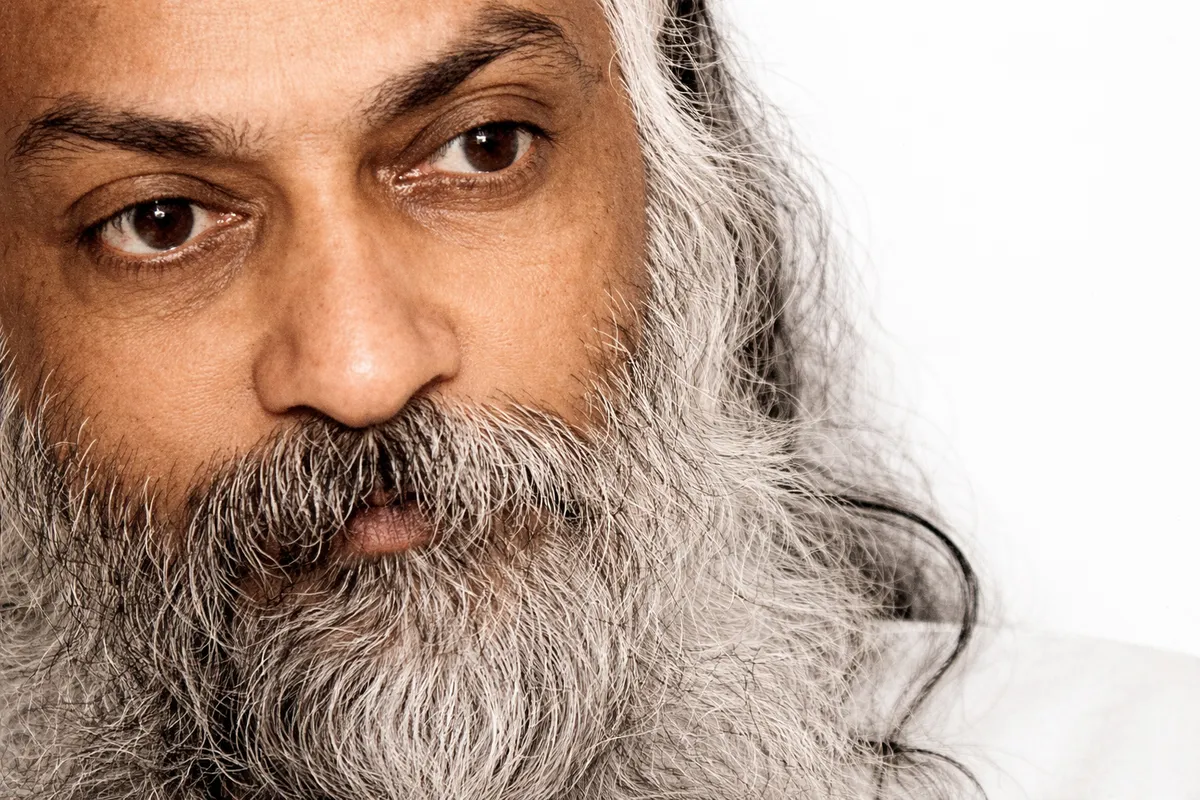
Osho's perspective on Introversion
When Osho Spoke About Introversion
Passages from the discourses where this theme comes alive.
Beloved Osho, huang po, the ninth century zen master said, "ordinary people all indulge in conceptual thought based on environmental phenomena; hence they feel desire and hatred. To eliminate environmental phenomena just put an end to your conceptual thinking. When this ceases, environmental phenomena are void, and when these are void thought ceases. But if you try to eliminate environmental phenomena, first putting a stop to conceptual thought, you will not succeed but merely increase its power to disturb you." beloved master, would you like to comment on this?
Meditation creates only one thing: a way of seeing the world in which everything looks ecstatic. The silence or the thundering of clouds... everything takes on a new dimension. There are two persons like this... Huang Po is one and another is Hui Hai. You should avoid these two fellows. I know they can confuse you and then to sort it out will be an unnecessary effort. These two fellows Huang Po and Hui Hai should be sent to America. California is the right place. Confuse people there -- there, they are so much willing to pay to be confused. Three hundred dollars! Huang Po has just to open a shop in America. In the whole world, California is the most insane spot, so anybody who wants to earn money out of people's insanity should simply move towards California. Don't go astray, just direct your nose towards California. Many have…
The words 'introvert' and 'introspection' have morbid connotations. How do they differ from healthy self-awareness and turning within?
'God' and 'dog' -- both words have the same balance. God may be the introversion of energy. Dog may be the extroversion of the energy. But the energy is the same, because only one energy exists. The world is a unity. The mind creates opposites. One very great Zen monk, Rinzai, was asked once.... The questioner must have been a very sceptical mind. He asked: 'You go on emphasizing that everything is God and everything is Buddha. Do you mean to say that even a dog is a Buddha?' Rimai laughed. Didn't answer. On the contrary, he jumped, and started barking. That's exactly the right answer: a Buddha barking like a dog. He showed the fact rather than talked about it. You are morbid if you are confined to anything -- whatsoever the name. You are healthy if you are flowing in all directions together. If opposites meet in you,…
Osho, if an extrovert, through practice, keeps turning inward and becomes introverted, should he change his path later in life?
Now this is difficult. There is a Socrates who draws certainty from the atheist and from the theist. And there is this friend—the anti-Socrates—who draws anxiety from Buddha and Mahavira, and also from Bertrand Russell. He draws anxiety from both opposites. What does this mean? It means we draw out only what we can draw out. Yet we think my anxiety is because of Bertrand Russell, or because of Mahavira. The truth is: I am anxious, I am uncertain. I will extract uncertainty from Mahavira, and I will extract uncertainty from Russell. Arjuna says, “Tell me something by which I may go beyond all uncertainty and become steady.” Arjuna’s demand is right; but he is not clear about the cause. This is our state too. We go to temple, to mosque, to a guru or a saint—to find certainty, to become definite. Nowhere will it become definite. With an uncertain…
प्रश्न: ओशो, बहिर्मुखी व्यक्ति साधना करते-करते अंतर्मुख होता जाए, तो क्या अपना रास्ता जीवन में आगे जाकर उसे बदलना चाहिए?
अब बड़ी मुश्किल है। एक साक्रेटीज है, जो कहता है, नास्तिक से भी निश्चय निकाल लेता है, आस्तिक से भी निश्चय निकाल लेता है। एक ये मित्र हैं, ये बिलकुल एंटीसाक्रेटीज हैं। ये बुद्ध और महावीर से भी चिंता निकालते हैं, बर्ट्रेंड रसेल से भी चिंता निकालते हैं। ये दोनों विरोधियों से भी चिंता निकाल लेते हैं। तो इसका अर्थ क्या है? इसका अर्थ यह है, हम वही निकाल लेते हैं, जो हम निकाल सकते हैं। लेकिन फिर भी हम सोचते हैं कि वह बर्ट्रेंड रसेल की वजह से मुझे चिंता पैदा हो रही है, महावीर की वजह से चिंता पैदा हो रही है। सच बात यह है कि मैं चिंतित हूं, अनिश्चित हूं। मैं महावीर से भी अनिश्चय निकालता हूं, रसेल से भी अनिश्चय निकाल लेता हूं। अर्जुन कहता है, कुछ ऐसा कहें मुझे कि मैं सारे अनिश्चय के पार होकर थिर हो जाऊं। अर्जुन की मांग तो ठीक है; लेकिन साफ-साफ उसे नहीं है कि कारण क्या है। हम सबकी भी यही हालत है। …
OSHO, on the first day you said that karma-sannyas is the path of the inward-turned person, and desireless action (nishkama karma) is the path of the outward-turned person. But people find that sometimes they are extroverted and sometimes introverted. In this situation, please explain how a person can decide precisely whether he is inward-turned or outward-turned.
So the extrovert concludes, “Religion is not for me. My fate doesn’t include it. The mind never becomes silent; nothing reveals within; I simply can’t go inside. I must be suffering the fruits of past karmas.” Not necessary. You are suffering a misunderstanding. You haven’t seen clearly that you are extroverted. If you are extroverted, the religious form must be entirely different for you. You need a religion that can use your outward-running energy. For the introvert, meditation; for the extrovert, prayer. Notice: meditation and prayer are very different paths. Meditation is the religion of the inward-turned; prayer is the religion of the outward-turned. In meditation, even God has no place. Meditation means utterly alone—alone, and alone—reaching the point where only I am, nothing else remains. Prayer means God; not one, but two. Ultimately, prayer arrives where only God remains and I am not. The fruits are the same, but…
प्रश्न: ओशो, पहले दिन आपने कहा कि कर्म-संन्यास अंतर्मुखी व्यक्ति की साधना है तथा निष्काम कर्म बहिर्मुखी व्यक्ति की साधना है। लेकिन लोगों का अनुभव है कि कभी वे बहिर्मुखी होते हैं, तो कभी अंतर्मुखी। इस स्थिति में कृपया समझाएं कि कोई व्यक्ति ठीक-ठीक कैसे निर्णय करे कि वह अंतर्मुखी है अथवा बहिर्मुखी है?
तो बहिर्मुखी आदमी सोचता है, अपने वश का नहीं है धर्म। अपने भाग्य में नहीं है। मौन तो होता ही नहीं मन; ठहरता ही नहीं। भीतर तो कुछ पता ही नहीं चलता। भीतर तो जाना होता ही नहीं। तो जरूर हम किसी पिछले जन्मों के पापों और कर्मों का फल भोग रहे हैं। नहीं; जरूरी नहीं है। आप सिर्फ एक भ्रांति का फल भोग रहे हैं। आप ठीक से समझ नहीं पाए कि आप बहिर्मुखी हैं। अगर बहिर्मुखी हैं, तो धर्म की रूप-रेखा आपके लिए बिलकुल अलग होगी। अगर बहिर्मुखी हैं, तो आपको धर्म भी ऐसा चाहिए, जो आपकी बहिर्मुख चेतना का उपयोग कर सके। अंतर्मुखी धर्म के लिए, ध्यान; बहिर्मुखी धर्म के लिए, प्रार्थना। कभी आपने खयाल किया कि ध्यान और प्रार्थना बड़े अलग रास्ते हैं! ध्यान का मतलब है, अंतर्मुखी का धर्म। प्रार्थना का अर्थ है, बहिर्मुखी का धर्म। ध्यान में परमात्मा की भी गुंजाइश नहीं है। ध्यान का मतलब है, अकेले, अकेले, और अकेले। ध्यान का मतलब है, उस जगह पहुंच जाना है, जहां मैं ही अकेला रह जाऊं और कुछ न बचे। …
Profound Quotes on Introversion
Explore our structured collection of meaning-mapped quotes regarding Introversion.