
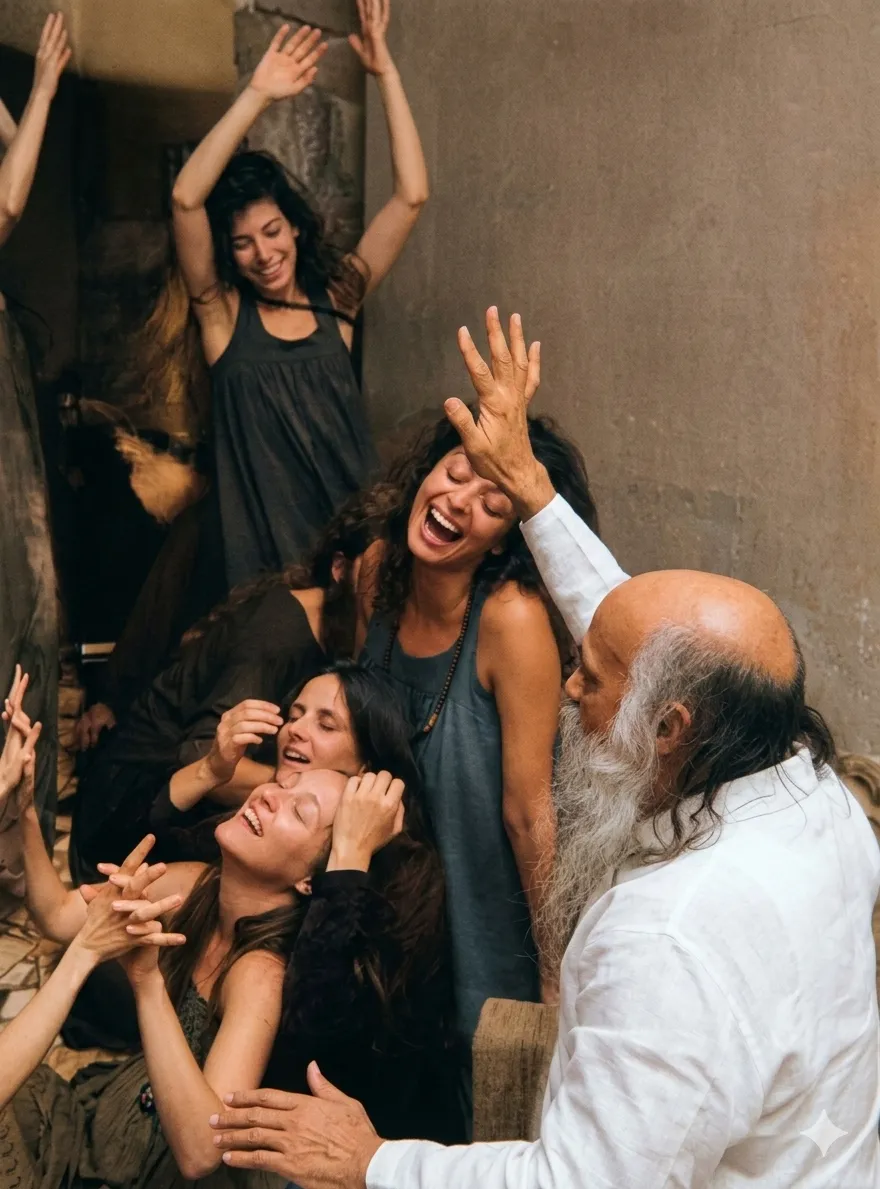
Osho's perspective on Detachment
When Osho Spoke About Detachment
Passages from the discourses where this theme comes alive.
How can I know if detachment or indifference is growing within?
It is not difficult to know. How do you know when you have a headache and how do you know when you don't have a headache? It is simply clear. When you are growing in detachment you will become healthier, happier; your life will become a life of joy. That is the criterion of all that is good. Joy is the criterion. If you are growing in joy, you are growing, and you are getting towards home. With indifference there is no possibility that joy can grow. In fact, if you have any joy, that will disappear. Happiness is health, and, to me, religion is basically hedonistic. Hedonism is the very essence of religion. To be happy is all. So remember, if things are going right, and you are moving in the right direction, each moment will bring more joy -- as if you are going towards a beautiful garden.…
I feel somewhat detached from all external events -- even sharp physical pain. It would be nice to think that this is the first bud of meditative being, but it seems more likely to be a chilling sign of schizoid withdrawal. Could you please say something about the perils of withdrawal, and how to avoid them?
IN THE search for a meditative state of mind, that peril always exists. In the search of one's own self there is always a danger that you may choose the inner against the outer -- then the withdrawal becomes schizoid, because you become lopsided, you lose balance. Balance is health. To lose balance is to lose health. And balance is sanity -- to lose balance is to become insane. The fear is always there. The danger is always there. The danger comes because of your mind. It is always easy for the mind to change its diseases. Somebody is mad after women; only sex is his obsession. One day or other he will be fed up with this, tired of it all. He will start moving to the other extreme: he will start thinking of brahmacharya -- celibacy -- of becoming a Catholic monk or something. There is danger. It…
Beloved Osho, although you have been teaching us to enjoy all pleasures of life, and not to be led by some kind of morality or disciplines, my life with you starts to look more like that of a monk -- a life of detachment from the usual kicks of life, and more of simplicity and silence. Is this a natural happening? Or am I creating new disciplines for my life?
But it takes a little time -- a few women in your life, few men in your life -- then you understand that it is the same game. Faces change, bodies change, but the game remains the same -- and a boring game! Not only boring, but if you keep all the lights on, then disgusting too. Strange type of thing.... Just this game of sex is enough proof that no god has created man, because if this is what God has created then he seems to be really a rascal. Some better arrangement could have been made. But this is the arrangement -- that everybody feels ashamed of it, that people go in the dark, turn the light off. I have loved a beautiful story: One couple from the Earth reached another planet, Mars, and of course they met people. The first couple they met, they invited them into…
With deepening meditation, one becomes more and more sensitive to objects, events and persons. But due to this heightened sensitivity one feels a sort of deep intimacy with everything, and this usually becomes a cause of subtle attachments. How to be sensitive and yet detached?
Let me tell you a story. Buddha was staying in a village. A woman came to him, weeping and crying and screaming. Her child, her only child, had suddenly died. Because Buddha was in the village, people said, "Don't weep. Go to this man. People say he is infinite compassion. If he wills it, the child can revive. So don't weep. Go to this Buddha." The woman came with the dead child, crying, weeping, and the whole village followed her -- the whole village was affected. Buddha's disciples were also affected; they started praying in their minds that Buddha would have compassion. He must bless the child so that he will be revived, resurrected. Many disciples of Buddha started weeping. The scene was so touching, deeply moving. Everybody was still. Buddha remained silent. He looked at the dead child, then he looked at the weeping, crying mother and he said…
Profound Quotes on Detachment
Explore our structured collection of meaning-mapped quotes regarding Detachment.