
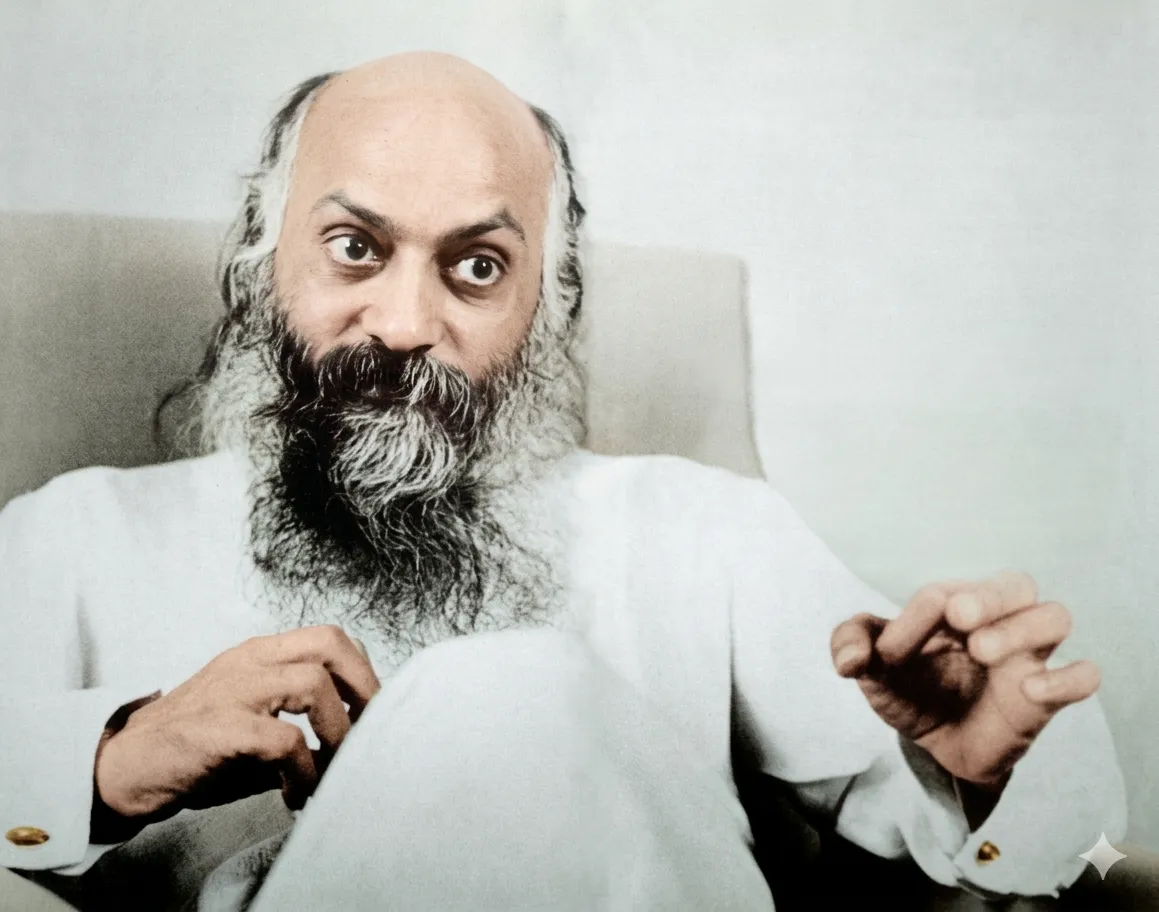
Osho's perspective on Dependability
When Osho Spoke About Dependability
Passages from the discourses where this theme comes alive.
Osho, a master can always know the spiritual state of a seeker longing for liberation, but how can the seeker know whether the master has attained truth or not? And if the disciple ever feels he has lost the gamble in his choice, can he go to another master? Please clarify your view.
The scripture says: eat once a day—so they eat once. Two garments—so two garments. Don’t travel after sunset—so they don’t. Don’t drink water at night—so they refrain. Rise before dawn—so they rise. They rehearse what the scripture prescribes; through this, they match your idea and seem suitable. If your conception springs from the same scripture, the match is exact. Hence the odd spectacle: the guru of one sect does not seem like a guru at all to another sect. But to his sect he appears the supreme guru. Their conceptions match. Understand the trick. You study the same shastra… Consider an actress who came to see me: “What do you say about the Bhrigu Samhita?” I asked why. She said, “In Delhi they read my Bhrigu. I noted what they said of my past lives, and future too. Some things about this life were true. Others aren’t yet, but the…
पहला प्रश्न: ओशो, गुरु तो सदैव मुमुक्षु की आध्यात्मिक स्थिति जान सकते हैं, परंतु मुमुक्षु कैसे जाने कि गुरु सत्य को उपलब्ध है, अथवा नहीं? और यदि शिष्य को कभी ऐसा महसूस होने लगे कि चुनाव में बाजी हार गया है, तो क्या वह दूसरे गुरु के पास जा सकता है? कृपया अपनी मान्यता स्पष्ट करें।
शास्त्र कहता है: इतनी बार भोजन, एक बार भोजन, तो ये एक बार भोजन करते हैं। शास्त्र कहता है कि दो वस्त्र, तो ये दो वस्त्र रखते हैं। शास्त्र कहता है: सूरज ढले चलना नहीं, तो ये चलते नहीं। रात पानी मत पीना, तो पानी नहीं पीते। ब्रह्ममुहूर्त में उठ आना, तो ब्रह्ममुहूर्त में उठ आते हैं। शास्त्र ने जो कहा है, उसकी कवायद करते हैं, उसका रिहर्सल करते हैं, उसका अभ्यास करते हैं, उसके अभ्यास से तुम्हारी धारणा से मेल खा जाता है, अनुकूल पड़ जाते हैं। अगर तुम्हारी भी उसी शास्त्र की धारणा है तो बस एकदम मेल खा जाते हैं। इसलिए तुम दुनिया में एक चमत्कार देखोगे कि एक संप्रदाय का गुरु दूसरे के संप्रदाय को बिलकुल गुरु जैसा नहीं मालूम होता। मगर उस संप्रदाय के लोगों को बिलकुल गुरु मालूम होता है, परम गुरु मालूम होता है। दोनों की धारणाएं एक जैसी हैं। दोनों की धारणाएं मेल खा रही हैं।
In one of your talks you said that the effect of shaktipat diminishes gradually; thus the seeker must maintain a regular contact with the medium. Does this not mean dependency upon some person in the form of a guru?
All relationships are binding, whether they be of husband and wife, father and son, or guru and disciple. Where there is relationship, there is slavery. So the spiritual seeker has not to form relationships. If he keeps the relationship of husband and wife there is no harm; it is not a hindrance because this relationship is irrelevant. But the irony lies in the fact that he renounces and drops out of husband-wife, father-son relationships to form a new guru-disciple relationship. This is very dangerous. The idea of a spiritual relationship has no meaning. All relationships belong to the mundane world. Relationship as such is worldly. If we say that relationship is the world, it would not be wrong. You are alone, unassociated. This is not an egotistical statement because others too are alone and unassociated. Someone is two steps ahead of you; if you have heard the footsteps, then you…
Osho, in a previous talk you said you prefer shaktipat to be as close to grace as possible. Doesn’t that imply that the method of shaktipat admits gradual refinement and development? In other words, is qualitative progress also possible in the process of shaktipat?
From one who has attained the seventh body, shaktipat becomes the purest—the purest. Yet it is still not grace. The purest state of shaktipat is reached at the seventh body—no further. On that side there is no veil now; for the one in the seventh there is no veil—he is one with the void. But on your side there is a veil. You will still take him to be a person. Your veil will now provide the final obstruction. From his side there is none, but for you he remains a person. The sense of personhood toward the medium is also an obstacle Understand: if I attain the seventh state, it is my affair that I know I am the void—but you? You will know me as a person. And your notion that I am a person becomes the last veil. That veil will fall only when the happening befalls…
प्रश्न: ओशो, पिछली एक चर्चा में कहा था आपने कि आप पसंद करते हैं कि शक्तिपात जितना ग्रेस के निकट हो सके उतना ही अच्छा है। इसका क्या यह अर्थ न हुआ कि शक्तिपात की पद्धति में क्रमिक सुधार और विकास की संभावना है? अर्थात क्या शक्तिपात की प्रक्रिया में क्वालिटेटिव प्रोग्रेस भी संभव है?
सातवें शरीर को उपलब्ध व्यक्ति से शक्तिपात शुद्धतम हो जाएगा। शुद्धतम हो जाएगा। ग्रेस फिर भी नहीं होगा। शक्तिपात की शुद्धतम स्थिति सातवें शरीर पर पहुंच जाएगी--शुद्धतम। जो, शक्तिपात जहां तक पहुंच सकता है, वहां तक पहुंच जाएगी। लेकिन उस तरफ से तो कोई पर्दा नहीं है अब, सातवें शरीर को उपलब्ध व्यक्ति की तरफ से कोई पर्दा नहीं है, उसकी तरफ से तो अब वह शून्य के साथ एक हो गया, लेकिन तुम्हारी तरफ से पर्दा है। तुम तो उसको व्यक्ति ही मानकर जीओगे। अब तुम्हारा पर्दा आखिरी बाधा डालेगा। अब उसकी तरफ से कोई पर्दा नहीं है, लेकिन तुम्हारे लिए तो वह व्यक्ति है। माध्यम के प्रति व्यक्ति-भाव भी बाधा समझो कि मैं अगर सातवीं स्थिति को उपलब्ध हो जाऊं, तो यह मेरी बात है कि मैं जानूं कि मैं शून्य हूं, लेकिन तुम? तुम तो मुझे जानोगे कि एक व्यक्ति हूं। और तुम्हारा यह खयाल कि मैं एक व्यक्ति हूं, आखिरी पर्दा हो जाएगा। यह पर्दा तो तुम्हारा तभी गिरेगा जब निर्व्यक्ति से तुम पर घटना घटे। …
Osho, true masters are different, and a follower of one master cannot accept another. But we find ourselves bowing to Buddha, Mahavira, Lao Tzu, Jesus, Krishna—everyone. Perhaps it is because you yourself have oriented us toward them. Even on seeing the living master Krishnamurti, our hearts overflowed with joy, our feet began to dance. Why? And we cannot understand why Krishnamurti’s lovers cannot accept you?
True masters are certainly different. Broadly, three kinds can be seen. First is the kind of master like Krishnamurti; Mahavira and Buddha belong to the same line. Such a master has one central message: become utterly free, do not depend on anyone. Your liberation lies in your freedom. Liberation is not a final event waiting at the end; you must learn freedom from the very first step—only then will it flower at the last. Krishnamurti’s famous book is The First and the Last Freedom: the first freedom is the last freedom; the very first step of freedom is already the last step. So: do not go into anyone’s refuge, do not surrender anywhere, do not bind yourself to any ideology; avoid belief. Mahavira called this the state of ashraya-shunyata—no refuge. Take no shelter. Buddha’s last message at the time of his death—Ananda asked for a final word to treasure forever—was:…
पहला प्रश्न: ओशो, सदगुरु अलग-अलग होते हैं और किसी एक सदगुरु को मानने वाला दूसरे सदगुरु को स्वीकार नहीं कर सकता। लेकिन हम बुद्ध, महावीर, लाओत्से, जीसस, कृष्ण, सभी के प्रति झुक जाते हैं। इसकी वजह यह हो सकती है कि आपने ही हमें उनके उन्मुख किया। जीवित गुरु कृष्णमूर्ति को देखकर भी हमारा हृदय आनंदविभोर हो उठा है, पैर थिरक उठे हैं। क्यों? और समझ में नहीं आता कि कृष्णमूर्ति के प्रेमी आपको क्यों स्वीकार नहीं कर सकते?
सदगुरु निश्चित ही भिन्न-भिन्न हैं। विशेषकर तीन वर्ग किए जा सकते हैं। एक वर्ग है कृष्णमूर्ति जैसे सदगुरुओं का; महावीर, बुद्ध उसी पंक्ति में आते हैं। इस प्रकार के सदगुरु का एक ही उपदेश है कि तुम परिपूर्ण रूप से स्वतंत्र हो जाओ, निर्भर न रहो। तुम्हारी स्वतंत्रता में ही तुम्हारा मोक्ष है। मोक्ष कोई अंतिम घटना नहीं है। पहले कदम से ही मुक्त होना सीखना पड़ेगा, तो ही अंतिम कदम पर मुक्ति फलित होगी। कृष्णमूर्ति की प्रसिद्ध किताब है, दि फर्स्ट एंड दि लास्ट फ्रीडम--पहली और अंतिम मुक्ति। पहली मुक्ति ही अंतिम मुक्ति है और पहला कदम ही, स्वतंत्रता का, अंतिम कदम है। तो न तो किसी की शरण जाना, न कहीं समर्पण करना, न किसी विचार से बंधना, श्रद्धा से बचना। महावीर ने इसी बात को अशरण-भाव कहा है, किसी की शरण मत जाना।
Profound Quotes on Dependability
Explore our structured collection of meaning-mapped quotes regarding Dependability.