
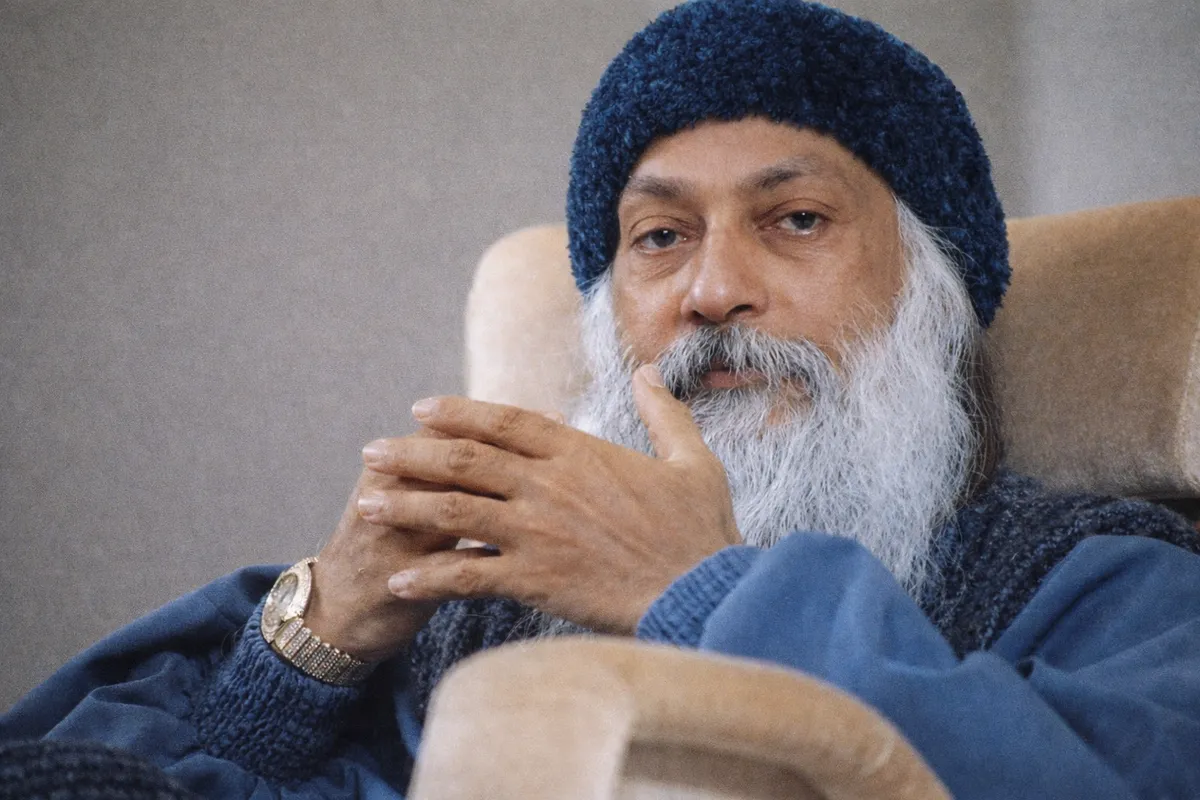
Osho's perspective on Baraka
When Osho Spoke About Baraka
Passages from the discourses where this theme comes alive.
Beloved Osho, I love being here. I wanted and felt to be with you even if it were just for two days. At your birthday in 1981 we met for the first time. The reason was that I had just read a book about gurdjieff and the phenomenon of baraka. This gave me such a hit that I made it to come to the ranch. These days I am working with managers and teaching them meditation techniques. I'm also preparing a worldwide meditation project. Again I feel I need `baraka'! Please can you say something about baraka?
Baraka is a Sufi word meaning grace. George Gurdjieff was trained in Sufi schools. He has carried many ideas of the Sufis into the West. The Sufi master -- just like any other master in the world -- is full of grace. If you are receptive, if you are open, just coming close to the master something invisible, some vibe of the divine, some rays of the unknowable start penetrating you. It also has the meaning of blessing. People come to the masters and ask for blessing. In English there is no exact word to translate `baraka', but in Sanskrit, in Hindi, we have the word prasad. Blessings carry a faraway echo of it. If you are receptive... And unless one is receptive one never goes to a master. That has been the Eastern tradition. Why waste your time and why waste the master's time? You go only when you…
Beloved Osho, contemplating you floods me with a deep ecstasy, and I feel the grace. You say you are not doing anything to create this ecstasy in us, but it is for sure that I also am not doing anything. Then from where is this bliss coming and how is it happening if neither you nor I are doing anything? Is it possible for you to explain more about the mystery of it? What is this phenomenon which we call grace?
It can happen only when neither the disciple nor the master is doing anything; it can happen only in a nondoing, absolute nondoing, because grace is not something you can do anything about. You can simply be receptive, open, that's all. Nothing positively can be done about it. It is already flowing -- the whole existence is filled with grace. You are closed, and the more you do something, the more you will become closed -- because every effort gives you a more egocentric feeling; whatsoever you do creates your ego. You feel I am doing something -- and whenever you do something you start thinking of the future, of the result. You start expecting. So two things happen: firstly, whatsoever you do becomes a food for the ego; secondly, whatsoever you do leads you into the future, then you are not here and now. And these both are the…
Osho, in the Nargol camp you said that shaktipat means the Divine power has descended into you. Later, in discussion, you said there is a difference between shaktipat and grace. These two statements seem contradictory. Please explain.
Shaktipat is always the Divine’s. But if a person becomes the medium, we call it shaktipat; if no person is the medium, it can sometimes happen suddenly—and it can harm. Yet if someone has waited endlessly, and has meditated with infinite patience, then the descent of power will also happen as prasad. There will be no medium then—but there will be no accident either. For his endless waiting, his infinite patience, his unbroken ardor, his unshakable resolve create in him the capacity to withstand the Infinite. So there is no accident. Thus the event happens in both ways. But then it will not appear to him as shaktipat; it will be known as prasad, because there is no medium. Only an egoless person can be a medium There is similarity in both, and there is difference. I am in favor that, as far as possible, prasad be available; as far…
प्रश्न: ओशो, आपने नारगोल शिविर में कहा कि शक्तिपात का अर्थ है--परमात्मा की शक्ति आप में उतर गई। बाद की चर्चा में आपने कहा कि शक्तिपात और ग्रेस में फर्क है। इन दोनों बातों में विरोधाभास सा लगता है। कृपया इसे समझाएं।
शक्तिपात तो सदा परमात्मा का ही है। लेकिन कोई व्यक्ति माध्यम बने तो उसको शक्तिपात कहेंगे; कोई व्यक्ति माध्यम न हो, तो यह आकस्मिक हो सकता है कभी, तो नुकसान पहुंच सकता है। लेकिन किसी व्यक्ति ने बड़ी अनंत प्रतीक्षा की हो, और किसी व्यक्ति ने अनंत धैर्य से ध्यान किया हो, तो भी प्रसाद के रूप में शक्तिपात हो जाएगा। तब कोई माध्यम भी नहीं होगा, लेकिन तब दुर्घटना नहीं होगी। क्योंकि उसकी अनंत प्रतीक्षा, उसका अनंत धैर्य, उसकी अनंत लगन, उसका अनंत संकल्प, उसमें अनंतता को झेलने की सामर्थ्य पैदा करता है। तो दुर्घटना नहीं होगी।
There was once a sufi who wanted to make sure that his disciples would, after his death, find the right teacher of the way for them.
HE THEREFORE, AFTER THE OBLIGATORY BEQUESTS LAID DOWN BY LAW, LEFT HIS DISCIPLES SEVENTEEN CAMELS, WITH THIS ORDER: 'YOU WILL DIVIDE THE CAMELS AMONG THE THREE OF YOU IN THE FOLLOWING PROPORTIONS: THE OLDEST SHALL HAVE HALF, THE MIDDLE IN AGE ONE-THIRD, AND THE YOUNGEST SHALL HAVE ONE-NINTH.' AS SOON AS HE WAS DEAD AND THE WILL WAS READ, THE DISCIPLES WERE AT FIRST AMAZED AT SUCH AN INEFFICIENT DISPOSITION OF THEIR MASTER'S ASSETS. SOME SAID, 'LET US OWN THE CAMELS COMMUNALLY.' OTHERS SOUGHT ADVICE AND THEN SAID, 'WE HAVE BEEN TOLD TO MAKE THE NEAREST POSSIBLE DIVISION.' OTHERS WERE TOLD BY A JUDGE TO SELL THE CAMELS AND DIVIDE THE MONEY; AND YET OTHERS HELD THAT THE WILL WAS NULL AND VOID BECAUSE ITS PROVISIONS COULD NOT BE EXECUTED. THEN THEY FELL TO THINKING THAT THERE MIGHT BE SOME HIDDEN WISDOM IN THE MASTER'S BEQUEST, SO THEY MADE ENQUIRIES…
What is the phenomenon of baraka?
definitionProfound Quotes on Baraka
Explore our structured collection of meaning-mapped quotes regarding Baraka.