
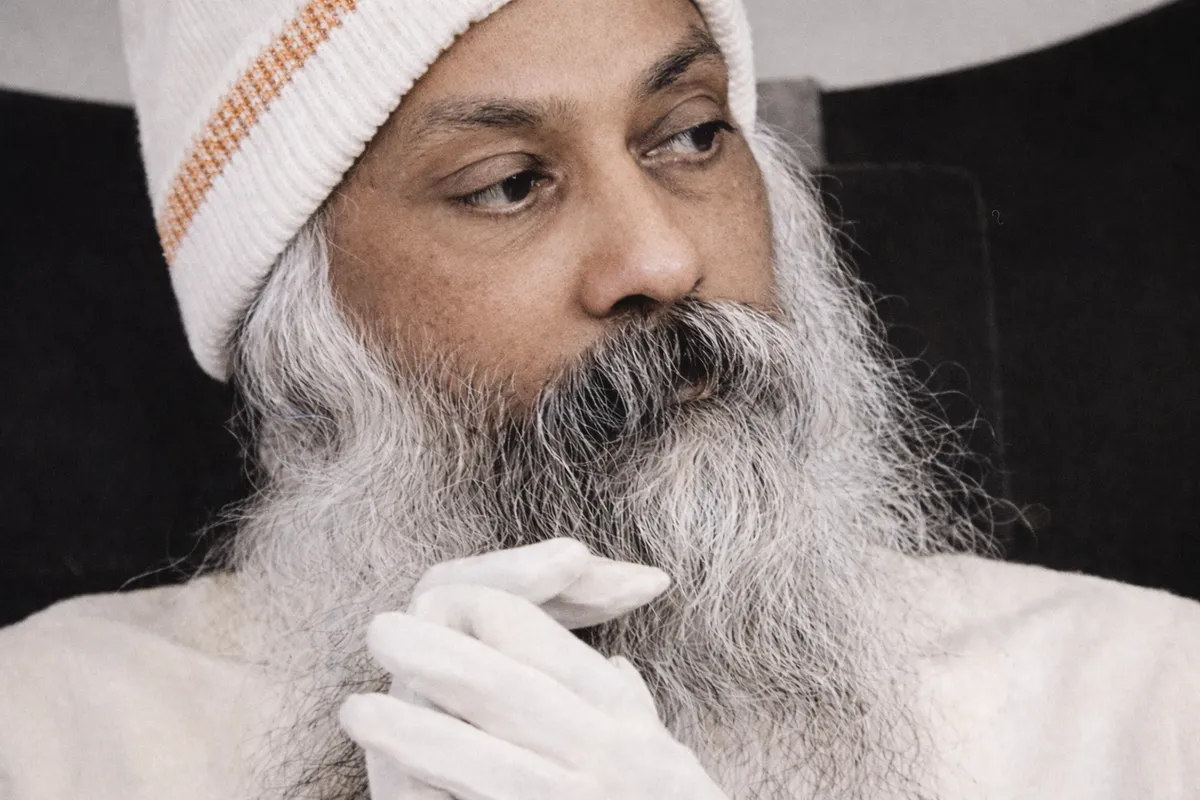
Osho's original Hindi beside Osho Live's English translation, matched passage by passage.
आत्मानंद ब्रह्मचारी! मैं न तो भारतीय हूं और न ही गुरु हूं। भारतीय होना, पाकिस्तानी होना, चीनी होना--राजनैतिक दांव-पेंच हैं, उनका धर्म से कोई संबंध नहीं है, वे सब राजनीति के खेल हैं। धर्म कैसे भारतीय हो सकता है? धर्म की कोई सीमा नहीं है। धर्म तो असीम है, असीम की खोज है, असीम के साथ एक हो जाने की अभीप्सा है।
Atmanand Brahmachari! I am neither Indian nor a guru. To be Indian, Pakistani, Chinese--these are political contrivances; they have nothing to do with religion. They are all games of politics. How can religion be Indian? Religion has no boundary. Religion is the boundless--a search for the boundless, a longing to become one with the boundless.
बूंद सागर हो जाना चाहती है, यह धर्म का सार-सूत्र है। और जो बूंद सोचती हो कि बूंद रह कर सागर हो जाएगी, वह भ्रांति में है। जो भारतीय होकर धार्मिक होना चाहता हो, वह धार्मिक नहीं हो सकता। हिंदू धार्मिक नहीं हो सकता, जैन धार्मिक नहीं हो सकता, मुसलमान धार्मिक नहीं हो सकता। धार्मिक होने के लिए ये सारी सीमाएं, ये सारे संस्कार छोड़ देने पड़ते हैं। इनके पार उठना पड़ता है--विराट में, आकाश में! ये क्षुद्र बातें हैं।
A drop wants to become the ocean--this is the essence of religion. But the drop that thinks it can remain a drop and still become the ocean is deluded. The one who wants to be religious while remaining Indian cannot be religious. A Hindu cannot be religious, a Jain cannot be religious, a Muslim cannot be religious. To be religious, all these limits, all these conditionings have to be dropped. You have to rise beyond them--into the vast, into the sky! These are petty matters.
फिर भारत क्या है? कल तक कराची भारत था, अब? अब भारत नहीं है। अब जो कराची में है, वह भारतीय नहीं है। कल तक ढाका भारत था, अब? अब ढाका भारतीय नहीं है। राजनीति बदलती है, देश बनते-बिगड़ते रहते हैं। ये तो पानी पर खींची गई लकीरें हैं। धर्म शाश्वत है। कल तक कोई पाकिस्तान न था, अब है। कल तक कोई इजरायल न था, अब है। देश थे, जो अब नहीं हैं। देश नहीं थे, जो अब हैं।
And what is India, after all? Until yesterday Karachi was India; now? Now it isn’t. Whoever lives in Karachi is no longer Indian. Until yesterday Dhaka was India; now? Now Dhaka isn’t Indian. Politics keeps changing; countries keep being made and unmade. These are lines drawn on water. Religion is eternal. Until yesterday there was no Pakistan; now there is. Until yesterday there was no Israel; now there is. Some countries were, that now are not. Some were not, that now are.
धर्म न तो कभी मिटता है, न कभी बनता है। न उसका कोई जन्म है, न उसकी कोई मृत्यु है। न धर्म का कोई आकार है, न रूप है, न रंग है, न उसकी कोई परिभाषा हो सकती है। लेकिन बड़े आश्चर्यों का आश्चर्य है कि धार्मिक व्यक्ति को भी ये भ्रांतियां पकड़े रहती हैं। और साधारण धार्मिक व्यक्तियों को ही नहीं, श्रावकों को ही नहीं; जिनको तुम साधु कहो, महात्मा कहो, वे भी इन्हीं मूढ़ताओं में बंधे होते हैं। उनके सिरों पर भी यही पागलपन सवार होता है।
Religion is neither ever destroyed nor ever created. It has no birth, no death. Religion has neither form nor shape nor color; it cannot be defined. Yet, wonder of wonders, even so-called religious people cling to these delusions--not just the lay followers, but those you call sadhus, mahatmas. They too are bound in these stupidities. The same madness rides on their heads.
तुम भी साधु हो। ऋषिकेश निवासी हैं आत्मानंद ब्रह्मचारी। क्या कर रहे थे ऋषिकेश में? अब तक मक्खियां ही मारते रहे! कैसा ब्रह्मचर्य है यह? अभी तक ब्रह्म का कोई अनुभव न हुआ--और ब्रह्मचारी हो गए! अभी तक ब्रह्म की चर्या का पहला कदम भी न उठा। कोई ब्रह्मचर्य का अर्थ कामवासना को दबा लेना थोड़े ही है। ब्रह्मचर्य बड़ा शब्द है, विराट शब्द है। हमारे पास जो सुंदरतम शब्द हैं, उनमें एक है। लेकिन लोग ब्रह्मचर्य का क्या अर्थ करते हैं?
You too are a sadhu. Atmanand Brahmachari of Rishikesh--what were you doing in Rishikesh? Swatting flies all this while! What kind of brahmacharya is this? You haven’t yet had even a taste of Brahman, and you have become a brahmachari! You haven’t even taken the first step in the way of Brahman. Brahmacharya does not mean suppressing sex desire. Brahmacharya is a great word, an immense word--among the most beautiful words we have. But what do people take it to mean?
मेरे एक मित्र थे--उनके घर मैं मेहमान होता था दिल्ली में--लाला सुंदरलाल। एक महात्मा के बड़े भक्त थे। फिर मेरे प्रेम में पड़ गए। मेरे प्रेम में पड़ना झंझट की बात है, क्योंकि मेरे प्रेम में पड़े तो दुविधा खड़ी हुई कि अब वे पुराने महात्मा का क्या करें! छोड़ते भी न बने, पकड़ते भी न बने। बात ऐसी बिगड़ने लगी। छोड़ने में डर लगे। तीस-चालीस साल पुराना संबंध था। वृद्ध आदमी थे सुंदरलाल। अब तो चल भी बसे। तीस-चालीस साल तक उनको गुरु माना था। मैंने उनसे पूछा: ऐसी क्या अड़चन है? पहले तो मैं तुमसे यह पूछूं लाला, कि ऐसा क्या देखा था जिसकी वजह से तीस-चालीस साल इस आदमी के साथ खराब किए?
I had a friend--I used to stay at his home in Delhi--Lala Sundarlal. A great devotee of a certain mahatma. Then he fell in love with me. Falling in love with me is troublesome, because once you do, a dilemma arises: what to do with the old mahatma now! He couldn’t quite leave him, couldn’t quite hold on either. Things began to get messy. He was afraid to drop him--it was a thirty- or forty-year-old relationship. He was an old man, Sundarlal. He’s passed away now. For thirty or forty years he had considered that man his guru. I asked him: What was the real hitch? First tell me this, Lala--what did you see in him that made you waste thirty or forty years with the man?
उन्होंने कहा: एक बात गजब की है इस आदमी में--लंगोट का पक्का है!
He said: There’s one amazing thing about him--he’s staunch with his loincloth!
मैंने कहा: यह मामला क्या, लंगोट का पक्का क्या? कस कर लंगोट बांधता है?
I said: What’s this business about a loincloth? Ties it extra tight?
वे कहने लगे: आप समझे नहीं। लंगोट का पक्का है, अर्थात ब्रह्मचारी है।
He said: You didn’t understand. “Staunch with his loincloth” means he’s a confirmed celibate.
देखा ब्रह्मचर्य का क्या अर्थ होकर रह गया--लंगोट का पक्का! कस कर बांध लिया लंगोट तो ब्रह्मचर्य हो गया!
Look how far the meaning of brahmacharya has fallen--“tight loincloth”! Tie your loincloth tight and that’s brahmacharya!
मध्य-युग में ऐसा पागलपन था यूरोप में, जैसा इस देश में अभी भी है। पतियों को बड़ी फिकर रहती थी कि कहीं उनकी पत्नियां किन्हीं और के प्रेम में न पड़ जाएं। इसलिए पति अगर युद्ध पर जाते थे तो पत्नियां अपना दहन कर लेती थीं अग्नि में। यह तरकीब थी, यह होशियारी थी, यह चालबाजी थी, ताकि पति आश्वस्त जा सके कि अब कोई फिकर नहीं। पत्नी तो जल मरी, अब क्या प्रेम करेगी? यूरोप में बात इतनी न बढ़ी थी, मगर उन्होंने और तरकीब खोजी थी। उनकी जरा वैज्ञानिक प्रतिभा है। उन्होंने स्त्रियों के बचाव के लिए ताले बना रखे थे, चेस्टिटी बेल्ट कहलाते थे वे। वे स्त्रियों को एक कमर में पट्टा पहना देते थे और उसमें एक ताला होता था। उस ताले को लगा देने के बाद वह स्त्री किसी व्यक्ति से संभोग नहीं कर सकती थी। चाबी वे अपने साथ ले जाते थे।
In the Middle Ages Europe suffered a madness like what still exists here. Husbands were very anxious their wives might fall in love with someone else. So if the husbands went to war, the wives would immolate themselves in fire. It was a trick, a cunning device, so the husband could go assured: now no worry; the wife burned to death--how will she love anyone? In Europe it didn’t go that far, but they invented another device--they have a bit of scientific flair. For protecting women they made locks--they were called chastity belts. They’d strap a belt around the waist with a lock. Once locked, the woman could not have intercourse with anyone. The husband would take the key along.
एक सेनापति युद्ध पर जा रहा था। उसकी स्त्री बहुत सुंदर थी, इसलिए उतना ही डर था, उतना ही भय था। भरोसा न आता था। सो उसने मजबूत से मजबूत ताला खरीद कर स्त्री को पहना दिया। लंगोट बना दिया...ब्रह्मचारिणी...इसको कहते हैं लंगोट का पक्कापन! लोहे का होता था। और उसमें ताला भी। लेकिन उसे यह फिकर थी कि कहीं चाबी युद्ध में गिर जाए, खो जाए, तो किसी मित्र को दे दूं। एक उसका मित्र था--बचपन का मित्र। हजारों अनुभवों से दोनों गुजरे थे, उस पर भरोसा किया जा सकता था। सो उस मित्र को चाबी दी। और कहा कि तुम पर मुझे भरोसा है। महीना लगे, दो महीने लगें, तीन महीने लगें, सम्हाल कर चाबी रखना। किसी और का मुझे भरोसा नहीं है, लेकिन तुम्हारा मुझे उतना ही भरोसा है जितना अपना। मित्र ने कहा: तुम बेफिकर रहो, तुम्हारी स्त्री सुरक्षित है। चाबी मेरे हाथ में है।
A general was going off to war. His wife was very beautiful, so he was that much more afraid, more anxious. He didn’t trust anyone. So he bought the strongest lock and had his wife wear it. A “loincloth” made of iron--a brahmacharini! With a lock. But he worried, what if the key gets lost in the war? Better give it to a friend. He had a childhood friend--they’d shared thousands of experiences; he could be trusted. He gave the friend the key and said: I trust you. A month may pass, two or three, keep this key safe. I can’t trust anyone else, but I trust you as much as I trust myself. The friend said: Don’t worry, your wife is safe. The key is in my hand.
सेनापति निश्चिंत युद्ध के मैदान की तरफ चला। अभी गांव के बाहर ही नहीं निकला था, कि उसका मित्र घोड़े पर सवार भागता हुआ आया और कहा: रुको-रुको, यह तुमने गलत चाबी मुझे दे दी।
The general set off for the battlefield, at ease. He hadn’t even passed beyond the village when his friend came galloping and shouted: Stop! Stop! You gave me the wrong key!
वे अभी गांव के बाहर ही नहीं निकले और वे ताला खोलने पहुंच गए! पक्के लंगोटों का भी क्या भरोसा? लोहे के लंगोटों का भी कोई भरोसा नहीं है। और फिर खुद ही तो बांधा हुआ है, कब खोल लोगे, क्या पता! और यह कुछ ब्रह्मचर्य की बात हुई?
He hadn’t even left the village, and the friend had already gone to open the lock! What reliance can there be on “staunch” loincloths? Even iron loincloths can’t be trusted. And anyway, you tied it yourself--who knows when you’ll open it! And is this what brahmacharya is?
मैंने कहा: लाला, तुम भी लाला ही रहे! छोटे-छोटे बच्चों को लाला कहते हैं। उम्र हो गई, कब समझोगे, कब प्रौढ़ बनोगे? लंगोट का पक्का है, इस बात से तुम प्रभावित हो। इससे सिर्फ एक बात पता चलती है कि तुम लंगोट के कच्चे हो, और कुछ पता नहीं चलता।
I said: Lala, you remained a lalla--a little boy! You’ve grown old; when will you understand, when will you mature? You’re impressed that he’s “tight with his loincloth.” From this only one thing is evident: that your own loincloth is loose--nothing else is evident.
वे कहने लगे: गजब, आपने भी एकदम से बात पकड़ ली! चालीस साल में न मालूम कितने लोगों से मैंने यह कहा, मगर किसी ने मुझसे यह नहीं कहा कि तुम लंगोट के कच्चे हो। आपको कैसे पता चला?
He said: Amazing--you caught it straightaway! In forty years I’ve told this to countless people, but no one ever told me I’m loose with my loincloth. How did you know?
इसमें बात ही क्या है पता चलने की? लोग अपने से विपरीत को आदर देते हैं। व्यभिचारी तथाकथित लंगोट के पक्कों को आदर देते हैं। ब्रह्मचर्य को जिसने अनुभव किया है, वह लंगोट के पक्कों को तो पागल समझेगा, विक्षिप्त समझेगा।
What is there to know! People pay respect to their opposites. The debauched pay respect to the so-called “tight-loincloth” types. One who has known brahmacharya will consider these “loincloth stalwarts” insane, deranged.
आत्मानंद ब्रह्मचारी, कैसे ब्रह्मचारी हो? ब्रह्म का अनुभव हुआ, थोड़ा भी चखा स्वाद? तो यह बात ही न उठती--भारतीय! वहां कहां रुकेंगी ये बातें! कैसे भारतीय? कैसे अभारतीय? कौन पूर्वीय, कौन पश्चिमी? जिसने ब्रह्म को जरा सा अनुभव किया, यह सारा अस्तित्व उसका अपना हुआ। उसकी सब सीमाएं गिर गईं।
Atmanand Brahmachari, how are you a brahmachari? Have you experienced Brahman--tasted it even a little? Then such a question would not arise--“Indian”! Where would such things stop? How Indian, how non-Indian? Who is Eastern, who is Western? One who has even a glimpse of Brahman--the whole existence becomes his own; all his boundaries fall.
लेकिन नहीं, लोग संसार छोड़ देते हैं, धन छोड़ देते हैं, पद छोड़ देते हैं, प्रतिष्ठा छोड़ देते हैं, सब छोड़ देते हैं, मगर ये सूक्ष्म सीमाएं जकड़े ही रहती हैं। जैन मुनि अभी भी जैन, हिंदू संन्यासी अभी भी हिंदू, मुसलमान फकीर अभी भी मुसलमान, ईसाई साधु अभी भी ईसाई! यह क्या मजा चल रहा है! कम से कम साधु तो ईसाई न हो, हिंदू न हो, ईसाई न हो। मगर ये ही ज्यादा हिंदू, ये ही ज्यादा ईसाई, ये ही सारे उपद्रव की जड़। इन्होंने सारे मनुष्य-जाति के इतिहास को गंदा कर दिया है ।
But no--people leave the world, leave wealth, rank, reputation, leave everything, yet these subtle boundaries bind them still. The Jain muni is still a Jain; the Hindu sannyasi still a Hindu; the Muslim fakir still a Muslim; the Christian monk still a Christian! What a joke! At least a monk should not be a Christian, should not be a Hindu. But they are the most Hindu, the most Christian--the very root of the trouble. They have dirtied the whole history of humankind.
तुम भी इसी तरह के जड़, पुरातनपंथी साधु मालूम पड़ते हो। तुम कहां आ गए यहां? कहां भटक गए?
You too seem a rigid, antiquated sadhu. Why have you come here? Where have you lost your way?
मैं भारतीय नहीं हूं; हो नहीं सकता, चाहूं तो भी। कोई उपाय नहीं मेरे भारतीय होने का। और मैं गुरु भी नहीं हूं। क्योंकि जिस दिन से स्वयं को जाना है, उस दिन से यह भी जाना कि तुम भी वही हो, जो मैं हूं। तुम्हें भला यह प्रतीति होती हो कि मैं तुम्हारा गुरु हूं, लेकिन मेरी तरफ से ऐसी कोई प्रतीति नहीं है कि मैं तुम्हारा गुरु हूं।
I am not Indian; I cannot be, even if I wanted to. There is no way for me to be Indian. And I am not a guru either. Because from the day I have known myself, I have known that you are that very same. From your side it may appear that I am your guru, but from my side there is no such sense that I am your guru.
बुद्ध ने कहा है अपनी संबोधि के क्षण में, प्रथम क्षण में, जब समाधि उतरी, तो जो पहली बात उनको अनुभव में आई, वह यह कि अरे, आश्चर्यों का आश्चर्य! मेरे साथ ही सारा अस्तित्व बुद्धत्व को उपलब्ध हो गया है! आदमी ही नहीं, पशु-पक्षी भी! पशु-पक्षी ही नहीं, पौधे, पत्थर, चांद-तारे भी! मैं क्या बुद्धत्व को उपलब्ध हुआ, सारा अस्तित्व बुद्धत्व को उपलब्ध हो गया है!
Buddha said, at the very moment of his enlightenment, the first thing he experienced was: Ah, wonder of wonders! Along with me the whole existence has attained Buddhahood! Not just humans--animals and birds too! Not just animals and birds--trees, stones, sun and stars! If I have attained Buddhahood, the whole existence has attained Buddhahood!
अब बुद्ध चाहें भी तो किसके गुरु बनेंगे? मैं किसी का गुरु नहीं हूं--मेरी तरफ से। तुम्हारी तरफ से तुम शिष्य हो सकते हो, क्योंकि तुम सीखने आए हो। जो सीख रहा है, वह शिष्य है। लेकिन जो सिखा रहा है, वह अनिवार्यरूपेण गुरु नहीं है। जरा समझना, बारीक बात है। और अक्सर साधुओं की बुद्धि बारीक नहीं होती, बहुत मोटी होती है। उसमें से बारीक बातें सरक जाती हैं, मोटी बातें पकड़ जाती हैं। स्थूल होती है। तो जरा ठीक से, सावधानी से सुनना मैं क्या कह रहा हूं। मैं यह कह रहा हूं कि शिष्य की तरफ से तो शिष्य होता है, क्योंकि वह सीखने आया है; उसे अभी पता नहीं वह कौन है। यही उसे सीखना है, यही उसे जानना है। लेकिन अगर सिखाने वाला अपने को गुरु समझता हो तो अभी सिखाने के योग्य ही नहीं होता। अभी उसे खुद भी पता नहीं है, वह क्या खाक सिखाएगा।
If so, whom would Buddha become a guru to, even if he wished? I am no one’s guru--from my side. From your side you can be a disciple, because you have come to learn. The one who is learning is a disciple. But the one who is teaching is not thereby necessarily a guru. Understand--it’s a subtle point. And often sadhus lack subtle intelligence; theirs is very coarse. Subtle points slip through; only the gross is grasped. So listen carefully to what I am saying. I am saying: from the disciple’s side, there is discipleship, because he has come to learn; he does not yet know who he is--this is what he has to learn, this is what he has to know. But if the one who is teaching considers himself a guru, then he is not yet fit to teach. He doesn’t yet know himself--what on earth will he teach?
इसलिए जिनको यह खयाल है कि हम गुरु हैं, वे तो गुरु हैं ही नहीं। उनसे तो सावधान रहना, उनसे बचना। असली सिखाने वाले को यह पता होता है--मैं और गुरु कैसे? असली सिखाने वाले का तो मैं ही नहीं बचता, अब गुरु कौन होगा?
Therefore those who imagine “I am a guru” are not gurus at all. Beware of them, keep your distance. The true teacher knows: How can there be an “I,” how can I be a guru? In the true teacher the “I” is gone--so who is there to be a guru?
यहां मेरे भीतर कोई भी नहीं है--एक सन्नाटा है, एक शून्य है। यह वाणी शून्य की है, ये स्वर शून्य के हैं। यह वीणा अपने से बज रही है, इसे बजाने वाला नहीं है कोई। मैं यहां मौजूद नहीं हूं--मैं की तरह। मैं तो गया। मैं तो उस दिन गया जिस दिन जागा। मैं तो नींद का हिस्सा था। नींद ही गई तो मैं भी गया। तुम अभी हो, तो तुम शिष्य हो सकते हो। जब मैं तुम्हें संन्यास देता हूं, तुम्हें स्वीकृति देता हूं कि तुम शिष्य हो। लेकिन यह मत समझना कि मैं यह कह रहा हूं कि मैं गुरु हूं। मैं तो गुरु हो नहीं सकता। मैं तो कुछ भी नहीं हो सकता। मैं तो अब एक शून्य हूं, जिसमें से परमात्मा को बहना हो तो बहे, न बहना हो तो न बहे। उसकी मर्जी! मैं तो अब बांस की पोंगरी हूं, चाहे तो बांसुरी बना ले और चाहे तो बांस ही रहने दे। कुछ भेद नहीं पड़ता बांसुरी बन जाऊं तो, बांस ही रहा आऊं तो।
Within me there is no one here--only a silence, an emptiness. This voice is of emptiness, these tones are of emptiness. This veena plays by itself; there is no player. I am not present here--not as an “I.” I vanished the day I awoke. I was part of the sleep. When sleep ended, I ended. You still are; so you can be a disciple. When I give you sannyas, I give you the acknowledgement that you are a disciple. But don’t think I am thereby declaring that I am a guru. I cannot be a guru. I cannot be anything at all. I am now a hollow reed; if the divine wishes to flow, let it flow; if not, not. That’s his will! I am a piece of bamboo; if he makes a flute of me, fine; if he leaves me as bamboo, fine. No difference whether I become a flute or remain a stick of bamboo.
तो न तो मैं भारतीय हूं, न मैं गुरु हूं।
So I am neither Indian, nor am I a guru.
और तुम कहते हो: ‘हमने सुना है, आपको संस्कृत भी नहीं आती।’
And you say: “We have heard you don’t even know Sanskrit.”
संस्कृत से क्या लेना-देना है? तुम सोचते हो महावीर को संस्कृत आती थी? महावीर को संस्कृत नहीं आती थी। लेकिन हुआ वैसा कोई ज्ञानी? हुआ वैसा कोई अनुभव को उपलब्ध? महावीर बोले हैं प्राकृत में।
What has Sanskrit to do with it? Do you think Mahavira knew Sanskrit? He did not. Yet was there anyone as wise? Anyone so realized? Mahavira spoke in Prakrit.
बुद्ध को संस्कृत नहीं आती थी। लेकिन हुआ वैसा कोई जलता हुआ सूर्य पृथ्वी पर दूसरा? वैसी अग्नि किसी से प्रकट हुई? वैसी ज्योति! बेजोड़, अद्वितीय...! बुद्ध तो पाली में बोले हैं।
Buddha did not know Sanskrit. Yet has there ever been another blazing sun like him upon this earth? Such fire! Such light--matchless, incomparable! Buddha spoke in Pali.
कबीर को संस्कृत नहीं आती थी, न गोरख को, न नानक को, न रैदास को, न मलूक को, न रामकृष्ण को, न रामतीर्थ को। संस्कृत से क्या लेना-देना है? मैं कोई पंडित नहीं हूं। हां, पंडित हो तो उसे संस्कृत आनी चाहिए। तब उसे वेद, उपनिषद, गीता कंठस्थ होने चाहिए।
Kabir did not know Sanskrit, nor Gorakh, nor Nanak, nor Raidas, nor Maluk, nor Ramakrishna, nor Ram Tirth. What has Sanskrit to do with it? I am no pundit. Yes, if you’re a pundit, you should know Sanskrit. Then you should have the Vedas, Upanishads, Gita by heart.
मैंने तो स्वयं को जाना है। स्वयं को जानने में कोई भाषा आवश्यक नहीं होती। स्वयं को जाना जाता है मौन में, भाषा से नहीं। मैंने परमात्मा को जाना है। परमात्मा को जानने के लिए कोई संवाद थोड़े ही करना पड़ता है, कोई भेंटवार्ता थोड़े ही होती है! उससे कुछ बोलना थोड़े ही पड़ता है! न वह कुछ बोलता है। वह चुप, तुम चुप। चुप्पी ऐसी गहरी कि दुई खो जाती है, द्वैत खो जाता है, द्वंद्व खो जाता है। दो चुप्पियां मिल कर एक हो जाती हैं। दो मौन दो नहीं रह सकते।
I have known myself. To know oneself, no language is needed. The self is known in silence, not through language. I have known the divine. To know the divine you don’t have to conduct a conversation, hold an interview! You don’t need to say anything to him--nor does he say anything. He is silent; you are silent. A silence so deep that twoness disappears, duality disappears, conflict disappears. Two silences merge and become one. Two “mouns” cannot remain two.
और परमात्मा को तुम सोचते हो संस्कृत आती है? लेकिन यह धारणा अलग-अलग धर्मों की है। अगर मुसलमान से पूछोगे तो वह कहेगा: परमात्मा अरबीमें बोलता है, क्योंकि कुरान तो अरबी में उतरी। वह इलहाम तो अरबी में हुआ। वह परमात्मा की भाषा नहीं है, वह मोहम्मद की भाषा है। मोहम्मद पर संस्कृत में उतरता तो देखते! तो मानना पड़ता कि परमात्मा की भाषा संस्कृत है। मोहम्मद अरबी जानते थे तो अरबी में परमात्मा उतरा। परमात्मा तो उतरता है मौन में, लेकिन मौन में जो जाना है, उसको मोहम्मद कैसे कहें? उसी भाषा में कहेंगे जिसमें वे बोल सकते हैं। परमात्मा और उनके बीच तो कोई भाषा की जरूरत नहीं है, लेकिन तुम्हारे और उनके बीच भाषा की जरूरत है। उनके भीतर जो गुनगुन पैदा हुई, वह तो उस भाषा में पैदा होगी जो वे जानते हैं। इसलिए अरबी।
And do you think the divine knows Sanskrit? Every religion has its pet notion. Ask a Muslim--he will say: God speaks Arabic, because the Quran descended in Arabic; the revelation was in Arabic. But that is not God’s language; that is Muhammad’s language. Had it descended upon him in Sanskrit, you would have to concede that God’s language is Sanskrit. Muhammad knew Arabic, so the divine “descended” in Arabic. The divine descends in silence--but how can Muhammad convey what is known in silence? He will speak in the language he knows. Between him and the divine, no language is needed; but between him and you, language is needed. The humming that arose within him had to arise in the language he knew. Hence Arabic.
और जीसस तो अरेमैक में बोले। अब तो अरेमैक भाषा ही खो गई। अब तो दुनिया में कोई अरेमैक भाषा बोलने वाला ही नहीं है। क्या हुआ? जीसस से परमात्मा अरेमैक में बोला? दुनिया में तीन हजार भाषाएं हैं, इस पृथ्वी पर तीन हजार भाषाएं हैं--मूल भाषाएं, बड़ी भाषाएं। इनकी छोटी-छोटी भाषाएं तो फिर बहुत हैं। अगर डायलेक्ट्स को भी, बोलियों को भी गिनें हम, तो तो तीस हजार हो जाएंगी। और वैज्ञानिक कहते हैं, इस तरह की पृथ्वियां कम से कम पचास हजार हैं, जहां जीवन है। पचास हजार पृथ्वियों का तुम गुणा कर दो तीस हजार बोलियों में। परमात्मा की कौन सी भाषा होगी? यहूदी मानते हैं कि परमात्मा की भाषा हिबू्र है।
Jesus spoke in Aramaic. Now Aramaic itself has vanished--no one in the world speaks Aramaic anymore. What then? Did God speak to Jesus in Aramaic? There are three thousand major languages in this world. If you count dialects, there are about thirty thousand. And scientists say there are at least fifty thousand planets like this one where life exists. Multiply thirty thousand by fifty thousand. Which one would be God’s language? Jews believe God’s language is Hebrew.
दूसरे महायुद्ध के बाद एक जर्मन सेनापति, एक अंग्रेज सेनापति से बात कर रहा था। वह कह रहा था कि मैं बड़ा हैरान हूं कि हम हारे कैसे! हारना हमें चाहिए नहीं था। कोई तर्क नहीं है हमारी हार के पक्ष में। तुम्हारा जीतना असंभव था। होना ही नहीं चाहिए था। हमारे पास ज्यादा वैज्ञानिक साधन थे, हमारे पास ज्यादा विकसित बम थे, हमारे पास ज्यादा तकनीकी रूप से विशेषज्ञ थे। हमारे सैनिक ज्यादा प्रशिक्षित थे। तुम्हारे जीतने का कोई कारण न था। हम हारे कैसे?
After the Second World War a German general was talking with an English general. The German said: I am amazed how we lost. We shouldn’t have. There’s no logic to our defeat. Your victory was impossible. We had more advanced science, more sophisticated bombs, more technical experts. Our soldiers were better trained. There was no reason you should win. How did we lose?
अंग्रेज मुस्कुराया और उसने कहा कि कारण यह है कि हम हर रोज युद्ध में जाने के पहले प्रार्थना करते हैं। परमात्मा हमारे साथ है। तुम्हारा सब तकनीकी ज्ञान, तुम्हारी सारी युद्ध की कुशलता, तुम्हारा प्रशिक्षण क्या काम आएगा? अरे परमात्मा हमारे साथ है, हम प्रार्थना करके युद्ध में जाते थे, इसलिए जीते।
The Englishman smiled: The reason is that every day before going into battle we prayed. God was with us. What use are your technical skills, your training? God was with us; we entered battle with prayer--that’s why we won.
जर्मन बोला: यह बात नहीं चलेगी। प्रार्थना तो हम भी करके जाते थे, रोज करके जाते थे।
The German said: That won’t do; we too prayed--every day.
अंग्रेज तो खिलखिलाने लगा और उसने कहा कि बस, तुम समझे ही नहीं बात। तुम किस भाषा में प्रार्थना करते थे?
The Englishman burst out laughing: That’s just it; you didn’t understand. In what language did you pray?
तो जर्मन ने कहा: स्वभावतः हम जर्मन भाषा में प्रार्थना करते थे।
The German said: Naturally, in German.
अंग्रेज ने कहा: बस वहीं भूल हो गई। जर्मन भाषा परमात्मा समझता है? अंग्रेजी के सिवा उसे दूसरी भाषा आती ही नहीं।
The Englishman said: That’s where you erred. Does God understand German? He knows no language but English.
अंग्रेज की वही धारणा है कि अंग्रेजी भाषा परमात्मा की भाषा है। संस्कृत को मानने वालों की धारणा है कि संस्कृत देववाणी है, वही उसकी भाषा है।
The Englishman’s notion is that English is God’s language. Those who revere Sanskrit think Sanskrit is Devavani, the language of the gods.
मुझे संस्कृत नहीं आती। करना क्या है संस्कृत का मुझे? मुझे उपनिषद नहीं दोहराने हैं। मुझे परमात्मा को अपने भीतर से बहने देना है, उपनिषद बन जाएंगे। मुझे श्रीमद्भगवतगीता से क्या लेना-देना है? मैं गा सकूं उसका गीत, वही श्रीमद्भगवतगीता होगी। वही होगा कुरान। वही होगी बाइबिल। मेरे प्राण उससे जुड़े हैं। मेरे तार उसके साथ संयुक्त हैं। मेरी उसकी धुन एक हो गई है। और तुम्हें फिकर पड़ी है कि संस्कृत आपको आती है या नहीं!
I don’t know Sanskrit. What would I do with it? I have no Upanishads to recite. I have to let the divine flow through me--the Upanishads will be born. What have I to do with the Srimad Bhagavad Gita? If I can sing his song, that is the Gita. That is the Quran. That is the Bible. My life-breaths are connected with him. My strings are tuned to him. My melody has become one with his. And you worry whether I know Sanskrit or not!
संस्कृत अब मुर्दा भाषा है। मर चुकी, कब की मर चुकी। सच तो यह है कि इस बात की संभावना है कि संस्कृत कभी भी लोकभाषा नहीं थी। वह हमेशा पंडितों की ही भाषा रही। वह पंडितों की जालसाजी है। पंडित हमेशा चाहता है कि वह एक ऐसी भाषा का उपयोग करे जो जनता की समझ में न आए। क्योंकि जनता की समझ में आ जाए तो पंडित जो सड़ी-गली बातें कह रहा है, वे उसकी पकड़ में आ जाएंगी। जब जनता को भाषा समझ में नहीं आती तो तुम कुछ भी बको। जनता समझती है--जितना कम समझती है उतना ही ज्यादा समझती है--कि कुछ अदभुत अलौकिक बातें हो रही हैं! कुछ रहस्यमयी बातें हो रही हैं! कुछ बड़ी पहुंची हुई, सिद्धावस्था की बातें हो रही हैं!
Sanskrit is now a dead language. Long dead. In truth there is a possibility Sanskrit was never a people’s language at all. It was always the language of pundits. A pundit’s trick. The pundit always wants to use a language the people cannot understand. Because if the people understand, then the rotten stuff the pundit spouts will be exposed. When people don’t understand the language, you can babble anything. In fact, the less they understand the more they “understand”--that something extraordinary, supernatural is being said! Something mysterious! Some great attainment is being demonstrated!
तुम यह मजा देख सकते हो, संस्कृत ग्रंथ का हिंदी में अनुवाद करो और कूड़ा-करकट हो जाता है। तुम भी चौंकोगे कि यही वेद हैं, जिनको हम सोचते थे कि सारे जगत का ज्ञान इनमें भरा हुआ पड़ा है! सारे जगत का अज्ञान इनमें भरा हुआ पड़ा है। मगर संस्कृत में अगर हैं तो तुम करोगे क्या? दो फूल चढ़ाओगे, चंदन लगा दोगे, सिर पटक लोगे, और क्या करोगे? और पंडित से पूछने जाओगे तो पंडित की कला ही यही है कि जहां कोई उलझन न हो वहां उलझन खड़ी कर दे। जहां बात सीधी-साफ हो, वहां इतने गोल चक्कर लगाए कि तुम चकरा जाओ, कि तुम भ्रमित हो जाओ। इतनी व्याख्याएं करे कि तुम्हारी समझ-बूझ चौंधिया जाए।
You can verify this: translate a Sanskrit text into Hindi and it turns into trash. You too will be shocked: “Are these the Vedas we thought were filled with all the world’s wisdom? They’re full of all the world’s ignorance.” But if it’s in Sanskrit, what can you do? You place two flowers, smear some sandalwood paste, bang your head a few times--what else can you do? And if you go ask a pundit, his whole art is to create confusion where there is none; to go in circles where the matter is straight, so you become dizzy, bewildered. He’ll offer so many interpretations that your understanding will be blinded.
तुमने देखा, डॉक्टर भी यही करते हैं। डॉक्टर जब तुम्हें दवाई का नुस्खा लिखता है तो हिंदी में नहीं लिखता, तुम्हारी भाषा में नहीं लिखता जो तुम समझते हो। क्योंकि तुम्हारी भाषा में लिख दे कि अजवाइन का सत्त, तो तुम जाकर दवाई की दुकान पर बीस रुपये में अजवाइन का सत्त नहीं खरीद सकोगे। तुम कहोगे: मूरख समझा है मुझको? बीस रुपये में तो पूरी एक बोरा अजवाइन घर ले आऊंगा। सत्त ही सत्त निकाल लूंगा। सात पीढ़ियों के काम आएगा। तुम समझे क्या हो? लेकिन वह लिखता है लैटिन भाषा में। वह तुम्हारी समझ में आती नहीं। वह वह समझता है और दवाई का दुकानदार समझता है। फिर बीस रुपये मांगे कि पचास रुपये मांगे, जितने ज्यादा मांगे उतनी कीमती दवा है; उतना असरकारी होती है, यह भी खयाल रखना। सस्ती दवा का असर नहीं होता। मुफ्त दवा मिल जाए तो बिलकुल असर होता ही नहीं। जितनी जेब कटे, उतना असर होता है। क्योंकि उतना बड़ा डॉक्टर, उतनी महंगी दवा। भारत में ही बनी हो तो उतना असर नहीं होता; जर्मनी से बनी हो, अमरीका से बनी हो, तो फिर कहना क्या! इसलिए भारत में भी लोग दवाइयां बनाते हैं, लेकिन लिख देते हैं--मेड इन यू.एस.ए.। मेड इन यू.एस.ए. का मतलब होता है: मेड इन उल्हासनगर सिंधी एसोसिएशन। वे सब उल्हासनगर में बनती हैं। उल्हासनगर गजब की जगह है। और सिंधियों का तो कहना ही क्या! उनसे तो परमात्मा भी हारा है। वे तो जो न बना लें सो थोड़ा है। डॉक्टर नहीं लिख सकते हैं ठीक उसी भाषा में जिस भाषा में तुम बोलते हो । पंडित भी नहीं कर सकते यह काम। पंडित और पुरोहित को तो मरी हुई भाषाएं चाहिए--जो कभी की मर चुकी हैं या कभी बोली ही नहीं गईं।
You’ve seen doctors do the same. When a doctor writes a prescription, he does not write it in your language. Because if he writes in your language, “ajwain extract,” you’ll go to the shop and buy it for twenty rupees--or you’ll say, “Do you take me for a fool? For twenty rupees I’ll bring home a whole sack of ajwain and extract as much as I want. It will serve seven generations. What do you think?” But he writes it in Latin. You don’t understand it; he understands, and the pharmacist understands. Then whether he asks twenty or fifty rupees, the more he asks, the more valuable the medicine is--the more “effective” it becomes; remember that. Cheap medicines don’t work. If you get it free, it has no effect at all. The more your pocket is cut, the more the effect. Because the bigger the doctor, the costlier the drug. If it’s made in India, it doesn’t “work” as well; if it’s made in Germany or America--what to say! That’s why even in India people make medicines but write “Made in U.S.A.” “Made in U.S.A.” means “Made in Ulhasnagar Sindhi Association.” They’re all made in Ulhasnagar. Ulhasnagar is a formidable place. And Sindhis--what to say of them! Even God has lost to them. There’s nothing they can’t make. Doctors cannot write in the language you speak. Nor can pundits. Pundits and priests need dead languages--long dead, or never spoken by the people at all.
संस्कृत, संभावना इस बात की है कि कभी भी लोकभाषा नहीं थी। शब्द से ही पता चलता है कि संस्कृत शब्द का अर्थ होता है: परिष्कृत। महावीर बोले हैं प्राकृत में। प्राकृत का अर्थ होता है: स्वाभाविक, जो लोग बोलते हैं। और संस्कृत का अर्थ होता है: परिष्कृत, जो लोग बोलते नहीं; जो पंडितों ने शुद्ध कर-कर के, निचोड़-निचोड़ कर, धार रख-रख कर, व्याकरण को बिठा-बिठा कर, ऐसा कर दिया है कि वह इतनी दूर हो गई है कि आदमी की पहुंच के पार हो गई है। नहीं तो महावीर कुछ पागल न थे। अगर लोग संस्कृत समझते होते तो महावीर संस्कृत में बोलते। वे बोले प्राकृत में--उस बोली में जो लोग समझते थे। प्राकृत का व्याकरण उतना शुद्ध नहीं है, जितना संस्कृत का। संस्कृत का तो व्याकरण ही व्याकरण है, शुद्ध ही शुद्ध है।
It’s likely Sanskrit was never a people’s language: the very word means “refined.” Mahavira spoke in Prakrit--“natural,” the speech people use. And “Sanskrit” means “refined”--not what people speak, but what pundits have purified, strained, sharpened, grammar-fitted, pushed so far away it’s beyond ordinary reach. Otherwise Mahavira wasn’t a fool. If people understood Sanskrit, he would have spoken Sanskrit. He spoke Prakrit--the tongue people understood. Prakrit’s grammar isn’t as pure as Sanskrit’s. Sanskrit is all grammar, all purity.
पंडित जब कोई भाषा बनाता है, बनाई हुई भाषाएं तो बिलकुल शुद्ध होती हैं, घिसती-पिसती नहीं। जो भाषा आदमी बोलते हैं, वे तो घिस-पिस जाती हैं। स्वाभाविक। और घिसी-पिसी हुई भाषाएं ही बताती हैं कि लोगों की हैं।
When a pundit manufactures a language, manufactured languages are perfectly pure, because they haven’t been worn by use. Languages that people speak get worn smooth. Naturally. And worn languages carry a certain beauty--they are people’s.
बुद्ध ने पाली भाषा का उपयोग किया, वह आम जनता की भाषा थी। उसे कोई भी समझ ले सकता था, क्योंकि बुद्ध को उलझाना नहीं था, सुलझाना था। बुद्ध से भी लोगों ने आकर कहा है, जैसे आत्मानंद ब्रह्मचारी यहां आकर पूछ रहे हैं। ऐसे आत्मानंद ब्रह्मचारी तब भी रहे होंगे। उन्होंने भी पूछा है कि आप संस्कृत में क्यों नहीं बोलते? बुद्ध ने कहा: मैं कोई पागल हूं? संस्कृत में बोलना किससे है? कोई इक्के-दुक्के पंडित समझते होंगे। मुझे बोलना है उनसे जो चारों तरफ फैले हुए हैं। वह जो आम आदमी है, वह जो साधारण आदमी है, उससे संबंध बनाना है।
Buddha used Pali--the language of common folk. Anyone could understand it, because Buddha did not want to entangle, he wanted to untangle. In Buddha’s day too, people like this Atmanand Brahmachari came and asked: Why don’t you speak in Sanskrit? Buddha said: Am I mad? Who would I be speaking to in Sanskrit? A handful of pundits might understand. I want to speak to those spread out on all sides--the common person, the ordinary person--to connect with him.
पाली का व्याकरण वैसा शुद्ध नहीं है, हो नहीं सकता। जनता की कोई भाषा शुद्ध नहीं हो सकती। जनता की भाषा तो चलेगी, चलने से घिसेगी-पिसेगी। और तब उसमें एक सौंदर्य आ जाता है।
Pali’s grammar isn’t that pure; it cannot be. No people’s language can be pure. The people’s tongue moves, and in moving it gets worn smooth. Then a beauty arises in it.
अब यहां तुमने देखा, डॉक्टर रघुवीर ने एक भाषा बनाने की कोशिश की; वह बनाई हुई भाषा है, इसलिए चली नहीं, जनता की बनी नहीं। कोई उसे गले नहीं उतार सका। रघुवीर ने मेहनत बहुत की। डॉक्टर रघुवीर से मेरा मिलना हुआ था। मैंने उनसे कहा: तुम व्यर्थ ही मेहनत कर रहे हो। तुम्हारा जीवन अकारथ जा रहा है। क्योंकि कोई पंद्र्रह साल सतत मेहनत की उन्होंने; अकेले भी नहीं, और सौ-पचास शोधकर्ताओं को लगा कर श्रम किया। श्रम उनका भारी है। मगर जो भाषा उन्होंने बनाई, वह कभी चलने वाली नहीं है। क्योंकि बनाई हुई भाषाएं दुनिया में कभी नहीं चलीं। वे चल नहीं सकतीं। वे दुरूह होती हैं, कठिन होती हैं। शुद्ध तो होती हैं, मगर इतनी शुद्ध होती हैं कि आदमी के काम की नहीं होतीं। अब रेलगाड़ी सबको समझ में आती है, मगर पता नहीं रघुवीर को अड़चन है रेलगाड़ी से! रेलगाड़ी में क्या अड़चन है? वह शब्द अंग्रेजी का है, यह उनको अड़चन है। सबकी समझ में आता है, फिर अंग्रेजी का हो कि किसी का भी हो, इससे क्या लेना-देना? जिंदा भाषा का अर्थ ही यह होता है कि उसकी पाचन शक्ति होती है, वह दुनिया भर की भाषाओं से पचा लेती है।
Here, you saw, Dr. Raghuvira tried to fabricate a language; because it was manufactured, it didn’t catch on--the people would not accept it. No one could swallow it. He worked very hard. I met Dr. Raghuvira. I told him: You’re wasting your labor. Your life is being squandered. He worked continuously for fifteen years; not alone--he engaged a hundred or more researchers. A huge labor. But the language he made will never take root. Manufactured languages in the world have never taken root. They cannot. They are cumbersome, difficult. Pure, yes--but so pure they’re of no use to people. “Railgadi” everyone understands, but Dr. Raghuvira had a problem with “railgadi”! What’s the problem? The word is from English--that was his problem. If everyone understands, what does it matter whether it’s English or anything else? A living language digests words from everywhere--that’s what it means to be alive.
अंग्रेजी इसीलिए सबसे ज्यादा जिंदा भाषा है आज पृथ्वी पर, प्रतिवर्ष आठ हजार नये शब्द पचाती है। दुनिया की किसी भाषा की इतनी पाचन-क्षमता नहीं है। सब पचा जाती है। तुम जान कर हैरान होओगे संस्कृत का ‘पंडित’ शब्द अंग्रेजी पचा गई। अंग्रेजी में पंडित शब्द का उपयोग होता है। मतलब वही होता है जो हिंदी में होता है--पोंगा पंडित, थोथे, गोबर भरे। मगर पाचन-शक्ति जीवित व्यक्ति का लक्षण है।
English, therefore, is the most alive language on earth today--every year it digests eight thousand new words. No other language has such digestive power. It digests everything. You’ll be surprised: English even digested the Sanskrit word “pandit.” “Pandit” is used in English; the meaning is the same as in Hindi--a pompous pundit, hollow, stuffed with cow-dung. Digestive power is the mark of a living being.
‘रेलगाड़ी’ को भी नहीं पचा सकते, जब कि चल पड़ा शब्द! लाखों लोग, करोड़ों लोग उपयोग कर रहे हैं। पूरा देश रेलगाड़ी शब्द समझता है। न तमिल को दिक्कत है, न मराठी को दिक्कत है, न गुजराती को दिक्कत है, न पंजाबी को दिक्कत है, न हिंदी को दिक्कत है। मगर उन्होंने एक गढ़ लिया शब्द, वह चला नहीं। बहुत चलाने की कोशिश की--लोहपथगामिनी! बात ही कुछ जंचती नहीं, बुद्धूपन सी लगती है। जैसे तुम जा रहे हो स्टेशन, कोई तुमसे कहे कहां जा रहे हो, तुम कहो लोहपथगामिनी को पकड़ने जा रहे हैं! तो वह समझेगा कि तुम्हारी पत्नी भाग गई या क्या बात है? लोहपथगामिनी! तुम्हारी पत्नी का नाम है? यह क्या बला है--लोहपथगामिनी? पहले इसका अर्थ तो समझाओ! अर्थ समझाने में तुमको बताना पड़ेगा--लोहपथगामिनी यानी रेलगाड़ी। नहीं तो तुम समझा ही न सकोगे। हालांकि शुद्ध है, क्योंकि रेल का अर्थ होता है लोहपथ और गाड़ी का अर्थ होता है जो गमन करे। सो लोहपथगामिनी!
They can’t even digest “railgadi,” though it has caught on! Millions use it. The whole country understands “railgadi.” Neither Tamil nor Marathi nor Gujarati nor Punjabi nor Hindi has any difficulty with it. But he coined a word, and it didn’t fly. He tried very hard to make it fly--“lohpathgamini” (iron-path-goer)! It just doesn’t sit right; it sounds stupid. You’re going to the station, someone asks, “Where are you going?” You say, “I’m going to catch the lohpathgamini!” He’ll think your wife has run away or what? Is that your wife’s name--Lohpathgamini? What kind of creature is that? You’ll first have to explain its meaning. And to explain, you’ll have to say: “Lohpathgamini means railgadi.” Otherwise you can’t make yourself understood. Yes, it’s “pure,” because “rail” means “iron path,” and “gadi” means “that which moves”--so lohpath-gamini!
मैंने उनसे कहा कि गांव के लोग ज्यादा बुद्धिमत्ता जाहिर करते हैं। शब्द उनके पास घिस-पिस जाते हैं। देहात में जाकर पूछो आदमी से। कोई कहीं जा रहा, कहां जा रहे हो, तो वह कहता है: रपट लिखाने जा रहा हूं। रिपोर्ट का रपट हो गया। यह बात समझ में आती है। यह घिस गया शब्द, इसमें गोलाई आ गई। यह रिपोर्ट से ज्यादा प्रीतिकर हो गया। इस शब्द को किसी ने बनाया नहीं, यह अपने से बन गया, चलते-चलते बना--रपट! स्टेशन की जगह टेसन। वह गांव का हर आदमी जानता है, टेसन जा रहे हैं! स्टेशन में थोड़ी सी अड़चन है, उसको टेसन कर लिया, साफ अपने आप हो गया; किसी को करना नहीं पड़ा, करते-करते हो गया।
I told him: Villagers show more intelligence. Words get worn smooth in their mouths. Go ask someone in a village. Someone is going somewhere; “Where are you going?” He says: “To file a rappat.” “Rappat” from “report.” It makes sense. The word’s been worn smooth; it’s rounded off. It’s more endearing than “report.” No one fabricated it; it arose on its own in use--rappat! Instead of “station,” “tesan.” Every villager understands--“Going to the tesan!” “Station” has a small snag; they made it “tesan”--it became clear by itself; no one had to do anything--it happened in the doing.
लोक-व्यवहार से भाषाएं बनती हैं। दुनिया में
बहुत बार कोशिश की गई है। पश्चिम में एस्परेन्टो भाषा बनाई गई, कि वह जागतिक भाषा बन जाए। मगर चली नहीं। बहुत श्रम किया गया कि चल जाए। मगर चले कैसे? सुंदर थी, व्याकरण शुद्ध थी, जागतिक भाषा बन सके इसका सारा आयोजन था। लेकिन सब आयोजन व्यर्थ होते हैं। जबर्दस्ती कोई चीजें नहीं चलाई जातीं। भाषाएं ऐसी थोपी नहीं जातीं। सदियों में विकसित होती हैं। धीरे-धीरे, धीरे-धीरे, धीरे-धीरे हजारों-करोड़ों लोग उनका उपयोग करते हैं, तब उनमें प्राण आते हैं।
Languages are made by popular usage. Many times people have tried otherwise. In the West they made Esperanto, hoping it would become a world language. But it didn’t catch on. Much effort was made--in vain. How could it? It was beautiful, its grammar pure, designed to be a world language. But contrivances are futile. You can’t force such things. Languages cannot be imposed. They evolve over centuries. Slowly, slowly, slowly--millions use them--then life enters them.
मैं वही बोल रहा हूं जो लोग समझ सकते हैं। और अनुभव मेरा अपना है, कोई शास्त्रीय नहीं है।
I am speaking what people can understand. And my experience is my own--not scriptural.
और आत्मानंद, नाम तो तुम्हें बड़ा प्यारा...पता नहीं किसने दे दिया, किस नासमझ ने दे दिया! लेकिन तुमको आत्मानंद का भी कोई अनुभव नहीं है। नहीं तो यह बात पूछते? तुम थोथे पंडित मालूम पड़ते हो। मुर्दा भाषाओं को ढो रहे हो। जीवंत में खोजो।
And Atmanand--a name so sweet… Who gave it to you? Which unknowing soul bestowed it? But you have no experience of “Atmanand.” Otherwise you wouldn’t ask this question. You seem a hollow pundit, carrying dead languages on your back. Seek the living.
मुल्ला नसरुद्दीन की पत्नी गुलजान उससे पूछ रही थी: नसरुद्दीन, तुम मुझे कितना प्यार करते हो! बुढ़ापा भी आ गया, दांत भी सब गिर गए, बाल भी सब सफेद हो गए, हड्डी-पसलियां निकल आईं, अस्थिपंजर मात्र रह गई हूं। लेकिन तुम, तुम्हारा प्रेम अमर है! तुम मुझे वैसा ही प्रेम करते हो, जैसा पहले प्रेम करते थे। क्या मैं तुम्हें अब भी जवान लगती हूं? क्या मैं तुम्हें अभी भी सुंदर मालूम होती हूं?
Mulla Nasruddin’s wife, Guljaan, asked him: “Nasruddin, how much do you love me! Old age has come; all my teeth are gone, all my hair has turned white, bones and ribs stick out; I’m a skeleton. But your love is immortal--you love me just as you did before. Do I still look young to you? Am I still beautiful to you?”
नसरुद्दीन ने कहा: गुलजान, मेरी जान! सुनो तुम्हारी सदाबहार जवानी को देख कर मुझे एक शायरी, कविता याद आ रही है--
Nasruddin said: “Guljaan, my life! Listen--your evergreen youth reminds me of a couplet:
बुझ चुका है तुम्हारे हुस्न का हुक्का,
वो तो हम हैं कि गुड़गुड़ाए जाते हैं।
The hookah of your beauty has long gone out; it’s only I who keep on puffing it.”
अब यह संस्कृत का हुक्का कब का बुझ चुका! कभी जला हो, यह भी संदिग्ध है। मगर कुछ मूढ़ हैं कि गुड़गुड़ाए जाते हैं। मैं इस तरह के हुक्के नहीं गुड़गुड़ाता। मुझे कोई रस नहीं है।
This Sanskrit hookah has long been extinguished! It’s doubtful it ever burned. But some fools keep puffing away. I don’t puff such hookahs. There’s no juice in them for me.
मैं कोई पंडित नहीं हूं, मैं कोई शास्त्रज्ञ नहीं हूं। मैं सौभाग्यशाली हूं कि मैं पंडित नहीं हूं, शास्त्रज्ञ नहीं हूं। नहीं तो वही दुर्गति मेरी होती आत्मानंद, जो तुम्हारी हो रही है । मैंने अपने भीतर डुबकी मारी है, शास्त्रों में नहीं। अपने भीतर डुबकी मार कर जो पाया है, फिर उससे मैं गवाह हो गया हूं शास्त्रों का। लेकिन पाया मैंने अपने भीतर है।
I am not a pundit; I am not a scholar. I am fortunate not to be a pundit or a scholar--otherwise I would have met the same fate that is befalling you, Atmanand. I have dived within, not into scriptures. Having dived within and found, I have become a witness to the scriptures. But what I found, I found within.
आज जब मैं बुद्ध पर कुछ कहता हूं तो इसलिए नहीं कि बुद्ध का मुझे समर्थन करना है, बल्कि इसलिए कि मैं पाता हूं बुद्ध मेरे समर्थन में हैं। अगर आज मैं महावीर पर कुछ बोलता हूं तो इसलिए नहीं कि महावीर की मुझे व्याख्या करनी है--मुझे क्या लेना-देना महावीर से--बल्कि इसलिए कि जो मैंने पाया है उसी को महावीर ने भी कहा है। मेरा अपना अनुभव प्राथमिक है, शेष सारी बातें गौण हैं। मैं गवाह हूं। मैं स्वयं साक्षी हूं।
Today when I speak on Buddha, it is not to support Buddha; rather, I find that Buddha stands in support of me. If I speak on Mahavira, it is not to interpret Mahavira--what have I to do with Mahavira?--but because what I have found is exactly what Mahavira said. My own experience is primary; all else is secondary. I am a witness. I myself am the sakshi.
आनंद मोहम्मद! धर्म को सुन कर जाना नहीं जा सकता, देख कर ही जाना जा सकता है। धर्म एक साक्षात्कार है। तुम सौभाग्यशाली थे कि यहां मौजूद थे। और वह आदमी भी बड़ा प्यारा था, जिसने वह परिस्थिति पैदा कर दी। नहीं तो शायद तुमने जो देखा, वह तुम न देख पाते। इसलिए उसका धन्यवाद करो। उसका छुरा फेंकना, उसकी चेष्टा हत्या करने की...यहां जो सोए भी थे, वे भी उस घड़ी में जाग गए। एक क्षण को तुम्हारा मन थम गया होगा--थम ही जाएगा। ऐसे क्षणों में मन चलता नहीं, विचार रुक जाते हैं।
और विचार रुक जाएं, तो तुम मुझे देख लो। विचार रुक जाएं, तो तुम मुझे पहचान लो। विचार रुक जाएं, तो तत्क्षण मेरा और तुम्हारा मेल हो जाए, मिलाप हो जाए, मिलन हो जाए।
उस आदमी ने यह अवसर उपस्थित कर दिया आनंद मोहम्मद, कि तुम देख सके। उसने तुम्हें चौंका दिया, जगा दिया, अवाक तुम रह गए। तुम्हारी आंख से एक परदा उठ गया। बहुत बातें हो गईं उस छोटे से क्षण में। उस छोटे से क्षण में शाश्वत की एक झलक तुम्हें मिल गई।
और धर्म तो एक अनुभूति है। सत्संग में बैठते-बैठते कब मौका आ जाएगा, कहा नहीं जा सकता। कब किस घड़ी में सत्संग हो जाएगा, कहा नहीं जा सकता। इसलिए सत्संग में शिष्य बैठते रहते, आते रहते, बैठते रहते, आते रहते, बैठते रहते...पता नहीं कब, किस अपूर्व क्षण में कौन सी परिस्थिति में, कौन सी चुनौती में, तुम थम जाओ, ठहर जाओ।
उसका चिल्लाना, उसका छुरे को फेंकना, स्वभावतः सन्नाटे को गहरा कर गया। यूं ही यहां सन्नाटा है, लेकिन उस क्षण में सन्नाटा अपूर्व गहराई को उपलब्ध हो गया। तुम मुझे अपलक देख सके। तुम्हारी पलक भी न झुकी होगी फिर। मेरे जीवन को खतरा हो तो उस समय तुम कल पर नहीं टाल सकते। तुम यह नहीं कह सकते कि कल देख लेंगे; कि रोज देखते हैं, रोज सुनते हैं, कल सुन लेंगे, आज जल्दी क्या है, आज थोड़ी झपकी ही ले लें!
नहीं, उसने एक नया मौका दे दिया। तुम झकझोर गए, भीतर से झकझोर गए। उसने तुम्हारी धूल झाड़ दी। इसलिए तो मैं कहता हूं कि परमात्मा किस रूप में काम करता है, कहना कठिन है। इसलिए हर तरह से, हमेशा उसके प्रति धन्यवाद देना। वह जो करे, जैसा करे, उसमें जरूर हित होगा, कल्याण होगा, मंगल होगा।
सत्य वेदांत ने उस दिन की अपनी अनुभूति को इन शब्दों में बांधा है।...आनंद मोहम्मद, वे शब्द तुम्हारे काम के होंगे। सत्य वेदांत ने लिखा है--
Anand Mohammed! Dharma cannot be known by hearing; it can only be known by seeing. Dharma is a direct encounter. You were fortunate to be present here. And that man too was very lovable, for he created that situation. Otherwise you might not have seen what you saw. So thank him. His throwing the knife, his attempt at murder... even those who were asleep here woke up in that moment. For a moment your mind must have stopped—indeed, it does stop. In such moments the mind does not move; thoughts come to a halt. And if thoughts stop, then you can see me. If thoughts stop, you can recognize me. If thoughts stop, then instantly there is a meeting between you and me, a communion, a union. That man provided this opportunity, Anand Mohammed, so that you could see. He startled you, woke you up; you were left speechless. A veil was lifted from your eyes. Much happened in that small instant. In that brief moment you had a glimpse of the eternal. And dharma is an experience. Sitting in satsang, one cannot say when the opportunity will arise. One cannot say at what moment real satsang will happen. Therefore disciples keep sitting in satsang, keep coming, sitting, coming, sitting... Who knows in which unprecedented moment, in what situation, in what challenge, you suddenly stop, come to a halt. His shouting, his throwing the knife, naturally deepened the silence. There is silence here anyway, but in that moment the silence attained an extraordinary depth. You could look at me unblinking. Not even your eyelids would have lowered then. When my life is in danger, in that moment you cannot postpone to tomorrow. You cannot say, “We will see tomorrow; we see every day, we listen every day—we’ll listen tomorrow. What’s the hurry today? Let us take a little nap today!” No, he gave a new opportunity. You were shaken—shaken from within. He shook off your dust. That is why I say it is difficult to say in what form the divine works. Therefore, in every way, always give thanks to it. Whatever it does, however it does it, there will certainly be benefit, welfare, benediction in it. Satya Vedant has put his experience of that day into these words... Anand Mohammed, those words will be of use to you. Satya Vedant has written—
धर्म न समझने की बात है न समझाने की--देखने की बात है और दिखाने की। धर्म शास्त्रों में तो नहीं है, शब्दों में तो नहीं है, लेकिन किन्हीं-किन्हीं क्षणों में खुल जाते हैं द्वार--उस अनंत रहस्य के। एक क्षण को तुम्हारा सारा ज्ञान गिर जाता है, तुम फिर ऐसे हो जाते हो जैसे छोटे-छोटे बच्चे, निर्दोष बालक जैसे--आश्चर्यविमुग्ध, अवाक! बस, तभी तुम्हें पंख लग जाते हैं; तभी सारा आकाश तुम्हारा हो जाता है।
Religion is neither a matter of understanding nor of explaining—it is a matter of seeing, and of helping others to see. Religion is not in the scriptures, not in words; yet in certain moments the doors open—onto that infinite mystery. For a moment all your knowledge drops; you become as small children again—innocent, wonderstruck, speechless. Just then wings grow on you; just then the whole sky becomes yours.
वह घड़ी शुभ थी। सब घड़ियां शुभ हैं। तुम धन्यभागी थे कि उस घड़ी में मौजूद थे।
That moment was auspicious. All moments are auspicious. You were blessed to be present in that moment.
इस दुनिया में प्रकाश है, अंधेरा है। अंधेरा लाख-लाख वर्ष पुराना हो तो भी नये से नया दीपक भी उस अंधेरे को तोड़ देता है, यह स्मरण रखना। अंधेरा कितना ही पुराना हो और कितनी ही परतों पर परतें उसकी जमी हों, छोटा सा प्रकाश का दीया भी, मिट्टी का छोटा सा दीया भी उसे तोड़ने में समर्थ है। ज्योति अपूर्व क्षमता से भरी है। ज्योति बुझ-बुझ कर भी बुझ नहीं पाती है। हजारों बार बुझाई गई है, मगर बुझ सकती नहीं। सत्य हार-हार कर भी नहीं हारता है और असत्य जीत-जीत कर भी हार जाता है।
In this world there is light and there is darkness. Remember: even if darkness is ages old, the newest lamp still shatters it. However ancient the darkness, however many layers have settled upon it, even a small lamp of light, a small clay lamp, is capable of breaking it. Light is filled with an extraordinary power. Extinguished again and again, it still does not go out. It has been put out thousands of times, yet it cannot be extinguished. Truth, losing a thousand times, still does not lose; and untruth, winning again and again, still loses.
छोटी-मोटी विजयों पर चिंता मत लेना और छोटी-मोटी हारों पर विषाद मत करना। अंतिम विजय हमेशा सत्य की है और प्रकाश की है, क्योंकि अंतिम विजय हमेशा परमात्मा की है। अमावस लाख कोशिश करे, अंतिम विजय पूर्णिमा की है।
Do not worry over little victories, and do not sink into gloom over little defeats. The final victory always belongs to truth and to light, because the final victory always belongs to the divine. The new moon may try a thousand times; the final victory is the full moon’s.
मगर कोशिशें तो जारी रहेंगी। कोशिशें इसलिए जारी रहेंगी कि मैं जो कह रहा हूं, मैं जो कर रहा हूं, उससे न्यस्त-स्वार्थों पर चोट पड़नी स्वाभाविक है। वे तिलमिलाएंगे। उनकी तिलमिलाहट और कैसे प्रकट होगी? उनके पास और क्या है? जवाब तो नहीं। उनके पास कोई उत्तर तो नहीं। मैं जो चुनौती दे रहा हूं, उस चुनौती को झेलने की उनकी सामर्थ्य तो नहीं। मैं जो कह रहा हूं, छुरा फेंकना उसका कोई उत्तर है? उससे तो सिर्फ मेरी बात ही सही सिद्ध होती है। छुरा तो सिर्फ कमजोरी का लक्षण है। वह तो सिर्फ इतना ही बताता है कि अब तुम्हारे पास कोई तर्क न रहा, कोई विचार न रहा; अब तुम्हारे पास कोई उपाय न रहा। वह तो नामर्दी का लक्षण है। वह कोई बहादुरी का लक्षण नहीं है।
But the attempts will go on. They will go on because what I am saying, what I am doing, naturally strikes at vested interests. They will smart and burn. How else will their agitation show itself? What else do they have? They have no answer. To the challenge I am giving, they have no strength to stand. Is throwing a knife any reply to what I say? It only proves my point. A knife is merely a sign of weakness. It only shows that you have no argument left, no thought left, no way left. It is a sign of unmanliness, not of courage.
और ऐसे मौके आएंगे, और भी आएंगे। इस घटना के बाद पूना से अनेक पत्र मिले हैं, जो निश्चित ही पूना से लिखे गए हैं, हालांकि जिन्होंने लिखे हैं, बिलकुल नपुंसक हैं, नामर्द हैं। कुछ ने तो अपने नाम नहीं लिखे; कुछ ने नाम लिखे हैं, वे झूठे हैं। और पते दिए हैं, किसी ने हरियाणा का और किसी ने हिमाचल प्रदेश का और किसी ने कश्मीर का। और उन सब पर सील सिर्फ पूना की है--एक ही सील है। वे सब पूना में ही लिखे गए हैं, पूना में ही पोस्ट किए गए हैं। और सारे पत्रों का एक ही स्वर है कि हम आपको जीवित नहीं छोड़ेंगे। आपका वही अंत होगा जो जीसस का हुआ, मंसूर का हुआ। आपको हम सावधान करते हैं। या तो आप अपने कार्य को बंद कर दें, आप जो कहते हैं, वह कहना बंद कर दें, और या फिर हम आपकी जबान बंद कर देंगे।
And such occasions will come again—and again. After this incident many letters have arrived from Poona—certainly posted from Poona, though those who wrote them are utterly impotent, unmanly. Some did not sign their names; some signed with false names. They gave addresses—one in Haryana, one in Himachal Pradesh, one in Kashmir—yet all bear the same Poona postmark. They were all written and posted in Poona. And all the letters have the same refrain: “We will not let you live. Your end will be the same as Jesus, the same as Mansoor. We warn you. Either stop your work—stop saying what you are saying—or we will silence your tongue.”
जैसे कि कोई कभी परमात्मा की जबान बंद कर पाया है! मेरी जबान बंद होगी तो परमात्मा मेरे लाखों संन्यासियों की जबान से बोलेगा। लाभ ही होगा, हानि नहीं होगी। एक जबान बंद होगी तो हजार जबानें बोलेंगी। मैं जब तक हूं, तब तक किसी और को बोलने की जरूरत नहीं है। मैं नहीं हूं, तो लाखों को बोलना पड़ेगा। आग की तरह फैल जाएगी बात फिर। मेरे न होने से कुछ नुकसान नहीं होगा। मैं न होकर और भी ज्यादा प्रगाढ़ हो जाऊंगा।
As if anyone has ever silenced the tongue of the divine! If my tongue is silenced, the divine will speak through the tongues of my hundreds of thousands of sannyasins. It will be a gain, not a loss. If one tongue is silenced, a thousand will speak. So long as I am here, no one else needs to speak. If I am not here, then hundreds of thousands will have to speak. The word will spread like fire. My absence will bring no harm. In not being, I will become even more pervasive.
और कौन न मरना चाहेगा जीसस जैसी मौत, मंसूर जैसी मौत? खाट पर मरने का मुझे भी कोई बहुत लोभ नहीं है। यूं भी निन्यानबे प्रतिशत लोग खाट पर मरते हैं। खाट पर मरने में ऐसा क्या रस हो सकता है, क्या अर्थ हो सकता है? अच्छा ही होगा कि मेरी गिनती कोई जीसस, सुकरात और मंसूर में करा दे। मैं उसका धन्यवाद ही करूंगा, उसका आभार ही मानूंगा।
And who would not wish to die a death like Jesus, like Mansoor? I too have no special attraction to dying on a cot. Anyway, ninety-nine percent of people die on cots. What juice is there in dying on a cot; what meaning? Better that my name be counted with Jesus, Socrates, and Mansoor. I will only thank the one who does it; I will be grateful.
मगर यह नामर्दों की भाषा है। जो मैं कह रहा हूं, अगर वह गलत है, तो उसे जवाब दो। तुम्हारे पास भी वाणी है। और तुम्हारे पास तो इतने पंडित हैं, शंकराचार्य हैं, साधु-संन्यासी हैं, महात्मा हैं, मुनि हैं--इन सबका उपयोग करो। इस एक अकेले आदमी से--हिंदू, मुसलमान, ईसाई, जैन, बौद्ध--इतने सारे लोगों को पीड़ित और परेशान होने कि क्या जरूरत है? उत्तर दो।
But this is the language of the unmanly. If what I am saying is wrong, then answer it. You too have a voice. And you have so many pandits, Shankaracharyas, sadhus, sannyasins, mahatmas, munis—use them all. Why should so many—Hindus, Muslims, Christians, Jains, Buddhists—feel troubled and tormented by a single man? Answer.
लेकिन उत्तर नहीं हैं उनके पास। वे निरुत्तर खड़े हैं। एक-एक बात उनकी जड़ों को हिला रही है। घबड़ाहट उनमें फैलती जा रही है। और कमजोरों के पास फिर एक ही उपाय बच रहता है कि वे अपनी निम्नता पर उतर आएं, अपनी पशुता पर उतर आएं, वे घोषणा कर दें अपने पशु होने की।
But they have no answers. They stand speechless. Each word shakes their roots. Panic spreads among them. And then only one option remains for the weak: to descend into their own lowness, into their animality—to declare themselves animals.
मगर उनकी पशुता से कोई नुकसान कभी हुआ नहीं। जैसे सिर्फ उसका छुरा फेंकना, आनंद मोहम्मद, तुम्हें धर्म की एक झलक दे गया। अगर इस तरह के लोगों ने मिल कर मुझे सूली पर लटका दिया या मंसूर की तरह मार डाला, तो मैं तुम्हारे प्राणों में एक ऐसी अमिट छाप छोड़ जाऊंगा कि वही छाप तुम्हारा निर्वाण हो जाएगी, तुम्हारा मोक्ष हो जाएगी, तुम्हारी मुक्ति हो जाएगी। और फिर मैं तुम सबसे बोलूंगा। अभी इस एक देह में आबद्ध हूं, फिर तुम्हारी सब देहों में व्याप्त होकर बोलूंगा। फिर हजारों कंठ मेरे होंगे। ऐसे मुझे कुछ हानि नहीं दिखाई पड़ती, लाभ ही लाभ है। यह मामला ही कुछ ऐसा है कि इसमें हानि होती ही नहीं, लाभ ही लाभ है।
Yet their animality has never harmed anything. Just as his knife-throwing, Anand Mohammed, gave you a glimpse of religion—if such people, together, crucify me or kill me as they killed Mansoor, I will leave on your life-breaths such an indelible imprint that that very imprint will become your nirvana, your moksha, your liberation. And then I will speak through all of you. Right now I am confined in this one body; then I will be spread through your bodies. Then thousands of throats will be mine. In this I see no harm—only gain. This is a matter in which harm simply does not occur; there is only gain.
बोकोजू नाम का झेन फकीर अपने एक शिष्य के साथ बीस साल से मेहनत कर रहा था, लेकिन उस शिष्य को नहीं ज्ञान उपलब्ध हुआ सो नहीं उपलब्ध हुआ। और शिष्य ने कुछ कमी नहीं की। ऐसा कुछ अलाल नहीं था वह। दिन-दिन भर ध्यान में बैठा रहता। दिन-दिन भर सतत चेष्टा में संलग्न रहा। सुस्ती नहीं की। अपने को बचाया नहीं। धोखाधड़ी नहीं की। बड़ा आतुर था। मगर कुछ अड़चन थी, कुछ बात थी कि रुकावट बनी थी। होते-होते चूक जाता था। और एक दिन बाजार गया हुआ था किसी काम से और लौटा तो नाचता हुआ लौटा। बाजार में यूं हुआ कि गुजरता था एक बाजार से, जहां से उसे गुजरना भी नहीं था। उसे पता नहीं था कि वह गलत रास्ते पर पड़ गया है। वह रास्ता था जहां मांस बेचने वालों की दुकानें थीं। इस बौद्ध भिक्षु को मांस बेचने वालों की दुकानों वाले रास्ते से गुजरना उचित भी न था। भूल से गुजरा, तो तेजी से चला जा रहा था कि किसी तरह निकल जाऊं इस रास्ते के बाहर। मांस की दुर्गंध ही दुर्गंध थी। मछलियां, मांस, और न मालूम क्या-क्या बिक रहा था! तभी उसने एक दुकानदार और उसके ग्राहक की बात सुन ली। बस चलते-चलते सुन ली राह पर। ठिठक गया। वह ग्राहक पूछ रहा था कि यह मांस, तुम्हारी दुकान का श्रेष्ठतम मांस है न? मैं श्रेष्ठतम चाहता हूं, क्योंकि आज सम्राट को मैंने भोज पर आमंत्रित किया है।
A Zen master named Bokuju had been working with a disciple for twenty years, yet realization did not happen. And the disciple was not at fault. He was not lazy. He sat in meditation day in and day out. He remained engaged in continuous effort. He was not sluggish. He did not protect himself. He was no cheat. He was deeply intent. But there was some snag, some obstruction; at the very point of happening, he would miss. One day he had gone to the market on an errand and returned dancing. It happened thus: he strayed into a bazaar he need not have crossed. He did not know he had taken the wrong street. It was a lane of the meat-sellers. For a Buddhist monk it was not proper to pass that way. Passing by mistake, he hurried to get out—there was stench everywhere: fish, meat—who knows what all! Just then he overheard a shopkeeper and a customer. He stopped in his tracks. The customer was asking, “Is this meat the best in your shop? I want only the best, for today I have invited the emperor to a feast.”
उस दुकानदार ने कहा: यह बात कभी दुबारा मत कहना। मेरी दुकान पर सिर्फ श्रेष्ठ चीजें ही बिकती हैं। श्रेष्ठ के अलावा मैं कुछ बेचता ही नहीं। श्रेष्ठ नहीं तो मेरी दुकान पर नहीं। जो है, श्रेष्ठ है।
The shopkeeper said, “Never say such a thing again. In my shop only the best is sold. If it is here, it is the best. If it is not the best, it is not in my shop. Whatever is here is the best.”
अब इस बात से निर्वाण का क्या संबंध? मगर कोई बात हो गई और यह आदमी जो बीस साल से मेहनत कर रहा था और कोई पर्दा नहीं उठता था, वह उठ गया। यह नाचता हुआ आया। इसे दूर से ही देख कर गुरु ने कहा कि आ, आ, गले तुझे लगा लूं। बीस साल से इस दिन की प्रतीक्षा थी। यह कैसे हुआ?
Now what has such talk to do with nirvana? Yet something happened. The man who had labored for twenty years, and no curtain had lifted, suddenly the curtain lifted. He came dancing. Seeing him from afar, the master said, “Come, come, let me embrace you. I have waited twenty years for this day. How did it happen?”
उसने कहा: कैसे कहूं कैसे हुआ! बड़े अजीब ढंग से हुआ। मैं गुजर रहा था, गलती से मांस वालों को रास्ते से गुजर गया। पता होता तो मैं वहां से गुजरा भी नहीं होता। और आज एक अदभुत अवसर से चूक जाता। ऐसी वार्ता हो रही थी। ग्राहक से दुकानदार ने कहा--इस दुकान पर जो भी है, श्रेष्ठ है। और तब मुझे तत्क्षण आपकी याद आई और बीस साल में जो भी आपने दिया है वह सब श्रेष्ठ है, यह याद आई। एक-एक बात याद आई। जैसे बीस साल आंखों के सामने से गुजर गए और कोई पर्दा उठ गया। चरण छूने आया हूं।
He said, “How can I say how it happened! It happened in the strangest way. I was passing—by mistake—through the meat-sellers’ lane. Had I known, I would never have gone that way. And today I would have missed an extraordinary moment. I heard a conversation: to the customer the shopkeeper said—‘Whatever is in this shop is the best.’ Immediately I remembered you, and everything you have given me in these twenty years is the best—this remembered itself. Each thing came back. The twenty years passed before my eyes, and a curtain lifted. I have come to touch your feet.”
बोकोजू ने कहा: पागल, यही मैं तुमसे बीस साल से कह रहा था कि हम धंधा ही ऐसा करते हैं कि यहां जो है सभी श्रेष्ठ है। मगर तू सुनता ही नहीं था। मगर ठीक है, हर चीज का पकने का समय होता है। कोई फिकर नहीं। अच्छा ही हुआ। तू भूल से ही सही, उस रास्ते से गुजर गया। कब कहां बात घट जाएगी, कोई कुछ कह नहीं सकता।
Bokuju said, “Fool! This is what I have been telling you for twenty years—that our business is such that whatever is here is the best. But you would not listen. Still, all is well; everything ripens in its own time. No worry. Good it happened. Even by mistake you passed that way. Who can say when and where the happening will take place?”
आनंद मोहम्मद, उसका छुरा फेंकना और तुम्हें मेरा ठीक-ठीक दर्शन हो जाना, तुम्हें मेरे प्राणों के साथ एकरसता का अनुभव हो जाना। कब तुमने सोचा होगा कि कोई छुरा फेंकेगा तब यह होगा? कभी नहीं सोचा होगा। कभी कल्पना भी नहीं की होगी। सोचते भी कभी ऐसा तो मन में अपराध-भाव पैदा होता कि मैं भी कैसी बातें सोच रहा हूं, कि कोई छुरा फेंके! मगर कब, किस घड़ी में घटना घट जाएगी, कहना मुश्किल है।
Anand Mohammed, his throwing the dagger—and your having a precise vision of me, your experiencing a oneness with my life-breaths—when would you have thought that if someone threw a dagger, this would happen? Never would you have thought it. Never even imagined it. And had you thought it, some guilt would have arisen: “What am I thinking—that someone throw a knife!” But when, in which moment, the event will occur is hard to say.
मगर इस जगत में जो भी घटता है, सब शुभ है। यह परमात्मा की दुकान पर सभी कुछ श्रेष्ठ है। जो शायद मेरे जीवन से न हो सके, वह मेरी मौत से हो जाए। घबड़ाना मत, चिंता मत लेना। जीवन की श्रद्धा मत खोना। जीवन पर श्रद्धा मत खोना। और तुम पाओगे कि अगर तुमने जीवन पर श्रद्धा रखी तो जीवन तुम्हें जरूर लाख-लाख द्वारों से अमृत से भर देगा। तुम्हारी झोली हजार-हजार हीरों से भर जाएगी। तुम्हारा जीवन आलोकित होगा ही, होना ही चाहिए।
Yet whatever happens in this world is auspicious. In the divine’s shop, everything is the best. What perhaps cannot be accomplished by my life may be accomplished by my death. Do not be frightened, do not worry. Do not lose your trust in life. Keep your trust in life, and you will find that if you trust life, life will surely fill you with nectar through a thousand thousand doors. Your lap will be filled with countless diamonds. Your life will be illumined—it must be.
मेरे देखे, जिस तरह के प्रतिभाशाली लोग मेरे पास इकट्ठे हुए हैं, मैं यह घोषणा कर सकता हूं कि हजारों लोग परमज्ञान को उपलब्ध होंगे। यह घोषणा आसान बात नहीं है। लेकिन यह घोषणा मैं कर सकता हूं, क्योंकि मेरे पास कोई तृतीय श्रेणी के लोग इकट्ठे नहीं हो रहे हैं। तृतीय श्रेणी के लोग तो यह काम करेंगे, वे बेचारे वे इस काम में लाए जाएंगे, उनका उपयोग यह होगा--कोई छुरा फेंकेगा, कोई मारने की धमकी देगा, कोई जहर पिलाने की कोशिश करेगा। वे बेचारे यह काम करेंगे। उनका भी उपयोग कर लेंगे। बेकार पत्थर होंगे तो उनको नींव में डाल देंगे, मगर कहीं न कहीं उनका उपयोग हो जाएगा। मगर मेरे पास इस पृथ्वी के सुंदरतम लोग इकट्ठे हुए हैं।
In my view, given the kind of talented people who have gathered around me, I can declare that thousands will attain the supreme knowing. This is not an easy declaration. But I can make it, because third-rate people are not gathering here. The third-rate will do another kind of work—they will be used thus: someone will throw a knife; someone will issue a death threat; someone will try to poison. They will do that work. We will make use of them too. If there are useless stones, we will lay them in the foundation—somewhere they will be of use. But around me the most beautiful people on this earth have gathered.
आज सुबह ही सुबह ‘विवेक’ ने मुझे कहा कि कल कोई इटालवी फोटोग्राफर चित्र लेने आया था--इटली की किसी बड़ी पत्रिका के लिए। और उसने कहा कि जिस तरह के चेहरों के मैं चित्र लेना चाहता हूं, वे हजारों में खोजने पर कभी एकाध मिलता है। मगर यह आश्रम मेरे जीवन का पहला अनुभव है कि जिस चेहरे को देखता हूं, वही लगता है कि अरे, यह चेहरा भी उतार लेने जैसा है! इतने आनंदित लोग मैंने जीवन में कहीं देखे नहीं। और मुझे सिर्फ आनंदित चेहरों के चित्र उतारने में ही रस है। मैं दुखी चेहरे नहीं चाहता, मैं लंबे और उदास चेहरे नहीं चाहता।
This very morning Vivek told me that yesterday an Italian photographer came to take pictures—for a big Italian magazine. He said, “The kind of faces I look to photograph—one finds one in thousands, if that. But this ashram is the first experience of my life where whichever face I see, I feel: Ah! This face too should be taken! I have never seen so many joyous faces in my life. I am interested only in photographing joyous faces. I do not want sad faces, long and gloomy faces.
वह कह रहा था कि मैं वर्षों में थोड़े से ही चित्र उतारता हूं। हजारों आदमी में कभी एकाध आदमी का चित्र उतारता हूं। क्योंकि मुझे आदमी ही मुश्किल से मिलते हैं! मगर यहां मैं दीवाना हुआ जा रहा हूं कि किसको पकडूं, किसको छोडूं; किसको उतारूं, किसको न उतारूं! मैं तो फिल्में सीमित लेकर आया हूं अपनी पुरानी आदत के हिसाब से और यहां हर चेहरा उतारने योग्य है। हर चेहरे पर एक आनंद है। हर चेहरे पर एकप्रतिभा है, एक तेज है, एक रस है।
“For years I take only a few photographs. Among thousands I may photograph one or two people, because I rarely find human beings! But here I am going crazy—whom should I catch, whom should I let go; whom should I take, whom should I not take! I brought only a limited number of rolls with me, as per my old habit—and here every face is worth photographing. On every face there is a joy. On every face there is a brilliance, a radiance, a flavor.”
प्रत्येक संन्यासी धीरे-धीरे परमात्मा की तरफ सरक रहा है। और जैसे-जैसे सरक रहा है, वैसे-वैसे उसके भीतर आनंद बढ़ेगा, रस बढ़ेगा, अनुभूति बढ़ेगी। और कब किसका वसंत आ जाएगा, कहना कठिन है। मगर सबका वसंत आएगा। तैयारी रखो। अपनी तरफ से तत्पर रहना आवश्यक है, बस।
Each sannyasin is slowly, slowly moving toward the divine. And as one moves, joy will increase within, juice will increase, sensitivity will increase. When whose spring will arrive—hard to say. But everyone’s spring will come. Be prepared. From your side, only readiness is needed.
योगेश्वर! प्रेम तो अंधा होता है। कौन हिसाब रखता है उम्र का! उम्र वगैरह के हिसाब तो विवाह में रखे जाते हैं। लेकिन तुम थोड़ा हिसाब लगा रहे हो। सच में ही प्रेम में हो, कि यूं ही खयाल पैदा हो गया है फिल्में देख-देख कर?
Yogeshwar! Love is blind. Who keeps accounts of age! Age and such calculations are for marriage. But you seem to be doing a little accounting. Are you truly in love, or has the fancy just arisen from watching films?
पुरुष अहंकार के कारण यह भ्रांति पालता रहा है सदियों से कि पुरुष उम्र में बड़ा होना चाहिए और स्त्री छोटी होनी चाहिए। अगर पुरुष पच्चीस का हो तो स्त्री बीस की हो। क्यों? यह बात अवैज्ञानिक है। क्योंकि स्त्रियां पांच साल पुरुषों से ज्यादा जीती हैं। अगर तुम पचहत्तर साल जीओगे योगेश्वर, तो तुम्हारी ही उम्र की स्त्री अस्सी साल जीएगी। तो अगर तुम अपनी समान उम्र की स्त्री से विवाह करो तो उस गरीब को पांच साल के लिए विधवा कर जाओगे। और जवानी में इतनी जरूरत नहीं होती दूसरे की, जितनी बुढ़ापे में जरूरत होती है। जवानी में तो बहुत मिल जाते हैं। बुढ़ापे में तो अपना ही पति काम आए तो आए, दूसरे तो फिर देखते भी नहीं। अपने भी पराए हो जाते हैं बुढ़ापे में तो।
Because of male ego, man has carried this delusion for centuries that the man should be older and the woman younger. If the man is twenty-five, the woman should be twenty. Why? It’s unscientific. Women live five years longer than men. If you live to seventy-five, Yogeshwar, a woman your age will likely live to eighty. If you marry a woman of your own age, you will leave her a widow for five years. And one needs the other more in old age than in youth. In youth, companions abound; in old age, if one’s own husband is of use, fine—others won’t even look your way. Even one’s own turn into outsiders in old age.
और यह बड़ी अवैज्ञानिक प्रक्रिया है--सारी दुनिया में प्रचलित है--कि अपने से पांच साल कम उम्र स्त्री से विवाह करो। तो दस साल का फर्क हो जाने वाला है। तुम जब मरोगे तो दस साल के लिए विधवा स्त्री छोड़ जाओगे। इसलिए दुनिया में इतनी विधवाएं दिखाई पड़ती हैं, इतने विधुर दिखाई नहीं पड़ते। उसका कुल कारण यह अवैज्ञानिक बात है। सच तो यह है कि हरेक व्यक्ति को अपने से पांच साल उम्र बड़ी स्त्री से विवाह करना चाहिए, ताकि दोनों करीब-करीब, साथ-साथ मरें; ताकि किसी को सती वगैरह होने की आवश्यकता भी न पड़े। अपने आप ही करीब-करीब, साथ-साथ मरना हो जाए।
And this is a very unscientific custom—prevalent all over the world—that one should marry a woman five years younger. That builds in a ten-year gap. When you die, you’ll leave a woman widowed for ten years. That’s why the world has so many widows and far fewer widowers. The root cause is this unscientific notion. The truth is, each man should marry a woman five years older, so both will die more or less together; no need for anyone to be “sati” and such—nature will arrange a near-simultaneous farewell.
मगर पुरुष का अहंकार बड़ा अजीब है। उसे हर चीज में बड़ा होना चाहिए। अगर स्त्री लंबी हो तो ठिगना आदमी उससे बचता है, कि नहीं, हमें शादी नहीं करनी। उस लंबी स्त्री से कौन शादी करे! बांस जैसी लंबी है, कि बिजली का खंबा मालूम होती है! और स्त्रियां बड़ी प्रसन्न होती हैं, अगर उनको दूल्हा मिल जाए बिजली के खंभे जैसा लंबा, तो वे कहती हैं: देखो हमारा दूल्हा, बिजली का खंबा है! क्या गजब लंबा है! उनको सिखाया है पुरुषों ने कि पुरुष को बड़ा होना चाहिए, स्त्री को छोटा होना चाहिए--लंबाई में भी, उम्र में भी, पढ़ाई-लिखाई में भी। अगर पुरुष बी. ए. है तो वह एम.ए लड़की से शादी नहीं करना चाहता। यह पुरुष का अहंकार मात्र है। क्यों? एम. ए. लड़की में क्या कसूर है? क्योंकि वह जगह-जगह भद्द करवाएगी, जगह-जगह कोई भी पूछेगा--शिक्षा? तो तुम्हारा सिर नीचा हो जाएगा कि हम सिर्फ बी.ए.पास, जहां तक तो बी.ए. फेल! और पत्नी एम.ए. पास। तो जगह-जगह, बार-बार अपनी बेइज्जती कौन करवाए! तो पुरुष हर हालत में स्त्री को छोटा चाहता है।
But the male ego is peculiar: he must be “bigger” in everything. If the woman is tall, a short man avoids her: “No, I won’t marry. Who will marry that tall woman! She’s like a bamboo, like an electric pole!” And women are delighted if they get a groom like an electric pole—they say, “Look at our groom—an electric pole! So wonderfully tall!” Men have trained women to believe the man must be bigger and the woman smaller—in height, in age, in education. If the man is a B.A., he doesn’t want to marry an M.A. girl. Pure male ego. Why? What fault is it to be an M.A.? Because she’ll embarrass you everywhere: someone asks, “Education?” and your head drops—“I’m just a B.A. pass—well, practically a B.A. fail—and my wife is an M.A. pass.” Who wants to be humiliated again and again! So the man wants the woman smaller in every way.
योगेश्वर, क्या चिंता की बात है कि स्त्री ग्यारह वर्ष उम्र में बड़ी है?
Yogeshwar, what is there to worry about her being eleven years older?
मोहम्मद ने शादी की थी तो वे छब्बीस ही वर्ष के थे और पत्नी उनकी चालीस वर्ष की थी। चल पड़ो, पैगंबर होने का कम से कम एकाध काम तो करो! हालांकि चौदह साल का फासला नहीं है, मगर ये ग्यारह साल पता नहीं...स्त्रियों की बात का कोई भरोसा नहीं है उम्र के बाबत!
When Mohammed married, he was only twenty-six and his wife was forty. Go on, at least do one thing that a Prophet did! Though the gap there was fourteen years, and here just eleven—who knows… as for a woman’s age, there’s never any certainty!
नसरुद्दीन फजलू से एक दिन पूछ रहा था कि अच्छा, यह तो बताओ कि सन उन्नीस सौ पचास में जो पैदा हुआ है, उसकी उम्र इस समय कितनी होगी?
फजलू बोला: पापा, पहले यह तो बताइए कि पैदा होने वाला स्त्री है या पुरुष?
सन का सवाल इतना नहीं है; सवाल स्त्री का है या पुरुष का है। पुरुष तो आमतौर से सन के हिसाब से चलते हैं। उनका कैलेंडर में बड़ा भरोसा है। स्त्रियां कैलेंडर वगैरह को मानती ही नहीं। दो-दो, तीन-तीन साल में एक-एक साल बढ़ती हैं। ऐसी रुकती हैं कई जगह तो कि रुकी ही रहती हैं। जब तक धक्का ही नहीं खातीं बिलकुल, तब तक बढ़ती ही नहीं हैं। उनको कोई जल्दी ही नहीं बढ़ने की। सब उपाय करती हैं इस बात का चमत्कार कायम रखने का, कि उनकी उम्र कम है। अगर यह तुम्हारी स्त्री ने...जिससे तुम्हें प्रेम हो गया है, उसने ही तुम्हें बताया है, वह ग्यारह साल बड़ी है, तो तुम जरा खोज-बीन करना। हो सकता है चौदह साल बड़ी हो। तब तो समझो, कम से कम एक गुण तो पैगंबर का तुममें होगा।
One day Nasruddin asked Fazlu, “Tell me, someone born in 1950—how old would they be now?” Fazlu said, “Papa, first tell me—female or male?” The year is not the real question; the real question is, is it a man or a woman. Men usually go by the calendar; they trust it. Women don’t believe in calendars at all. Every two or three years they age by only one year. Sometimes they stop altogether—until they get a real jolt, they don’t age at all. They’re in no hurry to grow older. They do everything to keep up the miracle that their age is less. If this woman you love—if she herself told you she’s eleven years older—do a little investigating. She might be fourteen years older. Then at least you’d have one prophetic credential!
फिर यह भी खयाल रखना कि मोहम्मद ने नौ विवाह किए। वह नंबर दो का कदम योगेश्वर। और मोहम्मद घोड़े पर सवार रहते थे। वह नंबर तीन। एक घोड़ा खरीद लेना। और यह तुमको पता है कि कहानी क्या कहती है, कि मोहम्मद घोड़े पर बैठे-बैठे सीधे स्वर्ग गए। कोई इसका राज नहीं बता सकता, सिवाय मेरे। राज साफ है। नौ पत्नियां थीं, सो नौ दिशाएं घेरे खड़ी थीं। वहां तो भागने का उपाय था नहीं--तो दसवीं दिशा! दस ही दिशाएं होती हैं। और उन नौ ने इतना भी मौका न दिया कि घोड़े से उतर जाते, सो घोड़े को भी ले गए--सदेह, सघोड़ा। बीच में कहीं रुके ही नहीं, बैकुंठ ही पहुंच कर रुके। यह राज किसी ने कभी बताया ही नहीं। मैं तुम्हें बताता हूं। कारण क्या था इनका। एकदम सीधा घोड़े पर बैठे-बैठे स्वर्ग जाने का।
Also remember, Mohammed had nine marriages. That would be your step two, Yogeshwar. And Mohammed rode a horse—that’s step three. Buy a horse. And you know the story says: Mohammed went straight to heaven sitting on a horse. No one can tell the secret of this, except me. The secret is clear. There were nine wives, so the nine directions were blocked. There was no way to run—so he took the tenth direction! There are ten directions. And those nine didn’t even give him time to dismount, so he took the horse along too—body-and-horse together. He didn’t stop anywhere in between—stopped only upon reaching paradise. No one has ever told this secret. I’m telling you—the reason he went straight to heaven still seated on the horse.
तो अब अगर बढ़ ही रहे हो इस दिशा में--पैगंबर होने की--तो करो हिम्मत। ऐसे क्या घबड़ाते हो? मुसीबतें तो आएंगी, मगर मुसीबतों से मर्द कभी घबड़ाते हैं?
So if you’re moving in that direction—of becoming a prophet—then be brave. What are you trembling for? Troubles will come, but do men ever get scared of troubles?
दुल्हन की हो रही थी विदाई
बार-बार रोने के लिए
वह कर रही थी ट्राई
जब बनावटी हिचकी ली पहली
तो दुल्हन की मां बोली--‘अरी, पगली
यहीं रोने लगी तो यह मेकअप धुल जाएगा
तेरी सुंदरता का सारा राज खुल जाएगा।’
‘तब मैं क्या करूं मां’ लड़की ने सवाल किया
मां ने यूं समाधान किया--
At the bride’s send-off, she kept trying, again and again, to cry on cue. At her first fake sob the bride’s mother said, “Silly girl, if you start crying here, your makeup will run, and all the secret of your beauty will be exposed.” “Then what should I do, Ma?” the girl asked. The mother offered this solution: “Ah, your wits are still thick, my darling. Let your groom weep—why should you?”
‘अरी, तेरी अकल अभी तक मोटी है,
मेरी लाड़ली
रोएगा तेरा दूल्हा, तू क्यों रोती है?’
हिम्मत रखो। डंड-बैठक लगाना शुरू कर दो। मुसीबतें आएंगी। मुसीबतों के लिए पहले से तैयार हो जाना जरूरी है।
Keep your courage. Start doing push-ups and squats. Troubles will come; it’s wise to prepare in advance.
एक स्वर्गवासी ने
स्वर्गलोक की खिड़की में से बाहर झांका
देखा एक नजरिया बांका
सामने नरक लोक की तीसरी मंजिल पर
टिक गई उसकी नजर
मेनका और उर्वशी से भी सुंदर
एक नग्न युवती खड़ी थी उधर
वह अपने लंबे बालों को छिटका कर
लहरा रही थी
यानी कि अपनी ब्यूटी का झुनझुना बजा रही थी।
देखते ही स्वर्गवासी का दिल धक से रह गया
झट से यमराज के सामने गया
और बोला--
पकड़ो यह अपना डंडा झोला
स्वर्ग में रहते-रहते ऊब गया मन
अब मुझे नरक में भिजवा दीजै श्रीमान!
यमराज ने उसे बहुतेरा समझाया
स्वर्ग का अलौकिक आनंद दिखाया
A heaven-dweller peeped out of a window of heaven and saw, at a rakish angle, on the third floor of hell, what a sight! More beautiful than Menaka and Urvashi, a naked young woman stood there, flicking her long hair, swaying them, shaking the tambourine of her beauty. At first sight the heaven-dweller’s heart skipped a beat. He ran straight to Yama, Lord of Death, and said: “Here, take your staff and satchel— I am bored of heaven. Please send me to hell, Sir!” Yama explained at length, displayed heaven’s unearthly delights, but that fool could not be taught. Yama said, “As you wish.” In the blink of an eye he reached hell. What he had seen before and what he now saw were worlds apart: boiling cauldrons of hot oil, and nowhere the young beauty. He began to wail, “Ah! A total fraud!” Just then a minion of Yama, pushing him toward a cauldron, said: “Hey mister, where is your attention? On our third floor is the advertising center. What’s wrong if we advertise? That’s how heaven-dwellers like you come here and die a dog’s death.”
लेकिन उस मूरख पर तनिक भी
चली नहीं शिक्षा
यमराज बोले--जैसी तेरी इच्छा
पलक झपकते ही वह पहुंच गया नरक
जो पहले देखा था, और जो अब देखा
उसमें था जमीन-आसमान का फर्क
दिखी गरम तेल की खौलती हुई कढ़ाई
कहीं वह नवयौवना नजर न आई
वह रोने लगा--हाय सरासर धोखा!
तभी एक यमदूत ने
कढ़ाई की ओर धकाते हुए टोका--
‘ऐ मिस्टर,
So tread with a little caution. But love is mad. Don’t be afraid. One thing you didn’t mention: is the woman married or unmarried? Think about that too. Don’t get yourself into a mess.
आपका ध्यान है किधर?
हमारी तीसरी मंजिल पर है विज्ञापन सेंटर
क्या बुरा है जो हम विज्ञापन करते हैं,
तभी तो तुम्हारे जैसे स्वर्गवासी
यहां पर आकर कुत्ते की मौत मरते हैं।’
तो जरा सावधानी से चलना। मगर प्रेम तो पागल होता है। डरना मत। एक बात तुमने अपने प्रश्न में नहीं बताई कि स्त्री विवाहिता है या अविवाहिता। वह भी जरा सोच लेना। नहीं तो कोई झंझट में पड़ो, और झंझट आ जाए।
चंदूलाल की पत्नी ने शिकायत करते हुए कहा: अब तुम मुझे बिलकुल प्यार नहीं करते। पड़ोस में तुम्हारे दोस्त ढब्बू जी रहते हैं, उन्हें देखो। वे भी आखिर एक मर्द हैं, तुम्हारे ही जैसे। उनकी शादी हुए भी पच्चीस साल बीत गए, मगर कैसी मोहब्बत है, रोज अपनी पत्नी की कमर में हाथ डाल कर समुद्र्र-तट पर घूमने जाते हैं!
चंदूलाल ने मूंछों पर ताव देकर कहा: मैं भी मर्द का बच्चा हूं! तुमने समझ क्या रखा है? और साफ बता दूं कि जितना प्यार ढब्बू जी करते हैं, उससे कई गुना ज्यादा प्यार मैं करता हूं। और यह भी कह दूं कि मैं भी रोज कमर में हाथ डाल कर समुद्र्र तट पर घूमना चाहता हूं। लेकिन तुम्हारे और ढब्बू जी के भय से ही ऐसा नहीं करता, वरना तुम दोनों मिल कर मेरे प्राण ले लोगे।
Chandulal’s wife complained, “Now you don’t love me at all. Look at your friend Dhabboo-ji next door. He’s a man too, like you. It’s been twenty-five years since his wedding, yet such love—every day he puts his arm around his wife’s waist and they stroll on the seashore!” Chandulal twirled his moustache and said, “I’m a man’s son too! What do you think of me? Let me tell you plainly: I love you many times more than Dhabboo-ji loves his wife. And let me also say, I too want to put my arm around a waist and stroll the seashore every day—but only your and Dhabboo-ji’s fear stops me. Otherwise you two together would take my life.”
तो जरा देख लेना कि स्त्री विवाहिता तो नहीं है। ग्यारह वर्ष उम्र में बड़ी हो कि चौदह वर्ष उम्र में बड़ी हो, चलेगा। लेकिन किसी की पत्नी तो नहीं है? नहीं तो मुसीबत में पड़ो। वह तुमने जाहिर नहीं किया।
So first check that she isn’t a married woman. Whether she’s eleven years older or fourteen—it’ll do. But make sure she isn’t someone’s wife, else you’ll land in trouble. You didn’t reveal that.
और यह भी खयाल रखना कि मुसीबत कभी अकेली नहीं आती। सिद्ध पुरुष कह गए हैं कि मुसीबत कभी अकेली नहीं आती।
And remember: trouble never comes alone. The sages have said so—trouble never comes alone.
मुल्ला नसरुद्दीन अपने एक मित्र से कह रहा था: यार, जिस दिन मेरी पत्नी मायके से वापस घर आई, उसी रात मेरे घर में चोरी हो गई।
दूसरे मित्र ने कहा: दोस्त, मुझे तो किसी सिद्ध पुरुष की कहावत याद आ रही है।
मुल्ला नसरुद्दीन ने कहा: कौन सी?
मित्र ने कहा: यही कि मुसीबत कभी अकेली नहीं आती।
Mulla Nasruddin said to a friend, “The day my wife returned from her mother’s place, that very night there was a burglary at my home.” Another friend said, “Buddy, a proverb of a sage comes to mind.” Nasruddin asked, “Which one?” The friend said, “That trouble never comes alone.”
अब यह पत्नी जो तुम सोच रहे हो, अकेली आएगी कि और मुसीबतें लाएगी? अपनी मां वगैरह को तो साथ नहीं लाएगी? और इसके बच्चे-कच्चे कितने हैं? जब प्रश्न लिखा करो तो पूरा ही लिखा करो, ताकि मुझे भी तो पता हो, नहीं तो मैं कुछ जवाब दे दूं और तुम फंस जाओ, फिर मुझे जिम्मेवार ठहराओ, कि आपने ही तो कहा था। सार-संक्षेप में सारी बातें लिख दिया करो। इतने शर्म खाने की जरूरत नहीं है। अरे जब कह ही दी बात तो अब क्या छिपाना?
Now this “wife” you’re thinking of—will she come alone, or bring more trouble along? Will she bring her mother? And how many kids does she have? When you write a question, write the whole thing, so I also know—otherwise I’ll give some answer and you’ll get stuck, and then you’ll hold me responsible: “You said so.” In brief, write it all. No need to be so shy. Once you’ve spoken, why hide?
मुल्ला नसरुद्दीन बहुत शर्मीला था। एक बार उसने अपनी प्रेमिका को फूलों का एक सुंदर गुलदस्ता भेंट में दिया। प्रेमिका ने उल्लास से भर कर उसे आलिंगन में लेकर उसका चुंबन ले लिया। नसरुद्दीन तो एकदम अपने को छुड़ा कर बड़ी जोर से भागा। प्रेमिका घबड़ा गई और बोली कि क्या हुआ, नसरुद्दीन, क्या मेरे चुंबन का बुरा मान गए? ऐसे भाग कर कहां जा रहे हो?
नसरुद्दीन बोला: चुंबन का बुरा! अरे-अरे, नहीं-नहीं, मैं तो और फूल लेने जा रहा हूं।
Mulla Nasruddin was very shy. Once he gifted his beloved a beautiful bouquet. Overjoyed, she embraced him and kissed him. Nasruddin immediately wriggled free and bolted. The beloved panicked: “What happened, Nasruddin? Were you offended by my kiss? Where are you running?” Nasruddin said, “Offended by the kiss? No, no—I’m going to get more flowers.”
शर्मीले आदमी मालूम पड़ते हो योगेश्वर। पूरा ब्योरा तो लिख देते। थोड़ा वर्णन तो दे देते कि देखने-दिखाने में कैसी लगती है। तुमने यह भी नहीं लिखा कि तुम्हारी उम्र कितनी है। वह ग्यारह वर्ष बड़ी है, यह भी समझ में आ गया; मगर तुम साठ के हो कि सत्तर के? मुझे क्यों उलझन में डालते हो?
You seem a shy fellow, Yogeshwar. You could have given the full details. Describe her a bit—how does she look? You didn’t even write your age. I understand she is eleven years older; but are you sixty or seventy? Why put me in a bind?
नसरुद्दीन अस्सी साल का था, तब किसी के प्रेम में पड़ गया। सबने समझाया कि नसरुद्दीन, यह ठीक नहीं। बेटों ने समझाया, पोतों ने समझाया, नातियों ने समझाया, नहीं माना। मेरे पास ले आए उसको। मैंने कहा: बड़े मियां, इस उम्र में अठारह साल की लड़की से शादी करना मंहगा सौदा हो सकता है। स्वास्थ्य के लिए खतरा भी हो सकता है।
नसरुद्दीन ने कहा: आप बिलकुल फिकर न करें, अगर मर गई तो दूसरी शादी कर लेंगे।
Nasruddin was eighty when he fell in love. Everyone explained, “Nasruddin, this is not right.” Sons explained, grandsons explained, great-grandsons explained—he wouldn’t listen. They brought him to me. I said, “Old man, at this age marrying an eighteen-year-old girl could be an expensive bargain. It could be dangerous for your health.” Nasruddin said, “Don’t worry at all—if she dies, I’ll marry again.”
अपनी तो कोई सोचता ही नहीं। अब तुम यह भी तो बता देते कि तुम्हारी उम्र कितनी है।
No one thinks of himself! You could at least tell me your age.
नहीं माना, उसने शादी कर ली। सबको डर था कि कुछ न कुछ होगा। मैं भी चिंतित था। सुहागरात जब पूरी हुई और नसरुद्दीन मुझे मिला तो मैंने पूछा: कहो, कैसी गुजरी?
उसने कहा: सब ठीक रहा, सिर्फ एक जरा झंझट हुई कि जो दहेज में पलंग मिला है, बड़ा ऊंचा है। सो मेरे लड़के को मुझे उठा कर पलंग पर रखना पड़ा। और अस्सी साल के हो गए हैं। चलते-फिरते भी बनता नहीं ठीक से। चलो मैंने कहा, कोई बात नहीं पलंग पर तो चढ़ गए!
कहा: पलंग पर चढ़ गया।
फिर मैंने कहा: फिर क्या हुआ?
उन्होंने कहा: फिर क्या हुआ! फिर सुबह चारों लड़कों को मुझे पलंग से नीचे उतारना पड़ा।
मैंने सुना: यह बड़ी हैरानी की बात है! चढ़ाया एक ने, उतारा चार ने!
उसने कहा: मैं उतरना ही नहीं चाहता था। और बेईमान लगे एकदम खींचने! अब चार-चार पीछे पड़ गए...बहुत चिल्लाया, बहुत शोरगुल मचाया, नहीं माने, उतार ही दिया। और अब मुझे डर है कि पता नहीं वे फिर मुझे चढ़ाएं कि न चढ़ाएं। तो यही पूछने आपसे आया हूं कि क्या करूं?
तो मैंने कहा कि अब तुम एक नसेनी बनवा लो, या एक कुर्सी रख लो, एक स्टूल रख लो। या छोड़ो पलंग। या किसी बढ़ई को ले आओ, उसके, पलंग के पैर ही कटवा दो।
He didn’t listen and got married. Everyone feared something would happen. I too was concerned. After the wedding night was over, I met Nasruddin and asked, “Well, how did it go?” He said, “All went fine, just one hassle: the bed we got in dowry is very high. My boy had to lift me up onto it. And I’m eighty—walking is hard.” “Never mind,” I said, “at least you got onto the bed!” “Got onto the bed.” “Then what happened?” “What happened! In the morning, all four of my boys had to lift me down.” I said, “That’s surprising—one lifted you up, four took you down!” He said, “I didn’t want to get down. The rascals started tugging at me. I screamed and yelled—still they didn’t listen and took me down. Now I fear: will they lift me up again or not? That’s what I’ve come to ask—what should I do?” So I said, “Get a little staircase made, or keep a chair or a stool. Or forget the bed. Or bring a carpenter and have him cut the legs of the bed.” Nasruddin said, “That’s sensible—cutting the legs is best. Then when I want to get on, I get on; when I want to get off, I get off.”
नसरुद्दीन ने कहा: यह बात जंचती है कि पैर ही काट डालना ठीक रहेगा, कि अपने दिल से जब चढ़ना हो चढ़ गए, अपने दिल से जब उतरना हो उतर गए।
अब मर रहे हैं...चढ़ाने को भी कोई और चाहिए। मगर मूढ़ता जाती नहीं, मूर्च्छा जाती नहीं।
Now he’s dying—needs someone else even to lift him up. But foolishness won’t leave, the swoon won’t pass.
तुम्हारी उम्र कितनी है? कब मूर्च्छा छोड़ोगे? एक उम्र में ये बातें ठीक लगती हैं। और प्रेम पागल होता है, यह सच है।
How old are you? When will you drop your swoon? At a certain age these things fit. And it’s true: love is mad.
मैं एक शिविर लेने उदयपुर गया हुआ था। सोहन और माणिक मेरे साथ थे। शिविर के संयोजक थे...तब--हीरालाल कोठारी; अब--स्वामी जिनराज दास। उन्होंने पूछा: आप लोग कौन हैं?
तो मैंने कहा: यह सोहन है, मेरी बहिन। और ये हैं माणिक बाफना, ये सोहन के पति हैं।
वे बड़े हैरान हुए। बाफना यानी मारवाड़ी। और मैं तो मारवाड़ी हूं नहीं। और मैंने कहा कि सोहन मेरी बहिन है। अब वे सबके सामने तो कुछ कह न सके, रात को जब मुझे एकांत में मिले, कहा कि दिन भर से एक बात की चिंता मेरे मन में चढ़ी हुई है, कि आपने कहा कि सोहन आपकी बहिन और शादी आपने बताई कि हुई माणिक बाफना से। बाफना यानी मारवाड़ी।
मैंने कहा: प्रेम तो अंधा होता ही है। यह क्या मारवाड़ी देखे?
उन्होंने कहा: हां, यह बात बिलकुल ठीक है। प्रेम तो अंधा होता ही है।
तो मैंने कहा: बस, तुम इतनी बात नहीं समझे और इतनी देर तक नाहक परेशान रहे! न प्रेम मारवाड़ी देखे, न हिंदुस्तानी देखे। यह तो जिंदा-मुर्दा देख ले, यही बहुत। प्रेम तो अंधा होता है।
और फिर मैंने कहा कि माणिक बाफना बस नाम पात्र के मारवाड़ी हैं, ऐसे मारवाड़ी नहीं हैं, जरा भी मारवाड़ी नहीं हैं।
I once went to Udaipur to lead a camp. Sohan and Manik were with me. The organizer then—Hiralal Kothari, now Swami Jinraj Das—asked, “Who are these two?” I said, “This is Sohan, my sister. And this is Manik Bafna—Sohan’s husband.” He was astonished. Bafna means Marwari. And I’m no Marwari. I said Sohan is my sister, and she’s married to a Bafna. He said nothing in public, but met me alone at night and said, “All day one thing has troubled me. You said Sohan is your sister, and you say she married Manik Bafna—a Marwari.” I said, “Love is blind, after all. Does it check Marwari or not?” He said, “Yes, that’s true—love is blind.” I said, “Then why fret for so long over nothing! Love neither checks Marwari nor Hindustani. It’s enough if it can tell the living from the dead. Love is blind.” And then I added, “Manik Bafna is only ‘Bafna’ by name—he’s not really Marwari at all.”
तुम प्रेम के अंधेपन में पड़ रहे हो। जरा अपनी उम्र सोच लेना। तीस साल के इस तरफ होओ तो मैं कहता हूं कि ठीक है, थोड़ा-बहुत पागलपन करना ही चाहिए। पैंतीस साल तक भी होओ तो थोड़ा सा मार्जिन, चलो। बहुत ठीक तो नहीं, मगर ठीक। मगर अगर बयालीस की उम्र पार कर गए हो तो थोड़ा सोच-समझ कर। क्योंकि समझदार आदमी को बयालीस की उम्र तक कामवासना से मुक्त होना चाहिए। अगर कोई आदमी समझपूर्वक जीए तो बयालीस की उम्र सीमा-रेखा है। जैसे चौदह वर्ष की उम्र में व्यक्ति कामवासना की दृष्टि से प्रौढ़ होता है, थोड़ी-बहुत हेर-फेर कर लो, कोई तेरह साल में हो जाता है, कोई बारह में भी हो जाता है, कोई जरा चौदह की जगह पंद्र्रह में होता है, बस ऐसे हेर-फेर थोड़े। वैसे ही कोई बयालीस, कोई त्रितालीस, कोई चवालीस, पैंतालीस तक समझ लो कि थोड़ा फासला मान लो। मगर बयालीस और पैंतालीस के बीच आदमी को कामवासना से मुक्त होना चाहिए। उसके पहले जितनी भूल-चूकें करना हो कर लो, फिर हिसाब-किताब भी मत रखो उम्र वगैरह का। अब भूल-चूक ही करनी है तो किसके साथ की, उम्र कितनी थी, इसका क्या लेना-देना? अरे गड्ढे में ही गिरना है, तो गड्ढा लाल मिट्टी का था कि पीली मिट्टी का था, कि पूरब में था कि पश्चिम था, क्या लेना-देना है? गड्ढा ही है, हाथ-पैर ही तोड़ने हैं, तोड़ो! अस्पताल में ही भर्ती होना पड़ेगा...किसी गड्ढे में गिरो।
You are getting swept up in love’s blindness. Just consider your age. If you’re on this side of thirty, I say fine—one should do a little madness. Even up to thirty-five—give a little margin, okay. Not ideal, but okay. But if you have crossed forty-two, then think a bit. A wise person should be free of lust by forty-two. Just as at fourteen one becomes sexually mature—give or take: thirteen, twelve, fifteen—so too, around forty-two to forty-five one should be free of sexual craving. Before that, commit whatever errors you must; then don’t keep accounts of age and such. If you’re going to make mistakes anyway, what difference does the age make? If you are going to fall into a pit, what does it matter whether the pit had red or yellow soil, whether it lay to the east or west? A pit is a pit—you’ll break your arms and legs—then break them! You’ll end up in the hospital anyway—fall into any pit you like.
यहां जो लोग गड्ढों में गिर कर आए हैं, उनको मैं अनुभव करता हूं कि चिकित्सा आसान पड़ती है। जो लोग गड्ढों में गिरे नहीं हैं, जैसे ये आत्मानंद ब्रह्मचारी यहां आ गए हैं, जो लंगोट के पक्के मालूम होते हैं, अब ये लंगोट इतना कस कर बांधे होंगे कि इनकी जान मुसीबत में होगी। ये लंगोट थोड़ा ढीला करें तो ही इनको ब्रह्मज्ञान हो सकता है। थोड़ी राहत मिले। एक तो गर्मी के दिन और लंगोट कस कर बांधे हुए हैं! अब पता नहीं इनकी क्या गति हो रही है!
Those who have fallen into pits and come here—I find them easier to treat. Those who haven’t—like these “Atmanand Brahmachari” types who have landed here—tight-lungot fellows—now their loincloths are tied so tight their lives must be in distress. They’ll attain Brahman only if they loosen the loincloth a bit—get some relief. In this heat, with the loincloth cinched tight! Who knows what their condition is!
मुल्ला नसरुद्दीन को मैंने एक दिन देखा, चला जा रहा था--घसिटता और गालियां देता हुआ। क्या-क्या वजनी गालियां, कि अब तुम्हें क्या बताऊं! क्या-क्या जायकेदार गालियां, वे तो मुल्ला के मुंह से ही सुनने जैसी होती हैं। उसकी शैली भी है। हर चीज का ढंग और शैली होती है। उसकी गालियों से परेशान होकर एक दिन पत्नी उसकी...बहुत समझा चुकी, जिंदगी हो गई समझाते-समझाते, मानता ही नहीं, तो एक दिन सुबह-सुबह वह भी गालियां बकने लगी कि अब देखें। मुल्ला चौंका एक क्षण को। थोड़ी देर सुना और कहा कि हां ठीक है, गालियां तो ठीक दे रही है तू मगर वह जायका नहीं! ढंग नहीं आता तुझे। अरे पहले ढंग सीख, लहजा सीख, लज्जत ला। अब हर कोई गाना गाने लगे तो थोड़े ही गाना काम में आता है। ऐसे तो कौए भी कोशिश करते हैं कि कोयल बन जाएं, मगर कोयल की लज्जत और है!
One day I saw Mulla Nasruddin walking along—dragging his feet and hurling a torrent of gorgeously flavored abuses. What varieties—only worth hearing from Mulla’s own mouth. There is an art to everything. His wife, plagued by those abuses, tried for years to reform him. One morning she too began to abuse, “Let’s see.” Mulla started, listened a bit, and said, “All right, your abuses are okay, but you lack the flavor! Learn the style, the tone, bring the relish. If everyone starts singing, does it become music? Crows try to become cuckoos, but a cuckoo’s savor is something else!”
मुल्ला चला जा रहा था सुबह-सुबह...जायकेदार बड़ी वजनी गालियां देता। मैंने कहा: नसरुद्दीन, क्या हो गया? सुबह-सुबह क्या बात बिगड़ गई?
उसने कहा कि कुछ नहीं, यह जूतों का मामला है। ये मेरे जूते बुरी तरह काटते हैं।
मैंने जूते देखे तो वे कम से कम दो नंबर छोटे। मैंने कहा: ये काटेंगे नहीं तो क्या होगा? इनको बदलते क्यों नहीं?
उसने कहा: इनको मैं कभी नहीं बदल सकता। दृढ़ संकल्प किया हुआ हूं, इनको मैं बदल ही नहीं सकता।
तुम्हारी मर्जी! फिर गाली क्यों बकते हो?
गाली भी बकूंगा, क्योंकि इनकी तकलीफ मुझे झेलनी पड़ रही है। कोई और दूसरा बकेगा क्या? अरे जिसके पैर में काटेगा जूता, वही तो जानेगा?
मैंने कहा: यह भी खूब रही! जूता बदलने को राजी नहीं हो और गालियां भी देते हो! तो आखिर बात क्या है? क्यों इन जूतों से इतना मोह है? इतनी आसक्ति क्या है?
तो उसने कहा: इसका राज है। दिन भर के बाद जब थका-मांदा सारे काम और उपद्रव और दुनिया और परेशानियों-चिंताओं से घर लौटता हूं और पत्नी का मुकाबला करना पड़ता है, उसकी सुनता हूं, सब सुन-सुना कर, थका-मांदा जब जूतों को फेंकता हूं और बिस्तर पर गिरता हूं तो वह राहत अनुभव होती है...कि अहा! जैसे स्वर्ग मिल गया! बस एक ही तो आनंद है मेरे जीवन में, जब ये जूते उतारता हूं, तब मुझे मिलता है। अब आप कहते हैं इनको भी बदल लो, तो वह आनंद भी गया।
I said, “Nasruddin, what happened? What’s gone wrong this morning?” He said, “Nothing—shoes. These shoes bite me badly.” I looked: at least two sizes too small. I said, “They’ll bite—why not change them?” He said, “I can never change them. I’ve made a firm resolve—I won’t change them.” “Your wish! Then why the abuse?” “I’ll abuse too—because I have to bear the pain. Who else will curse? The one whose feet are bitten knows.” I said, “This is rich. You refuse to change the shoes and you also abuse! What’s the matter? Why such attachment to these shoes?” He said, “There’s a secret. At the end of the day, exhausted by all the world’s hassles, when I return home, listen to my wife, suffer it all, and then fling off these shoes and fall on the bed—ah, what relief! As if heaven has descended! It’s the only joy of my life—when I take these shoes off. Now you say change them too—then even that joy is gone.”
अब ये आत्मानंद ब्रह्मचारी हैं, इनका कसा हुआ लंगोट समझो दो नंबर कम का जूता है। अब जान निकली जा रही होगी, प्राण संकट में पड़े होंगे। तो आदमी स्वभावतः राम-राम, राम-राम जपेगा ही, प्रभु-स्मरण करेगा ही, कि हे प्रभु, बचाओ! रक्षा करो! अरे दौड़ो! पहले तो बड़े आते रहे भक्तों के बचाव के लिए, अब क्यों नहीं आते? सतयुग में तो दौड़े आते थे, अब कलियुग में यह भक्त कैसी लंगोट की मुसीबत में पड़ा है!
Now these Atmanand Brahmacharis—their tight loincloth is like a shoe two sizes too small. Their life is being squeezed out. Naturally they’ll chant “Ram, Ram”—“O Lord, save me! Rescue me!” In the golden age you arrived to save devotees; why not in this dark age, when a devotee is in loincloth-distress!
मगर यह मुसीबत तुमने खुद खड़ी कर ली है।
But this trouble you’ve created yourself.
पैंतालीस वर्ष अगर योगेश्वर पार हो गए हों, तो चाहे ग्यारह साल बड़ी हो और चाहे ग्यारह साल छोटी हो, अब कुछ और करने का समय आ गया। अब जिंदगी में कुछ और करो। और अगर अभी मूर्खता करने की सुविधा हो, अभी कुछ गड्ढों में गिरने का समय हो, अभी इधर-उधर भटकने का थोड़ा समय हो, तो फिर फिकर न करो, इतना हिसाब-किताब न लगाओ। मुझसे भी क्या पूछने आए हो? प्रेम में पड़े, उसके पहले तो पूछा नहीं, अब कहते हो: प्रेम में पड़ गया और ग्यारह साल उम्र ज्यादा है, अब क्या करूं? फांसी तो तुम लगा लो गले में और कहो कि फांसी मैंने लगा ली और अब लटक गया, अब क्या करूं?
If you’re over forty-five, Yogeshwar, then whether she’s eleven years older or eleven years younger, it’s time to do something else with life. And if you still have the license to be foolish—still time to fall into some pits, to wander here and there—then don’t worry; don’t do so much accounting. Why come to ask me? You didn’t ask before falling in love; now you say, “I’ve fallen in love and she’s eleven years older—what should I do?” It’s like putting the noose around your neck and saying, “I’ve tied the noose and I’m hanging—now what should I do?”
अब मरो भैया! अब कोई भी क्या करेगा? अब अगले जन्म में देखेंगे। मैं तो नहीं रहूंगा, कोई और बुद्ध पुरुष का पीछा करना। किसी और बुद्ध पुरुष को सताना। उससे पूछना यही आध्यात्मिक बातें।
Now die, brother! What can anyone do now? We’ll see next birth. I won’t be here; go chase some other wise one—harass him. Ask him these spiritual questions.
गुरुदत्त! समस्या की जड़ तक अगर जा सको तो समाधान अपने आप हो जाता है। उतनी निरीक्षण की क्षमता ही समाधान ले आती है। लोग समस्या की जड़ों तक जाना नहीं चाहते। लोग तो ऊपर-ऊपर लीपापोती करते हैं। लोग तो ऊपर-ऊपर से मलहम-पट्टी करते हैं। लोग तो लक्षणों की चिकित्सा करते हैं। लोग फिकर नहीं करते इस बात की कि किसी समस्या की जड़ में जाएं। अगर जड़ में जाएं तो जड़ में पहुंचते-पहुंचते ही समस्या तिरोहित हो जाएगी।
Gurudatt! If you can go to the root of a problem, the solution happens by itself. That much capacity for observation brings the solution. People don’t want to go to the roots of a problem. They whitewash the surface. They apply ointments and bandages on top. They treat symptoms. They don’t bother to go to the root. If you reach the root, the very journey there makes the problem evaporate.
मगर यह भी खयाल रखना कि कई दफा ऐसा होता है कि समस्या में जड़ होती ही नहीं। और तुम अगर जड़ों की खोज में लग गए तो मुश्किल में पड़ जाओगे। तो पहले तो यह समझ लेना कि समस्या जड़वाली है भी? क्योंकि कई समस्याएं अमरबेल जैसी होती हैं। उनकी जड़ें वगैरह नहीं होतीं, वे झाड़ों पर ही फैली होती हैं।
But keep in mind, many times it happens that a problem has no root at all. And if you start searching for roots, you will get into trouble. So first understand whether the problem even has a root. Many problems are like dodder—rootless parasitic vines that spread over other plants.
जैसे एक आदमी डॉक्टरों के पास जाता रहा; सब डॉक्टर थक गए, परेशान हो गए। समझ में न आए उसकी बीमारी क्या है? वह बड़ी बेचैनी में था। वह बैठ भी न सके एक क्षण चैन से। वह कहे कि मेरा दम घुटा जा रहा है। कार्डियोग्राम लिया, ब्लडप्रेशर लिया, खून की जांच, पेशाब की जांच, पाखाने की जांच...हजार जांचें हो गईं, कुछ रास्ता नहीं। सब डॉक्टर थक गए उस आदमी से। बहुत पैसे वाला था। पैसे देने की कमी न थी। आखिर बड़े से बड़े डॉक्टर ने कहा कि भई, यह मैं तुमसे कहे देता हूं कि तुम्हें जिस तरह की बीमारी हुई है, अभी तक इस बीमारी को पहचाना नहीं जा सका। इसका इलाज तो होना असंभव है। मैं इतना ही तुमसे कह सकता हूं कि तुम छह महीने से ज्यादा जिंदा नहीं रहोगे। इसलिए तुम्हें जो करना हो कर लो। छह महीने तुम्हारे हाथ में हैं।
For example, a man kept going to doctors; all the doctors got tired and perplexed. No one could figure out what his illness was. He was deeply restless—couldn’t sit still even for a moment. He kept saying, “I feel suffocated.” They did an ECG, checked his blood pressure, blood tests, urine tests, stool tests... a thousand tests—no result. The doctors were exhausted with him. He had plenty of money, that wasn’t the issue. Finally the most prominent doctor said, “Listen, the kind of disease you have has not yet been identified. Its treatment is impossible. I can only tell you that you won’t live more than six months. Whatever you want to do, do it—six months are in your hands.”
उस आदमी ने कहा: सिर्फ छह महीने? वह भागा घर। उसने तत्क्षण बड़ी से बड़ी कारें खरीदीं। एक हवाई जहाज खरीदा कि दुनिया का चक्कर लगा आऊं। वह जिंदगी भर की उसकी इच्छा थी कि दुनिया का चक्कर लगा लूं। अब छह ही महीने बचे तो मामला खत्म कर लेना चाहिए। पैसे की तो कोई कमी थी नहीं। दर्जी के पास पहुंचा और उसने कहा कि सौ ड्रेस श्रेष्ठतम कपड़ों की बना डालो। जब सारा माप लिया गया, तो गले का माप...। उसने कहा: आप गला कितना पसंद करते हो?
उसने कहा: जितना यह गला है, इतना ही।
तो उसने कहा: इतना अगर गला रहा तो आप हमेशा अनुभव करोगे कि जैसे दम घुट रहा है, बेचैनी अनुभव होगी, हमेशा परेशानी रहेगी। ठीक से बैठ न सकोगे। वही कसा लंगोट! मैं तुमसे कहता हूं कि यह कालर ठीक नहीं है तुम्हारा। तुम्हें कम से कम दो इंच बड़ा कालर चाहिए। तुम्हारी गर्दन मोटी है और यह कालर तो फांसी की तरह लगा है।
He said, “Only six months?” He ran home. At once he bought the grandest cars. He bought an airplane—he’d always wished to fly around the world; now with only six months left, better finish the business. Money wasn’t lacking. He went to a tailor and ordered a hundred suits of the finest cloth. When all the measurements were taken, the collar... The tailor asked, “What collar size do you prefer?” He said, “Exactly what it is now.” The tailor said, “If you keep that collar, you will always feel as if you’re choking, you’ll feel restless, always uncomfortable—you won’t be able to sit properly. That tight cinch! I’m telling you, this collar isn’t right for you. You need at least two inches more. Your neck is thick and this collar sits like a noose.”
उस आदमी ने कहा: कहते क्या हो!
कहा: हां, यही।
The man said, “What are you saying!” The tailor said, “Exactly that.”
क्योंकि ये ही सारे उसके लक्षण थे, बीमारी के। और जब उस आदमी ने, उस दर्जी ने नये कपड़े बना कर दिए और उसने जब नया कमीज पहना, बीमारी नदारद हो गई। उसने कहा: हद हो गई! आज वर्षों से चक्कर काटता रहा डॉक्टरों के। जाना चाहिए था मुझे दर्जी के पास। इस समस्या में कोई जड़ ही न थी। और वह जड़ की तलाश कर रहा था। जड़ न हो तो फिर कोई समाधान नहीं होगा। तब तो तुम मुश्किल में पड़ जाओगे।
Because those were all his symptoms. And when the tailor made the new clothes and the man put on the new shirt, the ‘disease’ disappeared. He said, “Unbelievable! For years I went round and round to doctors. I should have gone to the tailor.” In that problem there was no root at all—and he was hunting for roots. If there is no root, there will be no solution that way—you’ll only get stuck.
इसलिए पहली बात तो यह देखना कि समस्या में कोई जड़ भी है? क्योंकि मेरे देखे सौ में से नब्बे समस्याओं में कोई जड़ ही नहीं होती। ऊपरी होती हैं। दो कौड़ी की होती हैं। उनमें समय मत गंवाना। लेकिन कुछ समस्याएं होती हैं, जिनमें जड़ें होती हैं।
So first, see whether the problem has any root. In my view, ninety out of a hundred problems have no root. They are superficial. Two-penny problems. Don’t waste time on them. But some problems do have roots.
तो पहले तो यही साफ-साफ व्यक्ति को कर लेना चाहिए कि किस समस्या की जड़ है और किस समस्या की जड़ नहीं है। और नहीं तो अंट-संट जड़ खोज लोगे, उससे कुछ हल नहीं होगा।
First make it clear for yourself which problem has a root and which doesn’t. Otherwise you’ll invent some random ‘root,’ and nothing will be solved.
मैंने सुना, पनघट पर पानी भरने आई चौधराइन ने ताना देते हुए रावले की छत पर खड़े ठाकुर को, जो उसकी ओर टुकुर-टुकुर घूरते हुए अपनी मूंछों पर ताव दे रहे थे, कहा कि ठाकुर, अरे अब बस करो, वरना ये मूंछें हाथ में आ जाएंगी।
ठाकुर था कि ताव दिए ही जा रहा था, दिए ही जा रहा था। चौधराइन ने भी ठीक कहा, आखिर ऐसे उखड़ ही जाएंगी मूंछें! अब बस करो--उसने कहा--बहुत हो गया ताव देना। मगर ठाकुर भी ठाकुर था। ठाकुर ने उसी अंदाज से अपनी धोती को झटके से खोलते हुए नहले पर दहला मारा और कहा: घबड़ा मत चौधराइन, मूंछें हाथ में नहीं आएंगी, क्योंकि इनकी जड़ें ठेठ नीचे तक फैली हैं। देख ले।
I’ve heard: At the village well, the Chaudharain, drawing water, taunted the Thakur standing on the roof of his manor, who was staring at her and twirling his moustaches, “Thakur, enough now, or these moustaches will end up in my hands!” The Thakur kept on twirling and twirling. The Chaudharain was right: at this rate, the moustaches would come off! “Stop it now,” she said, “enough twirling.” But the Thakur was the Thakur. With a flourish he flicked open his dhoti—upping the ante—and said, “Don’t worry, Chaudharain, the moustaches won’t end up in your hands, their roots run right down below. See for yourself.”
इस तरह की जड़ों की खोज में मत लग जाना। नहीं तो कहां मूंछें और कहां जड़ें!
Don’t go searching for that kind of ‘root’! Otherwise—what have moustaches to do with those roots!
निश्चित ही गुरुदत्त, अगर समस्या में कोई जड़ हो तो जड़ तक जाना चाहिए। मगर होनी चाहिए जड़। और लोग अक्सर जड़ों में नहीं जाते। लोग अक्सर समाधान की तलाश करते हैं। लोग यह नहीं पूछते कि मेरी समस्या को कैसे समझूं? लोग पूछते हैं, समाधान दे दें। लोग समाधान चाहते हैं, जल्दी से, सस्ता, कोई दे दे। खुद इतना भी श्रम नहीं करना चाहते? काश तुम इतना भी श्रम करो, कि ध्यानपूर्वक बैठ कर अपनी किसी समस्या के पर्त-पर्त उतरो, देखो कि इसकी जड़ कहां है! अगर जड़ होगी तो बराबर जड़ मिलेगी। और जड़ पाई कि समस्या तिरोहित हो जाएगी। जैसे सुबह सूरज के उगते ही ओस-कण वाष्पीभूत हो जाते हैं--ऐसे। और अगर जड़ न होगी तो भी समस्या हो गई हल, क्योंकि तुम्हें दिखाई पड़ गया कि जड़ है ही नहीं, यह बात बिलकुल ऊपरी है, थोथी है। इसकी कोई गहराई नहीं है। इसमें कुछ परेशान होने की जरूरत नहीं है।
Certainly, Gurudatt, if a problem has a root, you should go to it. But there must be a root. People usually don’t go to roots; they go hunting for solutions. They don’t ask, “How do I understand my problem?” They ask, “Give me the solution.” They want a solution quickly, cheaply—someone else should hand it over. They won’t even do this much labor? If only you would at least sit attentively and peel your problem layer by layer, and see where its root lies! If there is a root, you will surely find it. And the moment you find the root, the problem vanishes—like dewdrops evaporating when the sun rises. And if there is no root, even then the problem is resolved, because you see that there is no root, it’s purely superficial, hollow. There is no depth in it. There is nothing to be bothered about.
लेकिन अक्सर लोग व्यर्थ की बातों में उलझे रहते हैं। अब कोई मुझसे पूछता है कि अगर ब्रह्ममुहूर्त में न उठे तो ब्रह्मज्ञान होगा कि नहीं?
क्या पागलपन की बातें कर रहे हो! ब्रह्मज्ञान कभी भी हो जाएगा, कभी भी उठो। उठने से ब्रह्मज्ञान का क्या संबंध है? चौबीस घंटे ब्रह्म के हैं। कोई ब्रह्ममुहूर्त होता है? क्योंकि वह आदमी बेचारा परेशान है इस बात से कि वह सुबह चार बजे नहीं उठ पाता, उठता है तो दिन भर उसे नींद आती है--अब यही उसकी समस्या बन गई। अब वह परेशान हो रहा है। और अब वह परेशान हो रहा है कि कैसे इसको हल करूं। और मूढ़ों से अगर पूछेगा, जिनको तुम महात्मागण समझे बैठे हो, तो वे कहेंगे कि तू तामसी वृति का है। आहार शुद्ध कर! तेरा भोजन तामसी होगा। शुद्ध दूध पी। दुग्धाहारी हो जा। सफेद गाय का दूध पीना, तो यह तामस मिट जाएगा। और तामस मिटेगा, जब सात्विकता पैदा होगी, तब ब्रह्ममुहूर्त में अपने आप नींद खुल जाएगी।
अब यह मुसीबत में पड़ेगा। अब इसको मिल गए उपद्रवी। जब कि सच्चाई यह है कि स्वभावतः जब तुम्हारी नींद टूटती है, वही ठीक समय है तुम्हारे लिए। इस तरह की व्यर्थ की समस्याएं खड़ी मत करो। इनका कोई मूल्य नहीं है।
But people often get entangled in useless things. Someone asks me, “If I don’t wake up at brahma-muhurta, will I attain Brahma-knowledge or not?” What nonsense! Brahma-knowledge can happen anytime—wake up whenever you wake up. What has waking up to do with Brahma-knowledge? All twenty-four hours belong to Brahman. Is there some special “brahma-muhurta”? That poor fellow is troubled because he cannot wake up at four a.m.; and if he does, he feels drowsy all day—now this has become his problem. And now he worries how to solve it. If he asks fools you take to be ‘great saints,’ they’ll say, “You are tamasic by nature. Purify your diet! Your food must be tamasic. Drink pure milk. Become a milk-drinker. Drink the milk of a white cow—then tamas will be dispelled. And when sattva arises, you will naturally wake at brahma-muhurta.” Now he’ll land in trouble—he’s found mischief-makers. Whereas the truth is: whenever your sleep naturally breaks, that is the right time for you. Don’t create such pointless problems. They have no value.
कोई फिकर में लगा है--क्या खाऊं, क्या न खाऊं? आलू खाना चाहिए कि नहीं खाना चाहिए? अब आलू जैसे सीधे-साधे लोग...इनकी चिंता में पड़े हैं कि आलू खाना कि नहीं खाना। आलू खाने से कहीं गड़बड़ तो नहीं हो जाएगा? ब्रह्मज्ञान, आत्म-ज्ञान में कहीं कोई बाधा तो नहीं पड़ जाएगी?
ऐसा दो कौड़ी का आत्म-ज्ञान, जो आलू बटाटा में ही खत्म हो जाए, तो ऐसे आत्म-ज्ञान को करोगे भी क्या? मिल भी गया तो क्या कीमत? उतनी ही कीमत होगी जितनी आलू की। आलू ले लो कि आत्म-ज्ञान ले लो। उससे तो आलू बटाटा ही बेहतर। ऐसे आत्म-ज्ञान का क्या मूल्य है?
Someone else frets, “What should I eat, what not? Should I eat potatoes or not? Will eating potatoes cause trouble? Will it obstruct Self-knowledge?” Such a two-penny Self-knowledge that collapses over a potato—what will you do with it? Even if you get it, its worth will be no more than a potato’s. Take your pick: potatoes or Self-knowledge! In that case, potatoes are better. What is the value of such Self-knowledge?
मगर लोग चिंताओं में पड़े हैं। मैं बीस साल तक इस देश के गांव-गांव में घूमा हूं। लोग ऐसे-ऐसे प्रश्न पूछते हैं कि चकित हो जाना पड़ता है। और ये उनकी समस्याएं हैं, वे समझते हैं। ये समस्याएं ही नहीं हैं। ये सिर्फ मूढ़ताएं हैं। ये व्यर्थ की बकवासें हैं। इनका कोई मूल्य नहीं है। समस्याएं कहीं और हैं। समस्याएं गहरे में हैं।
But people worry. I have wandered through this country’s villages for twenty years. People ask such questions that one is left astonished. And they imagine these are their ‘problems.’ They aren’t problems at all; they’re simply foolishness, empty chatter—worthless. The real problems lie elsewhere, deeper.
लोग यह नहीं पूछते कि कामवासना का क्या करूं? हां, लोग यह पूछते हैं कि ब्रह्मचर्य कैसे साधूं? तुम फर्क समझना, दोनों का फर्क। कामवासना क्या है, इसको समझोगे तो तुम जड़ में उतरोगे। क्योंकि ध्यान के सिवाय कामवासना की जड़ में उतरने का और कोई उपाय नहीं है। लेकिन तुम समाधान पूछते हो। तुम पूछते हो: ब्रह्मचर्य कैसे साधूं? तो कोई बताता है: लंगोट कस कर बांधो! कोई कहता है: शुद्ध दूध पीओ। कोई कहता है: डंड-बैठक लगाओ। कोई कहता है: सिर के बल खड़े हो जाओ। इससे वीर्य जो है, ऊपर की तरफ चढ़ेगा, सिर की तरफ जाएगा।
People don’t ask, “What should I do about lust?” No, they ask, “How do I practice celibacy?” Understand the difference. If you try to understand what lust is, you will be going to the root—because apart from meditation, there is no other way to enter the root of lust. But you ask for solutions: “How do I practice celibacy?” Then someone says, “Tighten your loincloth!” Someone says, “Drink pure milk.” Someone says, “Do push-ups and squats.” Someone says, “Stand on your head—then the semen will rise upward toward the head.”
बिलकुल निपट गंवारी की बात है! कोई ऐसा यंत्र नहीं है तुम्हारे भीतर जिससे वीर्य सिर की तरफ चला जाए। और चला जाए तो तुम्हारी खोपड़ी सड़ जाएगी। बचाना! अगर जाने लगे तो एकदम उचक कर पैर के बल खड़ा हो जाना, नहीं तो खोपड़ी खराब हो जाएगी बिलकुल। क्योंकि यह तुम्हें पता होना चाहिए कि जो वीर्यकण हैं, वे दो घंटे में मर जाते हैं। जैसे ही उन्होंने वीर्य की थैली छोड़ी कि दो घंटे से ज्यादा उनका जीवन नहीं है। और अगर तुम्हारी खोपड़ी में चढ़ गए तो मरघट हो जाएगी खोपड़ी। वहां मुर्दा ही मुर्दा इकट्ठे हो जाएंगे। फिर ऐसी दुर्गंध उठेगी तुम्हारी खोपड़ी से...और फिर वहां बुद्धि वगैरह कहां बचेगी? बुद्धि के लिए स्थान ही नहीं बचेगा।
Utter bumpkin talk! There is no device within you by which semen can go to your head. And if it did, your skull would rot. Beware! If it starts to go up, immediately jump and stand on your feet—otherwise your skull will be ruined completely. You should know that sperm cells die within two hours of leaving the seminal sac. If they climb into your skull, it will become a cremation ground—only corpses piled up. Then such a stench will rise from your skull... and where will intelligence remain? There won’t be any room left for intelligence.
मगर इस तरह की बातें बताने वाले लोग तुम्हें मिल जाएंगे, कि आसन करो, प्राणायाम करो! और तुम्हें ये बातें जंचेंगी, क्योंकि ये सदियों से दोहराई गई हैं। एक मजे की बात है, सदियों तक कोई भी झूठ दोहराओ, वह सच जैसा मालूम होने लगता है। लेकिन झूठ झूठ है, कितना ही दोहराओ।
Yet you’ll find plenty of people telling you, “Do asanas, do pranayama!” And such things appeal to you because they’ve been repeated for centuries. There’s a curious fact: repeat any lie for centuries and it begins to feel like truth. But a lie is a lie, however much you repeat it.
मैं जरूर चाहता हूं गुरुदत्त कि समस्याओं के समाधान तक जाने की तुम्हें कला आनी चाहिए। उस कला को ही मैं ध्यान कहता हूं। यहां आ गए हो तो विपस्सना सीखो। विपस्सना कला है। विपस्सना का अर्थ होता है: देखने की कला। साक्षीभाव की कला। विपस्सना शब्द का भी अर्थ यही होता है: देखना। दर्शन। तुम अपने भीतर बैठ कर अपनी समस्या को देखो। देखते जाओ, देखते जाओ। पहले-पहले ऊपर-ऊपर का कचरा आएगा, फिर और गहराई, और गहराई। आखिर में तुम्हें जड़ें मिल जाएंगी।
I certainly want, Gurudatt, that you learn the art of arriving at the solution of problems. I call that art meditation. Now that you are here, learn Vipassana. Vipassana is an art—the art of seeing, of witnessing. The very word Vipassana means seeing, vision. Sit within yourself and look at your problem. Keep looking, keep looking. At first the surface trash will appear; then deeper, and deeper. In the end you will find the roots.
और एक चमत्कार घटित होता है: जिस क्षण तुम्हारे हाथ में जड़ें लग जाएंगी, उसी क्षण समस्या तिरोहित हो जाती है। इसलिए मैं तुम्हारे जीवन में दमन के पक्ष में नहीं हूं, रूपांतरण के पक्ष में हूं। रूपांतरण की कीमिया है--ध्यान। और ध्यान जब तुम्हें रूपांतरित कर देता है, तो जो अवस्था बनती है वही समाधि है। और समाधि ही समाधान है।
And a miracle occurs: the very moment the roots are in your hands, the problem vanishes. Therefore I am not in favor of repression in your life; I am in favor of transformation. The alchemy of transformation is meditation. And when meditation transforms you, the state that arises is samadhi—and samadhi is the solution.
आज इतना ही।
That’s all for today.