
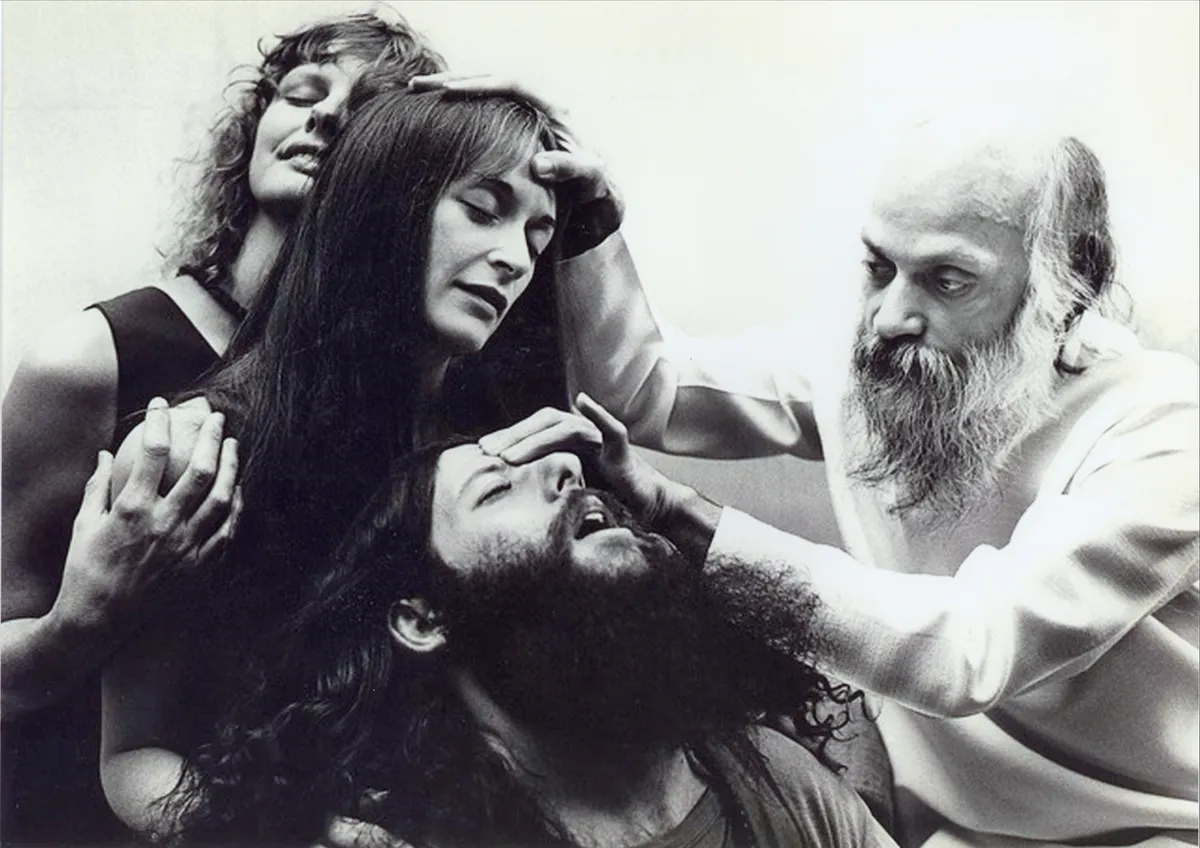
He used words like signposts so you’d keep walking; they become rocks only if you cling to them instead of stepping past them.
From the Discourses
Passages where Osho speaks to this question — each links to the complete discourse.
Osho, of that which is indescribable—by speaking of it, why would a Shandilya place a stone before humanity?
And if the choice is between God and these wandering ones—let no injustice be done to these wanderers. That is why Shandilya speaks. That is why Buddha had to speak. It is their great compassion. They have not placed stones in your way; they have given the key to turn those stones into steps. And at least do not be unjust to Shandilya by making such a charge. For Shandilya is not telling you to drop affection; he is saying, purify affection—stone becomes a step. Shandilya is not telling you to drop love; he is saying, love can become a step—purify it, it becomes devotion, and you will rise. Shandilya is not telling you to renounce the world; he is saying, do not hate the world—otherwise that very hatred will become the obstacle. Shandilya does not preach dispassion-as-aversion, asceticism, grim austerity—he is opening the doors of the temple of love.…
दूसरा प्रश्न: ओशो, जो वर्णनातीत है, उसे कह कर क्यों कोई शांडिल्य मनुष्यता के सामने एक पत्थर धर देता है?
और अगर परमात्मा और इन भटकते हुए लोगों के बीच चुनाव करना है, इनके साथ अन्याय न हो, इन भटकते लोगों के साथ अन्याय न हो, इसलिए शांडिल्य बोलते हैं। इसलिए बुद्ध को बोलना पड़ा। यह उनकी महाकरुणा है। तुम्हारे मार्ग में पत्थर नहीं रखे हैं, तुम्हारे मार्ग में जो पत्थर पड़े हैं, उनको कैसे तुम सीढ़ियां बना लो, इसके सूत्र दिए हैं। और कम से कम शांडिल्य के साथ तो तुम इस तरह की बात कह कर अन्याय मत करो। क्योंकि शांडिल्य तो तुमसे नहीं कह रहे हैं कि स्नेह छोड़ दो; कह रहे हैं, स्नेह को शुद्ध कर लो, पत्थर है, सीढ़ी बन जाएगा। शांडिल्य तो नहीं कह रहे हैं कि प्रेम छोड़ दो; शांडिल्य कह रहे हैं, प्रेम सीढ़ी बन सकता है, शुद्ध कर लो, श्रद्धा बन जाएगा, ऊपर चढ़ जाओगे। शांडिल्य तो नहीं कह रहे हैं संसार छोड़ दो; शांडिल्य तो कह रहे हैं, द्वेष करो ही मत संसार से, अन्यथा वही बाधा हो जाएगी। शांडिल्य तो विराग का, वैराग्य का, तप का, तपश्चर्या का कोई उपदेश नहीं दे रहे हैं, शांडिल्य तो द्वार खोल रहे हैं प्रेम के मंदिर के, और तुम कहते हो मार्ग में पत्थर...!
Shandilya is answering likely doubts. He says: Someone may feel, “When everything is dropped and the Divine is found, why bring up majesty? Everything has been left—majesty too; all grasping dropped, all possessiveness dropped. If everything is dropped and union with the Divine has happened, why is Shandilya now speaking of aiśvarya?” The sutras are complete. Where the devotee has become God, the sutras should end. Such a doubt can arise. It is a valid and useful doubt. Shandilya anticipates it and answers: He says, “The need remains—because intellects are of many kinds.” These sutras are not being written for a single type of intelligence. They are written taking into account the whole range of human minds. For all, not for one class.
शांडिल्य संभावित शंकाओं का उत्तर दे रहे हैं। वे कहते हैं: यह शंका उठ सकती है किसी के मन में कि जब सब छोड़ दिया तब परमात्मा को पाया, अब सब छोड़ देने के बाद ऐश्वर्य की चर्चा क्यों उठाई जा रही है? सब तो छोड़ दिया, ऐश्वर्य भी छोड़ दिया, सारी पकड़ छोड़ दी, सारा परिग्रह छोड़ दिया, अब जब सब छोड़ दिया और परमात्मा का मिलन हुआ, तो अब शांडिल्य ऐश्वर्य की बात क्यों उठा रहे हैं? सूत्र पूरे हो गए हैं। जहां भक्त भगवान हो गया, वहां ये सूत्र समाप्त हो जाने चाहिए, किसी के मन में यह संदेह-शंका उठ सकती है। यह सार्थक शंका है। संगत है, उपयोगी है। शांडिल्य इसकी संभावना को मान कर उत्तर देते हैं।
The eyes cannot approach it, neither can speech nor mind. We do not, therefore, know it, nor do we know how to teach it. It is different from what is known and it is different from what is unknown. Thus we have heard from our predecessors who instructed us about it. What speech cannot reveal but what reveals speech -- know thou that alone as brahman and not this -- anything objective -- that people worship here. What mind does not comprehend but what comprehends the mind -- know thou that alone as brahman and not this that people worship here.
God is not indubitable. Remember this: God is not indubitable. He can be doubted -- not only doubted, he can be disproved. And really, when someone doubts God you cannot prove his existence. You can only convince those who are already convinced, but you cannot convert a new man; that is impossible. Not a single atheist can be converted because he needs proof and you cannot prove God. God is not indubitable. He can be doubted, rejected. The whole hypothesis can be said to be false. There is no proof that can help. So Descartes goes on discussing, inquiring, and he says that unless he comes to a point, to something in existence that is indubitable.... Not that it can be proved -- no. Rather, it cannot be doubted. And ultimately he comes to the self and says that the self is a greater reality than God. It is, because…
Another friend has asked: If truth cannot be expressed in words and cannot be written in scriptures, then what is the way to express it?
Think of that man who went into that room and sat silently. What did he do? He left all words and cared only to fall silent—utterly silent. When he became perfectly silent, an answer came—not his own; it came from above, from depths; it was God’s. Let us too, for ten minutes in this quiet night, try to be silent. It is possible; there is no difficulty. We have simply never experimented—that is why it has not happened. But what has never happened may happen today; if not today, tomorrow. The possibility is always there. For those who put in a little effort, the possibility becomes a reality. What will we do here for ten minutes? Look: the night is utterly still—the trees are still, the moon and stars are still, the breezes are still. Can we not, for ten minutes, be still with them and sit quietly? There will…
एक और मित्र ने पूछा है कि अगर सत्य शब्द से नहीं कहा जा सकता और शास्त्र में नहीं लिखा जा सकता, तो फिर क्या रास्ता है उसे कहने का?
… क्या किया होगा उसने? वह आदमी क्या किया उतनी देर? उतनी देर उसने अपने सारे शब्दों को छोड़ दिया और फिकर की चुप हो जाने की, साइलेंट हो जाने की, मौन हो जाने की। और जब वह परिपूर्ण मौन हो गया तो उसे कुछ उत्तर मिला--जो उत्तर उसका अपना नहीं था; जो कहीं ऊपर से आया था, गहराई से आया था, जो परमात्मा का था। हम भी दस मिनट इस शांत रात में चुप होने की कोशिश करें। यह हो सकता है, इसमें कोई कठिनाई नहीं है। चूंकि हमने कभी कोई प्रयोग ही नहीं किया है, इसलिए नहीं हुआ है। लेकिन जो कभी नहीं हुआ है, वह आज हो सकता है। जो आज नहीं हुआ है, वह कल हो सकता है। संभावना हमेशा शेष है। जो थोड़ा सा श्रम करते हैं, उनकी संभावना वास्तविक बन जाती है। क्या करेंगे दस मिनट के लिए हम यहां? देखते हैं, रात चारों तरफ बिलकुल शांत है--वृक्ष शांत हैं, चांद-तारे शांत हैं, हवाएं शांत हैं। क्या इनके साथ दस मिनट के लिए हम भी शांत होकर चुप नहीं बैठ सकते हैं?
Osho, but the mantra-experts would say there is some other reason for its use?
Ask the mantra-scholars about that. What I am saying here is that the new arts are making uses that are absurd. Sculptures are being made of a kind you cannot call anyone’s statue. If you want to make a statue of “man,” it has to be made so that no one’s face appears in it—because if any face appears, it becomes someone’s; it is no longer of “man.” So if you want to make a statue of man, it must not have my face, not your face, not anyone’s face. The moment there is any particular face, it becomes some person’s and ceases to be “manhood.” So we make a statue in which there is no one’s face—such a statue can be made; we imagined it would be a statue of humanity, but it won’t remain even of a single human. What I am saying is: it will not become…
ओशो, लेकिन वह मंत्र-शास्त्री कहेंगे कि इसका कोई और कारण है उपयोग का?
वह मंत्र-शास्त्री से बात करनी चाहिए। मैं तो यहां यह कह रहा हूं कि नई कलाएं इस तरह के उपयोग कर रही हैं जो एब्सर्ड हैं। इस तरह की मूर्तियां बन रही हैं जिनको आप किसी की मूर्ति नहीं कह सकते। अगर आदमी की मूर्ति बनानी है तो ऐसी ही बनानी पड़ेगी कि उसमें किसी का चेहरा न आए, क्योंकि किसी का भी आ जाएगा तो वह किसी का हो जाएगा। आदमी का नहीं रह जाएगा। अब आदमी की अगर मूर्ति बनानी है तो उसमें मेरा चेहरा नहीं होना चाहिए, आपका चेहरा नहीं होना चाहिए, उसमें किसी का चेहरा नहीं होना चाहिए। उसमें कोई पर्टीकुलर चेहरा हुआ कि वह किसी आदमी का हो जाएगा, आदमियत का न रह जाएगा। तो हम एक ऐसी मूर्ति बनाएं, जिसमें किसी का चेहरा न हो—बन जाएगी ऐसी मूर्ति, लेकिन हम सोचते थे कि वह आदमियत की बन जाएगी, लेकिन वह एक आदमी की भी न रह जाएगी। जो मैं कह रहा हूं वह यह कह रहा हूं कि आदमियत की तो बनेगी नहीं, वह जो एक आदमी की बन सकती थी, वह भी नहीं बनेगी अब, अब वहां से भी विदा हो जाएगी, वह फेसलेस हो जाएगी। …