
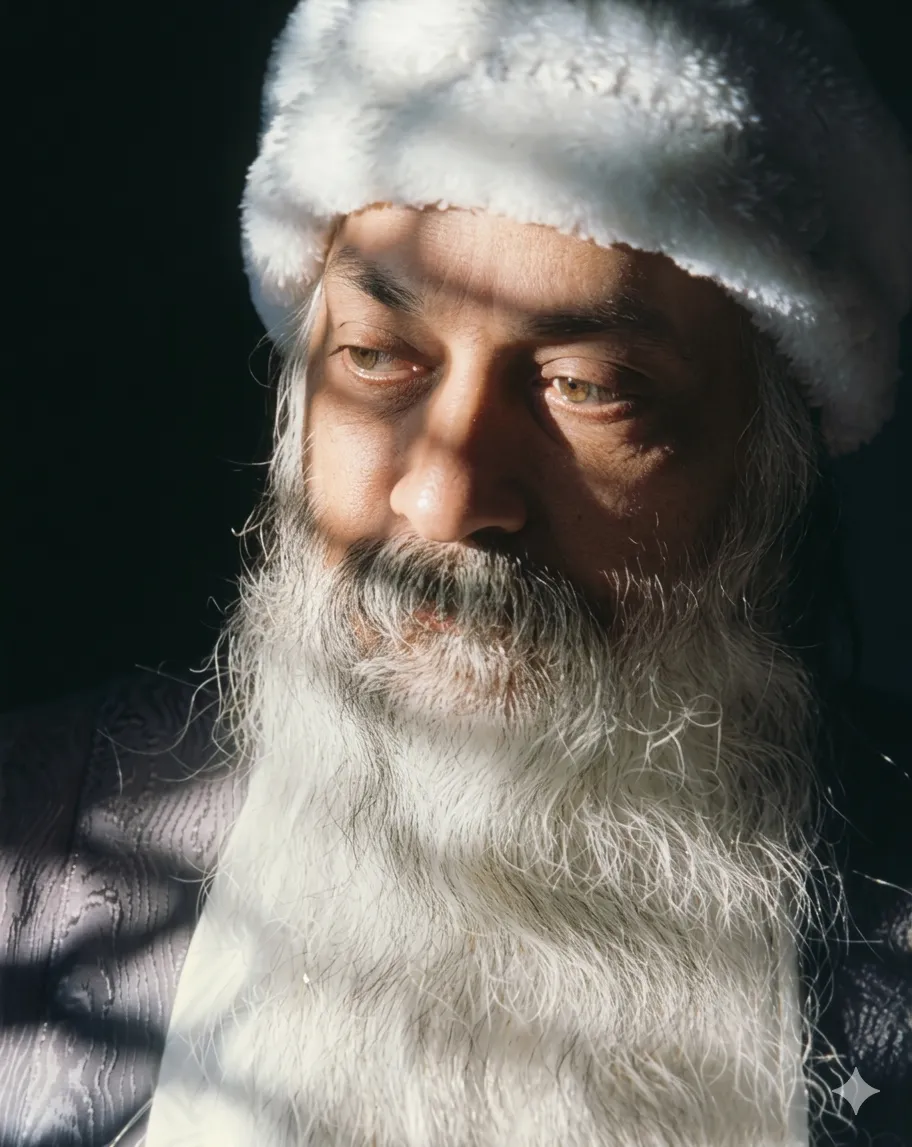
You resist what you most want because it would change who you think you are, so your mind gets scared while your heart already knows.
From the Discourses
Passages where Osho speaks to this question — each links to the complete discourse.
Osho, why does every desire come carrying its opposite? Is its dividedness inevitable? And is no whole and undivided desire possible? What is desire?
One day, by mistake, he wandered into the camp of a Muslim chieftain. He was going along in ecstasy, dancing; the camp happened to be in the way—that was all. The women, frightened, screamed. A naked man, dancing in ecstasy, had walked in—they thought he was mad. Seeing a naked sadhu intrude, the chieftain, too, grew angry. He drew his sword and struck. One of Sadashiva’s hands was cut off and fell to the ground. But Sadashiva’s joy suffered no interruption. The hand fell, blood began to flow, yet the dance continued. Just as he had been dancing, he turned and kept dancing as he walked away. The chieftain was astonished, and also pained—he had never seen such ecstasy. And that a hand could be cut off and he would not even notice—such ecstasy! The man was in some other realm. Looking into his eyes, it was as if he…
दूसरा प्रश्न: ओशो, प्रत्येक कामना अपना प्रतिपक्ष लिए क्यों आती है? उसका विभाजित रहना क्या अनिवार्य है? और क्या कोई अखंड और अविभाजित कामना संभव नहीं है? यह कामना क्या है?
यह उन्हीं की घटना है! उन्होंने जीवन भर मौन रहने की साधना स्वीकार कर ली थी, मौन थे और नग्न।नग्न रहते और चुप, बड़ी झंझटें आती थीं। एक तो मौन, बोलते नहीं, और नग्न घूमते! समाधि उनकी निरंतर लगी रहती थी। मस्त ही रहते थे अपनी मस्ती में। एक दिन भूल से एक मुसलमान सरदार के शिविर में चले गए। मस्ती में जा रहे थे नाचते, शिविर बीच में पड़ गया होगा तो पड़ गया, कोई शिविर के लिए गए नहीं थे। स्त्रियों ने डरकर चीख लगा दी। कोई नंगा मस्ती में नाचता हुआ चला आ रहा है, वे समझे कोई पागल है। नग्न साधु को घुसा देखकर सरदार भी क्रोध में आ गया। और उसने तलवार उठा ली और हमला कर दिया। सदाशिव का एक हाथ कटकर नीचे गिर गया। लेकिन सदाशिव के आनंद में कोई बाधा न पड़ी। हाथ कटकर गिर गया, लहू बहने लगा, लेकिन नाच जारी रहा। जैसे नाचते आए थे वैसे ही नाचते चलने, वापस लौटने लगे। सरदार हैरान हुआ, दुखी भी हुआ--यह मस्ती, ऐसी मस्ती कभी देखी न थी। और हाथ कट जाए और पता न चले, ऐसी मस्ती! किसी और लोक में था यह आदमी। …
Osho, looking within I have felt that many of my desires are sick, diseased—especially the negative desires. So are there healthy and unhealthy desires? And would you kindly tell us what the difference is between healthy and sick desires?
Desire is natural. It is nature’s gift. It is a donation from the divine. In itself desire is perfectly healthy. Without desire you could not live—not even for a single moment. In fact, the ancient scriptures say one thing: God was alone. A desire arose in him to become two—and the world was born. A desire arose in God to be two, to be many, to expand, to spread—and the world came into being. We are parts of that very desire of the divine; we are rays of that desire. So the first thing: desire is natural. It is of nature; it is innate. Desire is not bad; it is not sin. Those who told you desire is sin—avoid desire, escape from it, repress it, cut it down, kill it—they are the ones who made desire sick. Repressed desire becomes diseased. Whatever is pushed down turns poisonous. It does not…
दूसरा प्रश्न: ओशो, अपने भीतर झांकने पर मुझे लगा है कि मेरी अनेक वासनाएं रुग्ण हैं, बीमार हैं, विशेष कर नकारात्मक वासनाएं। तो क्या वासनाएं भी स्वस्थ और रुग्ण होती हैं? और क्या बताने की कृपा करेंगे कि स्वस्थ और रुग्ण वासनाओं में फर्क क्या है?
वासना स्वाभाविक है। प्रकृति की भेंट है। परमात्मा का दान है। वासना अपने आप में बिलकुल स्वस्थ है। वासना के बिना जी ही न सकोगे, एक क्षण न जी सकोगे। सच तो यह है, संसार के पुराने से पुराने शास्त्र एक बात कहते हैं: परमात्मा अकेला था। उसके मन में वासना जगी कि मैं दो होऊं, इससे संसार पैदा हुआ। परमात्मा में भी वासना जगी कि मैं दो होऊं, कि मैं अनेक होऊं, कि मैं फैलूं, विस्तीर्ण होऊं, तो संसार पैदा हुआ! हम परमात्मा की ही वासना के हिस्से हैं, उसकी ही वासना की किरणें हैं।
Osho, in the previous verse you spoke about resolve. What is the difference between resolve and repression of the senses? We want to understand this.
It is necessary to understand the word deva. Much confusion has arisen from it. Deva is a technical term. In this world, when people die, ordinary people find a womb quickly; a body becomes available immediately. But for a very exceptional, auspicious soul, a suitable womb is not immediately available; it must wait. For a very evil soul too, a womb is not readily available; it also must wait. For ordinary souls the womb becomes available at once—hence an ordinary man dies here and is born there; there is little gap between death and new birth—sometimes moments, sometimes not even that. Wombs are available round the clock; the soul immediately enters. But a superior soul waits for a worthy womb. Such superior souls are called devas. Inferior souls also wait; they are called pretas—ghosts. Those who died doing much evil—such as a Hitler, on whose head lies the murder of…
प्रश्न: ओशो, पिछले श्लोक में आपने कहा, संकल्प की बात की, तो संकल्प में और इंद्रियों के दमन में क्या फर्क है? यह जानना चाहते हैं।
यह देवता शब्द को थोड़ा समझना जरूरी है। इस शब्द से बड़ी भ्रांति हुई है। देवता शब्द बहुत पारिभाषिक शब्द है। देवता शब्द का अर्थ है.इस जगत में जो भी लोग हैं, जो भी आत्माएं हैं, उनके मरते ही साधारण व्यक्ति का जन्म तत्काल हो जाता है। उसके लिए गर्भ तत्काल उपलब्ध होता है। लेकिन बहुत असाधारण शुभ आत्मा के लिए तत्काल गर्भ उपलब्ध नहीं होता। उसे प्रतीक्षा करनी पड़ती है। उसके योग्य गर्भ के लिए प्रतीक्षा करनी पड़ती है। बहुत बुरी आत्मा, बहुत ही पापी आत्मा के लिए भी गर्भ तत्काल उपलब्ध नहीं होता। उसे भी बहुत प्रतीक्षा करनी पड़ती है। साधारण आत्मा के लिए तत्काल गर्भ उपलब्ध हो जाता है। इसलिए साधारण आदमी इधर मरा और उधर जन्मा। इस जन्म और मृत्यु और मृत्यु और नए जन्म के बीच में बड़ा फासला नहीं होता। कभी क्षणों का भी फासला होता है। कभी क्षणों का भी नहीं होता। चौबीस घंटे गर्भ उपलब्ध हैं; तत्काल आत्मा गर्भ में प्रवेश कर जाती है। लेकिन एक श्रेष्ठ आत्मा नए गर्भ में प्रवेश करने के लिए प्रतीक्षा में रहती है। …
Question: wasn't buddha's desire for realization a desire?
Mind is desiring. The mind cannot do anything without desire. You cannot transcend the mind through desiring, because the mind is the desiring. So the mind has to desire even that which is found only when there is no desire. But begin with the wall. Know desire, and you will stumble upon the door. Even Buddha had to begin with a desire, but no one told him -- the fact was not known to him -- that the door opens only when there is no desire. As I understand it, struggling with desire is the disease. Giving up the struggle is the freedom. That is the only real death: when you just give up. If you can just lie down and die with no struggle to live, without even an indication of struggle, that death can become a realization. If you just lie down and accept -- with no movement…
Osho, on deep introspection I find no worldly desires that might become a bondage at the time of death. But the desire to attain truth keeps growing—what should I do? Kindly guide me.
That too will obstruct. Desire as such obstructs. It makes no difference what the desire is for; the content does not matter. Whether you want wealth or you want meditation, the nature of wanting is the same—and wanting hinders. Whether you want status or you want the Divine, the delusion of wanting is one. What does wanting mean? Understand this. Wanting means: as I am, I am not all right. Something else should be. A little more money, a little more status, a little more meditation, a little more truth, a little more God. But a little more is needed. As I am, I am not satisfied. Wanting means discontent. Then what difference does it make what the wanting is for? The discontent will remain. You go and throw a pebble into a still lake—a pebble, an ordinary pebble—and ripples arise. Do you think if you throw the Kohinoor diamond,…
चौथा प्रश्न: ओशो, मनोमंथन करने पर पता चलता है कि सांसारिक वासनाएं तो नहीं हैं, जो मृत्यु के समय बंधन बनें। लेकिन सत्य पाने की वासना ही बनती जाती है, सो क्या करूं? कृपाकर मार्ग-दर्शन करें।
वह भी रोक लेगी। वासना मात्र रोकती है। इससे कुछ भेद नहीं पड़ता कि वासना किस चीज की। विषय-वस्तु से कोई भेद नहीं पड़ता। तुम धन चाहो कि ध्यान चाहो, चाह का स्वरूप एक है। और चाह रोकती है। तुम पद चाहो कि परमात्मा चाहो, चाह की भ्रांति एक है। चाह का अर्थ क्या होता है? यह समझ लो। चाह का अर्थ होता है: जैसा मैं हूं, वैसा ठीक नहीं हूं। कुछ और होना चाहिए। थोड़ा और धन, थोड़ा और पद, थोड़ा और ध्यान, थोड़ा और सत्य, थोड़ा और परमात्मा। लेकिन थोड़ा और होना चाहिए। जैसा मैं हूं, उससे मैं संतुष्ट नहीं। चाह का अर्थ है--असंतोष। फिर चाह किस बात की है, इससे क्या फर्क पड़ेगा? असंतोष तो रहेगा ही। तुम गए; एक शांत झील में कंकड़ फेंका--कंकड़, साधारण सा कंकड़--तो लहर उठती है। तुम सोचते हो, कोहिनूर हीरा फेंकोगे, तो लहर नहीं उठेगी! कोहिनूर हीरा फेंको--पानी को क्या फर्क पड़ता है? तुमने कंकड़ फेंका कि कोहिनूर, पानी को तो कोई भी भेद नहीं है। कोहिनूर पत्थर है, और पत्थर कोहिनूर है। फिर भी लहरें उठेंगी। …