
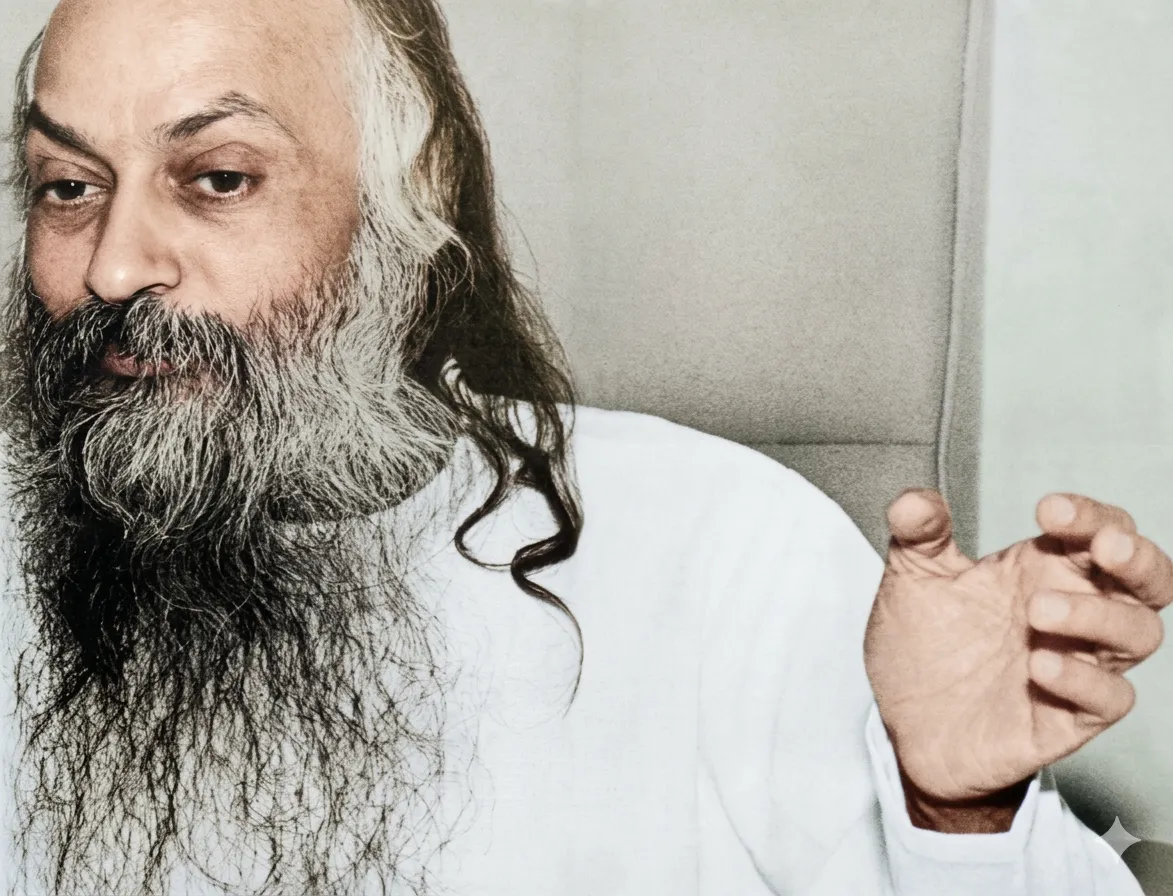
Pretending on stage doesn’t stop real pain at home; freedom comes when you see life as a play and drop the “I am doing” that wants control and credit.
From the Discourses
Passages where Osho speaks to this question — each links to the complete discourse.
Osho, yesterday you gave the message: “Learn acting.” But skilled and famous actors, even though they know the art of acting, are anxious, unhappy, and troubled. Why does their acting not free them from sorrow? Please explain.
There is a great difference between knowing the art of acting and becoming a non-doer. Knowing the art of acting is one thing; turning life itself into acting is quite another. An actor knows the art of acting when he is on the stage. The moment he steps down, he forgets the whole art. He comes home and becomes a doer again. On stage, when he plays Rama and Sita is lost, he will act; the tears will be false; he will ask the trees; all will be unreal. He will weep, call out, shout, set out to search—everything will be false. But if, on coming home, he finds his wife has run away, he forgets to “act” again. Then he really begins to cry; real tears will flow. On the stage there was acting; the moment he comes home, the sense of doership returns. Stage-acting will not help. Let…
ओशो, कल आपने संदेश दिया: अभिनय सीखा; पर कुशल और प्रसिद्ध अभिनेता अभिनय की कला जानते हुए भी चिंतित, दुखी और परेशान हैं। उनका अभिनय उन्हें दुख से मुक्त क्यों नहीं करता? कृपा करके समझाइए।
अभिनय की कला जानना और अकर्ता हो जाने में बड़ा फर्क है। अभिनय की कला जानना एक बात है, और जीवन को अभिनय बना देना बिलकुल दूसरी बात है। अभिनेता अभिनय की कला जानता है, जब मंच पर होता है। जैसे ही मंच से नीचे उतरा कि सारी कला भूल जाता है। घर आया कि कर्ता हो जाता है। वह जो राम बना है, मंच पर, सीता खो जाएगी, तो अभिनय करेगा; आंसू झूठे होंगें; वृक्षों से पूछेगा; सब असत्य होगा। रोएगा, पुकारेगा, चिल्लाएगा, खोजने निकलेगा--वह सब झूठ होगा। लेकिन घर आकर पाए कि उसकी पत्नी भाग गई। तब भूल जाएगा कि अब फिर अभिनय करे। तब रोने लगेगा। तब, असली आंसू बहेंगे। मंच पर अभिनय था, घर आते ही कर्ता का भाव हो गया!
Osho, they too are acting!
Then even what they say will not make us unhappy. If someone abuses you, you know it is just part of the acting. When within we know we are unattached, we should know that everyone is unattached. In that state the mind will remain calm—calm even amidst disturbance. And until this art is learned, where will you run? Nothing will come of it. Here children make a racket; go and sit in the forest and the birds will make a racket and disturb you. Life is present everywhere and in every way. Right now you have a big house and you worry so much about it; a sannyasin worries just as much about his loincloth—that it might get stolen. Once, this happened: I boarded the train at Jabalpur. Some people had come to see off a sannyasin—seemed to be great devotees of his, perhaps he was from out of town.…
प्रश्न: ओशो, वे भी एक्टिंग कर रहे हैं!
तो फिर उनकी बात से भी हमको दुख नहीं होता। एक आदमी गाली दे रहा है, तो हम जानते हैं कि वह एक्टिंग का हिस्सा है। जब हम अपने भीतर जानते हैं कि हम असंग हैं, तो हमको जानना चाहिए कि सब असंग हैं। तो उस स्थिति में चित्त तो शांत रहेगा। हर अशांति में भी शांत रहेगा। और जब तक यह कला न सीखी तब तक कहां भाग कर जाओगे? उससे कुछ होने वाला नहीं है। यानी यहां बच्चे शोरगुल कर रहे हैं, जंगल में बैठ जाओगे तो पक्षी शोरगुल करेंगे और डिस्टर्बेंस करेंगे। जिंदगी तो सब तरफ मौजूद है और सब तरह से मौजूद है। अभी आपके पास बड़ा मकान है, आपको इसकी इतनी चिंता है; एक संन्यासी को अपनी लंगोटी की इतनी ही चिंता रहती है कि यह कहीं चोरी न चली जाए। अभी मैं, एक दिन ऐसा हुआ, जबलपुर से मैं बैठा तो किसी संन्यासी को कुछ लोगों ने जबलपुर से छोड़ा। बड़े भक्त मालूम होते थे उनके, कहीं के बाहर के संन्यासी होंगे। एक फट्टा बांधे हुए थे। फट्टा होता है न! यह आप क्या कहते हैं, बारदाना कहते हैं न--बोरा, टाट। …
Osho, you say: live life as if it were acting. In that case, what more than acting would spiritual practice, religion, and the search for liberation be?
Someone laughs; you may also laugh. But you know there is nothing now truly to laugh at, and nothing now truly to weep about. The world goes on. For you it has become a dream, but that does not make it disappear. Trees will bloom, birds will sing, people will fall in love, deaths will occur, births will occur, bands will play, weddings will be celebrated, the shehnai will sound, someone will die and the chant “Ram naam satya hai” will be recited—this all will continue. For you it has ended. For you it ending means only this: you are no longer possessed by it. For you all has become acting. But everything continues. Where is there to run? What use is running? Because if you run, you again become the doer. That is why Krishna insists: do not run—otherwise running too is doership. And running also means that you…
पहला प्रश्न: ओशो, आप कहते हैं कि जीवन ऐसे जीओ कि वह एक अभिनय हो। उस हालत में आध्यात्मिक साधना, धर्म और मोक्ष की खोज भी अभिनय से ज्यादा क्या रहेगी?
कोई हंसता है, तो तुम हंस भी लेते हो। लेकिन तुम जानते हो कि न अब हंसने को कुछ है, न अब रोने को कुछ है। संसार चलता रहता है। तुम्हारे लिए स्वप्न हो गया, इससे मिट नहीं जाता। वृक्षों में फूल लगेंगे, पक्षी गीत गाएंगे, लोग प्रेम में पड़ेंगे, मृत्युएं होंगी, जन्म होंगे, बैंड-बाजे बजेंगे, विवाह होगा, शहनाई बजेगी, कोई मरेगा, रामनाम सत्त का पाठ होगा, यह सब चलता रहेगा।
Osho, I find your words very full of rasa, very delightful. But as a stage actor I want to go deep into the art of acting. So I am not yet ready for sannyas. Nor do I want to be limited to a single ochre color. I am interested in colorful clothes, because life too is colorful, rainbow-like. Can I come from time to time for your darshan without becoming your sannyasin?
But I had to choose some symbol. And I chose saffron deliberately. Deliberately—because for some five thousand years saffron has been in the wrong hands. It must be taken back from them. This lovely color has become a symbol of the denial of life. Yet it is the color of life, of spring. Hence its other name: basanti—the color of spring, when all flowers bloom. I don’t know how this spring-color fell into the hands of the wrong people—enemies of flowers, lovers of thorns—people who lay thorn-beds and sleep upon them, who long for thorns, who torment themselves in every way, who are filled with violence. Since there is risk in doing violence to others—for others will answer back—they do violence to themselves. No one can answer that, no one can defend against it. It became the symbol of the self-violent. It became the symbol of hypocrites—those who say one…
दूसरा प्रश्न: ओशो, मुझे आपकी बातें बहुत रसपूर्ण लगती हैं। लेकिन मैं रंग-मंच का अभिनेता होने के नाते अभिनय कला की गहराई में जाना चाहता हूं। इसलिए संन्यास के लिए मेरी अभी तैयारी नहीं है। और न ही मैं केवल एक गैरिक रंग में सीमित होना चाहता हूं। मैं रंग-बिरंगे वस्त्रों में रुचि रखता हूं, क्योंकि जीवन भी तो रंग-बिरंगा है, इंद्रधनुषी है। क्या मैं बिना आपका संन्यासी हुए समय-समय पर आपके दर्शन को आ सकता हूं?
लेकिन मुझे कोई न कोई प्रतीक तो चुनना था। और गैरिक मैंने जान कर चुना है। जान कर चुना है इसलिए कि गैरिक वस्त्र गलत आदमियों के हाथ में कोई पांच हजार साल से रहा है। उसको उनके हाथ से छुड़ाना है। यह प्यारा रंग जीवन के निषेध का प्रतीक बन गया। और यह जीवन का रंग है, यह वसंत का रंग है। इसलिए इसका दूसरा नाम बासंती रंग है। वसंत, जब सारे फूल खिल जाते हैं। यह वसंत का रंग न मालूम कैसे गलत लोगों के हाथ में पड़ गया, जो फूलों के दुश्मन हैं, जो कांटों को प्यार करते हैं, जो कांटों की शय्या बिछा कर उस पर सोते हैं, जो कांटों के लिए लालायित हैं, जो अपने को सताते हैं हर तरह से, जो अपने को परेशान करते हैं हर तरह से, जो हिंसा से भरे हैं। हालांकि दूसरे की हिंसा करने में खतरा है। क्योंकि दूसरा भी जवाब देगा। वे अपनी ही हिंसा करते हैं। उसमें कोई जवाब भी नहीं कर सकता, उसमें कोई रक्षा भी नहीं कर सकता। यह आत्महिंसक लोगों का प्रतीक हो गया। यह पाखंडियों का प्रतीक हो गया। जो कहते कुछ हैं, करते कुछ हैं। …
Osho, if this whole world is the play of Purusha and Prakriti, then where are we participants, who are suffering so much?
In Japan there is a form called Noh drama. There is no raised stage; actors perform right among the audience. A newcomer cannot tell who is spectator and who is actor. This Noh drama is a Zen invention. The script is not fully prepared; only cues are given—and even those are not rigid. Spontaneity is allowed. If a seated spectator gets carried away and joins in, he is not forbidden. If an actor changes his role completely, there is no prompter backstage, no facility to correct him. The play flows as life flows—into the unknown. What will happen is not fixed; the conclusion is not decided. It is thrilling—and just like life. This whole life is a great Noh drama. There is no spectator here; all are actors. And there is no written manuscript in the hand. No voice from behind the curtain says, “Say this.” Nothing is certain. Everything…
चौथा प्रश्न: ओशो, जब यह सारा जगत पुरुष और प्रकृति का खेल है, तो हम कहां भागीदार हैं, जो इतना दुख झेल रहे हैं?
जापान में एक नाटक होता है, नो-ड्रामा। उसमें कोई मंच नहीं होता। उसमें अभिनेता ठीक हाल में ही काम करते हैं। और नया आदमी खड़ा हो तो उसको समझना मुश्किल हो जाता है, कौन दर्शक है और कौन अभिनेता है! यह नो-ड्रामा झेन फकीरों की ईजाद है। और इसमें पूरी पांडुलिपि तैयार नहीं होती; सिर्फ इशारे होते हैं। और इशारों पर भी कोई जिद नहीं होती कि घटना वैसी ही बहनी चाहिए। स्पांटेनियस, सहज होने की सुविधा होती है। और कोई बैठा हुआ दर्शक अगर जोश में आ जाए और भाग लेने लगे, तो उसको भी मनाही नहीं है। और कोई अभिनेता पात्र करते-करते अपना सारा ढंग बदल दे, तो पीछे से प्रांप्ट करने का कोई उपाय नहीं है, कोई सुविधा भी नहीं है। नाटक बहता है, जैसे जिंदगी बहती है, अनजान में। क्या घटना होगी, पक्का नहीं है। निष्कर्ष पहले से तय नहीं है। बहुत रोमांचक है। और ठीक जिंदगी जैसा है।