
Passion doesn’t need to disappear—give it to God, stop dividing life into good and bad, and the ‘me’ at the center fades.
From the Discourses
Passages where Osho speaks to this question — each links to the complete discourse.
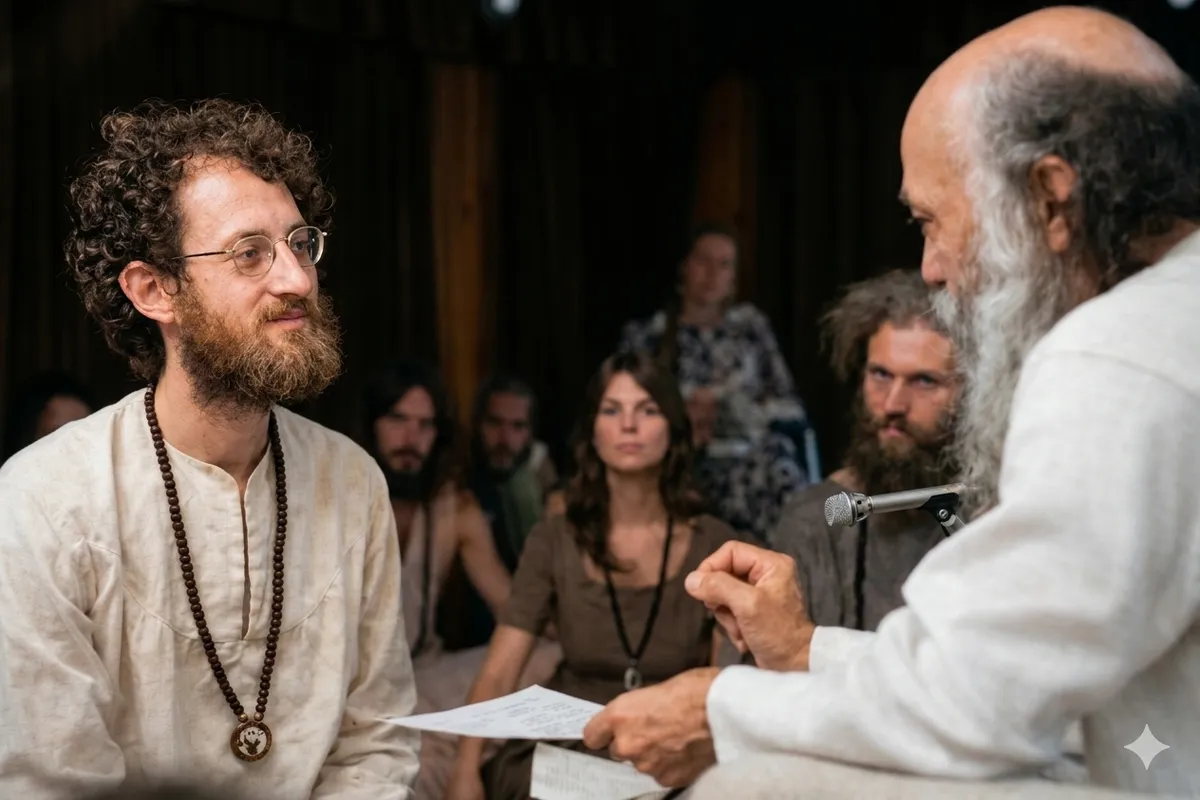
Swami Yog Chinmay has asked: You say that when, at the feet of the true Master, one finds diamonds and jewels, then the pebbles and stones fall away. Then why are our passions still not falling away?
The same notions, the same worn‑out notions—the same junk is stuffed in your head! Where am I asking you to give anything up? I am telling you: live as though everything is His. That beautiful woman is also He, and the radiance that has come into your eyes because of that beautiful woman is also He—live like that. Why are you carrying this division? When will you drop it? You listen to me every day—Chinmay has been listening for years—yet somewhere inside you are preserving the old notions, hugging them to your chest. So you keep measuring by them: “It still hasn’t happened. Dispassion hasn’t arisen yet; passion is still arising.” I tell you: passion too is His. The day you surrender with the understanding that everything is His—that is what I call dispassion. In dispassion, passion will not die; only the ego will no longer be the center of…
स्वामी योग चिन्मय ने पूछा है कि आप कहते हैं सदगुरु के पास जब हीरे-जवाहरात मिल जाते हैं तो कंकड़-पत्थर छूट जाते हैं। तो फिर भी हमारी वासनाएं क्यों नहीं छूट रही हैं?
… वह सुंदर स्त्री भी वही है, और तुम्हारी आंख में उस सुंदर स्त्री के कारण जो ओज आ गया है, वह भी वही है--ऐसे जीयो। तुम यह भेद क्यों मानकर चल रहे हो? इस भेद को कब छोड़ोगे? मुझे रोज सुनते हो, चिन्मय सुनते हैं वर्षों से, मगर कहीं भीतर पुरानी धारणाएं बचाए बैठे हैं, छाती से लगाए बैठे हैं। तो नाप-तौल करते रहते हैं उन्हीं से कि अभी तक ऐसा नहीं हुआ। अभी तक वीतरागता पैदा नहीं हुई, अभी तो राग पैदा हो रहा है। मैं तुमसे कहता हूं, राग भी उसी का है। जिस दिन तुम सब उसी का है, ऐसा समर्पण कर दोगे, उसी को मैं वीतरागता कहता हूं। राग मरेगा नहीं वीतरागता में, सिर्फ अहंकार केंद्र न रह जाएगा राग का, परमात्मा राग का केंद्र हो जाएगा। सब उसका है।
The buddha said: those who have passions are never able to perceive the way, for it is like stirring up clear water with hands. People may come there wishing to find a reflection of their faces which however they will never see. A mind troubled and vexed with passions is impure, and on that account it never sees the way. O monks, do away with passions. When the dirt of passion is removed the way will manifest itself. The buddha said: seeing the way is like going into a dark room with a torch. The darkness instantly departs while the light alone remains. When the way is attained and the truth i
Whatsoever meaning we give to life, we give it to life. And Buddha is saying if you want to know the real meaning of life, then you have to drop giving all meanings to it. Then the way reveals itself. Then life opens its mysterious doors. You stop giving meaning to it -- your desires are giving meaning to it; they are defining the undefinable. And if you remain clouded with your desires, whatsoever you know is nothing but your own dreaming. That's why we say in India that this life, this so-called life lived through desires, is maya, it is a magical thing. You create it, you are the magician. It is your maya, your magic. We don't live in the same world, remember. We live in separate worlds, because we don't live in the same desires. You project your desires, your neighbour is projecting his desires. That's why…
Osho, yesterday you said that jealousy is included in respect. I have immense respect for you, but the jealousy inherent in it keeps poisoning it, and I feel guilt and pain. Does reverence transcend this poison-laced respect?
It needs a little explaining—it's a delicate point. Whenever you respect someone, you do so because you see in that person something you do not have. You respect because you glimpse in the other something you would also like to possess. A beggar respects an emperor because he, too, longs to be an emperor. So on the one hand he respects, and inside he also envies. Because he is not yet an emperor but wants to be. You have attained what he wants to attain. He respects you as skillful, successful: “I stand far back in the line; you have gone ahead to where I should have been.” So you are powerful, clever, intelligent, strong—he respects you. But inside a fire of jealousy also burns—if he gets the chance, he would like to be in your place and push you aside. And if the beggar gets that chance, he will…
तीसरा प्रश्न: ओशो, आपने कल कहा, आदर में ईर्ष्या सम्मिलित है। आपके प्रति मुझमें अपार आदर है, लेकिन उसमें निहित ईर्ष्या उसमें जहर घोलती रहती है और मैं ग्लानि और पीड़ा का अनुभव करता हूं। क्या श्रद्धा इस विष-भरे आदर का अतिक्रमण करती है?
भिखारी सम्राट का आदर करता है, क्योंकि उसकी भी आकांक्षा है कि सम्राट हो। तो एक तरफ आदर भी करता है, भीतर ईर्ष्या भी करता है। क्योंकि सम्राट अभी वह है नहीं, सम्राट होना चाहता है। तुम हो गए हो, तुमने वह पा लिया है जो वह पाना चाहता है। इसलिए तुम्हें आदर भी करता है कि तुम कुशल हो, सफल हो, मैं पंक्ति में बहुत पीछे खड़ा हूं, तुम आगे पहुंच गए हो, तुम उस जगह पहुंच गए हो जहां मुझे होना चाहिए था। इसलिए तुम शक्तिशाली हो, होशियार हो, बुद्धिमान हो, बलशाली हो, तुम्हारा आदर करता हूं। लेकिन एक भीतर ईर्ष्या की आग भी जलती है--अगर मुझे मौका मिले तो उस जगह मैं होना चाहूंगा, तुम्हें हटाना चाहूंगा। और जब मौका मिल जाएगा इस भिखारी को तो यह सम्राट को हटा कर धक्का दे देगा, सिंहासन पर बैठ जाएगा।
Beloved Osho, the more I am able to absorb you, the more thirsty I become. Please talk about meditation and passion.
There is no harm in becoming more thirsty for truth. There is no harm in becoming more thirsty for new spaces of experience, new challenges, voyages to new stars in your innermost being. I call it divine discontentment. Only the fools are contented. You can see it. Watch a donkey... how contented he looks! He should be worshipped by all religious people. You cannot find a more contented being -- having nothing, but you will never see him frustrated, in despair, freaking out. In the world of donkeys even psychotherapies don't exist. Donkeys don't need any psychotherapist. But it is not a quality; it is not to be praised, it is a condemnation. The man of any worth is discontented. The smaller men are discontented about smaller things: money, power, prestige. These are not very far away from the donkeys -- cousin-brothers. There is just a difference of a few…
Osho, religions call worldly pleasures unstable and fleeting and thereby try to create dispassion in us. But isn’t it precisely their fleetingness that is also the reason for their attraction?
Certainly, it is so; transience itself is the cause of attraction. And religions do not create dispassion by merely declaring life transient. Religion says: wherever there is transience, suffering will follow like a shadow. Transience is not the cause of dispassion; the suffering that comes in its wake is. Transience attracts, it beckons. The faster life runs away, the more the mind says—Enjoy, quickly! Now it’s here, now it’s gone. Who knows when the curtain will fall? So enjoy as much as you can; live with the utmost urgency. Let not even a single moment go idle—suck it dry. Exhaust the full possibility of each moment. Transience is attraction. Death is approaching; that is precisely why we cling to life. If death did not come, who would cling to life? If pleasures came and never left, who would worry? The cause of attraction is transience. The faster a thing dissolves,…
दूसरा प्रश्न: ओशो, धर्म सांसारिक सुखों को अस्थिर और क्षणभंगुर बता कर उसके प्रति हममें वैराग्य पैदा करते हैं। लेकिन क्या उनकी वही क्षणभंगुरता उनके आकर्षण का कारण भी नहीं है?
निश्चित ही, ऐसा ही है; क्षणभंगुरता ही आकर्षण का कारण है। और धर्म जीवन को क्षणभंगुर बता कर वैराग्य पैदा नहीं करते हैं। धर्म तो कहते हैं: जो भी क्षणभंगुर है उसके पीछे दुख आएगा। क्षणभंगुरता नहीं है कारण वैराग्य का, क्षणभंगुरता के पीछे दुख छाया की तरह आता है। दुख कारण है वैराग्य का। क्षणभंगुरता तो आकर्षित करती है, बुलाती है। जितना जल्दी जीवन भागा जाता है, उतना ही मन होता है--भोग लो जल्दी! अब गया, अब गया। कब उठ जाएंगे, पता नहीं। तो भोग लो। जितना ज्यादा भोग सको, भोग लो। जितनी त्वरा से जी सको, जी लो। एक क्षण भी खाली न जाए, चूस लो। एक-एक क्षण की पूरी संभावना को भोग लो। क्षणभंगुरता आकर्षण है। मौत आ रही है, इसीलिए तो जीवन को हम पकड़ते हैं। अगर मौत आती ही न हो, कौन जीवन को पकड़ेगा? अगर सुख आते हों और कभी जाते ही न हों, कौन चिंता करेगा? आकर्षण का कारण क्षणभंगुरता है। जो चीज जितने जल्दी विलीन हो जाती है, उतनी कीमती मालूम होती है। …