
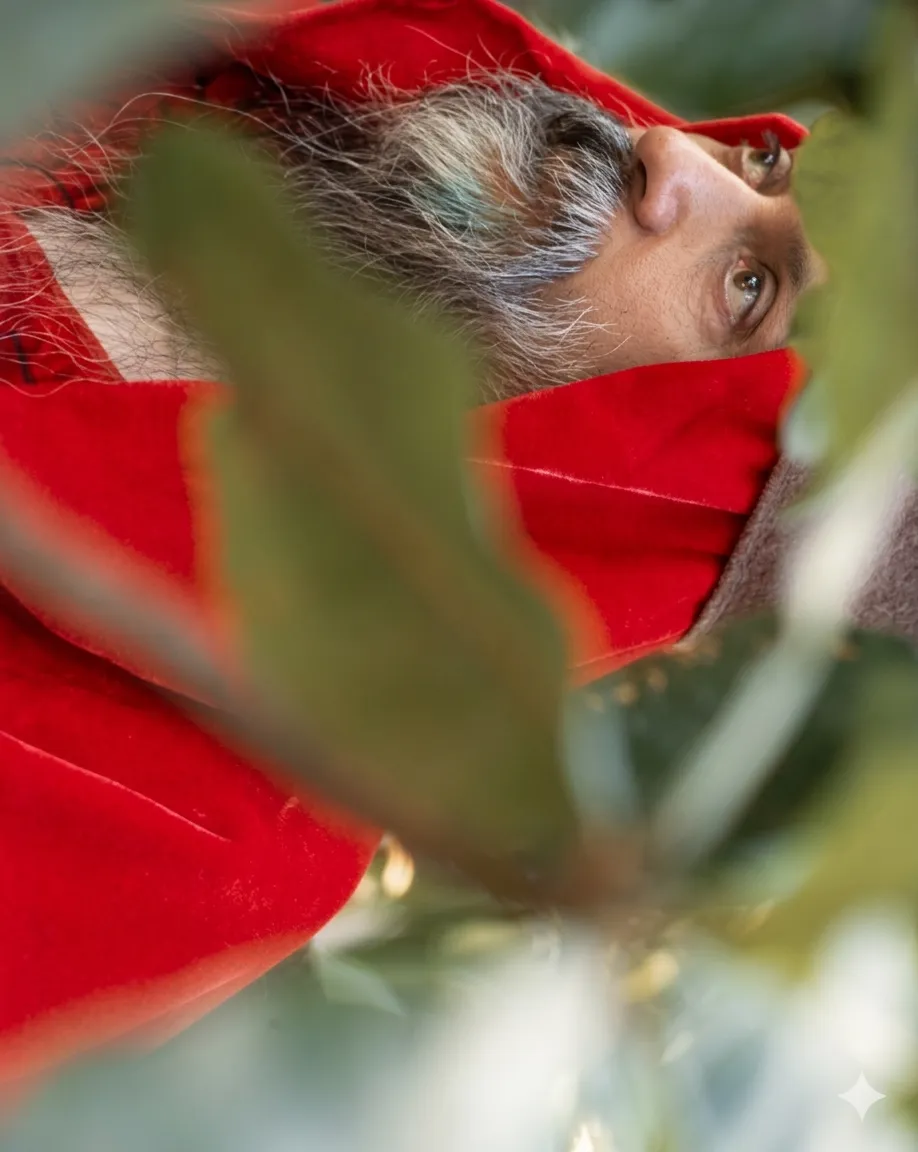
New clothes don’t change your inside; notice old habits, stop feeding them, and start a fresh way so your spare energy has a good home.
From the Discourses
Passages where Osho speaks to this question — each links to the complete discourse.
I am now a sannyasin, but why do I go on thinking in the same old ways?
Have you not tried it? You have been smoking for long, and you want to stop it, because the Surgeon General says that cigarettes are harmful for your health. And I know the Surgeon General himself smokes, but that is another matter. They are harmful to your health, so you stop smoking. But there was a great energy involved in smoking, a great restlessness was being released through smoking. Have you not observed it? Whenever you feel restless you start smoking -- your restlessness has an outlet through smoking. Whenever you are tense, nervous, you start smoking -- your nervousness, your tension, is released through smoking. If you stop smoking, where will you put your nervousness? Where will your restlessness go? It will boil within you. That's what is felt as an urge. You start feeling a great urge to smoke. You will have to put this energy to some…
Osho, what is the definition of God?
Words are very small. If you say God is light, then what of darkness? The scriptures have said that God is light. Suppose we accept this as a definition—then what about darkness? Where will darkness go? Darkness is too; in fact it is far more than light. Light sometimes is and sometimes is not; darkness is always, eternal. Where will you place darkness? If you say God is light, darkness is left out. If you say God is darkness, then light is left out. If you say God is both darkness and light, a contradiction arises: they cannot be together. Try to have both darkness and light in the same room. If you bring in light, darkness disappears; if you preserve darkness, you cannot have light. Then how can both be together? That becomes an impossibility. So you cannot say “both” either. Then the fourth device is to say: it…
Osho, you said that the moment you give sannyas you set us free. But why is it that, even after being set free, the life of a sannyasin does not change from the very roots? As it is, even after sannyas he still lives in his old state of mind. Sometimes he even falls below the ordinary level. Why doesn’t the fragrance of liberation instantly make him an honest, great human being? Doesn’t this indicate “sanchit,” that everything is bound by past karma, preordained?
A gentleman came and said, “I meditate so much, yet my body keeps aging. A meditator’s body shouldn’t age!” These are your “root-level” revolutions! A meditator’s body shouldn’t age? What is wrong with old age? Whoever is young will grow old. A meditator too will grow old. A meditator too will die. The only difference: when he grows old, he remains a witness—knowing the one aging is not “I.” And when he dies, he dies awake—knowing the one that is dying was his body, not he. Death will happen. Otherwise Buddha, Mahavira, Krishna, Mohammed, Christ—none would ever have died. Being meditators, how could they? A meditator attains the immortal! Then he could not die, nor grow old. You are entangled in falsehoods and have hoarded the trivial within. I try in every way to snatch these trivialities from you, and you hide them away in some corner. In truth I…
A friend has asked: You keep telling people again and again to take sannyas. But when the mind is not at peace, what will sannyas do?
Sannyas means only this much: that the uninterrupted stream of our life should be broken somewhere—somewhere a break, a gap, a fracture. Otherwise, out of habit, a person goes on living as he lived until yesterday. Somewhere a break is needed. Otherwise we go on bound to the old groove, and that same groove holds us until death. There is no other meaning to sannyas; psychologically it means only this: we are changing the image of the self that has existed in a person’s mind up to now. It makes a difference. Astonishingly, it makes a difference. There is a friend who took sannyas. He used to say to me, “What will changing clothes do?” I said, “Change them and see. And if it doesn’t do anything, change back.” Fifteen days later he came and said, “This is amazing! My feet stop for a moment in front of the liquor…
Question: at first sight, sannyas appears to be something that limits one's activities. Why does one have to change one's clothes to red? Why should one have to change his appearance, since sannyas is something that is within rather than without?
Gurdjieff used to say a very meaningful thing: that as you are now, you have no soul. He was both right and wrong. You have a soul, but you do not know about it. You are the outside, and so clothes are very meaningful. Because of clothes a person becomes beautiful and because of clothes a person becomes ugly. Because of clothes he becomes respected; because of clothes he is not respected. A judge has to wear certain clothes -- a supreme court justice has to use a particular robe -- and no one asks why. With that robe he is a supreme court justice; without that robe he is no one. This is how man is. When I look at a man he is more his clothes than his mind. And this is as it should be, because we belong to the body, we are identified with the body.…