
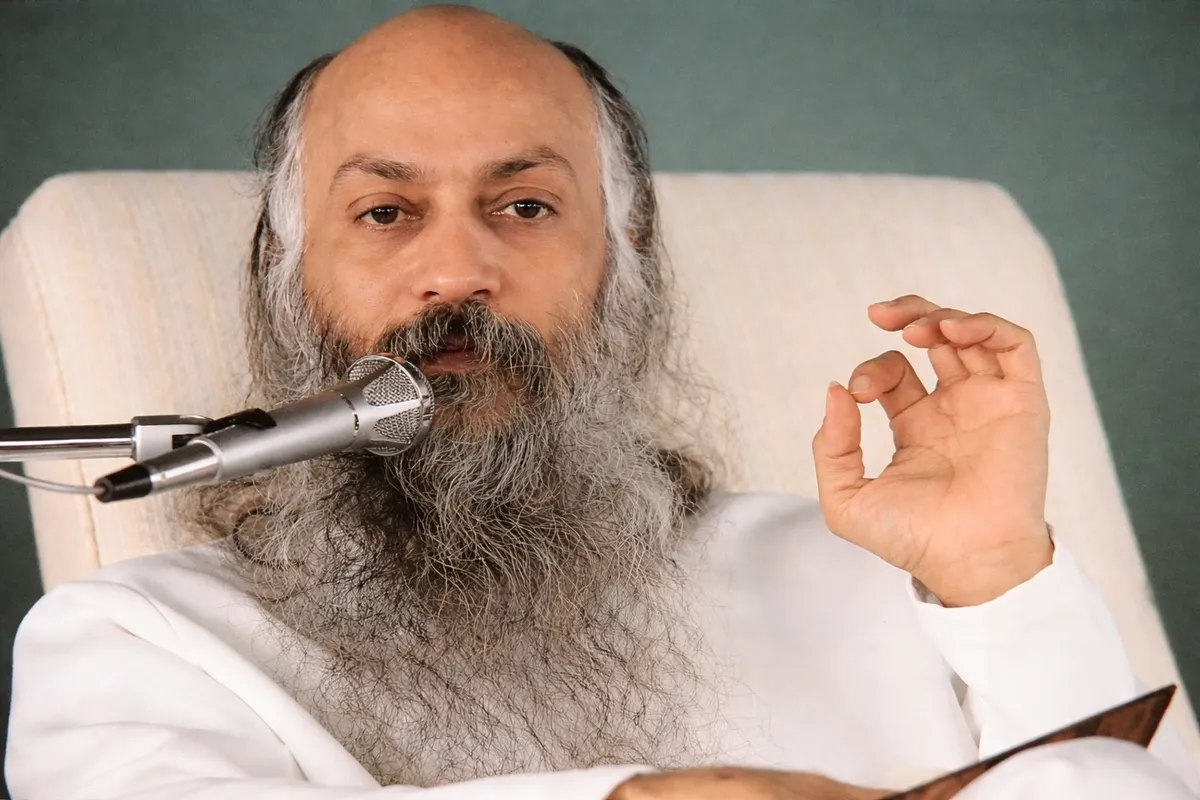
Masters act differently because everyone is one-of-a-kind, and at the highest peak that uniqueness shows up in different styles—so don’t compare one to judge another.
From the Discourses
Passages where Osho speaks to this question — each links to the complete discourse.
Osho, why are there so many confusions in philosophy?
There is no confusion in darshan; in shastra there will be confusion. Shastra itself means confusion. Shastra means: doctrines, arguments, words. Darshan is simple and direct. Darshan means vision—the capacity to see—the eye. When the eye is empty, void of ego, free of thought, when the mind does not interfere, what happens then is darshan. To see what is, just as it is—that is darshan. Remember the difference between darshan and darshan-shastra. Darshan-shastra is not darshan; darshan-shastra is speculation, intellectual tussle. Darshan is vision, experience. In philosophy there will be entanglement. In philosophy a single question will carry a thousand questions, and from each answer a thousand more will arise. And in philosophy no question ever gets resolved. In five thousand years of history, philosophers have not solved a single question. For five thousand years they have asked many questions, but not given a single answer. They cannot. A philosopher…
तीसरा प्रश्न: ओशो, दर्शनशास्त्र में इतनी उलझनें क्यों हैं?
दर्शन में उलझन नहीं है, शास्त्र में तो उलझन होगी। शास्त्र का मतलब ही होता है उलझन। शास्त्र का अर्थ होता है: सिद्धांत, तर्क, शब्द। दर्शन तो साफ-सीधा है। दर्शन का तो अर्थ होता है: दृष्टि, देखने की क्षमता, आंख। जब आंख खाली होती है, अहंकार से शून्य होती है, विचार से मुक्त होती है, मन बाधा नहीं डालता, तब जो घटता है वह दर्शन। जैसा है, उसको वैसा ही देख लेना दर्शन है। दर्शन और दर्शनशास्त्र के भेद को याद रखना। दर्शनशास्त्र दर्शन नहीं है, दर्शनशास्त्र ऊहापोह है। दर्शन दृष्टि है, अनुभव है। दर्शनशास्त्र में तो झंझट होगी। दर्शनशास्त्र में तो एक-एक प्रश्न में हजार प्रश्न लगेंगे और एक-एक उत्तर से हजार प्रश्न उठेंगे। और दर्शनशास्त्र में कभी किसी प्रश्न का कोई हल नहीं हो पाता। पांच हजार साल के इतिहास में दर्शनशास्त्रियों ने एक प्रश्न भी हल नहीं किया है। पांच हजार साल में उन्होंने बहुत प्रश्न पूछे हैं, लेकिन एक भी उत्तर नहीं दिया है। वे दे ही नहीं सकते।
One of the sannyasins has asked a question: WHAT IS MISSING IN COMMUNISM?
If you really want celibate people, then they need a brain operation. The center of sex should be removed. But then you will be simply impotent -- not celibate. Karl Marx was right, that such religions should be finished. They are against humanity. They protect poverty and they protect the rich. They are against revolution, they are against any change -- obviously, he was right to call them the opium of the people, the hope of the hopeless. If Christianity and Judaism were the only religions, then the Soviet Union would not have any need, any urge to find the inner world! But just think about it. You cannot have the outside world without having the inside world; they exist together like two sides of the coin. And there are scientific methods available. Zen is the most scientific method to inquire into your consciousness. It takes you beyond mind into…
Osho, a master can always know the spiritual state of a seeker longing for liberation, but how can the seeker know whether the master has attained truth or not? And if the disciple ever feels he has lost the gamble in his choice, can he go to another master? Please clarify your view.
The scripture says: eat once a day—so they eat once. Two garments—so two garments. Don’t travel after sunset—so they don’t. Don’t drink water at night—so they refrain. Rise before dawn—so they rise. They rehearse what the scripture prescribes; through this, they match your idea and seem suitable. If your conception springs from the same scripture, the match is exact. Hence the odd spectacle: the guru of one sect does not seem like a guru at all to another sect. But to his sect he appears the supreme guru. Their conceptions match. Understand the trick. You study the same shastra… Consider an actress who came to see me: “What do you say about the Bhrigu Samhita?” I asked why. She said, “In Delhi they read my Bhrigu. I noted what they said of my past lives, and future too. Some things about this life were true. Others aren’t yet, but the…
पहला प्रश्न: ओशो, गुरु तो सदैव मुमुक्षु की आध्यात्मिक स्थिति जान सकते हैं, परंतु मुमुक्षु कैसे जाने कि गुरु सत्य को उपलब्ध है, अथवा नहीं? और यदि शिष्य को कभी ऐसा महसूस होने लगे कि चुनाव में बाजी हार गया है, तो क्या वह दूसरे गुरु के पास जा सकता है? कृपया अपनी मान्यता स्पष्ट करें।
शास्त्र कहता है: इतनी बार भोजन, एक बार भोजन, तो ये एक बार भोजन करते हैं। शास्त्र कहता है कि दो वस्त्र, तो ये दो वस्त्र रखते हैं। शास्त्र कहता है: सूरज ढले चलना नहीं, तो ये चलते नहीं। रात पानी मत पीना, तो पानी नहीं पीते। ब्रह्ममुहूर्त में उठ आना, तो ब्रह्ममुहूर्त में उठ आते हैं। शास्त्र ने जो कहा है, उसकी कवायद करते हैं, उसका रिहर्सल करते हैं, उसका अभ्यास करते हैं, उसके अभ्यास से तुम्हारी धारणा से मेल खा जाता है, अनुकूल पड़ जाते हैं। अगर तुम्हारी भी उसी शास्त्र की धारणा है तो बस एकदम मेल खा जाते हैं। इसलिए तुम दुनिया में एक चमत्कार देखोगे कि एक संप्रदाय का गुरु दूसरे के संप्रदाय को बिलकुल गुरु जैसा नहीं मालूम होता। मगर उस संप्रदाय के लोगों को बिलकुल गुरु मालूम होता है, परम गुरु मालूम होता है। दोनों की धारणाएं एक जैसी हैं। दोनों की धारणाएं मेल खा रही हैं।
Beloved Osho, I heard you saying that enlightenment is the transcendence of mind -- conscious, unconscious, sub-conscious -- and that one dissolves into the ocean of life, into the universe, into nothingness. I also hear you talking about the individuality of human beings. How can the individuality of an enlightened person manifest itself if he is dissolved in the whole?
The ordinary, unconscious human being has no individuality; he has only a personality. Personality is that which is given by others to you -- by the parents, by the teachers, by the priest, by the society -- whatever they have said about you. And you have been desiring to be respectable, to be respected, so you have been doing things which are appreciated, and the society goes on rewarding you, respecting you more and more. This is their method of creating a personality. But personality is very thin, skin-deep. It is not your nature. The child is born without a personality, but he is born with a potential individuality. The potential individuality simply means his uniqueness from anybody else -- he is different. So first, remember that individuality is not personality. When you drop personality, you discover your individuality -- and only the individual can become enlightened. The false cannot…
Osho, by not creating a guru–disciple relationship, Krishnamurti didn’t create trouble for himself; whereas here, by creating such a relationship you seem to get nothing but trouble. Is there a difference in the compassion of enlightened ones? If there is no difference, then, Osho, why did you choose such an inconvenient path?
Mukesh! These are not things one chooses. No one chooses them. It isn’t that Krishnamurti chose as he did, or that I chose as I did. As long as the chooser is there, neither Krishnamurti can be, nor can I be. As long as the chooser is there, Buddhahood does not happen. When the chooser bids farewell, the descending of Buddhahood happens. Then whatever happens, happens; however it happens, so it happens—choicelessly. The leaves of a tree are green—they have not chosen. A rose is red—it has not chosen. One flower is white, another is yellow; one is filled with this fragrance, another with that. Neither champa has chosen, nor chameli (jasmine), nor juhi (jasmine). Choice is not the point at all. Juhi is juhi, Krishnamurti is Krishnamurti, I am I, Maluk is Maluk, Dadu is Dadu, Doolan is Doolan. If it were a matter of choice, it would only…
दूसरा प्रश्न: ओशो, कृष्णमूर्ति ने गुरु और शिष्य का नाता न बना कर अपने लिए कोई मुसीबत खड़ी नहीं की; जब कि यहां आपको गुरु और शिष्य का नाता बना कर अपने लिए मुसीबतों के अतिरिक्त कुछ भी नहीं मिल रहा है। क्या बुद्धपुरुषों की करुणा में भेद है? अगर कोई भेद नहीं है, तो ओशो आपने क्यों ऐसा असुविधापूर्ण रास्ता चुना?
मुकेश! ये बातें चुनने की नहीं हैं। ऐसा कोई चुनता नहीं है। ऐसा नहीं कि कृष्णमूर्ति ने ऐसा चुना या मैंने ऐसा चुना। जब तक चुनने वाला है तब तक न तो कृष्णमूर्ति हो सकते हैं, न मैं हो सकता हूं। जब तक चुनने वाला है तब तक बुद्धत्व घटता ही नहीं है। जब चुनने वाला विदा हो जाता है तब बुद्धत्व का अवतरण होता है। फिर जो होता है, होता है, फिर जैसा होता है, वैसा होता है--चुनावरहित। जैसे वृक्ष के पत्ते हरे हैं, उन्होंने कुछ चुना नहीं है, और गुलाब के फूल लाल हैं, उन्होंने कुछ चुना नहीं है। जैसे कोई फूल सफेद है और कोई फूल पीला है, और कोई फूल ऐसी गंध से भरा और कोई फूल वैसी गंध से भरा। न तो चंपा ने चुना है, न चमेली ने, न जूही ने। चुनाव की बात ही नहीं है। जैसे जूही जूही है वैसे कृष्णमूर्ति कृष्णमूर्ति है, मैं मैं हूं, मलूक मलूक, दादू दादू, दूलन दूलन। यह बात चुनाव की होती तो संसार की ही हो जाती। संसार यानी चुनाव। जहां तुम चुनते हो वहां संसार है। …