
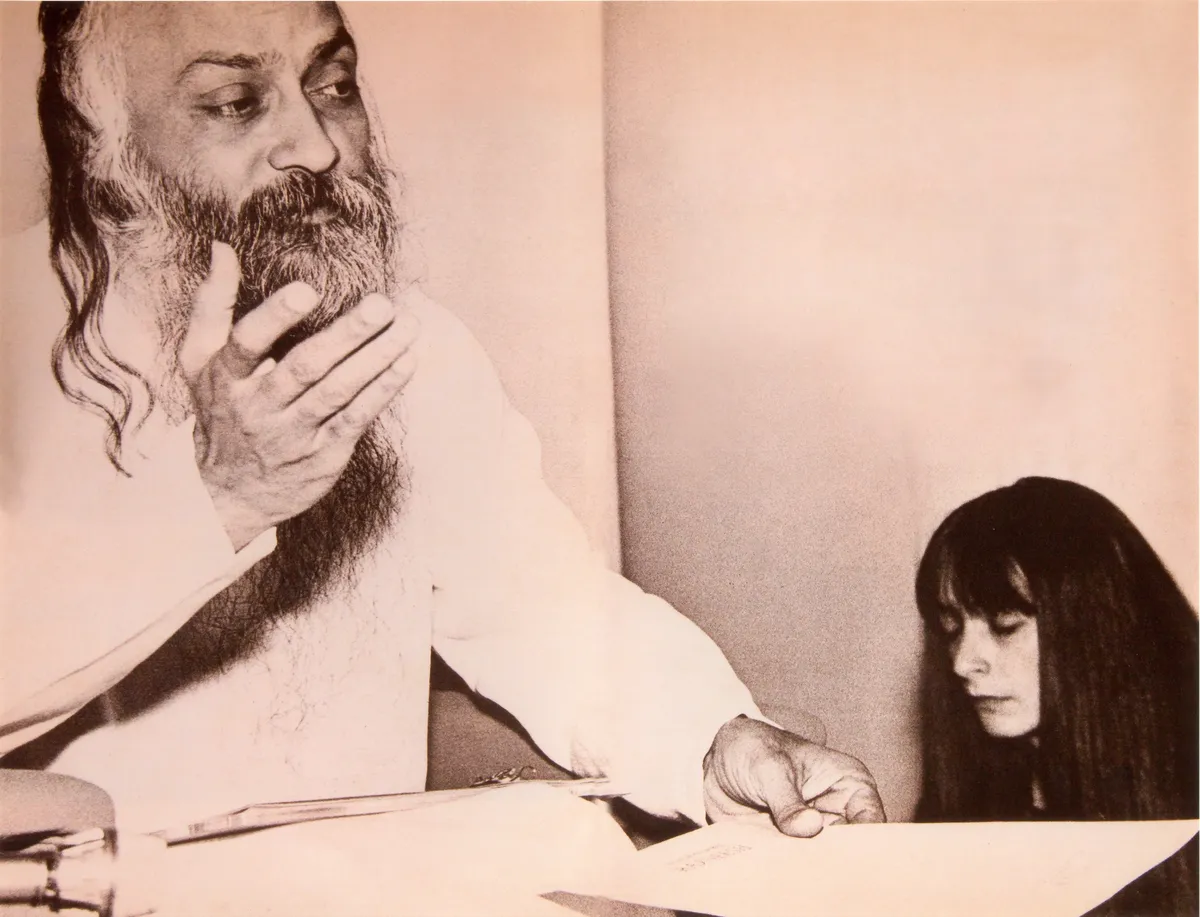
According to Osho, if you haven’t known God, don’t worship at all. First seek direct experience through meditation; once even a glimpse arises, worship flowers spontaneously as gratitude and surrender. Then every place becomes a temple and no ritual is needed—true worship is thanksgiving, an offering of yourself, not symbolic acts or borrowed forms.
Don’t try to worship before you’ve felt God; meditate to know, and real thank-you feelings will happen by themselves.
From the Discourses
Passages where Osho speaks to this question — each links to the complete discourse.
Osho, without seeing God, whom should I worship—how, and where? Please be compassionate and explain!
Jageshwar, When you have not seen God at all, why worship in the first place? Why does the question arise—whom should I worship, how, and where? That’s strange. It’s like a naked man asking, “If I take a bath, where shall I wring out my clothes? And even if I wring them, where shall I dry them?” When you have no sense of God yet, how will you worship now? No realization of God—and you want to go further! That’s Sheikh Chilli stuff, castles in the air. But often such foolishness passes for metaphysics. When you asked it, you probably thought you were asking a very profound, very religious question. You are asking something utterly pointless. It’s like the house isn’t even built, the foundation hasn’t been laid, and you are already worrying about the roof—should it be tiles or asbestos sheets? Worship will come later; first there must be…
Osho, what should I do? How should I pray? How should I worship?
“What should I do? How should I pray? How should I worship?” Bid farewell to the word “how.” Move into inactivity. Sit for an hour—do not think what to do—just sit for an hour. If birds are singing, listen. If sunrays are dancing upon you, feel them. If a breeze comes and rustles your clothes, makes them quiver, feel it. Just sit. You will be amazed to discover that if you can sit for an hour without any occupation, one day prayer will be born within you—like a wonder. But when you ask “how,” you don’t realize what you’re asking. You are saying, “All right, I will sit for prayer—just give me some occupation. Should I turn a rosary? Chant a mantra? Arrange a puja tray? Perform aarti?” You want some device to keep busy. You cannot remain without doing. Doing is your disease, your madness. In the shop you…
Osho, you always emphasize experience. I have done everything—worship and rituals, yoga and meditation, vows and fasting! And for some years I even lived like an old-style sadhu. Yet nothing came of all that. What should I do now?
You have done nothing. Do you even know what fasting is? Fasting—upavas—means to dwell near, to sit close to the Divine. It does not mean starving. Yes, it often happens that sitting close to Him you forget food; you forget to eat. In real fasting, food is not in the focus—God is; and God is so much in focus that you forget the body. Then food does not come to mind: that is fasting. When you fast, the exact opposite happens. What you do should not be called upavas; that is why we have another word—anashan, a hunger strike. You go on a hunger strike: “Today I will not eat.” But have you seen what a man does when he decides to fast? “Tomorrow I mustn’t eat”—so tonight he stuffs himself. He makes up for tomorrow today. Is that fasting? And what will you do tomorrow all day? You will…
Today I would request Osho to guide us on idol worship.
A Japanese seeker from Soto Zen told me of a practice: twenty-four hours a day the disciple intones “Muuuu… muuu…” After days, the sound storms inside; thoughts drop. By three weeks, the roaring “Muuuu!” possesses him. Food, sleep fall away; guards must watch him. At the final climax, a last thunderous roar—and suddenly all is still. For days he lies in deep quiet. When he returns, the old man is dead; a new man stands—continuity with the past broken. Om is such a sound; every religion has its own. As worship deepens, sound transforms consciousness. Repetition is crucial. If you sing one hymn one day, another the next, there will be no results. Continuous blows on one point drive the nail. But beware of mechanical repetition—then it is wasted labor. If the sound becomes your very life, every cell, bone, blood crying it—then sound can open the door. And all…
Question: In this context, listen to the second question. Satya Vedant has asked: Osho, in a recent statement Shri Dongre Maharaj said that a person who eats food without worshipping the deity is not eating food but sin. He said that the first vision of Brahman happens in the idol. Shri Dongre Maharaj said that one should drink water only after worshipping Ganapati. And Ganapati is the only deity who sits holding a laddoo in his hand! There is sweetness in this laddoo, because knowledge itself is the laddoo. He said that it is also necessary to worship the Mother, Shakti. Without Shakti life is useless. From Shakti comes devotion, and from devotion comes steadiness in meditation! By meditating on Ganapati obstacles do not arise. And by meditating on the Mother, Shakti comes.