
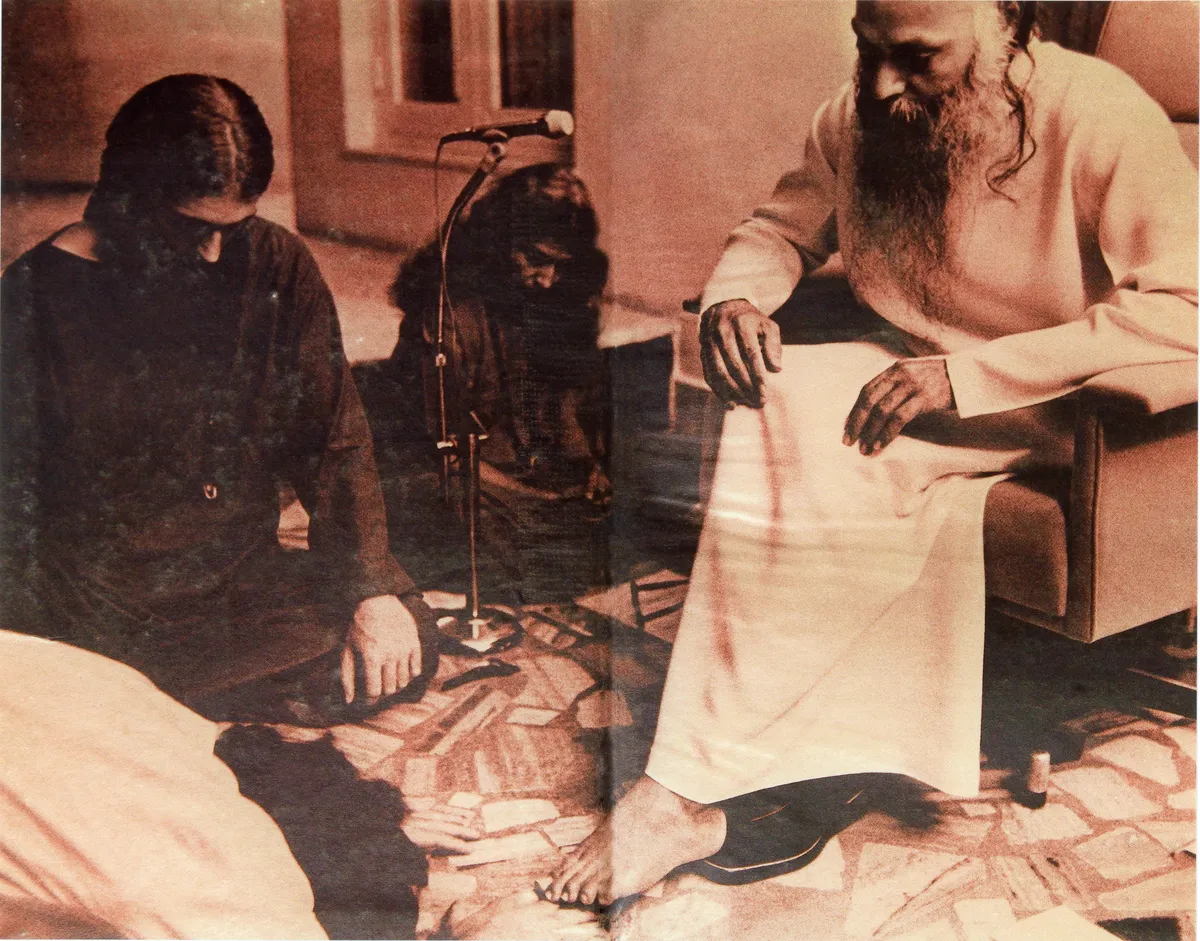
A siddha is someone so free of attachment that they are whole and one with everything, with no inside/outside or me/you left.
From the Discourses
Passages where Osho speaks to this question — each links to the complete discourse.
“One nondual Brahman alone is everything, and there is no other.” “Thus, by your own experience, know your own Self to be indivisible and be a siddha; and abide most joyfully in the Self whose nature is free of thought-construction.” “Thus, by your own experience, know your own Self to be indivisible and be a siddha.” Knowing it from scripture will not do. Whether the Vedas say so or the Smritis say so—it will not do. Hearing will not resolve it. Know it by your own experience; thus become a siddha. Siddha means: one beyond whom there is no further journey or movement. Siddha means the final halt, the last destination, beyond which all roads end. Asiddha means: as we are. Asiddha means: one whose work is still unfinished; something remains to be done; something will happen, and then there will be happiness.
‘एक और अद्वैत ब्रह्म ही सब कुछ है और कोई भी नहीं।’ ‘इस प्रकार अपने अनुभव से स्वयं ही अपनी आत्मा को अखंडित जान कर तू सिद्ध हो, और निर्विकल्प स्वरूप आत्मा से ही अत्यंत सुखपूर्वक स्थिति कर।’ ‘इस प्रकार अपने अनुभव से स्वयं ही अपनी आत्मा को अखंडित जान कर तू सिद्ध हो।’ शास्त्र से जान कर नहीं चलेगा काम। श्रुतियां कहें, स्मृतियां कहें, नहीं चलेगा काम। सुन कर हल नहीं होगी बात। अपने ही अनुभव से ऐसा जान कर तू सिद्ध हो। सिद्ध का अर्थ है, जिसके आगे कोई यात्रा और गति नहीं। सिद्ध का अर्थ है, अंतिम पड़ाव, अंतिम मुकाम, जिसके आगे रास्ते समाप्त हो जाते हैं। असिद्ध का अर्थ है, जैसे हम हैं। असिद्ध का अर्थ है, जिसका अभी कुछ काम बाकी है; अभी कुछ करना है; अभी कुछ होगा, तो सुख होगा। असिद्ध का अर्थ है, कुछ होगा, कुछ करना है; कुछ पूरा करना है, कुछ पाना है। वह मिल जाएगा तो सुख होगा। असिद्ध का सुख किसी चीज पर निर्भर है। …
Yesterday someone asked a question. I did not answer it then; I had kept it for today. The question is: Who is a siddha?
Drowsy, listless, the days slipped by; nights won vows of wakefulness. Why does arrival turn to departure? Why does destruction become creation? Is death birth, or birth death? Nowhere a resolution appears. Pride in knowledge is all that remains, sewing together the start and end. In a moment, sunlight turned to shadow— Maya’s forms, and forms enamored of Maya. Water in the stone, stone in the water; in each soul the world is nestled. In the river—wave; in the wave—current; in each current, all of life. O you who fill drop by drop— why do brimming oceans run empty? “All’s well”—that’s what we heard; why did all depart, head in hands? If Brahman is truth and the world a lie, why do sunbeams weave dream-sky? In darkness—rays; in rays—dark prisons; victory upon victory, and yet life lost. A diamond-birth squandered so, weeping—singing, eating—drinking. Pride in knowledge is all that remains,…
कल किसी का प्रश्न था। उत्तर मैंने नहीं दिया, आज के लिए छोड़ रखा था। पूछा है, सिद्ध कौन?
ब्रह्म सत्य तो जग मिथ्या क्यों रविकर क्यों स्वप्नांबर बुनते तम में किरण किरण तम कारा जीत जीत क्यों जीवन हारा हीरा जनम गंवाया यों ही रोते - गाते, खाते - पीते ज्ञान गुमान शेष हो जाते आदि अंत को सीते-सीते
Taru has asked.
What does siddha mean? It means that what was a seed within you has become a tree; it has flowered. It means: what you were meant to become, you have become; your destiny is fulfilled. Where the Ganga falls into the ocean, she becomes siddha. Where the seed becomes a flower, it is siddha. Siddha means: nothing remains to be done, nothing remains to be gained, nowhere remains to go. No goal remains—you are the goal. No temple, no mosque, no pilgrimage remains. No journey remains. You are the temple; you are the mosque. The beginning has arrived at the end. The traveler who set out has arrived. Then there is no need to forget. For being is so blissful… Have you ever noticed? Whenever you are happy, you do not want to forget yourself. Only when you are unhappy do you want to forget. A happy man does not…
पहला प्रश्न: ओशो, आप मुझे देख-देख कर शराब की बातें क्यों करते हैं? सीधे-सीधे क्यों नहीं कह देते? मैं सिद्ध हूं; आपको कुछ कहना है? तरु ने पूछा है।
सिद्ध का अर्थ है कि अब और कुछ करने को न रहा, अब कुछ पाने को न रहा, अब कहीं जाने को न रहा। अब कोई मंजिल न रही। अब तुम्हीं मंजिल हो। अब कोई मंदिर-मस्जिद न रहा, कोई तीर्थ न रहा। कोई यात्रा न रही। अब तुम्हीं मंदिर हो, तुम्हीं मस्जिद हो। प्रारंभ अंत पर आ गया। जो यात्री चला था, वह पहुंच गया। तब भुलाने की कोई जरूरत नहीं रह जाती। क्योंकि होना इतना आनंदपूर्ण है...क्या तुमने कभी खयाल किया, तुम जब भी सुखी होते हो, तब तुम अपने को भुलाना नहीं चाहते। जब दुखी होते हो, तभी भुलाना चाहते हो। सुखी आदमी शराब न पीएगा। क्यों पीएगा? कोई सुख को भुलाना चाहता है? कोई सुख को डुबाना चाहता है? …
Siddhi means that place from which no urge to go anywhere else arises. As long as that urge arises, there is samsara. Siddhi means where you are is the ultimate place—no urge to go elsewhere. Even if someone puts liberation in front of you, you close your eyes: “I am already seated in liberation.” There is a story about Nan-in—a Zen mystic. At the foot of a mountain, atop which was a pilgrimage shrine toward which thousands walked each year, Nan-in lay under a tree. Many monks went on pilgrimage too. The ignorant have no special link with householders—monks and renunciates are equally ignorant. They also go up the mountain—as if there were something there! Nan-in lay under the tree. One day some monks saw him. They had stopped to rest under the tree. They said, “Nan-in, we come every year on pilgrimage.
सिद्धि का अर्थ है ऐसी जगह, जहां से कहीं और जाने का भाव न उठे। जब तक कहीं जाने का भाव उठता है, तब तक संसार। सिद्धि का अर्थ है, जहां आप हैं, वही परम स्थान। उसके अतिरिक्त कहीं जाने का कोई भाव नहीं है। कोई मोक्ष भी सामने लाकर रख दे, तो आप आंख बंद कर लें कि अपन पहले ही मोक्ष में बैठे हैं। नान-इन के संबंध में कथा है--एक झेन फकीर। एक पहाड़ की तलहटी पर, जहां पहाड़ पर ऊपर एक तीर्थ था और हजारों यात्री वर्ष में यात्रा करते थे पैदल पहाड़ पर, नान-इन पहाड़ की तलहटी में एक झाड़ के नीचे लेटा रहता था। अनेक साधु-भिक्षु भी यात्रा पर जाते थे। अज्ञानियों का कोई गृहस्थों से संबंध नहीं है। साधु-संन्यासी भी वैसे ही अज्ञान में हैं। भिक्षु भी, संन्यासी भी, वे भी पहाड़ पर यात्रा करने जाते हैं। जैसे वहां कुछ हो! नान-इन झाड़ के नीचे पड़ा रहता था।
And you have asked: “Please clarify the difference between a sadhak and a sannyasin.”
To make this distinction clear you should understand these seven words. First: Curiosity. Some people are merely curious. They ask, “Is there God or not?”—but they don’t have much at stake in it. They ask just for the sake of asking, like little children. If you don’t answer for two minutes, they forget. If you answer after a minute, they’ll say, “What are you answering? When did I ask?” Such people come to me. If they start talking about God and I see only curiosity in their eyes, I ask about something else: “How is your wife? How are the children?” They forget—God and all that is dropped—and they begin talking about wife and children. Then they sit for an hour and never bring up God again. They had raised it just to keep the conversation going—out of courtesy, out of curiosity. It has no value. So the first state…
और तुमने पूछा है: ‘कृपया साधक व संन्यासी का भेद स्पष्ट करें।’
… कुछ लोग हैं, जो कुतूहली हैं। पूछते हैं, ईश्वर है या नहीं? लेकिन इसमें उन्हें कुछ ज्यादा लेना-देना नहीं है। पूछने को पूछ लिया। जैसे छोटे बच्चे पूछते हैं। कुछ भी पूछ लेते हैं। अगर उत्तर न दो मिनट भर, तो वे भूल-भाल गए। मिनट भर बाद तुम अगर उत्तर दो, तो वे कहेंगे: किस बात का उत्तर दे रहे हो! हमने पूछा कब? ऐसे लोग मेरे पास आ जाते हैं। अगर ईश्वर की बात करते हैं, तो मैं देखता हूं, उनकी आंखों में सिर्फ कुतूहल है, तो मैं कुछ और बात पूछ लेता हूं। पूछता हूं: आपकी पत्नी कैसी है? बच्चे कैसे हैं? वे भूल गए; ईश्वर वगैरह छोड़ दिया। …