
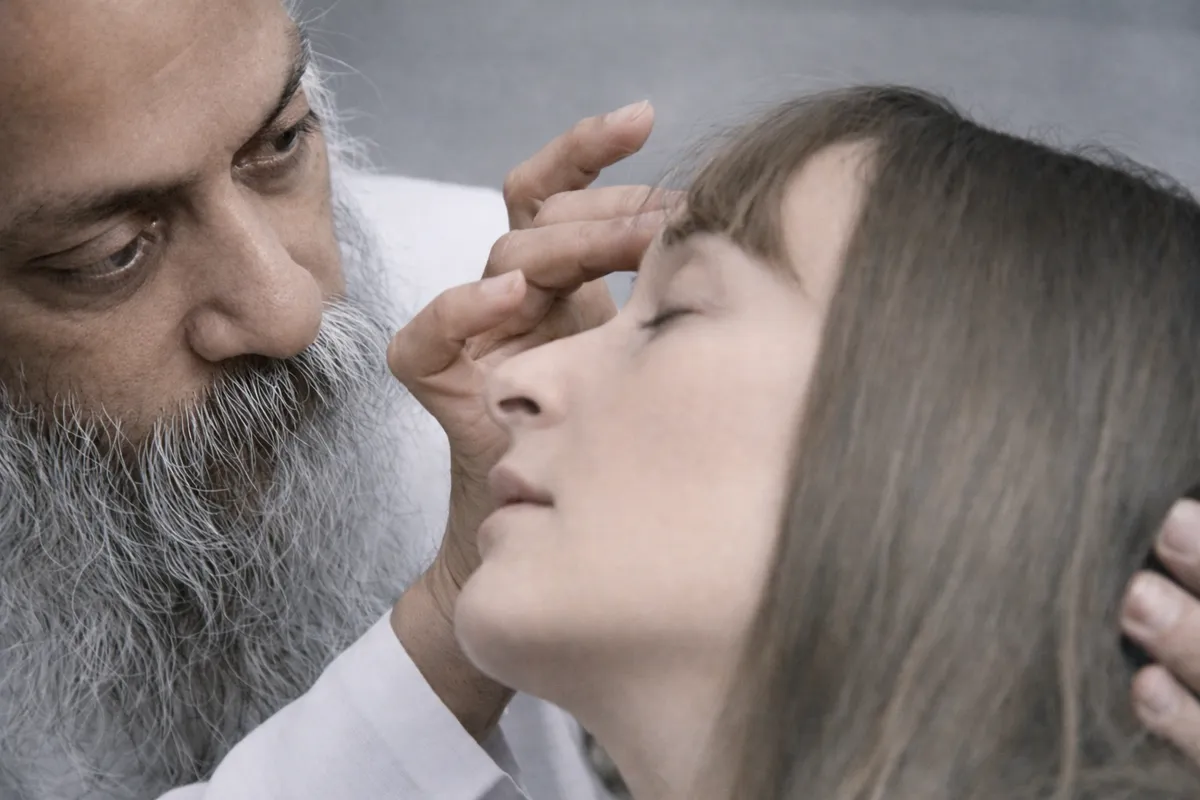
Stop worrying about what to call property; focus on living with awareness and love instead of labels.
From the Discourses
Passages where Osho speaks to this question — each links to the complete discourse.
In this moment it is sheer delight! It cannot be otherwise because in the present only bliss and consciousness can exist. That's what Buddha calls 'chittakshana' -- a consciousness moment. And once you have learned that there is no need to be afraid, because it is always only a single moment that comes into your hand. Life never gives you two moments. There is no provision for it. Nobody is given two moments together. Only one is given -- when that one is taken then another comes, but you always have one moment. So buddha says,'If you can transform one moment you have known the very peak -- you can transform the whole eternity. Nothing else is needed.' Sometimes people come to me and they say, 'Right now I am feeling very happy, but what will happen to me?' right now is the only thing there is.
Osho, there is one more thing I want to understand in the first question: how is it that objects—possessions—hypnotize and possess their owner, the possessor? What are the reasons?
In the very desire to become a master lie the seeds of slavery; because whatever we decide to master, we also, unknowingly, have to become its slave. We become slaves because our mastery depends upon that which we own. Without it, our ownership cannot exist. And when ownership depends on something, how can we be the owner of our ownership? The real master is that upon which it depends. If I have ten slaves, I am the master of ten slaves; but my mastery depends on those ten slaves being there. If these ten slaves are lost, my mastery will be lost with them. The key to that mastery is not in my hands; it is in the hands of those ten slaves. In a very deep sense they have become my masters, because without them I cannot be a master. And how can we be masters of those without…
ओशो, पहले प्रश्न में एक चीज और समझनी है कि वस्तुएं, पजेशंस, अपने मालिक को, पजेसर को कैसे सम्मोहित, पजेस्ड कर लेती हैं? इसके क्या कारण हैं?
… उसके बिना हमारी मालकियत नहीं हो सकती। और जब मालकियत किसी पर निर्भर होती है तो हम अपनी मालकियत के मालिक कैसे हो सकते हैं? मालिक तो वही हो गया, जिस पर वह निर्भर होती है। अगर दस गुलाम मेरे पास हैं, तो मैं दस गुलामों का मालिक हूं; लेकिन मेरी मालकियत दस गुलामों के होने पर निर्भर है। अगर ये दस गुलाम खो जाएं, तो मेरी मालकियत भी खो जाएगी, इनके साथ ही खो जाएगी। उस मालकियत की कुंजी मेरे पास नहीं है, इन दस गुलामों के पास है। ये दस गुलाम बहुत गहरे में मेरे मालिक हो गए हैं, क्योंकि इनके बिना मैं मालिक न हो सकूंगा। और जिनके बिना हम मालिक न हो सकें, उनके हम मालिक कैसे हो सकते हैं? जिनके बिना हमारी मालकियत गिर जाएगी, जाने-अनजाने उनके हम गुलाम हो गए! हम उनसे बंध गए!
Beloved Osho, a long time ago I replaced the word god with simply "it." it is about as vast as I can go with my mind. Do I need to abolish it as well? -- because it is alive and all around me.
The first thing to be understood is that changing names does not change anything. You can call it God, you can call it Allah, you can call it Ishwar -- there are three hundred languages on the earth. There are three hundred ways to call God, or you can invent your own private name for God. You say, "I have replaced God with the word `It." What does it mean? You have only changed the label. Perhaps you can change even the container, but the question is of the content. And the content is there, I can see from your question, because you say, "it is alive and all around me." Now, "it" is used for things. You have changed just the word; you are giving him a new name, but "It" is all alike. And the second thing you say is, "This is as far as my mind can…
If we can refrain from naming, if the mind does not fabricate names, and we can look even at a stone without word and without name, then Paramatman will be revealed in the stone. And if we look at a heart throbbing with love and give it names — my son, my mother, my wife — then that heart that was pulsing with life will also become a piece of stone. Give a name — consciousness becomes an object. Drop the name — objects become conscious. So Lao Tzu, to explain, divides Existence in two — heaven and earth. By earth he means matter; by heaven he means experience, sensitivity, chaitanya, consciousness. The Nameless is the begetter of all matter and all consciousness. Heaven is a lived experience; earth is a state.
तो हम परमात्मा को कोई नाम न दे सकेंगे; क्योंकि नाम देते ही परमात्मा वस्तु हो जाएगा। जिस चीज को भी हम नाम देंगे, वह वस्तु हो जाएगी। आत्मा को भी नाम देंगे तो वह वस्तु हो जाएगी। और अगर हम पत्थर को भी नाम न दें तो वह आत्मा हो जाएगा। अगर हम नाम देने से बच जाएं और हमारा मन नाम निर्मित न करे, और हम बिना शब्द और बिना नाम के किसी पत्थर को भी देख लें, तो पत्थर में परमात्मा प्रकट हो जाएगा। और हम किसी प्रेम से धड़कते हुए हृदय को भी नाम देकर देखें--मेरा बेटा, मेरी मां, मेरी पत्नी--कि हृदय जो धड़कता हुआ था जीवन से, वह भी पत्थर का एक टुकड़ा हो जाएगा। दिया नाम, कि चेतना वस्तु बन जाती है। छोड़ा नाम, कि वस्तुएं चैतन्य हो जाती हैं। तो लाओत्से दो हिस्से करता है--अस्तित्व। अस्तित्व को समझाने के लिए उसने बांटा: हेवन एंड अर्थ, पृथ्वी और स्वर्ग। पृथ्वी से अर्थ है लाओत्से का पदार्थ का, मैटर का। और स्वर्ग से अर्थ है लाओत्से का अनुभव का, अनुभूति का, चैतन्य का, चेतना का। तो समस्त पदार्थ और समस्त चेतना का जनक है अनाम। …
Mm mm... you don't have any name and nobody has any name! Names are just useful, utilitarian. Deep down you remain nameless. Your reality remains always undefined; no name can contain it. So remember that: rather than paying too much attention to a name, pay much attention to the nameless reality behind it, and remain nameless. It is good -- people have the need. A name is needed to be called by, to be addressed by, but that's where its function is fulfilled. When you are sitting alone in your room you don't have any name; you have a name only when somebody is addressing you. If you are in the mountains, you don't have any name. [Osho recounts the story of the emperor who presented a great Zen master with a beautiful velvet robe.