
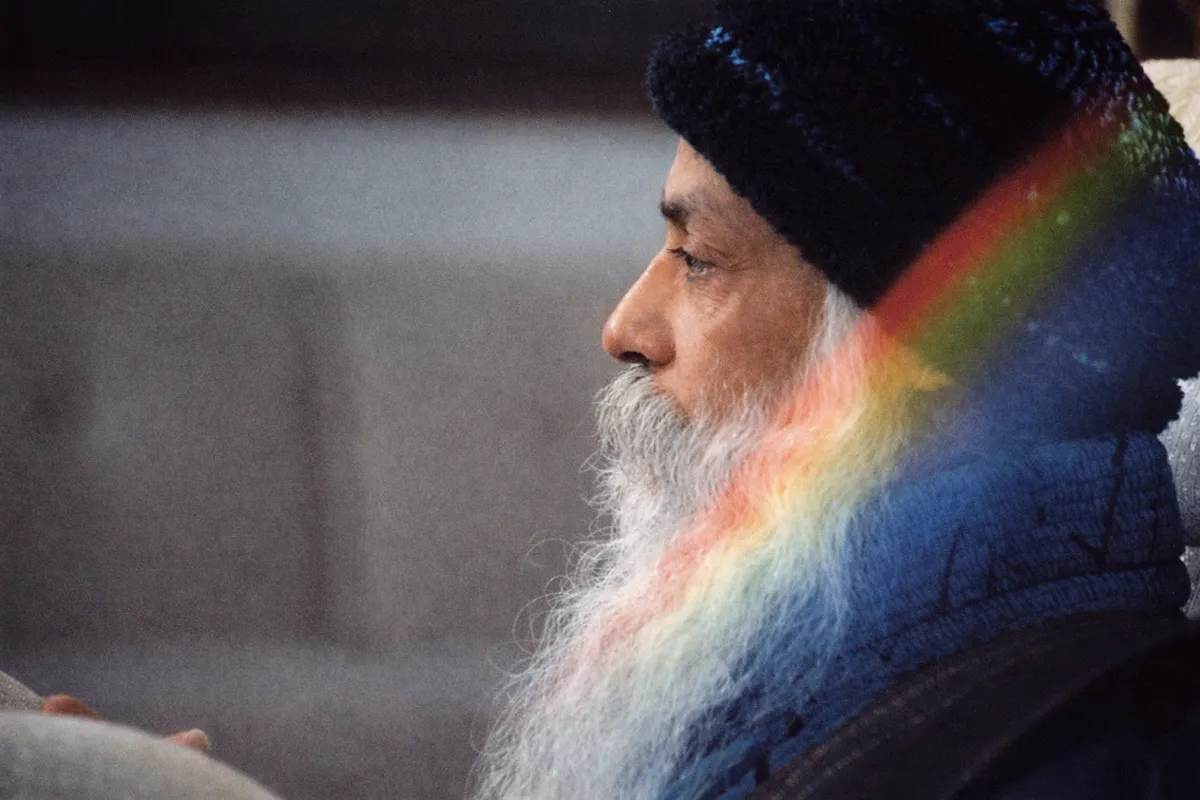
When even your last longing for God drops, you vanish like a river in the sea, and only God remains.
From the Discourses
Passages where Osho speaks to this question — each links to the complete discourse.
Osho, aspiration dissolves and becomes abhipsa. When abhipsa ends, what remains? Please clarify.
Akanksha means the world’s desires. Akanksha means desires—plural. Not one, many. The world means many. When akanksha dissolves and becomes abhipsa—abhipsa means desire, not desires. The single desire is called abhipsa; the many desires are called akanksha. When all the rays of desire gather together and are focused on one truth—on the Divine, or liberation, or on the Self, on nirvana, on kevalya—that is abhipsa. When the net of desires collects into one, abhipsa is born. When rays gather, fire is born. Rays are many; fire is one. Up to here, it is understandable: a man wants wealth, position, wife, son, brother; he wants life, a long life. All these wants—these many wants—gather together, and the man wants only the Divine—this much we can still understand. One who has had many desires can at least imagine that all desires have merged, all small streams and rivulets have fallen into a…
तीसरा प्रश्न: ओशो, आकांक्षा मिटकर अभीप्सा बन जाती है। अभीप्सा की समाप्ति पर क्या कुछ बचता है? स्पष्ट करें।
आकांक्षा यानी संसार की आकांक्षाएं। आकांक्षा यानी आकांक्षाएं। एक नहीं, अनेक। संसार अर्थात अनेक। जब आकांक्षा मिटकर अभीप्सा बनती है--अभीप्सा यानी आकांक्षा, आकांक्षाएं नहीं। एक की आकांक्षा का नाम अभीप्सा, अनेक की अभीप्सा का नाम आकांक्षा। जब सारी आकांक्षाओं की किरणें इकट्ठी हो जाती हैं और एक सत्य पर, परमात्मा पर, या मोक्ष पर, या स्वयं पर, निर्वाण पर, कैवल्य पर केंद्रित हो जाती हैं, तो अभीप्सा। आकांक्षा और आकांक्षाओं का जाल जब संग्रहीभूत हो जाता है, तो अभीप्सा पैदा होती है। किरणें जब इकट्ठी हो जाती हैं, तो आग पैदा होती है। किरणें अनेक, आग एक। यहां तक तो समझ में बात आ जाती है कि आदमी धन को चाहता है, पद को चाहता है, पत्नी को चाहता है, बेटे को चाहता है, भाई को चाहता है, जीवन चाहता है, लंबी उम्र चाहता है। यह सब चाहत, ये सब चाहतें इकट्ठी हो जाती हैं और आदमी सिर्फ परमात्मा को चाहता है--यहां तक भी समझ में आ जाता है। …
Question: Second question: Osho, is abhipsa enough for the Lord? Shobha! It all depends on what abhipsa is for. If abhipsa is just a beautiful name given to desire, it is not enough. If abhipsa is a lovely garment put on lust, it is not enough. If abhipsa is truly abhipsa… abhipsa means a blazing fire. Within you only one yearning remains… Consider this: someone asked Farid, “I want to attain God—what should I do?” Farid said, “Come with me to the river, we’ll bathe. If I get the chance while we’re bathing, I’ll give you the answer; otherwise, we’ll sit on the steps afterward and I’ll tell you.” The inquirer was a little frightened—what kind of answer is that? “If I get the chance, I’ll answer while bathing!” Still he thought, “Fakirs speak in such carefree ways. Let’s see what he does—what answer can there be in bathing?
शोभा! अभीप्सा से क्या प्रयोजन है, इस पर सब निर्भर होगा। अगर अभीप्सा केवल कामना के लिए दिया गया सुंदर नाम है, तो पर्याप्त नहीं। अगर अभीप्सा वासना को ही पहनाया गया सुंदर परिधान है, तो पर्याप्त नहीं। अगर अभीप्सा सच में ही अभीप्सा है...अभीप्सा का अर्थ होता है: प्रज्वलित अग्नि। तुम्हारे भीतर एक ही आकांक्षा रह गई... ऐसा समझो--फरीद से किसी ने पूछा कि मैं ईश्वर को पाना चाहता हूं, क्या करूं? फरीद ने कहा, आ मेरे साथ नदी पर, हम स्नान करें। या तो स्नान करने में ही अगर हाथ अवसर लगा, तो जवाब दे दूंगा। और नहीं तो फिर स्नान करके घाट पर बैठ कर दे दूंगा। …
The song ends:
THE SUPREME UNDERSTANDING TRANSCENDS ALL THIS AND THAT. THE SUPREME ACTION EMBRACES GREAT RESOURCEFULNESS WITHOUT ATTACHMENT. THE SUPREME ACCOMPLISHMENT IS TO REALIZE IMMANENCE WITHOUT HOPE. AT FIRST A YOGI FEELS HIS MIND IS TUMBLING LIKE A WATERFALL; IN MID-COURSE, LIKE THE GANGES, IT FLOWS ON SLOW AND GENTLE; IN THE END IT IS A GREAT VAST OCEAN WHERE THE LIGHTS OF SON AND MOTHER MERGE IN ONE. ... Zen masters -- Bodhidharma, Rinzai, Bokuju -- they have been pictured in the first state. That's why they are so ferocious. They look like roaring lions, they look like they will kill you. If you look at their eyes, their eyes are volcanoes, fire jumps at you; they are like shocks. They have been pictured in the first satori state for certain reasons, because Zen people know that the first is the problem; and if you know Bodhidharma in this state, when the
Therefore Buddha has been very difficult to understand. Because he says there is no Atman; he says there is no God; he says there is no Brahman. Then what remains is that which remains—that which remains. And what remains? Emptiness remains—shunya—without any boundary. Emptiness remains in which there is no wave of thought. Emptiness remains in which there is no center, no ego. Emptiness remains... one should say: nothing remains. This very losing of everything is the finding of everything. This is the ultimate, the last. Beyond this? There is no way beyond—for now there is no one left who could go beyond. From the cosmic unconscious, from the Brahman-unconscious, the leap that happens is into the void, into the Supreme, into Truth, into Mahanirvana, into Moksha—whatever name we may give. In truth, all names are futile. All language is futile.
इसलिए बुद्ध को समझना बहुत मुश्किल पड़ा है। क्योंकि वे कहते हैं, आत्मा भी नहीं है; वे कहते हैं, ईश्वर भी नहीं है; वे कहते हैं, ब्रह्म भी नहीं है। फिर जो बच जाता है वही है, दैट व्हिच रिमेंस। अब वह क्या बच जाता है? शून्य बच जाता है, जिसकी कोई सीमा नहीं है। शून्य बच जाता है, जिसमें कोई विचार की तरंग नहीं है। शून्य बच जाता है, जिसमें कोई सेंटर नहीं है, कोई ईगो नहीं है। शून्य बच जाता है... कहना चाहिए कुछ भी नहीं बच जाता है। यह जो सब-कुछ का खो जाना है, यही सब-कुछ का पाना भी है। यह परम है, यह आखिरी है। इसके पार? इसके पार का उपाय नहीं है। क्योंकि अब कुछ पार भी किसी के जा सको, वह भी नहीं बच जाता है। कॉस्मिक अनकांशस से, ब्रह्म-अचेतन से जो छलांग लगती है, वह शून्य में, परम में, सत्य में, महानिर्वाण में, मोक्ष में, जो भी हम नाम देना चाहें, दे सकते हैं। असल में, सब नाम व्यर्थ हैं। सब भाषा व्यर्थ है। इसमें बाधाएं, पहली बाधाएं तो हमारी अपनी हैं, इसलिए मैंने उसकी विस्तार से चर्चा की।
A friend has asked: Osho, Krishna says, “The devotee who lets go of all beginnings is dear to me.” So should one also let go of the very beginning of the search for the Divine?
The idea of the Divine, meditation on the Divine, is there to remove all the thorns of this world—but it too is a thorn. But don’t be hasty, thinking, “If it’s a thorn, then what have we to do with it? We are already troubled by thorns—why pick up another?” Don’t be so quick. That thorn serves to remove all these other thorns. And the day your thorn is out, that day both thorns must be thrown away together; you don’t keep the second one either. As all desires fall away, in the end the desire to realize the Divine also has to be dropped. It is the last desire. The very moment it drops you realize: it has always already been attained. There is a limitation in our language: it makes it seem as if the Divine is somewhere to be sought, hidden somewhere far away, to be located;…
एक मित्र ने पूछा है कि ओशो, कृष्ण कहते हैं, सर्व आरंभों को छोड़ने वाला भक्त मुझे प्रिय है। तो क्या परमात्मा की खोज का आरंभ भी छोड़ देना चाहिए?
… इतनी जल्दी मत करना। वह कांटा इन सारे कांटों को निकालने के काम आ जाता है। और जिस दिन आपका कांटा निकल गया, उस दिन दोनों कांटों को साथ-साथ फेंक देना पड़ता है। फिर उस कांटे को रखना नहीं पड़ता। जैसे सब वासनाएं खो जाती हैं, अंत में परमात्मा को पाने की वासना भी छोड़ देनी पड़ती है। वह आखिरी वासना है। उसके छूटते ही आपको पता चलता है कि वह मिला ही हुआ है। हमारी भाषा में अड़चन है। ऐसा लगता है कि परमात्मा कहीं है, जिसको खोजना है। …