
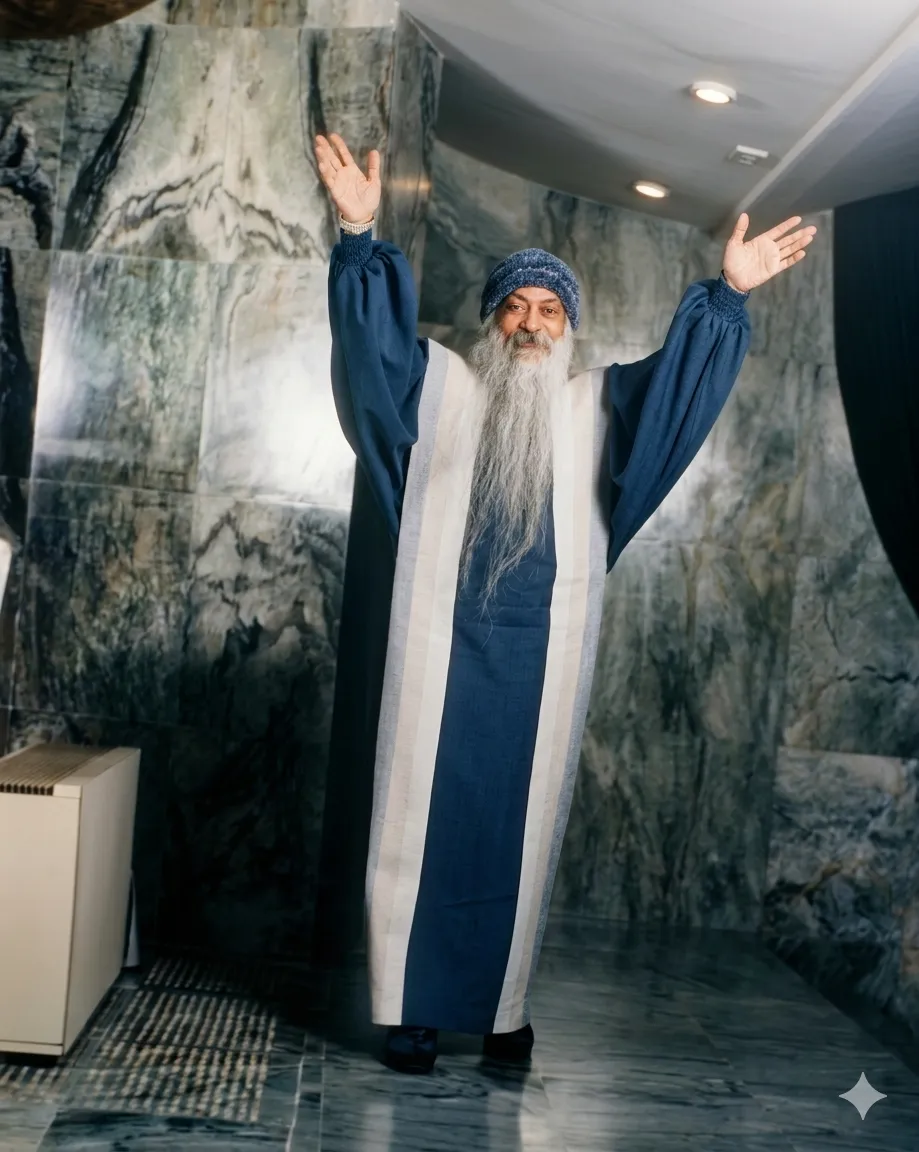
Real repentance means noticing you hurt someone, saying sorry to them, and becoming more aware so you don’t repeat it—no guilt trips or priests needed.
From the Discourses
Passages where Osho speaks to this question — each links to the complete discourse.
Question: BELOVED MASTER, WHAT IS TRUE REPENTANCE? ... Ramakrishna said, "That is the trouble: when you take the dip in the Ganges your sins jump out and sit on the trees, and they wait for you. How long can you remain in the water? The Ganges is really great and it does purify, but how long...? Finally, you will have to come out, and the moment you come out -- those sins are sitting on the trees, they jump on you. And sometimes it happens that somebody else's sins also jump on you -- just for a change they enjoy it. Those trees are full of sins. So you can go, but beware of the trees. The man said, "This is very difficult. How long can I remain in the water? Finally I have to come out, and I have to pass under those trees.
Osho, what is the most astonishing law in this world?
A Sufi story. A thief, at night, began to climb into a house through a window. The window frame gave way, he fell, and broke his leg. The next day he went to court and blamed the householder for his broken leg. The owner was summoned and said in his defense: The one responsible is the carpenter who made the window. The carpenter was called; he said the contractor who built the wall hadn’t made the windowed section strong enough. In his defense the contractor said: My mistake happened because of a woman who was passing by—she drew my attention away. When the woman was presented in court, she said: At that time I was wearing a very fine dress. Normally no one even looks at me. So the fault lies with the dress, which was so exquisitely sewn. The judge said: Then summon the tailor who sewed it; he…
पांचवां प्रश्न: ओशो, इस जगत में सर्वाधिक आश्चर्यजनक नियम कौन-सा है?
एक सूफी कहानी। एक चोर रात के समय किसी मकान की खिड़की में से भीतर जाने लगा, कि खिड़की की चौखट टूट जाने से गिर पड़ा और उसकी टांग टूट गयी। अगले दिन उसने अदालत में जाकर अपनी टांग के टूटने का दोष उस मकान के मालिक पर लगाया। मकान-मालिक को बुलाकर पूछा गया, तो उसने अपनी सफाई में कहा: इसका जिम्मेदार वह बढ़ई है, जिसने कि खिड़की बनायी। बढ़ई को बुलाया गया, तो उसने कहा कि मकान बनाने वाले ठेकेदार ने दीवार का खिड़की वाला हिस्सा मजबूती से नहीं बनाया था। ठेकेदार ने अपनी सफाई में कहा: मुझसे यह गलती एक औरत की वजह से हुई, जो वहां से गुजर रही थी। उसने मेरा ध्यान अपनी तरफ खींच लिया था। जब उस औरत को अदालत में पेश किया गया, तो उसने कहा: उस समय मैंने बहुत बढ़िया लिबास पहन रखा था। आमतौर पर मेरी तरफ किसी की नजर उठती नहीं है। …
Question: First question: Osho, isn’t prayer nothing but repentance? ... Prayer is spontaneous. From within you a quiver of joy rises and spreads across worlds and horizons. From within you a feeling of bliss arises and you start dancing. A sense of supreme blessedness—that in this vast mystery, this existence, I too am! I—whose being was never necessary. I—without whom the world would run perfectly well—perhaps even better. I—who have no worthiness. And yet I am! In this incomparable existence, there is a place for me too! I am blessed. I am grateful. One who bows down in such gratitude, as branches laden with fruit bend down—one who is laden with the fruits of gratitude and whose branches have bent, bowed by the weight of blossoms—not because of any set, well-worn prayer, but from his own direct experience—in that bowing a stream of nectar will flow.
प्रार्थना तो सहज स्फूर्त है। तुम्हारे भीतर से एक आनंद की पुलक उठे और व्याप्त हो जाए लोक-लोकांत में, दिग-दिगांत में। तुम्हारे भीतर से एक आनंद-भाव उठे और तुम नृत्य कर उठो। परम धन्यता का बोध--कि इस विराट रहस्य में, अस्तित्व में, मैं भी हूं! मैं--जिसके होने की कोई भी जरूरत न थी। मैं--जिसके बिना जगत भलीभांति चलता। शायद ज्यादा भलीभांति चलता। मैं--जिसकी कोई पात्रता नहीं है। मैं भी हूं! इस अपूर्व अस्तित्व में मेरी भी जगह है! मैं धन्यभागी हूं। मैं कृतज्ञ हूं। ऐसी कृतज्ञता में जो झुक गया है, जैसे फलों से लद गई वृक्ष की शाखाएं झुक जाती हैं, ऐसे कृतज्ञता के फलों से जो लद गया है और जिसकी शाखाएं झुक गई हैं, फूलों के भार से जो झुक गया है--किसी बंधी-बंधाई, पिटी-पिटाई प्रार्थना के कारण नहीं, बल्कि अपनी निज की अनुभूति के कारण--तो उस झुकने में रसधार बहेगी। उस झुकने में परमात्मा से मिलन होगा। उस झुकने में प्यास बुझेगी।
Osho, in almost all the so‑called religions, especially Christianity, atonement is regarded as a great religious virtue. But yesterday you said that atonement is simply anger standing on its head. Please say more in this context!
She said, “Tell them what! It’s been three hours. Do you think I remember what started it? Was I sitting with a notebook? One thing led to another, and now we’re God‑knows‑where. So what of it!” This “remorse” is simply reinstalling the ego’s statue. The ego fell—once again you did what you had resolved not to do. How to enthrone the statue again? Atonement is the art of reinstalling the idol: “All right—let’s repent, let’s atone. We are very, very sorry.” But even in that sorrow there is a web of ego. All religions have invented such devices. In Hinduism: go bathe in the Ganga. It’s convenient. Why repent every day? Every few years, or when the Kumbha Mela comes in twelve years, take one dip—twelve years wiped clean! Now write freely again on the slate—abuse and all, whatever you fancy. Begin again with Sri Ganeshaya Namah. And why worry?…
तीसरा प्रश्न: ओशो, प्रायः सभी तथाकथित धर्मों में, खासकर ईसाइयत में, प्रायश्चित्त को बड़ा धार्मिक गुण माना जाता है। किंतु कल आपने बताया कि प्रायश्चित्त क्रोध का ही शीर्षासन करता हुआ रूप है। कृपा करके इस संदर्भ में आगे कुछ और कहें!
फजलू की मां ने कहा, क्या खाक बता दूं! तीन घंटे हो गए, मुझे क्या अब खयाल रहा कि किस बात से बात शुरू हुई थी! कोई नोट बुक लेकर बैठी हूं? बात में से बात निकलती गई, निकलती गई, अब कहां के कहां आ गए, अब उसका क्या! यह जो पश्चात्ताप होता है, यह अहंकार को पुनर्स्थापित करना है। गिर गया अहंकार, फिर वही भूल कर दी जो नहीं करने का तय किया था। अब इस प्रतिमा को कैसे विराजमान करें? तो पश्चात्ताप कला है प्रतिमा को वापस विराजमान करने की, कि लो भई पश्चात्ताप किए लेते हैं, प्रायश्चित्त किए लेते हैं। हम दुखी हैं, बहुत दुखी हैं। मगर उस दुख में भी जाल अहंकार का है। सभी धर्मों ने ये तरकीबें खोजीं। हिंदू धर्म में गंगा-स्नान कर आओ। यह ज्यादा सुविधापूर्ण तरकीब है। रोज-रोज क्या पश्चात्ताप करना, दो-चार साल में या बारह साल में जब कुंभ भरे, तो एक डुबकी मार आए। बारह साल का मामला खतम, फिर स्लेट खाली; अब दिल खोल कर फिर लिखो जो लिखना हो, गाली-गलौज, जो-जो मरजी आए। श्री गणेशाय नमः फिर से करो। और डर क्या है! …
Question: THE BUDDHA SAID: IF A MAN WHO HAS COMMITTED MANY A MISDEMEANOUR DOES NOT REPENT AND CLEANSE HIS HEART OF THE EVIL, RETRIBUTION WILL COME UPON HIS PERSON AS SURE AS THE STREAMS RUN INTO THE OCEAN WHICH BECOMES EVER DEEPER AND WIDER. IF A MAN WHO HAS COMMITTED A MISDEMEANOUR COME TO THE KNOWLEDGE OF IT, REFORM HIMSELF AND PRACTISE GOODNESS, THE FORCE OF RETRIBUTION WILL GRADUALLY EXHAUST ITSELF AS A DISEASE GRADUALLY LOSES ITS BANEFUL INFLUENCE WHEN THE PATIENT PERSPIRES. THE BUDDHA SAID: WHEN AN EVIL-DOER, SEEING YOU PRACTISE GOODNESS, COMES AND MALICIOUSLY INSULTS YOU, YOU SHOULD PATIENTLY ENDURE IT AND NOT FEEL ANGRY WITH HIM. FOR THE EVIL-DOER IS INSULTING HIMSELF BY TRYING TO INSULT YOU. THE BUDDHA SAID: ONCE A MAN CAME UNTO ME AND DENOUNCED ME ON ACCOUNT OF MY OBSERVING THE WAY AND PRACTISING GREAT LOVING KINDNESS.