
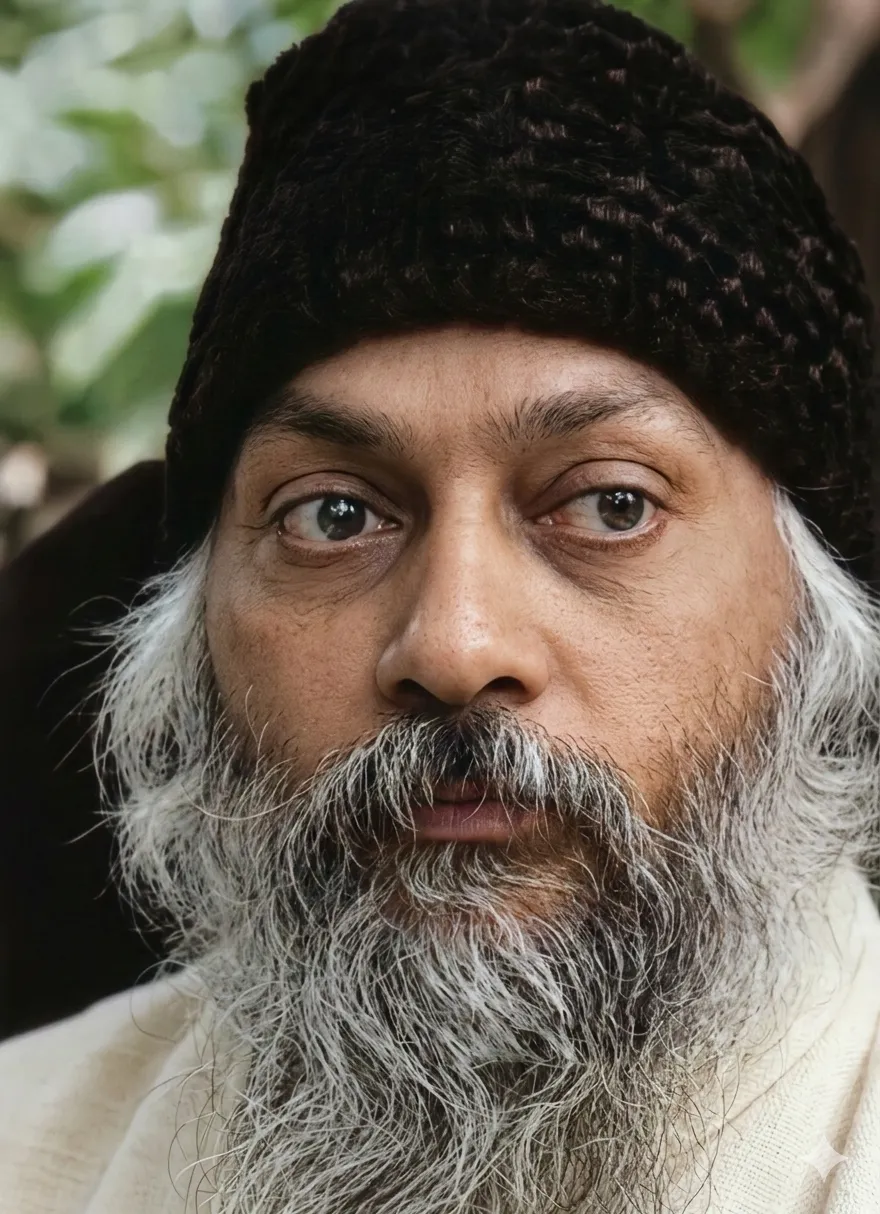
Giving doesn’t run out because it comes from the big Source of life; when you stop clinging and stay open, more flows in to share.
From the Discourses
Passages where Osho speaks to this question — each links to the complete discourse.
Beloved Osho, what is the source of your infinite spring of giving?
Beware! While the time is there, give, give as much as you can, give whatsoever you can. Sing a song, share a joke, dance! Give whatsoever you can give. It costs you nothing, but it will bring you more and more joys. Existence goes on repaying you tremendously. Whatsoever you give to existence, it returns a thousandfold; it comes back to you. You give one flower, and a thousand flowers shower on you. Don't be clingers. If you really want to be rich, if you want to have an enriched inner world, then learn the art of giving. THOSE WHO DARE GIVE NOTHING ARE LEFT WITH LESS THAN NOTHING; DEAR HEART, YOU GIVE ME EVERYTHING, WHICH LEAVES YOU MORE THAN EVERYTHING -- THOUGH THOSE WHO DARE GIVE NOTHING MIGHT JUDGE IT LEFT YOU NOTHING. GIVING YOU EVERYTHING, I TOO, WHO ONCE HAD NOTHING, AM LEFT WITH MORE THAN EVERYTHING AS…
We all have become such wells. In the eyes of Yoga, we are rotting wells, not the alive wells that take from the ocean and give it back to the ocean. Those who come to the well for water in their small pots are nothing but mediums for the ocean. They will send it back up to the ocean and the well will become fresher and fresher. Yoga's saying is amazing, that if one gives as much as he takes, then he is that much alive. The more one takes and the more one returns, in the same proportion one becomes the center of more life-energy, the more thrill, the more dance, the more intensity of life manifests in him. Consider Krishna or Buddha, Mahavira or Christ -- what is the reason that they seem to be full of such enormous life-energy?
Osho! Revered Daddaji has, since my childhood, treated me as his own, showering unreserved affection and inspiration. Amid a heap of memories, his sense of kinship with all, childlike love, readiness to give everything away, and a presence that filled the whole atmosphere with joy kept filling me within, and filling me. Every day, on one pretext or another, he would say to me: “Apna hai kya—lutaao! What is there that is ours—give it away!” Please kindly tell us the purport of this dear saying.
Narendra! That is precisely the fundamental meaning of sannyas: “What is there that is ours?—Give it away!” Whoever takes anything to be “mine” has built the world. And whoever builds the world for himself forges his own prison, casts his own chains. Our chains are cast from mine-and-thine—this is mine, that is yours; here is the boundary of mine, there the boundary of yours. All our boundaries become prisons—chains on our hands and feet. And the more we become entangled in “mine,” the more miserly we become, the more stingy. And the Divine can never be available to a miser. Why not? Because to attain the Divine there is one condition a miser cannot fulfill—and that condition is love. A miser simply cannot love; for the miser, love is impossible. He fears that if he loves someone, he will have to drop the feeling of mine-and-thine. What else is love?…
दूसरा प्रश्न: ओशो! पूज्य दद्दाजी मुझे बचपन से ही अपना जान कर, उन्मुक्त स्नेह और प्रेरणा देते रहे हैं। ढेर सारी स्मृतियों के बीच उनका सबके प्रति अपनापन, बालवत प्रेम, सब कुछ लुटा देने की तत्परता और सारे वातावरण को आनंद से भर देने वाला रूप मेरे भीतर भरता गया, भरता गया। वे मुझसे रोज किसी न किसी बहाने कहते थे: अपना है क्या--लुटाओ! अपना है क्या--लुटाओ! उनके इस प्यारे वचन का आशय कृपा करके हमें कहें।
नरेंद्र! संन्यास का यही तो मौलिक अर्थ है: अपना है क्या--लुटाओ! जिसने कुछ अपना माना उसने संसार बसाया। जिसने संसार बसाया उसने अपने लिए कारागृह बनाया, अपनी जंजीरें ढाल लीं। हमारी जंजीरें मेरे-तेरे से बनी हैं--यह मेरा, वह तेरा; यह मेरे की सीमा, वह तेरे की सीमा। हमारी सब सीमाएं कारागृह बन जाती हैं; हाथों में, पैरों में जंजीरें बन जाती हैं। और जितना ही हम मेरे में जकड़ते जाते हैं उतने ही कृपण होते जाते हैं, उतने ही कंजूस होते जाते हैं।
Question: BELOVED OSHO, OF THE BESTOWING VIRTUE PART 1 TELL ME: HOW DID GOLD COME TO HAVE THE HIGHEST VALUE? BECAUSE IT IS UNCOMMON AND USELESS AND SHINING AND MELLOW IN LUSTRE; IT ALWAYS BESTOWS ITSELF. ONLY AS AN IMAGE OF THE HIGHEST VIRTUE DID GOLD COME TO HAVE THE HIGHEST VALUE. GOLD-LIKE GLEAMS THE GLANCE OF THE GIVER.... THE HIGHEST VIRTUE IS UNCOMMON AND USELESS, IT IS SHINING AND MELLOW IN LUSTRE: THE HIGHEST VIRTUE IS A BESTOWING VIRTUE. TRULY, I DIVINE YOU WELL, MY DISCIPLES, YOU ASPIRE TO THE BESTOWING VIRTUE, AS I DO.... YOU THIRST TO BECOME SACRIFICES AND GIFTS YOURSELVES; AND THAT IS WHY YOU THIRST TO HEAP UP ALL RICHES IN YOUR SOUL. YOUR SOUL ASPIRES INSATIABLY AFTER TREASURES AND JEWELS, BECAUSE YOUR VIRTUE IS INSATIABLE IN WANTING TO GIVE.
However huge the treasury — whether Kubera’s or Solomon’s — if we take out ten paise, the chest is not what it was; it is less. And however great the hoard, if we add ten cowries, it is no longer what it was; it is more. But the sutra says: from the Whole, the whole emerges — not a little — we do not remove ten paise, we take out the whole treasury — from the Whole, the whole is brought forth — and still the Whole remains. Either a madman said it, one who knows nothing of math — a first-grader knows that if we take something out, there will be a deficit. If we take it all out, nothing should remain. But this sutra says: no — the whole still remains.
इस महावाक्य में बड़ी अजीब बातें कही गई हैं, हायर मैथमेटिक्स की। कहा है कि पूर्ण से पूर्ण निकल आता है, फिर भी पीछे पूर्ण शेष रह जाता है। साधारण गणित के हिसाब से बिलकुल गलत बात है। अगर हम किसी भी चीज में से कुछ निकाल लेंगे, तो उतना ही शेष नहीं रह सकता जितना था। कुछ कम हो जाएगा। हो ही जाना चाहिए; अन्यथा हमारे निकाले हुए का क्या हुआ? अगर मैं एक तिजोरी में से दस रुपए निकाल लूं, उसमें अरबों रुपए भरे हों, तो भी कम हो गए। दस पैसे भी निकाल लूं, तो भी कम हो गए। उतना ही शेष नहीं रह सकता जितना पहले था। कितनी ही बड़ी तिजोरी हो--कुबेर का खजाना हो कि सोलोमन का--अगर दस नए पैसे भी हमने उसमें से निकाले, तो अब तिजोरी उतनी ही नहीं है जितनी थी, कुछ कम हो गई। और कितना ही बड़ा खजाना हो, अगर हम दस कौड़ी भी उसमें डाल दें, तो अब उतनी ही नहीं रही जितनी थी। कुछ जुड़ गई और ज्यादा हो गई। …