
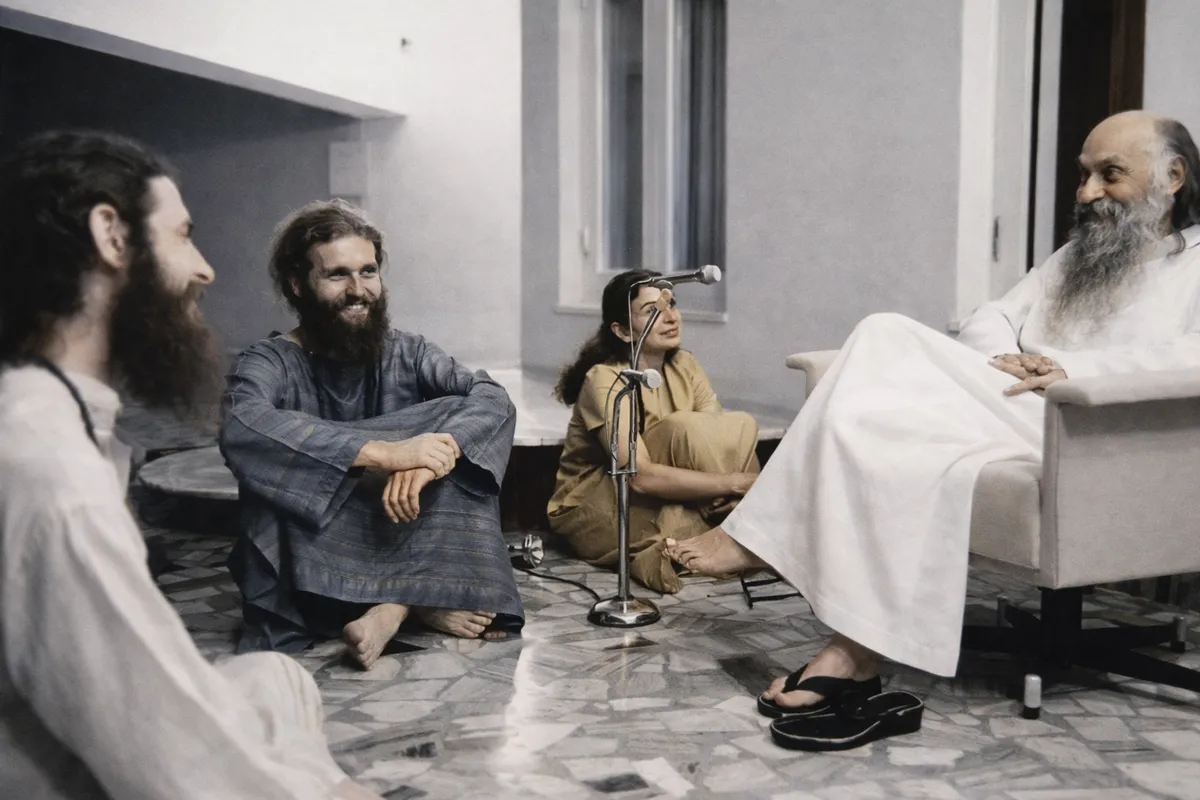
They share ancient wisdom publicly to gently change the West from chasing things and violence to inner peace and understanding.
From the Discourses
Passages where Osho speaks to this question — each links to the complete discourse.
Osho, why have you chosen this dead country as the field of your work?
Precisely for that! Because it is dead, it must be revived. What is the point of reviving those who are already alive? One treats the sick, not the healthy. This country is dead, and has been dead for centuries. It must be breathed back to life. And this country is a precious one. It ought not be dead. Its deadness is a costly loss. This country must live. It must be rejuvenated, for it holds a great treasure. If it is reawakened, light will spread to the whole world. But the country lies dead. It lies like a corpse upon its own treasure. It neither benefits from that wealth itself, nor allows anyone else to benefit from it. Life must be breathed into this corpse; it must be awakened—because no other land holds such a treasury. That is exactly my predicament. This country is dead, yet it holds a vast…
आखिरी प्रश्न: ओशो, इस मुर्दा देश को क्यों आपने अपने कार्यक्षेत्र की तरह चुना है?
इसीलिए! मुर्दा है, सो जिलाना है। जो जी रहे हैं, उन्हें क्या जिलाना? बीमार की चिकित्सा करनी होती है, स्वस्थ की तो नहीं! यह देश मुर्दा है, और सदियों से मुर्दा है। और इसको पुनः प्राण देने हैं। और यह देश मूल्यवान देश है। यह मुर्दा नहीं होना चाहिए। इसका मुर्दा होना महंगा सौदा है। यह देश जीवित होना ही चाहिए। पुनरुज्जीवित होना ही चाहिए, क्योंकि इस देश के पास एक बड़ी संपदा है। यह अगर पुनरुज्जीवित हो जाए, तो सारे जगत को रोशनी मिले। मगर यह देश मुर्दा पड़ा है। यह अपनी संपदा के ऊपर लाश होकर लेटा है। न यह खुद लाभ ले रहा है उस संपदा का, न किसी और को लाभ दे रहा है उस संपदा का। इस मुर्दे में प्राण फूंकने हैं, इसे जगाना है। क्योंकि इतनी बड़ी संपदा किसी और देश के पास नहीं है। यही मेरी मुसीबत है।
Osho, your words suggest that the coming ten years will be highly critical, catastrophic, and decisive for humankind. And perhaps your arrival is related to ensuring that, in the face of this impending calamity, humanity suffers the least possible harm and the core values of culture and religion are preserved as much as possible. Will you guide us in this direction?
Friends come to me and say, “Why don’t you do something so that ashes appear from your hand? Millions will come.” But they would be the wrong millions. Millions would come, but millions would be wrong. And among those millions, the few who are rightly close to me would be lost, they would be distracted. For those who are rightly close to me would not be able to survive before that crowd—the crowd would surge ahead. It would be a crowd of the ambitious, a crowd of the insane. Those who gather to see ash falling from a hand are mad; they should be in an asylum. They are diseased. And once you invite the diseased, they will not let the healthy remain. Economics has a simple rule: counterfeit coins drive genuine coins out of circulation. If there is a fake rupee in your pocket, you will try to spend…
प्रश्न: ओशो, आपके वचनों से संकेत मिलता है कि आने वाले दस वर्ष मनुष्य-जाति के लिए बहुत संकटपूर्ण, सांघातिक और निर्णायक होने वाले हैं। और आपका आगमन भी शायद इस बात से संबंधित है कि इस आसन्न विपदा से मनुष्य को कम से कम क्षति हो तथा संस्कृति और धर्म के मूल्यों को अधिक से अधिक बचाया जाए। इस दिशा में क्या हमारा मार्ग-दर्शन आप करेंगे?
मित्र हैं मेरे पास, जो कहते हैं कि आप कुछ ऐसा क्यों नहीं करते कि हाथ से भस्म पैदा हो जाए? लाखों लोग आ जाएंगे। लेकिन वे गलत होंगे। लाखों आ जाएंगे, लेकिन लाखों ही गलत होंगे। और उन लाखों की भीड़ में जो ठीक थोड़े से मेरे पास हैं, वे भटक जाएंगे, वे खो जाएंगे। क्योंकि जो ठीक मेरे पास हैं, वे उस लाखों की भीड़ में आगे न टिक पाएंगे, वह भीड़ आगे आ जाएगी। क्योंकि वह महत्वाकांक्षियों की भीड़ होगी, वह पागलों की भीड़ होगी। वह जो राख हाथ से गिरती देखकर इकट्ठे होते हैं, वे पागल हैं, उनको पागलखाने में होना चाहिए था। रोगग्रस्त हैं। और एक बार रोगी को बुला लो, तो फिर स्वस्थ को वह वहां नहीं टिकने देगा।
I am not in search of another world, something that is beyond death; my effort is to transform this moment now and here into paradise. I am not for postponement. All those people who have been saying "If you are virtuous after death you will be rewarded," are being deceptive because who knows what happens after death? Nobody comes back to tell us. These people who are telling us have not known anything. They are just repeating like parrots. I say to my sannyasins never postpone -- postponement is a very subtle trick of the mind. Live the moment in its totality. Always remember this is the only moment yon have got, there is no other moment, there is no other world. This world is god, there is no other god. Once this vision settles in you it transforms your whole life.
Why is the west becoming more and more interested in meditation? And also, why is the east losing interest in its own spiritual treasures?
After a time, penniless but still submissive to the decrees from one high, he landed in the county poorhouse. One day the overseer sent him out to plow a potato field. A thunderstrom came up but was passing over when, without warning, a bolt of lightning descended from the sky. It melted the plowshare, stripped most of his clothing from him, singed off his beard, branded his naked back with the initials of a neighbouring cowman, and hurled him through a barbed wire fence. When he recovered consciousness he got slowly to his knees, clasped his hands and raised his eyes towards heaven. Then, for the first time, he asserted himself: "Lord," he said, "this is getting to be plumb ridiculous!" This is the situation of the East: "This is getting to be plumb ridiculous!" But the East goes on thanking God, goes on feeling grateful. There is nothing to…
Osho, for centuries Indians have been enslaved and poor, and as a result suffer from a terrible sense of inferiority, blindly imitating the West. Isn’t this imitation unhealthy? And shouldn’t they find their own path and destination themselves? In this context, what guidance will you give us?
Mahatma Gandhi gave the poor a new name—Daridra Narayan, “God in the form of the poor.” If the poor are Narayan, how can poverty be eradicated? Will you eliminate Narayan? Narayan is to be worshiped. Install the poor in temples, worship them! Blessed is he who is poor! He called untouchables “Harijan,” people of God. We are clever with words. Once, “Harijan” meant those who had realized God; Gandhi applied it to bhangis and chamars. God is unknown—but we have His “people”! The word untouchable at least contained a sting, a pain. Harijan is syrup over poison—easy to swallow. Now being Harijan even feels good! Should poverty be eradicated, or worshiped? If they are Daridra Narayan—then build temples! Tagore said: My God is where the laborer breaks stone; my God is where the farmer, under the blazing sun, sows his field. Fine—then the more who break stones by the roadside,…
पहला प्रश्न: ओशो, भारत के लोग सदियों से गुलाम और गरीब रहने के कारण भयानक हीनता के भाव से पीड़ित हैं, और इसलिए पश्चिम का अंधानुकरण कर रहे हैं। क्या यह अंधानुकरण अस्वस्थ नहीं है? और क्या उन्हें अपना मार्ग और गंतव्य स्वयं ही नहीं ढूंढना चाहिए? इस संदर्भ में आप हमें क्या मार्गदर्शन देंगे?
महात्मा गांधी दरिद्रों को नया नाम दे गए--दरिद्रनारायण। अब जब दरिद्र नारायण हो तो दरिद्र को मिटाना कैसे? नारायण को मिटाओगे क्या? नारायण की तो पूजा होती है। मंदिर में स्थापित करो गरीब को, पूजा करो इसकी! धन्यभागी है, गरीब है! अछूतों को हरिजन कह गए। हम तो शब्दों में बड़े होशियार हो गए हैं। कहां तो हम हरिजन कहते थे उन लोगों को जिन्होंने परमात्मा को पा लिया और कहां महात्मा गांधी भंगी-चमारों को हरिजन कह गए। हरि को तो जाना नहीं और हरिजन हो गए! इससे तो अछूत शब्द अच्छा था। उसमें दंश था, पीड़ा थी। हरिजन शब्द तो बड़ा मिठास भरा हो गया। भीतर जहर है, ऊपर थोड़ी-सी चासनी है। अब गटक जाओ। अब तो हरिजन होने में बड़ा मजा आ गया!