
The door means waking up inside so you can go from feeling lost to feeling at home in yourself.
From the Discourses
Passages where Osho speaks to this question — each links to the complete discourse.
The lover went to the desert. Months passed, years passed, and ultimately he attained what was expected of him. He came back, knocked on the same door. The same voice asked the same question "Who art thou?" Now he laughed and said "I am no more -- only you are," and the doors were opened for him. The doors of love open only when you can say "I am not -- only you are." Martin Buber has written a famous book, I AND THOU, and he says that prayer is a dialogue between I and thou; he is utterly wrong. Prayer is not a dialogue between I and thou; prayer is a surrender of the I to the thou. It is not a dialogue. The I simply disappears into the thou.
Beloved master, I am standing before a door on which is written: mysteries of existence. I open it and find myself at your feet. Looking deep into your eyes, I see that suddenly the door is there again. I open it and once more, I am here at your feet. Beloved master, how do you manage to be both the door and the mystery on either side?
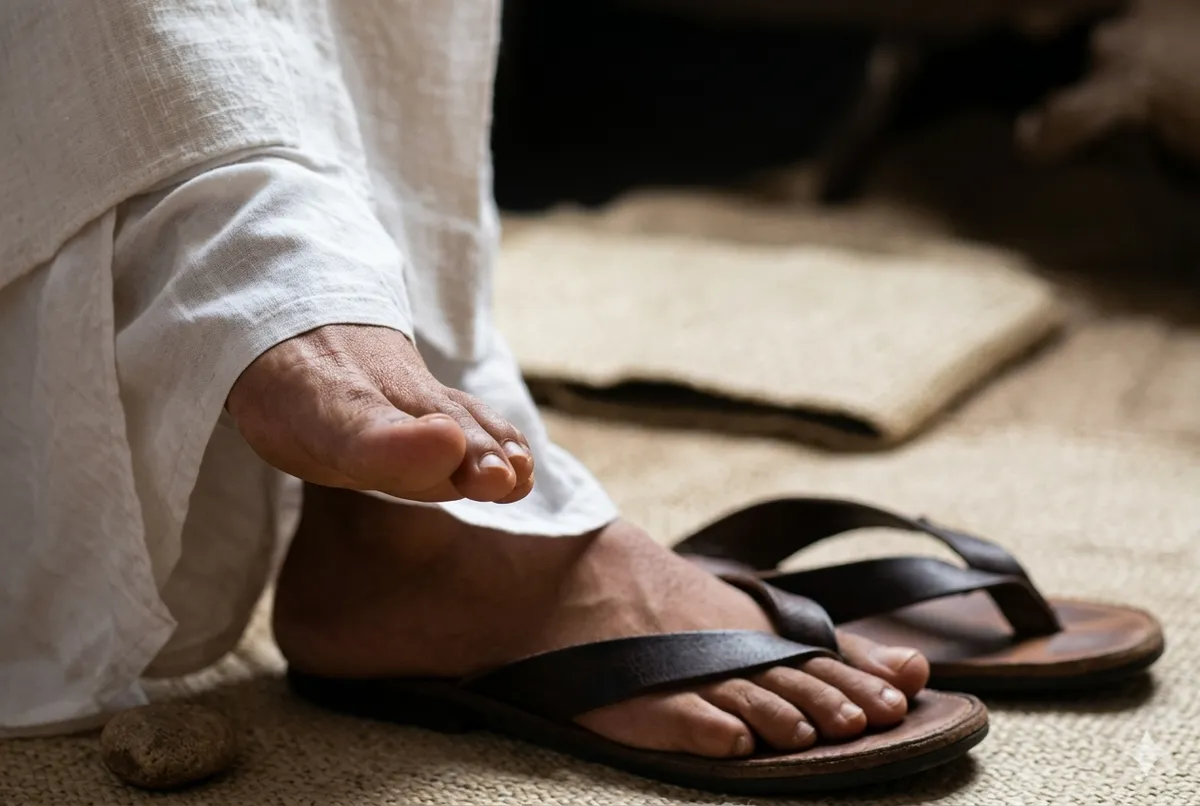
If the master touches the head of the disciple, that is immensely important, but very esoteric because that creates a circle of energy: from his hands the energy is flowing into the disciple, from his feet the energy is flowing into the disciple. The disciple is almost flooded with the master's being, his ecstasy. The West has missed a tremendously significant experience. In the West to touch somebody's feet looks humiliating, disrespectful. In the East if the master moves his feet and does not allow you to touch his feet that means you are not prepared, you are not open; the energy cannot move in you. And the master, encompassing the disciple from both ends, turns the wheel of his life to new dimensions. So it does not matter, Milarepa, whether it is the feet or the eyes, or just the remembrance or just the heart throbbing with love and…
Osho, in a letter you wrote: Do not remain in indecision; do not look back. The temple doors are wide open. After thousands of years such an opportunity descends upon the earth. And know that these doors will not remain open forever. It can be missed easily. Therefore I keep calling: come and enter! I stand at the door, knocking and knocking. And I knock because in some other birth and another age I had given a promise.
At night a chariot arrived. The sound of wheels at the door. In his sleep the head priest felt, He has come. He said, Listen, does anyone hear a chariot? The other priests said, Stop this nonsense. All day you plagued us; will you not stop now? Your head has gone bad. No chariot is coming; it is thunder. They went to sleep. Then someone alighted from the chariot, climbed the steps, knocked at the door. One of the priests muttered in his sleep, Seems someone is knocking. The suspicion was there, the mind wavered—perhaps the dream was true! The chief priest said, This is the limit! It isn’t only I who am entangled in dreams—you are too. It’s just a gust of wind rattling the door. Who will knock at midnight? And is God a thief, to come at midnight? God comes in broad daylight, under the sun. Now…
प्रश्न: ओशो, आपने एक पत्र में लिखा है: असमंजस में न रहो, पीछे मत देखो। मंदिर के द्वार पूरे खुले हैं। हजारों साल के बाद ऐसा अवसर पृथ्वी पर उतरता है। और जान लो कि ये द्वार सदा खुले नहीं रहेंगे। आसानी से यह अवसर खो भी सकता है। इसलिए मैं बार-बार पुकार रहा हूं, आओ और प्रवेश करो! मैं दरवाजे पर खड़ा दस्तक पर दस्तक दे रहा हूं। और दस्तक इसलिए देता हूं कि किसी अन्य जन्म में और अन्य युग में मैंने वचन दिया था।
रात रथ आया, द्वार पर रथ की आवाज सुनाई पड़ी, बड़े पुजारी को नींद में लगा कि आ गया, देवता आ रहा है। उसने कहा, सुनो, कोई रथ की आवाज सुनता है? दूसरे पुजारियों ने कहा, अब बंद भी करो बकवास। दिनभर सताया, अब भी पीछा कर रहे हो? तुम्हारा मस्तिष्क खराब हो गया, कोई रथ नहीं आ रहा, बादलों की गड़गड़ाहट है। फिर वे निश्चिंत सो गए। फिर रथ से कोई उतरा, सीढ़ियां कोई चढ़ा, द्वार पर किसी ने दस्तक दी। फिर किसी एक पुजारी को लगा कि कोई द्वार पर दस्तक दे रहा है। आशंका तो मन में छिपी थी, डांवाडोल तो मन था ही कि शायद कौन जाने सपना सही हो! फिर कोई नींद में बड़बड़ाया, उसने कहा कि लगता है, कोई द्वार पर दस्तक देता है। अब तो बड़े पुजारी ने भी कहा कि हद हो गई, मैं ही सपने में नहीं उलझा हूं, दूसरे भी उलझे हैं! यह हवा का झोंका है, जो दरवाजे को खटखटाता है। आधी रात कौन दरवाजे पर धक्का देने आएगा! और परमात्मा कोई चोर है कि आधी रात आए? भरे बाजार, उगे हुए दिन में, सूरज के नीचे परमात्मा आता है। अब चुपचाप सो जाओ और अब कुछ भी हो, कोई बीच में बाधा न डाले। सोने दोगे या न सोने दोगे?
Salih of qazwin taught his disciples: whoever knocks at the door continually, it will be opened to him. Rabiya, hearing him one day, said: how long will you say, it will be opened? The door has never been shut.
I am talking to YOU, otherwise what is the point of talking? And when I am talking to you, I look to your need. And the question is not: What is truth? The question is: If I say something to you, what are you going to do about it? If I say the door is not shut, you will stop knocking. That is the logical conclusion. If I say no methods are needed, you will drop methods, but then you will remain the same as you are. A man who has compassion has to think how others are going to react to his statements. The statement is not the point -- how you react to the statement is the point: what energy it creates in you, where it leads you. If that leads you towards truth, towards the door which is always open, then I will also say: Knock, and…
It can only open when it is connected with the sun it can only open when it can dance in the wind, it can only open when it can enjoy the shower of rain, when it can have a dialogue with the stars, It belongs to the whole; it can only open up in a deep rootedness with the whole. Man remains a bud, his blissfulness remains a bud for the simple reason that he is too concerned about security, concerned that he does not go into any danger, afraid of danger, insecurity, risk. So he keeps himself within a certain boundary and encloses himself in a protective wall. This is how he becomes a prisoner. Life can be lived only as insecurity, life can be lived only as danger -- there is no other way. The other possibility is only death. These are the two alternatives.