
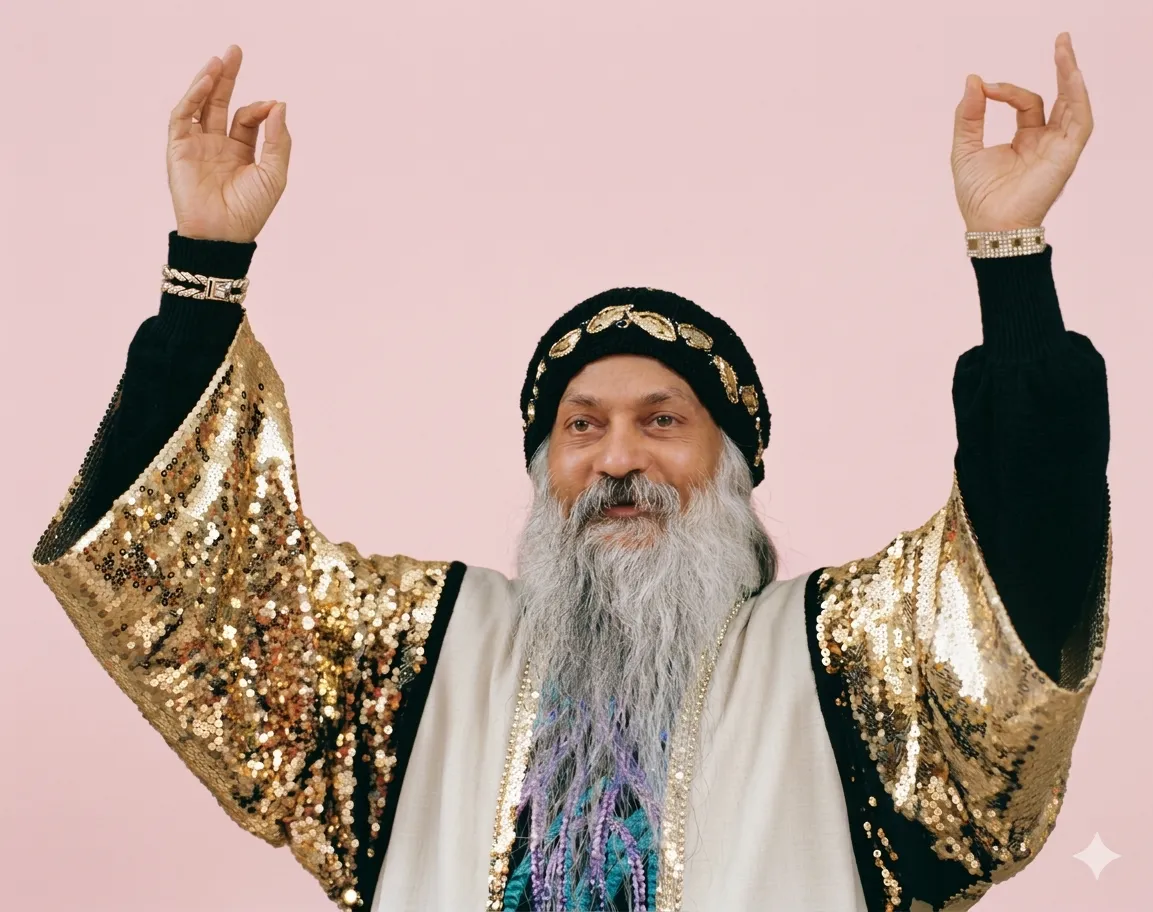
Meera loved so deeply that even pain turned into a happy dance, showing that real love sets you free.
From the Discourses
Passages where Osho speaks to this question — each links to the complete discourse.
And these deaths did one more fortunate task -- she was shown one thing, that everything in this universe is momentary. If the beloved is to be sought, seek in the eternal. Here nothing is yours. Don't go astray here, don't lead yourself astray. Here everything touched will go away. Here death, and death only, increases. This is a graveyard. Don't get any idea of dwelling here. No one has ever remained here. All that she'd seen with her own eyes... Thirty-three years old is not very old. She was young. So many deaths happened in her youth that the thorn of death showed her totally, clearly, that life is momentary. And then her mind turned away from all this. Turning away from this one can turn towards the divine. First Meera danced only at home, before her Krishna statue.
Osho! I set out to seek the Beloved; how is union with the Beloved attained?
Yog Neelam! The Beloved is not far. Not even so far that any meeting would be needed. There has only been forgetfulness, not separation. Separation cannot be. The Beloved abides within. He is the breath of our breath, the heartbeat of our heart. Without him we have no being. Because he is, we are. As the ocean is, so the waves are. The ocean can be without waves, but the waves cannot be without the ocean. Yet a wave can fall into a delusion—the delusion that “I am separate from the ocean.” In that very delusion, forgetfulness happens. Only forgetfulness happens; separation cannot. The whole search for the Beloved is nothing but remembrance—re-remembering. That is why the saints have called this search surati. Surati means remembrance, recollection. Surati is the folk form of the word smriti. What the Buddha called smriti, by the time of Kabir and Nanak became surati—dearer,…
पहला प्रश्न: ओशो! पिय को खोजन मैं चली, पिया मिलन कैसे हो?
योग नीलम! पिया दूर नहीं है। इतना भी दूर नहीं कि मिलन की भी जरूरत हो। सिर्फ विस्मरण हुआ है, विछोह नहीं। विछोह हो ही नहीं सकता। पिया तो भीतर विराजमान है। वही तो हमारी श्वासों की श्वास है। वही तो हमारे हृदय की धड़कन है। उसके बिना तो हमारा कोई होना नहीं है। वह है तो हम हैं। जैसे सागर है तो लहरें हैं। सागर तो बिना लहरों के हो सकता है, मगर लहरें बिना सागर के नहीं हो सकतीं। लेकिन लहर को एक भ्रांति हो सकती है--इस बात की भ्रांति कि मैं सागर से पृथक हूं। बस उसी भ्रांति में विस्मरण हो जाता है। विस्मरण ही होता है, विछोह तो हो सकता नहीं।
Osho, compared to Meera’s saying “Peevat Meera hansi re,” the far more wondrous saying is “Mharo desh Marwar,” for which reason I honor Meera more than other awakened ones. What do you say?
Prafulla Bharti, Surely Meera must have said: “Mharo desh Marwar!” Seeing the state of Marwar, seeing the condition of the Marwaris—“Blessed be the land of Marwar!” Meera must have been astonished, startled: “In such a land, and I was born here!” That itself is a miracle. Take it as God’s grace that in Marwar Meera should be born! In Marwar, quite a different kind of people are usually born. What has Marwar to do with Meera? Elsewhere it would have fit; but she was born in Marwar! Startled, she must have exclaimed: “Mharo desh Marwar!” Prafulla Bharti, are you a Marwari, that this delights your heart so much? A certain poet arrived at the house of Seth Dhaniramji, a literature-loving Marwari merchant. He sent in his collection of poems and waited for the outcome. Dhaniramji read a few pages and ordered his servant, “Tell the accountant to give the poet…
दूसरा प्रश्न: ओशो, मीरा के इस वचन ‘पीवत मीरा हांसी रे’, से कई गुना अदभुत वचन तो यह है--‘म्हारो देश मारवाड़’--जिसके कारण मेरे हृदय में अन्य जाग्रत व्यक्तियों की अपेक्षा मीरा का अधिक सम्मान है। आप क्या कहते हैं?
प्रफुल्ल भारती, जरूर मीरा ने कहा होगा: म्हारो देश मारवाड़! देख कर मारवाड़ की हालत, देख कर मारवाड़ियों की हालत कि धन्य रे देश मारवाड़! चकित हुई होगी मीरा, चौंकी होगी, कि ऐसे देश में भी और मैं पैदा हो गई! यह चमत्कार ही है। यह प्रभु की कृपा ही समझो कि मारवाड़ और मीरा पैदा हो जाए! मारवाड़ में तो और ही तरह के लोग पैदा होते हैं। मारवाड़ का मीरा से क्या लेना-देना? और कहीं होती तो चलती। मारवाड़ में पैदा हो गई! चौंक कर कहा होगा: म्हारो देश मारवाड़! प्रफुल्ल भारती, तुम क्या मारवाड़ी हो, जो तुम्हें यह बात हृदय को बहुत प्रसन्न करती है? एक कवि महोदय साहित्य-प्रेमी मारवाड़ी सेठ धनीराम जी के घर पहुंचे। काव्य-संग्रह अंदर भिजवा कर वे परिणाम की प्रतीक्षा करने लगे। धनीराम जी ने कुछ पृष्ठ पढ़े और नौकर को हुक्म दिया, मुनीम जी से कहो, तुरंत पचास रुपये कविजी को दे दें। नौकर अभी कुछ कदम बढ़ा ही था कि धनीराम जी ने फिर आवाज दी, रुको, सौ रुपये देना। फिर कुछ पृष्ठ और पढ़ कर चिल्लाए, पूरे डेढ़ सौ देना। …
Osho, you are my indwelling one. Will songs of love like Meera’s and Chaitanya’s burst forth in my heart? Will I be able to dance in mad ecstasy like them?
When I begged alms from the deity of silence, I received honey-brimming chalices of sound—resounding verse! He whose halo is lord of day and night— whenever I beheld him, my eyes closed of themselves. When the trident-bearer dances, mad with ecstasy, flowers of virtue, restraint, and sadhana shower down. Beads of sweat—science; the dust of his feet—the dignity of knowledge; servant, yogi, ascetic—each longs for him. Opposites reconciled—such are his two feet; their shade is a maya beyond even supreme knowing. Softer than clay is his tender heart; adamantine the cosmos, golden the radiance of his body. The two strings of breath are attraction and repulsion; in sleep he dreams the creation of a hundred universes; on motionless eyelids the play of worlds sports, in keen wakefulness roars the dread dissolution. Beg alms from such a god of silence, and you receive honey-brimming chalices of sound—resounding verse! He whose halo…
चौथा प्रश्न: ओशो, आप मेरे अंतर्यामी हैं। क्या मेरे हृदय में मीरा और चैतन्य के से प्रेम के गीत फूटेंगे? क्या उनकी तरह मैं पागल होकर नाच सकूंगा।
वज्रदृढ़ ब्रह्मांड कांचनकांति काया! श्वास के दो तार आकर्षण-विकर्षण नींद में शत सृष्टियों का स्वप्न-सर्जन, अचल पलकों पर विक्रीडित लोक लीला प्रखर जागृति में प्रलय का घोर गर्जन! मौन ऐसे देवता से भीख मांगो, नाद के मधुकलश मुखरित छंद पाए!
Osho, where the wise extol freedom, release or moksha, the devotee sings songs of celebration and joy. Why is it so?
The devotee sings drunk with ecstasy. The devotee’s language is different. His quest is celebration, bliss; not freedom, not moksha. The devotee says: keep your moksha—I do not want it. Let me have your darshan. “These eyes thirst for the Beloved’s sight!” Let me behold you, let there be touch and seeing. I need nothing more. Keep your moksha; for me, the bond of your love is enough. Bind me in a thousand bonds—let your arms encircle me. Let me live in your embrace. Let me hold your feet. Do not take these feet away from me. That is enough for me. The devotee’s search is different—it is a search for love, for bliss, for celebration. When the event happens in a devotee’s life—it is the same event—but the first thing he sees is bliss. Freedom comes like a shadow, following behind. It comes—both come together; they are two names…
तीसरा प्रश्न: ओशो, जहां ज्ञानी स्वतंत्रता, मुक्ति या मोक्ष की महिमा बखानते हैं, वहां भक्त उत्सव और आनंद के गीत गाते हैं। ऐसा क्यों है?
मस्त-मगन होकर, मस्ती में डूब कर भक्त गाता है। भक्त की भाषा अलग। भक्त की खोज उत्सव है, आनंद है। स्वतंत्रता नहीं, मोक्ष नहीं। भक्त तो कहता है: मोक्ष तुम अपने पास रखो, मुझे चाहिए नहीं; मुझे तो तुम्हारे दर्शन मिल जाएं। हरिदर्शन की प्यासी अखियां! बस मैं तो तुम्हारे दर्शन पा लूं। दरस-परस हो जाए। इससे ज्यादा मुझे कुछ चाहिए नहीं। तुम्हारा मोक्ष तुम जानो। मुझे तो तुम्हारे प्रेम का बंधन पर्याप्त है। तुम मुझे हजार-हजार बंधनों में बांधे रहो। तुम्हारी बाहें मुझे घेरे रहें। मैं तुम्हारे आलिंगन में रहूं। मैं तुम्हारे चरणों को पकड़े रहूं। ये चरण मुझसे मत छीनना। बस मेरे लिए पर्याप्त है। भक्त की खोज बड़ी और है--प्रेम की खोज है; आनंद की खोज है; महोत्सव की खोज है। तो जब भक्त के जीवन में वह घटना घटती है, वह घटना एक ही है; मगर जब भक्त के जीवन में घटती है तो उसे पहले दिखाई पड़ता है आनंद। स्वतंत्रता आती है, छाया की तरह। स्वतंत्रता आती है, पीछे-पीछे सरकती आनंद के। …