
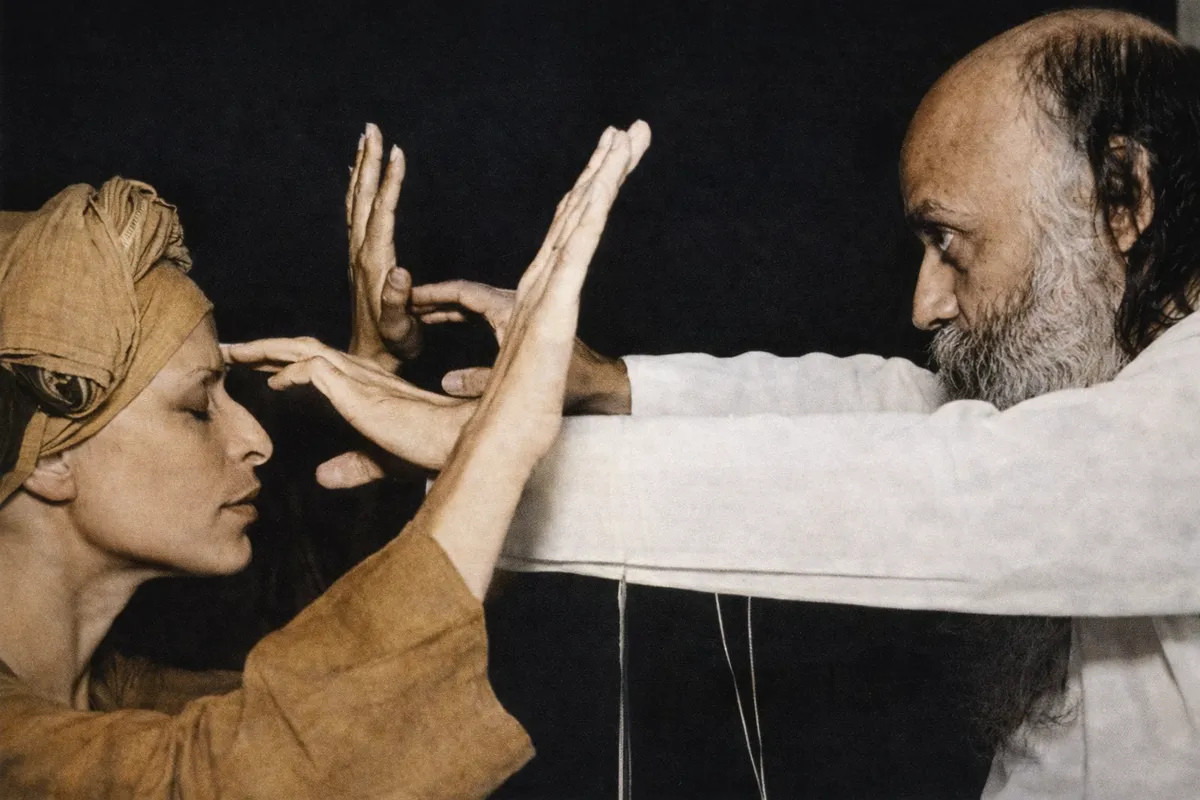
Don’t make a big deal—have a drink if it helps you relax, but stay aware and don’t get hooked.
From the Discourses
Passages where Osho speaks to this question — each links to the complete discourse.
Osho, have you been drinking?
Absolutely—I'm sitting here drunk twenty-four hours a day. But I’ve discovered a very fine kind of wine; you don’t have to buy it in the market! (The audio recording of the question is not clear.) Please listen to me, please listen to me; if you don’t want to drink, then don’t. (The audio recording of the question is not clear.) Please hear me out completely. It seems a couple of drunkards have turned up here, and they’re getting upset. Let them understand a little. (The audio recording of the question is not clear.) Write down whatever you want to say and send it in. Do not behave unethically with so many people. Write it down and send it. Do not misbehave with so many people. (The audio recording of the question is not clear.) Let me finish what I am saying, then you can speak. I was saying to you:…
ओशो, आपने पी है?
बिलकुल चौबीस घंटे पीए हुए बैठा हूं। लेकिन जरा शराब मैंने बहुत अच्छे किस्म की खोज ली, उसको बाजार से खरीदना नहीं पड़ता! (प्रश्न का ध्वनि-मुद्रण स्पष्ट नहीं है।) मेरी बात सुन लें, मेरी बात सुन लें, आपको न पीनी हो तो आप मत पीना। (प्रश्न का ध्वनि-मुद्रण स्पष्ट नहीं है।) मेरी पूरी बात सुन लें। यहां मालूम होता है, दो-चार शराबी आ गए हैं, तो उनको तकलीफ हो गई है। उनको थोड़ी बात समझ लेने दें। (प्रश्न का ध्वनि-मुद्रण स्पष्ट नहीं है।) आप लिख कर दे दें, भेज दें जो भी बात करनी हो। इतने लोगों के साथ अनैतिक व्यवहार न करें। आप लिख कर भेज दें। इतने लोगों के साथ दुर्व्यवहार न करें। (प्रश्न का ध्वनि-मुद्रण स्पष्ट नहीं है।) मैं अपनी बात पूरी कर लूं, फिर आप बोलें। मैं आपसे कह रहा था कि आदमी की जिंदगी में इतनी चिंताएं हैं, आदमी की जिंदगी में इतने तनाव हैं कि यह बिलकुल स्वाभाविक है कि आदमी इन तनावों और इन परेशानियों और इन चिंताओं को थोड़ी देर के लिए भूलना चाहे। …
Question: The final question: Osho, do you also drink alcohol? And there is nothing else truly worth drinking. For years I haven’t drunk water—that much I can assure you; for ten years at least I haven’t touched it. I drink soda and wine. Soda on the outside, wine on the inside. I believe in balance—a little of the outer, a little of the inner. There is a wine that has never been distilled; toward it no one has ever been able to gaze. There is an elixir like that. I drink this undistilled wine. I live on this unseen elixir! And I want to make you drunkards too. Bhakti means wine. Shandilya means a drunkard. The devotee’s temple is a tavern—intoxication, sweetness, mellowness. Drink the Divine; then no other wine will remain worth drinking.
और कुछ पीने योग्य है भी नहीं। वर्षों से पानी तो मैंने पीया नहीं, इतना तो मैं पक्का भरोसा दिला देता हूं--दस साल से तो नहीं पीया। सोडा पीता हूं और शराब। सोडा बाहर का, शराब भीतर की। मैं संतुलन में भरोसा रखता हूं--थोड़ा बाहर का, थोड़ा भीतर का। जो कभी खींची नहीं गई ऐसी शराब है एक जिसकी तरफ कभी कोई ताक नहीं सका ऐसी आब है एक मैं इस बिना खींची शराब को पीता हूं मैं इस बिना देखी आब को जीता हूं! और मैं तुम्हें भी शराबी बनाना चाहता हूं। भक्ति यानी शराब। शांडिल्य यानी शराबी। भक्त का मंदिर यानी मधुशाला, मादकता, माधुर्य। परमात्मा को पीओ, फिर कोई और शराब पीने जैसी नहीं रह जाएगी। मेरे देखे, जो लोग शराब पीते हैं, वे इसीलिए पीते हैं कि उनकी असली खोज तो परमात्मा की है, और परमात्मा मिलता नहीं। असली खोज तो यह है कि कैसे अपने को डुबा दें, लेकिन ऐसी कोई जगह नहीं मिलती जहां डुबा दें, तो चलो भुला लें; डूबना तो होता नहीं, तो थोड़ी देर को भुला लें। शराब थोड़ी देर को भ्रांति देती है कि भूल गए अपने को। अहंकार बहुत पीड़ा है।
Osho, I had heard that wine is bitter and burns the chest; but the taste of your wine is something else.
The “flaw” that was in Hafiz and Khayyam, in Umar Khayyam… Umar Khayyam has been misunderstood. Great injustice has been done to him. One day in Bombay I passed a hotel: on its sign was written “Umar Khayyam.” Great injustice has been done to Umar Khayyam. When Fitzgerald translated Khayyam into English, a great error occurred. Fitzgerald could not understand Khayyam—he could not have, because to understand Khayyam you need the sufi’s ecstasy, the sufi’s samadhi. Umar Khayyam is a sufi saint—one of the rare realized ones, of the stature of Buddha, Ashtavakra, Krishna, Zarathustra! The wine he speaks of is God’s wine. The beauty he sings is God’s beauty. But Fitzgerald did not understand. A Western rationalist—he thought: wine means wine. He translated it so. Fitzgerald’s translation became very famous. The verse is beautiful; Fitzgerald is undoubtedly a great poet. But he did not understand. The sufi fragrance was…
चौथा प्रश्न: ओशो, सुना था कि शराब कड़वी होती है और सीने को जलाती है; पर आपकी शराब का स्वाद ही कुछ और है।
फितना-ए-अक्ल से बेजार हूं मैं ऐब जो हाफिज-ओ-खय्याम में था हां, कुछ उसका भी गुनहगार हूं मैं ऐब जो, जो बुराई हाफिज और खय्याम में थी, उमरखय्याम में...। उमरखय्याम को समझा नहीं गया। उमरखय्याम के साथ बड़ी ज्यादती हुई है। एक दिन बंबई में मैं निकल रहा था एक जगह से, होटल पर लिखा हुआ था: ‘उमरखय्याम’। उमरखय्याम के साथ बड़ी ज्यादती हुई है। फिट्जराल्ड ने जब उमरखय्याम का अंग्रेजी में अनुवाद किया तो बड़ी भूल-चूक हो गई। फिट्जराल्ड समझ नहीं सका उमरखय्याम को। समझ भी नहीं सकता था, क्योंकि उमरखय्याम को समझने के लिए सूफियों की मस्ती चाहिए, सूफियों की समाधि चाहिए। उमरखय्याम एक सूफी संत है। थोड़े-से पहुंचे हुए महापुरुषों में एक, बुद्ध और अष्टावक्र और कृष्ण और जरथुस्त्र की कोटि का आदमी! उसने जिस शराब की बात की है, वह परमात्मा की शराब है। उसने जिस हुस्न की चर्चा की है, वह परमात्मा का हुस्न है। लेकिन फिट्जराल्ड नहीं समझा। पश्चिमी बुद्धि का आदमी, उसने समझा: शराब यानी शराब। उसने अनुवाद कर दिया। …
I had heard that wine is bitter and burns the breast, but the taste of your wine is something else.
I say unto you, enjoy life with the witnessing consciousness. But you want to drop the witness. You catch only 'enjoy'. Enjoy life but if you enjoy it without remaining the witness, you didn't enjoy it. Real enjoyment is only when you remain a witness. Drink wine but if consciousness is lost you didn't drink it. You have drunk real wine only if consciousness grows as you drink. There is no other wine than samadhi. As I see it, the attraction for alcohol will continue in man until the attraction for samadhi grows. People will go on drinking fake wine until real wine is available to them. False coins will pass until the real coin is available. Governments throughout the world try to stop the consumption of wine, but it doesn't happen. They have always been trying to do it. Religious people have been advising governments to enact prohibition. They…
Osho, “Sway on, sway on, O reveler; the clouds are dark, the air is ecstatic; lift the goblet and kiss, kiss, kiss—sway on, sway on, O reveler!” Is this your message?
Across a thousand cycles, flagons and goblets came again and again. Taverns opened time after time; wine was placed before you, cups were filled, the ewers overturned—and yet some misunderstanding persists: Those who were thirsty from the very beginning remained thirsty, Though the flagon and the goblet came a thousand times. Either you did not understand, or you misunderstood. Either you did not hear, or you heard something else. The likelihood of error is complete. This is the message I am giving: It is we who could not renew our longing—otherwise A thousand times the beloved’s messages arrived. I am sending the message, daily I send it—but you yourselves do not extend your cup. You do not muster the courage. Who knows in what weaknesses the mind is entangled, in what old beliefs it is stuck. When the dust clears from the eyes, the roof of Sinai appears; Drink the…
ओशो, झूम बराबर झूम शराबी झूम बराबर झूम काली घटा है, मस्त फिजा है जाम उठाकर चूम, चूम, चूम, झूम बराबर झूम शराबी क्या यही है आपका संदेश?
हमीं न कर सके तजदीदे-आरजू वरना हजार बार किसी के पयाम भी आए मैं तो संदेश दे रहा हूं, रोज दे रहा हूं, लेकिन तुम्हीं अपने प्याले को आगे नहीं बढ़ा पाते हो। तुम्हीं हिम्मत नहीं जुटा पाते हो। न मालूम कैसी-कैसी कमजोरियों में मन को उलझाए हुए हो। न मालूम कैसी-कैसी पुरानी धारणाओं में मन को अटकाए हुए हो। छटे गुबार नजर बामे-तूर आ जाए