
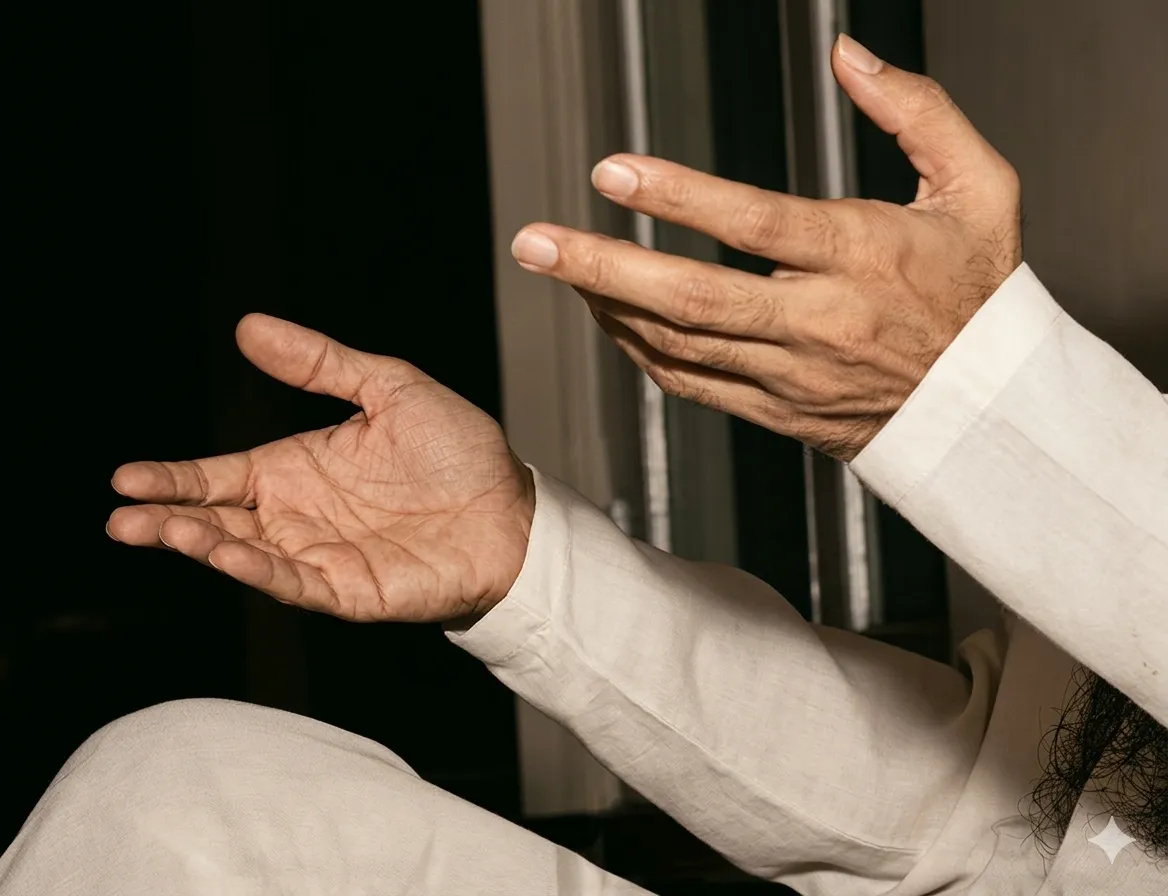
Light doesn’t fight darkness; it turns darkness into light, and with practice we can stay with that light without running back to old habits.
From the Discourses
Passages where Osho speaks to this question — each links to the complete discourse.
Osho, you say take light into darkness and the darkness disappears. You are the light. Then where is darkness? And why do I long for darkness too?
Chetana, when I say bring light and darkness disappears, what I mean exactly is: bring light and darkness becomes luminous. It does not disappear, because nothing can disappear. Bring light in and darkness becomes enlightened. When the light comes in it transforms the very quality of darkness itself. Nothing disappears, things are just transformed. If you allow me in your heart, you will not find darkness. That doesn't mean darkness has disappeared; darkness has been transformed. Darkness is no more darkness, it has become light itself. In fact, darkness and light are not two opposite things as we ordinarily think. The difference between darkness and light is not of opposition. They are the same thing. It is like hot and cold. What you call cold is only relatively cold; there is no absolute difference. What you call hot is only relatively hot; there is no absolute difference. You can try…
Question: BELOVED OSHO, WHAT DO YOU HAVE TO SAY ABOUT DARKNESS? I have much to say about darkness, because nobody has taken notice of the mystery that darkness is. Much has been said about light, almost nothing about darkness. But darkness is a much deeper phenomenon than light is. Light comes and goes -- darkness remains; it never comes, it never goes. Light is not eternal, because it needs fuel, some kind of fuel, and the fuel will be exhausted sooner or later. Darkness needs no fuel, no cause; hence darkness is not an effect and can remain eternally there. In the morning, you see the sun arises and there is light; in the evening the sun sets, the light disappears, and suddenly all over there is darkness. It does not mean that when the sun disappears, darkness comes in.
Sometimes running here and there, talking, laughing, working, reading, writing and cleaning -- the fact is: when the door closes behind and the eyes are shut -- it is dark. Thoughts or no thoughts feelings or no feelings it is dark. Morning or night any time inside it is dark. Looking inside for the looker it is dark. Is 'I' darkness who is is writing this question?
So, remember it: whatsoever you know about light and darkness -- both have to be left behind. When you close your eyes, you have left the light outside; now you enter darkness. Love it. Sing? a song with it. Have a dance with it. Don't fight with it, don't be afraid of it, don't keep a distance from it. And don't go on looking for light. Forget about light. This darkness is there -- it has to be enjoyed; one has to be grateful to God for this darkness, this silence, this stillness, this velvety expanse. And then, one day, the observer and the observed are no more two. When you love something, the duality disappears. If you love darkness, you become darkness. And when there is no duality, there comes a luminousness of a totally different quality. It is not the light that comes from the sun, and it…
Osho, you speak so much about the inner light, but my experience is different. Whenever my thoughts fall silent in meditation, a dense darkness descends within me, which feels cool and pleasant. Kindly explain what this is.
Psychologists say that in every human being’s unconscious that caveman’s experience is still there; it has not gone. It has become embedded in the body’s memory. Hence we fear the dark. Now there is no reason—one sits at home, electricity is at hand; press a button and there is light; there is no such hassle. In the country a “festival of discipline” is going on—no disturbances, no cause for fear. You are sitting in your room, and still you are panicking at the dark. That experience from twenty thousand years ago is in your every vein. You too are born from that same man; the chain is linked to him. It has not been forgotten; it is lodged very deep. So darkness seems frightening. Man becomes afraid of the dark. But the one who is afraid of the dark will never be able to go within. His inner journey will…
आखिरी प्रश्न: ओशो, आप भीतर के प्रकाश की इतनी बात करते हैं, लेकिन मेरा अनुभव कुछ और है। जब भी ध्यान में मेरे विचार शांत होते हैं तो मेरे भीतर एक घना अंधकार घिरता है, जो ठंडा और प्रीतिकर लगता है। कृपापूर्वक समझाएं कि यह क्या है?
मनोवैज्ञानिक कहते हैं कि प्रत्येक मनुष्य के अचेतन मन में वह गुफा-मानव का अनुभव अभी तक पड़ा है, वह गया नहीं। वह शरीर की स्मृति में समाविष्ट हो गया है। तो इसलिए हम अंधेरे से डरते हैं। अब तो कोई कारण भी नहीं है, घर में बैठे हैं, बिजली पास में है, जब बटन दबाओ रोशनी हो जाए, कोई झंझट भी नहीं है ऐसी। देश में अनुशासन-पर्व चल रहा है--कोई उपद्रव नहीं है, कोई डर का कारण नहीं है। अपने कमरे में बैठे हैं, तो भी अंधेरे से घबरा रहे हैं। वह बीस हजार साल पहले आदमी का जो अनुभव था, वह तुम्हारी नस-नस में समाया हुआ है। तुम भी उसी आदमी से पैदा हुए हो। श्रृंखला उसी से बंधी है। वह बात भूली नहीं है, वह बहुत गहरे में पड़ी है। तो अंधेरे से डर लगता है। अंधेरे से आदमी भयभीत होता है।
A second friend has asked: Osho, in the practice of awakening, of awareness, fear arises, and there is a constant worry that the routine of life may fall into disorder. It also seems that when anger, sex, etc., arise, if one acts on them, they are finished in five to seven minutes—one feels free of them. If you don’t act, their after-echo, their waves, keep resounding within for days. Then it feels as if it would have been better to have done it and been done with it. So what should one do? Is such awakening not repression?
Two things. First, if through “awakening” your anger—which would otherwise be over in five minutes—goes on for two days, understand it is not awakening; it is repression. Repression makes things spread. It creates even more disturbance than indulgence. If sexual desire arises and is over in a moment, but with your so-called awakening it drags on for days, grows dense, and becomes a burden on the mind, know that it is not awakening, it is repression. Many of us don’t rightly understand the difference between awakening and repression. Understand it. Repression means: what has arisen inside, you press it down inside; you don’t allow it to come out. Indulgence means: you let it out on someone. Get the difference clear. Repression means: you force it down upon yourself; indulgence means: you unload it onto the other. Awakening is a third thing—letting it out into the void: neither pressing it down…
एक दूसरे मित्र ने पूछा है: ओशो, जागृति की, होश की साधना में भय का जन्म हो जाता है, और हर समय डर लगता रहता है कि जीवन-चर्या अस्त-व्यस्त न हो जाए। फिर ऐसा भी लगता है कि क्रोध, काम आदि उठते हैं, तो कर लेने से पांच-सात मिनट में निपट जाते हैं। उनसे मुक्ति हो जाती मालूम पड़ती है। न करो तो दिनों तक उनकी प्रतिध्वनि, उनकी तरंगें भीतर गूंजती रहती हैं। और तब ऐसा लगता है कि इससे तो कर ही लिया होता तो निपट गए होते। तो क्या करें? ऐसी जागृति दमन नहीं है?
दो बातें हैं, एक तो, अगर, जागृति से क्रोध--जो पांच मिनट में निपट जाता है, दो दिन चल जाता है, तो समझना कि वह जागृति नहीं है, दमन ही है। क्योंकि दमन से ही चीजें फैल जाती हैं। भोग से भी ज्यादा उपद्रव खड़ा हो जाता है। अगर कामवासना उठती है और क्षण भर में निपट जाती है। और जागृति से दिनों सरकती है और सघन होने लगती है और मन पर बोझ बन जाती है, तो समझना कि जागृति नहीं है, दमन ही है।