
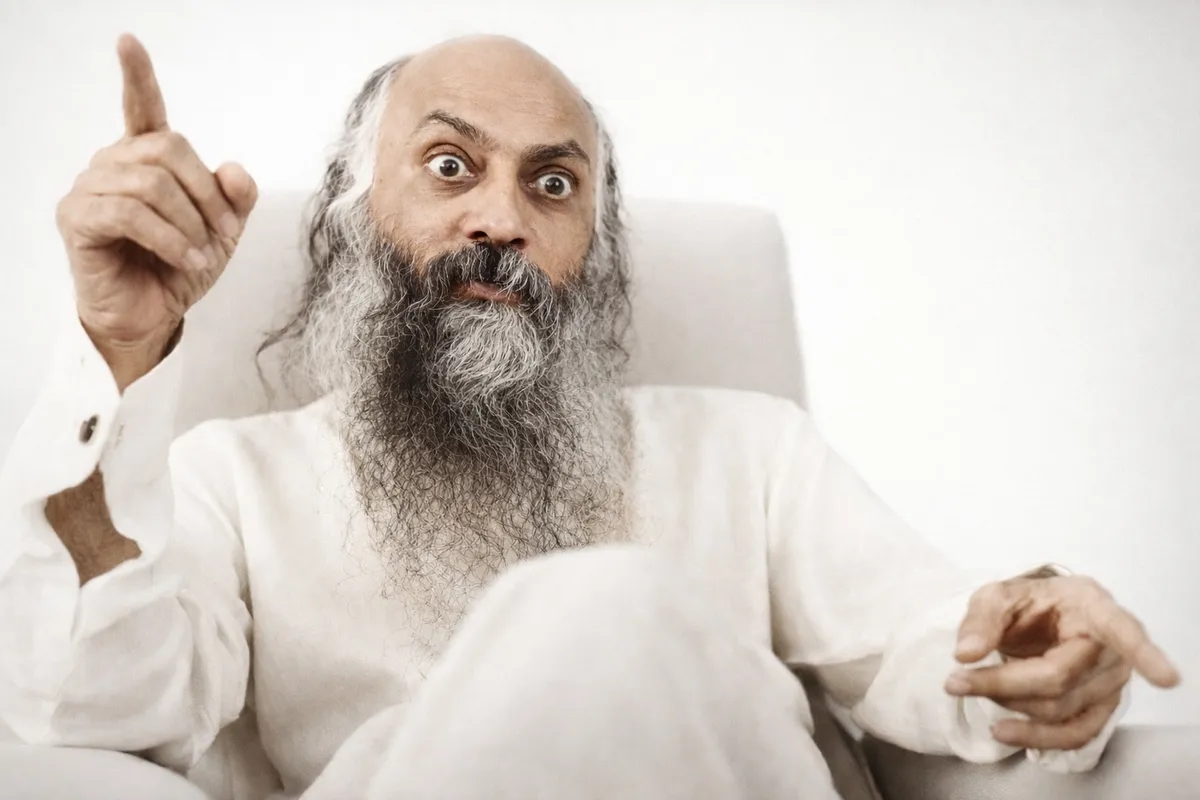
We do many helpful things, but inside we relax and just watch; that inner rest is Osho's 'laziness' while everyone is 'busy' with love.
From the Discourses
Passages where Osho speaks to this question — each links to the complete discourse.
Beloved Osho, I have heard you say that you are the laziest man in the world. Is this the reason why in your commune the sannyasins are so busy, far more busy than people in the outside world? Please comment.
It is true. I am the laziest man in the whole world. And to keep me lazy, my people have to work. To keep me poor, they have to give away all their fortunes. But they are enjoying it. The work they are doing is their love. Hence they have stopped calling it work; they call it worship. And my laziness is just my way of saying to you that the ultimate happens only when you are in a state of non-doing. It does not mean lazy according to your dictionaries. I am busy from six in the morning to eleven in the night. Of course, busy without business -- I don't have any business. I am lazy in my own meaning of the word; I am a non-doer. And that is my whole teaching to you, that even while you are doing something you remain a non-doer. Doing is…
Osho, on the first day you explained that “non-ability” is a precious word in Taoist vision and carries great spiritual value. In that context it seems that tamasic and lazy people already possess the quality of non-ability, yet their spiritual growth is not visible. What is your view on this?
What Lao Tzu calls “non-ability” is the name of the deepest ability. It is not laziness; it is the ultimate state of rest. Nor is it tamas; it is a most incandescent state of energy. Understand the difference clearly. The confusion is natural, because if someone is sitting inactive it appears to us that he is lazy. But all who sit inactive are not lazy. The one we call lazy does not truly sit empty; the work of the mind goes on. Perhaps the lazy man does nothing with his body, but with the mind he is fully busy. Where those who are bodily active are running, he too runs with his desires and cravings. In the mind there is no difference. He seems lazy to us because he is not running as we are. But he too is running. If laziness becomes absolute—what Lao Tzu calls non-doing—then laziness itself…
पहला प्रश्न: ओशो, प्रथम दिन की चर्चा में आपने समझाया कि अयोग्यता ताओ चिंतना का कीमती शब्द है, तथा उसका बहुत आध्यात्मिक मूल्य है। इस संदर्भ में ऐसा लगता है कि तामसी व आलसी लोग तो अयोग्यता के गुण से संपन्न होते ही हैं, लेकिन फिर भी उनका आध्यात्मिक विकास होता दिखाई नहीं पड़ता। इस विषय में आपकी क्या दृष्टि है?
लाओत्से जिसे अयोग्यता कहता है वह गहनतम योग्यता का नाम है। वह आलस्य नहीं है, विश्राम की परम दशा है। वह तमस भी नहीं है, ऊर्जा की अत्यंत प्रज्वलित स्थिति है। फर्क को ठीक से समझ लें। भ्रांति स्वाभाविक है, क्योंकि जो व्यक्ति भी निष्क्रिय बैठा है, हमें लगेगा, आलसी है। सभी निष्क्रिय बैठे हुए व्यक्ति आलसी नहीं होते। जिसे हम आलसी कहते हैं, खाली तो वह भी नहीं बैठता; मन का काम जारी रहता है। शायद आलसी आदमी शरीर से कुछ न करता हो, मन से तो पूरी तरह करता है। और जहां शरीर की गति वाले लोग दौड़ रहे हैं वहां वह भी अपनी कामना और वासना से दौड़ता है। उसके मन के संबंध में कोई फर्क नहीं है। हमें आलसी दिखाई पड़ता है, क्योंकि हमारे जैसा नहीं दौड़ रहा है। दौड़ तो वह भी रहा है।
In my childhood I never liked to do anything. I would simply sit and sometimes I would be sitting just in front of my mother, and she would say, 'Nobody seems to be in the house' -- because she wanted somebody to go to the market and fetch something for her and I would be just sitting in front of my mother! (laughter) But it was almost inconceivable that I would go to the market, so they all thought, 'This man is lazy.' My grandfather used to say, 'I'm very much worried about you. Who is going to feed you? How are you going to earn a living?' And he was right... his worry was right. But I accepted that. That's perfectly okay. When you are lazy, you are lazy.
Osho, you said there is a path even through laziness. How so? I too am lazy; please shed a little light.
I used to think only Sheela was a Das Maluka. Are there others too! In fact, there must be many; Sheela must have a large family. But pay attention: if you are truly lazy, even laziness can become a path. The point to watch is—are you really lazy? This happened in Japan. An emperor was very lazy. Naturally he thought, “I am an emperor, I am lazy, nothing obstructs me; but those who are poor and lazy must be in great difficulty.” He thought, “If I weren’t an emperor, what trouble I would be in! I don’t earn, I can’t earn—I don’t even get up from my bed. Often I simply lie there with my eyes closed. I eat and then sleep; then get up, eat again, and sleep again.” So he thought, “I am an emperor, fine—but surely there must be other lazy people in this land; what must…
आखिरी प्रश्न: ओशो, आपने कहा कि आलस्य से भी मार्ग है। वह कैसे? मैं भी आलसी हूं, कृपाकर थोड़ा प्रकाश डालें।
ऐसा हुआ जापान में। एक सम्राट बहुत आलसी था। और स्वभावतः उसे लगा कि मैं तो सम्राट हूं, आलसी हूं, कुछ अड़चन नहीं आती, जो दीन हैं और दरिद्र हैं और आलसी हैं, उनको बड़ी मुश्किल आती होगी। उसने सोचा कि अगर मैं सम्राट न होता तो मैं कितनी मुश्किलों में पड़ता, न मैं कमाता, न कमा सकता हूं--उठता ही नहीं था अपने बिस्तर से, अक्सर तो आंखें ही बंद किये पड़ा रहता था। भोजन कर लिया, फिर सो गया। फिर उठ गया, फिर भोजन कर लिया, फिर सो गया। तो उसने सोचा, मैं तो सम्राट हूं, ठीक है--ऐसा पड़े-पड़े याद आयी होगी कि और भी होंगे आलसी इस देश में, उन बिचारों पर क्या बीतती होगी! उनको तो काम करना ही पड़ता होगा। तो उसने सोचा कि जब ऐसा मौका आया है कि एक आलसी सम्राट हो गया है तो और आलसियों को भी राज्य की तरफ से सुविधा मिलनी चाहिए। स्वाभाविक। उसने अपने वजीरों को बुलाकर कहा कि खोज की जाए, जो भी आलसी हों, सबको राज्याश्रय दिया जाए।
Beloved Osho, you took my heart and now it is too late; I am enjoying aloneness and laziness so much that sometimes I think there must be something wrong with me. I feel I am at the beginning of a new journey, and there is a question that keeps on coming up: what is the difference between being a watcher, and the feeling of "I am not that"?
Prem Anugraho, it is not true that I have taken your heart. You have given it to me. If I had taken it, it would not be too late; because you have given it to me, it is certainly too late! The master takes nothing from the disciple. The disciple gives everything, including himself. The master gives an opportunity for you to give. And it is a joy and a bliss to give your heart. Nothing can be more precious a present, and there is no other way to show your gratitude. But in any case, your heart is gone! And you are saying, "I am enjoying aloneness and laziness so much that sometimes I think there must be something wrong with me." There is. Enjoying aloneness is perfectly right, but enjoying laziness is not right. Laziness is a negative state. One should be overflowing with energy. One should be…