
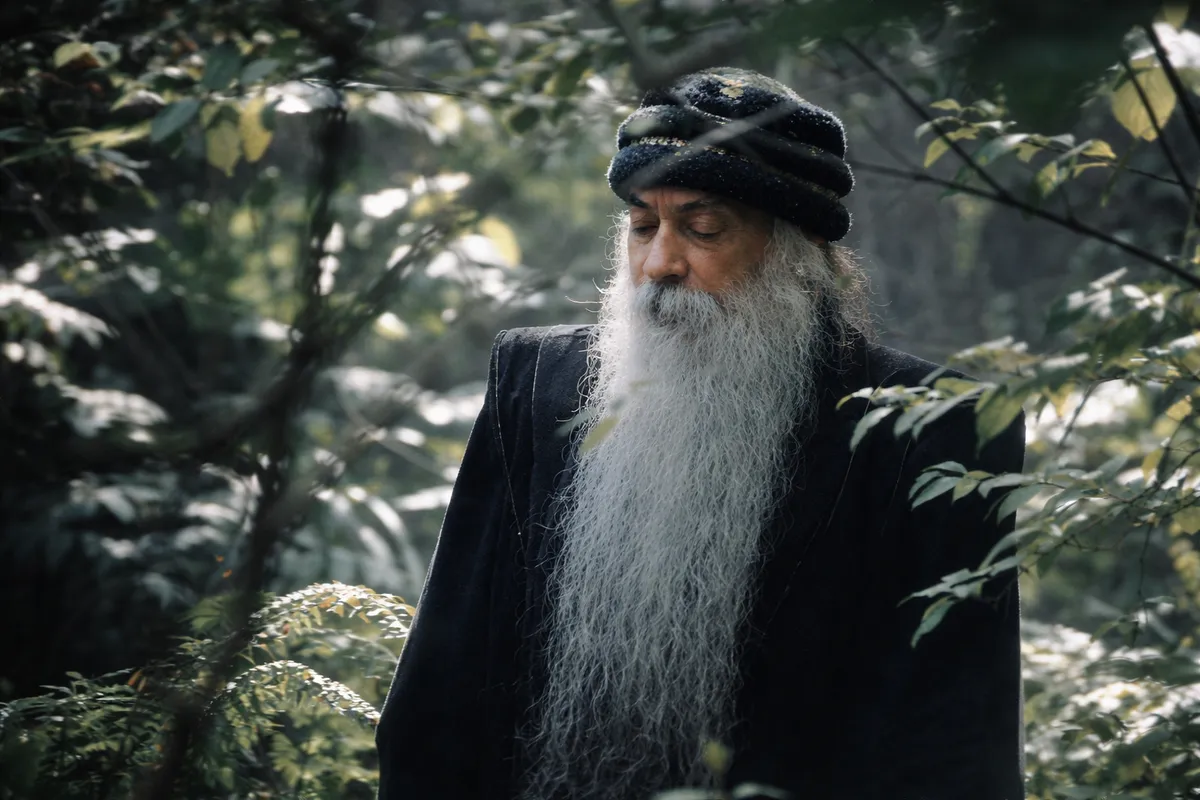
Real contentment is when you stop checking if you’re happy or sad; then a quiet, natural happiness stays by itself.
From the Discourses
Passages where Osho speaks to this question — each links to the complete discourse.
Osho, yesterday you said that jealousy is included in respect. I have immense respect for you, but the jealousy inherent in it keeps poisoning it, and I feel guilt and pain. Does reverence transcend this poison-laced respect?
It needs a little explaining—it's a delicate point. Whenever you respect someone, you do so because you see in that person something you do not have. You respect because you glimpse in the other something you would also like to possess. A beggar respects an emperor because he, too, longs to be an emperor. So on the one hand he respects, and inside he also envies. Because he is not yet an emperor but wants to be. You have attained what he wants to attain. He respects you as skillful, successful: “I stand far back in the line; you have gone ahead to where I should have been.” So you are powerful, clever, intelligent, strong—he respects you. But inside a fire of jealousy also burns—if he gets the chance, he would like to be in your place and push you aside. And if the beggar gets that chance, he will…
तीसरा प्रश्न: ओशो, आपने कल कहा, आदर में ईर्ष्या सम्मिलित है। आपके प्रति मुझमें अपार आदर है, लेकिन उसमें निहित ईर्ष्या उसमें जहर घोलती रहती है और मैं ग्लानि और पीड़ा का अनुभव करता हूं। क्या श्रद्धा इस विष-भरे आदर का अतिक्रमण करती है?
भिखारी सम्राट का आदर करता है, क्योंकि उसकी भी आकांक्षा है कि सम्राट हो। तो एक तरफ आदर भी करता है, भीतर ईर्ष्या भी करता है। क्योंकि सम्राट अभी वह है नहीं, सम्राट होना चाहता है। तुम हो गए हो, तुमने वह पा लिया है जो वह पाना चाहता है। इसलिए तुम्हें आदर भी करता है कि तुम कुशल हो, सफल हो, मैं पंक्ति में बहुत पीछे खड़ा हूं, तुम आगे पहुंच गए हो, तुम उस जगह पहुंच गए हो जहां मुझे होना चाहिए था। इसलिए तुम शक्तिशाली हो, होशियार हो, बुद्धिमान हो, बलशाली हो, तुम्हारा आदर करता हूं। लेकिन एक भीतर ईर्ष्या की आग भी जलती है--अगर मुझे मौका मिले तो उस जगह मैं होना चाहूंगा, तुम्हें हटाना चाहूंगा। और जब मौका मिल जाएगा इस भिखारी को तो यह सम्राट को हटा कर धक्का दे देगा, सिंहासन पर बैठ जाएगा।
In a worldly sense I am completely happy. But still, I am not happy. I do not understand the reason for my unhappiness. Could you indicate the way?
Only one who becomes completely happy in a worldly sense discovers that happiness is unreal. The unhappy never find out. The unhappy live in the hope that if they can find worldly happiness then everything will be alright. The hope of an unhappy person is very alive. In the eyes of a discontented man there is a flame of hope. Only in the eyes of the contented does the flame of hope vanish. This is why I continuously say that only the contented person, contented in the so-called worldly sense, can start off on the religious quest. When you have all the so called contentment and still you are not happy, then it becomes clear that there can be no contentment in 'this world.' Whatever you could collect on the outside, you have collected. Now you are in a situation where all illusions have broken, where all the mirages of…
Question: First question: Osho, isn’t it right to live with contentment? Devdas! There is a great difference between one kind of contentment and another. One is the contentment of a dead man, a defeated man, a man who has lost. It looks like contentment, but it is not. Inside, the flames of discontent are raging, but outwardly he has put on a show, reasoned himself into it; he could not win, and even bearing defeat seems hard, so he whitewashes his defeat to look like contentment. There is Aesop’s old story: a fox keeps leaping—leaping many times—to reach bunches of grapes; but she cannot reach, her reach falls short. Tired, beaten, with a sorrowful heart, she turns back. At least there is the reassurance that no one has seen her defeat. But just then a rabbit, hidden in a nearby thicket, comes out and says: Auntie, what happened?
देवदास! संतोष और संतोष में बड़ा भेद है। एक तो है संतोष मरे हुए आदमी का, पराजित आदमी का, हारे हुए आदमी का। वह संतोष मालूम होता है, लेकिन संतोष है नहीं। भीतर तो लपटें हैं असंतोष की, लेकिन बाहर से टीम-टाम किया, समझा लिया अपने को; जीत तो सके नहीं, हार को भी सहना कठिन मालूम होता है, तो हार को लीप-पोत लिया संतोष की भांति। ईसप की पुरानी कहानी है कि एक लोमड़ी छलांग लगाती है--बहुत छलांग लगाती है--अंगूर के गुच्छों को पाने के लिए; फिर नहीं पहुंच पाती, पहुंच छोटी पड़ जाती है; हारी-थकी, उदास चित्त वापस लौटती है; पर कम से कम एक आश्वासन है कि किसी ने उसकी हार देखी नहीं; लेकिन तभी एक खरगोश पास की झाड़ी में छिपा, बाहर आता है और कहता है: चाची, क्या हुआ? अंगूरों तक पहुंच न सकीं? लोमड़ी ने कहा कि नहीं, पहुंच क्यों न सकूं, मेरी पहुंच के बाहर क्या है, चांद-तारे तोड़ लाऊं, लेकिन अंगूर खट्टे थे, पहुंचने योग्य ही न थे।
That should not remain just the meaning of your name -- it should become the meaning of your life too! It means bliss, contentment... and both are aspects of one phenomenon. From one side it is bliss, from another side it is contentment. Only in bliss can one be contented and only when one is contented can one be in bliss -- they are not separate. And when I say to be contented, I don't mean the ordinary thing that is always being preached about contentment. When the priests all over the world say, 'Be contented,' they mean to repress... they mean to be false. They mean that if you have a discontent inside you, throw it into the unconscious; don't take any note of it;... forget about it. Even if your heart is weeping and crying, go on smiling. They create a split. That contentment is just hocus-pocus...
Understand the logic of discontent, its mechanism. Its mechanism is this: whatever is attained becomes futile. Meaning seems to exist only so long as it is not attained. The woman you desired was very beautiful so long as she was not attained. Attain her, and all beauty vanishes. The house you wanted—you slept sleepless nights! How many dreams you adorned!—then it is attained, and the matter becomes empty. Whatever comes into your hand becomes worthless the moment it comes. Will you call this discontent your friend? This is your enemy. It makes you run—only makes you run—and whenever something is attained, the very attainment renders it futile. Then it makes you run again. It has been driving you for births upon births. Through the eighty-four lakhs you ran because of friendship with discontent. You have ten thousand rupees—what have I really? Nothing!
असंतोष का तर्क समझो। असंतोष की व्यवस्था समझो। असंतोष की व्यवस्था यह है कि जो मिल गया, वही व्यर्थ हो जाता है। सार्थकता तभी तक मालूम होती है जब तक मिले नहीं। जिस स्त्री को तुम चाहते थे, जब तक मिले न तब तक बड़ी सुंदर। मिल जाए, सब सौंदर्य तिरोहित। जिस मकान को तुम चाहते थे--कितनी रात सोए नहीं थे! कैसे-कैसे सपने सजाए थे!--फिर मिल गया और बात व्यर्थ हो गई। जो भी हाथ में आ जाता है, हाथ में आते ही से व्यर्थ हो जाता है। इस असंतोष को तुम दोस्त कहोगे? यही तो तुम्हारा दुश्मन है। यह तुम्हें दौड़ाता है--सिर्फ दौड़ाता है--और जब भी कुछ मिल जाता है, मिलते ही उसे व्यर्थ कर देता है। फिर दौड़ाने लगता है। यह दौड़ाता रहा है जन्मों-जन्मों से तुम्हें। वह जो चौरासी कोटियों में तुम दौड़े हो, असंतोष की दोस्ती के कारण दौड़े हो। दस हजार रुपये पास में हैं--क्या है मेरे पास, कुछ भी तो नहीं! लाख हो जाएं तो कुछ होगा! लाख होते ही तुम्हारा असंतोष--तुम्हारा मित्र, तुम्हारा साझीदार--कहेगा, लाख में क्या होता है? …