
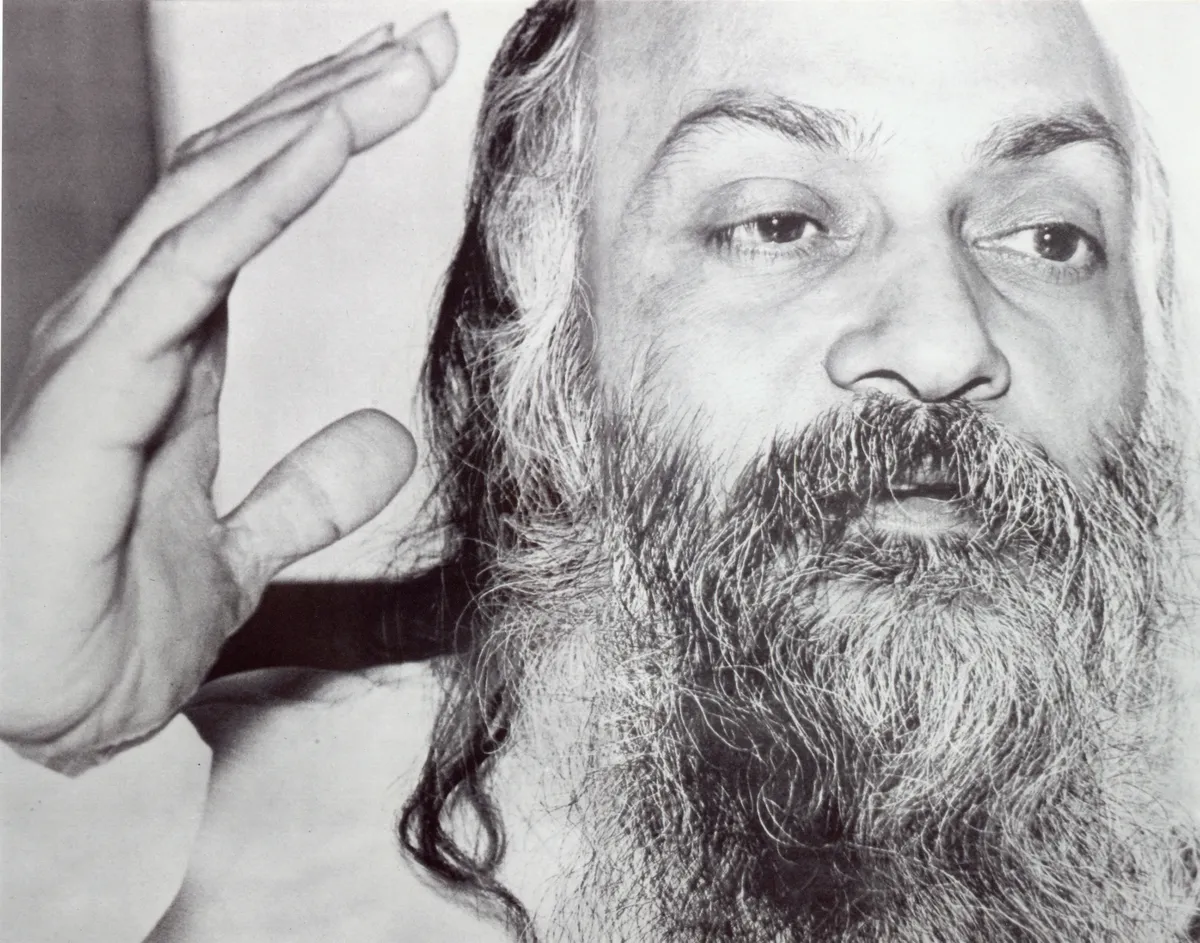
His old books feed and support his new talks like roots feed flowers; they help, but don’t treat them as fixed rules.
From the Discourses
Passages where Osho speaks to this question — each links to the complete discourse.
Beloved Osho, you have said that when the self surrenders, the whole existence then protects. Then why was the fakir who could see the formless everywhere, or who could feel the presence of godliness everywhere, murdered by the english soldiers?
It appears like murder to you, but not to him. You see it as murder because you are under illusion. He saw only the divine in that spear; he saw that the death was a meeting with the divine. Existence protected him in the sense that even death did not seem like death to him. Death became the door of the ultimate bliss. To you it seems that he died, he was finished. When the Ganges flows into the sea, to you it seems that it is finished. But ask the Ganges: it will say, "I have disappeared and thus become the sea." The Ganges will say, "The fear of annihilation was there before but now it has disappeared. Before this I was very narrow, bounded by the two banks. I could have been finished. I was limited so I could have died. But now I have become unlimited, now…
A friend has asked: Osho, according to your statements, all dharmashastras—the religious scriptures that express the ideas of Buddha, Mahavira, and so on—are useless. Then why shouldn’t the books through which your ideas are expressed also be considered useless? Why should a person not advance only through his own experience? What need is there to listen to you?
And in response there are Jain books that say the same: it is better to be crushed under a mad elephant’s feet than to take refuge in a Hindu Shiva temple. That is a great sin; death is better than that. I am against this mentality. This mentality has caused great harm. How could I be opposed to books, to ideas, to the experiences of those who have enriched life? But I am opposed to deadness, and to the insistence that whatever we are clinging to is the only truth. This is the sign of a violent mind. A nonviolent, loving heart does not make such insistences. It is always open to think and to inquire. Always impartial. I spoke to you about this the day before yesterday, so I will not go further into it now. Let me simply repeat: I am in favor of books; I am not…
एक मित्र ने पूछा है: ओशो, आपके कथनानुसार सब धर्मशास्त्र, धार्मिक पुस्तकें व्यर्थ हैं, जिनमें बुद्ध, महावीर वगैरह के विचार व्यक्त होते हैं। तो आपके विचारों की अभिव्यक्ति जिन पुस्तकों से है, उन्हें भी व्यर्थ क्यों न माना जाए? मानव अपने अनुभवों से ही क्यों न आगे बढ़े, आपको सुनने की भी क्या आवश्यकता है?
मेरा किताबों से, विचारों से, जीवन को जिन्होंने समृद्ध किया है उनकी अनुभूतियों से क्या विरोध हो सकता है? लेकिन जड़ता से मेरा विरोध है। और इस आग्रह से कि जो हम पकड़ कर बैठे हैं, वही सत्य है। यह बहुत हिंसात्मक, वायलेंट माइंड की सूचना है। यह अहिंसक, प्रेमपूर्ण चित्त ऐसे आग्रह नहीं करता है। वह हमेशा खुला होता है सोचने को, विचार करने को। हमेशा निष्पक्ष होता है। उस संबंध में मैंने परसों आपसे बात की है, इसलिए और उस संबंध में आगे कुछ नहीं कहूंगा। इतना ही पुनः कह देता हूं: किताबों के मैं पक्ष में हूं, शास्त्रों के मैं पक्ष में नहीं हूं। और मेरा फर्क आप समझ लें।
I am new to your teaching but if I have understood you so far you say (approximately anyway) that knowledge obtained from books is mere information, and as such is useless and sterile -- what matters is an inner knowing derived from experience, and feeling rather than intellect. Why then do you publish books for sale?
I speak to seduce you into silence. I use words so that you can be persuaded towards the wordLESS existence. Books are there to lead you beyond, so don't cling to them. At the most they are bridges. But if you make your house on a bridge you are a fool. Pass through it! Right now, you cannot understand silence, you can understand only words. I will have to use words to give you the message of silence. Between the words, between the lines, sometimes, if you hang around me long enough, you may one day start hearing silence -- then there is no need, then burn those books with other Vedas, Bibles and scriptures. My books also have to be burnt. Everything has to be left behind. But right now you are not ready. When you are ready there is no need for any books. Those books are not…
Osho, for some twenty years you have been speaking to us, and many of your statements contradict one another; yet, remarkably, to this day you have never taken back a single statement nor felt the need to revise any. And all your statements have now become public property. Are you doing this knowingly, and is there some secret behind it? And is there not the danger that, in time, people will doubt that all these statements could be from one and the same enlightened master?
That’s how a Muslim is a Muslim—he has grabbed the Qur’an’s statements. A Buddhist is a Buddhist—he has grabbed Buddha’s. A Jain is a Jain—he has grabbed Mahavira’s. I don’t want to leave statements behind for you to grab. I want to leave you in the statementless, the ineffable. I will say everything and take it all away. Give with one hand, remove with the other. One day you will understand that this empty state—when nothing remains in your hands—is the state of truth. The moment you grasp, you are grasped. The grasper is captured by what he grasps. The one who clings to statements becomes sectarian. The one who lives in the statementless is religious. Then he understands all statements and is possessed by none, defined by none. “Your many statements contradict one another. But surprisingly, you have never taken back a single statement.” There is no need to.…
दूसरा प्रश्न: ओशो, कोई बीस वर्षों से आप हम लोगों से बोल रहे हैं और आपके अनेक वक्तव्य एक-दूसरे का खंडन करते हैं; लेकिन आश्चर्य कि आज तक आपने अपना एक भी वक्तव्य वापिस नहीं लिया और न किसी वक्तव्य में कुछ संशोधन करने की जरूरत मानी। और आपके समस्त वक्तव्य अब सार्वजनिक संपत्ति बन गये हैं। क्या आप जान-बूझ कर ऐसा कर रहे हैं और इसके पीछे क्या राज है कोई? और क्या यह खतरा नहीं है कि कालांतर में लोग संदेह करें कि ये सारे वक्तव्य एक ही महापुरुष के हैं?
इसी तरह तो मुसलमान मुसलमान है; उसने कुरान का वक्तव्य पकड़ लिया। बौद्ध बौद्ध है; उसने बुद्ध का वक्तव्य पकड़ लिया। जैन जैन है; उसने महावीर का वक्तव्य पकड़ लिया। मैं तुम्हारे लिए कोई वक्तव्य नहीं छोड़ जाना चाहता। मैं तुम्हें अवक्तव्य, अनिर्वचनीय दशा में छोड़ जाना चाहता हूं। सब कहूंगा और सब छीन लूंगा। इधर एक हाथ से दूंगा, दूसरे हाथ से अलग कर लूंगा। कभी तो तुम समझोगे कि यह खाली दशा, जब तुम्हारे हाथ में कुछ भी नहीं होता, यही सत्य की दशा है। जब पकड़ने को कुछ भी नहीं होता तभी तुम मुक्त हो। जहां तुमने कुछ पकड़ा कि तुम पकड़े गये। पकड़ने वाला पकड़ा जाता है। जिसे तुम पकड़ते हो वह तुम्हें पकड़ लेता है।
Osho, a question arises in my mind. Last night you said some things about the scriptures. It seemed to me that whatever you say could also be found in the scriptures. And what you are saying is itself gradually becoming a scripture. And what you say about the scriptures will apply verbatim to what you yourself have said as well. One who can see will see it here too; one who cannot see will not see it here either. And one who can see will also see it in the ancient scriptures, while the one who cannot see will not see it there either. Then there remains no purpose in criticizing them.
If this much becomes clear to us, then you will see I am not condemning scripture; I am stating the factual situation of scripture. And what you say is right: much of what I say will be found in the scriptures—not because it is there, but because you will have understood me. If my words have been understood by you, you will find them in the scriptures, because in scripture you will find only what your understanding is. Whatever your understanding is, that is what you will find—because we project our own understanding into scripture. Ordinarily we think that understanding comes out of scripture. It does not. We put our understanding into the scripture. That is why a thousand commentaries on the Gita are possible. If understanding came out of the Gita, how could there be a thousand commentaries? And if Krishna had a thousand meanings, then Krishna’s mind must…
प्रश्न: ओशो, एक प्रश्न मेरे मन में उठता है। आपने रात को शास्त्रों के बारे में कुछ बात कही। मुझे ऐसा लगा कि आप जो भी कुछ कहते हैं, वह शास्त्रों में भी उपलब्ध हो ही सकता है। और आप जो कुछ कह रहे हैं, वह भी स्वयं में एक शास्त्र ही बनते चले जा रहे हैं। और जो बातें आप शास्त्रों के संबंध में कह रहे हैं, वह आपकी कही हुई बातों पर भी ज्यों की त्यों लागू हो जाएंगी। जो देखने वाला है, उसे इसमें भी दिखेगा। जो नहीं देखने वाला है, उसे इसमें भी नहीं दिखेगा। और जो देखने वाला है, उसे प्राचीन शास्त्रों में भी दिख ही जाता है। और न देखने वाले को उनमें भी नहीं दिखता। फिर उनकी निंदा का कोई प्रयोजन शेष नहीं रह जाता।
यह जो हमें खयाल में आ जाए, तो मैं शास्त्र की निंदा नहीं कर रहा हूं, शास्त्र की वस्तुस्थिति क्या है, वह कह रहा हूं। और वह जो तुम कहते हो, वह ठीक है। मेरी बहुत सी बातें शास्त्र में मिल जाएंगी--इसलिए नहीं कि वे शास्त्र में हैं, इसलिए कि तुम मेरी बातों को समझ लोगे। अगर मेरी बातें तुम्हें समझ में पड़ गईं, तो तुम्हें शास्त्र में मिल जाएंगी। क्योंकि शास्त्र में तुम्हें वही मिल जाएगा, जो तुम्हारी समझ है। जो तुम्हारी समझ है, वही मिल जाएगा। क्योंकि हम शास्त्र में अपनी समझ डालते हैं। आमतौर से हम सोचते हैं कि शास्त्र से समझ निकलती है। निकलती नहीं, हम शास्त्र में अपनी समझ डालते हैं। इसीलिए तो गीता की हजार टीकाएं हो सकती हैं। अगर गीता से समझ निकलती हो तो हजार टीकाएं कैसे हो सकती हैं? और कृष्ण के अगर हजार मतलब रहे हों तो कृष्ण का दिमाग खराब रहा होगा। कृष्ण का मतलब तो एक ही रहा होगा। हजार टीकाएं हो सकती हैं, लाख टीकाएं हो सकती हैं, क्योंकि हर एक व्यक्ति अपनी समझ उसमें खोज लेगा। …