
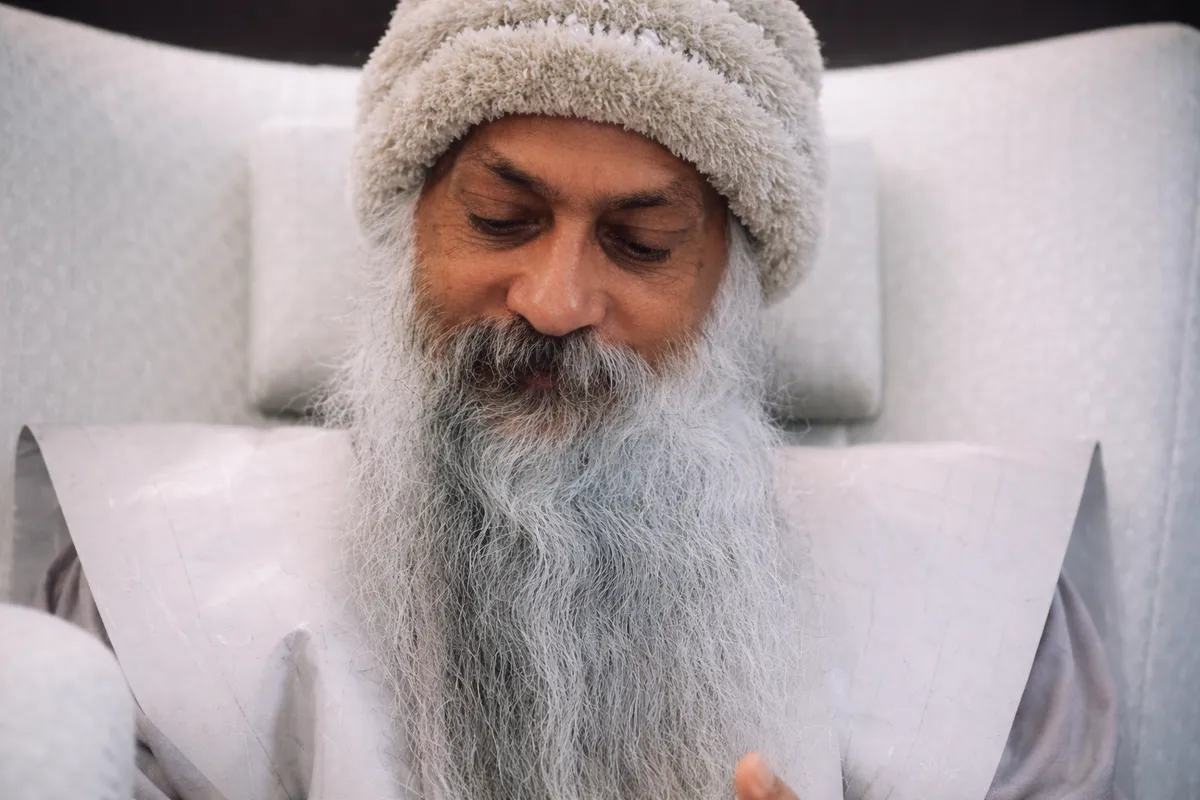
Exercise is for feeling light and happy—so laugh, play, and move in ways that relax your body and clear your mind.
From the Discourses
Passages where Osho speaks to this question — each links to the complete discourse.
Osho, I dance and I weep. Meditation brings me great bliss, yet sometimes a question wrings my heart: after all, what need is there for sadhana, for meditation, for God-realization?
Hence the miser is the most pitiable person in the world. He possesses money, yet has no essence. The miser has wealth but does not know how to use it. He coils over his money like a snake. Stories rightly say that when a miser dies, he becomes a snake coiled on his safe, a ghost. He was a ghost while living. After death he does not need to become one—he never lived; he was already dead. I have heard of a man who had buried gold bricks in his garden. His daily task—call it worship, prayer, adoration—was to dig up the pit, look at the bricks, then fill it again. His heart would be greatly gratified. Thus his life passed. He grew old. A fakir had watched this many times. One night the fakir took away the gold bricks and put bricks of stone in their place. The old…
पहला प्रश्न: ओशो, मैं नाचता भी हूं, रोता भी हूं। ध्यान में बड़ा आनंद आता है, पर कभी-कभी एक प्रश्न दिल को मरोड़ जाता है: आखिर यह साधना, ध्यान, ईश्वर-प्राप्ति की जरूरत भी क्या है?
इसलिए तो कंजूस आदमी दुनिया में सबसे दया का पात्र है। उसके पास धन है और सार नहीं है। कृपण के पास धन है, लेकिन धन का उपयोग करना नहीं जानता वह। वह धन के ऊपर सांप की तरह कुंडली मार कर बैठ जाता है। ठीक ही कहती हैं कहानियां कि कृपण आदमी मर जाता है तो फिर अपनी तिजोरी पर कुंडली मार कर सांप बन कर बैठ जाता है, भूत हो जाता है। वह जिंदगी में ही भूत था। मर कर उसको होने की जरूरत ही नहीं। वह जीआ ही नहीं कभी। मरा ही हुआ था। मैंने सुना है, एक आदमी ने अपने बगीचे में सोने की ईंटें गाड़ रखी थीं। उसका रोज का काम था--वही उसकी पूजा कहो, आराधना कहो, अर्चना कहो--रोज का काम था--खोदना गड्ढे को, वापस अपनी ईंटों को देख लेना, फिर गड्ढे को पूर देना। चित्त उसका बड़ा गदगद हो जाता था। ऐसी उसकी जिंदगी बीती। बूढ़ा हो गया था।
Osho, that friend has asked: might this become just a short rest, a brief entertainment?
No. Let it be for a little while—soon it will take hold of your whole life. This meditation is such a guest that once it slips inside, you will not be able to send it out. Once it is in, you simply cannot expel it. Because it brings such bliss—who can throw bliss away? It brings such peace—who would drive peace out? Try it once—let it come in—and then it will never be able to leave. And even if someone says, “We’ll take it out and give you ten million rupees,” you will not agree to part with it even for ten million. I have heard that in those days an emperor, Shrenik, came to Mahavira. Shrenik said to Mahavira, “I have attained everything. Now I hear so much talk about meditation—what is this thing? How much will it cost? I am ready to buy.” He was an emperor—accustomed to…
ओशो,उन मित्र ने पूछा है कि कहीं यह थोड़ी देर के लिए एक विश्राम, थोड़ी देर के लिए एक मनोरंजन होकर तो न रह जाएगा?</cr>
नहीं, इसे थोड़ी देर होने दें, यह आपकी पूरी जिंदगी को पकड़ लेगा। यह ध्यान ऐसा मेहमान है कि एक दफे भीतर घुस जाए, फिर आप इसको बाहर न कर पाएंगे। एक दफे भीतर भर घुस जाए, फिर इसे आप बाहर कर ही न पाएंगे। क्योंकि अपने साथ इतना आनंद लाता है, आनंद को कौन बाहर कर सकता है? अपने साथ इतनी शांति लाता है कि शांति को कौन बाहर कर सकता है? एक बार प्रयोग करके इसे भीतर आ जाने दें, फिर यह कभी बाहर न जा सकेगा। और कोई अगर कहेगा भी कि इसे बाहर हम कर देते हैं और आप करोड़ रुपये ले लो, तो भी आप करोड़ रुपये लेकर इसे देने को राजी न होंगे। सुना है मैंने कि महावीर के पास उस जमाने का एक सम्राट श्रेणिक मिलने आया। और उस श्रेणिक ने महावीर से कहा कि मैंने सब पा लिया है, अब मैं यह ध्यान की बड़ी चर्चा सुनता हूं, यह ध्यान क्या बला है? कितने में मिल सकता है? मैं खरीदने को तैयार हूं।
The same friend has asked: Osho, if the pot becomes void, then the pot itself will disappear, won’t it?
The current of our births is a series. Buddha, for the first time, gave the world the sense of a living, flowing soul—dynamic, river-like, a stream. On the day the pot breaks, the very same soul that desired liberation will not be the one that is liberated. Some current of consciousness within that series will be liberated. The series is one. Not a unit, but a flow. And now even scientists, in the material realm, are nearing this truth. They say: it is no longer right to say “atom”; say “event.” Now, to say “particle” is wrong—say event. And no longer say “object”—say process, flow, quantum! Lao Tzu says: become the void. The moment the event of becoming void happens, the pot becomes useless. Even so, the pot may live for a while longer, because the pot has its own laws. You bring a pot into the house to fill…
उन्हीं मित्र ने पूछा है कि ओशो, घड़ा शून्य होगा, तो घड़ा भी मिट जाएगा न!
हमारे जन्म की धारा श्रृंखला है। बुद्ध ने पहली दफा इस जगत को जीवंत, प्रवाहमान आत्मा का भाव दिया--डायनैमिक, रिवर-लाइक, सरित-प्रवाह जैसी। जिस दिन भी घड़ा टूटेगा, उस दिन वही आत्मा मुक्त नहीं होगी, जिसने मुक्ति चाही थी। उसी श्रृंखला में कोई चेतना की धारा मुक्त होगी। श्रृंखला एक है। इकाई नहीं है, प्रवाह है। और अब जब कि वैज्ञानिक पदार्थ के जगत में भी इस सत्य के करीब पहुंच रहे हैं। क्योंकि वे कहते हैं, अब एटम कहना ठीक नहीं, ईवेंट कहना ठीक है। अब! अब यह कहना कि अणु है, गलत है। घटना, अणु नहीं। और अब यह कहना कि वस्तु है, ठीक नहीं है--वस्तु-प्रवाह, बहाव, क्वांटम! लाओत्से कहता है, शून्य हो जाओ। तो जैसे ही शून्य होने की घटना घटेगी, वैसे ही घड़ा व्यर्थ हो जाएगा। फिर भी घड़ा थोड़े दिन जी सकता है, क्योंकि घड़े के अपने नियम हैं। आप एक घर में घड़ा ले आए, भरने लाए थे, लेकिन घर लाते-लाते आप बदल गए और अब आप नहीं भरना चाहते। तो आपके नहीं भरने भर से घड़ा नहीं फूट जाएगा। घड़े का अपना अस्तित्व है। …
Question: in hatha yoga there is an exercise in which one tenses every muscle in the body and then releases the tension and becomes relaxed. Is this similar to what happens in dynamic meditation?
You are not aware of the spiritual because you have so much tension in the body, so much tension in the mind. But if you are not tense in the physical and mental realms, you will automatically know the bliss of the spiritual, the relaxation of the spiritual. It comes to you; it has been waiting for you. Your whole attention is so absorbed by the physical and the mental that there is no attention left to divert to the spiritual. Only if the body and the mind are not tense can you delve into the spiritual, can you know the bliss of it. The spiritual is never tense; it cannot be. There is no spiritual tension, only bodily tension, only mental tension. Bodily tension has been created by those who, in the name of religion, have been preaching anti-body attitudes. In the West, Christianity has been emphatically antagonistic toward…
Question: First question: Osho, why should I meditate? Divakar Bharti! In life there are some things that are not means but ends. And there are many things that are means, not ends. One may ask, “Why should I earn money? One cannot ask, “Why should I meditate? Because money is a means—the “why” can be answered. ... Ramakrishna tells this story again and again: two dolls of salt, seeing the crowd, had come to the fair. They heard the debate. They said: Wait! We’ll go and find out. How else will it be settled? Sitting on the bank, how will you measure the ocean’s depth? We’ll go, we’ll take a plunge, and we’ll be right back! The two salt dolls plunged in. The people waited—and waited. The fair ran for months—then it dispersed—people went home. The dolls did not return. They could not return.
रामकृष्ण यह कहानी बहुत बार दोहराए हैं कि दो नमक के पुतले भी भीड़-भाड़ देख कर आ गए थे मेले में। उन्होंने यह विवाद सुना। उन्होंने कहा: रुको! हम अभी पता लगा कर आते हैं। यूं कैसे तय होगा! तट पर बैठे-बैठे सागर की गहराई कैसे मापोगे? हम जाते हैं; डुबकी मारते हैं; अभी लौट कर आते हैं! दोनों नमक के पुतलों ने डुबकी मार दी। प्रतीक्षा करते रहे--प्रतीक्षा करते रहे लोग। मेला चला महीनों--उजड़ा--लोग विदा भी हो गए। पुतले नहीं लौटे, सो नहीं लौटे। लौट भी नहीं सकते। नमक के पुतले थे, सागर में लीन हो गए। सागर से ही बने थे; नमक के थे, सो सागर से ही बने थे, सागर का ही अंग थे, सागर में ही विलीन हो गए।