
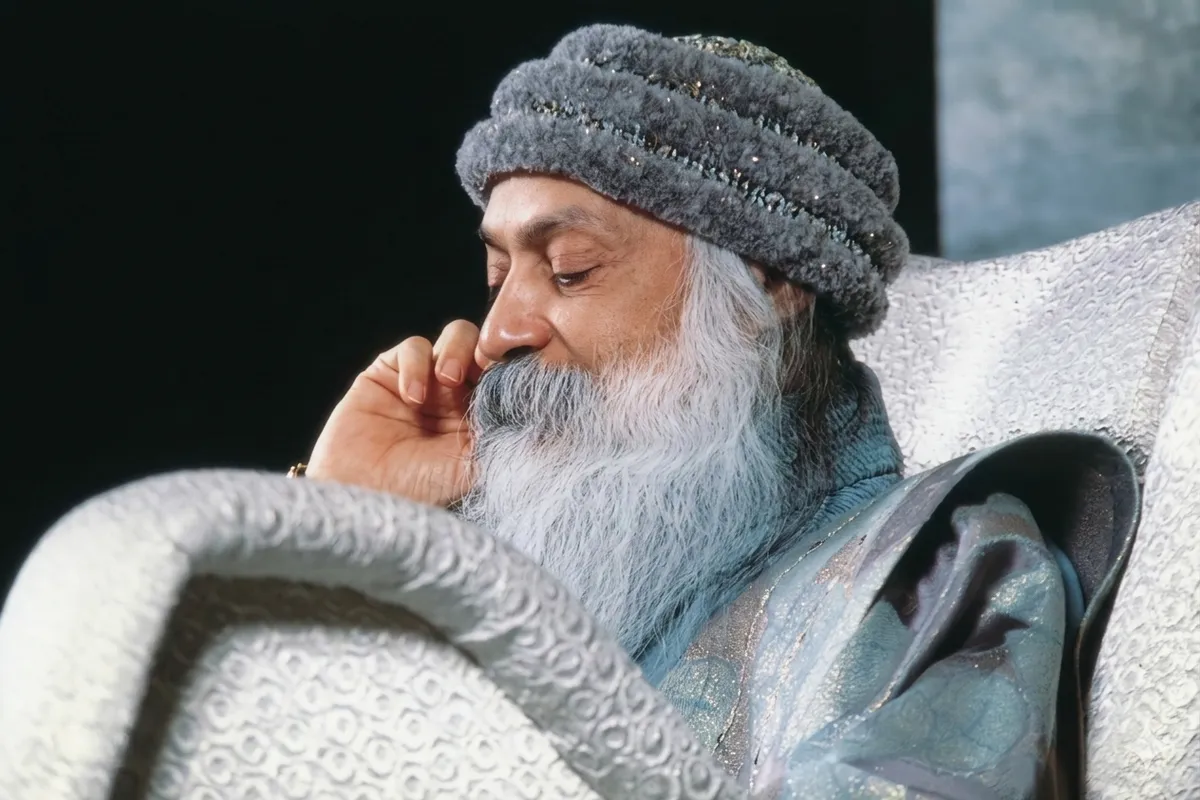
If you never pause, you get stiff inside; short breaks keep you soft, awake, and flexible.
From the Discourses
Passages where Osho speaks to this question — each links to the complete discourse.
This is one of the basic things I want to contribute. Religions have always created trouble because they think that if you go out too much, you become incapable of coming in or you may be lost. So one becomes afraid and goes on avoiding people, relationships, work. One starts condemning all that is extrovert, worldly, this-worldly. One starts keeping oneself in one's inner space. You can remain there but the inner space will remain very shallow because the pendulum has to swing both ways. If you want the pendulum to stay always at the left, sooner or later you will not be able to even keep it there, because when it goes to the right, then it comes to the left. The bigger the swing the better. So be a swinger ! [Osho said that through moving into opposites, depth would come more easily.
Do something right now... close your eyes, and allow something that you have never allowed before.... [Osho shines his torch on him] Good, mm? Very good. For three weeks be completely crazy, and after three weeks things will balance by themselves. The experience has been good. You could at least do something. (Osho smiled at him warmly.) Good... [A group member says he is pretty shaken up 'I had a strong experience of the limitations I was casing myself in.'] (after a few seconds pause) You carry a very strong armour around you. But it is good that you are becoming aware. It is just an armour, it is not clinging to you. You are clinging to it, so when you become aware, you can simply drop it. The armour is dead. If you don't carry it, it will disappear.
In his song of mahamudra, tilopa says: mahamudra is beyond all words and symbols, but for you, naropa, earnest and loyal, must this be said: the void needs no reliance, mahamudra rests on nought. Without making an effort, but remaining loose and natural, one can break the yoke -- thus gaining liberation.
Tilopa doesn't say, "Be moral," he says, "Be natural." And these are completely, diametrically opposite dimensions. A moral man is never natural, cannot be. If he feels angry he cannot be angry because the morality doesn't allow it. If he feels loving he cannot be loving because the morality is there. It is always according to the morality that he acts; it is never according to his nature. And I tell you: if you start moving according to moral patterns and not according to your nature, you will never reach the state of Mahamudra, because it is a natural state, the highest peak of being natural. I tell you: if you feel angry, be angry -- but perfect awareness has to be retained. Anger should not overpower your consciousness, that's all. Let anger be there, let it happen, but be fully alert to what is happening. Remain loose, natural, aware,…
Osho, how should life be lived, and what is its purpose?
Enter life—stay awake and experiment; try waking and observe; try sleeping and observe; try eating; try lying and truth-telling; try anger and forgiveness; try love and enmity—taste all. In all of it, wherever depth increases, where peace increases, where joy increases, where a glimpse of the divine comes—recognize that as the rule forming for your life. And do not make even that rule so rigid that there is no possibility of change tomorrow. No one knows what life will bring tomorrow. The straight path may suddenly need a turn. What was pleasurable may become painful. Keep an opening for tomorrow. Hence the second thing: discover life’s rules from within. And also: do not consider your discovered rule absolute. Do not regard it as perfect. It must have the flexibility to change tomorrow. Life flowers fully only in one who can change each moment. But we are “consistent” people. We insist:…
ओशो, जीवन को कैसे जीया जाए, उसका प्रयोजन क्या है?
जिंदगी में उतरें--जाग कर देखें, उठ कर देखें, भोजन करके देखें, झूठ बोल कर देखें, सच बोल कर देखें, क्रोध करके देखें, क्षमा करके देखें, प्रेम करके देखें, दुश्मनी करके देखें--सारे अनुभव लें। जिंदगी में उतरें। और उन सारे अनुभवों में कि जहां से गहराई ब़ढ़े, जहां से शांति बढ़े, जहां से आनंद बढ़े, जहां से प्रभु की झलक मिले, समझें कि वह मेरे जीवन का नियम बनना शुरू हुआ। और उस नियम को भी इतनी सख्ती से न बना लें कि कल उसमें बदलाहट का उपाय न रह जाए, क्योंकि कोई भी नहीं जानता कि कल जिंदगी क्या लाए। कोई भी नहीं जानता कि कल तक जो सपाट रास्ता था, कल उसे बदलना पड़े, मोड़ आ जाए। कोई भी नहीं जानता कि कल तक जो बहुत सुखद था, आने वाले कल में दुखद हो जाए। कल के लिए ओपनिंग चाहिए। इसलिए दूसरी बात आपसे कहता हूं, अपने भीतर से जीवन के नियम खोजें। और दूसरी बात कहता हूं, अपने खोजे नियम को भी एब्सोल्यूट, परिपूर्ण न मान लें। अपने खोजे नियम को भी पूर्णता न समझ लें। वह भी कल बदलने की लोच, फ्लैक्सिबिलिटी उसमें होनी चाहिए। …
Question: Osho, One day the great Sultan Mahmud was strolling through the streets of his capital, Ghazni. He saw a poor porter staggering under the heavy burden of a great stone on his back, almost at his last breath. Moved to compassion, Mahmud gave a royal order: “O porter, drop that stone.” The command was obeyed at once. But the stone lay there on the road for many years, an obstacle to passersby. In the end many citizens petitioned the king to issue an order for its removal. Thinking with administrative prudence, the Sultan said, “What has been done by royal decree cannot be annulled by an equal decree. People would then think that royal edicts are born of mere whim. The stone will remain where it is.” The result was that during Sultan Mahmud’s lifetime the stone stayed there.
महान सुलतान महमूद एक दिन अपनी राजधानी गजनी की सड़कों पर घूम रहे थे। उन्होंने देखा कि एक गरीब भारिक, पीठ पर भारी पत्थर का बोझ लिए दम तोड़ रहा है। उसकी हालत से द्रवीभूत होकर महमूद ने शाही ढंग से हुक्म दिया, ‘ओ भारिक! पत्थर को नीचे गिरा दे।’ एक गरीब मजदूर कहीं पत्थर को ले जा रहा है। पसीने से तरबतर है, कमर टूटी जा रही है फिर भी ढो रहा है। महमूद ने कहा, पत्थर को नीचे गिरा दे। सम्राट की आज्ञा हुई तो उसने पत्थर नीचे गिरा दिया।