
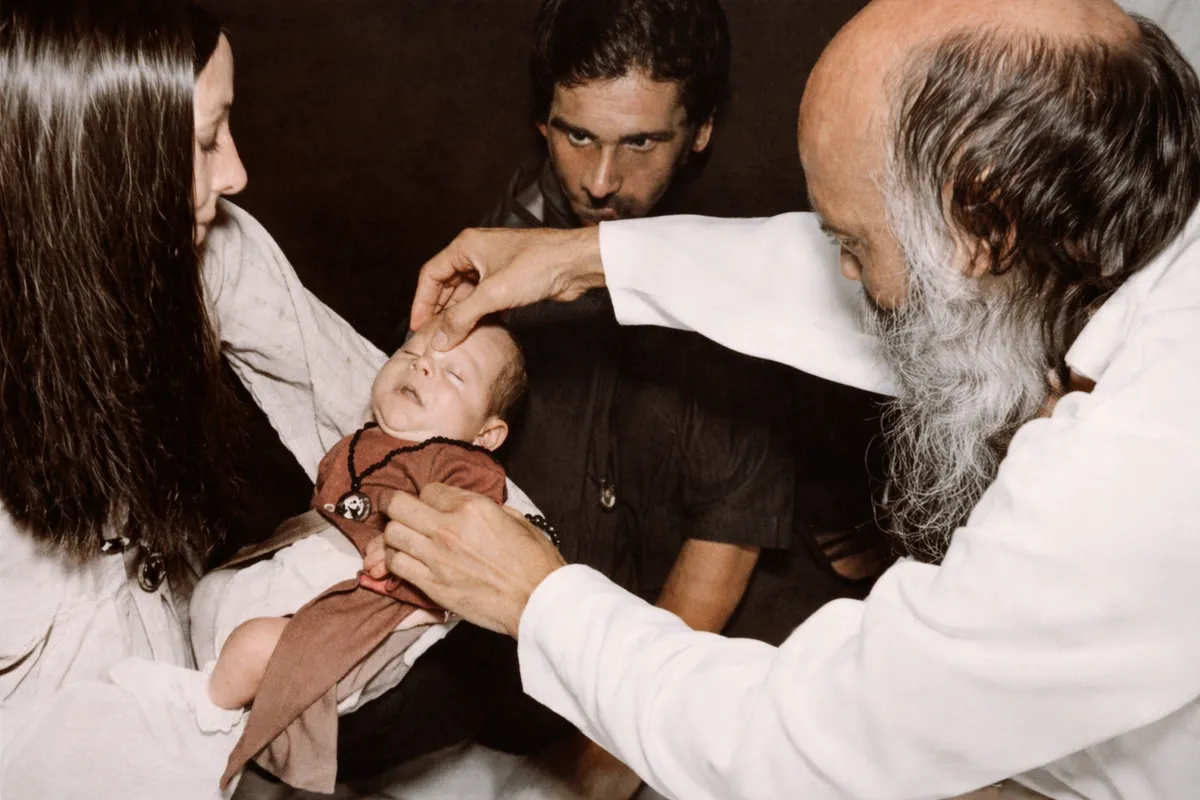
It’s the special underwear (kachha), but clothes don’t make you wise—being awake inside does.
From the Discourses
Passages where Osho speaks to this question — each links to the complete discourse.
All scriptures become sticks. You worship them, memorize them. And it is not that no one ever woke through them — they did, but a living hand was behind them. Nanak was behind the stick. The vibration in the stick was not the stick’s — it came from the living hand. Now you go on — keep the five Ks, tie the hair, wear the kara, carry the kirpan, the kachh — do what you will, but these are sticks; nothing will happen now. A jugat is alive only when a living hand is behind it. While I am, use my stick. After I am gone, you will practice Dynamic Meditation — nothing will happen. And you will surely do it after I am gone — I am certain — because you have the old habit. Why so? Because methods do not frighten you; they do not threaten your sleep.
… तुम उनकी पूजा करते हो, याद करते हो। और यह भी नहीं है कि कभी उनसे लोग न जगे थे--जगे थे। लेकिन कोई जीवित हाथ पीछे था। कोई नानक पीछे था। वह कंपन जो डंडे में था, डंडे का नहीं था। वह उस जीवित हाथ का था। वह डंडे में जो जीवन प्रवाहित हो रहा था, वह नानक का था। अब तुम चले जाओ। पांचों ककार पूरे करते रहो। केश बांधो, कंधा लगाओ, कटार रखो, कच्छा पहनो, जो तुम्हें करना है करो, मगर ये सब डंडे हैं। अब इनसे कुछ होने वाला नहीं। जुगत जीवित होती है, जब कोई हाथ जागा हुआ पीछे होता है। …
Garden, dance, sing. Set seriousness aside for a while; be non-serious, light. For a time, do not be old, do not be adult—be a child. One who can be a child for an hour even in old age—his life begins to change; his energy gathers as in childhood. And the third and final point: One, live moment to moment; be free of future and desire. Two, be creative; utility is not enough—meaningful works alone are not enough—work that is 'meaningless' is also needed. Do not only build character; allow lila too. Third: whenever you find the chance, consciously close all the senses and look within. Twenty-four hours we look outside. When the chance comes to look within, we are asleep—so inner seeing never happens. Either we look out, or we do not look—these are our two modes. By day, we look out; by night, we do not look.
तो आप अपनी जिंदगी में--दूसरा सूत्र अकाम की तरफ--सृजनात्मक, टु बी क्रिएटिव...। दो-चार क्षण खोजें, कुछ भी खोजें और सृजन में लग जाएं। बगीचे में काम कर सकते हैं, नाच सकते हैं, गीत गा सकते हैं। गंभीरता को कुछ देर के लिए अलग कर दें, गैर-गंभीर हो जाएं, हलके हो जाएं। कुछ देर के लिए बूढ़े न रह जाएं, जवान न रह जाएं, बच्चे हो जाएं। और जो आदमी बुढ़ापे में भी घंटे भर के लिए बच्चा हो जाए, उसकी जिंदगी बदलनी शुरू हो जाती है। उसकी ऊर्जा फिर बचपन की तरह इकट्ठी होने लगती है।
Oh yogi, assume the posture of contentment and modesty.
PICK UP THE CARRYING BAG OF DIGNITY AND HONOR, AND APPLY THE SACRED ASH OF MEDITATION. ESTABLISH DEATH AS YOUR BEDROLL; MAKE A MAIDEN OF YOUR BODY. LET EXPERIENCE BE YOUR STAFF OF LIBERATION, AND CONSIDER THE UNITY OF ALL AS YOUR FIRST PRINCIPLE. TO CONQUER THE MIND IS TO CONQUER THE WORLD. IF YOU MUST BOW, BOW TO HIM. HE IS THE PRIMAL BEING, PURE, WITHOUT BEGINNING OR END. HE IS THE UNSTRUCK SOUND. HE IS IMMUTABLE THROUGH ALL TIME. MAKE KNOWLEDGE YOUR PLEASURE AND COMPASSION YOUR STOREHOUSE. MAKE A CONCH SHELL OF THE ETERNAL MUSIC PLAYING IN EVERY BEING. HE ALONE IS A MASTER IN WHOM ALL BEINGS ARE INTERTWINED, WHILE THE SEARCH FOR SUPERNATURAL POWERS IS A FALSE PATH. THE LAW OF UNION AND SEPARATION GOVERNS ALL THINGS, AND DESTINY DETERMINES OUR JUST INHERITANCE. IF YOU MUST BOW, BOW TO HIM. HE IS THE PRIMAL BEING, PURE,…
Verse (Sanskrit): पउड़ी: 28 मुंदा संतोखु सरमु पतु झोली धिआन की करहि बिभूती। खिंथा कालु कुआरी काइआ जुगति डंडा परतीति।। आई पंथी सगल जमाती मनि जीतै जगु जीत।। आदेसु तिसै आदेसु।। आदि अनीलु अनादि अनाहति। जुगु जुगु एको वेसु।। पउड़ी: 29 भुगति गिआनु दइआ भंडारणि घटि घटि बाजहि नाद। आपि नाथु नाथी सभ जा की रिधि सिधि अवरा साद।। संजोगु विजोगु दुइ कार चलावहि लेखे आवहि भाग।। आदेसु तिसै आदेसु।। आदि अनीलु अनादि अनाहति। जुगु जुगु एको वेसु।। Transliteration: paur̤ī: 28 muṃdā saṃtokhu saramu patu jholī dhiāna kī karahi bibhūtī| khiṃthā kālu kuārī kāiā jugati ḍaṃḍā paratīti|| āī paṃthī sagala jamātī mani jītai jagu jīta|| ādesu tisai ādesu|| ādi anīlu anādi anāhati| jugu jugu eko vesu|| paur̤ī: 29 bhugati giānu daiā bhaṃḍāraṇi ghaṭi ghaṭi bājahi nāda| āpi nāthu nāthī sabha jā kī ridhi sidhi avarā sāda|| saṃjogu vijogu dui kāra calāvahi lekhe āvahi bhāga|| ādesu tisai ādesu|| ādi anīlu anādi…
And it is because of words that so many sects are born. Buddha lived two thousand years before Nanak—he used the language of his day. Krishna, another two thousand earlier, used another language. Muhammad, in a different land and air, used yet another. Mahavira different, Jesus different. Languages differ, because of you. Among the enlightened there is no difference. Nanak spoke in a tongue people of his time could understand. So Nanak says, Karta Purakh—the Creative Person. Instantly we think: if He is the Creator and we are the created, duality begins. Yet Nanak has just denied duality by declaring the One. If He is the Maker and the made stands separate, then there are two. The trouble begins with language. As Nanak goes further, the challenge grows. The first word after his samadhi is, Ik Onkar Satnam. In truth, the entire Sikh dharma is contained in these three words.
और तुम्हारे शब्दों के कारण ही इतने संप्रदाय पैदा हो जाते हैं। क्योंकि बुद्ध नानक से दो हजार साल पहले हुए। तो बुद्ध दूसरी भाषा का उपयोग करते हैं, जो प्रचलित थी, जो लोग समझते थे। कृष्ण और दो हजार साल पहले बुद्ध से हुए। वे और दूसरी भाषा का उपयोग करते हैं, जो लोग समझते थे। मुहम्मद और दूसरी भाषा का उपयोग करते हैं, क्योंकि दूसरी हवा, दूसरा मुल्क, दूसरे ढंग के लोग। महावीर अलग, जीसस अलग। भाषाओं के भेद हैं। भाषा तुम्हारी वजह से अलग है, अन्यथा ज्ञानियों में कोई भी भेद नहीं। नानक जो भाषा का उपयोग कर रहे हैं, वह नानक के समय समझी जा सकती थी। तो नानक कहते हैं, कर्ता पुरुष। वही बनाने वाला। लेकिन तत्क्षण हमें खयाल आता है कि अगर वही बनाने वाला है, और हम बनाए गए हैं, तो द्वैत हो गया। और नानक तो शुरू में ही इनकार कर दिए हैं कि वह एक है। अगर वह बनाने वाला और स्रष्टा है, और सृष्टि अलग है जिसको उसने बनाया, तो द्वैत शुरू हो गया। हमारी भाषा से अड़चन शुरू होती है। …