
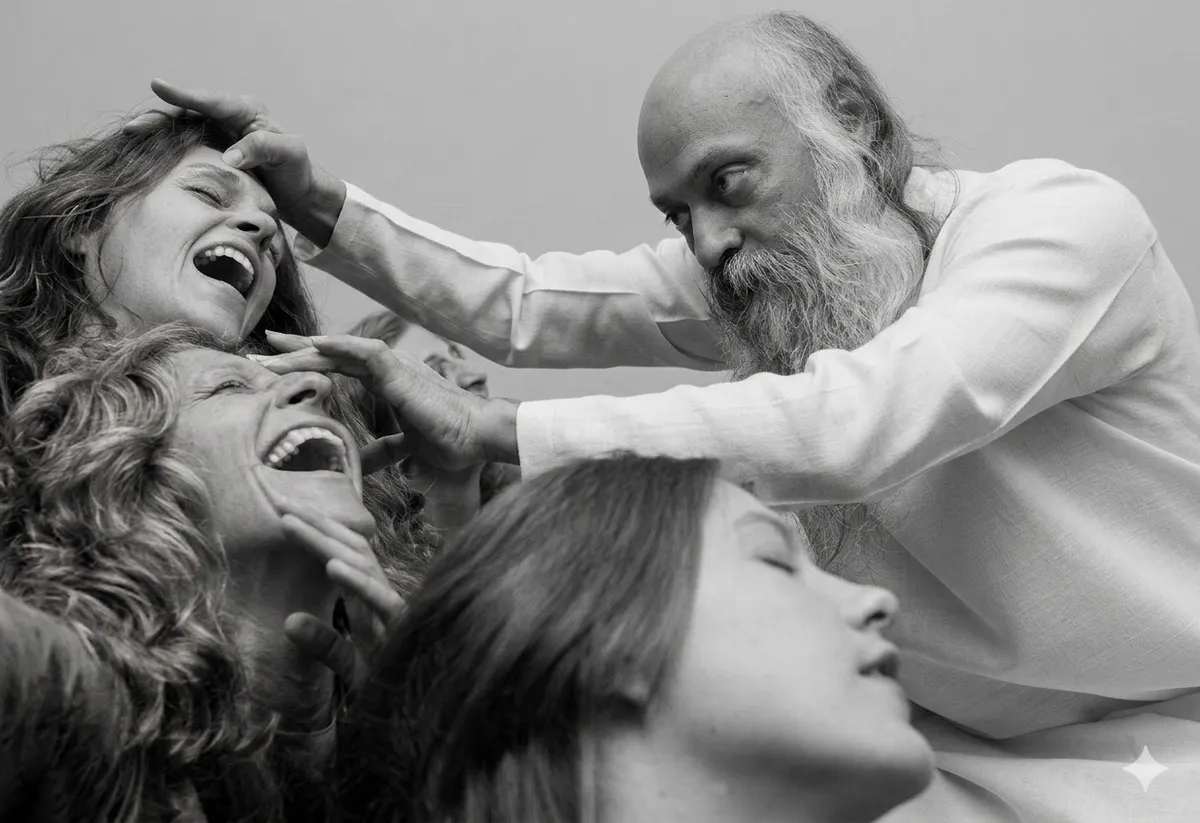
It feels like your heart quietly opening to the master from within, even without sitting next to him.
From the Discourses
Passages where Osho speaks to this question — each links to the complete discourse.
Beloved Osho, I feel warm love in your presence and now I realize that when I am not close to you it does not happen in the same way. Is it still true that time and space do not make any difference in the great affair between master and disciple?
People's understanding was absolutely wrong that Ananda, who had burst into tears, must have loved the master more. Asked, he said, "I am crying because he was alive, and for forty-two years I have been his most intimate disciple -- intimate in the sense that I was always with him. In these forty-two years not even for a single day was I separate; even in the night I used to sleep in his room, just to be present in case he needed something. I am not crying because I was the most intimate, I am crying because even with such a long physical intimacy I have remained separate from him. Something has remained like a barrier." Gautam Buddha was not dead yet. He had closed his eyes, and he was relaxing into the eternal. He came back, opened his eyes, and said to Ananda, "Don't be worried. It was my…
Osho, kindly explain the meaning of inner closeness to the true Master.
Now the first man was making a mistake, but at least the mistake was his own. These others were making a borrowed mistake; even their mistake was not theirs. If you bow at someone’s feet because you saw someone else do it, it will be false. If you bow out of greed, it will be false. If you bow thinking you may gain something—standing in an election and hoping to win— People come to me. They touch my feet and say, “We are standing in the election; now your blessing is in your hands.” I tell them, “If you truly want my blessing, you will lose the election. Because I can only bless that God forbid you should win. It’s better to get out of this madhouse before you enter it. Once inside, getting out becomes very difficult. Once you reach Delhi, people die at Rajghat and never return. After…
तीसरा प्रश्न: ओशो, अनुकंपा कर समझाएं सदगुरु से आंतरिक निकटता का अर्थ।
अब यह पहला आदमी तो गलती कर ही रहा है लेकिन फिर भी इसकी गलती कम से कम इसकी निजी है। ये दूसरे जो आदमी गलती कर रहे हैं, ये उधार गलती कर रहे हैं, इनकी गलती भी अपनी नहीं है। अगर तुम किसी को देख कर किसी के चरणों में झुक जाओ तो वह झूठ होगा। अगर तुम किसी लोभ के वश झुक जाओ तो झूठ होगा। अगर तुम इसलिए झुक जाओ कि शायद कुछ लाभ होगा, चुनाव में खड़े हो गए हैं, शायद जीत जाएंगे। इधर मेरे पास लोग आ जाते हैं। चरण छूकर कहते हैं कि चुनाव में खड़े हो गए हैं, अब आपके हाथ में लाज है। मैं उनसे कहता हूं, अगर तुम सच में मेरा आशीर्वाद चाहते हो तो चुनाव में हारोगे। क्योंकि मैं वही आशीर्वाद दे सकता हूं कि भगवान न करे कि तुम जीत जाओ। क्योंकि पहले ही निकल आओ इस पागलखाने के बाहर तो अच्छा है। घुसने के बाद निकलना बहुत मुश्किल हो जाएगा। एक दफे दिल्ली पहुंच गए फिर राजघाट पर ही मरते हैं लोग, फिर लौट नहीं पाते। दिल्ली के बाद राजघाट ही बचता है, फिर और जाओ कहां? तो अभी बाहर से ही निकाल लूंगा तुम्हें। …
Osho, what does it mean that a disciple should be close to the master and open his heart? Please explain well. And why is it so difficult, and why is there fear?
If ever you are entering someone’s love, if ever someone’s call reaches you, if ever you glimpse a ray of the divine around someone, do not miss the opportunity. What is there to lose? One more illusion—so be it! Among millions of illusions, one more—what obstacle will that create? So many thorns have pierced you; one more thorn will pierce. So many people have deceived you; one more person will deceive you. This is what I call courage. Courage means: try once more. Courage means: do not take past experience as the whole truth. It is possible that something new may happen—trust in that possibility is faith. To believe that only what has happened so far will keep happening forever—that is to sink into melancholy, into despair. True, you have traveled many paths and none took you anywhere. There is nothing to be frightened about in that. I have heard:…
दूसरा प्रश्न: ओशो, शिष्य गुरु के निकट हो और अपना हृदय खोले, इसका क्या तात्पर्य है? कृपया अच्छी तरह से समझाएं। और आखिर यह इतना मुश्किल क्यों है और भय क्यों होता है?
इसलिए अगर कभी किसी के प्रेम में उतर रहे हो, कभी किसी की पुकार तुम्हें सुनाई पड़ती हो और कभी किसी के आस-पास परमात्मा की किरण दिखाई पड़ती हो तो चूक मत जाना अवसर। खोने को क्या है? एक भ्रम और होगा इतना ही न! चलो ठीक, एक भ्रम और सही। करोड़ों भ्रम में एक भ्रम जुड़ जाएगा तो क्या अड़चन होने वाली है? इतने कांटे गड़े, एक कांटा और गड़ जाएगा। इतने लोगों ने धोखा दिया, एक आदमी और धोखा दे जाएगा। इसको मैं साहस कहता हूं। साहस का अर्थ है, एक बार और प्रयोग करें। साहस का अर्थ है, अतीत के अनुभव को ही सब कुछ न मान लें। संभव है, कुछ और हो, नया हो। नया हो सकता है, इस बात का भरोसा ही श्रद्धा है। जो अब तक हुआ है वही सदा होता रहेगा ऐसा मान लेना तो फिर विषाद में घिर जाना है, निराश हो जाना है। सच है, बहुत मार्गों पर तुम गए, कोई मार्ग कहीं नहीं ले गया, इससे कुछ घबड़ाने की बात नहीं है।
In moments of deep love and merging with the surrounding existence, o fragrance, your fragrance, comes to me, and gratitude arises in my heart. Is love the only communion possible with a master?
There is no other communion, not only with a Master -- there is no other communion with anybody except love. There are three ways to be related. One we call communication. It is mind to mind. You talk. Words meet, not you. Intellects grope, try to understand each other, but you remain far away. It is a very guarded relationship. Not really a relationship, just a groping, trying to find whether you would like to come closer or not. Intellect is very suspicious, non-trusting. In ordinary life ninety-nine per cent of your relationships remain intellectual. You talk to judge You talk to protect. You talk to avoid. In fact when you are talking to people you are not saying much, in fact you are trying not to say much. Words create an illusion that you are saying many things. It may be just otherwise, you may be hiding. Have you…
Beloved master, to many people in the west, the master/disciple relationship is outside their experience. What does it involve?
Chris Lister, Allen Jewhurst, Lesley Rogers, the East has contributed a few tremendously significant things to human consciousness. One of those beautiful things is the phenomenon of the master/disciple relationship. It is an Eastern contribution; just as science is a Western phenomenon, mysticism is Eastern. Science is extrovert, mysticism is introvert. Science is trying to know the objective reality, and mysticism is an exploration of the subjective reality, of the interiority of your own being. In the world of science the teacher/student relationship exists, because science can be taught -- hence the teacher/ student relationship. But religion, mysticism, cannot be taught, it can only be caught. Hence in mysticism there is no relationship like the teacher/student relationship. A totally different kind of relationship exists: the master/disciple. The differences are tremendous, the differences are great. Between a student and a teacher, doubt is the method. The teacher is there to help…