
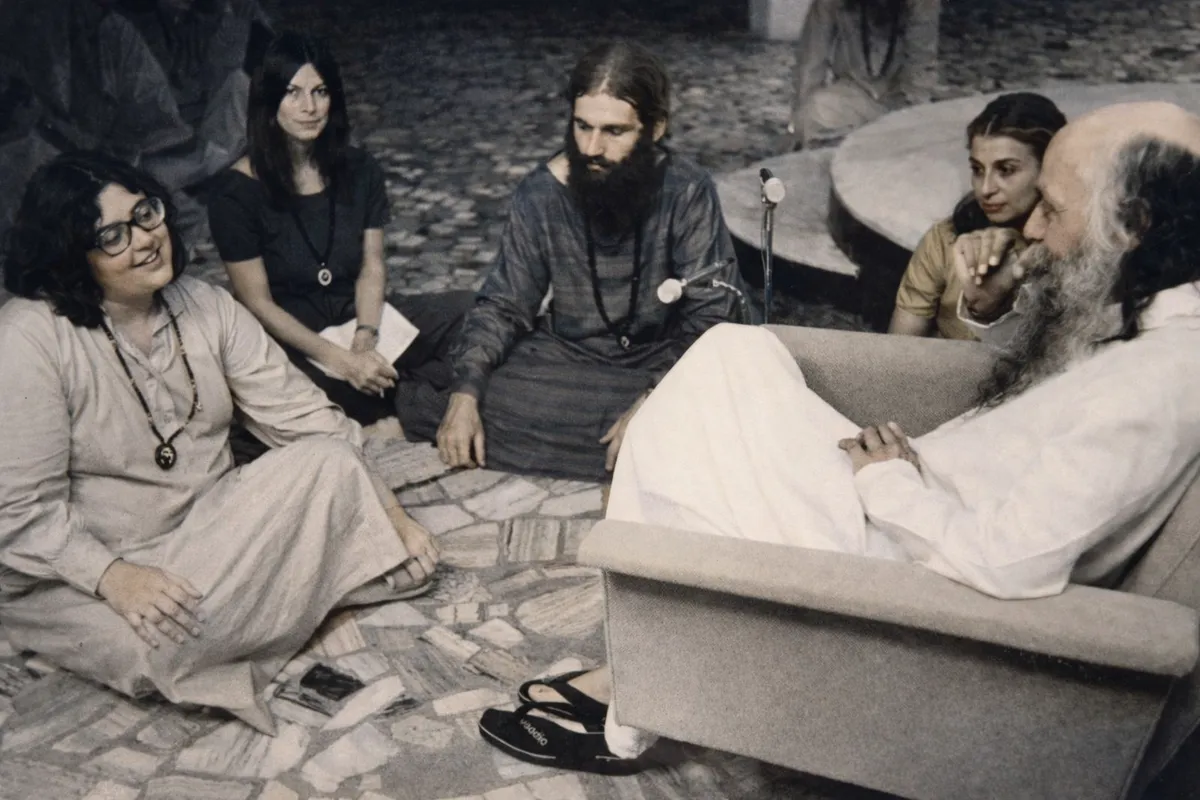
Don’t blame the government; it reflects the people’s mindset—change the mindset to change the rulers.
From the Discourses
Passages where Osho speaks to this question — each links to the complete discourse.
Osho, from Morarji Desai’s government to Rajiv Gandhi’s, you have remained only a critic. But do you have any particular approach or answer for solving this country’s problems?
This country’s population is the enemy of this country—a problem that can be solved very simply, with a little intelligence. In the commune I created in America there were five thousand sannyasins, twenty-five hundred couples. In five years not a single child was born. No guns were used, no police stood guard—only understanding. Second: India has been enslaved for two thousand years—by Mughals, Turks, Huns, Muslims, the British. Two thousand years is a long time. Slavery has sunk so deep into the mind that it doesn’t leave even when you try to remove it. We must remove this inner slavery. It is not only slavery; it has filled your mind with rubbish that will go only when slavery falls. Outwardly you look free—only outwardly. Within, no difference. Slavery is a chain that stifles human genius. In three hundred years the British built schools, colleges, universities here—not so you would become…
प्रश्न: ओशो, मोरार जी सरकार से लेकर राजीव सरकार तक के आप केवल आलोचक ही बने रहे हैं। किंतु इस देश की समस्याओं को सुलझाने के लिए आपके पास क्या कोई विशेष दृष्टिकोण या उत्तर है?
अमरीका में जिस कम्यून को मैंने निर्मित किया था, उसमें पांच हजार संन्यासी थे। ढाई हजार जोड़े। लेकिन पांच वर्षों में एक बच्चा पैदा नहीं हुआ। और न तो बंदूकें इस्तेमाल की गईं, और न जबरदस्ती पुलिस खड़ी की गई, सिर्फ समझाने की बात थी। दूसरी बात, भारत दो हजार सालों से गुलाम रहा है। कभी मुगल, कभी तुर्क, कभी हूण, कभी मुसलमान, कभी अंग्रेज। दो हजार वर्ष लंबा समय है। दो हजार साल की गुलामी ऐसी बैठ गई है दिमाग में कि हटाए भी नहीं हटती। इस गुलामी को दिमाग से हटा देना जरूरी है। क्योंकि यह गुलामी ही नहीं, इस गुलामी ने बहुत कुछ तुम्हारे दिमाग में कूड़ा-कचरा भर दिया है, जो कि इस गुलामी के गिरने के साथ ही जाएगा। यूं देखने को तो तुम आजाद हो गए हो--बस देखने को। भीतर की गुलामी में कोई फर्क नहीं है।
Osho, why is india drifting towards lawlessness? Are indians the most lawless people?
So the very next day Willy went onto the course, found some partners and began to play. At the fourth hole, however, after a very careful swing, poor Willy missed the ball completely. Instinctively, he let out a holler, 'Oy gevalt!' he shrieked. Suddenly realizing what he had said, Willy smiled broadly and added with a flourish, 'Whatever that means!' A tale is told of a certain countess who was half French and half English. When she was in labour with her first child, her husband was beside himself with anxiety. The doctor tried to calm him down. 'She's got plenty of time to go,' he said. 'Let's play cards.' So he dealt out a hand, but then suddenly a cry came from the bedroom, 'Mon dieu! Mon dieu!' The count jumped up from his chair. 'Not yet, not yet,' soothed the doctor. 'Keep on playing.' So they did, but…
Beloved Osho, what are the defects of the present political system in india, and what is the remedy? What type of political system would be suitable?
It was simply out of necessity; when his mother was assassinated he had to come into politics, unwillingly. He has no political ambitions, and that is a great hope. India has maintained a policy of neutrality for forty years-not being either in the Soviet camp or American camp, but remaining neutral to both. The idea was that if you are neutral to both, both will be friendly to you. But in reality, just the opposite happened. Both are suspicious of India. Because you are neutral, nobody knows: in a situation when your support is needed, which camp will you support? Drop that idea of neutrality. I am not saying become part of a camp. There is no need to become part of a camp. But drop the idea of being neutral; mix with both the camps and allow both the camps to help you. And both will compete in helping…
Osho, where are this country’s politicians taking the nation? What became of socialism?
This country can be healthy, prosperous, abundant. It has everything, and its people have great talent. But our assumptions are wrong. Then you weep and worry and ask: where are politicians taking the country? Ask yourself: whom did you choose? From that, you’ll know where they’ll take you. Politics should be in the hands of the young—fresh minds who still have the courage to experiment, the capacity to try, even the guts to make mistakes. But whom do you send into politics? Seventy-five-year-olds, eighty-year-olds, eighty-four-year-olds. Everywhere else retirement rules apply—at fifty-five, fifty-eight, or sixty. Why? Because after sixty, people generally go senile—everywhere else. But in politics? After sixty, suddenly they’re deemed wise. What a joke. Until you’re senile, you’re nobody; who will even recognize you? First question: have you gone senile? If yes, you’re fit to be a leader. Morarji Desai left the university sixty years ago. Whatever he learned…
तीसरा प्रश्न: ओशो, इस देश के राजनेता देश को कहां लिए जा रहे हैं? समाजवाद का क्या हुआ?
यह देश स्वस्थ भी हो सकता है, समृद्ध भी हो सकता है, संपन्न भी हो सकता है। इसके पास सब है। और मनुष्यों की इतनी संपदा है, इतनी प्रतिभा है। मगर हमारी धारणाएं गलत हैं। और फिर तुम रोते हो, और फिर तुम परेशान होते हो। फिर तुम पूछते हो: इस देश के राजनेता देश को कहां लिए जा रहे हैं? तुमने राजनेता किसको चुना है? तुमने जिसको चुना है, समझ लो उससे कि वह तुम्हें कहां ले जाएगा। राजनीति युवकों के हाथ में होनी चाहिए, ताजे मस्तिष्कों के हाथ में होनी चाहिए--जिनके पास अभी प्रयोग करने का साहस है, क्षमता है, जो अभी भूल-चूक करने की भी हिम्मत कर सकते हैं। लेकिन तुम राजनीति में लोगों को ले जाते हो--पचहत्तर साल हैं कोई, कोई अस्सी साल, कोई चौरासी साल। और सब जगह रिटायरमेंट के नियम लागू होते हैं--कहीं पचपन साल में, कहीं अट्ठावन साल में, कहीं साठ साल में आदमी को हम रिटायर कर देते हैं। क्यों? क्योंकि साठ साल के बाद और सब जगह आदमी सठिया जाते हैं। और राजनीति में? साठ साल के बाद ही समझदार होते हैं। बड़ा मजा है। जब तक सठियाओ नहीं, तब तक तो कोई तुम्हारी प्रतिष्ठा ही नहीं है। तब तक कौन तुम्हें पूछता है! पहली बात तो लोग यह पूछते हैं कि सठियाए कि नहीं? सठिया गए तो नेता होने के योग्य हो।
Osho, Shri Morarji Desai talks a lot about doing this and that in the national interest—then why doesn’t he do anything?
I know a gentleman. All his life he has contested elections, and all his life he has lost them. Contesting and losing—that is his entire story. Wherever an election is happening, of whatever kind—if he just hears of it, he stands. And every time he forfeits his deposit. I got to wondering what the matter was. And he’s a decent man—truthful, honest. I looked into it and discovered that it is precisely because of his decency, truthfulness, and honesty that he forfeits his deposit. In one election people asked him, “Why are you standing—To serve the people?” He said, “No, I want to taste the perks of office.” Now who will vote for such a man? Though what he said was true: “I have nothing to do with serving the people. I want to enjoy the sweetmeats of office. To hell with the people!” He spoke with perfect honesty—but such…
छठवां प्रश्न: ओशो, श्री मोरार जी देसाई राष्ट्र-हित में यह करूंगा वह करूंगा, ऐसी बातें तो बहुत करते हैं, फिर कुछ करते क्यों नहीं?
एक सज्जन को मैं जानता हूं। वह जिंदगी भर से चुनाव लड़ते हैं और जिंदगी-भर से चुनाव हारते हैं। चुनाव लड़ना और चुनाव हारना, यही उनकी कथा है। कहीं भी चुनाव हो, कैसा भी चुनाव हो; उनको खबर भर लग जाये, वे चुनाव में खड़े होते हैं। और हर बार उनकी जमानत जब्त होती है। मैं थोड़ा विचार में पड़ा कि मामला क्या है! और आदमी भले हैं, सच्चे हैं, ईमानदार हैं। मैंने खोज-बीन की, तो पता चला कि उनकी भलाई, उनकी सचाई, उनकी ईमानदारी के ही कारण जमानत जब्त होती है। एक चुनाव में खड़े थे, लोगों ने उनसे पूछा कि आप चुनाव में किसलिए खड़े हैं, जनता की सेवा के लिए? उन्होंने कहा कि नहीं, मुझे पद का मजा लेना है। अब इसको कोई वोट देगा, इस आदमी को? हालांकि, बात सच्ची कही उन्होंने कि जनता की सेवा वगैरह से मुझे कुछ लेना-देना नहीं है। …