
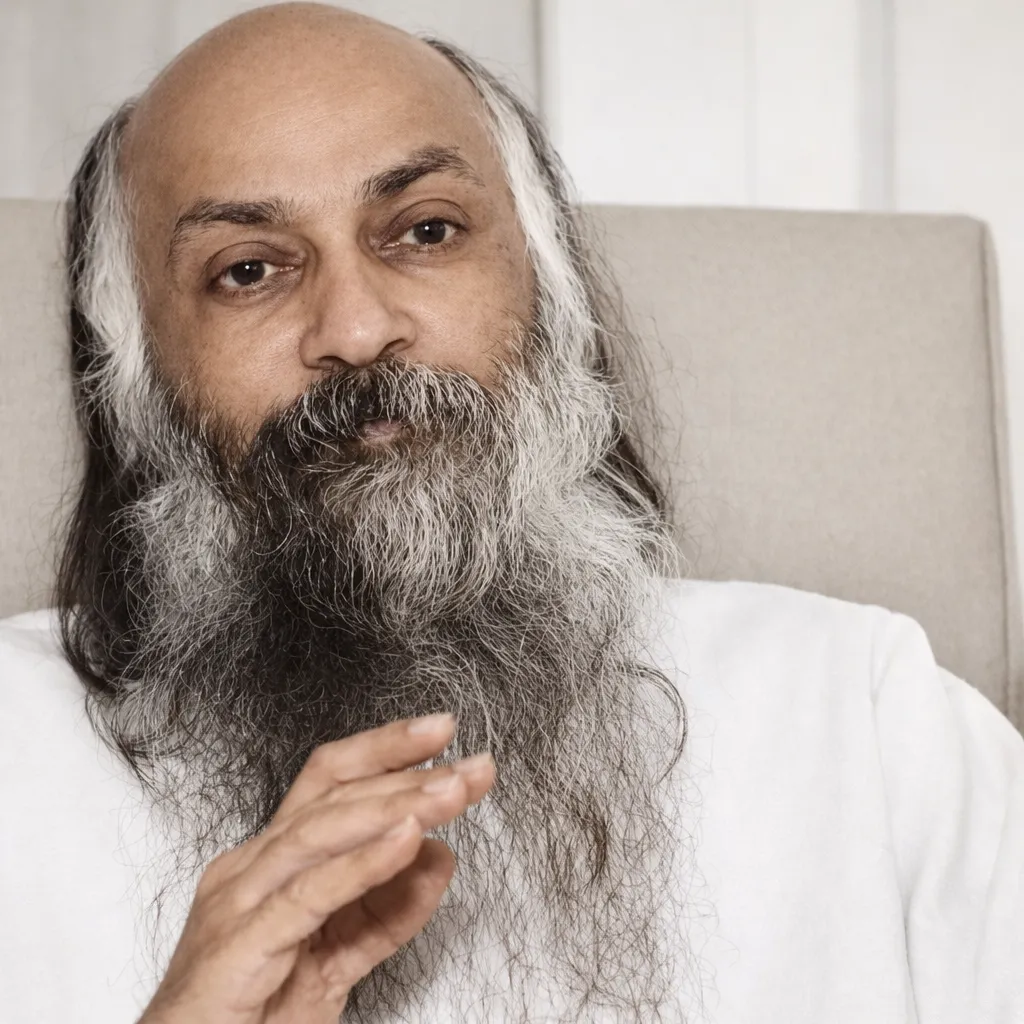
It’s being like a clear mirror—wide awake, seeing things as they are now, keeping nothing, and not clinging to ideas or a separate “me.”
From the Discourses
Passages where Osho speaks to this question — each links to the complete discourse.
What exactly do yowl mean by 'conscious ignorance'? Is it the recognition that one is ultimately, fundamentally ignorant? Or is there more to it?
Ashoka, conscious ignorance is not ignorance at all. It is the ultimate state of consciousness -- how can it be ignorant? It is pure knowing. Of course, there is no knowledge, hence it is called ignorance. But there is knowing, utter knowing, clarity, transparency. No knowledge is gathered, but all is known. Conscious ignorance means innocence AND conscious. If innocence is unconscious, sooner or later it will be corrupted by knowledge. Unconscious mind is always ready to be corrupted, polluted, distracted. Consciousness means centering, awareness -- you cannot be distracted. You remain in your knowing, but you don't accumulate knowledge. Knowledge is always of the past: knowing is in the present, is of the present. Like a mirror: the mirror reflects if something comes before it, but when it passes the mirror is empty again. This is conscious ignorance -- not that the mirror does not reflect: it reflects, but…
Osho, could you say something about what is going on in Delhi?
I’ll tell a little story. When Lanka’s former ruler Ravana was on his deathbed, Rama sent Lakshman to learn statecraft from him—saying, “Son, we may have won, but we have no experience of running the administration here; go and ask him how to run things.” Lakshman went there and said to Ravana, “You are dying now—tell us how to govern here.” Ravana said, “Half the politics I handled, half Kumbhakarna did. Had you gotten in touch with Kumbhakarna as well?” Lakshman said, “Yes—he said: eat to your heart’s content and then sprawl on the sofa with your eyes closed. This is the best method.” “Tell me,” Ravana asked, “are you going to unleash dictatorship, or will you run things by democracy? Which method will be suitable?” “What will go down well with the people?” “Nothing,” said Ravana. “When you impose dictatorship, the people will yearn for democracy; and when you…
अंतिम प्रश्न: ओशो, दिल्ली में जो चल रहा है, उसके संबंध में कुछ कहें?
एक छोटी कहानी कहूंगा। लंका का पिछला शासक रावण जब मरने लगा, तो राम ने लक्ष्मण को उसके पास राजनीति की शिक्षा लेने के लिए भेजा--यह कह कर कि तात, अपन जीत तो गये हैं, मगर अपने को यहां शासन चलाने का कोई अनुभव नहीं है; इससे पूछ कर आओ कि कैसे क्या चलाना है। लक्ष्मण वहां गया, रावण से कहा कि अब तू तो मर ही रहा है, यहां शासन कैसे चलाएं, यह बताता जा? रावण ने कहा कि आधी राजनीति मैं करता था, आधी कुंभकर्ण; तुमने कुंभकर्ण से भी संपर्क साधा था क्या? लक्ष्मण ने कहा: हां, वह कह गया है कि आनंद से जमकर खाना पेलो और सोफे पर आराम से आंखें मूंदकर डले रहो। यह पद्धति सर्वश्रेष्ठ है। यह बताओ, रावण ने पूछा: तुम लोग तानाशाही मचाओगे कि प्रजातंत्र से चलोगे? कौन-सी पद्धति उपयुक्त होगी? ‘जनता को क्या जमेगा?’ कुछ नहीं, रावण ने कहा, जब तानाशाही मचाओगे तो जनता प्रजातंत्र के लिए छटपटायेगी और जब प्रजातंत्र लागू करोगे तो तानाशाही के गुण गाने लगेगी। ‘फिर?’ ‘फिर क्या, ऐसे चलना कि लोग समझ ही न पायें कि तानाशाही है या प्रजातंत्र। …
Osho, you always praise a simple, innocent consciousness. What is this simplicity, this innocence?
The man said, “Then send me to the Indian one; I don’t want the German.” That difference was enough. The Germans refined it further—they read your scriptures and perfected them. German intellect knows how to refine things, arrange them, run everything by the clock. Even in the ashram I have given the electricity work to Haridas—a German sannyasin. However many times Pune’s electricity fails, the ashram’s does not. Let Pune fail, but not the ashram. Haridas takes great care; he has arranged everything—automatic generators: the moment the power fails, they kick in; you can’t even tell there was a failure. Where has this been learned? This much evil in the world—your saints had already arranged for it in the scriptures. Hell for others, heaven for themselves. These are not marks of simple-hearted people. A simple person—why would he think of hell and heaven? He has no such notions, no such…
पहला प्रश्न: ओशो, आप सरल, निर्दोष चित्त की सदा प्रशंसा करते हैं। यह सरलता, यह निर्दोष चित्तता क्या है?
जर्मनों ने और भी परिष्कार कर लिया। पढ़े तुम्हारे ही शास्त्र और उनको और परिष्कृत कर लिया। जर्मन बुद्धि चीजों में परिष्कार करना जानती है और व्यवस्था देना जानती है और हर चीज को गणित के हिसाब से चलाना जानती है। आश्रम की बिजली का काम भी मैंने हरिदास को दिया है--एक जर्मन संन्यासी को। पूना में बिजली कितनी ही दफे फेल हो, आश्रम में नहीं होने देता। पूना में होती रहे फेल, लेकिन आश्रम में फेल नहीं होने देता। हरिदास इसकी फिक्र पूरी करता है, उसने इंतजाम कर रखा है पूरा। जनरेटर लगा रखे हैं आटोमेटिक, कि इधर बिजली फेल हुई कि जनरेटर पर बिजली फौरन शुरू हो जाती है। पता ही नहीं चल पाता कि आश्रम में कभी कोई बिजली फेल होती है। अब किसी भारतीय को मैंने भी नहीं दिया वह काम। यह सीखा कहां से होगा? यह जो इतनी दुष्टता दुनिया में है, यह तुम्हारे संत-महात्माओं ने पहले ही इसका आयोजन शास्त्रों में कर रखा है। नरक औरों के लिए, स्वर्ग अपने लिए। …
Osho, you said... then you will find that the devotee is God. The question arises: if one devotee prefers to be God and another wants to remain only a devotee, then which of the two is superior?
The one who wants to be God will not be able to be. And the one who wants to remain a devotee will become God. The question of superior or inferior does not arise, because only one of the two will happen. The one who does not want to be will be. The one who wants to be will be deprived. That very wanting is of the ego. But the matter is a little delicate. Sometimes humility too belongs to the ego. Beware that your humility may not be of the ego. Perhaps you are saying, “No, I don’t want to be,” because you know that those who refuse are the ones who attain. Then you are clever. Then your humility is adulterous. Your humility is not pure, not sacred, not virginal—it is like a prostitute. The one who wants to be God, whose ego says, “I must become God,”…
दूसरा प्रश्न: ओशो, आपने कहा... तब पाओगे कि भक्त ही भगवान है। प्रश्न उठता है कि एक भक्त भगवान होना पसंद करे और दूसरा सिर्फ भक्त रहना चाहे, तो दोनों में श्रेष्ठ कौन है?
जो भगवान होना चाहे वह तो हो न पाएगा। और जो भक्त भक्त ही रहना चाहे वह भगवान हो जाएगा। श्रेष्ठ-अश्रेष्ठ का सवाल नहीं उठता, क्योंकि एक ही हो पाएगा। जो नहीं होना चाहता वही हो पाएगा। जो होना चाहता है, वह तो वंचित रह जाएगा। वह तो चाह भी अहंकार की ही है। लेकिन मामला थोड़ा नाजुक है। कभी-कभी ऐसा होता है कि विनम्रता भी अहंकार की ही होती है। कहीं तुम्हारी विनम्र्रता भी अहंकार की ही न हो। कहीं तुम इसलिए ही न कर रहे होओ कि नहीं मैं नहीं होना चाहता, क्योंकि तुम जानते हो कि जो इनकार करते हैं वही हो पाते हैं। तो तुम चालाक हो। तो तुम्हारी विनम्रता व्यभिचारी है। तो तुम्हारी विनम्रता शुद्ध नहीं, पवित्र नहीं, कुंआरी नहीं, वेश्या जैसी है।
Osho, you said that you don't know who you are. Don't you really? Do we never know who we are?
But it has been a great problem for the scholars: "Why did Eknath treat his own god in this way?" They don't have any answer. At least he could have looked at him, at least he could have said, "Please sit down on the brick." I have talked with many Maharashtrian scholars who are followers of Eknath; they don't have any answer. I said, "It is so simple. The story may be bogus, and I know that it is bogus. There is no Vithoba; nobody ever comes, whether you keep your door open or locked. But one thing is certain: Eknath was really an authentic man. When he was doing one thing, he was doing it totally. When God comes he says, "Stand there, don't bother me till I am finished with my work." To me this is the implication in my saying that if death comes to my sannyasins…