
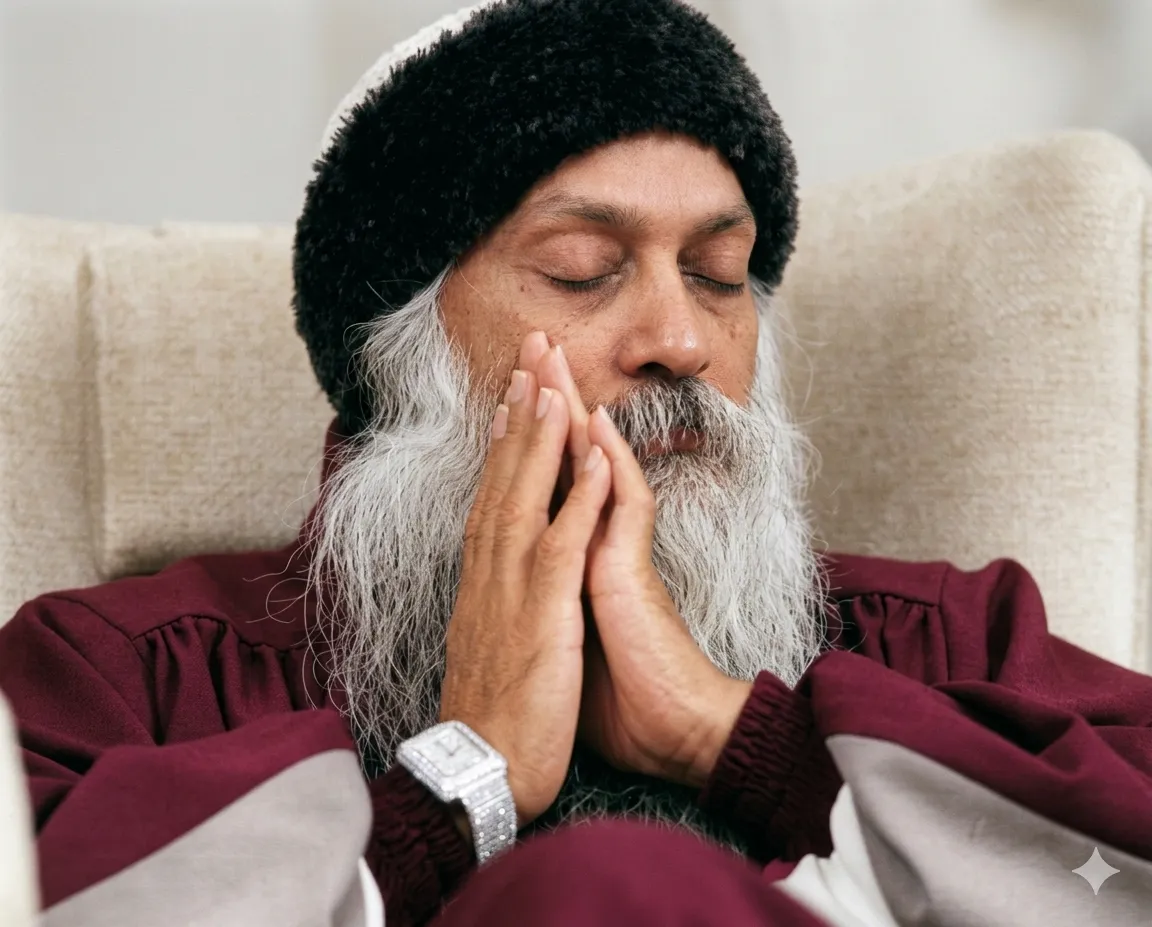
It’s singing and dancing so your heart can feel what your head can’t—especially after lots of talking.
From the Discourses
Passages where Osho speaks to this question — each links to the complete discourse.
A friend has asked, Osho, why should we be religious when neither the beginning nor the end is known, and there is no trace of God or soul? The enlightened ones speak of truth—if that truth is real, why can’t they make everyone experience it?
No one is telling you to be religious—at least Lao Tzu would not. The so-called religious people have created so much disturbance that it is better you do not become one of them. Lao Tzu does not say, “Be religious.” He simply says: be what you are. You may ask, why should I be what I am? Because that is the only thing you can be. There is no way to be anything else. Yes, you can try to be something else—and in that trying your life can be wasted. You may then say, why not waste life? No one can stop you. And precisely for this reason even the enlightened ones are defeated and cannot give you the knowledge of truth—because you say, why should we know the truth? What can the enlightened do? They can speak. They can try to awaken in you the thirst for the joy…
एक मित्र ने पूछा है, ओशो, हम धार्मिक ही क्यों हों, जब न आदि का पता है, न अंत का, न ईश्वर-आत्मा का कोई पता है? बुद्ध पुरुष कहते हैं जिस सत्य की बात, यदि वह सत्य है, तो वे सभी को उसका अनुभव क्यों नहीं करवा पाते हैं?
कोई नहीं कहता आपसे कि आप धार्मिक हों। कम से कम लाओत्से तो नहीं कहेगा। क्योंकि धार्मिक लोगों ने इतने उपद्रव किए हैं कि आप न हों, तो अच्छा है। लाओत्से नहीं कहता कि धार्मिक हों। लाओत्से तो इतना ही कहता है कि जो आप हैं, वही हों। आप पूछ सकते हैं कि वही हम क्यों हों? क्योंकि वही आप हो सकते हैं। और कुछ होने का उपाय नहीं है। हां, और कुछ होने की आप कोशिश कर सकते हैं। उस कोशिश में जीवन व्यर्थ हो सकता है। लेकिन आप कह सकते हैं कि हम जीवन को व्यर्थ क्यों न करें? कोई आपको रोक नहीं सकता। …
Question: Third question: Osho, please explain a little about kirtan-meditation. ... Kirtan has many moods. Sometimes the devotee dances in separation; then his kirtan has a great poignancy—tears flow, there is pain and longing. Sometimes he dances in rejoicing; then his mood is bright, it is spring, flowers everywhere. See his intoxication then—rays of joy dance all around him. Sometimes he dances in thirst; sometimes in fulfillment. The devotee has great seasons, and kirtan has many expressions. Kirtan is a rich happening—every depth of life is included in it, and every height. At first the devotee hides his love within. It is intrinsic to love that we do not wish to tell anyone—love is no spectacle, no exhibition. He hides it, ties it in the corner of his garment like a diamond. Kabir says, “I have found the diamond and knotted it tight.
तो कीर्तन की बहुत भंगिमाएं हैं। कभी भक्त विरह में नाचता है; तब उसकी कीर्तन में बड़ी उदास भंगिमा होती है। आंसू बहते हैं। पीड़ा और विरह होती है। कभी भक्त आनंदोल्लास में नाचता है; तब उसकी बड़ी प्रसन्न भंगिमा होती है, वसंत होता है, सब तरफ फूल होते हैं! तब उसकी मस्ती देखें! तब उसके चारों तरफ आनंद की किरणें नाचती हैं। कभी प्यास में नाचता है; कभी तृप्ति में नाचता है। भक्त की बड़ी ऋतुएं हैं और कीर्तन की बड़ी भाव-भंगिमाएं हैं। कीर्तन बड़ी समृद्ध घटना है। जीवन की सभी गहराइयां उसमें समाविष्ट हैं, और सभी ऊंचाईयां भी। पहले तो भक्त छिपाता है अपने प्रेम को भीतर। प्रेम का वह अनिवार्य अंग है कि हम उसे किसी को बताना नहीं चाहते। वह कोई तमाशा थोड़े ही है! वह कुछ ऐसी बात थोड़े ही है जो दिखलाते फिरें! उसकी कोई प्रदर्शनी तो नहीं, कोई नुमाइश तो नहीं! उसे छिपाता है, उसे हीरे की तरह गांठ में बांधकर रखता है। कबीर कहते हैं: हीरा पायो गांठ गठियायो! …
Osho, please clarify further what dancing and singing have to do with this Gita Jnana Yajna. And please also make it clear why the dancing in this sankirtan is chaotic, “disorderly,” and arbitrary. Naturally, the same thought arose in friends too. They also asked me: what has kirtan, melody, and dance to do with a Gita jnana-yajna? And even if there is dance, shouldn’t it be orderly, rhythmic? What is the meaning of it being disorderly, unstructured, anarchic, chaotic?
The festive dimension of human enthusiasm and elation—the celebrative dimension of consciousness—must open. Religion has become too serious. The more serious it is, the more sickly it becomes. Banish solemn faces from the temples. Let temples be places of dance and celebration of life—then we can bring religion back. Grim, sick, frightened faces, harassed and afflicted by life—these have robbed the temples of their radiance. The temple is a moment for life’s dance. One should leave all life’s gravities in the marketplace and enter there. One should go dancing. One should dance for a while, forgetting everything—public opinion, propriety, shame. Yesterday a woman informed me that an old lady at the back was saying, “What sin is this! Men and women dancing together!” Such a mind will never understand Krishna. If even in dance and kirtan the thought of man versus woman persists, better not to dance or chant. If…
प्रश्न: ओशो, इस गीता ज्ञान यज्ञ से नाचने-गाने का क्या संबंध है, इसे और स्पष्ट कीजिए। और इस संकीर्तन में नाचना अस्तव्यस्त, डिसआर्डरली और मनमाना क्यों है, इसे भी साफ करें। स्वभावतः, ऐसा खयाल और मित्रों को भी उठा। उन्होंने भी मुझे पूछा है कि गीता ज्ञान यज्ञ से कीर्तन का, धुन का, नृत्य का क्या संबंध? और फिर नृत्य भी हो, तो व्यवस्थित हो, तालबद्ध हो! डिसआर्डरली, अव्यवस्थित, अराजक, केआटिक, इसका क्या मतलब है?
धर्म बहुत गंभीर हो गया है। और जितना गंभीर होगा धर्म, उतना रुग्ण और बीमार होगा। गंभीर शकलों को मंदिरों से विदा कर दो। मंदिर नृत्य के और जीवन के उत्सव के स्थल हों, तो हम धर्म को वापस ला पाएंगे। गंभीर चेहरे, बीमार, घबड़ाए हुए, जिंदगी से परेशान, पीड़ित-- नहीं, मंदिर को बेरौनक कर गए हैं। मंदिर तो जीवन के नृत्य का क्षण है। वहां तो जिंदगी की सारी गंभीरता बाजार में छोड़कर चले जाना चाहिए। वहां तो नाचते हुए ही जाना चाहिए। वहां तो नाचना चाहिए घड़ीभर सब भूलकर, लोग-लिहाज, लाज-लज्जा, सब भूलकर। कल एक महिला ने मुझे खबर दी कि कोई बूढ़ी महिला पीछे कह रही थी कि यह क्या पाप हो रहा है! स्त्री और पुरुष साथ नाच रहे हैं! कृष्ण को न समझ पाएगी ऐसी बुद्धि। अगर नृत्य और कीर्तन में भी स्त्री-पुरुष का खयाल बना रहे, तो अच्छा है कि नृत्य-कीर्तन मत करो। इतना भी न भूलता हो! दूसरे का शरीर न भूलता हो, तो अपना शरीर कैसे भूलेगा? अगर इसका भी खयाल बना रहे कि पास में स्त्री खड़ी है, इसलिए बच-बचकर नाचो, तो मत नाचना। …
A friend has asked, “Osho, don’t ask him anything about the Gita. But he has a big objection to the kirtan that happens here!”
He says not to ask him about the Gita—because he must have already understood the Gita! Then why he comes here, who knows. There is no purpose in coming here. If he has understood the Gita, what is the purpose of coming! He should climb some temple and shout, “Come, whoever wishes to attain. I have attained!” His trouble is with kirtan. Have you ever done kirtan? If you have, there cannot be an objection. And if you haven’t, you shouldn’t be raising the question. We must not ask about what we haven’t tasted. The discomfort, of course, will be: “What is this—people start dancing, they lose their senses!” Or: “Men and women are dancing together!” If you can’t be so “unmindful” as to even forget man and woman, then what on earth will you forget! If you’re still keeping the alertness that “I am a man, and the one…
Even when there is no sound it is there. The Zen people call it the sound of one hand clapping. It is their way of saying that it is not an ordinary sound which is created by clapping two hands. It is not a clash. It is unstruck. When you play on the sitar you have to strike, by your strokes you create the sound. There is a fight between you and the strings. You have to pull the strings to a certain tension and then relax them. This is called the struck sound. But the inner sound is unstruck, 'anahat'. Nobody is playing there and nobody is there. It is utter silence. Even you are not there, at least not as you know yourself. A very new awareness is there which has nothing to do with you.