
Lunch isn’t the point; be aware of your feelings so you don’t use food to replace love.
From the Discourses
Passages where Osho speaks to this question — each links to the complete discourse.
Question: OSHO, WHAT IS FOR LUNCH TODAY? Sant Maharaj, WHAT IS THE MATTER? Are you really becoming a celibate? It happens to celibates: their interest starts changing from women to food. You can look around the Indian sannyasins, the so-called mahatmas, and you will always find them very fat, with big bellies. And the reason is that their whole sexuality becomes perverted. They start focusing their libido on food. Food and sex are deeply related, very intimately related, from the very beginning. Food is necessary for the survival of the individual and sex is necessary for the survival of the species. Sex is exactly like food for the species and food is like sex for the individual. Without food the individual will die, without sex the species will die. If you start repressing your sexuality, then the natural shift is from love to lunch! It is not coincidental.
Osho, you got as far as breakfast. To complete our religious historical records, could you tell us what goes beyond the juice?
So forgive me, I am going to remain the same way but you can always remind me that I have left something out in the middle. I can always complete it. I would love to complete it but what can I do? There is so much to say -- and nothing to say. You can understand my problem: so much to say that even if I go on for lives it will still be there -- and nothing to say, because that which I want to give to you is not something which can be said. I am living in this dilemma but trying for some middle way; and I have the feeling I have found the middle way. I have heard a story: when God created man of course He was an amateur. He baked the man too much -- a negro came out. God said,''Jesus! What happened to…
Osho, please tell me: after realization, is taking food also attachment to the body? After realization, can life continue without food?
A mahatma has arrived, it seems! What grudge do you have against food? What enmity with the body? The body too is His form. Taste is His taste. The relish of food is also a hymn to Him. What sickly mind are you carrying! You have fallen into the wrong company—into the company of the perverse—which people mistake for satsang. You’ve been spoiled by the friendship of someone of a twisted nature. Your so‑called sadhus and mahatmas are anti‑life, anti‑body, anti‑joy. Their God is not the creator, the celebrant of life; their God is life’s enemy. In their reckoning, God and His creation are at odds—an idea stuffed with sheer foolishness. If God is the Creator, then creation is His unfolding. How can the Creator be opposed to His creation? Is a poet against his poem? Is a musician against his music? And if a musician is against music, why…
ओशो, यह बताने की कृपा करें कि उपलब्ध होने के बाद भोजन लेना भी शरीर का मोह है? क्या उपलब्ध हो जाने के बाद भोजन के बिना जीवन चल सकता है?
कोई महात्मा का आगमन हो गया है! भोजन से ऐसी क्या नाराजगी? शरीर से ऐसी क्या दुश्मनी? शरीर भी उसका रूप है। स्वाद भी उसका स्वाद है। भोजन का रस भी उसका भजन है। यह तुम कैसा रुग्ण-चित्त लिए बैठे हो! तुम गलत आदमियों के साथ पड़ गए हो। तुम दुष्ट-संग में पड़ गए। हालांकि दुष्ट-संग को ही लोग सत्संग समझ रहे हैं। तुम किसी दुष्ट-प्रकृति आदमी की दोस्ती में बिगड़े हो। तुम्हारे तथाकथित साधु-महात्मा जीवन-विरोधी हैं, शरीर-विरोधी हैं, आनंद विरोधी हैं। उनका परमात्मा जीवन का नियंता, रचयिता नहीं है; उनका परमात्मा जीवन का शत्रु है। उनके हिसाब में परमात्मा और उसकी सृष्टि में विरोध है, जो कि बात बड़ी ही नासमझी से भरी है। अगर परमात्मा स्रष्टा है तो सृष्टि उसका फैलाव है। तो सृष्टि के विपरीत उसका स्रष्टा कैसे हो सकता है? कोई कवि अपनी कविता के विपरीत होता है? …
Osho, please shed some light on this clear method of returning.
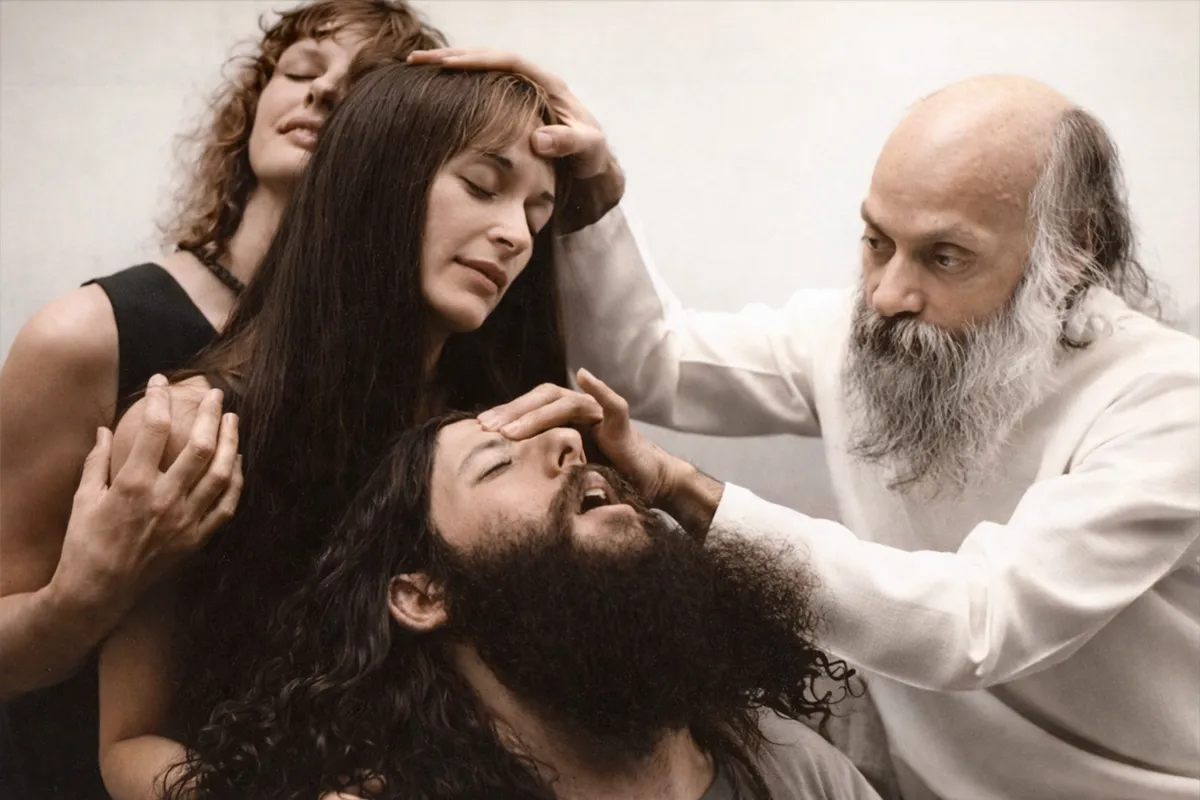
There are a few things to understand here as well. Ordinarily we have no idea that every touch of ours is a magnetic touch. When we touch someone filled with love, the one who is touched senses the difference. When we touch filled with hatred, that too is sensed. When we touch with indifference, even that is felt. In all three states our magnetic element flows in different currents. And if, with the whole mind and a firm resolve, one concentrates entirely in the hands, the magnetic currents become very intense—what Mesmer called magnetic passes. If we lay a person down naked, do not touch the body, and hold both our hands above the head at a distance of about four inches, keeping that gap, and then, while vibrating the hands strongly, move them the same four inches above the body down to the feet, and do this for fifteen…
ओशो, कृपया यह जो वापस लौट आने की स्पष्ट विधि है, इस पर कुछ प्रकाश डालें।
इस संबंध में भी कुछ समझने जैसी बात है। चूंकि हमें साधारणतः कोई अनुमान नहीं है कि हमारा प्रत्येक स्पर्श चुंबकीय स्पर्श है। जब हम प्रेम से भरकर किसी को छूते हैं, तो स्पर्श का भेद जिसको स्पर्श किया है उसे पता चलता है। जब हम घृणा से भरकर किसी को छूते हैं, तब भी पता चलता है। जब हम उपेक्षा से छूते हैं, तब भी पता चलता है। तीनों स्थितियों में हमारा चुंबकीय तत्व अलग-अलग धाराओं में प्रवाहित होता है। फिर अगर पूरे मन से और पूरे संकल्प से हाथ पर ही स्वयं को पूरा केंद्रित किया गया हो, तो चुंबकीय धाराएं बड़ी तीव्र हो जाती हैं, जिनको मैसमर ने मैग्नेटिक पासेज कहा है। अगर एक व्यक्ति को हम नग्न सुला दें, उसके शरीर को न छुएं, चार इंच दूर अपने दोनों हाथों को उसके सिर पर लें। …
Another friend has asked: Osho, what is the relationship between the method of meditation and jati-smaran (recollection of past lives)?
But the one who becomes skilled in this—who can fully awaken any day’s memory up to the age of five—will find that the memories begin to awaken completely. And you should test it. As today passes, note down some events and lock them up. After two years, try to recall today. Most of it will have been forgotten. Then remember—and after remembering, break the lock and compare whether what you recalled matches what you had written. You will be amazed—astonished—that besides what you wrote, many more details have come back which you did not even note at the time. They will all be there in memory. Buddha called this alaya-vijnana. There is a corner of the human mind he called the storehouse of consciousness. Like a junk room in the house where we keep all the odds and ends, there is a storehouse that collects memories—where everything from birth after…
एक और मित्र ने पूछा है कि ओशो, ध्यान की विधि और जाति-स्मरण में क्या संबंध है?
लेकिन जो व्यक्ति इसमें समर्थ हो जाएगा, पांच वर्ष की उम्र तक की किसी भी दिन की स्मृति को पूरा जगाने लगेगा...और वह पूरी जगने लगती है। और फिर उसको इस तरह जांच कर लेनी चाहिए। जैसे आज का दिन गुजर रहा है, तो आज के दिन की कुछ बातें नोट करके ताले में बंद कर दें। दो साल बाद आज के दिन को याद करें। वह सब खो जाएगा आज का दिन। और तब स्मरण करें, और स्मरण करके फिर ताला तोड़ें, और फिर मेल करें कि वह बात मेल खा गई कि नहीं। और आप हैरान होंगे--आप हैरान होंगे कि जितनी आपने लिखी थीं, उससे बहुत ज्यादा बातें और भी याद आई हैं जो कि आप उस दिन भी नोट नहीं कर पाए थे। वे तो सब बातें याद आ ही जाएंगी। इसको बुद्ध ने नाम दिया है, आलय-विज्ञान। मनुष्य के मन का एक कोना है, जिसको उन्होंने आलय-विज्ञान कहा है। आलय-विज्ञान का मतलब होता है, स्टोर हाउस आफ कांशसनेस। जैसे घर में एक कबाड़खाना होता है, जहां हम सब बेकार हो गई चीजों को डालते चले जाते हैं। …