
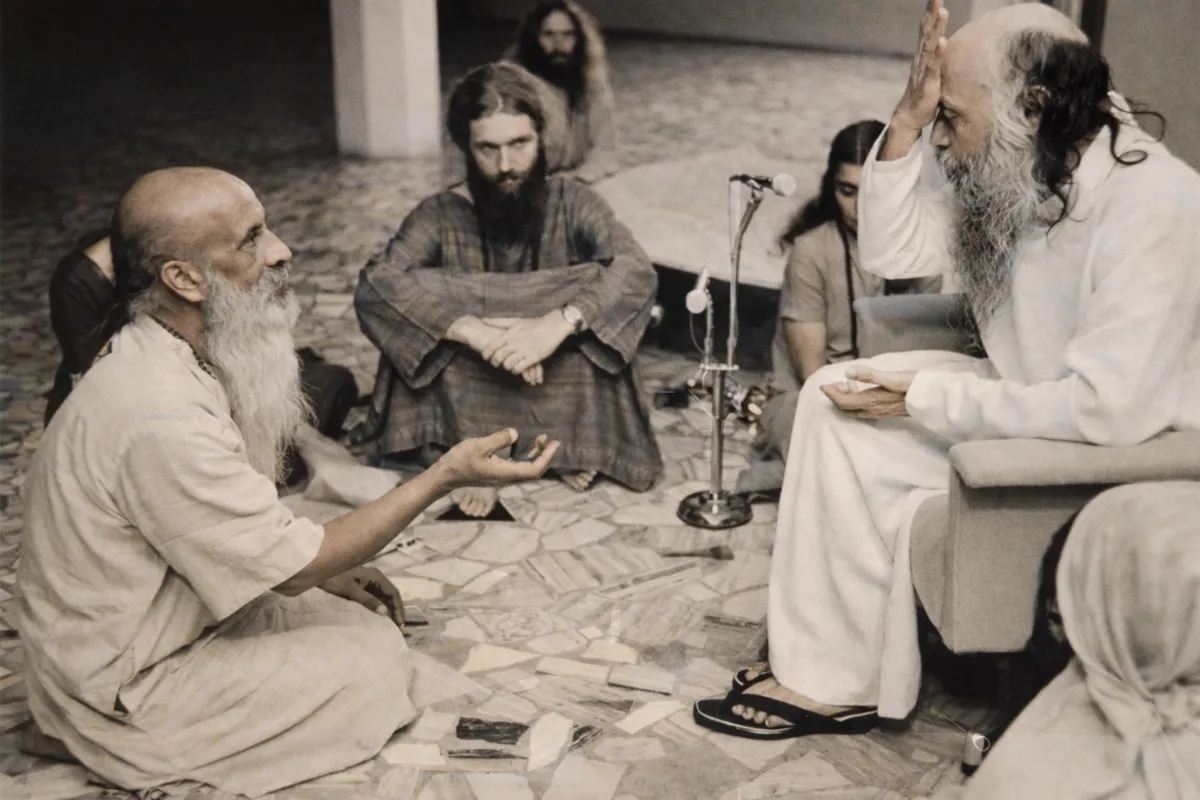
When you keep labeling things from the outside, you start chasing or hating them; stop labeling and just be aware, and both chasing and hating fade.
From the Discourses
Passages where Osho speaks to this question — each links to the complete discourse.
As the fletcher whittles and makes straight his arrows, so the master directs his straying thoughts.
LIKE A FISH OUT OF WATER, STRANDED ON THE SHORE, THOUGHTS THRASH AND QUIVER. FOR HOW CAN THEY SHAKE OFF DESIRE? THEY TREMBLE, THEY ARE UNSTEADY, THEY WANDER AT THEIR WILL. IT IS GOOD TO CONTROL THEM. AND TO MASTER THEM BRINGS HAPPINESS. BUT HOW SUBTLE THEY ARE, HOW ELUSIVE! THE TASK IS TO QUIETEN THEM, AND BY RULING THEM TO FIND HAPPINESS. WITH SINGLEMINDEDNESS THE MASTER QUELLS HIS THOUGHTS. ... Ram was only wearing one single cloth, he had just wrapped a blanket around himself. He threw the blanket -- rather than answering he created a situation. That's how great mystics work. He threw the blanket, he was utterly naked, and he ran away. All the people ran with him! Not only those who were surrounding him but others also who were standing here and there or who had come for a morning walk, and people who were sitting on
Osho, how does the energy of thought transform into feeling?
Therefore I am not teaching you religious thoughts. I am initiating you into no-thought. Generally, what goes on in temples and mosques is just this: people full of worldly thoughts are stuffed instead with spiritual thoughts—nothing more. But what difference does it make? You have given the disease a pious, pretty name; what changes? So long as you want to be anything, so long as you harbor the ambition to become something in the future, so long as you are eager for tomorrow, you will remain unquiet. The stream of thought will keep flowing. And as long as the stream of thought flows, you will remain cut off from God. I am telling you that religious thoughts are just as great an obstacle between you and God as worldly thoughts. Thought is the barrier; no-thought is union. Gorakh has said: See the Unseen, ponder what is seen, seat the Invisible…
पहला प्रश्न: ओशो, विचार की ऊर्जा भाव में कैसे रूपांतरित होती है?
इसलिए मैं तुम्हें धार्मिक विचार नहीं सिखा रहा हूं। मैं तुम्हें निर्विचार की दीक्षा दे रहा हूं। आमतौर से यही चल रहा है मंदिर-मस्जिदों में: जो लोग सांसारिक विचारों से भरे हैं, उन्हें हम कैसे आध्यात्मिक विचारों से भर दें, बस...। मगर क्या फर्क पड़ता है? रोग का नाम धार्मिक रख लिया, अच्छा-प्यारा नाम रख लिया, इससे क्या फर्क पड़ता है? जब तक तुम कुछ भी होना चाहते हो, जब तक तुम भविष्य में कुछ होने की आकांक्षा रखते हो, जब तक तुम कल के प्रति आतुर हो, आकांक्षी हो, अभीप्सु हो, तब तक तुम अशांत रहोगे। विचार की धारा बहती रहेगी। और विचार की धारा बहती रहेगी, तुम परमात्मा से टूटे रहोगे। मैं तुमसे यह कह रहा हूं कि धार्मिक विचार भी परमात्मा के और तुम्हारे बीच उतनी ही बड़ी बाधा है जितनी सांसारिक विचार की। विचार बाधा है, निर्विचार मिलन है।
Pragya has asked: “You and all the saints say the same...”
I don’t know about all the saints, because among your so‑called saints most are not saints at all. Out of a hundred of your saints, perhaps one is a saint; the other ninety‑nine are as sick as you are—and often far more chronically sick. But you understand the language of those ninety‑nine, because they speak the language of your disease. The one who is a real saint—you don’t understand his language. I am choosing to speak about those few, those one‑in‑a‑hundred saints, so I can sift for you who the real saints are. There are too many non‑saints; they’re not worth counting. I keep speaking on saints. They are not many. Your “all saints” are not saints—and certainly Pragya’s “all saints” cannot be. For her, those she calls saints will be the sick and deranged—because her mind, her way of thinking, her chain of logic is repression: anti‑body, anti‑world. “You…
पूछा है प्रज्ञा ने: ‘आप और सभी संत यही कहते हैं...।’
और सभी संतों का मुझे पता नहीं, क्योंकि तुम्हारे सभी संतों में बहुत तो संत हैं ही नहीं। तुम्हारे सौ संतों में एकाध संत होता है, निन्यानबे तो तुम जैसे ही रुग्ण और तुमसे भी ज्यादा महारुग्ण होते हैं। मगर उन निन्यानबे की भाषा तुम्हें समझ में आती है, क्योंकि वे तुम्हारे ही रोग की भाषा बोलते हैं। और वह जो एक है, उसकी भाषा तुम्हें समझ में नहीं आती। उन्हीं थोड़े से एक-एक संतों को चुन कर मैं बोल रहा हूं उनके ऊपर, ताकि तुम्हें छांट कर बता दूं कि कितने संत हैं। असंत तो बहुत हैं, इसलिए उनकी संख्या गिनना भी ठीक नहीं। संतों पर बोलता जा रहा हूं। संत बहुत ज्यादा नहीं हैं। तुम्हारे सभी संत संत नहीं हैं, और प्रज्ञा के सभी संत तो हो ही नहीं सकते। …
When (in winter) still water by the wind is stirred, it takes (as ice) the shape and texture of a rock.
WHEN THE DELUDED ARE DISTURBED BY INTERPRETATIVE THOUGHTS, THAT WHICH IS AS YET UNPATTERNED TURNS VERY HARD AND SOLID. MIND IMMACULATE IN ITS VERY BEING, CAN NEVER BE POLLUTED BY SAMSARA'S OR NIRVANA'S IMPURITIES. A PRECIOUS JEWEL DEEP IN MUD WILL NOT SHINE, THOUGH IT HAS LUSTER. KNOWLEDGE SHINES NOT IN THE DARK, BUT WHEN THE DARKNESS IS ILLUMINED, SUFFERING DISAPPEARS (AT ONCE). SHOOTS GROW FROM THE SEED AND LEAVES FROM THE SHOOTS. HE WHO THINKS OF THE MIND IN TERMS OF ONE OR MANY, CASTS AWAY THE LIGHT AND ENTERS THE WORLD. INTO A (RAGING) FIRE HE WALKS WITH OPEN EYES -- WHO COULD BE MORE DESERVING OF COMPASSION? ... <q>A PRECIOUS JEWEL DEEP IN MUD WILL NOT SHINE, THOUGH IT HAS LUSTER.</q> SAYS SARAHA: MIND IMMACULATE... when the mind has no thoughts -- that is when the mind is pure consciousness, when the mind is a silent lake without