
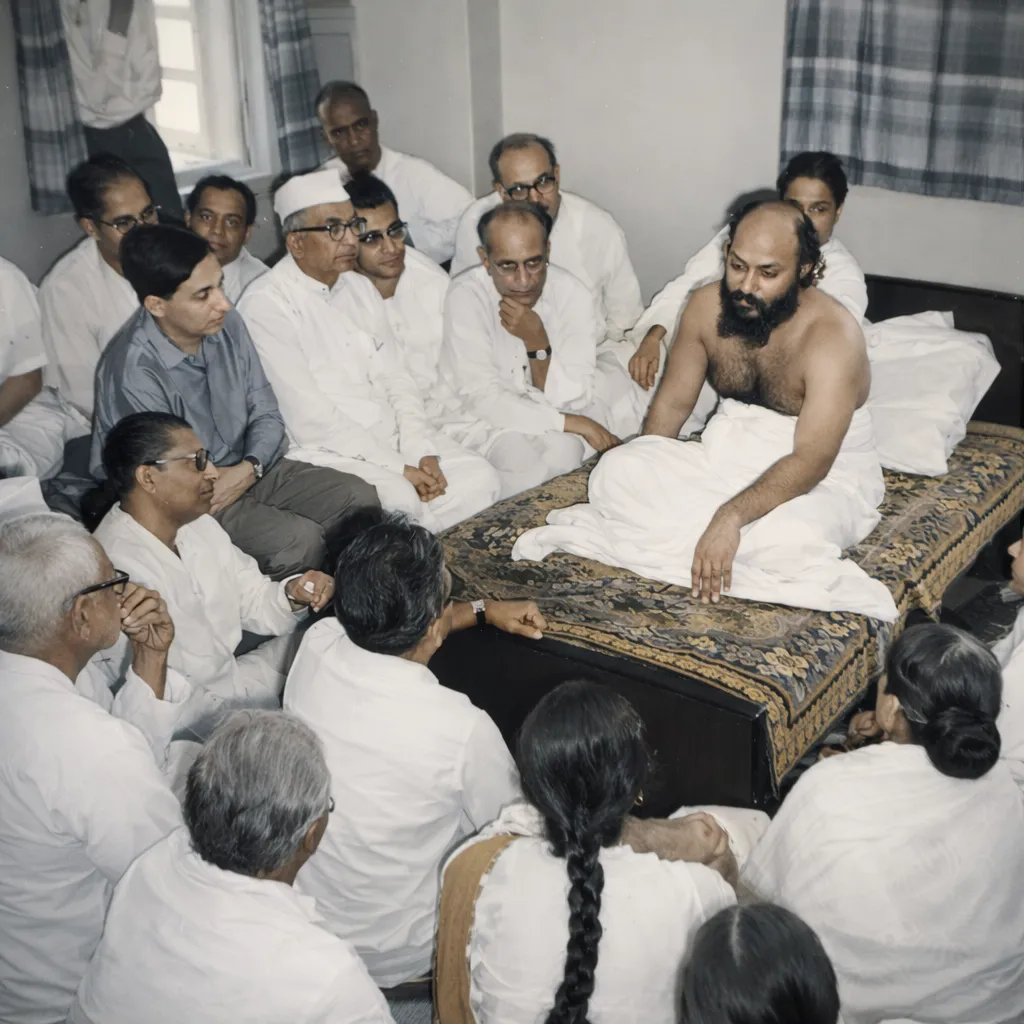
Sometimes people are called “father” even when they aren’t; don’t trust titles—look at what someone really is and does.
From the Discourses
Passages where Osho speaks to this question — each links to the complete discourse.
Beloved master, what is a father?
Anand Sugeet, a father is a Catholic priest -- who is neither a husband nor a father; but Catholics are well known to do such strange things. Why they call their priests "father" is really strange. Pope also means "father"; it is another form of "papa." Father Francesco and Father Viggiani were sitting in a grotto chatting. "Do you think the pope will ever allow priests to marry?" asked Father Francesco. "It won't happen in our time," replied Father Viggiani. "Maybe in our children's." The seventh question:
Osho, what is more important in your religion -- to be thyself or to know thyself?
Gurdjieff calls them "selves; it is the same. You can call personalities selves or egos, and you can start looking for them -- it is a tremendously charming game to look at them. In the evening, you decide that tomorrow morning you are going to get up at five. This you have been deciding for many years, and you know it -- that every evening you decide.... But this night is different! -- that too, you know. Every night you have been saying, "This night is different; tomorrow I am going to get up. There is a limit to everything!" But all these things you have been saying every night. You are not saying a single new thing, but you are not aware of it. And at five o'clock when the alarm goes, you just press the button; and you are angry at the clock. You may throw the clock,…
An institution means something that is not natural, something that has been invented by man. So I take the word 'father' as symbolic of all invented institutions. And there is no other kind. One has to go beyond being a husband, being a father, being a wife, one has to go beyond all these stupid ideas. One has just to be human, loving -- and then a miracle happens in life then you can love somebody else's child as deeply as your own. Once the idea of father is dropped your love is free, then there is no limitation to it. And we will need a totally different kind of humanity.
It was needed once -- it was needed that your father should be authoritative, that your mother should be authoritative -- otherwise you would not have grown at all. Mm? -- you were simply so unaware of the world and its problems. They had to prepare you. The child cannot understand reasoning and cannot understand arguments and cannot go deep into analysis and causes and things like that. He has to simply be told 'Do this!'. You cannot philosophise, you cannot sermonise, and you cannot go into the deep causes of it; the child will not understand. You have to be very clear. Now psychologists say that because of this, women have become very very authoritative -- because they have to deal with children. The father goes to the office or to the factory or somewhere else for the whole day; the mother has to be with the children.
Another friend has asked: Osho, what is the relationship between the method of meditation and jati-smaran (recollection of past lives)?
But the one who becomes skilled in this—who can fully awaken any day’s memory up to the age of five—will find that the memories begin to awaken completely. And you should test it. As today passes, note down some events and lock them up. After two years, try to recall today. Most of it will have been forgotten. Then remember—and after remembering, break the lock and compare whether what you recalled matches what you had written. You will be amazed—astonished—that besides what you wrote, many more details have come back which you did not even note at the time. They will all be there in memory. Buddha called this alaya-vijnana. There is a corner of the human mind he called the storehouse of consciousness. Like a junk room in the house where we keep all the odds and ends, there is a storehouse that collects memories—where everything from birth after…
एक और मित्र ने पूछा है कि ओशो, ध्यान की विधि और जाति-स्मरण में क्या संबंध है?
लेकिन जो व्यक्ति इसमें समर्थ हो जाएगा, पांच वर्ष की उम्र तक की किसी भी दिन की स्मृति को पूरा जगाने लगेगा...और वह पूरी जगने लगती है। और फिर उसको इस तरह जांच कर लेनी चाहिए। जैसे आज का दिन गुजर रहा है, तो आज के दिन की कुछ बातें नोट करके ताले में बंद कर दें। दो साल बाद आज के दिन को याद करें। वह सब खो जाएगा आज का दिन। और तब स्मरण करें, और स्मरण करके फिर ताला तोड़ें, और फिर मेल करें कि वह बात मेल खा गई कि नहीं। और आप हैरान होंगे--आप हैरान होंगे कि जितनी आपने लिखी थीं, उससे बहुत ज्यादा बातें और भी याद आई हैं जो कि आप उस दिन भी नोट नहीं कर पाए थे। वे तो सब बातें याद आ ही जाएंगी। इसको बुद्ध ने नाम दिया है, आलय-विज्ञान। मनुष्य के मन का एक कोना है, जिसको उन्होंने आलय-विज्ञान कहा है। आलय-विज्ञान का मतलब होता है, स्टोर हाउस आफ कांशसनेस। जैसे घर में एक कबाड़खाना होता है, जहां हम सब बेकार हो गई चीजों को डालते चले जाते हैं। …