
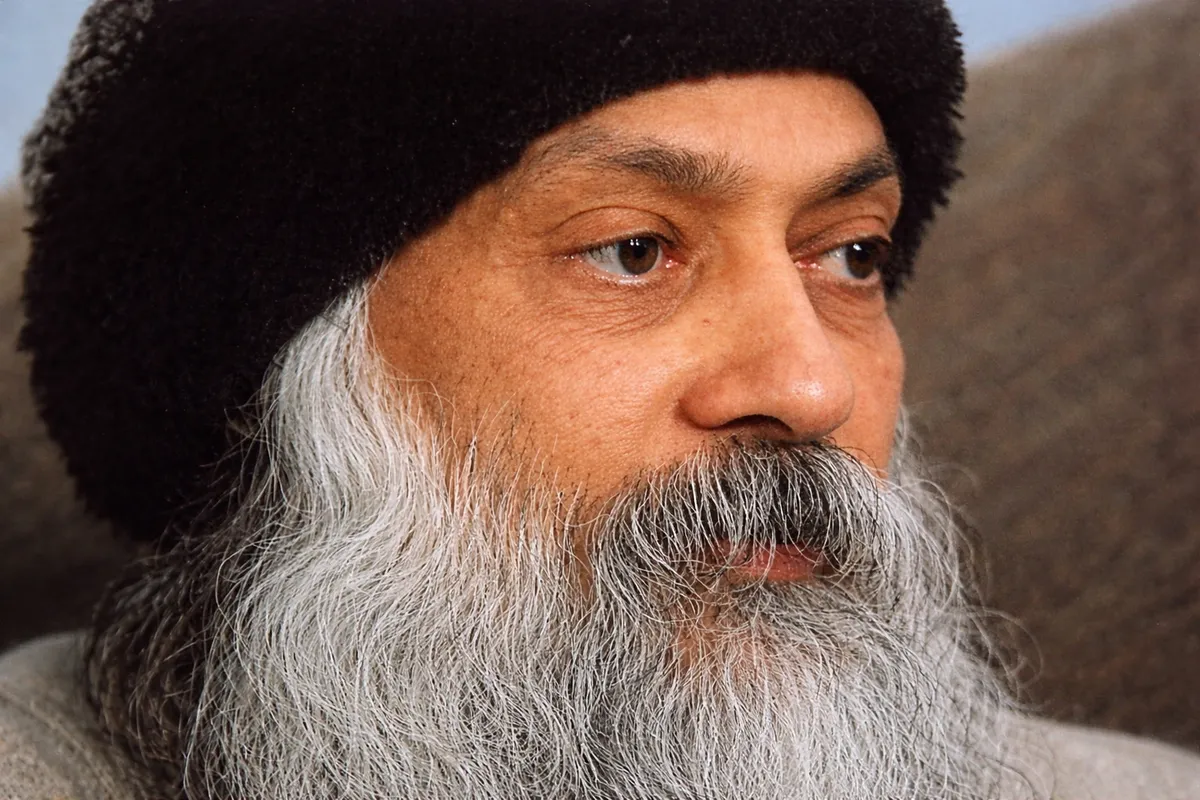
Even if someone looks messy or acts rough, they’re still sacred inside, and sannyas just says, “I see your real, beautiful self.”
From the Discourses
Passages where Osho speaks to this question — each links to the complete discourse.
Osho, I have heard that initiation into sannyas is not given to the unworthy. Why is that? Are the unworthy not deserving of the satguru’s compassion?
The unworthy is just the opposite. If the divine comes, he thinks, “All right, he came—as was my due. He had to come; if he hadn’t, I would have shown him.” “He has to come; it is my right; it is my entitlement.” If he does not come, the unworthy becomes upset: “This is great injustice. There is injustice in the world—some get it, some don’t; there is partiality, favoritism, nepotism.” The unworthy has his own language. The worthy too has a language. When the divine comes, the worthy says—“Prasad.” “I had no qualifications at all, and yet you came!” This is the language of the worthy—understand it; it is a very paradoxical language. The worthy says, “I was unworthy, and you came! I had no merit to even ask; there was no basis from which to demand—only your compassion, your love, your mercy. You are Rahim, you are Rahman,…
Beloved Osho, why do you give sannyas to almost anybody who comes to see you? What is your concept of sannyas? What obligation does it involve?
But once you know a greater phenomenon -- a greater bliss, a greater happiness -- then you are not renouncing things. They just drop away, just like dry leaves from the tree. No one knows and no one hears, the dry leaves just drop. The tree remains oblivious to it and there is no wound left behind. So, to me, everything has a moment to happen, a moment of ripeness -- ripeness is all. One must ripen; otherwise one will be wandering unnecessarily and harassing himself unnecessarily and destroying himself unnecessarily. One should ripen, then the opportunity comes by itself. So renunciation is through positive growth. That is what I mean by my sannyas -- renunciation through positive growth. There is no negativity at all, no denial, no suppression. I accept the human being as he is. Of course, now much is potential, but as he is, he is not…
Osho, sannyas was born in this land; it was granted the dignity of Gaurishankar (Everest). But today its honor has become merely superficial. Inside, the individual and society alike are afraid of it. Why have sannyas and the sannyasin lost their meaning? Please explain.
In my sannyas there is no prohibition—no “leave this, run from that.” Awakening is enough. Cowards run. Those who awaken remain where they are and are free there. My sannyas does not want to give you knowledge; it wants to give you meditation. Meditation means emptiness; it means: I do not know. Life is such an ultimate mystery that nothing definitive can be known about it. And I want to give sannyas a new posture—creativity. I will call him a sannyasin who sings a new song; who strikes a new music from the veena; who dances a new dance; who makes this world a little more beautiful, brings a little more blessedness to the earth. Then sannyas can regain its dignity. And I would have the sannyasin not imitate. Listen, understand, contemplate—but live from your own individuality. Therefore I give my sannyasins no codes of conduct—only processes to awaken the…
September 28, 1970 was a memorable day. At Manali in the Himalayas, Osho initiated His first group of sannyasins. This event was followed by this special evening discourse, on the significance of Neo Sannyas. To me, sannyas does not mean renunciation; it means a journey to joy bliss. To me, sannyas is not any kind of negation; it is a positive attainment. But up to now, the world over, sannyas has been seen in a very negative sense, in the sense of giving up, of renouncing. I, for one, see sannyas as something positive and affirmative, something to be achieved, to be treasured. It is true that when someone carrying base stones as his treasure comes upon a set of precious stones, he immediately drops the baser ones from his hands. He drops the baser stones only to make room for the newfound precious stones. It is not renunciation.
Beloved Osho, what is sannyas?
Sannyas is rebellion against all slavery; it is living life in absolute freedom. To live life in absolute freedom, without traditions, without conventions, without religions, without philosophies, without ideologies -- political, social, and others -- to live unburdened is sannyas. But it will look crazy to the whole world. Freedom looks crazy because everybody is living an imprisoned life. To prisoners, the person who escapes from the prison looks crazy, because for them prison is comfortable, convenient, secure, safe. A Hungarian secret police colonel was inspecting a strip of the border. "Too many people have been slipping across at this point," he informed the guards. "I have been ordered to test your security precautions." After deploying the guards at strategic points, the colonel began creeping on all fours toward the barbed wire. "Can you see me now?" he called out. When they cried back "Yes," he started again. On the…