
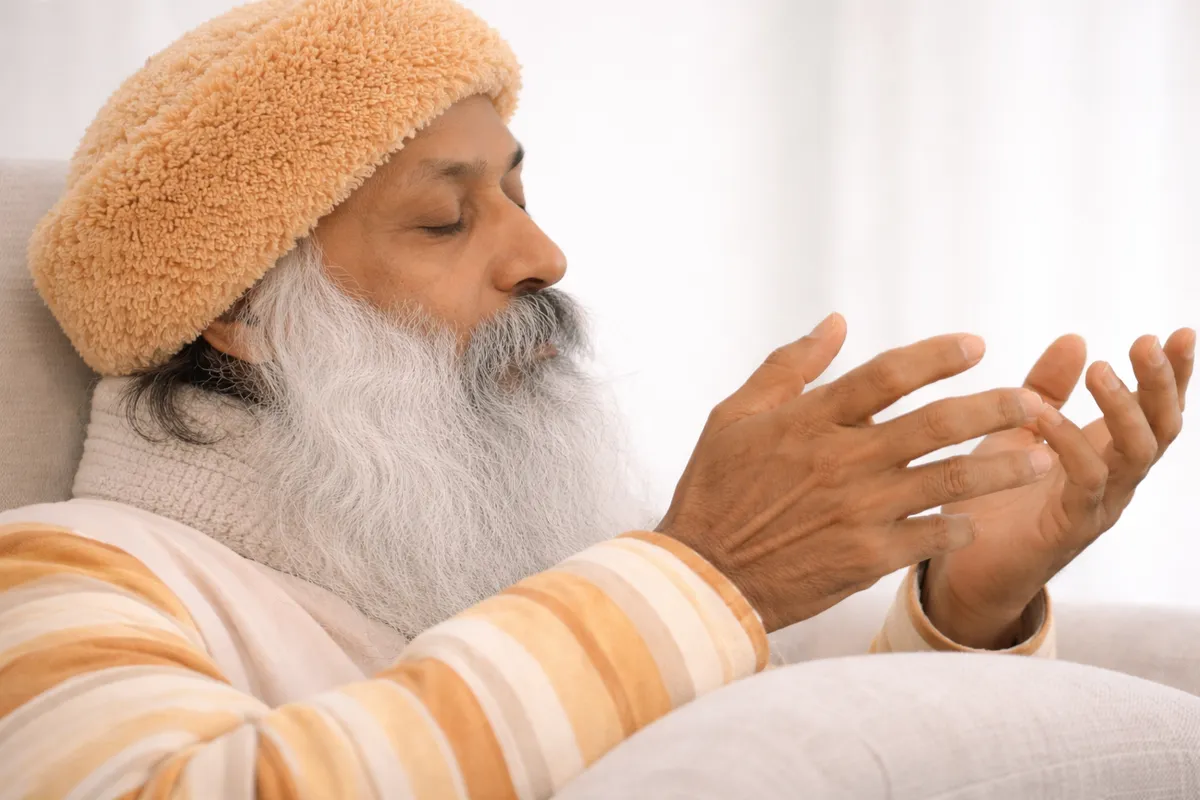
Records don’t last; breaking one just shows there’s always more to grow and discover.
From the Discourses
Passages where Osho speaks to this question — each links to the complete discourse.
Both are the possibilities. One can just go on seeking challenges because it enhances the ego. Then the motive is wrong. What you are doing is right, but the reason you are doing it is wrong. If you simply love challenges and it is not in any way an effort to enhance the ego, then it is tremendously beautiful. Then whatsoever you are doing is right, and the motive is also right. Then you are one thousand percent right. So just watch that -- that's what I am saying. Don't gather the ego. Go on finding new challenges, enjoy, but there is no need to collect the ego, to feed an ego, because if you are feeding an ego, then in fact you will not be able to enjoy the challenges; they become secondary. The purity is lost then; you are always hankering for the ego.
When you help somebody to grow, to pass through a fixation, an obsession, to attain to a breakthrough.... And when he blooms -- that is exactly the right word -- when he blooms, suddenly, a flare of energy. And the person who is helping is tremendously benefited. And always remember that the more peaks that you attain, the more you become capable of further and higher peaks. And there is no end to peaks. There is no ultimate peak. . . it goes on and on. Life is an endless process. So never think that now, this is the last. It is never the last. When people start thinking that this is the last and they start settling, they miss much. Because this is my observation -- that if you settle on a peak, sooner or later that peak will disappear, because peaks exist only when you are growing.
Osho, the fall of ordinary people seems understandable. But how is it that even someone who walks the path of renunciation, dispassion, austerity, and sadhana—who has come close to the destination—can still fall into the abyss?
The ordinary person cannot really fall. Where would he fall? One who walks on level ground—even if he stumbles, where is there to fall? Only the one who tries to climb the mountain peaks can fall. To fall you need a summit. And near the summits lie hidden ravines and chasms. On level ground, on the royal road, even if someone falls, what kind of fall is it? He is already fallen. The ordinary person never becomes “fallen,” because there is nowhere left to fall. So when you say the fall of the ordinary is understandable—you have not understood. How is the ordinary to fall? He lives at the point below which no further decline is possible. He lives at zero degrees, at the very bottom. He has made the ravine itself his home. Only the extraordinary fall—those who undertake the ascent to the peaks; who strive for heights; who…
दूसरा प्रश्न: ओशो, साधारण जन के पतन की बात तो समझ में आती है। लेकिन त्याग, वैराग्य, तप और साधना के पथ पर चलने वाला व्यक्ति भी, जो कि मंजिल के करीब पहुंच चुका है, क्यों कर उसका पतन की खाई में गिरना संभव हो पाता है?
पहाड़ों के शिखरों पर जो चढ़ने की कोशिश करता है, वही गिर सकता है। गिरने के लिए पर्वत शिखर चाहिए। और पर्वत शिखरों के पास छिपी हुई खाइयां हैं, खड्ड हैं। समतल भूमि पर, राजपथ पर चलने वाला गिरेगा भी तो क्या गिरेगा? गिरा ही हुआ है। साधारण जन कभी पतित नहीं होता, क्योंकि अब और पतित होने को जगह कहां? इसलिए तुम जब पूछते हो कि साधारण जन के पतन की बात तो समझ में आती है--तब तुम समझे नहीं। साधारण जन का पतन कैसे होगा? साधारण जन तो जीता ही उस बिंदु पर है, जिसके नीचे और पतन संभव नहीं है। वह तो शून्य डिग्री पर जीता ही है। वह तो आखिरी जगह जीता ही है। खाई-खड्ड को ही उसने घर बनाया है। सिर्फ गिरते हैं असाधारण जन--जो शिखर पर चढ़ने का अभियान करते हैं; जो ऊंचाइयों पर जाने का प्रयत्न करते हैं; जो स्वीकार करते हैं चुनौती ऊंचाई की, जो खाई में रहने को राजी नहीं होते; और जो कहते हैं, जब तक हम स्वर्ण-मंडित शिखरों को न पा लें, तब तक जीवन व्यर्थ है; जो खाई के अंधेरे में सरकने को, घर बनाने को राजी नहीं होते; जो कहते हैं, हम तो पंख खोलेंगे और उड़ेंगे आकाश में; दूर की यात्रा पर जो जाते हैं। जितनी दूर की यात्रा, उतना ही खतरा पतन का।
Beloved master, when I first sat in front of you at woodlands, fourteen years ago, there was an explosion inside. I don't know what it means, but I've often had the feeling that all I've been trying to do ever since is catch up to something that has already happened.
Don't behave like an old Indian who had gone for the first time in his life to see a movie. A beautiful girl is undressing by the side of a lake, and just when she is going to drop the last part of her clothes a railway train passes by, and that blocks the view. The old fellow tries in every way -- this way and that way, between the compartments, but the train is going so fast and when the last compartment of the train has gone, the girl has already entered the lake; she is swimming. The old man is very much frustrated. The first show is over, everybody has left, and the old man is still sitting in his seat. The manager comes and asks him, "Is there something that I can do to help? Everybody is gone, the show is over. Now the cleaners will come…
Osho, at times I feel I am on the very peak of life. It seems that everything—the whole mystery of life—has been found. But then, in certain moments, I also experience a very dense sadness and helplessness. I cannot grasp what my real problem is.
As long as there are peaks, there will be valleys. As long as there is the longing for the peak, you will have to endure the melancholy of the valleys as well. One who has asked for pleasure has, along with it, asked for pain. And when pleasure comes, pain enters with it like a shadow. We change the names of our pleasures, but we do not become free of pleasure; and the one who is not free of pleasure will not be free of pain. Ashtavakra’s entire teaching is just this: be free of duality. Only the one who is free of duality arrives. The peak you think you have reached is the illusion of arrival—because there is no peak to arrive at. Arrival is a vast plain—neither height nor depth. Arrival is like a scale that has balanced: both pans exactly equal and the needle at rest. Or…
पहला प्रश्न: ओशो, मैं कभी जीवन के शिखर पर अनुभव करता हूं। ऐसा लगता है कि सब कुछ, जीवन का सब रहस्य पाया हुआ ही है। लेकिन फिर किन्हीं क्षणों में बहुत घनी उदासी और असहायता भी अनुभव करता हूं--मेरी वास्तविक समस्या क्या है, यह मेरी पकड़ में नहीं आता है।
… और सुख जब आया तो उसकी छाया की तरह दुख भी भीतर आ गया। हम सुख के नाम तो बदल लेते हैं, लेकिन सुख से हमारी मुक्ति नहीं हो पाती। और जो सुख से मुक्त नहीं, वह दुख से मुक्त नहीं होगा। अष्टावक्र की पूरी उपदेशना एक ही बात की है: द्वंद्व से मुक्त हो जाओ। जो निर्द्वंद्व हुआ, वही पहुंचा। जिस शिखर को तुम सोचते हो पहुंच गये, वह पहुंचने की भ्रांति है। क्योंकि पहुंचने का कोई शिखर नहीं होता। पहुंचना तो बड़ी समभूमि है। न ऊंचाई है वहां, न नीचाई है वहां। …