
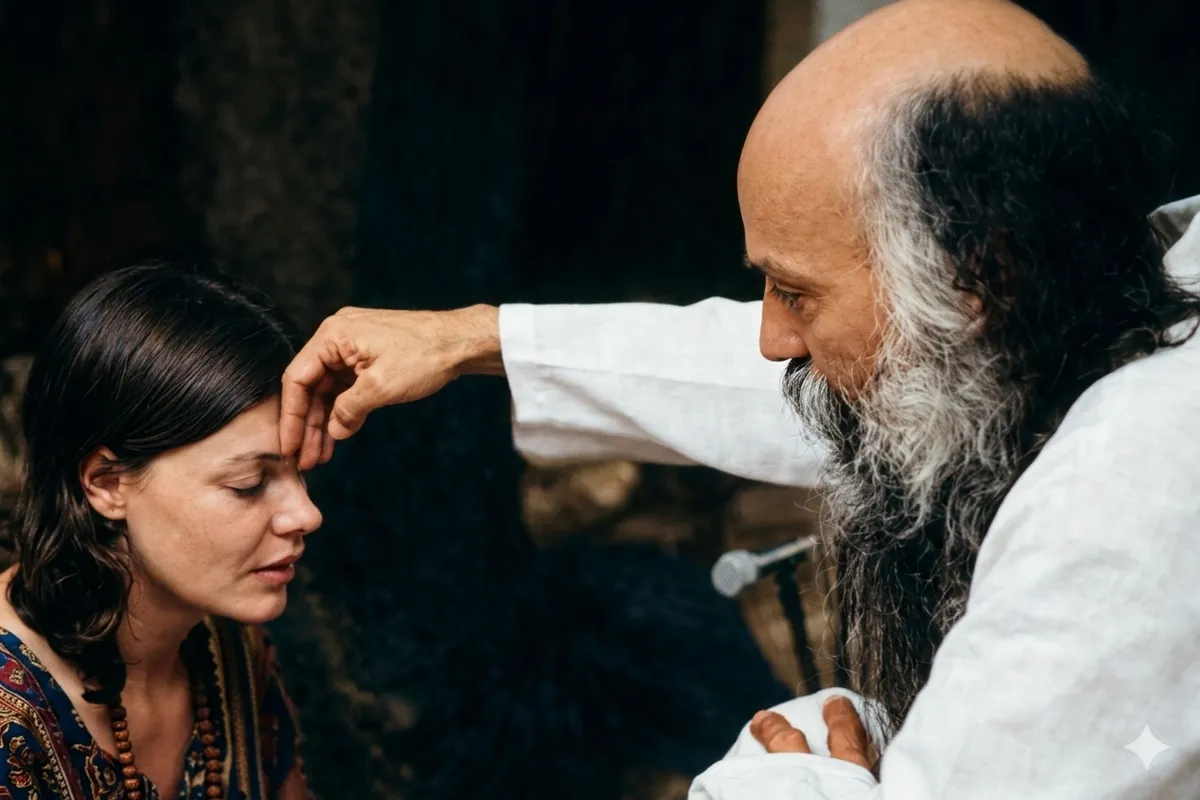
Even if you pass out, a quiet part of you still knows it’s happening.
From the Discourses
Passages where Osho speaks to this question — each links to the complete discourse.
What about after fainting?
It makes no difference. Even if he becomes utterly unconscious, it will still be known to him that he is unconscious. That is, the consciousness will remain intact that the body is unconscious and that “I cannot move my hand, I cannot get up”—this too is awareness. “I am unconscious”—that awareness will also remain. Even when he sleeps at night, he knows, “I am asleep.” It is known the whole time. This event too is part of his consciousness: “I am asleep.” That is why, even at the time of death, he will be able to remain aware: “I am dying. I am dying; this death is happening.”
प्रश्न: मूर्च्छा होने के बाद?
… तो मूर्च्छित हैं, यह उन्हें पता रहेगा। यानी यह कांशसनेस उन्हें पूरी रहेगी कि शरीर मूर्च्छित है और मैं हाथ हिला नहीं सकता, उठा नहीं सकता—यह भी होश है। मैं मूर्च्छित हूं, यह भी उनका होश रहेगा। वे रात सोएंगे, तो भी मैं सोया हूं—यह उन्हें पता है। यह पूरे वक्त पता है। यानी यह घटना भी उनकी कांशसनेस का हिस्सा है कि मैं सोया हुआ हूं। इसीलिए तो वे मरते वक्त भी होश में रह सकेंगे कि मैं मर रहा हूं। …
A friend has asked: Osho, is the samadhi attained when consciousness is lost a state of swoon? Sri Ramakrishna Paramhansa would lie for days as if near death!
In the West they have invented new ways: even blows are not enough; so they set up many lights, rapidly changing, deafening sound, assorted dances and songs; a completely deranged atmosphere is created. After an hour in that derangement one feels: ah, there is some life, some experience of living! We have died so much that unless the blow is enormous, there is no experience of life. Soft tones we cannot hear at all. Yet the natural tones of life are all soft. We cannot hear the night’s silence, nor the heart’s own beat. Have you ever heard the sound of your blood’s flow? It is very soft; you cannot hear it; but there is a sound. Buckminster Fuller wrote that for the first time he went into a building—a scientific laboratory—completely soundproof, where no sound from outside could enter. Inside he began hearing two kinds of sounds. He asked…
एक मित्र ने पूछा है कि ओशो, चेतना के खो जाने पर प्राप्त समाधि क्या मूर्च्छा की अवस्था है? रामकृष्ण परमहंस कई दिनों तक मृतप्राय अवस्था में लेटे रहते थे!
पश्चिम में उन्होंने नए रास्ते निकाले हैं। केवल चोट से भी काम नहीं चलता, तो बहुत तरह के प्रकाश लगा लेते हैं। प्रकाश बदलते रहते हैं तेजी से। बहुत जोर से शोर मचता रहता है। कई तरह के नाच, कई तरह के गीत चलते रहते हैं। एक बिलकुल विक्षिप्त अवस्था हो जाती है। तब घंटेभर उस विक्षिप्त अवस्था में रहकर किसी आदमी को लगता है, कुछ जिंदगी है; कुछ जीवन का अनुभव होता है! हम इतने मर गए हैं कि जब तक बहुत चोट न हो, तो जीवन का भी कोई अनुभव नहीं होता। धीमे स्वर तो हमें सुनाई ही न पड़ेंगे। और जीवन के नैसर्गिक स्वर सभी धीमे हैं। वे हमें सुनाई नहीं पड़ेंगे। रात का सन्नाटा हमें सुनाई नहीं पड़ेगा। हृदय की अपनी धड़कन हमें सुनाई नहीं पड़ेगी। आपने कभी अपने खून की चाल की आवाज सुनी है? वह बहुत धीमी है; वह सुनाई नहीं पड़ेगी। लेकिन आवाज तो हो रही है। बक मिनिस्टर फुलर ने लिखा है कि मैं पहली दफा एक ऐसे भवन में गया, एक विज्ञान की प्रयोगशाला में, जो पूर्णरूपेण साउंड-प्रूफ थी, जहां कोई आवाज बाहर से भीतर नहीं जा सकती थी। …
A friend has asked: Osho, in the very first stage of meditation I feel completely exhausted within a minute or two.
No, you don’t actually get tired; the thought of being tired arises. The thought of tiredness is a big thing. When you feel, “I’m utterly exhausted,” if at that very moment someone were to come after you with a gun, threatening to kill you, you would discover you’re not tired at all. You’d run for miles, and the fatigue would vanish. What happened? You were tired, weren’t you? Someone is chasing you with a gun—how are you running now? In truth, we have no idea how much power lies within us. We live using only the small amount of energy that floats on the surface. When that little portion gets a bit weary, we conclude, “Now I’m tired; that’s the end of it.” The moment you feel fatigue, begin again with even more intensity. Within two minutes you will find the tiredness has disappeared and a great energy has surged…
एक मित्र ने पूछा है कि ओशो, ध्यान के पहले चरण में ही एक-दो मिनट में बिलकुल थक जाते हैं।
नहीं, थक नहीं जाते, थकने का खयाल पैदा हो जाता है। थकने का खयाल बड़ी बात है। जब आपको लग रहा हो कि बिलकुल थक गए हैं, उसी वक्त कोई एक बंदूक लेकर आपके पीछे लग जाए कि मार डालेंगे, तब आपको पता चलेगा बिलकुल नहीं थके। मीलों दौड़ते चले जाएंगे, थकान का पता ही नहीं रहेगा। क्या हो गया? थक गए थे आप! एक आदमी बंदूक लेकर पीछे लग गया, अब आप दौड़ कैसे रहे हैं? असल में हमारे भीतर कितनी शक्ति है इसका हमें पता ही नहीं होता। छोटी सी शक्ति जो ऊपर होती है उसी का हम उपयोग करके जिंदा रहते हैं। बस वह जरा सी थक गई, बस हमने सोचा--अब तो थक गए, अब बात खतम हो गई।
Osho, if witnessing is possible through the knowledge-senses, is it also possible through the action-senses, or not?
One can be a witness to the body, because inside, consciousness is separate and distinct. I raise this hand—at that moment an action is occurring: I have raised the hand. Ordinarily we only know that I am the doer of the hand’s raising. But look within: while I am raising the hand there is a consciousness inside that is seeing the hand being raised. When you are walking on the road there is someone within who is seeing that you are walking. When you are doing anything there is someone within who is seeing that you are doing something. Twenty-four hours a day there is a seeing point within you. But you are not aware of it. Witnessing means: we gradually come to remember that point; its remembrance keeps returning; its awareness dawns. As awareness of that point grows, as awakening happens there, the coverings fall away; you will find…
पूछा है: ओशो, ज्ञान-इंद्रियों से साक्षीभाव शक्य है, ऐसा कर्म-इंद्रियों से शक्य है या नहीं?
शरीर के प्रति साक्षी हुआ जा सकता है; क्योंकि भीतर चेतना पृथक है, अलग है। यह हाथ मैं उठाता हूं--इस वक्त एक क्रिया हो रही है कि मैंने हाथ उठाया, तो हमें केवल एक ही बात का पता है कि मैं हाथ के उठाने का कर्ता हूं। लेकिन भीतर खयाल करें, जब हाथ को मैं उठा रहा हूं तो भीतर एक चेतना है जो देख रही है कि हाथ उठ रहा है। जब रास्ते पर आप चल रहे हैं तो आपके भीतर कोई देख रहा है कि आप चल रहे हैं। जब आप कुछ भी कर रहे हैं तो आपके भीतर कोई देख रहा है कि आप कुछ कर रहे हैं। चौबीस घंटे आपके भीतर कोई देखने वाला बिंदु है। लेकिन आपको उसका होश नहीं है।
Beloved Osho, in the sixties and seventies neurologists became very interested in an area of the brain stem called the "reticular formation." it is said that this is the area that filters input into the brain while we are asleep. Thus, a mother sleeps through all sorts of noises, but wakes the instant her child cries -- this function was said to be achieved by the reticular formation. It seems that during sleep there is one element within us which remains awake. Does witnessing have any relationship to this phenomenon? Does witnessing belong to a part of the brain?
It is recorded that Buddha never changed his posture in sleep; he would sleep in the same posture the whole night. His disciple, Ananda, was puzzled. Many times he would wake up and look, and he could not believe how Buddha managed. In sleep you cannot manage to keep the same posture. People cannot even manage the same posture while they are awake; there is so much restlessness that they have to turn this way and that. But in sleep you are unconscious... One day Ananda finally asked, "How do you manage the same posture the whole night long?" Buddha said, "You will understand one day when you become enlightened. I will give you the answer but it will be difficult for you to grasp it. I simply rest, I don't sleep. Since the day I became awakened, sleep has disappeared." Other things may be disturbed in the bodies of…